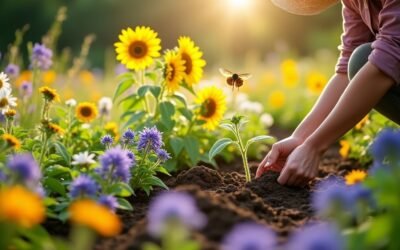
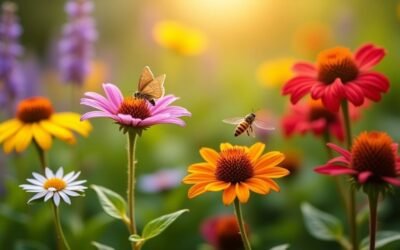
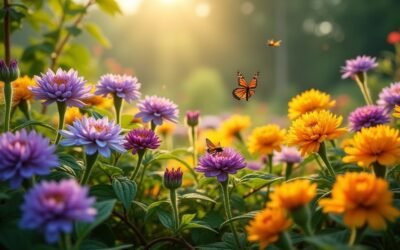
Brachyglottis 'Sunshine', commonly referred to as the Sunshine bush, captivates with its vibrant yellow blooms and lush, dark green foliage, invoking a sense of garden liveliness. This evergreen shrub reaches heights of 1.5 to 2 meters (5 to 6.5 feet) and spans up to 1.8 meters (6 feet) wide. Thriving in well-drained, sandy loam soils, it flourishes best in full sun, attracting essential pollinators like bees and butterflies. With minimal care, including regular deadheading and pruning, this hardy plant promotes ecological balance. Interested enthusiasts will find that proper maintenance details enhance understanding of its impressive attributes and garden contributions.
Main Points
- Brachyglottis 'Sunshine' is an evergreen shrub native to New Zealand, known for its vibrant yellow daisy-like flowers.
- It thrives in well-drained sandy loam and prefers full sun for optimal blooming.
- This hardy plant withstands temperatures between -10 to -5 degrees Celsius, suitable for USDA Zones 8a to 10b.
- Companion plants like Artemisia Powys Castle and Heuchera enhance its aesthetic appeal and ecological benefits.
- Regular deadheading and pruning promote healthy growth and prolonged flowering, while it attracts beneficial pollinators.
Introduction
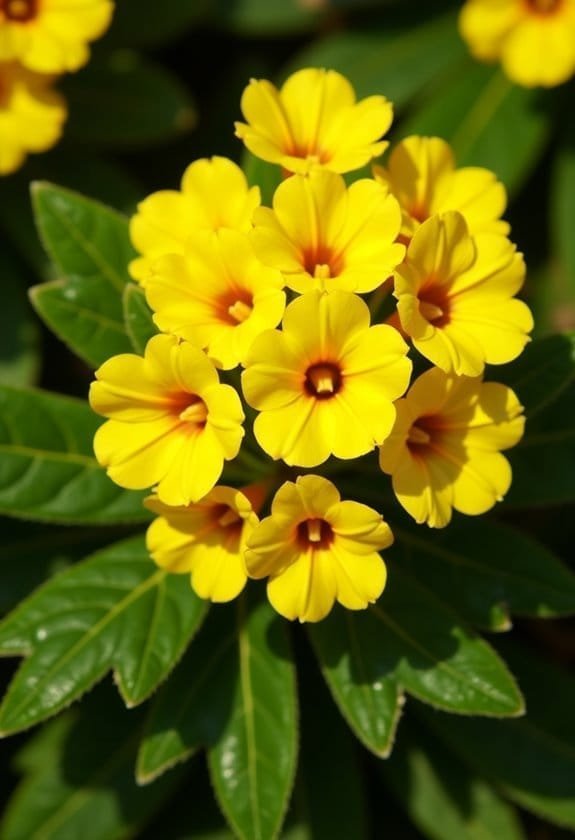
Brachyglottis 'Sunshine', commonly known as sunshine bush, boasts a scientific name that reflects its lineage within the Asteraceae family.
This evergreen shrub captivates gardeners with its vivid yellow daisy-like flowers, providing a striking visual during its blooming period in June and July.
With its impressive height of up to 2 metres and resilience against challenging conditions, the Brachyglottis 'Sunshine' serves as an exceptional choice for various landscaping applications.
Common Name
Often mistakenly called Senecio Sunshine, Brachyglottis 'Sunshine' is an evergreen shrub that stands out in gardens with its vibrant yellow daisy-like flowers. This misnomer can cause confusion, as this remarkable plant belongs to the Brachyglottis genus within the Asteraceae family.
Gardeners often appreciate Brachyglottis 'Sunshine' for its striking, bright yellow flowers that bloom in loose clusters during the summer months, creating a stunning visual display.
Typically, this evergreen shrub reaches heights of about 1.5 meters (approximately 5 feet) and can spread approximately 1.8 meters (6 feet) wide, making it a significant presence in any landscape. Its adaptability to various gardening conditions has made it a popular choice for both novice and experienced gardeners alike.
Not only does it offer aesthetic appeal, but Brachyglottis 'Sunshine' is also drought tolerant, which means it can thrive even in less-than-ideal moisture levels. This quality not only enhances its viability but also contributes positively to sustainable gardening practices.
Scientific Name
Known scientifically as Brachyglottis greyi, this evergreen shrub was originally classified under the genus Senecio. Part of the Asteraceae family, commonly referred to as the daisy family, Brachyglottis greyi embodies the rich flora of New Zealand's North Island, where it flourishes in ideal conditions.
The genus name "Brachyglottis" derives from Greek, meaning "short tongue," a reference to the specific anatomy of its flower's anthers that plays a vital role in pollination.
Brachyglottis greyi represents an intriguing hybrid of three species: B. greyi itself, B. laxifolia, and B. compacta. Each species contributes unique traits, enhancing the plant's adaptability and aesthetic appeal.
Due to its vibrant foliage and hardy nature, Brachyglottis greyi has garnered attention from botanical enthusiasts and organizations such as the Royal Horticultural Society, which acknowledges its ornamental value.
This shrub's resilience and stunning appearance make it an excellent choice for garden landscapes.
Ultimately, Brachyglottis greyi not only showcases the botanical diversity of New Zealand but also offers gardeners a symbol of beauty and perseverance within their cultivating spaces.
Overview
Among the diverse array of evergreen shrubs, Brachyglottis 'Sunshine' stands out with its striking combination of resilience and vibrant beauty.
Native to New Zealand, this remarkable shrub reaches heights of approximately 1.5 meters, showcasing greyish-green leaves that feature wavy margins, measuring up to 8 cm in length. Its foliage serves as a perfect backdrop for the eye-catching bright yellow daisy flowers that emerge in loose clusters during June and July, infusing gardens with warmth and color.
Brachyglottis 'Sunshine' thrives in full sun or semi-shade and prefers well-drained, slightly acidic loam, demonstrating impressive adaptability to poor soils and challenging coastal conditions.
This versatility not only enhances its ornamental value but also supports crucial pollinators like bees and butterflies. Moreover, the plant's non-toxic nature makes it a safe choice for households with pets and children, ensuring a harmonious gardening experience.
Notably, Brachyglottis 'Sunshine' has earned the prestigious Award of Garden Merit from the Royal Horticultural Society, solidifying its status as a worthy addition to any garden landscape.
Its enduring appeal lies in its mix of beauty and practicality, making it a favorite among gardeners.
Key Features
Brachyglottis 'Sunshine' showcases a remarkable growth size, typically reaching heights of about 1.5 meters and spreading up to 1.8 meters, creating a lush presence in any garden.
Its striking dark green, wavy-margined leaves, measuring up to 8 cm, contribute to its vibrant appearance, while the bright yellow daisy-like flowers, which bloom in loose clusters during June and July, add a splash of color.
With its resilience to coastal conditions and drought, this evergreen shrub not only enhances landscapes but also thrives in various environmental challenges, proving itself a valuable asset in diverse garden settings.
Growth Size
The Brachyglottis 'Sunshine' is a striking evergreen shrub that typically reaches a mature height of about 1.5 to 2 metres (5 to 6.5 feet).
Its growth habit is quite impressive, as this plant can spread up to 1.8 metres (6 feet) in width, consequently forming a densely bushy structure that can serve as an excellent focal point in a garden.
Characterized by its wavy-margined, dark green leaves, Brachyglottis 'Sunshine' showcases foliage that can grow up to 8 cm long, providing visual interest throughout the year.
Notably, this member of the Dunedin Group, belonging to the Senecio greyi species, thrives in various climates, exhibiting hardiness that allows it to withstand temperatures ranging from -10 to -5 degrees Celsius.
This resilience makes it suitable for gardens across the UK.
Cultivators appreciate its vigorous growth, which not only adds stature to landscapes but also enables it to act as a natural screen or border.
For those seeking to incorporate this stunning, robust shrub into their gardening efforts, its growth size offers both aesthetic allure and practical utility, promoting an inviting outdoor environment.
Appearance
With its vibrant and distinctive features, Brachyglottis 'Sunshine' captivates the eye in any garden setting. This evergreen shrub typically grows to about 1.5 meters in height, spreading up to 1.8 meters, which establishes a substantial yet manageable presence in landscape designs.
The striking dark green leaves, wavy-margined and up to 8 centimeters long, demonstrate an exquisite foliage texture that invites admiration and curiosity. The leaf arrangement contributes to its visual dynamism, as the greyish, ovate leaves boast a specialized backing of white felt, enhancing the overall aesthetic appeal.
This duality of color creates a delightful contrast, making the foliage look almost ethereal under sunlight. Furthermore, the soft, fuzzy texture of the dense foliage adds a tactile element, encouraging interaction.
Throughout the summer months, Brachyglottis 'Sunshine' produces charming bloom clusters of bright yellow daisies, each measuring approximately 2.5 centimeters wide. These radiant flowers emerge on white-felted stalks, providing an eye-catching complement to the shrub's foliage.
Flowering Season
During June and July, Brachyglottis 'Sunshine' bursts into bloom, showcasing clusters of bright yellow, daisy-like flowers that measure about 2.5 cm in width. This vibrant display contrasts beautifully with the plant's greyish, ovate leaves, which are edged in white felt, creating an eye-catching aesthetic suitable for any garden.
The flowering duration typically spans several weeks, allowing garden enthusiasts ample opportunity to appreciate this seasonal spectacle.
The bloom colors of Brachyglottis 'Sunshine' aren't just visually striking; they serve a crucial ecological purpose as well. During peak flowering, the shrub attracts various pollinators, which are drawn to its abundant nectar and pollen.
These vibrant yellow flowers not only enhance the visual appeal of gardens but also support local ecosystems by providing nourishment for bees and butterflies, thereby fostering biodiversity.
As the plant reaches its mature height of up to 2 meters (6.5 feet), its contributions extend beyond mere decoration, transforming landscapes into essential habitats.
Therefore, Brachyglottis 'Sunshine' proves to be a thrilling addition to any horticultural setting, both for its beauty and its role in sustaining nature.
Growing Requirements
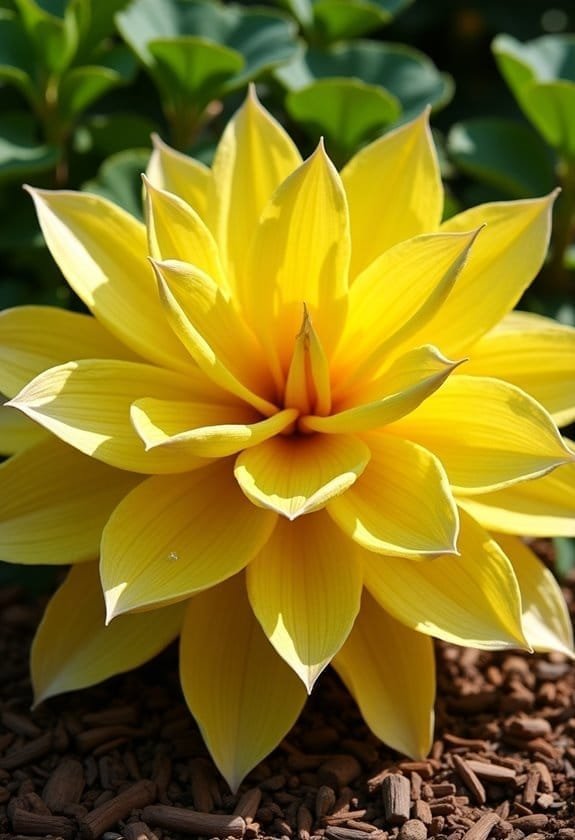
Brachyglottis 'Sunshine' flourishes in diverse lighting conditions, from full sun to semi-shade, highlighting its adaptability in various landscaping scenarios.
This evergreen shrub thrives best in well-drained sandy loam or slightly acidic soils, favoring a moisture balance that supports its growth without waterlogging.
Additionally, its hardy nature allows it to withstand temperatures as low as -10 to -5 degrees Celsius, making it an excellent choice for resilient garden designs.
Light
Ideal light exposure is indispensable for the vibrant growth of Brachyglottis 'Sunshine'. This resilient shrub thrives in full sun, where it can bask in maximum light intensity, essential for healthy photosynthesis and energy production.
However, it also possesses remarkable shade tolerance, allowing it to flourish in semi-shade conditions, making it a versatile choice for various garden settings.
When positioned correctly, Brachyglottis 'Sunshine' will reward gardeners with bright yellow daisy flowers during the summer months, a demonstration of its vitality.
Significantly, adequate sun exposure boosts the plant's ability to produce these stunning blooms, as light plays a central role in flower development.
While this plant exhibits drought tolerance once established, its overall health remains contingent upon ideal light conditions.
Consequently, gardeners must monitor its environment to ascertain that excessive shading doesn't hinder its growth potential.
By understanding the balance of sun exposure and light intensity, one can successfully cultivate this ornamental shrub, enhancing its beauty within any landscape.
Hence, finding that perfect spot in the garden becomes not only rewarding but crucial for the continual flourishing of Brachyglottis 'Sunshine'.
Soil
For ideal growth, this shrub requires well-drained soil that can either be average or rich in nutrients. The drainage significance can't be overstated, as Brachyglottis 'Sunshine' thrives best when its roots aren't submerged in soggy soil, which can lead to root rot.
Therefore, a soil composition of sandy loam or slightly acidic loam is best for facilitating air circulation and preventing waterlogged conditions.
While this plant exhibits a remarkable resilience, tolerating even poor soils, it still benefits from a nutrient-rich environment. Adequate nutrient needs, met through organic matter or compost, will enhance the plant's overall liveliness and flowering potential.
Once established, the shrub's drought tolerance increases, allowing it to flourish in dry conditions, particularly during the arid summer months.
To promote the best growth outcomes, gardeners should ascertain that the soil is kept dry during warmer periods. The avoidance of overly wet conditions is essential, highlighting the significance of well-drained soil and proper cultivation practices.
Through attentiveness to these factors, Brachyglottis 'Sunshine' can revel in its environment, showcasing its vibrant beauty throughout the growing season.
Water
Watering requirements for Brachyglottis 'Sunshine' are generally minimal once the plant is established. This resilience stems from its exceptional drought tolerance; however, understanding its watering frequency can greatly influence growth and health.
Ideally, it thrives in well-drained soil, which prevents harmful conditions like root rot and over-saturation. During the scorching summer months, the plant prefers to remain dry, necessitating less frequent watering. Notably, while it can withstand dry spells, regular moisture, particularly in sandy loam or slightly acidic loam, boosts foliage and enhances flowering.
An established Brachyglottis 'Sunshine' typically requires minimal irrigation, adapting naturally to its environment. For best results, gardeners might employ irrigation techniques emphasizing thorough yet infrequent watering sessions, mimicking natural rainfall patterns.
It's wise to observe the plant's behavior, adjusting watering if prolonged dry spells occur. Gentle watering can revive the plant's lush appeal, inviting a burst of vibrant blooms.
To conclude, the key lies in balancing the plant's inherent drought tolerance with occasional moisture to reveal its fullest potential, creating a thriving oasis in any garden setting.
Temperature
Maintaining ideal temperature conditions is essential for the health of Brachyglottis 'Sunshine'. This resilient shrub showcases remarkable climate adaptability, thriving best within a temperature range of -10 to -5 degrees Celsius. In the United Kingdom, it's hardy enough to withstand winter's chill, demonstrating impressive frost tolerance, yet it excels in USDA Zones 8a to 10b, where mild climates foster prime growth.
While Brachyglottis 'Sunshine' can endure poor soil conditions and the occasional drought, it's vital that gardeners provide protection from harsher frost phenomena in colder regions to mitigate potential damage. Full sun or semi-shade exposure considerably enhances its flowering capacity and overall vigor, making it a versatile choice for a variety of landscapes.
Moreover, understanding this plant's temperature requirements allows enthusiasts and horticulturists alike to create conducive environments. By ensuring that Brachyglottis 'Sunshine' receives appropriate temperature conditions, gardeners not only promote healthier growth but also extend the blooming season, resulting in a vibrant, flourishing display.
Ultimately, achieving the right balance guarantees this evergreen shrub thrives within its preferred habitat, symbolizing resilience against the elements.
Pollinator Criteria
Brachyglottis 'Sunshine' captivates a variety of pollinators, including bees, butterflies, and hoverflies, all drawn to its bright yellow daisy-like flowers.
This plant employs a mutualistic relationship where it offers nectar and pollen, thereby enhancing the survival and foraging efficiency of these essential insect species.
The intricate pollination methods employed by these visitors not only promote the plant's reproduction but also foster a vibrant ecosystem that supports broader biodiversity in garden settings.
Attracted Pollinators
A wealth of pollinators flock to Brachyglottis 'Sunshine' due to its vibrant yellow daisy flowers, which bloom in June and July.
These bright blooms serve as essential nectar sources, attracting an array of pollinators including bees and butterflies, particularly the Small Tortoiseshell. Such pollinator diversity enhances the overall health of garden ecosystems, encouraging a balance of species and supporting critical life cycles.
Recognized by the RHS Plants for Pollinators initiative, Brachyglottis 'Sunshine' is instrumental in bolstering bee populations and various other important pollinating insects.
The dense evergreen structure of this plant also provides crucial habitat importance, offering shelter for overwintering insects, a necessary factor for sustaining biodiversity during colder months. Additionally, this habitat supports pollinator populations that contribute to the health of different ecosystems.
Moreover, its resilience in a variety of environmental conditions, whether coastal or urban, makes Brachyglottis 'Sunshine' an ideal choice for those looking to attract pollinators in diverse landscapes. Additionally, the adaptability of Brachyglottis 'Sunshine' to various soil types allows it to thrive in both sandy and clay soils, making it a versatile option for gardeners.
Home gardeners can appreciate the insatiable buzz and beauty this plant cultivates, enriching their outdoor spaces while contributing substantially to pollinator conservation efforts.
Essentially, planting Brachyglottis 'Sunshine' not only beautifies gardens but also fosters ecosystems overflowing with life.
Pollination Method
With its vibrant blooms attracting a wide range of pollinators, Brachyglottis 'Sunshine' employs a method of pollination that relies greatly on insect action. The plant's bright yellow, daisy-like flowers, blooming mainly in June and July, are designed through specific flower morphology to appeal to bees, butterflies, and hoverflies.
These pollination strategies markedly influence bee behavior, as the attractive flowers provide both nectar and pollen, essential food sources for these pollinators. Bees, in particular, are drawn to the plant due to its rich supply of sustenance, facilitating effective pollen transfer as they move from flower to flower. This interaction enhances fertilization, ultimately increasing the plant's reproductive success.
In supporting such an array of pollinators, Brachyglottis 'Sunshine' not only contributes to its immediate environment but also bolsters local biodiversity. Additionally, the plant's evergreen structure provides shelter for overwintering pollinators, emphasizing its crucial role in the ecosystem.
Recognized by the RHS as part of the "Plants for Pollinators" initiative, Brachyglottis 'Sunshine' highlights the interconnectedness of flora and fauna, nurturing vibrant ecosystems through its intentional design.
Care & Maintenance
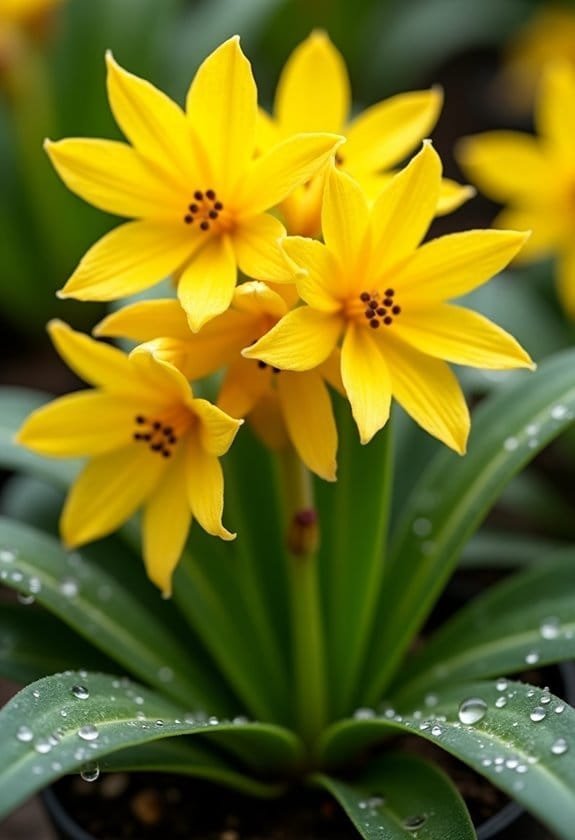
To cultivate Brachyglottis 'Sunshine' successfully, gardeners should start with well-drained soil, placing the shrub in full sun or semi-shade for ideal growth.
Ongoing care involves regular pruning, which not only shapes the plant but also encourages robust new growth and prolonged blooming.
Pairing this vibrant shrub with appropriate companions can enhance the landscape's aesthetic, fostering a harmonious garden environment.
Planting Tips
Proper care is vital for thriving Brachyglottis 'Sunshine' plants. To achieve optimal growth, gardeners should focus on effective planting techniques, which start with meticulous soil preparation. Ideally, these plants thrive in well-drained sandy loam or slightly acidic loam. An appropriate choice of soil not only boosts growth but also supports the plant's health.
Location selection is equally important, as Brachyglottis 'Sunshine' flourishes best in areas that receive full sun or semi-shade. This light exposure promotes vibrant blooms and robust foliage development, enhancing the overall aesthetic appeal of the garden.
When planting, make sure to water moderately, allowing the soil to dry out between sessions, particularly during the summer months when drier conditions are preferred.
Following planting, periodic pruning during the growing season will help maintain the desired shape and encourage bushier growth by removing any dead or overextended branches.
Additionally, applying a balanced fertilizer throughout the growing season can greatly enhance flowering and support plant health.
Ongoing Care
After planting, ongoing care for Brachyglottis 'Sunshine' helps guarantee these vibrant plants thrive. Their remarkable climate adaptability makes them suitable for drought-prone regions, requiring minimal irrigation once established.
Gardeners should prioritize regular deadheading, encouraging the plant to produce more blooms throughout the summer months.
Fertilization timing is vital, with an emphasis on applying nutrients during the growing season to support vigorous growth and prolific flowering. A balanced, slow-release fertilizer can work wonders, boosting the plant's vibrant foliage and impressive blossom displays.
Additionally, time-appropriate seasonal pruning is essential for maintaining size and shape, particularly during the active growing phase when the plant can rapidly expand.
While Brachyglottis 'Sunshine' generally enjoys a pest-resistant reputation, it's prudent to monitor for occasional intrusions from aphids or mealybugs, which could disrupt its flourishing.
By providing thoughtful care, with attention to timing and environmental conditions, gardeners can help this stunning plant maintain its lush beauty, ensuring that each season is imbued with vibrant color and life.
Proper maintenance not only enhances its striking appearance but fortifies its resilience against potential threats.
Suggested Companions
While Brachyglottis 'Sunshine' shines on its own, pairing it with thoughtfully chosen companions can create a dynamic and visually stunning garden. Companion planting strategies not only enhance aesthetics but also promote biodiversity.
For instance, combining Brachyglottis 'Sunshine' with Artemisia Powys Castle presents a striking contrast between the vibrant yellow flowers of the Brachyglottis and the silvery grey foliage of the Artemisia, enriching the overall plant color combinations.
To create seasonal interest, consider interspersing evergreen Brachyglottis 'Sunshine' with Heuchera varieties, which provide diverse hues year-round. Additionally, introducing Festuca glauca (blue fescue) contributes fine-textured, blue-green blades, enhancing visual appeal during the growing season. This combination can also improve soil drainage quality, promoting healthy root development for all the plants involved.
Moreover, incorporating Coreopsis not only magnifies color dynamics but also supports pollinators, attracting bees and butterflies for an ecological boost.
To maintain harmony, select companion plants like Sedum and Lavender that share similar soil and light requirements, thriving in well-drained areas with full sun. This strategic blending of species guarantees a resilient, productive garden that thrives through its vibrant community of plants. Additionally, planting alongside native species, such as Pyracantha, can enhance pollinator support and contribute to a balanced ecosystem in your garden.
Common Issues
Brachyglottis 'Sunshine' can face several common issues that gardeners need to address for ideal health and vibrancy.
While this plant often resists pests, occasional visitors like aphids and mealybugs may require vigilant monitoring, signaling the need for appropriate control measures.
In addition, maintaining well-drained soil is essential; excessive moisture can lead to root rot, impeding growth and threatening the plant's very survival.
Pests/Diseases
Most gardeners find that Brachyglottis 'Sunshine' is quite resistant to pests, though occasional infestations can occur. Primarily, aphids and mealybugs may emerge, compromising the plant's robust health. Regular inspections of the leaves—typically a simple chore—can prove essential, enabling early detection of these tiny invaders and making pest management strategies more effective.
When dealt with promptly, exhibiting vigilance helps prevent major infestations from escalating beyond control.
The plant's dense, evergreen structure often facilitates beneficial insects benefits, creating a natural balance within the garden ecosystem. These helpful allies feed on pests, effectively regulating their populations without the need for chemical interventions.
While Brachyglottis 'Sunshine' rarely succumbs to fungal diseases, excessive moisture can trigger such occurrences, underscoring the importance of disease prevention tips. Proper planting in well-drained soil not only fosters growth but also greatly minimizes risks of fungal attacks.
Moreover, adhering to good cultural practices—like thoughtful pruning and nurturing healthy foliage—can create a resilient environment. By embracing these approaches, gardeners can safeguard their Brachyglottis 'Sunshine' to thrive beautifully, ensuring a balanced interaction between plants and their environments.
Solutions
During the growing season, gardeners can effectively tackle common issues with Brachyglottis 'Sunshine' by implementing targeted solutions.
First, employing proper pruning techniques is crucial. Regularly trimming the shrub not only maintains an attractive shape but also encourages denser growth, reducing leggy or sparse foliage, which can diminish its visual appeal.
To optimize plant health, providing adequate soil amendments can appreciably enhance the growing conditions. While Brachyglottis 'Sunshine' thrives in poor soils, infusing organic matter encourages essential nutrient availability and promotes robust blooming, particularly in June and July.
Ensuring the plant is situated in well-drained soil further mitigates risks associated with root rot, a common issue for many garden species.
Pest control is another crucial aspect that shouldn't be overlooked. Although this hardy shrub is generally resistant to pests like slugs and snails, monitoring for aphids and mealybugs is advisable.
What Are the Key Differences Between Brachyglottis ‘Sunshine’ and Brachyglottis Monroi?
Brachyglottis ‘Sunshine’ and brachyglottis monroi ragwort have several key differences. While both are part of the ragwort family, ‘Sunshine’ has vibrant yellow flowers and silver-gray foliage, whereas Monroi features more subdued yellow blooms and green leaves. Additionally, Monroi tends to be more compact in size compared to ‘Sunshine’.
Summary
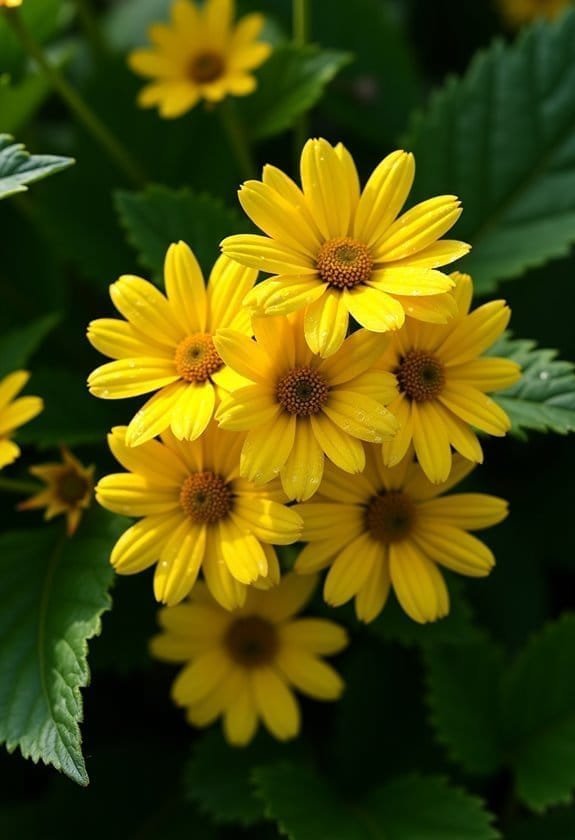
Celebrating its vibrant blooms and resilience, Brachyglottis 'Sunshine' stands out as an evergreen shrub that grows up to 1.5 meters tall. Its dark green, wavy leaves, reaching up to 8 cm, provide a lush backdrop for the stunning bright yellow daisy-like flowers that emerge in loose clusters during June and July.
Recognized for its hardiness, this plant thrives in various challenging conditions, showcasing significant cultivation benefits.
As a fixture in gardens, Brachyglottis 'Sunshine' offers remarkable ornamental uses, having received the RHS Award of Garden Merit for its aesthetic appeal. Its ability to flourish in temperatures as low as -10 to -5 degrees Celsius makes it particularly suitable for most of the UK. Furthermore, the plant's resilience allows it to tolerate poor soils, drought, and seaside environments, enhancing its popularity among gardeners.
Beyond its beauty, Brachyglottis 'Sunshine' plays an essential role in supporting local ecosystems. By attracting pollinators like butterflies and bees, it positively impacts the environment, promoting biodiversity and contributing to healthier gardens.