Bupleurum fruticosum, or Shrubby Hare's Ear, is an evergreen plant hailing from southern Europe, renowned for its impressive density and vivid sulfur-yellow flowers. Reaching heights of 4-6 feet (1.2-1.8 meters) and widths of 4-8 feet (1.2-2.4 meters), it thrives in full sun and well-drained soils, exhibiting admirable resilience to drought and cold (down to -10°F). This plant plays a crucial ecological role by supporting pollinators, including bees and butterflies, with its nectar-rich blooms from mid-summer to fall. Its low-maintenance nature makes it ideal for coastal gardens, rendering it a compelling choice for diverse landscapes, where more intriguing details await.
Main Points
- Bupleurum fruticosum, or Shrubby Hare's Ear, features evergreen, dark blue-green foliage and blooms with tiny sulfur yellow flowers in summer and fall.
- This resilient shrub thrives in USDA zones 6-11, requiring well-drained soil and full sun for optimal growth.
- Drought-tolerant once established, it needs minimal watering and maintenance while providing an attractive hummock shape suitable for privacy screens.
- The plant supports local pollinators like bees and butterflies, enhancing biodiversity and ecological health in Mediterranean ecosystems.
- Propagation can be achieved through seeds in spring or semi-ripe cuttings in summer, with regular checks for soil fertility recommended.
Introduction
Bupleurum fruticosum, often referred to as the Shrubby Hare's Ear, stands out as a resilient evergreen shrub native to the sunlit landscapes of southern Europe.
With its striking dark blue-green foliage and clusters of cheerful sulfur yellow flowers, this plant not only adds aesthetic value to gardens but also plays a crucial role in supporting local wildlife and beneficial insects.
Its adaptability to various conditions, such as drought tolerance and salt spray resistance, makes it an exceptional choice for coastal gardens, allowing it to thrive across USDA zones 6-11.
Common Name
Known commonly as Shrubby Hares Ear, Bupleurum fruticosum is an evergreen shrub that captivates gardeners with its dense, rounded growth and appealing blue-green foliage.
Typically reaching heights of 4-6 feet (1.2-1.8 meters) and widths of 4-8 feet (1.2-2.4 meters), this attractive plant flourishes in full sun, thriving in coastal and dry garden settings. Its adaptability to various soil types enhances its popularity among horticulturists, as it requires minimal maintenance once established.
From mid-summer to early fall, Shrubby Hares Ear showcases tiny sulfur yellow flowers that flourish in clusters, adding a bright, cheerful contrast to its lush green backdrop. These delicate blooms not only attract pollinators such as bees but also contribute to the visual appeal of the garden.
In addition, Bupleurum fruticosum exhibits excellent drought tolerance, making it an ideal choice for water-conscious gardeners seeking hardy yet ornamental plants.
Scientific Name
The scientific classification of Shrubby Hare's Ear reflects its unique characteristics and botanical relationships. This species, known scientifically as Bupleurum fruticosum, belongs to the Apiaceae family and was first described in 1753. Its historical significance in botanical taxonomy underscores its longstanding presence in the Mediterranean ecosystem.
Bupleurum fruticosum is an evergreen shrub, thriving in the temperate climates of southern Europe, renowned for its adaptability to various environmental conditions.
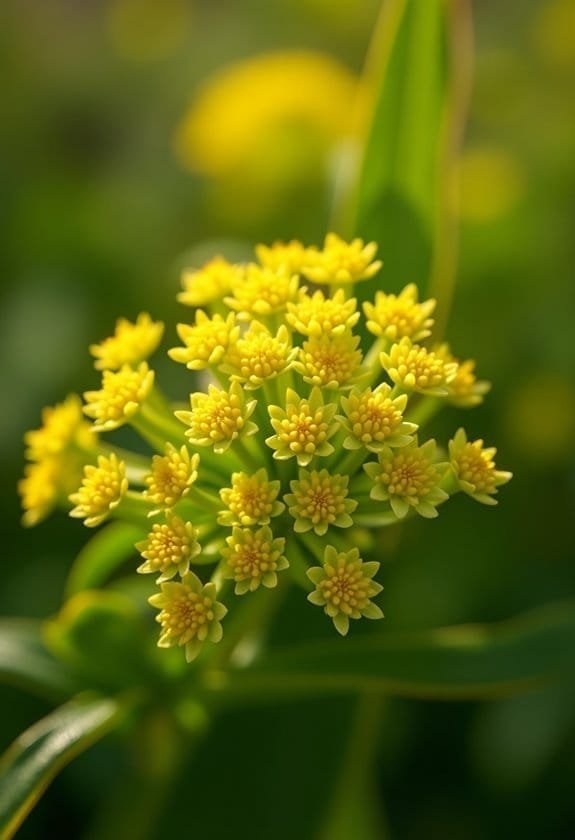
Characterized by its tiny yellow flowers, this plant blooms gracefully from July to October, forming neat, airy umbels that captivate the eye. The delicate structure of these flower clusters resembles a burst of petite suns, adding brightness to the landscape.
In addition, the shrub features hermaphrodite flowers, allowing for self-fertilization, which enhances its viability in diverse habitats. This self-fertility attracts a myriad of pollinators, including wasps and beneficial insects, essential for maintaining ecological balance.
Overview
An evergreen shrub that enriches Mediterranean landscapes, Bupleurum fruticosum, or Shrubby Hare's Ear, stands out with its vibrant yellow flowers and aromatic blue-green foliage. Native to the Mediterranean regions, this remarkable plant blooms from mid-summer to early fall, offering visual splendor throughout its flowering period.
Mature plants typically reach heights of 4 to 6 feet and can spread between 4 to 8 feet wide, making them versatile for various landscape applications, such as hedges, borders, and windbreaks.
Bupleurum fruticosum is known for its drought-tolerant nature, thriving in well-drained soils with full sun exposure. Preferring USDA hardiness zones 6 through 11, it showcases resilience against salt spray, establishing itself as an excellent choice for coastal gardens.
Additionally, it's a low-maintenance plant requiring minimal pruning; however, regular checks can enhance its growth and overall appearance.
The tiny yellow flowers of this shrub not only attract beneficial insects—like bees and butterflies—but also foster ecological balance, promoting biodiversity in garden spaces.
With its aesthetic appeal and practical benefits, Bupleurum fruticosum truly embodies the essence of a harmonious landscape.
Key Features
Bupleurum fruticosum, a robust evergreen shrub, typically reaches heights and widths of 4 to 8 feet, forming dense, attractive hummocks that enhance garden landscapes.
From July to October, it showcases delicate, sulfur yellow flowers in airy umbels, enchanting observers while its leathery, blue-green leaves provide year-round visual appeal.
This plant's adaptability to various sunlight conditions and soil types, coupled with its drought tolerance, positions it as an ideal choice for low-maintenance gardening.
Growth Size
Reaching heights of 4 to 6 feet (1.2 to 1.8 meters), Bupleurum fruticosum presents a robust presence in any garden. This medium-sized evergreen shrub typically matures to a height of approximately 4-5 feet, with a notable width of 5 to 8 feet (1.5 to 2.4 meters) at full spread. Its substantial size makes it an excellent choice for landscape design, providing both structure and visual interest.
Thriving in well-drained soil, this adaptable plant demonstrates remarkable versatility, tolerating varied soil types while showing resilience in conditions that can range from average to rich. Additionally, once established, Bupleurum fruticosum displays notable drought tolerance, making it an ideal option for gardeners in regions prone to water scarcity.
Its hardiness is further emphasized by its suitability for USDA Zones 6a to 10b, allowing it to flourish in climates encompassing mild to moderately cold regions. This adaptability guarantees that gardeners can enjoy its cheerful yellow blooms from mid-summer to early fall, a delightful reward for selecting this vibrant shrub.
Therefore, the growth size and resilience of Bupleurum fruticosum solidify its status as a valuable addition to diverse horticultural settings.
Appearance
With its striking presence, Bupleurum fruticosum, or Shrubby Hare's Ear, captivates the eye in any garden setting. This evergreen shrub reaches a mature height of 4 to 6 feet and can spread impressively, ranging from 4 to 8 feet wide. Its narrow, leathery leaves, characterized by a blue-green hue above and gray undersides, contribute markedly to its aesthetic appeal.
The lustrous green foliage not only sets a vibrant stage but also provides a lush backdrop for its ornamental features. Adding to the visual allure, the shrub produces tiny sulphur yellow flowers, arranged in delicate, airy umbels, bringing life and brightness to the landscape.
Though these blooms grace the plant from July to October, it's the combination of the gleaming foliage with these cheerful flowers that truly enhances its charm. The plant's dense and robust form creates a round and shapely hummock, making it ideal as a specimen plant or privacy screen.
Collectively, these key features not only underscore Bupleurum fruticosum's beauty but also its versatility in diverse garden designs, allowing it to thrive in various landscape settings.
Flowering Season
During the flowering season, Shrubby Hare's Ear comes alive, showcasing its dainty umbels of tiny sulfur yellow flowers from mid-summer to early fall, typically from July to October. Each umbel features a cluster of small chartreuse-yellow flowers that unfold in radiant splendor, forming enchanting groupings that contrast beautifully with the dense blue-green, leathery foliage of the shrub.
This striking visual appeal not only enchants gardeners but also draws beneficial insects, such as bees and butterflies, which are essential for pollination.
The flowering of Bupleurum fruticosum serves multiple ecological purposes. Beyond its ornamental value, these flowers provide an important food source for various wildlife species, promoting biodiversity in the environment.
As the blooming period advances, the shrub begins to develop seeds from August to October, ensuring potential propagation opportunities in the following spring. Hence, this cycle of flowering and seed production contributes considerably to the sustainability of the plant.
With its attractive blossoms and crucial ecological roles, Shrubby Hare's Ear embodies the interconnectedness of nature, enhancing both beauty and functionality within the garden ecosystem.
Growing Requirements
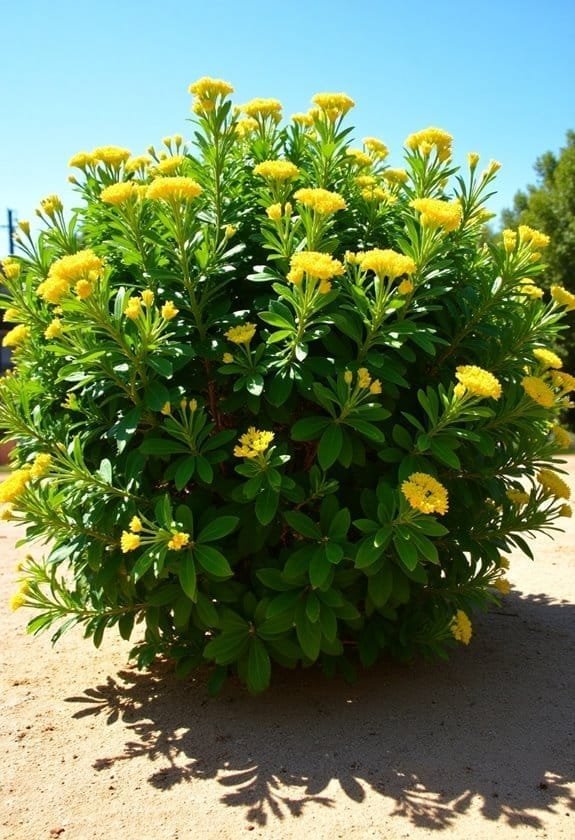
Bupleurum fruticosum flourishes with specific growing requirements that greatly impact its health and longevity.
This hardy shrub thrives in well-drained soils that range from average to rich, basking in full sunlight for ideal growth, while its remarkable drought tolerance makes it a fixture in dry landscapes.
With a cold hardiness of down to -10°F, it adapts well to various conditions, proving itself to be a resilient and low-maintenance addition to gardens.
Light
Light plays an essential role in the growth of Bupleurum fruticosum, as this shrub flourishes best under full sun to mostly sunny conditions. Ideally, it requires a robust 6 to 8 hours of direct sunlight each day. Such ample light enhances the shrub's ability to produce its characteristic sulfur yellow flowers, creating vivid splashes of color from mid-summer to early fall.
When planted in well-drained, dry locations, the shrub truly thrives, demonstrating remarkable drought tolerance, making it an excellent choice for sunny spots, especially in coastal regions.
While Bupleurum fruticosum can tolerate partial shade, those seeking ideal flowering and vigorous growth should prioritize full sun exposure. With sunlight beaming down, the plant not only develops stronger stems but also engages more effectively in photosynthesis, which ultimately sustains its overall health.
Under optimal light conditions, the shrub can adapt beautifully to its environment, becoming a stunning and resilient addition to any garden landscape. Ultimately, providing adequate sunlight is vital for ensuring the vibrant growth and blooming potential of this resilient plant.
Understanding these light requirements is key for any gardener looking to cultivate Bupleurum fruticosum successfully.
Soil
Soil quality plays an essential role in the successful growth of Bupleurum fruticosum. This adaptable shrub flourishes in well-drained soils, demonstrating a remarkable preference for environments that range from average to rich in fertility. While it excels in nutrient-rich settings, Bupleurum fruticosum can also tolerate poor soil conditions without compromising its health, making it an excellent choice for a variety of landscape scenarios.
The shrub thrives in full sun, its growth and flowering potential significantly improved by ample light exposure. When it comes to soil types, Bupleurum fruticosum shows resilience, favoring clay, sandy, or loamy soils, as long as they exhibit good drainage. This characteristic guarantees that moisture doesn't linger, preventing root rot and other moisture-related issues.
Drought tolerance is another remarkable feature of this species. Once established, it requires minimal watering, demonstrating an impressive ability to thrive in dry conditions.
Gardeners seeking a low-maintenance yet visually appealing plant can confidently incorporate Bupleurum fruticosum into their designs, knowing it will effectively complement a sun-drenched garden while adapting to diverse soil conditions.
Water
For ideal growth, sufficient water during the early stages is essential for Bupleurum fruticosum. This shrub thrives in well-drained soil, which plays an important role in preventing waterlogging and root rot, conditions detrimental to its development.
Initially, regular watering will support the plant's health as it establishes itself in its new environment.
Bupleurum fruticosum is remarkably drought tolerant and boasts low water requirements once established. Its adaptability allows it to thrive in various soil types, including sandy and clay variations, provided they drain well.
To guarantee optimal growth, the shrub must receive full sun exposure, a condition that not only promotes healthy development but also reduces overall water needs considerably.
During its formative years, consistent care is vital to set the foundation for a robust plant. Once settled, the shrub's resilience shines, as it can withstand dry spells effectively.
Gardeners should remember that the combination of well-drained soil, full sun, and moderate watering practices will yield vibrant, healthy plants.
With these considerations in mind, Bupleurum fruticosum can become a stunning addition to any garden, thriving even without excessive attention.
Temperature
Temperature plays an essential role in the successful cultivation of Bupleurum fruticosum. This hardy shrub thrives in USDA zones 6a to 11, making it adaptable to diverse temperate climates. It prefers full sun exposure, as this not only enhances its growth but also maximizes its blooming potential, especially during warmer months. Ideally, the shrub enjoys temperatures that allow for optimal photosynthesis, which is significant for its health and robustness.
While Bupleurum fruticosum is naturally resistant to cold, it can tolerate harsh conditions down to -10°F. However, it may require some winter protection, particularly in the colder edge of its hardiness range. Offering a light cover of mulch can insulate the roots, helping to shield them from severe frost.
Once established, this resilient plant becomes drought tolerant, proving valuable in regions experiencing low rainfall or dry spells. Its ability to endure coastal conditions, including salt spray, makes it an excellent choice for seaside gardens.
Pollinator Criteria
Bupleurum fruticosum showcases a vibrant array of hermaphrodite flowers that invite various pollinators, especially wasps, into its intricate floral architecture.
Blooming from July to October, these tiny sulfur yellow flowers cluster into umbels, creating an inviting spectacle for beneficial insects seeking nectar and pollen. This plant's unique pollination method not only fosters successful reproduction but also supports essential ecosystems by enhancing local pollinator populations, showcasing the interconnectedness of floral resources and insect behavior. Additionally, the presence of nectar-rich blooms creates an environment that attracts diverse pollinator species, further benefiting the ecosystem. Furthermore, similar to Prunus avium, Bupleurum fruticosum provides essential habitat for wildlife, contributing to biodiversity in its native environment.
Attracted Pollinators
With its abundant hermaphrodite flowers, Bupleurum fruticosum serves as a crucial resource for various pollinators, including bees and butterflies.
These tiny yellow flowers bloom in airy umbels from July to October, drawing an array of beneficial insects during the peak summer months. The plant's self-fertile nature guarantees a reliable food supply, allowing pollinators to thrive while they seek nectar and pollen.
The dense foliage of Bupleurum fruticosum not only provides nourishment but also creates significant habitats for these pollinator species.
The shelter offered by its sturdy leaves enhances biodiversity, fostering a healthy ecosystem populated by essential insects. Additionally, this plant's adaptability to coastal conditions and its drought tolerance guarantee that pollinators have consistent access to a stable food source, even in challenging environments marked by fluctuating weather patterns. Furthermore, its extended flowering period ensures that pollinators are attracted throughout much of the summer, enhancing their foraging opportunities.
Pollination Method
Effective pollination of Bupleurum fruticosum relies on its unique floral traits that attract specific pollinators, primarily wasps. These hermaphrodite flowers possess both male and female reproductive structures, promoting self-fertilization. Nevertheless, the presence of pollinators enhances the process, guaranteeing genetic diversity.
From June to September, the flowering period attracts a variety of beneficial insects, particularly wasps, which are drawn by the flowers' distinctive characteristics, including their shape and scent. Additionally, Bupleurum fruticosum provides a vital nectar source for other pollinators, such as butterflies and bees.
During this time, pollination plays an essential role in facilitating seed production, which occurs from August to October. Each successful visit from a wasp results in pollen transfer, allowing fertilization to take place. This process not only aids in the reproductive success of Bupleurum fruticosum but also contributes to the overall biodiversity of the ecosystem.
The shrub's ability to invite beneficial insects, including charming butterflies, fosters a vibrant environment that supports sustainable garden ecosystems. Additionally, the presence of pollinators like bumblebees enhances not just seed production but also promotes genetic diversity across various plant species.
Ultimately, the intricate relationship between the flowers and their pollinators guarantees that Bupleurum fruticosum continues to thrive, reinforcing its importance within its native habitat and beyond, thereby illustrating the delicate balance of nature's intricate web.
Care & Maintenance
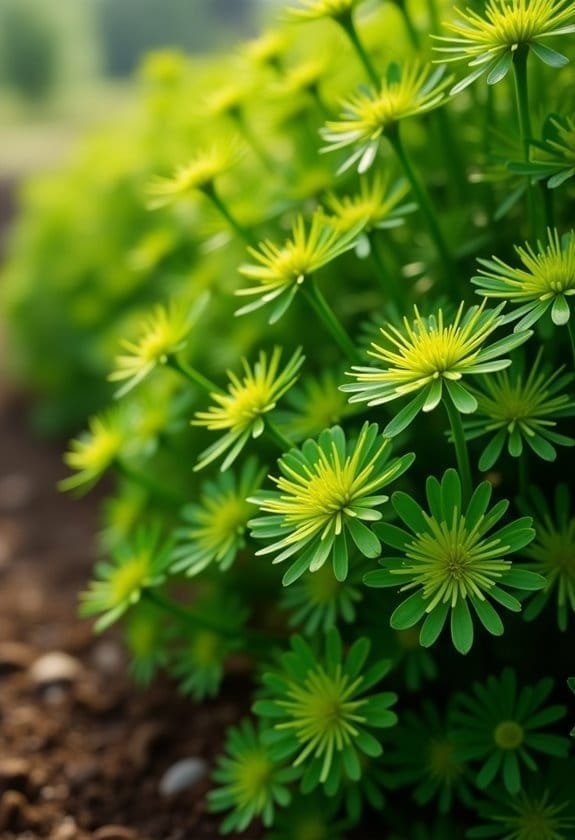
Caring for Bupleurum fruticosum involves understanding its specific environmental needs and ensuring consistent care for ideal growth.
This robust perennial flourishes in sun-drenched areas with well-drained, rich soil, thriving even in drought conditions once established.
Regular maintenance, such as minimal pruning and occasional checks, can greatly enhance its health, ensuring a vibrant display that complements its coastal habitat.
Planting Tips
Planting Bupleurum fruticosum requires attention to a few essential factors to guarantee healthy growth. First, this evergreen shrub thrives best in well-drained soil, which allows excess water to escape, preventing root rot and promoting vigorous development.
Ideally, one should plant it in full sun exposure to enhance ideal growth and encourage prolific flowering from mid-summer to early fall.
Bupleurum fruticosum exhibits remarkable drought tolerance once established, making it a prime candidate for dry sites, particularly in low-water gardens or coastal regions where salt spray may occur.
When preparing for propagation, gardeners can root semi-ripe cuttings in summer or plant seeds in containers during the spring. It's crucial that the soil remains well-drained and devoid of air pockets to facilitate successful rooting.
While this hardy shrub can adapt to relatively poor soils, it truly flourishes in average to rich soils. As a result, consistent checks on soil fertility can be beneficial for maintaining the plant's overall health.
Pruning may not be necessary often, but regular assessments can yield aesthetic improvements, showcasing the beauty of this resilient shrub in any landscape.
Ongoing Care
Once established, Bupleurum fruticosum requires minimal ongoing care, making it an ideal choice for gardeners seeking low-maintenance options. This resilient shrub thrives in conditions with soil of average fertility, demonstrating remarkable adaptability to poor soil situations.
Its ability to tolerate salt spray makes it suitable for coastal areas, while its low water needs additionally simplifies maintenance. In fact, once rooted, it'll need little summer water, requiring only occasional irrigation during prolonged dry periods, particularly in the initial months post-planting.
Regular checks for pruning can considerably enhance the plant's growth and appearance, although Bupleurum fruticosum handles hard pruning effectively if needed. This capability allows gardeners to shape the shrub without concern about damaging it.
Moreover, the plant is almost disease and pest-free, greatly reducing the need for chemical treatments and extensive caregiver intervention. With its self-sufficiency and low maintenance requirements, Bupleurum fruticosum emerges as a reliable choice for novice and seasoned gardeners alike, simultaneously fostering a sense of accomplishment and beauty in their outdoor spaces.
Ultimately, its robust nature simplifies ongoing care, allowing gardeners to enjoy the lush foliage while spending less time on upkeep.
Suggested Companions
Choosing the right companions for Bupleurum fruticosum can greatly enhance the beauty and health of a garden. This enchanting shrub thrives in well-drained soil and exhibits remarkable drought-tolerant characteristics, making it an excellent candidate for dry sites. Pairing it with drought-resistant allies such as lavender, rosemary, and sage nurtures a harmonious environment that shares similar sunlight and soil preferences. Additionally, incorporating ornamental grasses like blue fescue or sand lovegrass adds dynamic texture, beautifully contrasting with the dense foliage of the Shrubby Hare's Ear. Flowering perennials, including coreopsis and yarrow, are perfect companions, as they bloom from summer to fall, attracting vital pollinators while providing visual interest.
To optimize growth conditions, it's important to space Bupleurum fruticosum approximately 1.2 meters (3.9 feet) apart. This spacing facilitates airflow and light penetration, ensuring that all companion plants flourish. Moreover, integrating these companions contributes to the overall garden ecosystem by attracting essential pollinators and fostering biodiversity. Including compatible species like Bell Heather can enhance both beauty and the garden's ecological function. Grouping these shrubs with other evergreen varieties secures not only a balanced landscape structure but also a low-maintenance garden that thrives in like conditions. Choosing wisely among these companion plants not only celebrates biodiversity but also enriches the overall garden experience.
Common Issues
While Bupleurum fruticosum is generally resilient to pests and diseases, gardeners can still face challenges that warrant attention.
Extreme droughts can lead to stress, reducing the shrub's vigor, while poor drainage may result in detrimental root rot, compromising its health.
Pests/Diseases
Bupleurum fruticosum is rarely affected by pests or diseases, making it an excellent choice for low-maintenance gardens. This hardy shrub demonstrates remarkable drought tolerance, which considerably diminishes the likelihood of issues related to over-watering, such as fungal diseases.
Its adaptability to salt spray also affords it a natural resistance to coastal pests that thrive in high-salinity environments, further reducing potential problems.
Although pest issues are uncommon, routine monitoring is still recommended. Prudent gardeners may find it helpful to inspect for the presence of aphids or spider mites, two pests that occasionally target similar shrubs. Regular checks can facilitate early identification of any infestation, allowing for timely intervention even in cases of rare outbreaks.
The minimal maintenance required by Bupleurum fruticosum enhances its appeal, particularly for those seeking resilient, sustainable landscaping options.
Gardeners should appreciate not only its ability to withstand adverse conditions, but also its contribution to a diverse and healthy ecosystem. As a result, the plant serves as a reliable foundation for vibrant, low-water landscapes, offering beauty without the burden of considerable pest or disease concerns.
Solutions
Gardeners facing common issues with Bupleurum fruticosum can implement several effective solutions to secure the shrub thrives. This drought-tolerant plant flourishes in well-drained soils, making it perfect for gardens that experience water scarcity or poor drainage.
To secure healthy growth, gardeners should focus on providing full sun exposure, as insufficient light can hinder flowering and lead to stunted growth.
Propagation through semi-ripe cuttings taken in summer minimizes challenges associated with seed germination variability, providing consistent quality across plants. Once established, Bupleurum fruticosum requires minimal maintenance, allowing gardeners to enjoy its evergreen foliage and bright yellow flowers without frequent intervention.
Regular checks of the shrub can help identify and manage overgrowth, while occasional pruning enhances its visual appeal, addressing any unsightly formations.
This resilient shrub demonstrates robust resistance to most diseases and pests, further solidifying its status as a low-maintenance choice. By implementing these solutions, gardeners can navigate common issues, securing that Bupleurum fruticosum not only survives but thrives, transforming dry landscapes into vibrant displays of nature's resilience.
Are Both Bupleurum Fruticosum and Cucurbita Pepo Suitable for Outdoor Planting?
Yes, both Bupleurum Fruticosum and Cucurbita Pepo are suitable for outdoor planting. Cucurbita pepo benefits nutrition are numerous, as it is a great source of vitamins and minerals. Both plants can thrive in outdoor conditions and are a great addition to any garden or landscape.
Summary
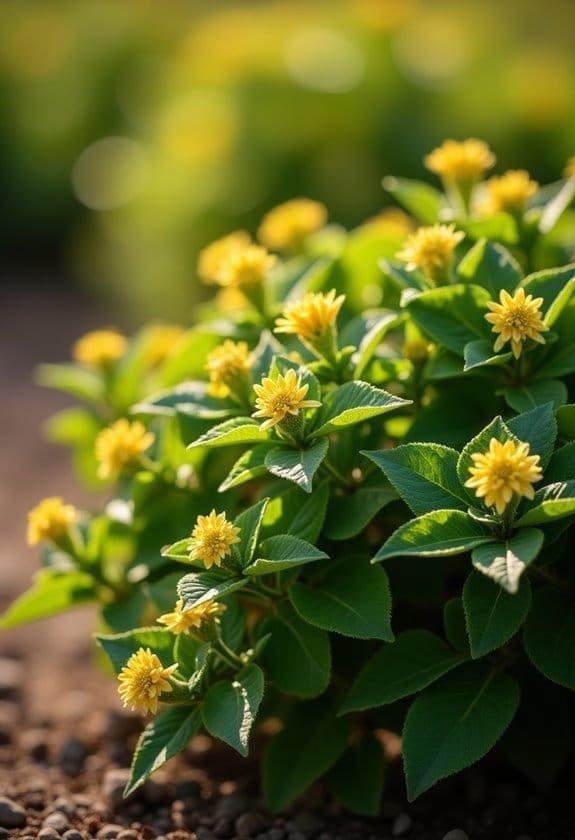
Known for its adaptability and minimal maintenance requirements, Bupleurum fruticosum, or Shrubby Hare's Ear, is an evergreen shrub that thrives in a variety of conditions. This drought-tolerant plant reaches an impressive height of 4 to 6 feet, showcasing fragrant blue-green leaves that provide a lush backdrop.
From July to October, tiny sulfur-yellow flowers emerge, adding splashes of color that attract beneficial insects, thereby enriching the local ecosystem.
Resistant to pests and diseases, Bupleurum fruticosum requires minimal care, allowing gardeners to enjoy its beauty without extensive effort. Its salt spray resistance makes it particularly well-suited for coastal gardening, where other plants might struggle.
In addition, this resilient shrub can effectively function as a privacy screen, or hedge, providing both visual appeal and seclusion in outdoor spaces.
The propagation methods for Bupleurum fruticosum include sowing seeds in containers during spring or taking semi-ripe cuttings in summer.
With its ability to tolerate poor soils and minimal care, Bupleurum fruticosum is an exemplary choice for diverse landscaping needs, offering both aesthetic charm and pragmatic solutions for gardens.