Callicarpa bodinieri var. giraldii, known as Beautyberry, is a medium-sized deciduous shrub, reaching heights of 4 to 6 feet. This visually enchanting plant boasts striking violet-purple berries that appear in the fall, while its lilac flowers bloom from June to August, attracting beneficial pollinators. Thriving in full sun to part shade, it prefers well-drained, nutrient-rich soil with a pH between 5.5 and 7.0. Additionally, it's hardy in USDA Zones 5 to 8, showcasing resilience against harsh conditions. With minimal care requirements, this shrub offers environmental benefits that support wildlife and promote biodiversity, and further insights await those intrigued by its unique features.
Main Points
- Beautyberry (Callicarpa bodinieri var. giraldii) is a deciduous shrub renowned for its striking violet-purple berries and lilac flowers.
- This medium-sized shrub grows 4 to 6 feet tall, thriving in full sun to part shade with well-drained, nutrient-rich soil.
- Native to Southern China, it is hardy in USDA Zones 5 to 8 and can tolerate temperatures as low as -10°F.
- The plant attracts pollinators like bees and butterflies, while its berries provide food for wildlife and can be used in jellies and wines.
- Minimal maintenance is required; occasional pruning, watering, and mulch applications promote healthy growth and vibrant aesthetics.
Introduction
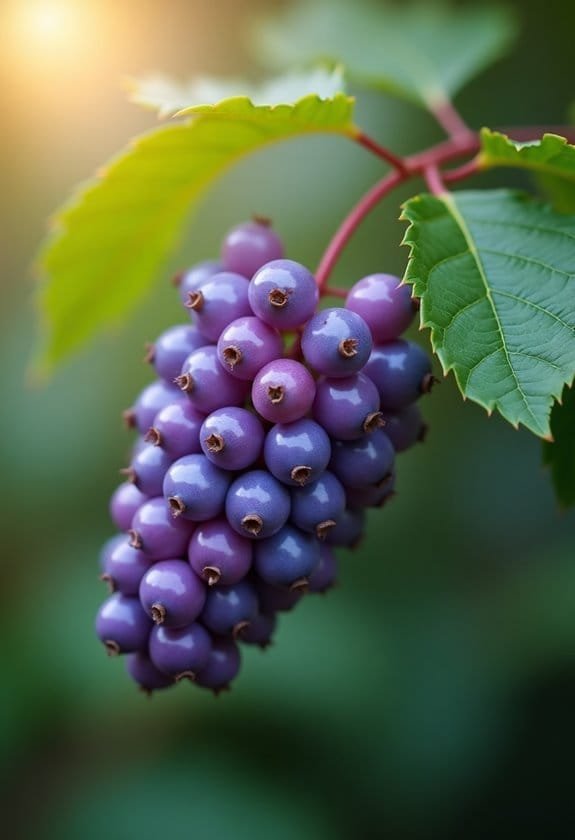
Callicarpa bodinieri var. giraldii, widely recognized as Beautyberry, stands out as a medium-sized deciduous shrub, gracefully reaching heights of 4 to 6 feet.
With its striking violet-purple berries emerging in the fall and enchanting lilac flowers blooming from June to August, this remarkable species enhances any garden.
Its ornamental value, coupled with low maintenance requirements, positions Beautyberry as a favored choice among gardeners and nature enthusiasts alike.
Common Name
During the fall season, the "Bodinier Beautyberry" or "Profusion Beautyberry" captivates garden enthusiasts with its vibrant display of violet-purple berries. This common cultivar of Callicarpa bodinieri var. giraldii stands out for its exceptional ornamental value, enhanced by the striking color of its berries.
Named in honor of Emile Maire Bodinier, a 19th-century French missionary and botanist, it carries a legacy of botanical exploration and appreciation.
The term "Beautyberry" aptly describes the plant's alluring fruit, which appears in clumps along the branches, creating a delightful contrast against the foliage. The Royal Horticultural Society has even recognized this striking variety with its prestigious Award of Garden Merit, underscoring its desirability in landscape design.
Phonetically, Callicarpa is pronounced "kal-ee-KAR-puh," deriving from Greek and translating to "beautiful fruit." This linguistic heritage adds depth to its identity, reflecting the aesthetic charm that these berries impute to any garden setting.
In providing both beauty and a rich botanical history, the Bodinier Beautyberry serves as a splendid addition to various outdoor spaces, drawing admiration from both novice and seasoned gardeners alike.
Scientific Name
Understanding the scientific name of the Beautyberry opens a window into its botanical heritage. Officially known as Callicarpa bodinieri var. giraldii, this classification highlights the intricate connections between species, names, and geographical origins. The genus name, Callicarpa, derives from Greek, meaning "beautiful fruit," aptly describing the striking purple berries that characterize these shrubs.
Additionally, the species name bodinieri pays tribute to Emile Maire Bodinier, a 19th-century French missionary and botanist renowned for his plant collections in China. This beautyberry was first described by botanist Augustin Abel Hector Léveillé in 1911, placing the plant within a historical botanical context.
Indigenous to Southern China and Indochina, Callicarpa bodinieri var. giraldii flourishes in sunny environments with well-drained soils, demonstrating a preference for conditions that promote vigorous growth.
Among its variants, 'Profusion' stands out due to its remarkable display of dark violet fruits and pale pink flowers. This sophisticated plant embodies a rich tapestry of cultural and natural history, reflecting the beauty and complexity of the botanical world. Each name carries a story, inviting further exploration into the fascinating life of the Beautyberry.
Overview
The Beautyberry, scientifically known as Callicarpa bodinieri var. giraldii, is a striking addition to any garden, known for its eye-catching violet-purple berries and lush green foliage.
This medium-sized deciduous shrub typically reaches heights of 4 to 6 feet, making it a fascinating focal point throughout the seasons. The vibrant berries, which ripen in the fall, create a stunning contrast against the bright green leaves, enhancing the garden's aesthetics.
Thriving in full sun to part shade, the Beautyberry prefers well-drained soil that ranges from average to fertile. When given ideal sun exposure, the shrub demonstrates enhanced flowering and prolific berry production.
The 'Profusion' cultivar has gained acclaim, recognized with the Royal Horticultural Society's Award of Garden Merit for its striking lilac flowers and abundant berry clusters.
In terms of maintenance, this shrub is relatively low-maintenance, exhibiting resistance to pests and diseases. Minimal pruning is required—primarily the removal of older twiggy growth—to maintain its vigor.
Native to Southern China, the genus name Callicarpa translates to "beautiful fruit" in Greek, aptly representing the shrub's visually striking features that promise to delight any gardener.
Key Features
Beautyberry, or Callicarpa bodinieri var. giraldii, typically reaches a growth height of 4 to 6 feet, creating a lush visual presence in gardens.
Its lanceolate leaves, adorned with a purplish hue when young and shifting to rosy-pink in the fall, enhance its ornamental appeal, while lilac-colored flowers bloom from June to August, leading to clusters of striking violet-purple berries by September.
This enchanting sequence of appearance guarantees that Beautyberry remains a vibrant fixture in the landscape, offering both aesthetic charm and seasonal interest.
Growth Size
With an upright and bushy growth habit, Callicarpa bodinieri var. giraldii typically matures to a height and width of 4-6 feet (120-180 cm). This deciduous shrub maintains an upright habit that adds structure to garden landscapes. Its growth pattern makes it ideal for use as a focal point or as part of a mixed border.
As it develops, the width of the shrub generally remains slightly less than its height, creating a balanced appearance conducive to smaller spaces. The foliage consists of lanceolate leaves measuring between 5-12 cm, which contribute to its attractive silhouette and change color throughout the seasons. Young leaves display a delicate purplish hue, shifting to a charming rosy-pink in the fall, enriching the visual appeal.
Certain cultivars, such as 'Profusion,' can reach impressive heights of up to 10 feet, showcasing a vigorous growth tendency that can captivate attention. These specimens, adorned with clusters of violet-purple berries maturing by September, persist into early winter, providing not only beauty but also critical nourishment for birds during colder months.
Therefore, Callicarpa bodinieri var. giraldii serves both aesthetic and ecological purposes in landscaped settings.
Appearance
Known for its striking visual appeal, Callicarpa bodinieri var. giraldii showcases clusters of vibrant violet-purple berries that develop by September and can linger into the winter months. This stunning shrub, standing between 6 and 10 feet tall, boasts a bushy, upright growth habit that adds structure and height to any garden.
The lanceolate leaves, measuring 5 to 12 centimeters, display a blue-green hue on their upper surfaces, shifting to a purplish tint during their youth, and finally transforming into rosy-pink in the fall.
Throughout the summer, the shrub enchants onlookers with its clusters of delicate pale pink flowers. These lilac-colored blooms emerge between June and August, harmonizing beautifully with the subsequent berries and contributing to the plant's overall aesthetic.
Resembling beads, the berries enhance the visual dynamics of the garden while attracting various wildlife, particularly birds, which revel in this delightful food source.
The seasonally changing hues—from vibrant greens to striking purples and rosy pinks—create a lively tapestry, making Callicarpa bodinieri var. giraldii a centerpiece in landscape design, celebrated for both its beauty and ecological significance.
Flowering Season
During the flowering season, Callicarpa bodinieri var. giraldii captivates observers with its delicate clusters of lilac-colored flowers that bloom from June to August. Each small flower, which emerges from new growth, plays a crucial role in the ecosystem by attracting pollinators such as bees and butterflies, enhancing the garden's biodiversity.
This vibrant interaction fosters a lively atmosphere, showcasing nature's interconnected beauty.
As the flowers begin to fade, they pave the way for the development of vibrant violet-purple berries, which masterfully ripen by September. These striking berries not only serve as a visual delight but also provide essential sustenance for various bird species during the colder months.
As a result, the flowering season isn't just about the blooms; it's a precursor to abundant fruit production for seasons to come.
Gardens adorned with this beautyberry plant enjoy significant seasonal interest, particularly in fall and early winter when the purple berries contrast beautifully against the foliage.
This interplay of flowering and fruiting leads to a richly textured landscape, demonstrating how Callicarpa bodinieri var. giraldii can transform any space into a living tapestry of color and life throughout the year.
Growing Requirements
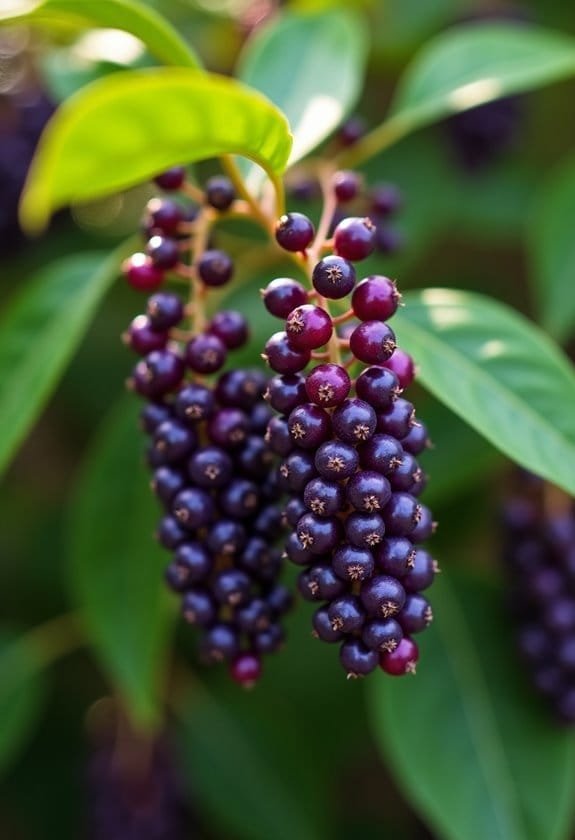
Callicarpa bodinieri var. giraldii, commonly known as Beautyberry, flourishes in a spectrum of light conditions, favoring full sun to part shade for maximum blooming and fruiting potential.
This adaptable shrub thrives in average, well-drained soils, particularly those rich in nutrients, which underscores the significance of suitable soil composition in promoting robust growth.
With a hardiness range extending from USDA Zones 5 to 8, this resilient plant withstands temperatures as low as -10°F, making it an excellent choice for diverse climatic conditions.
Light
Light plays an essential role in the thriving of Callicarpa bodinieri var. giraldii. This beautiful shrub flourishes best in full sun; a minimum of six hours of direct sunlight per day promotes vigorous growth, spectacular flowering, and abundant berry production.
Under these ideal conditions, its vibrant foliage exhibits striking colors, especially in the fall when the leaves shift to rosy-pink hues.
While it can tolerate partial shade, excessive darkness can result in unfortunate consequences. A lack of sufficient sunlight often leads to leggy growth and a noticeable decrease in berry yields, diminishing the plant's visual appeal and ecological contribution.
The importance of full sun for this variety can't be overstated; it acts not only as a catalyst for growth but also as a key component of the shrub's seasonal beauty.
Gardeners should guarantee that Callicarpa bodinieri var. giraldii is positioned in a location that maximizes sun exposure.
This carefully considered placement greatly enhances overall health and liveliness, ultimately creating an enchanting landscape feature that enlivens any garden space with its mesmerizing colors and textures.
Soil
Ideal growth of Callicarpa bodinieri var. giraldii hinges on the quality of soil it's planted in. This delightful shrub thrives best in well-drained, loamy soil that brims with organic matter, essential for supporting its perfect growth and prolific fruit production.
While it demonstrates adaptability to various soil types, Callicarpa truly flourishes in fertile soils characterized by good drainage, which prevents the detrimental effects of waterlogging.
The ideal soil pH for this species ranges between 5.5 and 7.0, allowing it to comfortably accommodate a diverse array of planting environments, from urban gardens to natural landscapes.
Enhancing soil quality can be achieved through regular applications of mulch, which not only improves moisture retention but also effectively suppresses unwanted weeds encroaching upon the Beautyberry's space.
Additionally, conducting soil tests is strongly advised, as they can illuminate specific amendments necessary for achieving the best growing conditions for these magnificent shrubs.
Water
Regularly providing appropriate water to Callicarpa bodinieri var. giraldii is crucial for its health and vigor. This remarkable shrub thrives best with intermittent watering, guaranteeing the soil maintains a balance that's adequately moist, yet never waterlogged. Excessive moisture can lead to detrimental root rot, jeopardizing the plant's stability and growth.
During its active growing season, particularly as new growth emerges, monitoring soil moisture levels becomes critical. By regularly checking, gardeners can provide the necessary hydration, particularly during prolonged dry periods or drought conditions. This diligent water management not only supports the beautyberry's overall vigor but also optimizes fruit production, making the shrub a stunning addition to any landscape.
Additionally, implementing a watering strategy that focuses on well-drained soil conditions is crucial. This environment promotes healthy root development, allowing the plant to access essential nutrients with ease.
Temperature
Temperature plays an essential role in the growth and health of Callicarpa bodinieri var. giraldii, commonly known as beautyberry. This resilient shrub demonstrates hardiness in USDA Zones 5 to 8, withstanding temperatures as low as -10°F. Such tolerance allows it to thrive through the various seasonal changes, welcoming the beauty of fall and early winter.
Beautyberry flourishes under full sun, which greatly enhances its flowering and fruit production capabilities. As the plant matures in the vibrant hues of late fall, its fruits develop into dark violet clusters that stand out dramatically against the landscape.
The French missionary who introduced this plant to Europe knew of its ornamental value, and today, it holds the Award of Garden Merit from the Royal Horticultural Society, reflecting its appeal and reliability in gardens.
While giraldii Profusion can tolerate various soil types, ideal growth occurs in average to fertile soils with proper drainage. However, inadequate sunlight may lead to leggy growth and diminished vigor.
Consequently, by respecting beautyberry's temperature and light preferences, gardeners guarantee a robust, fruitful display that delights in both fall and early winter landscapes.
Pollinator Criteria
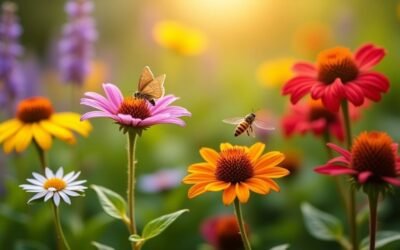
Beautyberry (Callicarpa bodinieri var. giraldii) draws an impressive array of pollinators, including various species of bees and butterflies, thanks to its rich blooming period from June to August.
These pollinators are crucial, as their interaction with the lilac-hued flowers guarantees successful cross-pollination, enhancing fruit production and fostering a diverse ecosystem.
Attracted Pollinators
The vibrant summer blooms of Callicarpa bodinieri var. giraldii attract a variety of pollinators, including bees and butterflies, thanks to their lilac-colored flowers packed with nectar and pollen.
These blooms, typically appearing from mid-summer to early fall, not only provide essential resources for these beneficial insects but also facilitate the effective cross-pollination necessary for fruit production. When planted in groups, Beautyberry shrubs create a bountiful environment, enhancing the attraction for visitors.
Moreover, as lilac flowers give way to striking violet-purple berries, various bird species flock to garden landscapes, seeking out this nourishing food source.
Ideal growth occurs in sunny locations, which greatly increases flowering abundance, thereby maximizing nectar availability for pollinators throughout the summer months. The shrub's resilient nature against pests and diseases guarantees that it requires minimal maintenance, making it an excellent choice for creating pollinator-friendly habitats.
Incorporating Beautyberry in garden designs encourages biodiversity, supporting both pollinator populations and avian visitors.
This harmonious interplay not only beautifies outdoor spaces but also underscores the ecological significance of such plants, fostering an essential connection between flora and fauna.
Pollination Method
Pollinators play an indispensable role in the fruit production of *Callicarpa bodinieri var. giraldii*, as they facilitate necessary cross-pollination between adjacent plants. This species thrives best when multiple individuals are planted together, maximizing pollinator activity and, consequently, pollination efficiency.
The lilac-colored flowers, blooming from June to August, attract a diverse array of insects, including bees and butterflies, which are crucial in transferring pollen. When pollinators visit the flowers, they gather nectar while inadvertently brushing against the pollen-producing structures. This interaction greatly enhances the likelihood of pollen movement between flowers, fostering genetic diversity in the resulting berries.
The availability of nectar increases with the presence of clusters of Beautyberry, enticing more frequent visits from these beneficial insects. Furthermore, maintaining a diverse garden habitat not only supports the health of pollinators but also enhances the overall fruit set of Beautyberry, ensuring robust violet-purple berry production.
Consequently, adept pollination through the concerted efforts of insects directly influences fruit yield, thereby underscoring the intricate connections between plant reproductive strategies and ecological balance.
Care & Maintenance
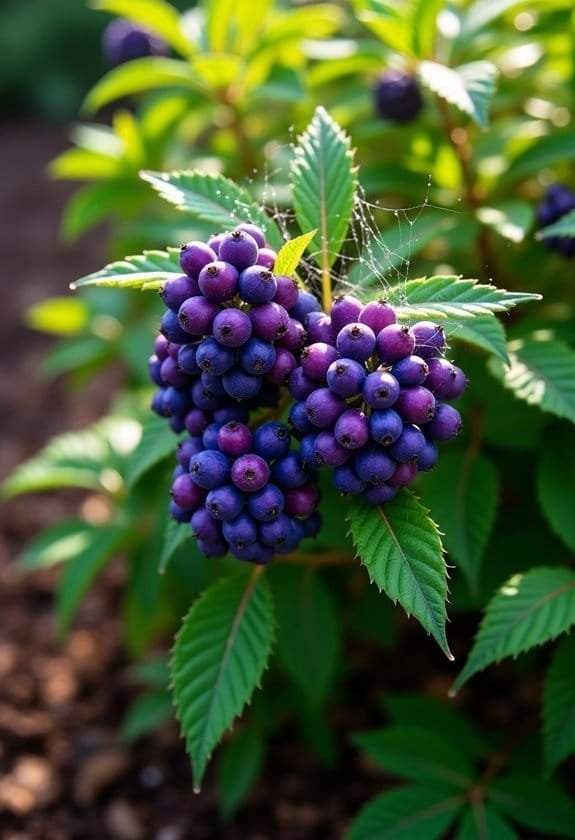
In caring for Callicarpa bodinieri var. giraldii, understanding its requirements is essential for ideal growth.
Proper planting in well-drained, fertile soil with full sun guarantees vibrant flowering and abundant fruit, while ongoing care involves minimal pruning and strategic watering to enhance resilience.
Additionally, selecting companion plants that promote cross-pollination can create a lush landscape, maximizing the shrub's visual and ecological benefits.
Planting Tips
When choosing a spot for Callicarpa bodinieri var. giraldii, full sun is perfect for maximizing flowering and fruiting. This resilient shrub can also thrive in part shade, though full sun promotes fuller, richer blooms and denser fruiting.
The planting arrangement should consider fertile, medium, well-drained soil, as Beautyberry performs best under such conditions—overly wet or compacted soil can hinder growth. It's essential to prepare the soil properly; incorporate organic matter to enhance fertility and drainage.
Spacing is important; group multiple plants together to facilitate cross-pollination, which greatly boosts fruit production, resulting in a visually stunning display of color. Ideally, place them about 3 to 4 feet apart to guarantee adequate air circulation, promoting healthy growth without competition for resources.
Though minimal pruning is required, late winter or early spring is a suitable time for removing twiggy growth, stimulating vigor and new growth that translates into consistent fruiting in the upcoming season.
Regular monitoring for pests, while often unnecessary due to Beautyberry's resilience, can prevent possible infestations, safeguarding a thriving, abundant garden.
Ongoing Care
Ongoing care for Callicarpa bodinieri var. giraldii is straightforward and demands minimal effort, making this shrub an excellent choice for gardeners seeking low-maintenance options.
This striking beautyberry thrives best in full sun to part shade, ideally nestled in well-drained, fertile soil to guarantee robust growth and fruit production. While this resilient shrub is rarely troubled by pests or diseases, seasonal monitoring remains essential; observations can catch potential issues like leaf spot and black mold early, enabling effective management.
Pruning occurs during late winter or early spring, a practice that not only fosters vigorous new growth but also enhances blooming and fruiting during the growing season.
Gardeners need only remove older, twiggy growth to maintain vigor, keeping the shrub healthy and productive. Though minimal in care requirements, maintaining a watchful eye allows one to appreciate the full splendor of this shrub as it showcases its brilliant berries.
Regular checks empower gardeners to act swiftly against any emerging threats, preserving the beauty and vitality of Callicarpa bodinieri var. giraldii in their landscape. With a little vigilance, this enchanting shrub can be a long-lasting addition to any garden, enchanting all who encounter it.
Suggested Companions
What plants can enhance the beauty and utility of Callicarpa bodinieri var. giraldii in a garden? Companion considerations should revolve around selecting plants that thrive in similar environments, such as Salal (Gaultheria shallon) and Oregon Grape (Mahonia aquifolium), both of which prefer partial shade and well-drained soil.
These companions align in their water needs; while Beautyberry enjoys intermittent watering, adjacent undergrowth species often benefit from a more consistent moisture level.
Incorporating flowering plants like Red Flowering Currant (Ribes sanguineum) not only enriches the garden aesthetically but also adds functionality, as both species draw bees and butterflies, enhancing pollination opportunities.
For the best results, grouping Beautyberry with other berry-producing shrubs promotes cross-pollination, considerably increasing fruit yield.
However, gardeners must consider the growth habits and sizes of these companion plants to avoid overcrowding. Given that Beautyberry can reach heights of 8 to 10 feet, shorter shrubs or perennials should be strategically placed around it.
This careful planning fosters a thriving ecosystem, ensuring that each plant flourishes harmoniously while showcasing the unique charm of Callicarpa bodinieri var. giraldii.
Common Issues
While Callicarpa bodinieri var. giraldii is generally a hardy choice, it isn't without its challenges.
Gardeners might observe issues such as leggy growth resulting from insufficient sunlight, alongside occasional ailments like leaf spot and black mold, which can mar the plant's appearance and robustness.
Implementing preventive strategies, including proper pruning and regular inspections, fosters a vibrant, healthy shrub, ensuring its ornamental beauty flourishes throughout the growing season.
Pests/Diseases
Beautyberry (Callicarpa bodinieri var. giraldii) is typically resilient and affected by few pests and diseases, making it a low-maintenance choice for gardeners. However, it may occasionally face issues like leaf spot and black mold, both manageable through diligent care and attention.
The leaves may display unsightly spots, affecting the shrub's aesthetic appeal, yet these concerns remain largely minor.
Integrated Pest Management (IPM) techniques are highly encouraged as they're instrumental in effectively monitoring and controlling potential pest issues. By regularly inspecting the plants for any signs of distress, gardeners can intervene before problems escalate.
Although the fruit of beautyberry isn't poisonous, wildlife often avoids it due to its bitter taste, meaning that the shrub generally suffers less from animal predation compared to other species.
Regular monitoring and maintenance provide significant benefits, as beautyberry typically experiences fewer health complications than many ornamental shrubs.
Consistent care allows for rapid identification of irregularities, promoting a vibrant and healthy plant. Through proactive pest management strategies, gardeners can enjoy the beautyberry's stunning purple berries and lush foliage while minimizing the risk of infestations or diseases.
Solutions
To maintain the health and beauty of Callicarpa bodinieri var. giraldii, proactive care strategies are essential. This robust shrub, generally low maintenance and resilient to pests, thrives best when planted in areas that receive full sun to part shade, as excessive shade can lead to leggy growth.
Sustainable practices, such as regular pruning, considerably enhance vigor; removing older twiggy branches during late winter stimulates blooming on new wood, ensuring vibrant foliage and fruitful displays.
Gardeners should monitor the beautyberry for early signs of leaf spot and black mold, as vigilance can prevent potential disease issues.
While deer usually avoid this plant, integrating beautyberry into small groupings promotes cross-pollination, resulting in a rich bounty of striking violet-purple berries.
Can Borage and Beautyberry be Planted Together in a Garden?
Yes, borage, a medicinal herb with benefits, and beautyberry can be planted together in a garden. Beautyberry’s vibrant purple berries and borage’s bright blue flowers can create a beautiful and visually interesting combination. Plus, borage can attract pollinators, which can benefit the beautyberry plant as well.
Summary
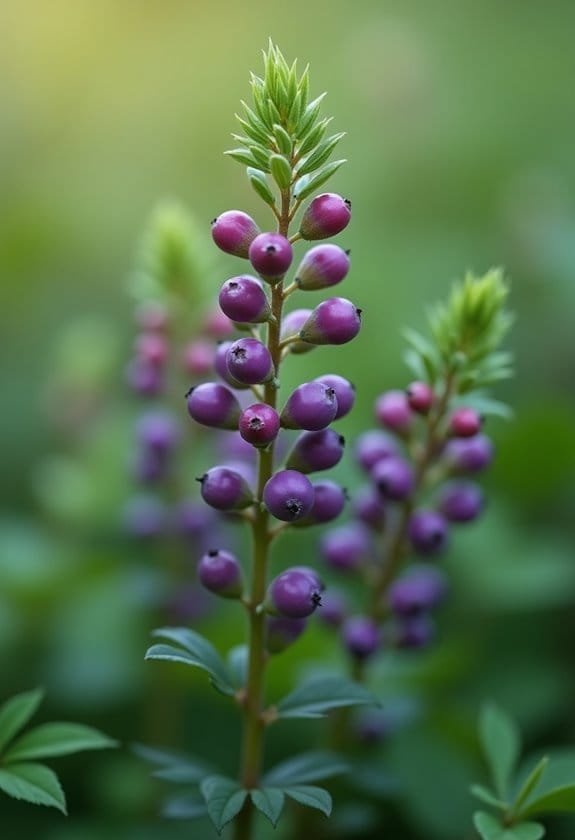
Often admired for its vibrant fall display, Callicarpa bodinieri var. giraldii, or Beautyberry, stands out as a medium-sized deciduous shrub, typically reaching heights of 4 to 6 feet.
Known for its stunning violet-purple berries that emerge in autumn and lilac flowers that bloom in summer, this resilient plant establishes itself as an aesthetic and practical addition to gardens. Thriving in full sun to part shade, it prefers well-drained, fertile soil and is hardy in USDA Zones 5 to 8.
Among its various cultivars, 'Profusion' stands out for producing an abundance of pale pink flowers and dark violet berries, providing exceptional visual interest in landscaped settings. However, Beautyberry's allure extends beyond mere aesthetics; its berries, though often overlooked, have culinary uses, being edible and sometimes used in jellies or wines.
With a low maintenance profile, it rarely suffers from pests or diseases and requires minimal pruning. When planted in groups, it enhances cross-pollination, ensuring a robust display of berries.
Ultimately, Beautyberry not only adds color to landscapes but also invites the curious to explore its understated culinary possibilities.