Campanula glomerata, or Clustered Bellflower, is an enchanting herbaceous perennial native to the North Temperate Zone, showcasing its striking blooms from May to July. It typically grows between 6 to 24 inches tall and features clustered flowers in hues of violet-blue and white. Preferring well-drained, nutrient-rich soil, it flourishes in USDA zones 3-8 under full sun or partial shade. This plant considerably contributes to biodiversity, attracting essential pollinators like bees and butterflies with its bell-shaped flowers. To guarantee thriving growth, consistent moisture and proper care are crucial, illustrating its importance in both aesthetic landscapes and ecological systems. There's much more to explore about this enchanting species.
Main Points
- Campanula glomerata, or Clustered Bellflower, features dense flower clusters in colors ranging from violet-blue to white and blooms from May to July.
- This herbaceous perennial thrives in USDA zones 3-8, preferring well-drained soil and consistent moisture without waterlogging.
- It attracts various pollinators like bees and butterflies, enhancing local biodiversity and supporting ecosystem health.
- Regular care includes deadheading, consistent watering, and monitoring for slugs to prevent damage and encourage thriving plants.
- Companion planting with species like sage and coreopsis can enhance garden aesthetics and benefit pollinator populations.
Introduction
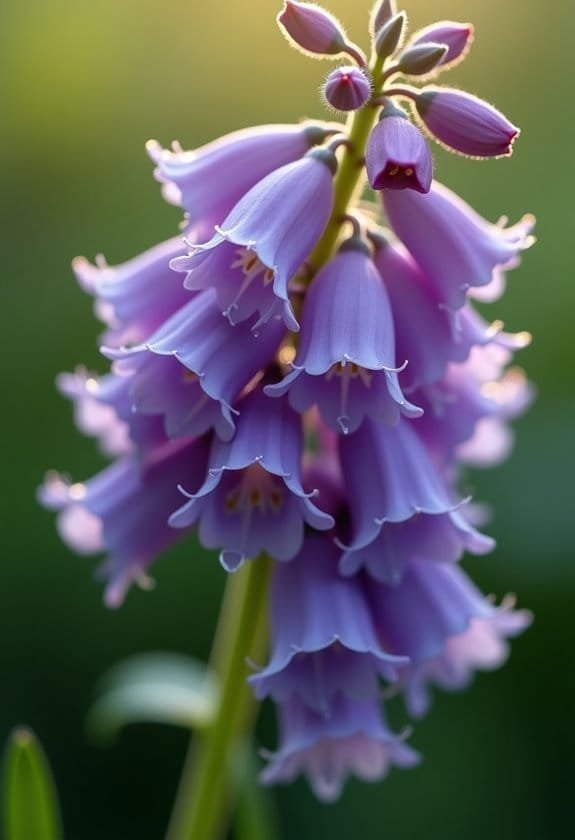
Known scientifically as Campanula glomerata, the Clustered Bellflower boasts an enchanting presence in gardens and natural landscapes alike.
This perennial herbaceous plant thrives in a range of environments, showcasing clusters of vibrant bell-shaped flowers that can measure about one inch across, creating a stunning visual display.
With its ability to attract pollinators and adaptability to various garden settings, this species represents a delightful and beneficial addition to any outdoor space. Additionally, it is known for supports local ecosystems by attracting vital pollinators like bees and butterflies, enhancing overall biodiversity.
Common Name
The Clustered Bellflower, scientifically classified as Campanula glomerata, captivates gardeners with its unique bell-shaped flowers that bloom in tight clusters on sturdy stems.
This perennial plant boasts vibrant, tubular blossoms that stand out in North American gardens, making it a popular choice for landscapes and borders. The name "Clustered Bellflower" aptly describes both the arrangement of its flowers and its robust growth habit, which can thrive in a variety of conditions.
Additionally, the plant is sometimes referred to as Danes Blood, a nod to its rich history in European folklore, where it was believed to possess medicinal properties. Gardeners often recognize it simply as Bellflower, underscoring the distinctive shape of its blooms.
Phonetically pronounced as kam-PAN-yoo-lah glo-mer-AY-tah, this common name not only facilitates identification but also enhances communication among gardening enthusiasts.
In essence, the Clustered Bellflower intertwines beauty and tradition, drawing admirers with its clusters of delicate flowers and its storied past.
As a versatile perennial, it offers both charm and historical intrigue, making it a cherished jewel in any garden setting.
Scientific Name
In exploring the Clustered Bellflower further, one can't overlook its scientific classification. The formal designation, Campanula glomerata, encapsulates essential information about the plant. The genus name, "Campanula," originates from the Latin word for "small bell," aptly reflecting the unique, bell-shaped flowers that adorn this vibrant species.
Furthermore, the specific epithet "glomerata" highlights a defining characteristic of the plant: the compact clusters of flowers that bloom atop the stems, creating stunning visual displays in the wild.
This remarkable flower is a member of the Campanulaceae family, which includes various types of bellflowers and closely related species, all sharing similar morphological traits.
Campanula glomerata itself is native to the North Temperate Zone of Eurasia, thriving in diverse habitats, from sun-drenched meadows to the shaded edges of woodlands. Its adaptability across different environments results in approximately 15 recognized subspecies, each exhibiting unique traits tailored to their specific geographic locales.
This scientific name not only aids in identifying the Clustered Bellflower within botanical studies, but also emphasizes the fascinating evolutionary lineage and ecological relationships inherent in its native habitats.
Overview
Clustered Bellflower, or Campanula glomerata, stands out as a vibrant perennial that's well-suited for gardens and natural landscapes alike. This hardy perennial, native to Europe and western Asia, flourishes in meadows and rocky slopes, showcasing its remarkable adaptability.
Typically reaching heights between 6 to 24 inches, it produces showy violet-blue to white bell-shaped flowers, often blooming in clusters that can consist of up to 15 blossoms.
Campanula glomerata thrives in a range of USDA hardiness zones from 3 to 8, preferring conditions that include full sun to partial shade, as well as well-drained soils for ideal growth.
This multifaceted plant not only enhances aesthetic appeal but also plays an essential role in supporting local ecosystems, as it attracts pollinators such as bees, butterflies, and hummingbirds. Additionally, its growth habits ensure that it can effectively compete with ground cover plants for space, similar to Ajuga reptans, promoting vibrant biodiversity.
In addition, its self-seeding nature provides opportunities for natural expansion, seamlessly integrating itself into garden designs. As a result, it proves to be an excellent choice for borders and rock gardens, ensuring a robust and dynamic display that persists across seasons.
Key Features
Clustered Bellflower, or Campanula glomerata, stands out for its impressive growth size and distinct appearance.
Reaching heights of 6-24 inches and widths of 12-36 inches, it features striking bell-shaped flowers that bloom in vibrant clusters during the warmer months of May through July.
This combination of size, color, and flowering season makes it an enchanting addition to any garden, enhancing both aesthetic appeal and biodiversity.
Growth Size
How does the Campanula glomerata stand out in a garden? This remarkable perennial boasts a growth size that captures attention, typically reaching a height of 6 to 24 inches (15 to 60 cm) and spreading between 12 to 36 inches (30 to 90 cm) wide.
Its sturdy leafy stems provide support for dense clusters of enchanting bell-shaped flowers, with each stem showcasing up to 15 blooms that range in size from 1 to 3 inches (2.5 to 7.5 cm) across. The flowers display a spectrum of colors, from vibrant violet-blue to pristine white, contributing to the plant's visual appeal.
Additionally, the foliage forms a striking rosette at the base, consisting of ovate to lance-shaped leaves that enhance its dense appearance.
Characterized by a vigorous growth habit, Campanula glomerata can naturally propagate through rhizomes, allowing it to create extensive colonies under favorable conditions. This adaptation not only enriches garden spaces but also invites biodiversity, truly making the clustered bellflower an exceptional choice for those looking to enhance their outdoor landscapes.
Appearance
The Campanula glomerata presents a striking visual impact in any garden with its vibrant bell-shaped flowers and lush foliage. The clusters of flowers, mainly violet-blue, can measure up to an inch in diameter and often bloom together in groups of up to 15 atop sturdy stems. Reaching heights of 6 to 24 inches, these perennials thrive in mid-border areas, where their impressive stature and colorful display can be fully appreciated.
The plant's lance-shaped leaves, which are toothed and may also exhibit an ovate form, contribute to its overall allure, forming a rosette at the base and supporting the dense foliage that surrounds the vibrant flower clusters.
Blooms occur during the flowering period from May through July, showcasing a visual symphony that captivates any observer.
Known for its vigorous growth, the Campanula glomerata can naturalize through rhizomes, leading to the formation of extensive colonies under favorable conditions. This ability to multiply efficiently not only enhances its appeal but also guarantees an eye-catching display year after year, helping to create lush, colorful gardens that delight the senses.
Flowering Season
During the flowering season, typically spanning from late spring to mid-summer, Campanula glomerata truly comes to life. This vibrant goodness graces gardens from May through July, enchanting onlookers with its striking bell-shaped blooms.
Each flower measures about 1-3 inches wide and forms dense clusters, sometimes containing up to 15 individual flowers per cluster. These formations create a magnificent display, especially when planted en masse, enhancing the visual appeal of any landscape.
The flower colors range from rich violet-blue to pristine white, showcasing varying cultivars and their unique shades, which work harmoniously to elevate garden aesthetics. As the blooming season progresses, gardeners often find delight in the proliferation of blossoms. Moreover, like the Rough Hawkbit, Campanula glomerata also attracts a variety of pollinators that are crucial for garden health.
However, to maximize this abundance, it's advisable to deadhead spent flowers after blooming. This simple act encourages a second flush of blooms, effectively prolonging the flowering season and ensuring that Campanula glomerata continues to mesmerize throughout the summer months.
With its upward-facing blossoms and efficient growth habits, this plant stands as an exemplary choice for those wishing to brighten their gardens with striking floral displays and effortless beauty.
Growing Requirements
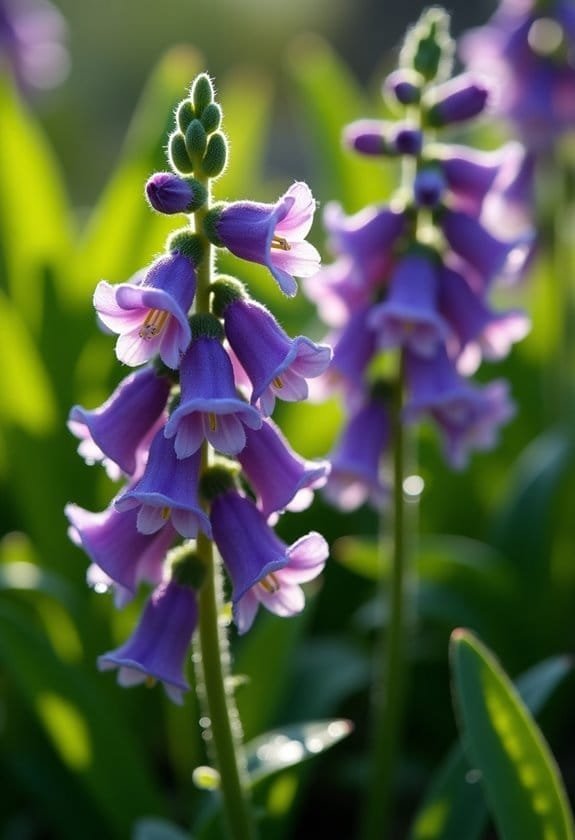
When considering the growing requirements for Clustered Bellflower, it's important to recognize its need for adequate light, suitable soil, and proper moisture levels.
Preferring a blend of full sun and partial shade, this resilient plant flourishes best in well-drained soil with a pH between 6.0 and 8.0, avoiding heavy clay that can hinder its growth.
Maintaining consistent moisture while preventing waterlogging is vital, ensuring this herbaceous perennial thrives and produces vibrant blooms throughout the growing season.
Light
Full sun to partial shade will bring out the best in Campanula glomerata, especially in warmer climates where part shade helps prevent stress. This beautiful plant flourishes when it receives a mix of sunlight, making it adaptable to various light conditions. In sunny borders or along woodland edges, it achieves peak growth with at least six hours of sunlight daily, though some relief from the sun's intensity in the afternoon can greatly enhance its importance.
Campanula glomerata requires well-drained soil to truly thrive, as heavy clay or consistently wet conditions can compromise its health. To further secure successful cultivation, gardeners should aim for regular moisture; keeping the soil consistently moist, without allowing it to become waterlogged, is critical.
When grown under these appropriate light conditions, the plant exhibits vigorous growth, producing vibrant clusters of stunning flowers that can be a spectacle in any garden setting. Notably, this species thrives similarly to Silverweed's growing requirements, demonstrating resilience to varying environmental conditions.
This species not only adds elegance to landscapes but also represents nature's resilience, adapting beautifully to the diverse demands of light, therefore embodying the essence of enduring beauty in gardens.
Soil
Campanula glomerata thrives best in well-drained soil that falls within a neutral to slightly alkaline range, with a pH of 6.0 to 8.0. This perennial plant exhibits remarkable adaptability to different soil types but demonstrates ideal performance in conditions that avoid heavy clay or excessive moisture.
In order to achieve robust growth, amending the soil with organic matter, such as compost, considerably enhances drainage while providing essential nutrients.
The perfect growing environment for Campanula glomerata includes average moisture levels, which means regular watering is necessary; however, it's critical to avoid waterlogged conditions that can lead to root rot. Consistent moisture supports the plant's overall vigor and encourages the vibrant blooms for which it's known.
Integrating organic amendments into the soil will improve its structure, allowing for better aeration and moisture retention, providing a balanced habitat for root expansion.
With proper care and attention to soil conditions, Campanula glomerata can flourish and bring a touch of beauty to any garden, enriching landscapes with its charming clusters of bell-shaped flowers.
As such, understanding its soil requirements is essential for successful cultivation.
Water
While consistent moisture is essential for the ideal growth of Campanula glomerata, it's equally important to secure the soil remains well-drained to prevent waterlogging. This bellflower thrives in environments where its roots can access water without being submerged, as waterlogged conditions can lead to root rot. When planting, thorough watering aids in establishing a strong root system, laying the groundwork for healthy growth.
Regular watering continues to be fundamental, particularly during dry periods in the first growing season. This attention helps the plant acclimate effectively to its environment and builds resilience against drought.
Applying a layer of mulch around the base of the plants can greatly benefit moisture retention, creating a microclimate that nurtures the soil while also preventing weeds from competing for essential water resources.
Monitoring soil moisture levels is critical to maintaining the plant's well-being; too much moisture results in detrimental fungal diseases, jeopardizing the plant's health. Aiming for that delicate balance of moisture secures that Campanula glomerata flourishes, producing vibrant blooms and promoting a robust garden ecosystem.
Interestingly, this plant also pairs well with other drought-tolerant plants, which enhances its resilience and supports a diverse garden environment.
The right practices will yield a thriving, beautiful display of clustered bellflowers.
Temperature
Growing in diverse climates, Clustered Bellflower adapts well to temperature variations, thriving in USDA zones 3-8. Campanula glomerata exhibits remarkable versatility, capable of withstanding a range of temperatures while favoring environments that offer consistent moisture.
This plant flourishes in full sun or part shade, with a specific inclination towards part shade in warmer climates to mitigate heat stress. In fact, similar to its relative, Common Harebell, it also demonstrates excellent drought tolerance once established.
To achieve peak growth, it's essential to plant Clustered Bellflower in well-drained soil to guarantee that the roots receive adequate oxygen and nutrients. Soil pH should ideally range from neutral to slightly alkaline, which facilitates nutrient uptake.
Furthermore, gardeners must be attentive to moisture levels; the plant requires consistent watering, but care should be taken to avoid waterlogged conditions that could lead to root rot.
In colder USDA zones, individuals can expect this hardy perennial to bloom beautifully each spring, while in the warmer stretches of zone 8, proper shading can prevent the foliage from wilting under intense heat. Additionally, selecting species like Horseshoe Vetch can enhance the local ecosystem, supporting biodiversity and pollinators that benefit neighboring plants.
As a result, selecting the right location, along with attentive care for moisture and soil quality, allows Clustered Bellflower to thrive in various temperate environments.
Pollinator Criteria
Campanula glomerata, or Clustered Bellflower, attracts a diverse array of pollinators, including indispensable species like bees, butterflies, and hummingbirds.
Its tubular, open flower shapes, combined with a generous nectar supply, facilitate effective pollination techniques essential for plant reproduction and ecosystem balance. Additionally, the presence of native flowering plants like dandelions ensures that pollinators have a consistent food source throughout the growing season. The extended blooming period of plants like Creeping Cinquefoil provides sustained nourishment for active pollinators, enhancing overall biodiversity.
Attracted Pollinators
The clustered bellflower's vibrant flowers play an important role in attracting a diverse array of pollinators, making it an essential addition to local ecosystems. Campanula glomerata blooms from May through July, aligning perfectly with the peak of pollination season, when nectar becomes imperative for sustaining various pollinator populations.
The plant's stunning violet-blue to white flowers, approximately 1 inch across, are highly visible, enticing not only bees but also butterflies and hummingbirds. Additionally, its flowering period is crucial for local biodiversity, as it provides nectar for pollinators late in the season, similar to the role of Devils Bit Scabious(Succisa pratensis).
The compact flower clusters can host up to 15 individual blossoms per stem, maximizing accessibility for these visiting pollinators. Thanks to this arrangement, pollinators can efficiently gather nectar, driving an indispensable network of interactions that enhances overall biodiversity.
Significantly, certain species, such as the Plasterer bee (Colletes brevicornis), rely on Campanula glomerata as a critical food source, illustrating the plant's significance to specialized pollinator populations. Additionally, the plant's adaptability to various soil conditions makes it a resilient choice for gardens, supporting a wider array of pollinator species.
Pollination Method
Pollinators are drawn to the clustered bellflower not only for its nectar but also due to its unique floral structure and bloom timing. Campanula glomerata features showy, bell-shaped flowers, densely arranged in clusters, creating an inviting habitat for various pollinators, including bees, butterflies, and hummingbirds.
This plant's bloom period lasts from May through July, aligning perfectly with the active season of these essential insects and birds, consequently enhancing its role in local ecosystems.
The tubular design of each flower allows long-tongued pollinators to access the nectar. This specialized structure not only facilitates nectar extraction but also encourages effective pollination, which is paramount for successful seed production. As multiple pollinators frequent these crowded flowers, the likelihood of cross-pollination increases greatly, leading to greater genetic diversity.
Furthermore, the vibrant colors and accessibility of Campanula glomerata's flowers attract a range of species, enhancing biodiversity in garden settings. This interplay between plant structure and pollinator behavior illustrates the intricate relationships within ecosystems, ultimately supporting stability and resilience, thereby ensuring the continuation of these beautiful blooms for generations to come.
Care & Maintenance
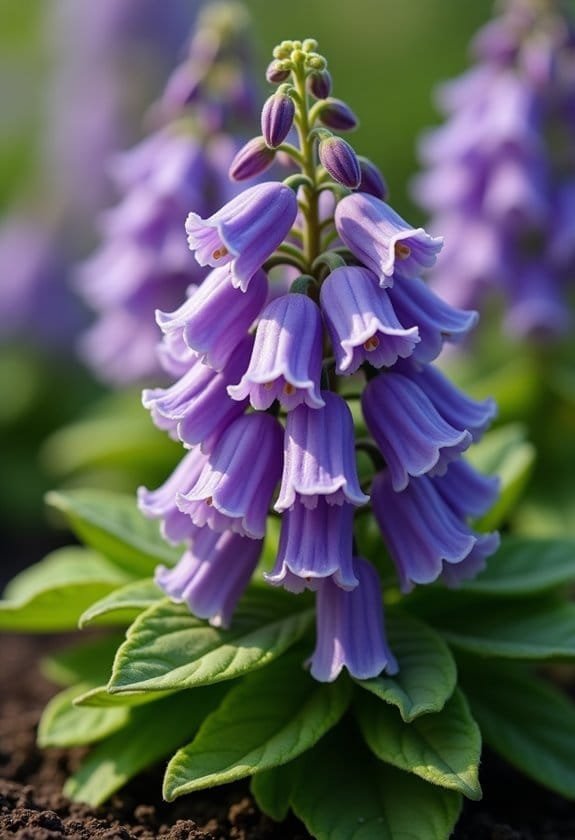
When it comes to the care and maintenance of Clustered Bellflower, understanding its unique planting requirements and ongoing care strategies is essential for vibrant growth.
With a preference for full sun to partial shade and well-drained soil, maintaining consistent moisture without waterlogging will ultimately support the plant's health and resilience.
Additionally, thoughtfully selecting companion plants can enhance both aesthetic appeal and ecological balance within the garden, creating a thriving oasis for pollinators and other wildlife. Incorporating plants like native bluebells can further enhance biodiversity and support a healthy ecosystem.
Planting Tips
Successful planting of the clustered bellflower, or Campanula glomerata, requires careful attention to its specific needs. This perennial flourishes in areas receiving full sun or part shade, ideally nestled within well-drained, neutral to slightly alkaline soil.
Ensuring consistent moisture is essential; consequently, gardeners should water thoroughly after planting while avoiding waterlogged conditions to promote healthy root development. Common Bistort is another great plant that thrives in consistently damp environments, which could complement your garden design.
Applying mulch around the base of the plants not only conserves moisture but also suppresses competing weeds, creating a favorable environment throughout the flowering season.
After blooming, it's beneficial to prune back stems, as this practice prevents unwanted self-seeding and encourages a potential second flush of vibrant flowers when conditions permit.
To maintain vigorous growth and prevent overcrowding, it's wise to divide clumps every three to five years.
This task should ideally take place in either spring or fall, coinciding with the plant's dormancy cycle, allowing for successful propagation and rejuvenation. Wild Thyme's ecological importance helps promote biodiversity, which can benefit neighboring plants like Campanula glomerata.
With these planting tips, gardeners can establish a flourishing colony of Campanula glomerata that captivates with its clusters of delightful blooms year after year.
Ongoing Care
Ongoing care for the clustered bellflower is crucial to keeping this perennial thriving throughout its growing season. To guarantee robust health and continuous blooms, gardeners should water thoroughly after planting and maintain moisture levels, applying mulch to conserve water and suppress competing weeds.
Monitoring for slugs and snails is critical; these pests can greatly damage the foliage and impede the plant's growth. Regularly cutting back stems post-bloom not only prevents self-seeding but also encourages a charming second flush of flowers, making certain the garden remains vibrant.
Every three to five years, it's beneficial to divide clumps to prevent overcrowding, which leads to vigorous growth and health of the plants. Additionally, implementing early spring fertilization in nutrient-deficient soils can boost overall growth and enhance flowering.
Maintaining proper air circulation around the clustered bellflower is crucial for minimizing the risk of fungal diseases and pests. By diligently providing ongoing care, gardeners cultivate a thriving landscape, showcasing the true beauty of the Campanula glomerata throughout its blooming cycle, from the first delicate blossoms to the last encore of color in the garden.
Suggested Companions
Creating a harmonious garden aesthetic is easy with the right companions for Campanula glomerata, or clustered bellflower. This delightful perennial thrives when paired with companion plants such as ornamental grasses, sage (Salvia spp.), and cranes bill (Geranium spp.), each contributing to a dynamic and visually appealing garden design.
Adding lady's mantle (Alchemilla mollis) enhances texture, as its lush foliage complements the intricate bell-shaped flowers of Campanula glomerata. Additionally, Germander Speedwell (Veronica chamaedrys) can also thrive in a similar garden environment, providing vital nectar sources for local pollinators.
Moreover, Coreopsis offers vibrant contrast, not only elevating the visual appeal but also drawing essential pollinators like bees and butterflies. These companions create a resilient ecosystem, important for the overall health of the garden.
It's essential to take into account spacing when incorporating these plants, as clustered bellflower has a propensity to spread rapidly, possibly suffocating nearby flora if planted too closely.
To maximize beauty and ecological function, gardeners should aim for groupings that guarantee air circulation and provide room for expansion. This mindful approach fosters a diverse habitat, allowing pollinators to thrive while enriching the garden's aesthetic tapestry.
Furthermore, the presence of Campanula glomerata in a garden helps attract a vital nectar source that supports biodiversity and enhances the overall garden ecosystem.
Consequently, strategic companion planting can transform a simple garden into a flourishing haven for biodiversity.
Common Issues
When cultivating Clustered Bellflower, gardeners should be aware of several common issues that can hinder the plant's growth and vibrancy.
Pests like slugs and snails might ravage the foliage, while poor soil conditions can lead to root rot, necessitating careful monitoring and preventative measures.
Additionally, fungal diseases thrive in humid environments; consequently, maintaining adequate air circulation and managing self-seeding tendencies can guarantee the plant remains a beautiful and sturdy addition to any garden.
Pests/Diseases
Despite its general resilience, Clustered Bellflower (Campanula glomerata) can face common pests and diseases that challenge its health. This lovely perennial occasionally encounters slugs and snails, notorious for leaving unsightly holes and causing considerable leaf damage.
Early detection is essential, as regular monitoring for unusual leaf discoloration or physical damage can mitigate further issues.
Moreover, fungal diseases may arise from excessive moisture, underscoring the importance of well-drained soil and proper airflow to prevent disease development. When foliage remains overcrowded, humidity builds up around the leaves, creating an ideal environment for pathogens to thrive.
To combat these threats, employing organic pest control methods, such as hand-picking these nocturnal nuisances or using diatomaceous earth, provides an effective means to manage slug populations without posing harm to beneficial insects that contribute to the garden's ecosystem.
Solutions
Regularly addressing common issues can greatly enhance the health and vibrancy of Clustered Bellflower. To maintain the aesthetic and vitality of Campanula glomerata, gardeners should consistently deadhead spent flowers. This practice discourages self-seeding, thereby preventing invasive spreading that could compromise garden spaces.
Additionally, it's crucial to monitor for slugs and snails, as these pests can damage foliage. Implementing barriers or organic pest control measures helps manage pest populations effectively.
Furthermore, maintaining good air circulation around these plants is paramount to reducing the risk of fungal diseases, especially in environments characterized by heavy moisture or high humidity. Overcrowding can hamper healthy growth, so it's advisable to divide clumps every three to five years. This division not only promotes vigor but also maintains peak flowering performance.
Lastly, the importance of maintaining well-drained soil can't be overstated. Excessive moisture can lead to detrimental conditions like root rot, severely impacting the health of Campanula glomerata.
What are the differences between Campanula Glomerata and Campanula Latifolia?
When comparing Campanula Glomerata and Campanula Latifolia, the most noticeable difference is their size. While Campanula Glomerata produces smaller, clustered blooms, Campanula Latifolia, also known as the giant bellflower, has larger individual flowers. Another key difference is in their leaf shapes and stem heights. For more information, check out this giant bellflower campanula latifolia article.
Summary
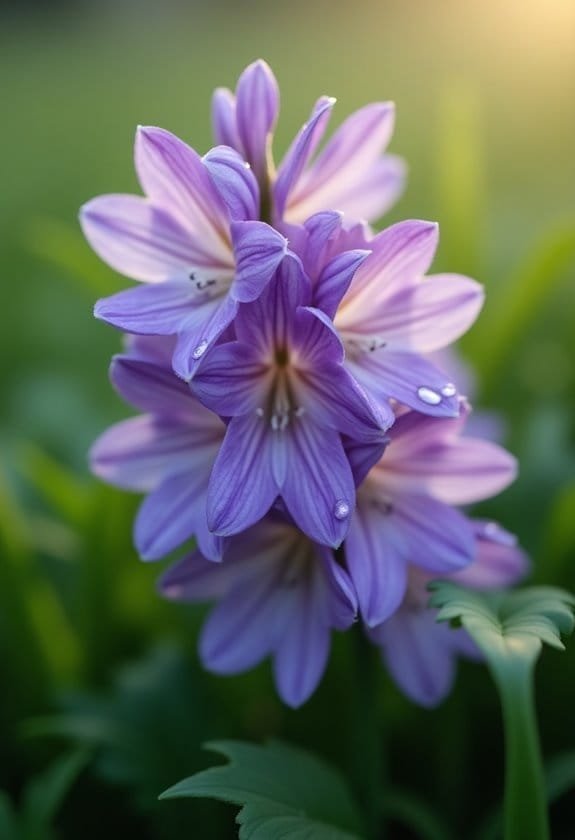
Clustered Bellflower, or Campanula glomerata, is an attractive herbaceous perennial that flourishes in European and western Asian meadows and rocky slopes.
This remarkable plant, reaching heights of 6 to 24 inches, showcases showy, bell-shaped flowers that bloom in clusters of up to 15, displaying vibrant hues ranging from violet-blue to white. It thrives in full sun to partial shade, often preferring well-drained soils, thereby making it adaptable to various garden settings.
Hardy in USDA zones 3-8, Campanula glomerata requires minimal care while offering significant visual interest.
Its role in the ecosystem is equally crucial; by attracting bees, butterflies, and hummingbirds, this species actively supports local pollinator populations. Moreover, similar to the Common Cowslip, it provides vital resources during early blooming periods, enhancing biodiversity in garden ecosystems. Its ability to self-seed enhances its utility in diverse landscaping options, including borders, rock gardens, and even as charming groundcover.
As gardeners seek sustainable and low-maintenance plant choices, Clustered Bellflower emerges as an exemplary candidate.
Not only does it enhance aesthetic appeal, but it also fosters ecological balance, making it an integral addition to any garden landscape. Through its beauty and ecological benefits, Campanula glomerata truly captivates both the heart and the environment.