Campanula Medium, commonly referred to as Canterbury Bells, is a enchanting biennial plant native to southern Europe. This alluring species typically grows between 1.5 to 3 feet tall, boasting stunning, cup-and-saucer-shaped flowers in colors like blue, pink, and white. Preferring rich, well-drained soil and full sun, it flourishes with consistent moisture and regular care. Canterbury Bells serve as essential attractors of pollinators, particularly bees and hummingbirds, enriching garden biodiversity. With their fragrant blooms and impressive stature, they enhance visual appeal while contributing to the ecosystem. Those intrigued may want to explore further details about their growing conditions and ecological significance.
Main Points
- Canterbury Bells, or *Campanula medium*, are biennial plants native to southern Europe that grow 1.5 to 3 feet tall.
- They bloom in vibrant colors during the summer of their second year, attracting pollinators like bees and hummingbirds.
- Preferring well-drained, sandy or loamy soil, they thrive in full sun to partial shade with consistent moisture.
- Essential care includes regular watering, mulching for moisture retention, and deadheading to prolong blooming.
- Companion planting with Delphinium and Foxglove enhances visual appeal and helps deter pests for healthier growth.
Introduction
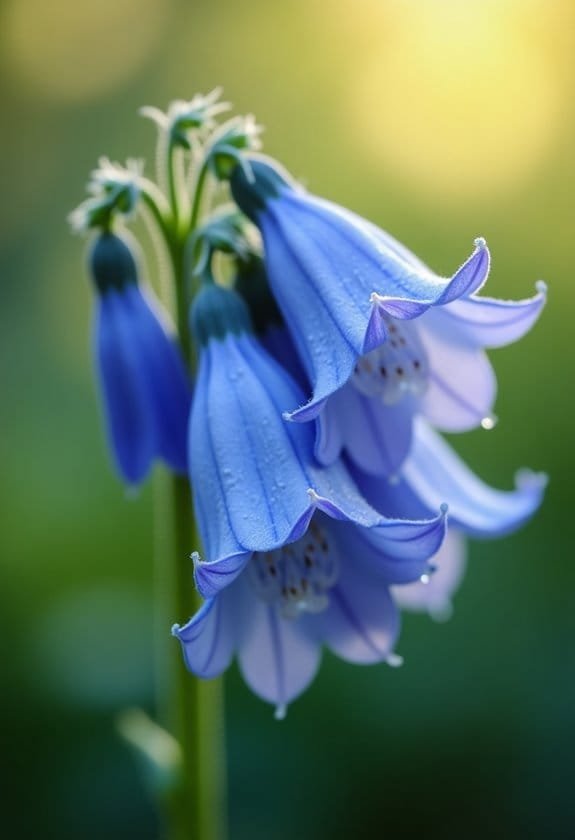
Campanula Medium, better known as Canterbury Bells, is a striking biennial that graces gardens with its towering spikes and elegant cup-and-saucer flowers.
Typically blooming in vibrant shades of blue, pink, white, or purple during the summer of its second year, this plant not only enhances visual appeal but also supports local biodiversity by attracting essential pollinators.
With proper care, including adequate sunlight and well-draining soil, it can flourish impressively to heights of 1.5 to 3 feet, becoming a stunning focal point in any landscape.
Common Name
Known for its striking beauty, Canterbury Bells stands out in gardens with tall spikes and cup-and-saucer shaped flowers. These biennial plants, commonly recognized as Canterbury bells flowers, grace landscapes with their vibrant hues, which include blue, pink, white, and purple.
Their exceptional colors not only enhance visual appeal but also attract pollinators, fostering a richer biodiversity within garden ecosystems. Alternative names such as Coventry Bells and Cup and Saucer further highlight the distinctive structure of these remarkable blooms.
Rooted in history, Canterbury Bells have been cultivated since the 16th century, making their mark in botanical literature; significantly, Thomas Jefferson mentioned them in 1812, reflecting their importance in American horticulture.
The phonetic spelling, *kam-pan-YOO-luh MEED-ee-um*, lends insight into their Latin origins and botanical classification, connecting gardeners with their heritage. As they grow, Canterbury bells flowers can reach heights of 24 to 36 inches, creating impressive displays that command attention.
Scientific Name
Canterbury Bells are scientifically classified as *Campanula medium*, a tribute to their structured beauty and heritage. This biennial flowering plant belongs to the Campanulaceae family, a group known for its varied and visually striking bell-shaped blooms. The genus name *Campanula* originates from the Latin word "campana," meaning bell, aptly representing the plant's characteristic floral structure that often inspires gardeners and botanists alike.
The specific epithet "medium" signifies its intermediate traits among the diverse species in the *Campanula* genus, suggesting a melding of qualities. Enthusiasts of this delightful plant appreciate that *Campanula medium* showcases a plethora of cultivars, exhibiting an array of flower colors, including breathtaking blue, soft pink, pure white, and rich purple.
This richness allows for versatile landscaping options, making it a favorite in various garden designs.
Originating from southern Europe, *Campanula medium* has adapted remarkably well, becoming widely cultivated and naturalized in different climates throughout North America. Its ability to thrive in diverse environments speaks to its resilience and appeal, further enhancing its status among cherished ornamental plants.
Overview
If you're looking to add a touch of elegance to your garden, *Campanula medium*, or Canterbury Bells, might just be the perfect choice. This remarkable biennial plant captivates gardeners with its tall, distinctive spikes adorned with cup-and-saucer shaped flowers that bloom in the summer of the second year.
Canterbury Bells thrive in varied settings, flourishing in full sun to partial shade while favoring rich, well-draining soil.
Reaching heights between 1 foot 6 inches and 3 feet, these plants boast lush basal leaves and a stunning array of bell-shaped blooms in colors such as blue, pink, white, and purple. Their blooming period stretches from May to July, during which they exude a sweet, minty fragrance, enhancing not only garden landscapes but also floral arrangements.
Beyond aesthetic appeal, Canterbury Bells offer ecological advantages by attracting essential pollinators like bees and hummingbirds.
Beekeepers also appreciate these flowers, as they can contribute markedly to honey production. By incorporating *Campanula medium* into a garden, gardeners not only enrich their outdoor spaces but also support local ecosystems, creating a harmonious blend of beauty and functionality.
Key Features
Canterbury Bells, scientifically known as Campanula medium, are striking biennial plants that can reach impressive heights of 1.5 to 3 feet.
Their tall spikes, adorned with cup-and-saucer shaped blossoms in enchanting shades of pink, blue, and white, create a visually stunning display, particularly during their peak flowering season from May to July.
With their unique structure and vibrant colors, these plants offer not only aesthetic appeal but also essential support for pollinators in the garden ecosystem.
Growth Size
Reaching impressive heights, Canterbury Bells (Campanula medium) typically grow between 1 foot 6 inches and 3 feet tall, while spreading out from 1 foot to 2 feet wide.
These biennial plants' erect stems, either reddish-brown or green and covered in fine hairs, provide an interesting contrast to the overall lush foliage. As Canterbury bells grow, they develop basal leaves with lanceolate to elliptical shapes, reaching up to 6 inches in length, while the upper leaves tend to be smaller and sessile.
The stunning spikes of these flowers, adorned with broadly bell-shaped blooms that measure between 1 and 3 inches in diameter, become the centerpiece of many gardens.
To optimize growth, it's essential to group these plants, which not only enhances their visual impact but also offers stability, particularly in regions vulnerable to wind.
Canterbury bells thrive when provided with ample space, allowing their majestic stature to be fully realized. As these vibrant beauties reach their full potential, they deliver a sense of elegance and charm, enriching any garden setting with their impressive height and delightful blooms.
Consequently, they invite admiration from gardening enthusiasts and casual observers alike.
Appearance
Boasting striking visual features, Campanula medium stands out in any garden setting. This perennial plant showcases tall spikes that can reach impressive heights of up to 3 feet, crowned with clusters of vibrant bell-shaped flowers. The blossoms, measuring around 2 inches in width, come in a stunning array of colors, including blue, pink, purple, and white, giving them a fascinating presence.
Their distinctive cup-and-saucer shape adds an elegant touch, making them a popular choice for ornamental gardens. The plant's basal leaves, lanceolate to elliptical in shape and measuring 5-6 inches long, possess serrated edges, adding texture to its foliage.
In contrast, the upper leaves appear smaller and sessile, enhancing the visual hierarchy of the plant. The stems exhibit a unique reddish-brown or green hue, often covered in a fine layer of hair, contributing to its overall allure.
During its first year, Campanula medium forms a lush clump of green leaves, laying the groundwork for its eye-catching spikes that burst into bloom in the summer of the following year. Such a fascinating life cycle guarantees that these bells remain a garden favorite, enchanting all who encounter them.
Flowering Season
The flowering season of Campanula medium is a vibrant spectacle that typically lasts from May to July, with late spring marking its peak. During this period, the stunning large, cup-and-saucer shaped flowers unfurl in an array of colors, including striking blue, soft pink, pure white, and deep purple. Their sweet, minty fragrance additionally enhances the allure of this blooming marvel.
A minimum duration of three months guarantees that spectators can enjoy a continuous display of these beautiful blossoms, especially when properly cultivated. To maximize the flowering season's impact, gardeners need to provide these plants with about 4-6 hours of sunlight daily, along with regular watering to maintain moisture levels.
Deadheading spent flowers can promote additional blooms, thereby prolonging the jubilation of color and scent in gardens. Moreover, allowing some seed pods to mature paves the way for future growth, creating a cycle of beauty that can last year after year. This dynamic interaction between careful gardening practices and the inherent nature of Campanula medium fosters a flourishing environment, enriching landscapes with its extraordinary charm throughout the flowering season. Additionally, like the Meadow Buttercup(important food source for pollinators), these plants provide vital resources for pollinators during their blooming period.
Growing Requirements
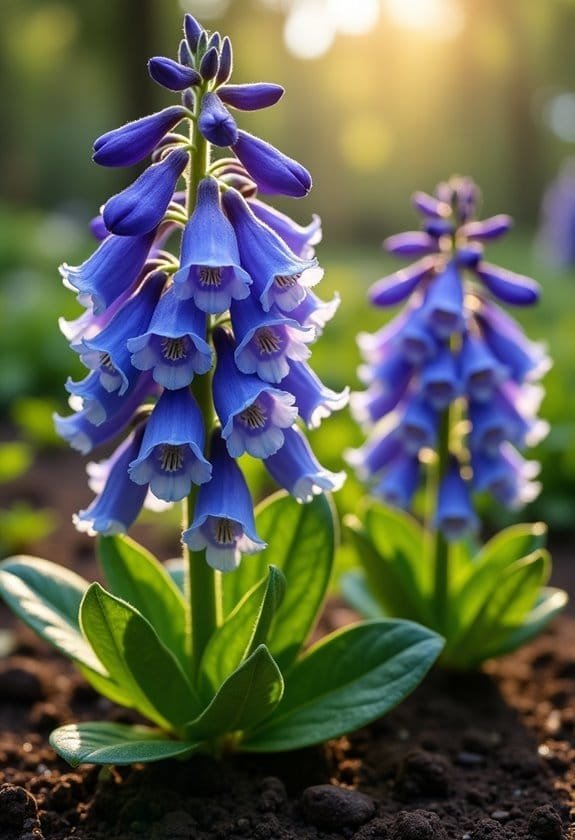
To successfully cultivate Campanula Medium, gardeners must understand its fundamental growing requirements.
These stunning Canterbury Bells thrive in full sun to partial shade, needing at least 4-6 hours of sunlight daily, while also favoring rich, well-drained sandy or loamy soil with a pH between 6.0 and 8.0.
Adequate watering is essential; maintaining even soil moisture prevents detrimental conditions, ensuring vibrancy and longevity in their exquisite blooms.
Light
Maximizing light exposure is key for Canterbury Bells, which thrive best in full sun. Requiring at least four to six hours of direct sunlight daily, these plants demonstrate a strong inclination toward bright conditions for peak growth and vibrant flowering.
While they possess a degree of adaptability, tolerating partial shade, it's in sunnier spots that they truly flourish, emitting their sweet fragrance and showcasing their exquisite bell-shaped flowers in full glory.
Ideal planting locations include the back of flower beds or borders, where their height adds visual impact to garden design. Proper light exposure not only enhances their aesthetic appeal but also plays a crucial role in their overall health.
In regions characterized by intense heat, however, providing a bit of shade can bolster their longevity and well-being, preventing undue stress on the plants.
Soil
For ideal growth, Canterbury Bells prefer rich, moist, well-drained soils, ideally sandy or loamy. These soil types provide the necessary aeration and nutrients fundamental for robust development.
The best soil pH range lies between 6.0, which is slightly acidic, to 8.0, neutral or alkaline, supporting the plant's nutritional absorption. To cultivate vibrant Canterbury Bells, gardeners should incorporate organic matter, such as compost, into the soil; this enhancement boosts fertility and guarantees effective drainage, preventing waterlogging that can hinder growth.
Moreover, planting Canterbury Bells in clusters not only improves their stability but also reinforces the significance of soil conditions in group settings. Clusters absorb nutrients more efficiently and create a microenvironment conducive to flourishing amid nearby plants.
When preparing the garden bed, it's important to attain an even consistency throughout the soil; this uniformity aids in maintaining moisture levels. Additionally, whilst regular watering supports healthy soil moisture, it's crucial to avoid overwatering or drought conditions, as either extreme can adversely affect the plant's health.
Goldenrod's preference for well-draining, slightly acidic soil further highlights the necessity of soil quality in promoting plant health and growth.
Ultimately, understanding the intricacies of soil composition is essential for successfully cultivating Campanula medium and promoting a stunning display of blooms.
Water
Regular watering is essential for Canterbury Bells, ensuring that the soil remains evenly moist without becoming soggy or dry.
These beautiful flowers thrive in rich, well-drained sandy or loamy soil, providing ideal water retention that avoids the pitfalls of waterlogging. During dry spells, moderate watering becomes important; too little moisture can inhibit healthy growth, while excessive water can invite fungal diseases, undermining the plant's liveliness.
Consistent moisture is particularly necessary during the blooming period from May to July, as it greatly enhances flower production and vibrancy.
The blooms of Canterbury Bells are renowned for their stunning hues, and proper watering practices help achieve this breathtaking display. Additionally, maintaining consistent monitoring of soil moisture levels is crucial for promoting overall plant health.
Additionally, applying a layer of mulch around the base of the plants acts like a protective blanket, retaining soil moisture while suppressing weeds that compete for valuable nutrients and water.
Temperature
Canterbury Bells generally thrive in cooler climates, particularly enjoying the conditions found in USDA Zone 5, where winter temperatures can drop considerably.
These biennial plants prefer a temperature range of 65 to 70°F for ideal seed germination, making indoor conditions critical before shifting them outdoors in spring. Additionally, Alder Buckthorn is notable for its remarkable seed production, which can inform gardeners about effective planting strategies.
Once established, Canterbury Bells benefit from full sun exposure, requiring at least 4-6 hours of direct sunlight per day. However, they can tolerate partial shade, especially in regions that experience extreme heat.
During warmer months, maintaining even soil moisture becomes paramount, as high temperatures may stress the plants and hinder their performance.
The ideal soil—well-drained and rich in organic matter—guarantees that roots can effectively absorb necessary nutrients.
To support their longevity in elevated temperatures, providing intermittent shade can alleviate heat stress, promoting a healthier growth environment.
As a result, gardeners must monitor temperature fluctuations closely; understanding these plant preferences can lead to an exquisite floral display. Additionally, drought tolerance is a key factor in ensuring that Canterbury Bells thrive alongside other resilient species like Common Harebell.
Proper thermal management not only fosters beautiful blossoms but also guarantees that the plants endure seasonal changes gracefully, much like a resilient dancer adapting to varying rhythms.
Pollinator Criteria
Canterbury Bells, or Campanula medium, attract a diverse array of pollinators, especially bees, butterflies, and hummingbirds, essential for sustaining vibrant garden ecosystems.
Their sweet, minty fragrance and visually striking blooms in shades of pink, blue, white, and purple not only captivate these creatures but also enhance their vital pollination activities from May to July, coinciding with peak foraging times. Additionally, these plants provide nectar-rich flowers that contribute to local biodiversity and ecosystem health, supporting various pollinator species. Furthermore, like Common Rockrose, Canterbury Bells serve as valuable nectar sources, attracting a multitude of insect visitors crucial for successful pollination.
Attracted Pollinators
Often, gardeners find that Campanula medium, or Canterbury Bells, attracts a delightful range of pollinators, including bees, butterflies, and hummingbirds. The sweet, minty fragrance of these vibrant, bell-shaped flowers draws in various species enthusiastic for nectar, ensuring a buzzing ecosystem.
Blooming from May to July, this flowering period coincides perfectly with the peak activity of many essential pollinators, reinforcing the plant's role in sustaining biodiversity.
Canterbury Bells produce abundant nectar, acting as a vital food source for honeybees, particularly beneficial for beekeepers aiming to enhance honey production. The flowers' diverse colors—ranging from stunning blues and delicate pinks to pure whites and rich purples—are not just aesthetically pleasing; they serve specific functions.
Each hue attracts different pollinator species, creating a vibrant habitat where nature thrives.
Incorporating Canterbury Bells into garden designs fosters biodiversity, supporting the health of local pollinator populations. This choice not only beautifies the landscape but also enriches the environmental tapestry, encouraging a symbiotic relationship between plants and their pollinator partners.
Pollination Method
Pollinators play an essential role in the reproduction of Campanula medium. During the blooming season from May to July, the fragrant, bell-shaped flowers attract a variety of pollinators, particularly bees and hummingbirds. The diverse hues of pastel-colored blooms—ranging from pink and blue to white and purple—not only enhance visual appeal but also serve as beacons for these critical creatures.
The plant's tall spikes facilitate pollination by providing easy access to nectar, enabling pollinators to navigate the flowers effortlessly. As pollinators visit multiple blooms, they effectively transfer pollen, leading to successful cross-pollination. This critical process culminates in the production of seed pods, which can mature into new plants, enriching biodiversity within garden ecosystems.
A healthy population of pollinators is essential for ensuring a consistent fruit and seed set in Canterbury Bells. Without their diligent efforts, the biennial lifecycle of the plant might falter, stunting its growth and diminishing future displays. Therefore, fostering an environment that supports these indispensable pollinators not only benefits Campanula medium but also enhances the vibrancy of surrounding flora. Additionally, introducing native pollinators to your garden can significantly improve the effectiveness of pollination and enhance overall plant health.
Care & Maintenance
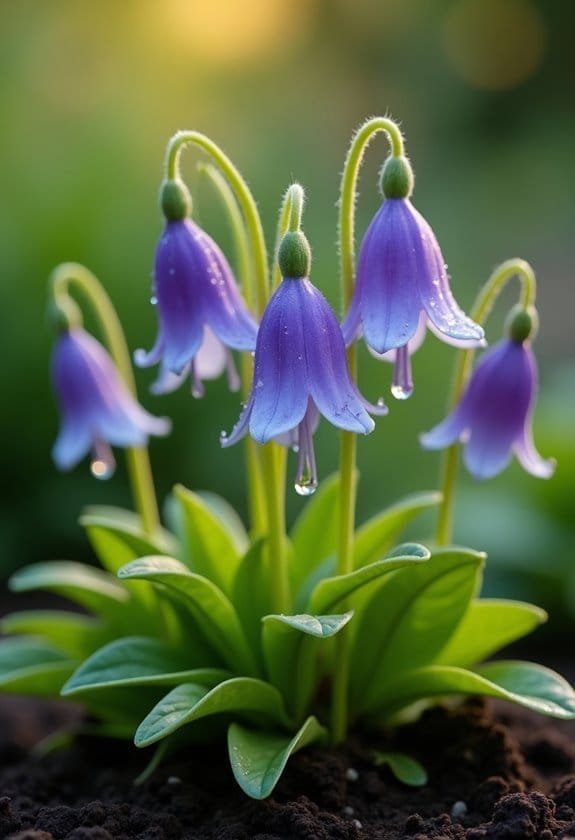
When caring for Campanula Medium, attention to planting tips, ongoing care, and suitable companion plants is paramount for peak growth.
Ideally, these vibrant Canterbury Bells flourish in full sun to partial shade, enjoying a balanced environment that provides rich, well-drained soil and regular moisture.
Planting Tips
Successfully caring for Campanula Medium, commonly known as Canterbury bells, starts with selecting the right planting spot. These charming perennials thrive best in full sun to partial shade, requiring at least 4-6 hours of sunlight daily. This medium of light facilitates ideal growth and prolific blooming, ensuring that your garden flourishes.
Furthermore, it's important to prepare rich, moist, well-drained soil, as consistent moisture not only enhances growth but also prevents detrimental waterlogging or drought stress. Regular watering establishes a healthy foundation.
In spring, fertilizing with a low nitrogen 5-10-5 NPK formula, accompanied by compost, enriches the soil and supports vibrant flowering throughout the season.
To encourage continuous blooming, deadheading spent flowers redirects energy towards new growth while enabling seed pod maturation for future planting. Additionally, promoting good air circulation is essential; regular pruning of dead foliage helps stave off disease.
Keeping an eye out for pests, like aphids, slugs, and mites, is crucial for maintaining plant health. By following these strategic planting tips, gardeners can create an environment in which Canterbury bells not only survive, but truly thrive.
Ongoing Care
Ongoing care for Campanula Medium guarantees vibrant blooms and healthy growth throughout the gardening season. One essential aspect of this care is regular deadheading, where spent flowers are removed promptly. This practice not only encourages continued blooming but also enhances the overall vitality of the plant, promoting healthier growth during the summer months.
In the spring, applying a low nitrogen 5-10-5 NPK fertilizer, in conjunction with compost, enhances soil quality and bolsters the blooming process. Gardeners in windy areas should consider staking to support the tall flower spikes, ensuring stability against adverse weather and overcrowding.
Adequate moisture is essential; maintaining consistent soil moisture levels without overwatering prevents disease and fosters robust health.
Additionally, pruning back dead foliage in late summer not only tidies the appearance of the garden but also allows fresh growth to flourish. Regular monitoring for pests, including aphids, mites, and slugs, is important for keeping Campanula Medium thriving.
Suggested Companions
Choosing the right companions for Campanula Medium can greatly enhance both its aesthetic appeal and overall health. Planting Canterbury Bells alongside towering companions like Delphinium and Foxglove not only complements their graceful, tall spikes but also attracts similar pollinators, fostering a vibrant ecosystem within the flower bed.
To maintain a harmonious visual balance, integrating lower-growing plants such as Lobelia or Alyssum offers a supportive backdrop, allowing the Canterbury Bells to shine. This thoughtful combination enhances the overall visual interest of the flower bed, drawing the eye upward towards the stunning blooms.
Moreover, regular deadheading of Canterbury Bells promotes prolonged blooming while simultaneously improving air circulation, which benefits neighboring plants by decreasing the risk of diseases. Enriching the garden with aromatic herbs like Basil or Mint serves a dual purpose: they deter pests and contribute to the overall health and well-being of the Canterbury Bells.
However, it remains imperative to select companion plants that share similar cultural needs, as Canterbury Bells thrive in well-drained, nutrient-rich soil and flourish in full sun to partial shade.
Through strategic companion planting, gardeners can create a flourishing and harmonious flower bed.
Common Issues
Canterbury Bells, or Campanula Medium, face several common issues that can hinder their growth and beauty.
These plants often attract pests like aphids and mites, which, if left unchecked, can devastate the blooms, while diseases such as powdery mildew thrive in overcrowded conditions with poor air circulation.
To guarantee a robust and vibrant display, gardeners must implement strategic solutions, including proper spacing, vigilant pest monitoring, and maintaining well-drained soil, thereby fostering healthier plants.
Pests/Diseases
Although beautiful, Campanula medium can fall victim to various pests and diseases that threaten its health and vigor. Common pests include aphids, mites, slugs, and snails, each posing unique challenges.
Aphids often leave behind curled leaves accompanied by a sticky residue, while mites can cause stippling, indicating damage to the foliage. Slugs and snails primarily target young plants, creating irregular holes that detract from the plant's overall appearance.
In addition to these pests, Campanula medium is susceptible to fungal diseases, often resulting from overwatering. Such maladies manifest as leaf discoloration and wilting, signaling that the plant is suffering.
Maintaining good air circulation and avoiding waterlogged soil are essential preventive measures against these issues.
Regular inspection for pest symptoms is crucial for early detection and effective management. Engaging in diligent monitoring enables one to address any infestations before they escalate, ensuring the health of the plants.
Utilizing organic control methods, like insecticidal soap, helps maintain overall plant health, protecting these charming bells from the detrimental effects of pests and diseases.
Solutions
Addressing the pests and diseases that affect Campanula medium requires proactive solutions to guarantee its continued health. One of the primary concerns is waterlogging, which can severely compromise root integrity and lead to fungal diseases. Gardeners should make sure that the soil remains well-drained and that regular monitoring of moisture levels is implemented. Long-headed poppy, like Campanula medium, thrives in well-drained soils, making drainage a key factor in both species' health.
In addition to managing water levels, regular deadheading of spent flowers will encourage a prolonged blooming period. This practice not only enhances visual appeal but also redirects the plant's energy from seed production to new growth.
For those residing in regions prone to high winds, staking tall flower spikes becomes essential, aiding in the maintenance of an upright structure.
Pest management is another critical aspect. Monitoring for common nuisances, such as aphids, mites, slugs, and snails, makes certain that the health of the plant remains uncompromised. Incorporating plants like Common Mallow(Malva Sylvestris) can attract beneficial pollinators that help manage pests effectively.
Additionally, practicing good air circulation by pruning dead foliage and avoiding overcrowding will diminish the risk of diseases stemming from fungal outbreaks. The resilience of long-headed poppy against moisture variation can inspire gardeners to explore drought resistance strategies that might be beneficial for Campanula medium as well.
What are the differences between Campanula Medium and Campanula Lactiflora?
When comparing Campanula Medium and Campanula Lactiflora, there are several differences to note. Campanula Medium, also known as Canterbury bells, has bell-shaped flowers in various colors, while Campanula Lactiflora, also called milky bellflower, produces clusters of small, star-shaped blooms in shades of blue and white. For more information, check out this campanula lactiflora milky bellflower article.
Summary
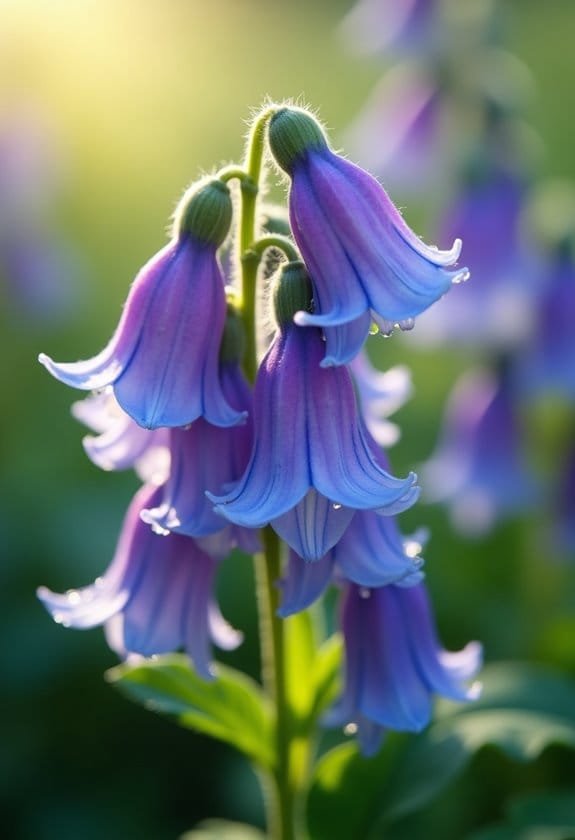
The stunning Campanula Medium, or Canterbury Bells, is a biennial plant celebrated for its tall spikes adorned with elegant cup-and-saucer shaped flowers that bloom in the second year.
This delightful specimen flourishes in a variety of garden settings, thriving best in full sun to partial shade and favoring moist, well-draining soil with a pH that ranges from slightly acidic to alkaline.
Among the popular cultivars, 'Champion' showcases large blossoms in striking blue or pink, while 'Double Melton Bells' charms with its double blooms, showcasing hues of pink and purple.
Blooms occur from May to July, transforming gardens into vibrant scenes that not only captivate the eye but also attract a plethora of pollinators, thereby enhancing biodiversity.
More importantly, the ecological implications of incorporating Canterbury Bells into landscapes can't be understated, as this plant isn't invasive in North America.
Gardeners can embellish their surroundings while simultaneously nurturing the environment's health.
To conclude, Campanula Medium serves not just as an ornamental addition to gardens, but as a pivotal contributor to ecological balance and beauty.