*Campsis radicans*, widely recognized as Trumpet Honeysuckle, is a vigorous climbing vine native to eastern North America. This plant showcases striking, trumpet-shaped flowers that can reach up to 3.5 inches (9 cm) in length, blooming in vibrant hues of orange and red. Thriving in well-drained, moist environments with at least six hours of sunlight daily, it supports diverse pollinator populations, particularly hummingbirds and bees, enhancing local biodiversity. While requiring regular care and pruning to manage its growth, its ecological significance and visual attraction make it a cherished addition to gardens. Further exploration reveals additional insights into its cultivation and benefits.
Main Points
- *Campsis radicans*, commonly known as Trumpet Vine, showcases vibrant trumpet-shaped flowers that attract pollinators like hummingbirds and bees.
- This native plant thrives in well-drained, moist soil with full sun exposure for optimal growth and blooming.
- Its vigorous growth can reach heights of 20-40 feet, making it ideal for climbing structures in gardens.
- Regular watering, seasonal pruning, and proper planting distance from structures are essential for maintenance and prevention of invasiveness.
- Companion planting with native species enhances biodiversity and pollinator support in garden settings.
Introduction
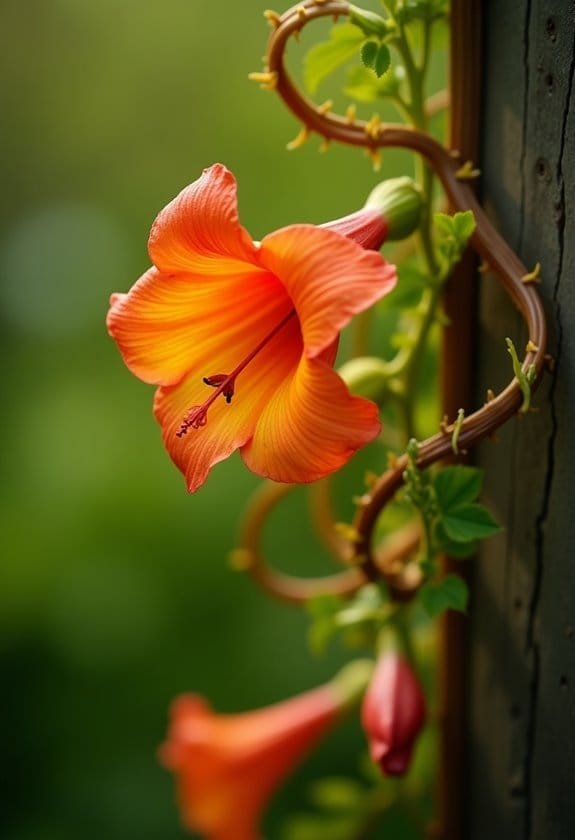
Campsis radicans, known commonly as Trumpet Vine, is a remarkable climbing plant native to eastern North America.
Exhibiting vigorous growth and striking trumpet-shaped flowers, it flourishes in full sun while attaining heights of 30-40 feet.
This plant supports a rich ecosystem by attracting various pollinators.
Additionally, like its relative Lonicera periclymenum, it plays a crucial role in supporting biodiversity in ecosystems.
This introduction sets the stage for understanding both the biological significance and potential challenges associated with this enchanting species.
Common Name
Known commonly as Trumpet Vine or Trumpet Creeper, *Campsis radicans* captivates gardeners and nature enthusiasts alike with its striking, trumpet-shaped flowers. This native North American plant possesses a vigorous climbing ability, enabling it to reach impressive heights of 20 to 40 feet (6 to 12 meters).
Its brilliant orange or red blossoms not only add vivid color to any landscape but also serve as a magnet for hummingbirds and various pollinators, attracting these crucial creatures to gardens.
The ability of Trumpet Vine to produce long, bean-like seed pods post-bloom meaningfully contributes to its reproductive success, enhancing its potential invasiveness in certain locales. Its ornamental value makes it a popular choice for garden design, where it can become a stunning focal point or dramatic backdrop.
Yet, beyond this beauty, Trumpet Vine serves functional purposes, such as enabling effective erosion control. Essentially, the allure of the Trumpet Vine lies not only in its aesthetic charm but also in its ecological contributions, showcasing the seamless interplay between nature's artistry and practical benefits, much like a well-composed symphony that harmonizes visual appeal and functional importance.
Scientific Name
The scientific name of the trumpet vine, *Campsis radicans*, reveals its classification within the Bignoniaceae family, emphasizing its botanical identity. This specific nomenclature highlights its lineage and characteristics distinct to the genus, while also hinting at the evolutionary adaptations that facilitate its vigorous growth.
Native to eastern North America, *Campsis radicans* captivates observers with its vibrant trumpet-shaped flowers, frequently displaying hues of bold orange and reddish-orange, complemented by a yellowish throat.
Historically, *Campsis radicans* was introduced to England in the early 17th century, often misclassified under a variety of names before settling into its current classification. This journey through botanical classification illustrates the evolving understanding of plant identity.
The plant's climbing ability allows it to effectively cover structures, making it a favored choice in gardens for vertical growth.
Moreover, its prolonged cultivation has led to the introduction of numerous hybrid varieties, such as the notable Mme Galen, established in the late 19th century, further enriching its appeal.
Overview
Originating from eastern North America, the trumpet vine, *Campsis radicans*, stands out as a vigorous and stunning addition to gardens and landscapes.
This self-clinging woody climber captivates observers with its extraordinary, trumpet-shaped flowers, which measure about 3 inches long. Typically found in vibrant shades of orange and red, these blossoms bloom in clusters during summer, attracting delightful hummingbirds that play a vital role in the ecosystem.
*Campsis radicans* can grow rapidly, reaching impressive heights between 20 to 40 feet, thanks to aerial rootlets that enable it to cling effectively to structures, while also forming dense colonies through its underground runners.
Adaptable to a variety of soil types, it thrives best in well-drained, moist environments, basking in full sun or partial shade to maximize flowering potential.
Despite its striking appearance and significant appeal to pollinators, trumpet vine requires careful management.
Without proper oversight, *Campsis radicans* can become invasive, potentially overwhelming other local plants. Recognizing both its beauty and its challenges becomes essential for gardeners looking to incorporate this remarkable plant into their landscapes.
Key Features
Campsis radicans, commonly known as Trumpet Vine, captivates with its strikingly large, trumpet-shaped blossoms, typically blooming in fiery shades of orange and red during the summer months.
This vigorous climber can reach impressive heights between 20 to 40 feet, utilizing its self-clinging woody vines that attach securely to various surfaces through aerial rootlets.
With its eye-catching appearance and robust growth, this plant not only enhances any garden but also provides an essential habitat for pollinators in warmer climates.
Growth Size
With the right support, Trumpet Vine can reach impressive heights of 20-40 feet (6-12 meters), showcasing its vigorous growth habit. This climbing perennial exhibits robust and woody stems that allow it to cover expansive areas effectively.
Additionally, through a process known as suckering, Trumpet Vine can form dense colonies by generating underground runners, further emphasizing its tenacious nature.
Its foliage features pinnate leaves, typically consisting of 7 to 13 leaflets. Each leaflet measures approximately 3 inches (8 cm) long and 1.5 inches (4 cm) wide, providing a lush green backdrop that enhances the plant's overall appeal.
The flowers, large and trumpet-shaped, can reach lengths of up to 3.5 inches (9 cm), adorned in vibrant hues of orange to reddish-orange, adding visual drama to its growth.
However, its aggressive growth habit requires consideration, as Trumpet Vine can potentially damage surfaces it clings to using aerial rootlets.
Gardeners and landscapers should be mindful of its sprawling nature when deciding on placement and support structures. Ultimately, proper management allows this striking plant to flourish beautifully in the right environment.
Appearance
Beneath the vibrant flowers of Trumpet Vine, the striking features of this plant come to life. The most enchanting aspect of the Campsis radicans lies in its large, trumpet-shaped flowers, which can reach lengths of up to 9 cm (3.5 inches). These blossoms, adorned in brilliant orange to reddish-orange hues, feature a yellowish throat that beckons pollinators, including hummingbirds, with its inviting brilliance.
The foliage consists of opposite, odd-pinnately compound leaves, typically harboring 7 to 13 leaflets. Each leaflet measures approximately 8 cm (3 inches) long and 4 cm (1.5 inches) wide, providing a lush backdrop for the dazzling blooms.
Additionally, trumpet vines develop long, bean-like seed pods that attain lengths of 15 cm (6 inches); these pods split open to release hundreds of delicate, brown seeds upon maturing and drying, ensuring the plant's vigorous growth.
As a self-clinging woody climber, the trumpet honeysuckle exhibits remarkable potential, soaring to heights of 30-40 feet (9-12 m), particularly when supported by trellises, fences, or other structures, showcasing its impressive presence in any garden.
Flowering Season
When do trumpet vines dazzle with their vibrant blooms? From June to September, these remarkable plants burst forth, showcasing their showy trumpet-shaped flowers.
These enchanting blossoms, often reaching up to 3 inches in length, typically exhibit bright orange or reddish-orange hues, adding a warm splash of color to gardens and landscapes. The flowers are arranged in terminal cymes, with each cluster offering between 2 to 8 blooms, creating a stunning visual display that can't be missed.
During their flowering season, trumpet vines attract numerous pollinators, including hummingbirds, which seek their abundant nectar, a crucial energy source in the sunny summer months.
Thriving in full sun or partial shade, these vines flourish best in well-drained soils, with flowering becoming more profuse under increased sunlight. Following the vibrant blooms, trumpet vines produce long, bean-like seed pods that mature by late summer.
As these pods dry, they split open, distributing hundreds of seeds, ensuring the continued legacy of this enchanting species. Consequently, the flowering season of Campsis radicans not only celebrates natural beauty but also sustains local ecosystems, contributing remarkably to biodiversity.
Growing Requirements
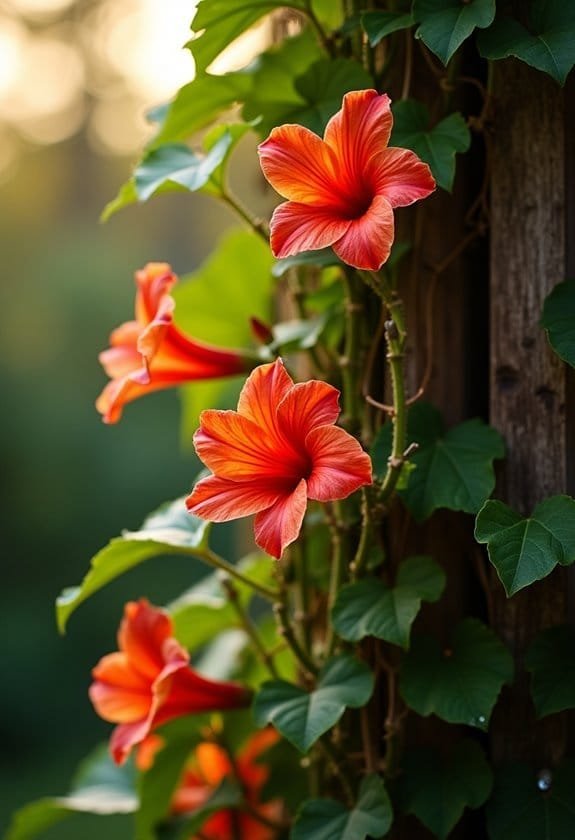
Campsis radicans, commonly known as Trumpet Vine, thrives best under specific conditions that cater to its robust growth.
It requires well-drained soil to flourish, ideally enjoying a daily sunbath of at least six hours while remaining adaptable to diverse soil types, from lean to average.
Furthermore, its hydration needs are modest once established, necessitating only weekly watering, consequently making it a resilient choice for a range of garden environments.
Light
For optimal growth, Trumpet vine (Campsis radicans) thrives in full sun or partial shade, ensuring plenty of blooming potential. This vigorous perennial flourishes when it receives at least six hours of direct sunlight daily, greatly enhancing its flowering abundance and overall vigor.
In sunlight-rich environments, the plant exhibits a robust growth pattern, adorned with spectacular trumpet-shaped flowers that attract pollinators, particularly hummingbirds.
However, inadequate sunlight can severely hinder its performance. Insufficient light leads to reduced flowering and elongated growth, as the vine stretches toward brighter areas, hampering its climbing ability and aesthetic appeal.
To achieve ideal results, gardeners must carefully assess the light availability of their chosen planting sites, ensuring that the vine can fully express its climbing and flowering capabilities.
When placed in perfect conditions, the Trumpet vine showcases its nature as a vigorous climber, creating stunning vertical displays.
Therefore, understanding the crucial role of full sun not only promotes healthy growth but also directly influences the success of its lush, vibrant blooms—essential aspects that every gardener should consider. Notably, similar to heather, soil pH plays a critical role in plant health, particularly for those thriving in acidic conditions.
Adequate sunlight truly serves as the foundation upon which this beautiful plant can thrive.
Soil
Ideal growth of Trumpet vine not only depends on sufficient light but also requires well-drained soil to thrive. Campsis radicans adapts competently to a variety of soil types, flourishing in conditions ranging from lean to average moisture.
Once established, this resilient plant demonstrates remarkable tolerance to drier soil conditions, making it an excellent choice for gardeners seeking low-maintenance options.
For peak flowering and general growth, trumpet vines not only prefer full sun to part shade but also benefit greatly from the right soil preparation.
Gardeners should guarantee effective practices by removing grass sod and tilling the soil, as these methods foster superior establishment and promote robust development. Regular mulching around the plant is essential too; it should maintain a couple of inches of distance from the crown, preventing potential stem rot from excess moisture accumulation.
The careful attention to soil conditions establishes a strong foundation for the trumpet vine's exuberant blooms, assuring horticultural success.
Water
Establishing a solid watering routine is crucial for the trumpet vine's success, especially in the initial weeks after planting. During this critical period, frequent watering is necessary to help develop strong root systems. For the first six weeks, it's advisable to provide consistent moisture, guaranteeing that the soil remains damp but not waterlogged.
Once the trumpet vine is firmly established, it demonstrates impressive drought resistance, typically requiring water only once per week. However, during particularly dry spells, it may need additional watering, depending on soil moisture levels. Gardeners can employ the finger test—simply inserting a finger into the soil to judge if it feels dry or moist—to determine whether the plant requires more water.
Maintaining adequate soil moisture is crucial, as it promotes ideal flowering and overall plant health. To enhance moisture retention, applying a layer of mulch around the base of the plant can be particularly beneficial, as it helps reduce evaporation and decreases the need for frequent watering.
Temperature
Temperature plays a vital role in the plant's overall health and productivity. Adequate sunlight enhances flowering, so planting the Trumpet Vine in full sun to partial shade guarantees peak bloom production. Established vines are remarkably drought-resistant, adapting to varying soil moisture levels, which allows them to sustain health even during dry spells. Furthermore, they thrive in well-drained, nutrient-poor soils, similar to Vipers Bugloss(Echium Vulgare), underscoring their ability to flourish in less fertile environments. Pruning is also important, as it greatly influences the growth cycle. Cutting back the Trumpet Vine in late winter or early spring encourages lush foliage and abundant flowering throughout the summer months.
Pollinator Criteria
Campsis radicans, popularly known as Trumpet Honeysuckle, attracts a variety of pollinators through its vibrant, trumpet-shaped flowers, primarily enticing ruby-throated hummingbirds, bees, and butterflies.
With its floral structure designed for effective pollination, the plant relies on these pollinators to facilitate reproduction, thereby ensuring its continued existence and contributing to local ecosystems. Additionally, the extended blooming period of this plant aligns with the active seasons of various pollinator species, enhancing its role as a reliable food source.
During the peak growing season from June to September, the extended blooming period not only offers a vital food source in the form of sweet nectar but also fosters biodiversity by supporting multiple species essential for a balanced environment. Additionally, similar to chicory, pollinator habitats provided by trumpet honeysuckle enrich the ecosystem by attracting essential species.
Attracted Pollinators
Bright orange trumpet-shaped flowers of Campsis radicans play an essential role in attracting a variety of pollinators. The plant's vibrant blooms, rich in nectar, serve as a fundamental food source for ruby-throated hummingbirds during the summer months. These visual pollinators are drawn by the striking appearance of the trumpet flower, relying on sight rather than scent, as these blooms lack fragrance.
Additionally, honeybees and butterflies frequent trumpet vine blossoms, contributing markedly to the local ecosystem's health through their pollination activities. The plant also supports nocturnal pollinators like sphingid moths, which feed on its nectar after sunset. This diverse array of visitors highlights the trumpet vine's ecological importance. In fact, the presence of extra-floral nectaries in its structure enhances its appeal to a variety of pollinators.
Moreover, trumpet honeysuckle features extra-floral nectaries, which provide additional sustenance to halictid bees, flies, and ants. These structures enhance its pollinator-friendly profile, making it an inviting hub for various insects. The ecological role of wild marjoram further emphasizes the importance of supporting biodiversity through a variety of plant species.
Pollination Method
Attracting pollinators relies heavily on specific criteria that drive their visits to Campsis radicans. This plant's primary pollination method centers on ruby-throated hummingbirds, which are irresistibly drawn to the vivid red and orange trumpet-shaped flowers. Those colors signal a rich source of nectar, which the flowers produce abundantly, compensating for their lack of floral scent.
When hummingbirds use their long bills to extract nectar, they inadvertently dislodge pollen, transferring it between blooms in a symbiotic relationship that benefits both species. The presence of native pollinators is essential for maximizing the reproductive output of flowering plants, making the interaction beneficial on both sides.
The flowering season, stretching from June to September, aligns seamlessly with peak activity periods for these beneficial birds, enhancing the likelihood of effective pollination. Furthermore, the presence of additional nectar sources, such as extra-floral nectaries, attracts diverse pollinators—including bees and butterflies—further enriching the biodiversity within the environment.
This complex interplay of visual cues and nectar rewards guarantees that Campsis radicans attracts not only its primary hummingbird pollinators but also a wider spectrum of insects, all contributing to its reproductive success. Notably, like Bird Cherry, this plant also plays a vital role in supporting biodiversity in its ecosystem.
Consequently, the plant exemplifies an intricate ecosystem, where its unique pollination method fosters essential ecological connections.
Care & Maintenance
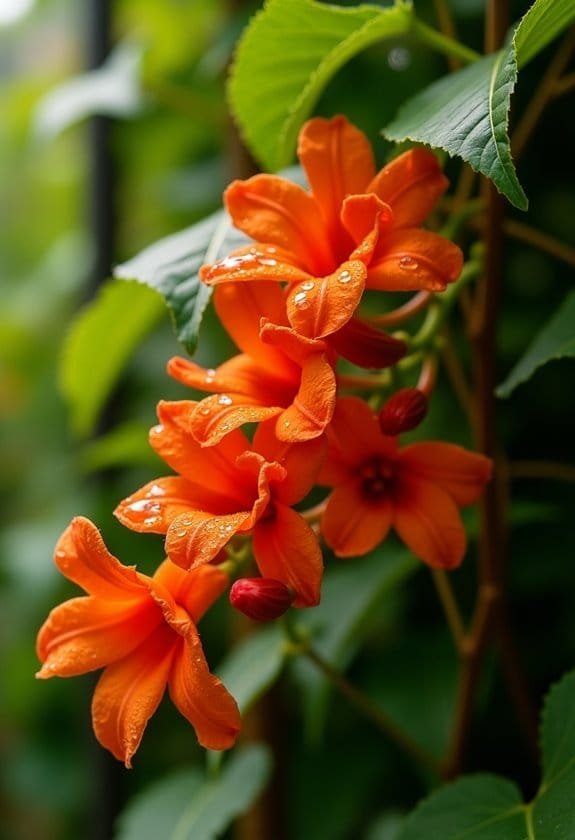
Campsis radicans requires thoughtful care and maintenance to flourish magnificently in gardens.
When planting, one should guarantee a distance of at least three feet from structures, as these vigorous climbers can damage surfaces with their strong aerial rootlets.
Ongoing care, including regular watering and seasonal pruning, reveals itself as essential for promoting healthy growth and spectacular blooms, ensuring that this stunning vine becomes an enchanting focal point in any landscape.
Planting Tips
When planting trumpet vine (Campsis radicans), choose a well-drained location that receives full sun to partial shade for the best results. This plant thrives in ideal light conditions, enhancing its growth and flowering potential.
Prior to planting, verify the soil is nutrient-rich and well-aerated, allowing roots to expand freely in their new environment. Common Box, which also prefers well-drained alkaline soil, can offer insights into effective soil preparation.
Once in the ground, frequent watering is crucial for the first six weeks. This initial period fosters establishment, encouraging robustness in the young vine. Following this, a weekly watering during dry spells helps maintain consistent soil moisture, necessary for the vigor of trumpet vines.
Proper maintenance also includes maintaining a few inches of distance from the crown during mulching; this technique prevents suffocation while aiding moisture retention.
As trumpet vines are vigorous climbers, a sturdy support structure—such as a trellis or fence—is essential. Without it, their aerial rootlets can cause damage, resembling a persistent vine of ambition reaching for the sky.
Regular pruning in late winter or early spring will control excessive growth while promoting a compact, healthy structure—cut back branches to three or four buds to keep the plant flourishing beautifully. Additionally, ensuring the soil conditions remain consistent will support overall plant vitality, reflecting how plants like Malus sylvestris thrive in their preferred environments.
Ongoing Care
After planting trumpet vine, ongoing care is essential for its long-term health and well-being. Regular pruning is vital, ideally conducted in late winter or early spring, as it not only helps control the vine's exuberant growth but also encourages a more compact plant structure.
Gardeners should cut back the branches to approximately 3-4 buds, aiding in the development of a more aesthetically pleasing form.
Established trumpet vines require minimal care, yet vigilant monitoring is necessary. It's important to check for weeds regularly, as these intruders can compete for resources and inhibit sunlight penetration, which is crucial for the plant's growth.
In the initial stages, frequent watering during the first six weeks is essential, shifting to once a week or during dry spells, gauging soil moisture with the simple finger test.
Fertilization poses no necessity after planting, as trumpet vines thrive in average to lean soils, demonstrating resilience without additional nutrients.
Maintenance practices should be adaptable, considering environmental growth conditions. Finally, gardeners must remain observant for the potential invasiveness of the plant, taking precautionary measures to prevent it from overtaking desired spaces in the landscape.
Suggested Companions
Trumpet vine's vibrant blooms can shine even brighter when paired with the right companion plants. Selecting native plants that share similar sunlight and water requirements enhances both the visual appeal and ecological benefits of your garden. Ideal companions for Trumpet vine include perennial species like black-eyed Susans and bee balm, which can bloom at different times throughout the season. This staggering of blooms reduces competition and creates continuous visual interest.
To promote healthy growth, mulch around the base of the Trumpet vine, guaranteeing a couple of inches of clearance from the crown to prevent rot. Regular pruning in late winter or early spring is essential, as it encourages compact growth, allowing surrounding companions ample sunlight. Yellowwort, which thrives in full sunlight, can also be a beneficial companion for pollinators.
Monitoring soil moisture helps maintain a thriving environment for both the Trumpet vine and its companions, particularly during their establishment phase and during dry spells. Consistent watering guarantees that both plants receive adequate hydration without overwhelming the root systems. Additionally, plants like Trumpet vine can benefit from well-drained soil to avoid issues like root rot, enhancing overall growth and vigor.
Common Issues
While generally resilient, trumpet vine can face issues such as root rot and vulnerability to various pests.
Excessive moisture often leads to root rot, a condition detrimental to the plant's health, necessitating well-drained soil to avert this risk. Common Honeysuckle can also be susceptible to pests like aphids, further underscoring the need for vigilant care.
Additionally, periodic inspections can help identify pests early, ensuring effective interventions and maintaining the vine's robust growth. Regular monitoring of growth patterns can also help prevent the spread of aggressive plant invaders, ensuring a healthy garden environment.
Pests/Diseases
Vibrant growth and resilience characterize Campsis radicans, also known as trumpet vine; however, it can still face common pests and diseases. While generally resistant to serious insect pests, trumpet vine isn't impervious to challenges such as aphids and thrips, which may inflict damage if left unchecked.
Aphid infestations can lead to stunted growth and distorted leaves. Fortunately, natural predators like ladybugs or insecticidal soaps can effectively control these pests, maintaining the plant's liveliness.
Another issue is powdery mildew, particularly in overly humid environments. This fungal disease thrives when air circulation is minimal, often producing a white powdery coating on leaves.
To combat this, gardeners should guarantee adequate air circulation and consider fungicide treatments for severe cases. Similarly, thrips can appear sporadically, causing discoloration of leaves that detracts from the vine's aesthetic appeal. Regular monitoring is essential, along with appropriate insecticides if necessary.
Lastly, neglected plants may suffer from root rot due to poor drainage or overwatering. This highlights the importance of well-drained soil, illustrating how proper care plays a foundational role in the health of Campsis radicans.
Solutions
To guarantee the health and beauty of Campsis radicans, gardeners must address several common issues that arise throughout its growth. First, this native plant can become invasive, particularly outside its native range, especially in areas like New England. To prevent it from overwhelming local flora, control measures, such as regular maintenance and strategic placement, are indispensable.
Additionally, the vigorous growth and aerial rootlets can cause significant foliage damage to surfaces like fences and walls; as a result, positioning the vine away from valuable structures is advisable.
Regular pruning is essential for managing its rapid growth and maintaining a compact shape. Gardeners should cut back branches to 3-4 buds in late winter or early spring, ensuring the plant retains its beauty without becoming unruly.
Moreover, insufficient sunlight may lead to reduced blooming; hence, providing full sun or partial shade is important for ideal flowering throughout summer.
Finally, preparing well-draining soil and clearing competing weeds allows Campsis radicans to thrive. By following these solutions diligently, gardeners can enjoy the vibrant blooms and lush growth of this remarkable plant while safeguarding surrounding native ecosystems.
Summary
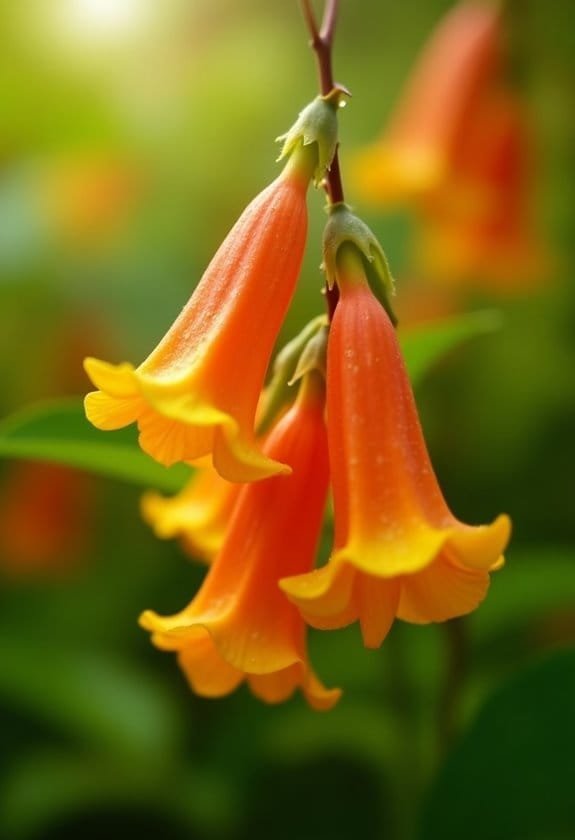
Campsis radicans, or Trumpet Vine, is a vigorous woody climber known for its striking, trumpet-shaped flowers in bright orange or red. Growing to heights of 20-40 feet, this remarkable plant showcases clusters of blooms throughout summer, effectively attracting hummingbirds and other pollinators that are drawn to its vibrant colors and nectar-rich blossoms.
Also referred to as Trumpet Creeper, it thrives in lean to average, well-drained soils and prefers exposure to full sun or part shade for maximum flowering potential.
Drought-tolerant once established, Trumpet Vine can quickly form dense colonies through its underground runners, making it invaluable for erosion control in certain landscapes. However, its extensive growth necessitates regular pruning to maintain control over its spread and density.
Post-blooming, the plant produces long, bean-like seed pods that contribute to its ecological impact, offering a means of propagation if not meticulously managed.