Catalpa bignonioides, known as the Indian Bean Tree or Cigar Tree, is a medium-sized tree native to the Southeastern United States, typically reaching heights of 25 to 40 feet. This tree features distinctive heart-shaped leaves and striking trumpet-shaped flowers that bloom in June and July, attracting crucial pollinators like bees and hummingbirds. Ideal growth occurs in nutrient-rich, well-drained soil under full sunlight, and it requires consistent moisture. While the tree's ecological contributions are significant, it faces threats from pests and diseases. Understanding its care and maintenance practices guarantees both aesthetic appeal and environmental value. Further exploration reveals even more about this remarkable species.
Main Points
- Catalpa bignonioides, commonly known as the Indian Bean Tree, is native to the Southeastern United States, thriving in diverse soil types.
- It features large, heart-shaped leaves and distinctive trumpet-shaped flowers that attract various pollinators, including bees and hummingbirds.
- The tree can reach heights of 25-40 feet and produces unique, elongated seed pods resembling cigars, facilitating efficient wind dispersal.
- Regular pruning and monitoring for pests are essential for maintaining tree health and structural integrity.
- Currently designated as threatened, the Indian Bean Tree's conservation is crucial for supporting local wildlife and ecosystems.
Introduction
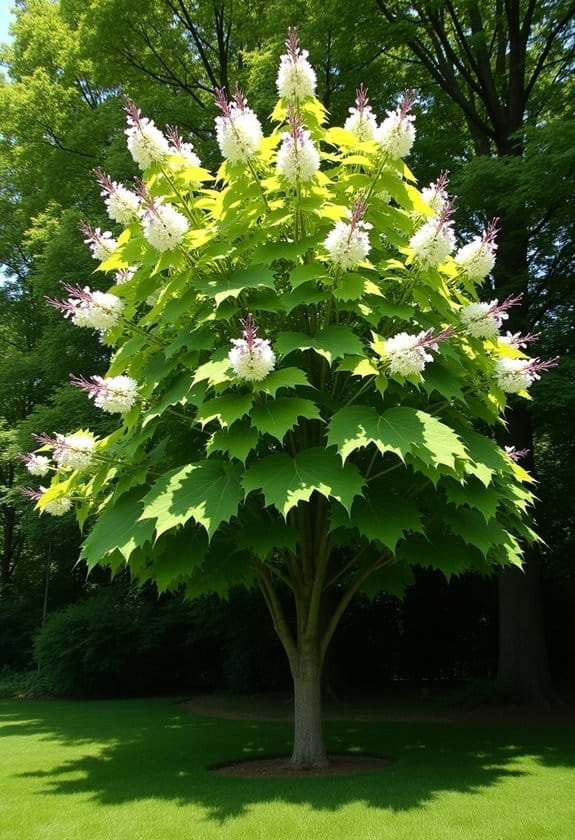
Catalpa bignonioides, more affectionately known as the Indian Bean Tree, stands as a remarkable specimen among deciduous trees native to the southeastern United States.
With its heart-shaped leaves and striking trumpet-shaped flowers that bloom in the warm months of June and July, this medium-sized tree captures attention not only for its visual allure but also for its unique elongated seed capsules, resembling cigar-like bean pods.
Understanding the unique characteristics and ecological significance of this tree is essential, especially considering its status as threatened, warranting careful attention to its conservation and management.
Common Name
Known for its distinctive characteristics, the Indian Bean Tree captures attention with its unique seed pods that bear a resemblance to cigars, earning it the nickname "Cigar Tree." This common name highlights not only the tree's visual appeal but also its historical and cultural significance, tying back to the Indigenous Catawba tribe. The term "Bean Tree" stems from the tree's production of flat, winged seeds encapsulated in lengthy, cylindrical pods that can reach impressive lengths of up to 40 centimeters, or 15 inches.
Native to the Southeastern United States, the Indian Bean Tree is often celebrated for its stunning trumpet-shaped flowers that bloom in June or July. These flowers showcase white petals adorned with striking yellow spots, further enhancing the tree's ornamental charm.
Due to its vigorous growth and remarkable visual attributes, the Indian Bean Tree has gained popularity in landscaping, extending far beyond its native habitats.
The evocative nickname "Cigar Tree" not only captures the eye but also weaves a narrative connecting the tree to the rich cultural heritage of the region, making it a notable fixture in both gardens and historical contexts.
Scientific Name
Often associated with its cultural roots, the Indian Bean Tree is scientifically classified as Catalpa bignonioides. This nomenclature highlights the tree's connection to the Bignoniaceae family, within which it showcases the captivating nature of its taxonomy. The name "Catalpa," despite frequent misspellings, pays homage to the Catawba Native American tribe, enriching its historical significance.
Catalpa bignonioides typically embodies a medium-sized, deciduous growth form, often reaching impressive heights of 25 to 40 feet. Its trunk can achieve a diameter of up to 1 meter, establishing a commanding presence in the landscape.
The tree is particularly recognizable for its substantial, heart-shaped leaves, which grow to lengths of 20 to 30 cm and widths of 15 to 20 cm. Remarkably, these foliage gems tend to emerge late in spring, adding to the tree's unique allure.
Primarily native to the southeastern regions of the United States, especially Florida, Alabama, and Georgia, this species has successfully naturalized beyond its original habitat.
The scientific name Catalpa bignonioides, consequently, not only identifies the species but also connects it deeply to its environmental and cultural context.
Overview
The Indian Bean Tree, or Southern Catalpa, stands out in landscapes across the southeastern United States with its impressive stature and unique features. This remarkable deciduous tree, scientifically known as Catalpa bignonioides, captivates observers by reaching heights between 25 and 40 feet, and boasts a trunk diameter of up to 1 meter.
Its large heart-shaped leaves, measuring 20 to 30 centimeters long, emerge late in the growing season, providing a lush canopy that filters sunlight.
In June and July, the Southern Catalpa showcases its striking white trumpet-shaped flowers, adorned with vivid yellow spots. These blooms attract a variety of pollinators, further enhancing the ecosystem.
Following flowering, the tree produces distinctive elongated seed capsules that resemble bean pods, measuring 20 to 40 centimeters long, which contribute to its nickname, the "Cigar Tree."
Notably, the Indian bean tree thrives in diverse soil types and conditions, favoring full sunlight and moist surroundings while tolerating clay and dry environments.
Its adaptive nature is complemented by mutualistic relationships with certain insects, which provide a fascinating glimpse into the interconnectedness of nature and its processes.
Key Features
Catalpa bignonioides showcases impressive growth, reaching heights of 25 to 40 feet and a trunk diameter of nearly 3 feet.
Its large, heart-shaped leaves, which appear late in the growing season, provide a striking backdrop for the tree's spectacular trumpet-shaped flowers that bloom in clusters of 20 to 40.
With a flowering season in June or July, this tree not only delights the eye but also enriches any landscape with its unique features and charm.
Growth Size
Reaching impressive heights of 25 to 40 feet, Catalpa bignonioides showcases a trunk diameter that can grow up to 1 meter (3 feet 3 inches).
This deciduous tree's growth size is notable, marked by its large, broad, and irregular crown shape, which results from its straggling growth patterns. This peculiar aspect enhances its aesthetic appeal, providing a unique look in any landscape.
In terms of foliage, Catalpa bignonioides features heart-shaped leaves measuring 20 to 30 cm (8 to 12 inches) long and 15 to 20 cm (6 to 8 inches) wide.
These leaves emerge relatively late in the growing season, contributing to a lush canopy as they unfurl. As the seasons progress, the tree produces elongated seed capsules that resemble bean pods, measuring 20 to 40 cm long, each containing flat, winged seeds that facilitate reproduction.
Appearance
With its striking appearance, the Indian Bean Tree stands out in any landscape. Its leaves are large and heart-shaped, measuring between 20–30 cm (8–12 in) long and 15–20 cm (6–8 in) wide. These impressive leaves appear late in the growing season, providing a lush canopy and a vibrant display of greenery.
The tree's bark matures from a warm brown to a cooler gray, showcasing hard plates and ridges that create distinctive texture as it ages.
In addition to its foliage, the Indian Bean Tree features a broad, irregular crown shape, the result of its straggling growth pattern. This unique structure allows branches to stretch and weave, often concealing the beautiful flower clusters among the abundant foliage.
Although the striking trumpet-shaped flowers aren't the focus here, they bloom in late spring, further enhancing the tree's visual charm.
Finally, the elongated seed capsules resemble bean pods, measuring 20–40 cm long, and contain flat, winged seeds that add to the tree's overall intrigue. Altogether, these characteristics contribute to the Indian Bean Tree's enchanting and unique appearance, earning it a prominent place in various gardens and parks.
Flowering Season
During late June to July, the Indian Bean Tree captivates onlookers with its remarkable display of trumpet-shaped flowers. This flowering season reveals clusters of 20 to 40 blossoms, mainly white with striking yellow spots and purple markings, creating a picturesque sight against its lush foliage.
These funnel-shaped flowers, each measuring about 3 to 5 inches in length, not only enhance aesthetic appeal but also play an essential role in the ecosystem by attracting various pollinators, including bees, which contribute to the tree's reproductive success.
The blooming period lasts several weeks, transforming landscapes into vibrant displays of nature's artistry. Flowering occurs after the heart-shaped leaves have fully developed, showcasing a stunning contrast between the rich green leaves and the delicate white flowers.
This timing guarantees that the tree captures maximum sunlight and energy for best growth. Additionally, the clusters of flowers emit a subtle, sweet fragrance, further enchanting visitors to parks and gardens.
As these blossoms fade, they leave behind elongated seed pods, continuing the Indian Bean Tree's legacy as a remarkable feature of the landscape.
Growing Requirements
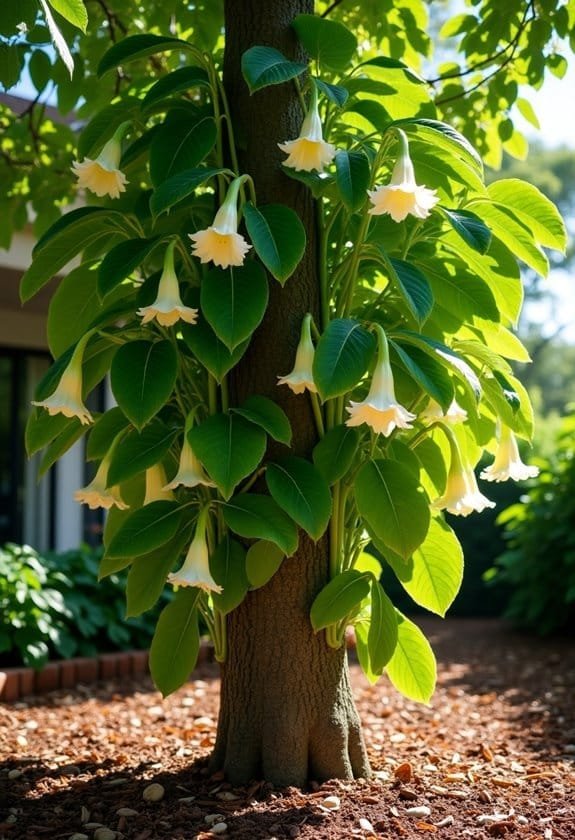
Catalpa bignonioides thrives under specific conditions that greatly influence its growth and health. This tree flourishes in rich, well-drained soil and demands full sunlight, as it greatly benefits from these elements for ideal development.
Additionally, understanding its temperature tolerance and water requirements is crucial for ensuring the young plants establish successfully while maturing into resilient specimens.
Light
For ideal growth and flowering, Catalpa bignonioides requires a good deal of sunlight, ideally soaking in at least six hours of direct light each day. This tree thrives in full sun, where it showcases its full potential, developing large, vibrant leaves and an impressive display of showy white flowers.
Such abundant exposure to sunlight not only supports vigorous growth but also enhances overall health, leading to a more visually appealing specimen.
Planting this species in shaded conditions, particularly during the sweltering summer months, can lead to detrimental effects. When deprived of adequate light, Catalpa bignonioides often experiences stunted growth and a reduced flower production, which diminishes its ornamental value and grandeur.
Consequently, it's vital to choose a sheltered location that protects the tree from strong winds while ensuring it receives ample sunlight. This adaptability allows the Catalpa to thrive in diverse soil types, although it truly flourishes in fertile, well-drained soils under consistent sunlight exposure.
Soil
With a preference for fertile, well-drained soil, Catalpa bignonioides flourishes when planted in nutrient-rich locations that retain moisture.
This adaptable tree thrives in a variety of soil types, tolerating both wet and dry conditions, making it a versatile choice for different landscapes.
Planting this tree requires particular attention to the composition of the soil around the root area. When establishing a new Catalpa, it's recommended to excavate a hole that's twice the width of the root ball, ensuring the soil around the edges is loosened to facilitate ideal root penetration.
Regular mulching with well-rotted manure or compost is essential, as it not only contributes essential nutrients but also helps maintain moisture levels throughout the growing season.
Ideal planting conditions also necessitate full sunlight exposure, enhancing both growth speed and flowering potential.
Water
Consistently moist soil conditions are essential for the health of Catalpa bignonioides, as this tree thrives in environments that support its fast growth and large leaf development. It prefers fertile, well-drained soil rich in moisture, creating a robust habitat for its expansive root system.
During hot and sunny periods, water demand increases; the tree struggles without sufficient moisture, particularly in nutrient-poor soils, where drought stress can greatly hinder its growth.
However, overwatering presents a distinct risk, potentially leading to root rot, which can compromise the tree's overall health. Once established, Catalpa bignonioides can tolerate brief droughts, but young trees require particular attention, especially during their first few years, to avoid frost damage and guarantee adequate moisture levels.
Implementing regular mulching with well-rotted manure or compost not only aids in moisture retention but also enriches the soil around the tree's roots, fostering a beneficial environment for development.
This careful balancing act of maintaining ideal water levels exemplifies the intricate relationship between moisture management and the successful growth of the Indian Bean Tree, culminating in a thriving landscape feature that enchants with its beauty and grandeur.
Temperature
Catalpa bignonioides demonstrates remarkable adaptability to varying temperatures, thriving in conditions that range from mild to cold climates. This resilient tree exhibits impressive hardiness, enduring temperatures as low as -17°C (1.4°F), with certain varieties capable of tolerating even more frigid conditions down to -30°C (-22°F). Such remarkable endurance allows it to flourish in diverse regions.
While Catalpa bignonioides is sturdy in winter, young specimens should receive protection from frost to guard against potential damage. Mature trees, however, are generally resilient, exhibiting robust health through severe winter months.
To achieve ideal growth and flowering, this species prefers full sunlight, and in warmer locales, it benefits from a sheltered environment that mitigates harsh conditions.
In terms of soil requirements, Catalpa bignonioides thrives in fertile, well-drained soil that retains adequate moisture without becoming waterlogged. Regular monitoring of the tree's health and structural stability post-winter is advisable, ensuring that its extensive root system effectively maintains soil stabilization.
Consequently, by understanding these temperature requirements, gardeners can enhance the growth and longevity of the vibrant Catalpa bignonioides, transforming landscapes with its stunning presence.
Pollinator Criteria
Catalpa bignonioides entices a diverse array of pollinators, particularly various species of bees, drawn in by its vibrant trumpet-shaped flowers.
During June and July, when the tree blooms, these bees are actively foraging for nectar, making this period vital for pollination success. The flower's intricate design, complete with guiding markings, not only enhances visibility but also facilitates efficient pollination, which is essential for local biodiversity. Furthermore, the presence of nectar sources from flowering plants like Calluna vulgaris helps sustain these bee populations throughout their foraging activities. Additionally, the availability of Primula vulgaris in nearby habitats contributes to pollinator health by providing an early season food resource.
Attracted Pollinators
With its trumpet-shaped white flowers featuring striking yellow spots, Catalpa bignonioides acts as a magnet for a variety of pollinators. These blossoms, rich in nectar, attract numerous bees, which enthusiastically visit during the blooming period in June and July, perfectly coinciding with their active foraging season. The flower structure is ingeniously designed to facilitate efficient nectar extraction, encouraging pollinators to linger while inadvertently transferring pollen between blooms.
In addition to bees, hummingbirds are drawn to the vibrant colors of the flowers, nourishing themselves and contributing to the tree's pollination process. These tiny aviators exhibit impressive agility, darting from flower to flower, promoting genetic diversity within the tree population.
Furthermore, Catalpa bignonioides plays an essential ecological role by serving as a larval host for the Catalpa sphinx moth. This relationship showcases the tree's importance in sustaining local pollinator populations, providing both nourishment through nectar and habitat for vulnerable species.
Pollination Method
How does Catalpa bignonioides attract its pollinators? This majestic Indian Bean Tree relies heavily on its striking trumpet-shaped flowers, which bloom vibrantly from June to July, to engage pollinators such as bumblebees.
The flower structure features a narrow corolla tube that lures these large-bodied insects deep within, facilitating effective pollination as they extract sweet nectar. Each flower showcases a visually appealing corolla, adorned with unique yellow spots that enhance its allure, drawing various pollinators throughout the flowering period.
In a single panicle, up to 40 flowers can blossom simultaneously, greatly boosting the likelihood of attracting pollinators and thereby enhancing reproductive success, which is crucial for future generations.
Success in pollination is paramount; when these flowers are fertilized, they yield elongated seed capsules that can reach lengths of 40 centimeters. This remarkable fruit development not only propels the propagation of the species but also enriches genetic diversity within the population.
Hence, the intricate relationship between the Indian Bean Tree's flowers and its pollinators underscores the essential role of successful pollination in maintaining healthy ecosystems and sustaining vibrant flora.
Care & Maintenance
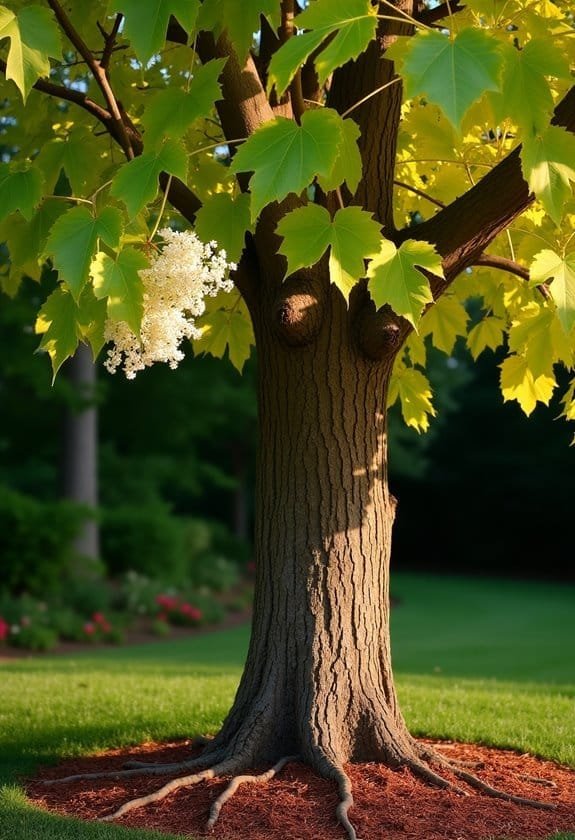
Caring for Catalpa bignonioides involves attention to planting tips, ongoing maintenance, and selecting appropriate companions to enhance its growth. By ensuring the tree is placed in full sunlight and well-drained soil, gardeners can create a thriving focal point, while regular watering and annual fertilization will sustain its vibrant blooms.
Additionally, pairing Catalpa with compatible plants not only enriches the landscape but also promotes a harmonious ecosystem that fosters growth and resilience.
Planting Tips
To successfully plant and maintain the Indian Bean Tree (Catalpa bignonioides), choose a sunny, spacious location with nutrient-rich, well-drained soil, ideally between early spring and autumn.
These planting tips, which honor the approaches of Native American cultivation practices, contribute to the tree's robust growth. When planting, guarantee the soil remains moist but not waterlogged, as young trees are sensitive to drought while mature specimens exhibit remarkable hardiness.
A slow-release organic fertilizer, applied annually in spring, bolsters nutrient absorption, especially in sunnier locales that may deplete essential resources. The interplay of sunlight and nutrient availability greatly impacts the tree's health, resembling the nurturing environment that indigenous communities provided for various plants.
Mulching with well-rotted manure or compost serves an essential function by retaining soil moisture around newly planted trees, though care should be taken to avoid direct contact with the trunk to prevent rot.
During autumn, pruning emerges as a crucial practice, allowing gardeners to remove dead or diseased wood, thereby promoting a healthier structure and encouraging bountiful leaf growth.
Ultimately, these thoughtful practices guarantee the Indian Bean Tree thrives beautifully in your landscape.
Ongoing Care
Ongoing care for Catalpa bignonioides is essential for guaranteeing robust growth and longevity. This spectacular tree thrives with regular watering; however, it's vital to avoid overwatering or letting the soil dry out completely.
To nourish the tree effectively, gardeners should apply annual mulching with well-rotted manure or compost, which not only enriches the soil with crucial nutrients but also helps retain moisture at its base.
Pruning plays a significant role in maintaining a healthy structure. Autumn is the ideal season for this task, where the focus should be on removing dead or diseased branches, guaranteeing the tree's natural shape remains unaltered.
For young Catalpa trees, protection from frost during winter is paramount, while older specimens are fairly hardy, tolerating temperatures as low as -17°C; extreme cold may warrant additional care.
Additionally, regular monitoring for pests, such as aphids and mealybugs, contributes to the tree's overall vitality. Healthy Catalpa bignonioides can mostly fend off these nuisances, yet vigilance remains key to safeguarding their well-being.
Through diligent ongoing care, gardeners can guarantee their Catalpa trees flourish, showcasing the beauty and majesty for which they're celebrated.
Suggested Companions
Pairing Catalpa bignonioides with the right companion plants can enhance both its aesthetic appeal and overall health. Taller perennials such as Rudbeckia (Black-eyed Susan) thrive in similar sunlight conditions, providing a striking visual contrast to the broad leaves of the Indian Bean Tree.
Adding Aster varieties can extend the garden's bloom period, showcasing vibrant colors in late summer and fall, long after the tree's flowers have faded.
Ground cover options like Daylilies not only tolerate the shade cast by Catalpa bignonioides, but they also suppress weeds while introducing brilliant color at the tree's base. For added depth, intersperse Dwarf Hydrangeas among the other plants. Their delicate blooms and lush foliage create a soft, textural contrast against the thick trunk and heart-shaped leaves of the tree.
To maintain an ideal growing environment, gardeners must regularly prune any competing weeds and surrounding shrubs. This practice guarantees that Catalpa bignonioides receives adequate sunlight and nutrients, promoting its health and encouraging harmonious interactions with its companion plants.
Ultimately, a thoughtfully curated arrangement can transform landscapes into vibrant, flourishing ecosystems.
Common Issues
Catalpa bignonioides faces a variety of common issues, ranging from pest infestations to diseases that can impact its health and growth.
While healthy trees generally withstand aphids and mealybugs, problems like brittle cinder and powdery mildew may arise, requiring prompt intervention to prevent deterioration.
Additionally, environmental factors and toxic components of the tree present further challenges that, if addressed properly, can help maintain its significance and beauty in diverse landscapes.
Pests/Diseases
The Indian Bean Tree faces several common pests and diseases that can considerably threaten its health. One significant concern is brittle cinder, a fungal disease that inflicts trunk rot and can lead to the tree's collapse, endangering not just the tree, but surrounding flora.
Additionally, the tree is susceptible to Verticillium wilt, a soil-borne fungus that disrupts its water transport system, manifesting in leaf yellowing and curling. Unfortunately, there's no effective cure for this devastating condition, which can jeopardize the tree's health.
Moreover, powdery mildew can appear on the leaves, presenting as an unsightly white coating; left unchecked, it can spread rapidly, necessitating the removal of affected foliage to shield the remaining leaves.
Root damage from voles—small rodents that love to gnaw on roots—can further undermine the tree's structural integrity, resulting in stunted growth and diminished health.
Even conditions like drought, excessive shade, or over-fertilization might create blooming issues, as these trees typically bloom only after reaching 5 to 8 years of age.
When wounded by pests or diseases, the enchanting Indian Bean Tree struggles to fulfill its essential role in the ecosystem.
Solutions
Maintaining the health of the Indian Bean Tree requires proactive measures to combat common issues related to pests and diseases. Catalpa bignonioides is particularly susceptible to pests such as aphids and mealybugs; however, a robust, healthy tree often enjoys the benefit of natural pest control from predators like house sparrows.
Regularly clearing large leaves, flowers, and pods not only alleviates litter concerns but also diminishes pest habitats.
To effectively manage powdery mildew, immediate removal of affected foliage is essential, while ensuring proper air circulation around the tree helps mitigate humidity levels that favor fungal growth.
Annual pruning plays a crucial role in maintaining the tree's structure; it involves removing weak or crossing branches, which not only reduces the risk of disease but also enhances light penetration. This practice fosters healthier growth and improves overall vigor.
Furthermore, young trees require protection from frost damage. Utilizing garden fleece and insulating the soil with fir branches during colder months can create a supportive microenvironment.
What are the similarities and differences between Catalpa Bignonioides and Buddleja Globosa trees?
Catalpa Bignonioides, also known as the Southern Catalpa, has striking heart-shaped leaves and produces long bean-like pods. In contrast, Buddleja Globosa, or the orange ball tree, has distinctive spherical clusters of fragrant orange flowers. Both trees require well-draining soil and regular watering, but the buddleja globosa (orange ball tree) plant care requires more attention to its pruning and shaping.
Summary
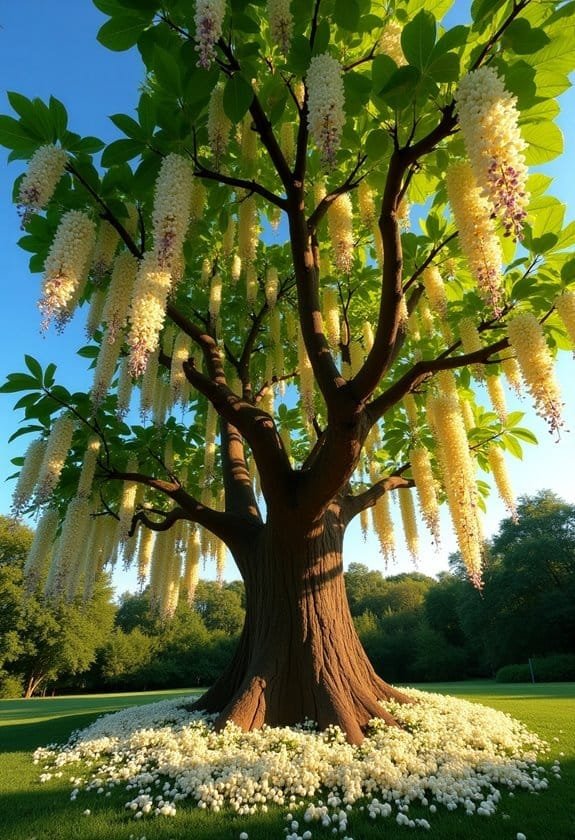
Known for its striking appearance and ecological significance, Catalpa bignonioides, or the Indian Bean Tree, thrives in the southeastern United States. This majestic deciduous tree typically reaches heights of 25 to 40 feet, showcasing its large heart-shaped leaves that usher in a enchanting aesthetic.
In June or July, the tree bursts forth with showy trumpet-shaped flowers, pure white adorned with vibrant yellow spots, enticing a myriad of pollinators while aesthetically enriching surrounding landscapes.
The tree's unique fruit features elongated seed capsules, resembling slender bean pods, that can extend between 20 to 40 centimeters, with each capsule containing flat, winged seeds designed for wind dispersal.
Catalpa bignonioides stands out for its fascinating ecological interactions, such as the increase in nectar production when its leaves are damaged, cleverly attracting bodyguard ants that protect it from herbivory.
However, the Indian Bean Tree faces challenges; it's listed as threatened on the IUCN Red List. This status underscores the pressing need for conservation efforts in response to habitat loss and environmental changes that jeopardize its survival, highlighting both its beauty and the significant role it plays in biodiversity.