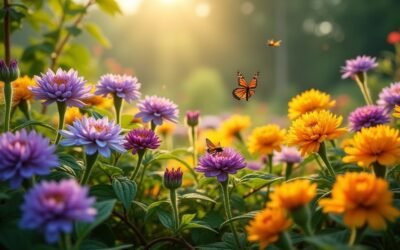
Centaurea macrocephala, or Giant Knapweed, captivates with its impressive stature, typically reaching 3 to 4 feet height and producing striking yellow flowers, 3 to 4 inches wide, from July to September. This perennial thrives in full sun and well-drained soils, flourishing even in nutrient-poor montane habitats. However, it exhibits aggressive growth tendencies, potentially overshadowing native flora, making vigilant management essential. While it attracts valuable pollinators like bees and butterflies, its self-seeding nature can lead to invasiveness. Understanding its ecological impact and maintenance requirements fosters a balanced garden approach, ensuring both beauty and sustainability in landscape design. Exploring further reveals even more insights.
Main Points
- Giant Knapweed (Centaurea macrocephala) features striking yellow flowers, growing 3-4 feet tall, ideal for enhancing landscape aesthetics.
- Native to the Caucasus, this plant thrives in USDA Hardiness Zones 3-7 and prefers full sun and well-drained soils.
- It exhibits aggressive growth and self-seeding, making it a noxious weed in some areas, threatening local plant biodiversity.
- Companion planting with species like Achillea millefolium and Echinacea purpurea reduces resource competition and promotes ecological balance.
- Regular maintenance through deadheading and monitoring prevents overcrowding and common issues like powdery mildew, ensuring healthier growth.
Introduction
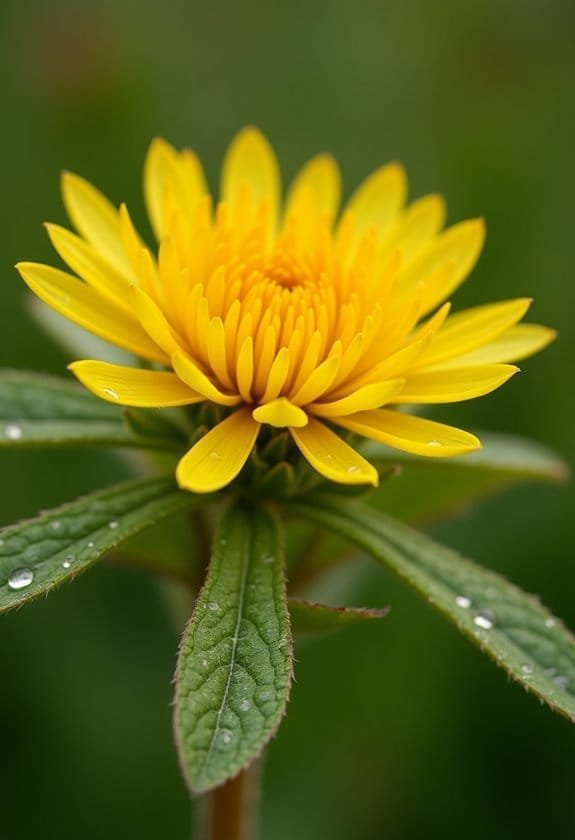
Centaurea macrocephala, widely known as Giant Knapweed, is an herbaceous perennial renowned for its stunning, large yellow blooms that grace gardens each summer.
Native to the Caucasus region, this striking plant typically reaches heights of 3 to 4 feet, flourishing in full sun and well-drained soils across diverse USDA Hardiness Zones.
Though it captivates with its ornamental beauty, its invasive tendencies pose significant threats to local ecosystems, prompting a closer examination of its impact on biodiversity. Additionally, like its relative, common knapweed, it can significantly reduce local biodiversity by dominating native plant species, leading to increased competition.
Common Name
Known commonly as Giant Knapweed, this striking plant boasts large, thistle-like blooms in a vibrant yellow hue. Officially designated as Centaurea macrocephala, its enchanting appearance often garners appreciation in gardens and landscapes. The common name Knapweed reflects its historical usage in herbal remedies, as well as its spiky, thorn-like structure that captures attention.
Giant Knapweed typically grows to an impressive height of 3 to 4 feet, making it one of the tallest species in the Knapweed category. This remarkable height, coupled with its bright yellow flowers, makes it a standout option for ornamental gardening. Additionally, it thrives in well-drained, nutrient-poor soils, which further contributes to its successful growth in various environments.
In addition, it attracts various pollinators, including bees and butterflies, which play significant roles in the ecosystem by facilitating plant reproduction. However, managing this plant is vital, as its aggressive growth patterns and propensity for self-seeding can lead to invasive behavior in specific regions. This aspect of its behavior is similar to its related species, Greater Knapweed, which also displays vigorous growth and potential invasiveness.
This duality of beauty and potential invasiveness underscores the need for careful consideration when incorporating Giant Knapweed into a garden. By embracing its appeal while being mindful of its growth, gardeners can enjoy its vibrant presence without compromising local ecosystems.
Scientific Name
The scientific name for Giant Knapweed—Centaurea macrocephala—provides essential insight into its classification and characteristics. This plant belongs to the genus Centaurea, which encompasses a diverse array of flowering varieties commonly known as knapweeds. The species name "macrocephala" derives from Greek, signifying "large head," aptly describing the impressive, thistle-like flowers that bloom in vibrant yellow from early to mid-summer.
Native to the Caucasus region, Centaurea macrocephala grows in mountain habitats where the conditions favor its robust development. It thrives in montane environments, showcasing its adaptability to various climates. This species is known for its ability to produce prolific seeds, which can further facilitate its spread in favorable conditions.
This perennial not only captivates horticulturists as a striking cut flower but also raises concerns due to its invasiveness in specific regions, particularly across parts of the United States. Greater Knapweed's self-seeding tendencies can lead to rapid spread, necessitating monitoring to prevent overwhelming neighboring plants.
As it spreads, it often disrupts local ecosystems, leading to its classification as a noxious weed in states like Washington. Understanding Centaurea macrocephala's classification, along with its potential impact on biodiversity, is significant for gardeners and conservationists alike.
The intricate balance between appreciation and management of this striking plant underscores the complexities of ecological stewardship.
Overview
Giant Knapweed, or Centaurea macrocephala, stands out as a remarkable herbaceous perennial that captures the attention of gardeners and nature enthusiasts. Native to the Caucasus region, this striking plant features large, thistle-like yellow flowers that measure 3-4 inches in width and bloom during early and mid-summer.
Growing to heights of 3-4 feet, it creates an impressive display while attracting a variety of pollinators, including bees and butterflies, keen to partake in its nectar.
Thriving in full sun and well-drained soils, Giant Knapweed flourishes in USDA hardiness zones 3-7. Its resilience against deer and rabbits only adds to its appeal as a Great Plant in garden design. Furthermore, it grows well in a range of soil conditions, which helps it adapt to various environments.
However, potential gardeners should be cautious, as it has the ability to self-seed and, if left unchecked, can become invasive. This characteristic might undermine local biodiversity by out-competing native flora. Additionally, similar to Musk thistle, Giant Knapweed poses challenges to agricultural productivity due to its invasive nature.
Beyond its ornamental value, Centaurea macrocephala is also revered in floral arrangements, both fresh and dried.
Anyone seeking more information or tips can reach out via email address for guidance about planting and care, ensuring that this vibrant species enhances their garden.
Key Features
Centaurea macrocephala, or Giant Knapweed, showcases a remarkable growth size, reaching heights of 3 to 4 feet and spreading from 1 to 2 feet.
Its striking appearance is characterized by large, thistle-like yellow flowers that can measure up to 4 inches in diameter, each enveloped by ornate brown bracts.
With a flowering season spanning 2 to 3 weeks in early to mid-summer, this plant not only captivates garden enthusiasts but also draws essential pollinators, adding to its allure.
Growth Size
Reaching impressive heights, Centaurea macrocephala, commonly known as Giant Knapweed, stands between 3 to 4 feet (90 to 120 cm) tall, with a spread of 1 to 2 feet (30 to 60 cm) in width. This plant exhibits remarkable growth habits, thriving in environments where it can establish its presence robustly over time. Height variation is minimal among individual specimens, contributing to their striking uniformity within garden spaces.
As Giant Knapweed advances in growth, it often develops clump formation, where multiple stems grow closely together, enhancing its visual impact and creating a substantial focal point in landscaping. With its unbranched stem structure, this species commands attention and showcases its impressive stature.
Initially, it takes a few years to reach full growth potential, a process that requires patience from gardeners. However, once established, the plant demonstrates resilience, showcasing adaptability to a variety of soil conditions. Its base leaves are oval and petiolate, evolving to shorter and narrower leaves as they ascend the stem, which adds to the plant's distinctiveness.
Appearance
Typically showcasing a striking presence, Centaurea macrocephala is adorned with large, thistle-like flower heads that bloom in vibrant golden yellow. These flower heads, measuring between 3 to 4 inches in diameter, dominate the plant's appearance, enthralling gardeners with their bold coloration. The plant typically reaches heights of 3 to 4 feet, spreading 1 to 2 feet wide, making it a prominent addition to garden aesthetics.
Each flower head is solitary, cradled by rounded, shiny, papery brown bracts that feature fringed tips and occasional spines. This unique structure not only adds visual interest but also facilitates effective landscape integration, enhancing design possibilities across various garden themes.
The basal leaves are oval and petiolate, while the shorter, narrower leaves on the upper stem create an appealing contrast. Awash in color variations, Centaurea macrocephala's numerous yellow florets bloom beautifully, producing a long pappus that can exceed one centimeter in length, aiding in seed dispersal.
This blend of striking features makes Giant Knapweed a must-have for those looking to elevate their outdoor spaces, ensuring an eye-catching focal point that draws attention and admiration.
Flowering Season
During the early to mid-summer months, specifically from July to September, Centaurea macrocephala bursts into bloom, showcasing its vibrant yellow flowers. These striking blooms, measuring 3-4 inches in width, consist of numerous yellow florets, each enclosed in glossy, papery brown bracts adorned with fringed tips.
The flowering duration typically lasts for about 2-3 weeks, during which the plant captivates various pollinators, including bees and butterflies, drawn in by its vivid colors. The bright hues of these flowers serve as beacons in the garden, encouraging the essential process of pollination that sustains ecosystems.
Regular deadheading during the flowering season not only helps maintain the plant's aesthetics but can also extend its bloom longevity, allowing gardeners to enjoy its splendor longer. This proactive care reflects a gardener's dedication to preserving the beauty and ecological benefits of Centaurea macrocephala.
Growing Requirements
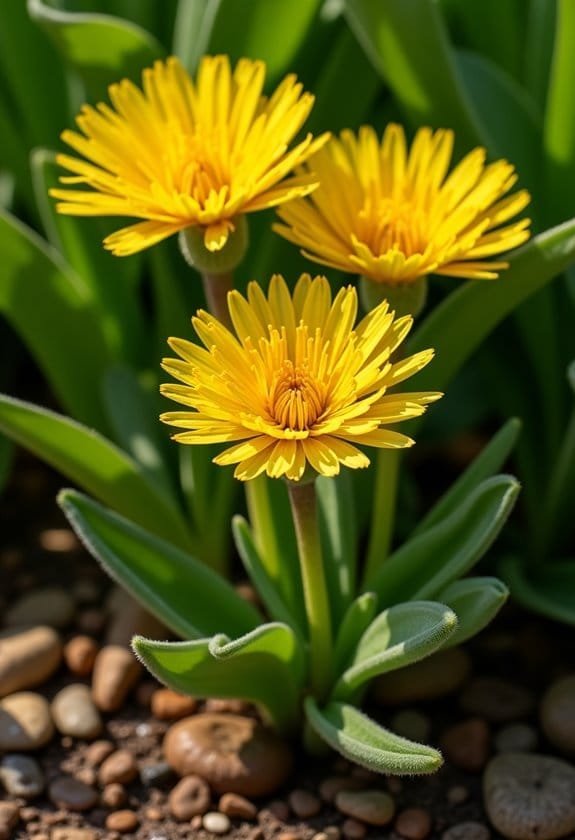
Centaurea macrocephala flourishes under full sunlight, readily adapting to well-drained soils that range from dry to medium moisture.
This hardy perennial, thriving in USDA zones 3 to 7, shows remarkable resilience, particularly in cooler climates.
With its preference for average soil that meets its moderate watering needs, the plant not only tolerates drought but also emphasizes the importance of proper placement to prevent invasive growth.
Light
A sunny location is essential for the ideal growth of Centaurea macrocephala. This perennial plant thrives in full sun, requiring at least six hours of direct sunlight daily to achieve peak growth and vibrant blooms.
The benefits of sunlight are evident in the plant's strong structure and plentiful flowering, as full exposure typically yields the best results. Although it can handle varying light conditions, understanding the plant's light adaptation is important when selecting a planting site.
In hotter climates, Centaurea macrocephala demonstrates remarkable shade tolerance. It can tolerate part shade, particularly when temperatures rise, allowing it to maintain overall health without suffering from sunburn or wilting. Cornflowers, as an example of drought-tolerant plants, also exhibit similar adaptability to varying light conditions.
Many gardeners will find that providing a little relief from intense sunlight enhances the plant's vigor, a reminder of nature's delicate balance.
When establishing a garden, local climate conditions and sun exposure play significant roles in the plant's performance.
Centaurea macrocephala adapts well within USDA Hardiness Zones 3 to 7, emphasizing the importance of planting it in a location that aligns with its light preferences. Understanding these requirements will lead to a flourishing garden filled with striking blooms. Moreover, like Crataegus monogyna, local ecosystems benefit from the inclusion of diverse plants that support wildlife and pollinators.
Soil
Healthy soil is essential for the successful cultivation of Centaurea macrocephala. This stunning plant flourishes best in well-drained soils, favoring those with dry to medium moisture levels to support vigorous growth and abundant flowering.
Drainage importance can't be overstated, as stagnant water can lead to root rot and other detrimental conditions. While it adapts to various soil types, Centaurea macrocephala thrives in soils of average fertility, which fosters ideal development.
In environments where soil conditions may be less than ideal, such as disturbed areas, this resilient species demonstrates a remarkable ability to establish itself, showcasing its versatility across USDA Hardiness Zones 3 through 7.
When selecting the perfect location for planting, gardeners should consider full sun exposure to maximize growth, although partial shade may be beneficial in hotter climates, reducing stress on the plant.
Water
Ensuring proper watering is vital for cultivating Centaurea macrocephala, especially during its establishment phase. This vibrant perennial thrives in dry to medium moisture conditions and prefers well-drained soils, which mitigate risks of root rot and other complications related to excessive moisture. During its early growth stages, employing effective watering techniques is essential; gardeners should maintain consistent moisture levels without saturating the soil.
Once established, Giant Knapweed showcases impressive drought tolerance, requiring considerably less frequent watering compared to many other perennials. This remarkable adaptability allows it to flourish in less water-intensive gardens, aligning with modern practices of moisture management and conservation.
Regular assessments of soil moisture can guide gardeners in determining the appropriate watering schedules, ensuring the plant receives just enough hydration to support its growth.
Additionally, full sun exposure not only benefits Centaurea macrocephala's overall health but also plays a vital role in maintaining ideal moisture levels. Enhanced soil drainage contributes to better evaporation processes, minimizing the risk of overwatering.
Temperature
Growing Centaurea macrocephala successfully hinges on understanding its temperature requirements. This robust plant thrives in USDA Hardiness Zones 3 to 7, making it particularly suitable for cooler climates.
While it flourishes best under full sun, it can tolerate partial shade in hotter areas, helping to mitigate the stress associated with temperature extremes.
The ideal temperature range for Centaurea macrocephala typically aligns with the warm summer months, as the species usually blooms from July to September. For healthy growth and prolific flowering, the warm temperatures during this period are essential. The temperature effects can greatly influence its flowering cycle, as cooler temperatures may delay blooming and impair overall plant vigor.
Centaurea macrocephala, being native to the temperate climates of the Caucasus region, showcases remarkable resilience. Once well-established, it adapts effectively to local conditions, including average to medium moisture levels in well-drained soils, and can withstand drought. Additionally, its success in various conditions highlights the importance of understanding invasive plant interactions to maintain ecological balance.
Pollinator Criteria
Centaurea macrocephala, commonly known as Giant Knapweed, plays a pivotal role in supporting various pollinators, particularly bees and butterflies.
Its striking yellow flowers, which bloom from early to mid-summer, offer a rich nectar source that attracts these beneficial insects, enhancing local biodiversity.
Attracted Pollinators
The vibrant yellow flowers of Centaurea macrocephala, also known as Giant Knapweed, effectively attract a variety of pollinators, particularly bees and butterflies. Blooming for 2-3 weeks in early to mid-summer, these large, thistle-like flower heads can measure 3-4 inches wide, offering substantial landing space. This design not only facilitates easy access but also enhances pollinator behavior, as the flowers align perfectly with the peak foraging needs of many bee species.
The nectar availability in the florets draws in honeybees, considerably contributing to local pollinator populations and biodiversity. Their foraging patterns, influenced by the plant's abundant nectar, play a fundamental role in maintaining ecological balance.
Additionally, the habitat diversity provided by Giant Knapweed supports not only these bees but also various butterfly species, which find both nourishment and refuge among the dense flowers.
Beyond the flowering period, the seed heads attract winter birds such as goldfinches, showcasing the plant's multifaceted ecological benefits. Therefore, Centaurea macrocephala serves not only as an essential food source for pollinators during summer but also enriches the entire ecosystem year-round, making it priceless for biodiversity efforts.
Pollination Method
Pollination in Centaurea macrocephala occurs primarily through bees and butterflies, which are drawn by the plant's bright yellow flowers. These vibrant blooms, flourishing from early to mid-summer, provide abundant nectar and pollen, vital elements for the survival of these foraging pollinators. By adopting effective cross pollination strategies, Giant Knapweed enhances genetic diversity within plant populations, allowing it to thrive more robustly. Moreover, Common Tansy's pollinator attraction reflects the essential role that flowering plants play in supporting local biodiversity.
However, the invasive species impacts of Centaurea macrocephala can disrupt local ecosystems. While it attracts beneficial insect species, it can outcompete native flora, leading to diminished biodiversity. This competition forces some indigenous plants and their associated pollinators to struggle for resources necessary for survival.
In light of these effects, habitat conservation efforts become necessary. To support sustainable ecosystems and biodiversity, one must consider managing Giant Knapweed populations responsibly. By balancing the ecological benefits it provides with the potential threat it poses to local flora, conservationists can guarantee that pollinators continue to thrive.
Ultimately, adopting informed management practices can maintain the delicate equilibrium of the habitats where this striking plant flourishes, furthering the resilience of both pollinators and plant species alike. Additionally, managing the growth of White Clover's nitrogen-fixing capabilities can help enhance soil fertility in areas where Centaurea macrocephala competes.
Care & Maintenance
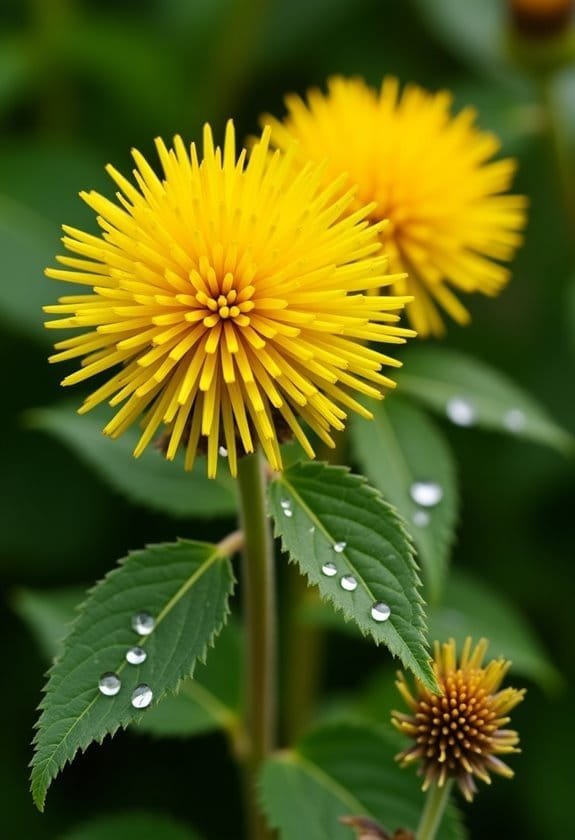
Centaurea macrocephala requires thoughtful care and maintenance to flourish beautifully in any garden setting.
To guarantee its success, gardeners should focus on strategic planting in well-drained soil and consider ongoing care strategies, like regular deadheading for prolonged blooms. Additionally, tormentil's robust rhizomatous root system supports healthy growth in similar soil conditions, making it an excellent companion plant choice.
Selecting suitable companion plants can create a vibrant ecosystem, enhancing both aesthetic appeal and ecological harmony while minimizing competition. It's beneficial to consider planting near species such as cross-leaved heath (Erica tetralix) that thrive in similar acidic conditions, promoting biodiversity in the garden.
Planting Tips
When it comes to planting Centaurea macrocephala, finding the right spot is vital. This striking perennial flourishes in well-drained soils and thrives under full sun to partial shade, so careful site selection is imperative for ideal growth. Ideally, gardeners should aim for a location that basks in at least six hours of sunlight daily.
Utilizing appropriate planting methods can substantially enhance success. Spring serves as the best time to sow seeds, while division can occur concurrently in spring or autumn to foster robust growth while minimizing invasive tendencies.
When planting, it's prudent to maintain ample spacing between plants, as this species can easily outcompete neighboring flora if left unchecked.
Moderate watering is also important; Centaurea macrocephala boasts drought tolerance, favoring dry to medium moisture conditions. Regular deadheading during the bloom period not only prolongs flowering but also mitigates unsightly self-seeding.
With diligent care and attention to these propagation techniques, gardeners can cultivate a vibrant display of this magnificent knapweed, enhancing their landscaping aesthetic while enjoying the beauty it brings to their outdoor spaces.
Ongoing Care
Ongoing care for Centaurea macrocephala is vital to maintaining its health and vibrancy. Regular deadheading during its blooming period from July to September not only encourages prolonged flowering but also prevents unwanted self-seeding, allowing this robust perennial to thrive without overwhelming local flora.
Pruning techniques play a significant role in this care; by removing spent blossoms, gardeners can stimulate new growth and maintain an attractive appearance.
Seasonal adjustments are equally important. Although Centaurea macrocephala generally flourishes in well-drained average soil with medium to dry moisture levels, applying a balanced fertilizer in early spring can enhance its growth, particularly after dividing established clumps for propagation.
This species, usually resistant to serious pests, may experience issues with powdery mildew, so monitoring for signs of this fungal affliction is wise.
Moreover, gardeners should vigilantly watch for the invasive spread of Centaurea macrocephala, as it can outcompete native plants.
With minimal maintenance required once established, this stunning perennial can effectively enhance any garden, provided ongoing care is prioritized to promote its vibrancy and ecological balance.
Suggested Companions
Creating a visually stunning garden can be enhanced by selecting the right companions for Centaurea macrocephala. This bold yellow flower pairs beautifully with large perennials like Achillea millefolium and Echinacea purpurea, which not only complement its vibrant hue but also introduce dynamic layers of color contrast techniques.
To adopt drought tolerance strategies, incorporating plants such as Salvia nemorosa or Lavandula angustifolia minimizes water competition, crucial for healthy growth in well-drained soils. The establishment of deep-root systems in these companion plants helps improve soil structure, boosting overall ecosystem health.
For those passionate about fostering a thriving ecosystem, employing pollinator attraction methods becomes essential; grouping Centaurea macrocephala with Monarda didyma or Rudbeckia hirta greatly enhances biodiversity, luring beneficial bees and butterflies into the garden. This confluence of flowers creates a sustained and harmonious blooming period that delights the senses.
Further amplifying this aesthetic, incorporating deeper hues from plants like Penstemon digitalis or Sedum spectabile can establish a striking visual contrast against the Giant Knapweed's sunny blossoms.
Regular deadheading of Centaurea macrocephala encourages continuous flowering, and so allows for the seamless integration of additional companions, enriching the garden's narrative throughout the growing season. Moreover, incorporating plants like Aubrieta can create vibrant carpets of color that enhance rock gardens, providing additional visual interest and support for pollinators.
Common Issues
Centaurea macrocephala presents several common issues that gardeners should be aware of to promote healthy growth.
Its susceptibility to pests and diseases, particularly powdery mildew in humid conditions, demands vigilant monitoring and proactive management strategies.
Additionally, the plant's propensity for self-seeding can lead to overcrowding, necessitating regular deadheading to control its spread and preserve the integrity of surrounding ecosystems.
Pests/Diseases
While Centaurea macrocephala is largely resistant to serious pests, gardeners should remain vigilant against a few common issues. The primary concern involves powdery mildew, an affliction that manifests as unsightly white spots on the leaves. This fungal disease flourishes in humid conditions, making regular monitoring essential to prevent considerable damage.
Employing effective pest management strategies is vital, particularly during those warmer months when humidity often peaks.
Moreover, invasive populations of Giant Knapweed may encounter increased pest pressures due to their vigorous growth, which can overshadow neighboring flora. This dominance can disrupt local ecosystems, resulting in a cascade of unforeseen issues.
Consequently, understanding the importance of air circulation emerges as a fundamental factor in disease prevention techniques. Good air flow around the plants greatly reduces the likelihood of powdery mildew, allowing the foliage to dry and discouraging fungal development. Additionally, maintaining biodiversity in garden spaces can help mitigate the impacts of potential infestations.
Solutions
Addressing common issues with Centaurea macrocephala requires proactive strategies to ascertain healthy growth and prevent invasiveness. Implementing effective invasive management strategies, such as regular deadheading, helps extend blooming periods and reduces the chances of over-seeding, which can lead to uncontrolled spread.
Furthermore, focusing on biodiversity protection measures is paramount, as this plant has a tendency to outcompete native flora for essential resources, thereby diminishing local ecosystems.
To mitigate the risk of powdery mildew, gardeners should guarantee good air circulation and avoid overhead watering. These practices not only promote plant health but also facilitate a more resilient landscape.
In cases where Centaurea macrocephala establishes in undesired locations, physical removal of the roots is recommended, given the plant's resilience once mature. Additionally, it is beneficial to be knowledgeable about the ecological impact of invasive species like Common Broom noxious weed, which can exacerbate challenges in local habitats.
Conducting an ecological impact assessment prior to introducing this species allows for informed decision-making. Additionally, those in regions where this plant is recognized as a noxious weed, such as Washington state, should stay informed about local regulations regarding management and eradication efforts, ensuring responsible stewardship of their landscapes.
What are the differences between Giant Knapweed and Greater Knapweed?
Giant Knapweed and centaurea scabiosa, also known as greater knapweed, are two distinct species. While both are perennial flowering plants, they can be differentiated by their size and appearance. Giant Knapweed tends to be taller and has larger flower heads, while greater knapweed has smaller, more intricate blooms.
Summary
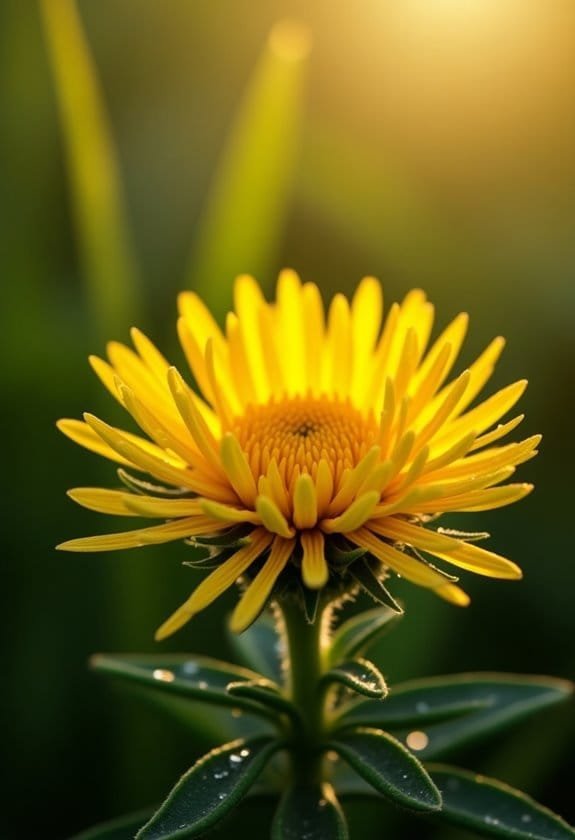
Giant Knapweed, or Centaurea macrocephala, stands out in gardens with its striking large yellow flowers that bloom in the summer. Reaching heights of 3-4 feet, it offers an eye-catching display favored in ornamental gardening.
While the plant attracts pollinators like bees and butterflies, its appeal comes with significant drawbacks, as it can become an invasive species. Once established, it readily outcompetes local vegetation, contributing to biodiversity loss and altering the ecosystem.
Thriving in full sun and well-drained soils, Giant Knapweed prefers dry to medium moisture conditions, making it adaptable across USDA zones 3-7.
Propagation occurs through spring-seeded methods or division, but its rapid growth can complicate management efforts. Gardeners must therefore approach this perennial with caution, as its ornamental value can quickly turn detrimental without careful site selection.
Despite its beauty, Giant Knapweed's potential for aggressive expansion necessitates responsible stewardship, ensuring it doesn't dominate or displace native flora. A balance between appreciation for its aesthetic qualities and awareness of the ecological ramifications is imperative for maintaining healthy garden habitats.