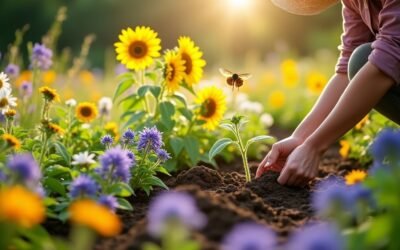
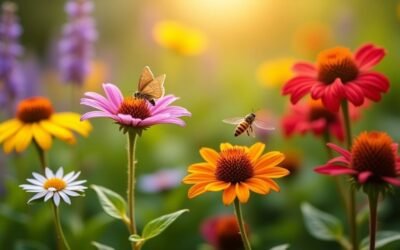
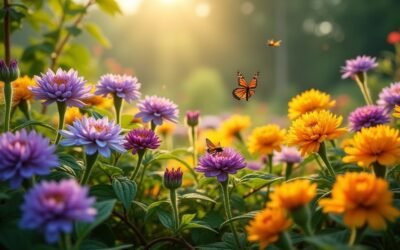
Centranthus ruber, or Red Valerian, is a alluring perennial, typically reaching heights of 2 to 3 feet. Its eye-catching star-shaped flowers bloom in an array of deep crimson, pink, and white, gracing gardens from early summer through fall. This adaptable species thrives in various soil types, requiring minimal maintenance and displaying commendable drought resistance. Red Valerian's dense foliage supports pollinators, encouraging biodiversity by attracting butterflies. While generally pest-free, it is essential to manage its self-seeding tendencies. Overall, this resilient plant harmonizes beautifully with others, enhancing garden aesthetics and ecological health, paving the way for deeper understanding of its benefits.
Main Points
- Centranthus ruber, commonly known as Red Valerian, features striking star-shaped flowers in deep crimson, pink, and white during summer to fall.
- This drought-tolerant plant thrives in well-drained soils and prefers full sun, suitable for USDA zones 5-8.
- Red Valerian is known for attracting butterflies, making it an excellent choice for enhancing garden biodiversity.
- Low maintenance, it requires minimal care and is resistant to common pests like deer and rabbits, ideal for xeric gardens.
- It can be propagated through seeds, divisions, or cuttings, with seeds germinating in 3-4 weeks.
Introduction
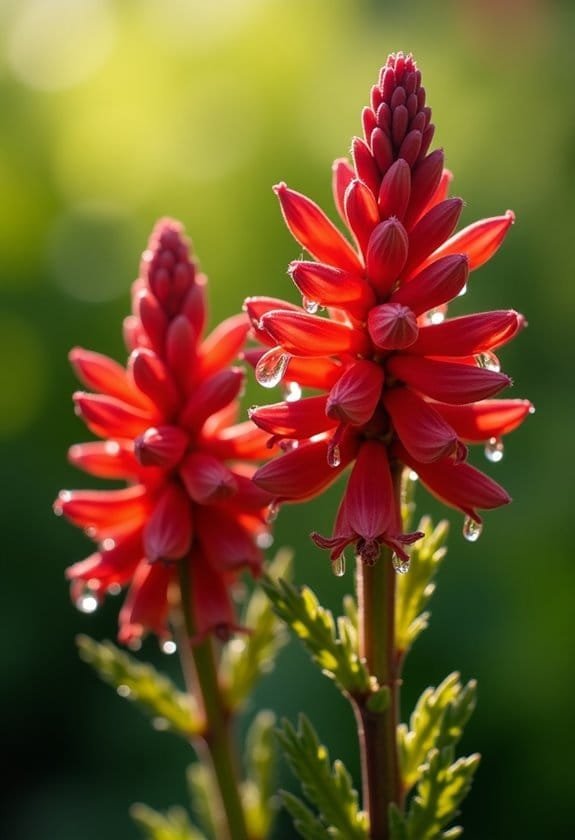
Centranthus ruber, widely known as Red Valerian, captivates with its striking star-shaped flowers that bloom in vibrant hues from early summer through fall.
This resilient perennial reaches heights of 2 to 3 feet, thriving in varied soil conditions and attracting butterflies while resisting the nibbling of deer and rabbits.
Understanding its characteristics and growing preferences serves as a vital foundation for successful cultivation in diverse garden settings.
Common Name
Known for its striking beauty, Red Valerian, also referred to as Spanish Valerian and Jupiter's Beard, captivates gardeners with its vibrant star-shaped flower clusters. This stunning perennial, scientifically known as Centranthus ruber, displays flowers in hues ranging from deep crimson to delicate pink and pristine white, essentially creating a lively tapestry in any garden space.
Growing to an impressive height of 24 to 36 inches and spreading approximately 30 inches, Red Valerian is an ideal candidate for borders and cottage gardens. Its remarkable ability to thrive under a variety of conditions makes it a favorite among horticulturists.
Moreover, this hardy species is both drought tolerant and relatively easy to care for, ensuring it remains vibrant even in less-than-ideal circumstances.
One of the most delightful aspects of Red Valerian is its capacity to attract butterflies, enriching the garden ecosystem. Additionally, it tends to be pest and disease free, resisting attacks from deer and rabbits, which can otherwise damage many garden plants.
Consequently, gardeners seeking color and resilience will find that Red Valerian adds not only aesthetic value but also robustness to their green spaces.
Scientific Name
Often seen as a garden gem, Red Valerian boasts the scientific name Centranthus ruber. A beloved choice among gardeners, this perennial plant belongs to the Valerianaceae family, notable for its aromatic characteristics. Centranthus ruber showcases an impressive array of ornamental flower colors, mainly in vibrant shades of crimson, pink, and white, enhancing the visual allure of any landscape.
Typically reaching heights of 2-3 feet (60-90 cm) and spreading between 18-24 inches (45-60 cm), it thrives under specific growing conditions. Native to the Mediterranean region, this resilient plant has adapted beautifully to various disturbed and rocky environments, particularly in the United States, where it has naturalized effectively.
The scientific name Centranthus ruber encapsulates its remarkable ability to withstand less-than-ideal conditions while providing aesthetic pleasure. This plant not only serves as an attractive addition to any garden but also exemplifies the power of nature's resilience.
Overview
Bringing a splash of color to gardens, Red Valerian, or Centranthus ruber, is a standout perennial admired for its star-shaped blooms in striking hues of crimson, pink, and white. Blooming from early summer to fall, Red Valerian reaches heights of 2 to 3 feet and spreads 18 to 24 inches, making it an excellent choice for borders and cottage gardens.
This hardy plant flourishes in full sun, thriving in well-drained soils while exhibiting tolerance to light shade. Its drought-resistant nature guarantees that it remains vibrant even under less-than-ideal moisture conditions, rendering it easy to grow for both novice and experienced gardeners alike.
Originating from the Mediterranean region, Centranthus ruber has become naturalized in various areas, including parts of the United States, where it favors rocky, disturbed habitats. Curiously, the plant can self-seed, potentially leading to its proliferation and categorization as weedy, which necessitates responsible management to control its spread within cultivated landscapes.
With its robust characteristics and colorful displays, Red Valerian stands as a versatile and aesthetically pleasing addition to the garden, enhancing its environment while demanding minimal care.
Key Features
Centranthus ruber, or Red Valerian, showcases a striking growth size between 24 to 36 inches tall, with a spread of 18 to 30 inches, making it a versatile choice for mid-border planting.
The plant captivates observers with its showy star-shaped flowers, which bloom from early summer through fall in an array of hues, including deep crimson and brick red.
With its impressive resilience to drought and adaptability to poor soils, this perennial not only beautifies gardens but also encourages local wildlife by attracting butterflies.
Growth Size
Typically, Centranthus ruber reaches a height of 2-3 feet (60-90 cm) with a spread of 18-24 inches (45-60 cm). This vigorous plant is often grown for its ornamental value, showcasing abundant rounded clusters of small flowers that bloom in various shades, such as brick red, purplish red, deep crimson, pale pink, or white depending on the cultivar. The growth size of Red Valerian allows it to serve effectively in mid-border planting, creating a vibrant focal point in gardens.
As Centranthus ruber matures, its structure evolves; it can develop a woody stem, which contributes to its lasting presence in garden landscapes. Lower leaves, which are petiolate, contrast with upper leaves that appear sessile, both measuring between 5-8 cm in length.
This growth habit further strengthens its capacity for self-seeding under suitable conditions, potentially leading to a more widespread presence throughout the garden. With every passing season, Centranthus ruber continues to engage gardeners, offering beautiful blooms alongside a robust growing nature, solidifying its reputation as a valued addition to diverse planting schemes.
Appearance
With its striking star-shaped flowers and sturdy presence, Red Valerian captures attention in any garden setting. Centranthus ruber typically reaches a height of 2 to 3 feet (60-90 cm) and can spread up to 2 feet (60 cm) wide.
The plant's foliage consists of oval to lanceolate leaves, measuring around 5-8 cm in length, which are arranged in a distinctive pairing along the stem, creating a lush backdrop for the vivid blooms.
The flower clusters, abundant and rounded, present an array of vibrant colors, including brick red, purplish red, deep crimson, and even pale pink in the Albus cultivar. These flowers grace gardens from early summer through fall, establishing a mesmerizing visual display that delights both garden enthusiasts and pollinators alike.
To maintain its health and appearance, it's advisable to cut back the plant after flowering, promoting a sturdier growth in the following season.
Remarkably resilient, Red Valerian thrives in poor soils, making it an ideal choice for low-maintenance landscaping. Its aesthetic qualities, combined with its resistance to common garden pests like deer and rabbits, enhance its appeal, inviting admiration from all who encounter it.
Flowering Season
As the summer season unfolds, Red Valerian bursts into bloom, displaying vibrant star-shaped flower clusters that continue to captivate throughout the fall. This perennial typically flourishes from early summer to late fall, showcasing a variety of colors, including striking crimson, soft pink, and pure white. Its flowers form rounded clusters that mesmerize not only gardeners but also attract butterflies, turning any garden into a lively spectacle.
The flower longevity of Centranthus ruber is remarkable, with mature plants rising to 2-3 feet, providing height and a continuous display of seasonal blooms. The prolonged blooming period greatly enhances ornamental value, making it a favored choice in borders and cottage gardens.
In favorable weather conditions, the abundant flowers thrive throughout the growing season, exhibiting resilience against variable climates. Moreover, regular removal of spent blooms encourages additional flowering, ensuring that the garden remains visually appealing.
This interaction between cultivation practices and natural growth emphasizes the weather's impact on the plant's performance. By understanding these dynamics, gardeners can fully appreciate the beauty and liveliness that Red Valerian brings to their outdoor sanctuaries.
Growing Requirements
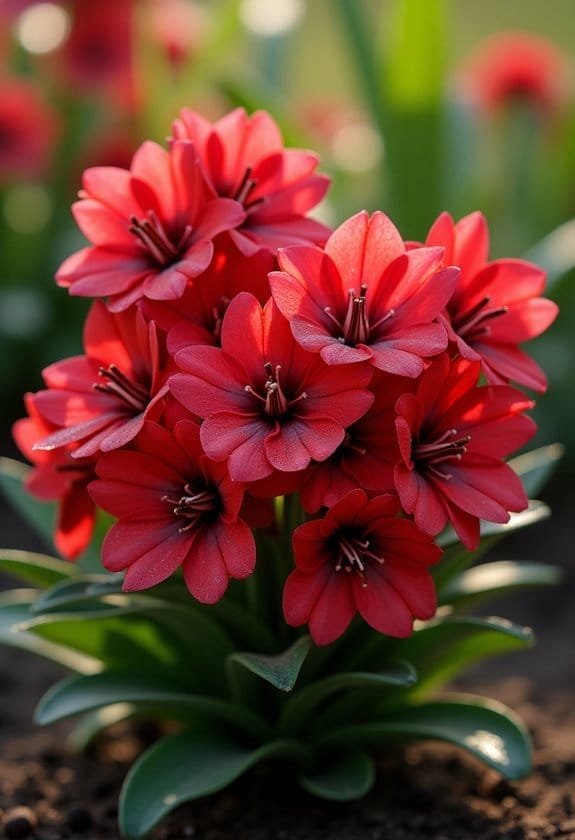
Centranthus ruber flourishes under full sun, although it can adapt to light shade, showcasing its vibrant blooms from early summer through fall.
This resilient plant prefers well-drained, average sandy soils and exhibits remarkable drought tolerance, making it an excellent choice for xeric gardens and coastal regions, barring those with excessive humidity.
Understanding its light, soil, water, and temperature needs is essential for gardeners aiming for ideal growth and prolonged flowering.
Light
Often thriving in full sun, Centranthus ruber, or Red Valerian, does best when it receives ample light. This perennial plant's light requirements emphasize bright sunlight, as ideal light exposure encourages robust growth and vibrant blooms.
While Red Valerian can adapt to partial shade, this light adaptation often leads to diminished flowering, resulting in less dazzling displays.
In temperate climates, particularly within USDA zones 5-8, Centranthus ruber flourishes when planted in well-lit spaces. Conversely, in hot and humid summer conditions, the plant's performance may wane, indicating a clear preference for balanced sunlight rather than excessive heat.
As a drought-tolerant species, Red Valerian showcases remarkable adaptability to diverse environments, yet its vibrant performance remains tied to sufficient light exposure.
For gardeners aiming for stunning floral displays, ensuring that Red Valerian receives direct sunlight for the majority of the day will greatly impact its health.
Hence, establishing this plant in informal, dry, or wildlife gardens not only enhances the aesthetics but also promotes ecological diversity, embodying a thriving habitat.
Soil
Robust growth and vibrant blooms in Centranthus ruber depend significantly on the soil conditions in which it's planted. This resilient perennial thrives best in well-drained soils characterized by average to sandy soil texture. Such conditions guarantee peak moisture retention without the risk of waterlogging, which can severely hinder growth.
The plant's remarkable adaptability allows it to flourish in various soil compositions, including poor and alkaline types, making it suitable for diverse garden environments.
In addition, Centranthus ruber demonstrates excellent soil drainage capabilities, tolerating both dry spells and occasional heavy rainfall once established. This trait not only bolsters its drought tolerance—an asset for xeric gardens—but also minimizes care requirements for the gardener.
However, caution should be exercised in coastal areas of California, Washington, and Oregon, where specific soil conditions may encourage aggressive behavior.
While establishing Centranthus ruber, gardeners should be mindful that reduced flowering may occur in conditions with insufficient sunlight, underscoring the importance of selecting ideal soil environments for this stunning plant.
Water
Watering requirements for Centranthus ruber can vary greatly based on the plant's growth stage. During the essential establishment phase, which is especially important when planted in warmer months, young Red Valerian requires consistent watering to support robust growth. Ensuring the young plants receive sufficient moisture can greatly impact their vitality, especially during dry spells.
Once established, however, this impressive plant exhibits remarkable drought tolerance; it thrives in well-drained soils while requiring little to no watering. Mature specimens can withstand average soil moisture conditions without frequent irrigation.
Ideally, gardeners should monitor the watering frequency, as maintaining excessive moisture can negatively affect growth, promoting conditions such as root rot. In xeric gardens, the Red Valerian's adaptability allows it to flourish with minimal care, making it an excellent choice for those seeking low-maintenance landscape options.
Temperature
Understanding the temperature requirements of Centranthus ruber is essential for successful growth and blooming. This hardy perennial flourishes in USDA zones 5-8, making it suitable for various temperate climates. However, it doesn't thrive under temperature extremes or during hot, humid summer months, which can hinder its development and blooming potential.
For ideal growth, Red Valerian requires moderate temperatures, ideally ranging from 60°F to 75°F. Full sun promotes vibrant blooms, but the plant can tolerate light shade—albeit with diminished flowering.
This species demonstrates remarkable adaptability, flourishing in average, well-drained soils, and it shows resilience by thriving in poor or sandy conditions.
Seasonal fluctuations influence the plant's performance, as perfect planting times in autumn, spring, or mild winter spells yield the best results. During these periods, Centranthus ruber establishes itself effectively, gradually acclimating to its environment, while avoiding the stress of extreme temperature variations.
Gardeners should be mindful of these conditions, ensuring that the plant receives the warmth it craves while shielding it from excessively harsh climates to maximize its flowering potential and overall health.
Pollinator Criteria
Centranthus ruber, or Red Valerian, attracts a diverse array of pollinators with its resplendent clusters of star-shaped flowers.
These vibrant blooms not only mesmerize with hues of crimson, pink, and white, but also produce nectar, inviting butterflies and other beneficial insects during their pollination activities.
The adaptability of Red Valerian's floral structure allows for efficient access to nectar, fostering a healthy environment for local pollinator populations to thrive.
Attracted Pollinators
With its striking clusters of star-shaped flowers, Centranthus ruber (Red Valerian) serves as a magnet for a variety of pollinators throughout the growing season. Attracting numerous butterflies, bees, and hoverflies, this plant plays a significant role in supporting pollinator importance within garden ecology.
The abundant, showy flowers, which bloom from early summer to fall, provide essential visual signals to foraging insects, facilitating their search for nectar. The long flowering period of Red Valerian guarantees a reliable food source, enhancing species diversity in local ecosystems.
When different pollinators thrive, they contribute to a balanced environment, fostering interactions that sustain plant populations. In addition, the nectar of Centranthus ruber appeals to beneficial insects, promoting harmony within the garden.
In addition to its aesthetic appeal, this drought-tolerant species holds significance in regions experiencing water scarcity, guaranteeing that pollinator activity remains vibrant even under challenging climate conditions. Additionally, its dense mat-forming habit makes it effective for weed suppression, enhancing biodiversity and providing critical habitat for various organisms.
Ultimately, Centranthus ruber not only enriches gardens with its lovely blooms but also fortifies the ecological framework, demonstrating its essential role in sustaining both pollinator populations and overall biodiversity.
Pollination Method
Pollination in Red Valerian hinges on its vibrant floral structure and strategic appeal to insect pollinators. The plant's flower clusters, comprised of five fused petals, form a tubular shape that effectively accommodates long-tongued pollinators like butterflies and bees. This specialized flower structure invites these visitors, whose pollinator behavior is driven primarily by the nectar availability that Red Valerian provides.
During its blooming period, from early summer to fall, the plant produces a continuous supply of nectar, enhancing its attractiveness for various insect species. Each flower cluster can contain numerous small flowers, greatly increasing the chances of pollinator visits and promoting cross-pollination, which is essential for genetic diversity in plant populations.
The bright colors of the flowers, especially the vivid crimson and pink shades, not only serve to attract attention visually but also contribute to the plant's reproductive success. As pollinators flit from flower to flower, they inadvertently assist in transferring pollen, an essential process for fertilization.
Consequently, Red Valerian thrives on its well-adapted structure and alluring nectar, ensuring a mutually beneficial relationship between the flowers and their insect partners in the intricate dance of pollination.
Care & Maintenance
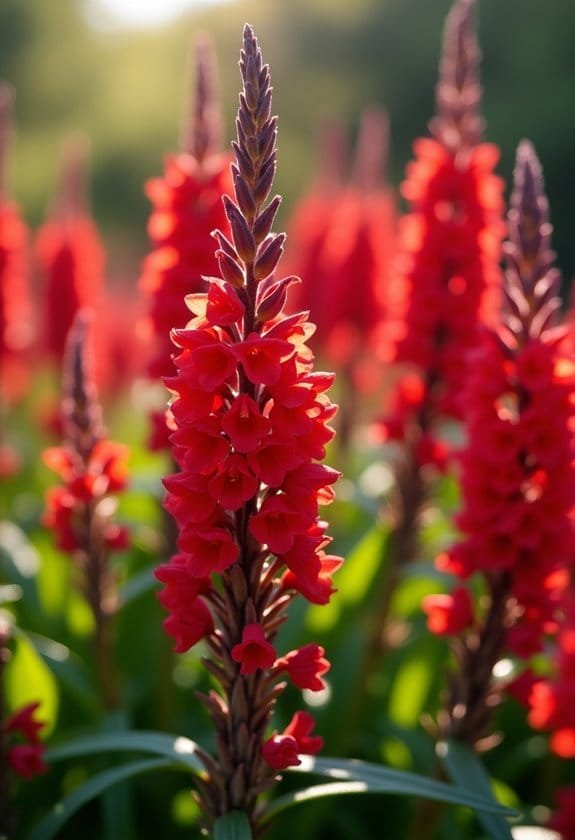
Proper care and maintenance of Centranthus ruber not only enhances its aesthetic appeal but also guarantees robust growth.
Regularly removing spent flower stems keeps the plant in bloom throughout the summer, while cutting back in spring lays the groundwork for vigorous foliage and new stems.
Additionally, monitoring for pests and providing water during dry spells can further nurture this resilient plant, making it a wonderful companion in the garden.
Planting Tips
When planting Centranthus ruber, also known as Red Valerian, gardeners should choose well-drained soil and position the plant at the same depth as its pot. This promotes healthy root development and prevents common mistakes, such as overwatering that can lead to root rot.
Recommended planting zones typically range from USDA hardiness zones 3 to 8, indicating the versatility of this resilient perennial.
For those considering propagation methods, dividing mature clumps in early spring or taking basal cuttings can yield new plants, though light cover is necessary until establishment.
Once placed correctly, Red Valerian becomes remarkably low-maintenance—established plants exhibit drought resistance and require little regarding watering or feeding.
Regularly removing fading flower heads not only encourages continued blooming but also limits self-seeding, thereby allowing gardeners to maintain the desired shape and size of the plant.
Ongoing Care
Ongoing care for Centranthus ruber guarantees vibrant blooms and overall plant health. Employing effective pruning techniques is essential; regularly cutting back spent flower stems encourages the production of new blooms while maintaining the plant's vigor.
It's advisable to remove fading flowers promptly to prevent self-seeding, which can lead to unwanted weedy growth under favorable conditions.
Watering should be approached with caution, as Red Valerian is exceptionally drought-tolerant. After its establishment, little to no supplemental watering is necessary, allowing the plant to thrive even during dry spells.
When it comes to fertilization tips, Red Valerian generally requires minimal feeding; nevertheless, a balanced fertilizer applied during the growing season can support robust growth.
Seasonal adjustments play a key role in ongoing care. As seedlings develop, they should be thinned to maintain a spacing of about 30 cm apart. This spacing promotes healthy air circulation and prevents overcrowding, ensuring that each plant receives adequate sunlight and nutrients.
While monitoring for pests and diseases is wise, Centranthus ruber usually remains resilient against such threats, making it an excellent choice for wildlife-friendly gardens.
Suggested Companions
In the garden, pairing Red Valerian (Centranthus ruber) with complementary plants can enhance both beauty and biodiversity. Companion planting plays an important role in creating harmonious ecosystems, and several plants thrive alongside Red Valerian. For instance, sea holly (Eryngium) shares similar sun and soil requirements, resulting in a visually striking combination that captivates the eye.
Another excellent companion is evening primrose (Oenothera), known for its shared preference for well-drained soils and ability to attract butterflies, thereby promoting pollinator diversity.
Additionally, the common harebell (Campanula rotundifolia) matches Red Valerian in height and flowering time, perfectly filling those mid-border spaces that need just the right touch of color.
For a contrasting texture, Perovskia, or Russian sage, flourishes under the same conditions, enriching visual aesthetics within the garden.
When planning these pairings, it's important to space plants appropriately to accommodate Red Valerian's mature spread of about 60 cm, ensuring each plant has adequate room to thrive without competing for nutrients.
Such thoughtful selections not only create stunning visuals but also foster ecological balance, drawing wildlife and pollinators into a thriving garden ecosystem. Additionally, incorporating species such as Sea Holly can further enhance the garden's resilience and ecological importance by attracting a variety of pollinators.
Common Issues
Centranthus ruber, commonly known as Red Valerian, faces certain challenges despite its robust nature.
Although typically resilient, the plant can occasionally exhibit signs of stress due to environmental factors or unanticipated pests, necessitating vigilant monitoring.
Addressing these common issues early on guarantees not only the preservation of its health but also the aesthetic appeal of garden spaces.
Pests/Diseases
Gardeners appreciate Centranthus ruber's resilience, as it's largely resistant to pests and diseases, making it a low-maintenance choice. However, they may occasionally encounter common issues, particularly with aphids and spider mites. While these pests can appear, they typically cause minimal damage, and effective pest management strategies can keep them in check.
Another potential concern is fungal diseases such as powdery mildew, which often thrive in overly humid conditions. Consequently, implementing proper spacing and guaranteeing adequate air circulation around each plant are essential maintenance strategies for disease prevention. By doing so, gardeners can greatly reduce the likelihood of these outbreaks disrupting their flowering plants.
Moreover, Centranthus ruber is prone to root rot if situated in poorly drained soils, which underscores the importance of selecting well-drained garden situations to promote overall plant health.
Regular monitoring for these common pests and diseases is crucial; promptly addressing any issues that arise can help maintain the vibrancy of Red Valerian throughout its growing season.
This proactive approach guarantees that Centranthus ruber continues to flourish, bringing color and resilience to gardens while minimizing intervention needs.
Solutions
To effectively manage common issues with Centranthus ruber, regular maintenance is key. This resilient plant is known for its ability to self-seed freely, which can lead to weedy conditions if not monitored.
Gardeners should prioritize self-seeding control by routinely removing spent flower stems before seeds ripen, thereby limiting unintentional spread. It's also beneficial to thin seedlings to a spacing of about 30 cm, ensuring that young plants have enough room for robust growth.
Notably, Centranthus ruber thrives as a drought-tolerant plant, requiring minimal watering and fertilization. This feature makes it particularly appealing for low-maintenance gardens.
However, in specific regions, especially coastal areas like California, Washington, and Oregon, the plant may exhibit aggressive growth. Gardeners should practice aggressive growth management by regularly evaluating their garden for any signs of rampant spread and implementing timely interventions when necessary.
While pests and diseases are rarely a concern, vigilance remains prudent. By adhering to these guidelines, gardeners can enjoy the beauty of Red Valerian while maintaining a vibrant, well-managed landscape that harmonizes with its natural environment.
What are the differences between Red Valerian and Purple Plume Thistle?
Red Valerian and Purple Plume Thistle, specifically cirsium rivulare atropurpureum thistle, have distinct differences. Red Valerian features clusters of red, pink, or white flowers and thrives in dry, sunny conditions. In contrast, Purple Plume Thistle boasts deep purple flowers and prefers moist, well-drained soil.
Summary
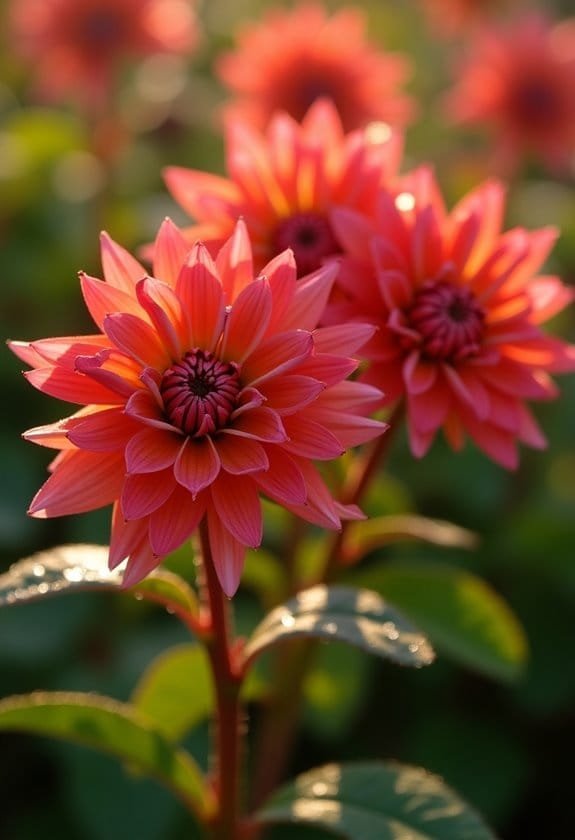
Red Valerian, known scientifically as Centranthus ruber, is a resilient perennial that stands out in any garden with its striking rose-red flowers, blooming from early summer to fall. This hardy plant typically reaches a height of 24-36 inches, thriving in well-drained soils, particularly under full sun, making it an excellent choice for xeric gardens and perennial borders.
Its cultural significance spans various regions, with traditional medicinal uses attributed to its roots, once believed to treat various ailments.
The plant's drought tolerance and ability to self-seed lend it an advantageous role in garden design, as it adds vibrant color while requiring minimal maintenance. However, gardeners must be mindful of its potential to become weedy in suitable conditions, even though it isn't invasive in many coastal areas of the United States.
Propagation options include seeds, division, or basal cuttings, with seeds germinating in approximately 3-4 weeks.
Native to the Mediterranean but widely naturalized, including in Arizona and Utah, Centranthus ruber not only beautifies spaces but connects to historical cultivation practices, reminding us of the enduring bond between nature and culture.