Cirsium rivulare 'Atropurpureum', known as the Purple Plume Thistle, is a compelling perennial characterized by its striking deep crimson flowers, reaching up to 1 inch in diameter. This resilient plant thrives in hardiness zones 4 to 8, preferring full sun and moist, well-drained soils. Typically growing up to 4 feet tall and 2 feet wide, it creates a lush, dense presence in gardens. Not only does it attract diverse pollinators like bees and butterflies, but it also supports local wildlife by providing essential nectar and seeds. Its care involves regular deadheading and consistent watering, ensuring vibrant growth and ecological benefits. Discovering more about its cultivation reveals further insights into this impressive species.
Main Points
- Cirsium rivulare 'Atropurpureum,' or Purple Plume Thistle, can grow up to 4 feet tall and 2 feet wide.
- It thrives in hardiness zones 4 to 8, requiring full sun and moist, well-drained soils.
- The plant features striking deep crimson flowers that bloom from mid-summer to late summer, attracting pollinators like bees and butterflies.
- Regular deadheading and consistent watering are essential for maintaining its health and promoting extended blooming.
- Purple Plume Thistle supports local biodiversity by providing nectar for pollinators and seeds for songbirds.
Introduction
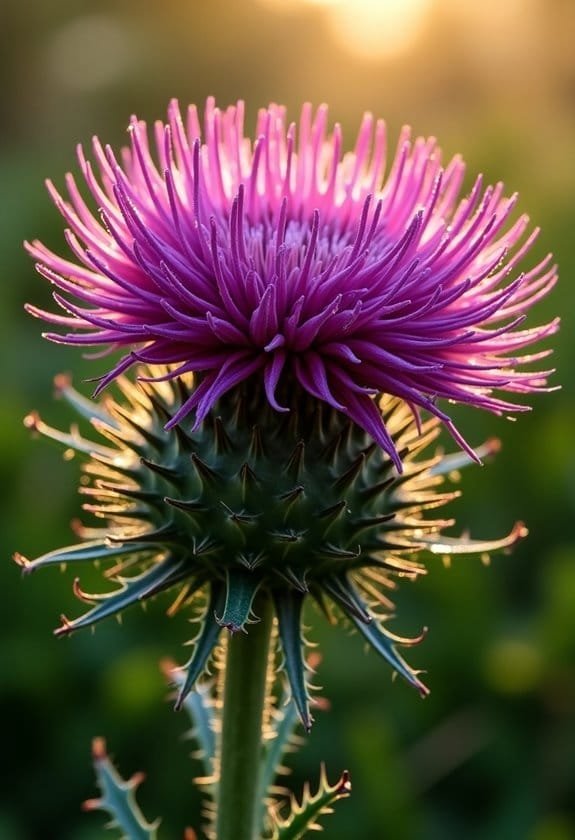
Cirsium rivulare 'Atropurpureum', more commonly known as Purple Plume Thistle, is an ornamental perennial celebrated for its striking deep crimson, pincushion-like flowers.
Reaching heights of up to 4 feet, this visually dramatic plant thrives in hardiness zones 4 to 8, preferring full sun while showcasing its resilience in moist, well-drained soils.
With its enchanting blooms attracting pollinators such as bees and butterflies, it not only beautifies landscapes but also enriches local ecosystems.
Common Name
What makes the "Purple Plume Thistle" a standout choice for garden enthusiasts? This eye-catching plant, known scientifically as Cirsium rivulare 'Atropurpureum,' showcases deep crimson, pincushion-like flower heads that draw admiration and attention. With a height that can reach up to 4 feet (120 cm) and a width of approximately 2 feet (60 cm), it commands a striking presence in any garden space.
The common name "Plume Thistle" aptly reflects its feathery flower structure, evoking imagery of soft plumes swaying in a gentle breeze, enhancing landscapes with an ornamental touch.
Thriving in full sun, the Purple Plume Thistle favors moist, well-drained soils, making it an excellent choice for cottage and naturalized gardens.
Beyond its aesthetic appeal, this attractive perennial is also a haven for various pollinators, including bees and birds, promoting biodiversity and contributing to wildlife-friendly gardening practices. Additionally, like the Vipers Bugloss with its pollinator-attracting properties, the Purple Plume Thistle plays a significant role in enhancing local ecosystems.
As garden enthusiasts endeavor to create vibrant, inviting environments, incorporating Cirsium rivulare 'Atropurpureum' enables them to enjoy not only its striking beauty but also the essential role it plays in supporting local ecosystems.
Scientific Name
Known scientifically as Cirsium rivulare 'Atropurpureum', this ornamental thistle exemplifies the unique characteristics found within the Asteraceae family, commonly referred to as the daisy family.
The genus Cirsium includes a range of perennial and biennial plants, often marked by their striking spiny leaves and clustered flower heads, which contribute to their vibrant, eye-catching appearances.
The specific epithet, rivulare, derives from the Latin word for "stream" or "bank," indicating this plant's propensity for moist habitats.
This affinity is mirrored in its cultivation requirements, as Cirsium rivulare 'Atropurpureum' thrives in environments that offer well-drained, yet consistently moist soils, catering to its growth preferences in hardiness zones 4-8.
Additionally, the enchanting deep crimson pincushion-like flowers attract diverse pollinators, including bees and butterflies, enhancing the ecological value of this ornamental thistle.
Its upright growth habit allows it to stand out in garden settings, offering both aesthetic appeal and support for local wildlife.
Consequently, Cirsium rivulare 'Atropurpureum' serves as a remarkable example of nature's beauty, intertwined with its biological significance in the Asteraceae family.
Overview
With its breathtaking deep crimson flowers, Cirsium rivulare 'Atropurpureum', often called the Purple Plume Thistle, captivates gardeners seeking to enhance their landscape. This striking ornamental perennial reaches heights of up to 4 feet (120 cm) and spreads approximately 2 feet (60 cm) wide. Its pincushion-like heads, measuring about 1 inch (3 cm) in diameter, bloom from mid-summer to late summer, offering a vibrant focal point.
Thriving in hardiness zones 4 to 8, Cirsium prefers moist, well-drained soils while demanding full sun; however, it can tolerate light shade. This plant not only beautifies a garden but also serves an ecological purpose by attracting an array of pollinators, including bees and butterflies, and providing seeds for songbirds.
The role of Purple Plume Thistle in promoting environmental diversity is significant, making it a valuable addition to any garden.
To maximize its blooming potential, gardeners should practice regular deadheading of spent flowers, ensuring a vibrant display well into the fall. As autumn approaches, the continued presence of these crimson flowers contributes to the garden's visual appeal and ecological richness.
Key Features
Cirsium rivulare 'Atropurpureum' showcases impressive growth, reaching heights of up to 4 feet while spreading approximately 2 feet wide, creating a bold presence in any garden.
Its eye-catching, deep crimson flowers, reminiscent of fluffy pincushions, bloom mainly from mid-summer to late summer, enchanting various pollinators like bees and butterflies.
With its spiny, dark green foliage providing a striking backdrop, this thistle establishes itself as both a stunning and functional addition to well-drained, sunny spaces.
Growth Size
Reaching impressive heights of up to 4 feet (120 cm), Cirsium rivulare 'Atropurpureum' showcases a striking vertical presence in the garden. This perennial plant, commonly known as Purple Plume Thistle, displays a robust growth habit characterized by its tall, branching form.
It spreads approximately 2 feet (60 cm) wide, making it a formidable feature in various garden settings, including beds and naturalized areas.
The striking flower heads, deep crimson and pincushion-like, bloom throughout mid to late summer, adding vibrant color to any landscape. Each flower head measures up to 1 inch (3 cm) in diameter, creating a visually stunning contrast against the plant's rich green leaves.
These green leaves offer an additional layer of texture to the garden, enriching the overall aesthetic appeal.
Cirsium rivulare 'Atropurpureum' is known for its slow clumping growth, encouraging it to create a lush, dense presence that enhances the surroundings.
Its upright stance and substantial size draw attention, making it an ideal focal point. This blend of height and elegance not only complements other plants but also attracts pollinators, fostering a lively ecosystem within the garden.
Appearance
Standing tall at up to 4 feet (120 cm), Purple Plume Thistle captivates gardeners with its striking appearance. This perennial, scientifically known as Cirsium rivulare 'Atropurpureum,' showcases deep crimson, pincushion-like flowers, each measuring approximately 1 inch (3 cm) in diameter.
Beyond their allure, these flowers rest on long, leafless stems, which elevate them above the plant's dark green foliage, creating a dramatic contrast against the vibrant blossoms.
The plant adopts a clumping growth habit, stretching around 2 feet (60 cm) in width, thereby offering a robust presence in any garden setting. The spiny, dark green leaves not only enhance the aesthetic appeal but also serve as a resilient backdrop for the eye-catching blooms.
As the leaves rise from the base, they create a lush foundation that accentuates the boldness of the flower heads.
Moreover, the combination of height and structure renders the Purple Plume Thistle an ideal candidate for borders, beds, or naturalized areas. Its striking form and bold coloration fill garden spaces with life, inviting both admiration and intrigue.
Essentially, Cirsium rivulare 'Atropurpureum' stands as a demonstration of the beauty inherent in vibrant, perennial blooms.
Flowering Season
When does the vibrant display of Purple Plume Thistle truly shine? Cirsium rivulare 'Atropurpureum' typically blooms from mid-summer to late summer, revealing its striking deep crimson, pincushion-like flowers. Each flower head can reach up to 1 inch (3 cm) in diameter, creating an eye-catching spectacle that draws in a variety of pollinators, such as bees and butterflies.
This dynamic interaction not only enhances the visual appeal of the garden but contributes considerably to its biodiversity. To extend the flowering season, gardeners can practice deadheading—regularly removing spent blooms—which can prolong the display well into the frost.
This adaptability allows Cirsium to serve as an ornamental pillar, achieving heights of up to 4 feet (120 cm) and providing a stunning vertical element in diverse landscapes. Additionally, the substantial bloom size and vivid color make this plant an excellent choice for both fresh and dried flower arrangements, enabling enthusiasts to elevate their aesthetic experience.
Growing Requirements
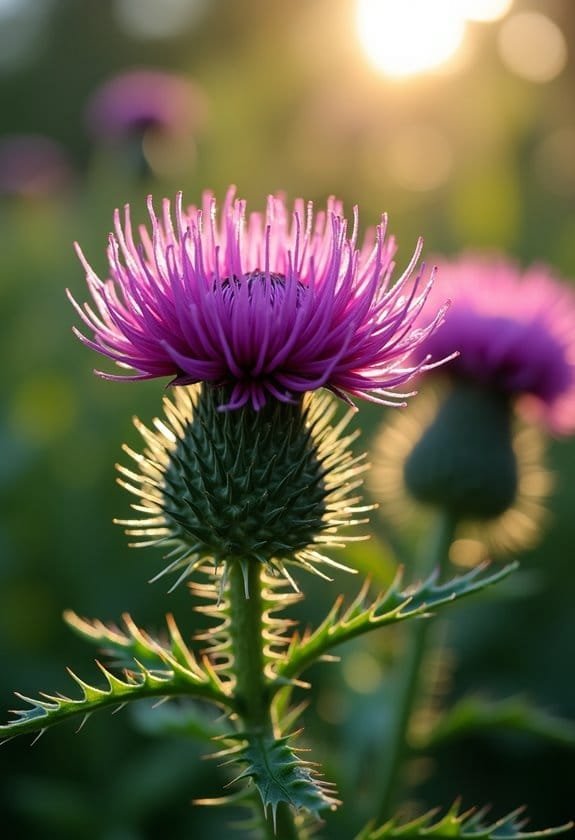
Cirsium rivulare 'Atropurpureum' flourishes in a range of growing conditions, requiring full sun to thrive—ideally, it needs at least six hours of direct sunlight each day.
This plant prefers moist, well-drained soil but can adapt to heavier, damper conditions, making it perfect for garden beds near water sources.
Regular watering is essential, especially during dry spells, to maintain the ideal moisture level, ensuring robust growth and vibrant blooms.
Light
For ideal growth and stunning blooms, Cirsium rivulare 'Atropurpureum' thrives in full sun. This striking thistle prefers bright, direct sunlight, as it requires at least six hours a day to reach its maximum potential. Inadequate light exposure can lead to stunted growth, diminished vigor, and lackluster flowering.
While it may tolerate some light shade, the plant flourishes most when basked in sunlight for the majority of the day, enabling it to produce its vibrant, deep crimson pincushion-like flowers from mid-summer to late summer. Hemlock water-dropwort's toxicity to foragers underscores the importance of recognizing light requirements in other plants to avoid similar misidentification.
The importance of sunlight can't be overstated; it's the lifeblood that fuels the plant's photosynthetic machinery, fostering robust growth and a rich coloration that captivates the eye.
When positioned correctly, this thistle not only offers aesthetic allure but also attracts pollinators that contribute to the ecosystem, similar to how the Ox-Eye Daisy supports local biodiversity. Gardeners should be wary, as positioning the plant in overly shaded areas may compromise its health and flowering ability.
Ultimately, for those aiming to cultivate a flourishing display of Cirsium rivulare 'Atropurpureum', a bright, sunny habitat is essential. Embracing this light requirement guarantees a visually stunning and thriving addition to any garden.
Soil
Achieving ideal growth in Cirsium rivulare 'Atropurpureum' hinges on the right soil conditions. This perennial thrives best in moist, well-drained soils that maintain a consistent moisture level, crucial for its slow clumping growth habit.
While it's adaptable to various soil types, it particularly favors heavy, damp soils, which don't dry out quickly. Such conditions help the plant develop robust roots and an impressive structure.
Conversely, overly dry conditions can lead to susceptibility to mildew, underscoring the importance of reliable moisture.
To enhance soil quality, incorporating organic soil improvers, like well-rotted leaf compost, can markedly boost growth by enriching the nutrient content. Organic matter enhances soil structure, encouraging moisture retention while promoting adequate drainage—a delicate balance that prevents root rot, one of the most detrimental issues for this elegant thistle. Additionally, fostering acidic soils can support the health of various perennial plants like heather, which thrive in similar conditions.
Water
Moisture is crucial for the thriving of Cirsium rivulare 'Atropurpureum.' The plant needs regular watering to keep the soil consistently moist, especially during dry spells.
Ideally, it flourishes in well-drained, damp soils, making it well suited for areas near natural water sources. Achieving this balance is essential; the thistle's health deteriorates in excessively dry conditions, as it becomes susceptible to harmful mildew that can hinder its growth.
During periods of drought, supplemental watering becomes a significant intervention to prevent stress on the plant. Ensuring that the soil retains adequate moisture not only promotes healthy growth but also enhances the plant's resilience against environmental challenges. Furthermore, like Sea Kale, this thistle showcases its adaptability to drought resistance through its robust growth patterns.
Aiming for a moisture level where the soil is damp, but not waterlogged, cultivates an ideal growing environment. The beauty of this thistle is in its adaptation to heavy, moist soils, which allows it to thrive even in less-than-ideal conditions. Moreover, like Bogbean, this thistle benefits from a well-established rhizome system, which contributes to stability in wetland ecosystems.
Temperature
Cirsium rivulare 'Atropurpureum' thrives best in USDA hardiness zones 4 to 8, showcasing its impressive resilience against temperatures as low as -29°C (-20°F). This hardy plant exhibits remarkable adaptability to varying temperature conditions, as indicated by its heat zone rating, spanning from 1 to 8. Such resilience enables it to flourish in diverse environments, making it an excellent choice for garden enthusiasts seeking versatility.
While 'Atropurpureum' prefers full sun for peak growth, it can tolerate light shade, particularly in warmer climates where excessive heat can pose a challenge. Maintaining adequate moisture in well-drained soils is essential for the health of its root systems and overall liveliness during the growing season. Regular watering becomes critical, especially during dry spells, ensuring that the plant continues to thrive and produce its inviting flowers.
Cirsium rivulare's botanical nature is an indication of its capacity for adaptation, as it effortlessly navigates through temperature fluctuations while enchanting gardeners with its unique, plume-like blooms. Additionally, it shares ecological benefits similar to Rough Hawkbit by acting as a vital nectar source for pollinators in its environment.
Consequently, prudent management of its growing conditions remains imperative for peak development, ensuring that this beautiful thistle flourishes for years to come.
Pollinator Criteria
Cirsium rivulare 'Atropurpureum' plays an essential role in attracting various pollinators, such as specialized bees like Melissodes and Osmia.
With its vibrant crimson flower-heads blooming from mid-summer to late summer, it provides a consistent nectar source that supports the reproductive cycles of these important insects. The presence of these blooming plants can increase the availability of nutrient-rich resources for pollinators and other wildlife within the habitat.
The plant's structural attributes and floral arrangements facilitate efficient pollination, enhancing the ecosystems they inhabit by fostering biodiversity. Additionally, its flowering patterns contribute to maintaining biodiversity and supporting wildlife within the habitat they occupy.
Attracted Pollinators
Purple Plume Thistle is a magnet for pollinators, particularly bees and butterflies, thanks to its vibrant, deep crimson flowers that bloom from mid to late summer. These striking flower heads are a veritable banquet of nectar, enticing an array of beneficial insects, including specialized bee species such as Melissodes and Osmia. The thistle's abundant nectar serves as a crucial energy source for these pollinators as they actively forage, and their presence guarantees the plant's reproduction and health.
Moreover, the Purple Plume Thistle's tall, branching habit creates a welcoming habitat, enhancing biodiversity in various garden settings. This ecological contribution doesn't stop with nectar; the thistle's flowers also serve as host plants for butterfly species, including the exquisite Little Metalmark and the well-known Painted Lady. In addition, similar to common knapweed(invasive nature), Purple Plume Thistle's unique flower structure maximizes cross-pollination opportunities, further supporting a healthier ecosystem.
The relationship between the thistle, its pollinators, and the environment underscores the intricate balance of nature, highlighting how each component supports the other. Additionally, the seeds that develop later provide nourishment for songbirds, further enriching the ecosystem. This plant's role as a vital nectar source is essential for supporting local pollinator populations and promoting biodiversity.
Fundamentally, Cirsium rivulare 'Atropurpureum' exemplifies a dynamic hub of activity for pollinators, enhancing both beauty and ecological function within its surroundings.
Pollination Method
The vibrant flowers of Cirsium rivulare 'Atropurpureum' not only attract a wide range of pollinators but also employ a unique pollination method that maximizes its reproductive success.
Blooming from mid-summer to late summer, these striking deep crimson flowers serve as essential sustenance, offering abundant nectar to pollinators such as bees and butterflies during critical life stages when food sources diminish.
The plant's tall, upright structure creates visual landmarks that enable pollinators to locate the flowers with ease, fostering an efficient foraging experience. Moreover, the presence of these plants can be beneficial for the overall ecosystem by attracting a diverse array of specialized pollinators, ensuring that these populations flourish.
As a member of the Asteraceae family, its numerous disc florets are densely packed within each flower head, facilitating access to nectar for a variety of beneficial insects.
This arrangement encourages frequent visits by specialized bees, including Melissodes and Osmia, directly contributing to local biodiversity. Additionally, like Creeping Buttercup, the presence of Cirsium rivulare can provide abundant nectar resources to support pollinator populations in diverse ecosystems.
Care & Maintenance
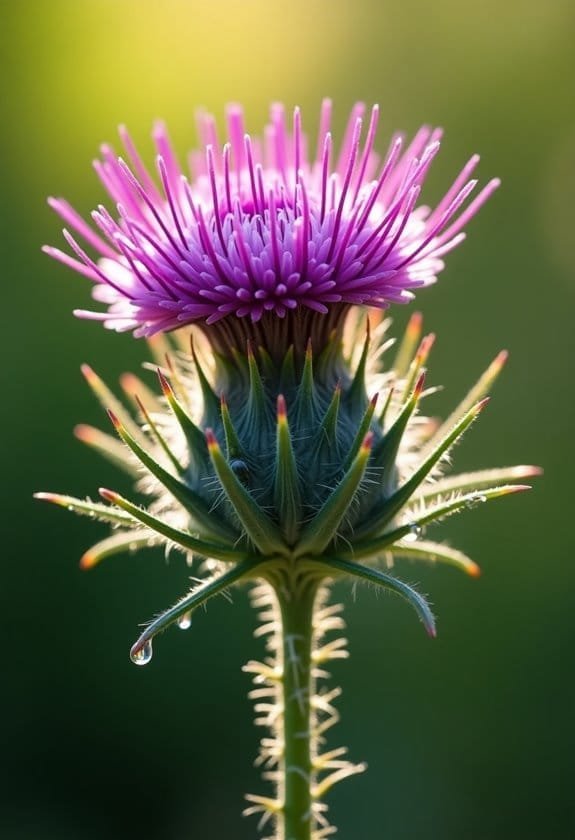
As Cirsium rivulare 'Atropurpureum' flourishes in the garden, attentive care and maintenance are crucial to guarantee its vigor and extended bloom.
Regular deadheading, adequate watering during dry spells, and seasonal mulching serve as integral practices that promote healthy growth and mitigate environmental stressors.
Additionally, the thoughtful selection of companion plants can enhance its overall aesthetic and ecological function, fostering a vibrant ecosystem within the landscape.
Planting Tips
Cirsium rivulare 'Atropurpureum' thrives best when planted in full sun, requiring well-drained, moist soil to flourish throughout its summer blooming period. This striking perennial exhibits vibrant purple flowers that bloom from mid-summer to late summer, attracting pollinators and enhancing any garden landscape.
To guarantee peak growth, gardeners should consider planting in heat zones 1-8, where regular watering during dry spells maintains its health and vibrancy.
Furthermore, deadheading spent flowers promotes new blooms, extending the flowering season until the frost arrives. When the plants become overcrowded, lifting and dividing congested clumps in either autumn or spring aids in sustaining robust growth and preventing competition for essential nutrients.
In addition, applying mulch after the first frost can protect the root systems and retain soil moisture, creating a nurturing environment. Leaving the flower heads intact serves a dual purpose, providing winter food for birds while adding visual interest to the dormant garden.
Through these thoughtful planting tips, Cirsium rivulare 'Atropurpureum' can serve as a resilient and stunning perennial, enhancing biodiversity and beauty throughout the seasons.
Ongoing Care
Ongoing care for Cirsium rivulare 'Atropurpureum' plays an essential role in maintaining its beauty and vigor. Regular deadheading of spent flowers is critical, as it encourages the plant to produce new blooms, potentially extending the blooming season until frost. This practice not only enhances the plant's aesthetic appeal but also promotes overall health.
Consistent watering is important, particularly during dry spells; ensuring ample moisture helps sustain the plant's resilience. Additionally, enriching the soil with organic matter as needed serves to nourish the roots, fostering lush growth.
It's important to monitor for powdery mildew, especially during dry conditions, as this fungal issue can compromise plant strength. Taking preventative measures can thwart the onset of this problem.
In autumn, it's beneficial to cut back spent flowers. This action not only prevents self-seeding but also allows the remaining foliage to provide winter sustenance for birds.
Furthermore, lifting and dividing congested clumps either in autumn or spring invigorates growth and prevents overcrowding, ensuring each plant receives adequate resources.
Suggested Companions
Regularly selecting companion plants for Cirsium rivulare 'Atropurpureum' can greatly enhance both aesthetic appeal and ecological diversity in the garden.
This striking thistle pairs beautifully with Papaver (poppies), particularly in moist conditions, where their vibrant blooms create an eye-catching visual contrast. Additionally, incorporating Aster and Astrantia not only enriches the foliage structure but also attracts similar pollinators, fostering an environment teeming with life.
For a textural balance, grasses like Luzula nivea and Pennisetum thrive alongside Purple Plume Thistle, adding a dynamic movement that complements the thistle's spiny, dark green leaves. This creates a visually stimulating garden tapestry, where the thistle becomes an attractive backdrop for flowering companions.
The thoughtful mixture of these companion plants not only enhances the floral display but also contributes considerably to biodiversity.
Common Issues
Cirsium rivulare 'Atropurpureum', while generally robust, faces several common challenges that gardeners must confront.
Mildew can thrive in dry conditions, threatening the plant's vibrant foliage, while pests like aphids may emerge, causing significant damage if overlooked.
Addressing these issues promptly, through regular maintenance and strategic interventions, guarantees the plant remains healthy and aesthetically pleasing throughout its growing season.
Pests/Diseases
Monitoring for pests and diseases is essential for keeping Cirsium rivulare 'Atropurpureum' healthy and vibrant. This striking plant isn't immune to common issues, as improper conditions may lead to significant problems.
Particularly, aphids can present a challenge; their feeding habits often produce sticky residues, which might attract secondary pests to the foliage. Additionally, gardeners should remain vigilant, as caterpillars and beetles may occasionally munch on the leaves, leaving unsightly damage or discoloration behind.
In addition to these pests, the plant can be susceptible to powdery mildew, particularly during dry conditions. This fungal disease manifests as a white, powdery coating on leaves, hindering overall health, and appearance.
Hence, implementing preventative measures like ensuring proper air circulation around the plants can mitigate such challenges. Overcrowding should be avoided, as it fosters an environment ripe for diseases. Additionally, regular deadheading of spent flowers can limit self-seeding, which reduces the risk of pests attracted to developing seed heads.
Solutions
Implementing proactive strategies is key to addressing common issues with Cirsium rivulare 'Atropurpureum'. This stunning thistle is prone to mildew, especially in arid conditions. Consequently, maintaining adequate moisture through regular watering not only encourages healthy growth but also diminishes mildew susceptibility.
Additionally, routine deadheading of spent flowers serves a dual purpose; it promotes the emergence of new blooms while curbing self-seeding, which can lead to overcrowding and reduced plant significance.
During extreme winter, employing mulching techniques is essential to insulate the roots, ultimately improving survival rates. Regularly monitoring the plant for pests is important, as infestations can negatively impact growth and the quality of blooms.
If the plant becomes congested, lifting and dividing clumps in autumn or spring can enhance air circulation. This practice not only encourages better growth but also invigorates the overall health of the Plume Thistle.
Summary
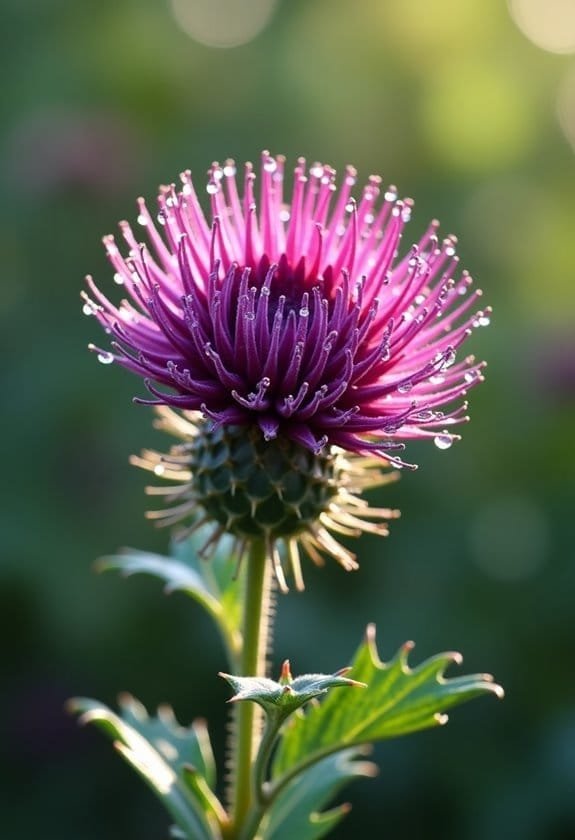
The Purple Plume Thistle, scientifically known as Cirsium rivulare 'Atropurpureum', is a striking herbaceous perennial that enchants garden enthusiasts with its vibrant deep crimson flowers. This clump-forming plant reaches a height of up to 4 ft (120 cm) and spreads approximately 2 ft (60 cm), making a significant visual impact.
Its blooming season extends from mid-summer to late summer, during which time its pincushion-like flowers, measuring about 1 in (3 cm) in diameter, not only attract bees and birds but also add a lively explosion of color to gardens.
Thriving in hardiness zones 4 to 8, the Purple Plume Thistle prefers full sun and moist, well-drained soils, although it can tolerate light shade. To prolong the blooming season, deadheading spent flowers is beneficial, and the plant's ability to self-seed can create delightful surprises if left unmanaged.
Additionally, the ornamental value of this thistle is significant, as it pairs beautifully with companion plants like poppies and dark Astrantias, enhancing both garden aesthetics and floral arrangements.
Consequently, the Purple Plume Thistle introduces a unique combination of beauty and biodiversity to outdoor spaces.