Cleome hassleriana, or Spider Flower, captivates with its unique, spiky clusters of blooms, measuring 1-1½ inches wide, in vibrant hues of white, pink, and purple. This annual, reaching heights of 3 to 6 feet, thrives in full sun and well-drained soil, exhibiting drought tolerance when established. Remarkably attracting bees, butterflies, and hummingbirds, it blooms continuously from early summer until frost, enhancing garden biodiversity. Low maintenance, it requires regular deadheading and proper spacing to encourage growth. Consequently, with the right care, Spider Flowers become not only appealing visual assets but also valuable contributors to local ecosystems, inviting further exploration of its benefits.
Main Points
- Cleome hassleriana, commonly known as Spider Flower, features vibrant flower clusters in colors like white, pink, and purple.
- This annual plant thrives in full sun, requires well-drained soil, and is drought tolerant once established.
- Spider Flowers attract various pollinators, including bees and butterflies, enhancing garden biodiversity.
- Regular deadheading and proper spacing maximize blooming and promote healthy growth in gardens.
- Pairing with other tall flowers or colorful low growers enhances aesthetic appeal and supports diverse ecosystems.
Introduction
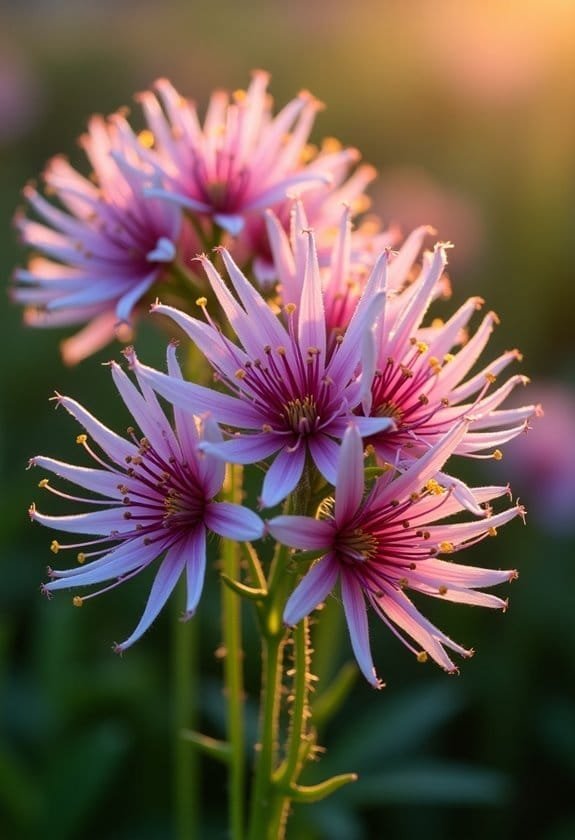
Cleome hassleriana, affectionately known as the spider flower, captures the eye with its striking, spiky clusters of blooms.
Native to the temperate regions of South America, particularly Paraguay and Argentina, this annual plant thrives under the sun, reaching heights of up to six feet.
With over a dozen vibrant shades attracting pollinators, it exemplifies both beauty and resilience, making it an appealing choice for diverse gardens.
Common Name
Known commonly as the Spider Flower, Cleome hassleriana gets its name from its long, thread-like stamens that resemble spider legs. This visually striking plant enthralls enthusiasts and gardeners alike with its unique morphology.
Often referred to as the "Bee Plant," Cleome hassleriana attracts a variety of pollinators, including bees, butterflies, and hummingbirds, making it a crucial player in local ecosystems. These flowers bloom profusely throughout summer, heightening their appeal to both insects and floral aficionados.
In addition to Spider Flower, it's also known as Spider Plant and Spider Weed, which reflect its distinctive growth habit and delicate appearance. Each name captures different aspects of its character, from the elegance of its flower clusters to the intricate structure of its reproductive parts.
In some regions, it may be affectionately called Grandfather's Whiskers, a symbol of its endearing and whimsical nature.
For those interested in pronunciation, the phonetic spelling "klay-OH-me" guarantees that everyone can confidently share knowledge about this enchanting flower.
As a fascinating addition to gardens, Cleome hassleriana embodies the delicate relationship between beauty and ecological significance.
Scientific Name
The scientific classification of the Spider Flower highlights its place within the plant kingdom. Known formally as Cleome hassleriana, this fascinating species falls under the Cleomaceae family.
Originating from southern South America, Cleome hassleriana thrives in regions that include Argentina, Paraguay, Uruguay, and parts of southeastern Brazil. As an annual plant, it completes its life cycle within a single growing season, adapting to diverse environments, particularly in hardiness zones 2-11 and heat zones 1-12.
This remarkable plant can grow to impressive heights of up to 6 feet, showcasing a unique floral structure that includes four petals and six elongated stamens. Its blooms display a vibrant palette of colors, encompassing shades of white, pink, and purple, creating an eye-catching spectacle in gardens and landscapes.
The classification of Cleome hassleriana not only reflects its botanical lineage but also underscores its ecological adaptability and aesthetic appeal. By understanding its scientific name and properties, gardeners and botanists alike can better appreciate the intricacies of this enchanting species, allowing for more informed cultivation and admiration of its beauty in the natural world.
Overview
Brightening gardens with its striking blooms, Cleome hassleriana, commonly referred to as the spider flower, captivates both gardeners and nature enthusiasts alike. This fast-growing annual, native to South America, particularly Paraguay, Uruguay, Argentina, and southern Brazil, reaches impressive heights of 3 to 6 feet.
The plant showcases distinctive, spiky flower clusters in hues of white, pink, purple, and rose, enchanting observers from early summer until frost's first touch.
The aromatic foliage features palmately compound leaves with 5 to 7 leaflets, while certain varieties bear spiny characteristics that contribute to their unique charm.
Thriving in full sun and well-drained soil, Cleome demonstrates remarkable drought tolerance once established, making it an ideal choice for resilient gardens. The preferred soil pH ranges from 6.0 to 7.0, highlighting its adaptability to average conditions.
Moreover, Cleome hassleriana plays a crucial role in enhancing garden biodiversity by attracting various pollinators, including bees, hummingbirds, and butterflies.
This interplay underscores the importance of incorporating such vibrant flowers into garden designs, not only for visual appeal but for the ecological benefits they bring to their environment.
Key Features
Cleome hassleriana, renowned for its striking height, can reach up to 6 feet, commanding attention in any garden.
Its distinctive spiky flower clusters, adorned in shades of white, pink, rose, and purple, create a vibrant spectacle that draws in various pollinators during the summer months.
With its rapid growth and tendency to self-seed, this annual not only enhances the aesthetic appeal of outdoor spaces but also fosters ecological interactions, enriching the environment around it.
Growth Size
Standing tall at maturity, Cleome hassleriana typically reaches heights between 3 to 6 feet (90-180 cm), making it an excellent choice for the rear of garden borders. This striking plant brings not only vertical interest to landscapes but also a noticeable crown width that can expand anywhere from 12 to 24 inches (30-60 cm).
As it grows, its individual leaves emerge palmately compound, characterized by 5 to 7 leaflets that can extend up to 12 cm (5 in) long, contributing to its unique and attractive foliage.
While many gardeners appreciate the impressive growth size of Cleome hassleriana, they might also explore compact cultivars like Señorita Rosalita®, which remain more modest in stature, reaching only 12 to 18 inches. These smaller varieties retain the species' signature features but are perfect for smaller spaces or front garden arrangements.
As the plant develops, its elongated seed pods, which can grow up to 15 cm long and house multiple tiny seeds, promise continued propagation and beauty.
Consequently, Cleome hassleriana's remarkable dimensions and growth characteristics make it a versatile asset in varied garden settings.
Appearance
The foliage of Cleome hassleriana displays palmately compound leaves, typically composed of 5 to 7 leaflets. These leaves can exhibit spiny and sticky characteristics, thanks to glandular hairs that adorn them.
The overall appearance isn't just striking but also functional, as these features deter herbivores and enhance the plant's survival ability.
Available in vibrant colors, including white, pink, rose, and purple, Cleome hassleriana creates a bold visual impact in gardens.
This combination of striking blooms and intriguing foliage guarantees that it remains an eye-catching favorite among gardeners and nature enthusiasts alike.
Flowering Season
During the flowering season, Cleome hassleriana, known as the spider flower, showcases an impressive array of blooms from early summer until frost. This extension of the flowering period provides an ongoing spectacle of colors, alluring garden enthusiasts and casual observers alike.
Each individual flower measures 1 to 1½ inches wide, featuring four light green sepals, four clawed petals, and six striking long stamens. The resulting flower clusters present a unique visual appeal, enhanced by the rich tapestry of colors ranging from whites to vibrant pinks, roses, and purples. Some cultivars boast fragrant blooms, adding another sensory layer to their charm.
The dense terminal inflorescences, called racemes, can spread up to 6-8 inches wide, drawing attention from a variety of pollinators. As hummingbirds, bees, and butterflies frequent these plants, they contribute to the local ecosystem, supporting biodiversity in gardens.
Once the flowers fade, seedpod development occurs beneath the clusters, releasing small brown seeds when mature, a process that often leads to self-seeding for future growth. Ultimately, the flowering season of Cleome hassleriana transforms landscapes, simultaneously nurturing both beauty and ecological significance.
Growing Requirements
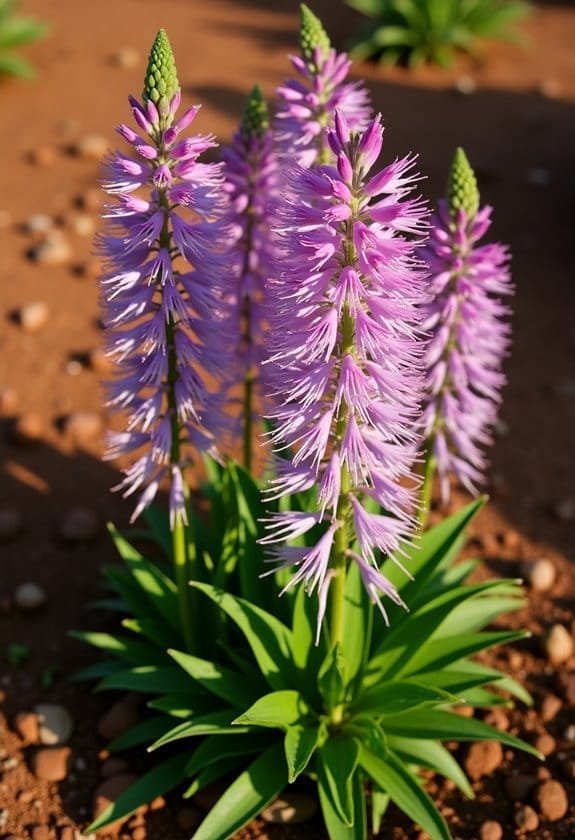
Cleome hassleriana flourishes under specific growing conditions, making an understanding of its light, soil, and water requirements essential for successful cultivation.
This plant thrives in full sun, demanding a minimum of six hours of sunlight each day to achieve maximum growth and vibrant blooms.
Additionally, it prefers well-drained soil with a pH between 6.0 and 7.0, while being resilient to drought.
Yet careful attention must be paid to avoid overwatering to prevent leggy growth.
Light
Sunshine is essential for the vigorous growth of Cleome hassleriana, as these plants thrive in full sun and require at least 6 hours of direct sunlight each day. Adequate sunlight fuels the photosynthesis process, leading to healthy growth and the production of abundant blooms. When deprived of sufficient sunlight, Cleome plants often exhibit tall, weak growth and experience a noticeable decrease in flowering, diminishing their visual appeal.
While Cleome can tolerate some light shade, its best performance occurs in well-drained soil under full sun conditions. This environment mitigates problems like powdery mildew, which can adversely affect plant health.
Ideal temperatures for growth hover around 75-80°F during the day and 60-65°F at night, further enhancing the plant's resilience and flowering potential.
Moreover, ensuring proper spacing between individual plants is significant; this practice allows each plant to bask in ample sunlight and promotes effective air circulation, thereby preventing overcrowding issues that may inhibit growth.
To summarize, prioritizing sunlight exposure is essential for cultivating flourishing Cleome hassleriana, fostering a vibrant and colorful garden that delights the senses.
Soil
For ideal growth, Cleome hassleriana flourishes in average to rich, well-drained soil, preferably sandy or loamy, with a pH between 6.0 and 7.0. This plant thrives in moist conditions, particularly during its early development stages; however, once established, it exhibits remarkable drought tolerance.
Ensuring proper drainage is crucial, as overwatering can lead to leggy growth, negatively impacting the plant's overall appearance and vitality.
Maintaining healthy soil greatly impacts Cleome's resilience against pests and diseases. By enriching the ground with organic matter, gardeners can enhance soil health, thereby fostering robust growth and an impressive floral display. Adding mulch serves a dual purpose: it helps retain moisture within the soil while minimizing watering frequency, particularly useful during dry spells.
Moreover, cautious fertilization is essential; excessive nutrient application can disrupt the delicate balance of soil health. Consequently, gardeners should prioritize cultivating well-drained, nutrient-rich environments that complement Cleome hassleriana's growing requirements.
Water
Watering plays an important role in the growth of Cleome hassleriana. This plant prefers consistently moist, well-drained soil, particularly when it's in its early stages of development. During this essential phase, ample moisture fosters strong root establishment and healthy foliage.
Once the plant matures, it becomes drought-tolerant, but regular watering during prolonged dry spells is vital. Supplemental hydration during such conditions promotes ideal blooming and guarantees vibrant flowers.
Applying mulch around the base of Cleome hassleriana can greatly enhance moisture retention, reducing the frequency of watering needed. However, care must be taken to avoid overwatering, which can lead to leggy growth and, ultimately, compromise the plant's structural integrity.
Too much water may also instigate root rot, jeopardizing its health. In full sun conditions, adequate water supply remains critical; without it, stress can set in, resulting in fewer blooms and diminished aesthetic appeal.
Consequently, finding the right balance between hydration and drainage is key to thriving Cleome hassleriana. Ultimately, attentive watering practices will lead to a robust and flourishing garden display, showcasing the exquisite beauty of spider flowers.
Temperature
Maintaining the right temperature is crucial for the growth of Cleome hassleriana. This vibrant plant thrives best with daytime temperatures ranging from 75-80°F, paired with cooler nighttime conditions of 60-65°F for peak growth and blooming. Exposure to frost is detrimental, necessitating careful timing for planting; it's best to sow seeds after the last frost date in colder regions to avoid damage.
Once established, Cleome demonstrates remarkable drought tolerance, allowing it to survive in less-than-ideal watering situations. However, for flourishing blooms and robust growth, maintaining consistent moisture is essential, especially in warm weather.
It's important to monitor temperature closely, as prolonged exposure to extreme heat above 90°F can impede flowering and stunt growth, making careful temperature management crucial.
With a broad adaptability across USDA hardiness zones 2-11, Cleome hassleriana showcases versatility in various climates. Consequently, gardeners should remain vigilant in local temperature conditions to guarantee the healthy development of this stunning spider flower.
Pollinator Criteria
Cleome hassleriana, known for its stunning array of colors, attracts a diverse group of pollinators, including hummingbirds, bees, and butterflies.
The plant's six long stamens, laden with nectar, facilitate both visual and olfactory signaling, ensuring effective pollination throughout its extended blooming season.
Attracted Pollinators
The enchanting spider flower, known scientifically as Cleome hassleriana, is a magnet for a variety of pollinators, thanks to its unique characteristics. Blooming from early summer until frost, it offers a continuous supply of resources, attracting species like hummingbirds, bees, butterflies, and even bats.
Pollinators are drawn not just to the vibrant flower colors—ranging from brilliant white to deep purple—but also to the intriguing spiky flower clusters that display long stamens. The flowers emit a spectrum of fragrances, from musky to sweet, which play a crucial role in luring pollinators that depend on scent for navigation and foraging.
This olfactory appeal enhances the spider flower's effectiveness as a food source, allowing it to attract a greater diversity of pollinators. The structure of the flower is particularly appealing to bees, who seek out such forms for their rich pollen and nectar.
Pollination Method
Attracting a diverse range of pollinators is just the beginning for Cleome hassleriana; its unique pollination method plays a notable role in its reproductive success. This flowering plant entices hummingbirds, bees, butterflies, and even bats with its vibrant, colorful flowers that bloom from early summer until frost.
The structure of the flower features six elongated stamens, which not only provide a stunning visual display but also serve as an accessible landing platform for various pollinators. The diverse color range, including shades of white, pink, rose, and purple, coupled with fragrances that vary from musky to sweet, notably enhances the attraction to these beneficial creatures.
Pollen and nectar are essential rewards offered by the flowers, drawing in pollinators, who play a critical role in cross-pollination. The dense terminal inflorescences, known as racemes, increase visibility and accessibility for visiting pollinators, thereby facilitating higher rates of reproductive success among plants.
In essence, the effective synergy between flower structure and pollinator interaction highlights the intricate balance within nature, ensuring that Cleome hassleriana continues to thrive in its ecosystems.
Care & Maintenance
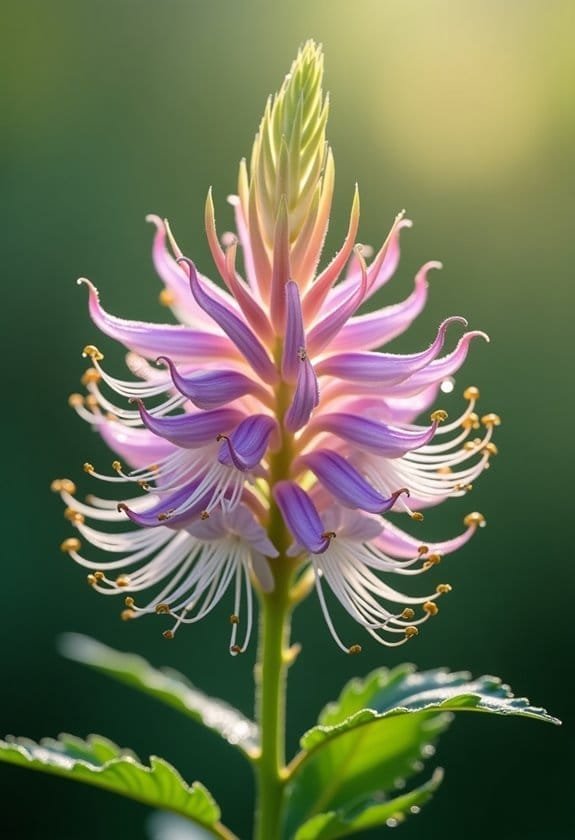
When considering the care and maintenance of Cleome hassleriana, it's essential to understand its specific needs to guarantee vibrant growth and blooming.
It thrives under full sun conditions and demands well-drained soil; thus, planting in a location that receives at least six hours of sunlight daily fosters ideal development.
Regularly watering during dry spells supports the plant's needs while incorporating techniques like deadheading spent blooms enhances its visual appeal and prolongs its blooming period.
Planting Tips
Success in cultivating Cleome hassleriana hinges on understanding its care and maintenance needs. This striking plant flourishes in full sun, necessitating at least six hours of direct sunlight daily to achieve peak growth and abundant blooms.
Regular watering is advantageous, particularly during dry spells; however, gardeners should exercise caution to avoid overwatering, which can lead to leggy growth and disease complications.
To promote a lush, bushy appearance, pinching back young plants is recommended. Meanwhile, deadheading spent blooms not only prolongs flowering but also curtails unwanted self-seeding, which can disrupt garden aesthetics.
When planting, spacing plants at least one foot apart is essential to prevent overcrowding, thereby reducing the risk of mildew and rust. Thin seedlings as needed to guarantee adequate airflow and sunlight penetration, creating a healthier growing environment.
Fertilization is generally unnecessary with quality soil and mulch, though employing a balanced fertilizer during the active growing season can enhance liveliness. By adhering to these guidelines, gardeners can cultivate a vibrant display of Cleome hassleriana that captivates the eye and enriches any garden landscape.
Ongoing Care
After mastering the planting tips, ongoing care is essential for maintaining the health and vibrancy of Cleome hassleriana. Regular deadheading of spent blooms stimulates new growth, prolonging the blooming period and ensuring that the garden remains lively.
During dry spells, diligent watering is vital, especially for young plants; however, once established, Cleome exhibits drought tolerance and prefers well-drained soil to avoid overwatering. Unlike Common Tansy, which can thrive in various conditions, Cleome's need for well-drained soil is critical to prevent root rot.
Light pruning and thinning are indispensable practices that prevent overcrowding, a scenario that can foster diseases like powdery mildew and rust. By strategically trimming back some stems, gardeners can promote healthy air circulation and vigorous growth.
Fertilization during the growing season often benefits Cleome, especially with a balanced fertilizer that enhances both growth and flowering potential. Yet, it's worth noting that healthy plants in nutrient-rich soil may thrive without additional nutrients.
As autumn approaches, cutting back dead foliage is advisable for winter care, as this practice not only tidies the planting area but allows for new spring growth. Additionally, introducing plants such as Common Yarrow can attract beneficial pollinators to your garden, enhancing its ecological diversity.
Therefore, with proper ongoing care, Cleome hassleriana can flourish in its full, radiant glory season after season.
Suggested Companions
Integrating Cleome hassleriana with complementary plants not only enhances the garden's aesthetic but also promotes a thriving ecosystem.
For an impressive visual display, gardeners should consider pairing Cleome with tall, upright flowers like zinnias and sunflowers. Their vertical growth harmonizes with the airy structure of the spider flower, accentuating its unique form. Additionally, incorporating dynamic foliage plants such as ornamental grasses introduces varied textures, creating a striking contrast against Cleome's spiky blooms.
To establish a vibrant foundation, low-growing border plants, like marigolds or petunias, should nestle at the base, adding bursts of color that accentuate Cleome's height. In addition, integrating heat-tolerant plants, such as lantana or salvia, guarantees a continuous color palette throughout the summer, perfectly suited for the full sun conditions that Cleome thrives in.
For a truly inviting environment, combining Cleome with other pollinator-attracting species like echinacea or gaillardia diversifies the garden and sets the stage for a flourishing butterfly and bee habitat, turning the landscape into a joyous symphony of life. This is particularly beneficial as species like Bellis perennis support local ecosystems by offering consistent nectar sources for pollinators.
Common Issues
While Cleome hassleriana showcases impressive resilience against many pests and diseases, it does face challenges, particularly with aphids, spider mites, and whiteflies.
Regular monitoring becomes crucial, as these pests can quickly damage plants if left unchecked, leading to reduced vigor and blooming.
Additionally, concerns like powdery mildew and rust often arise in hot, humid conditions, underscoring the importance of adequate air circulation and soil management to guarantee peak health and flowering.
Pests/Diseases
Cleome hassleriana typically holds its ground against pests, but it can occasionally encounter issues with aphids, spider mites, and whiteflies. These tiny invaders may infest the delicate foliage, hindering growth and affecting overall vigor. Regular monitoring becomes essential, as early detection allows for timely interventions that can preserve the health of these vibrant plants.
Moreover, Cleome is susceptible to certain diseases, particularly in hot, humid climates. Powdery mildew, a fungal affliction, thrives when plants are overcrowded, reducing airflow and creating a favorable environment for spores to spread. Rust, another potential threat, manifests as unsightly orange or brown pustules on the leaves, further compromising plant health. To combat these diseases, fostering appropriate space between plants is vital.
Healthy soil greatly contributes to preventing both pests and diseases. Nutrient-rich soil supports robust plant growth, while depleted, unhealthy soil may attract unwanted pests like aphids.
Solutions
Addressing common issues that may arise with Cleome hassleriana can greatly enhance its growth and flowering. This resilient plant often attracts a variety of pests, such as aphids, spider mites, and whiteflies, requiring vigilant monitoring for early intervention. Regular inspections facilitate prompt action, ensuring the plant's importance.
To prevent powdery mildew and rust, proper spacing is essential; plants should be spaced adequately, ideally 12 to 18 inches apart, particularly in hot, humid conditions where overcrowding worsens these issues.
Furthermore, providing Cleome with full sun—at least six hours daily—enables ideal blooming and minimizes leggy growth that occurs when the plant is overly shaded.
It's equally important to avoid overwatering and over-fertilizing, as these practices can lead to spindly growth and diminished vigor.
Deadheading spent blooms not only enhances aesthetic appeal but also prolongs the flowering period and mitigates unwanted self-seeding.
Summary
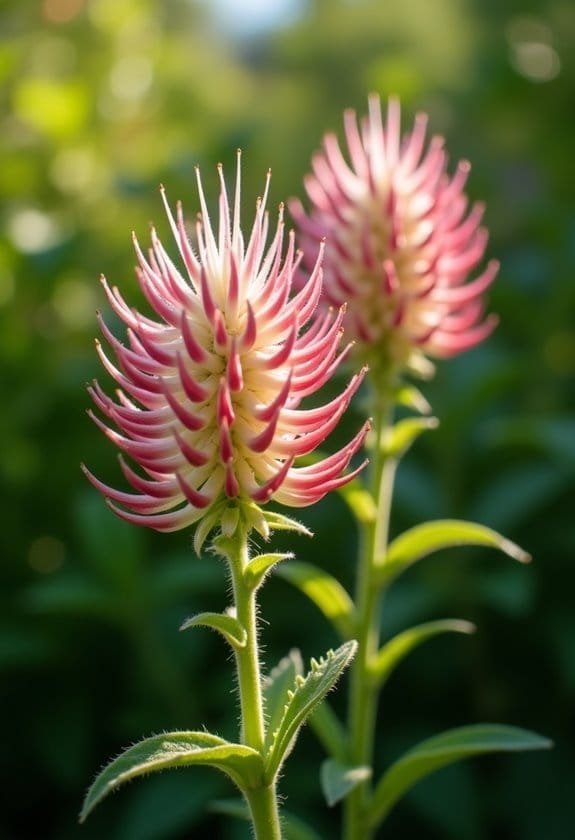
The enchanting beauty of Cleome hassleriana, or spider flower, makes it a popular choice for gardens. This fast-growing annual typically reaches heights of 3 to 6 feet, boasting unique, spiky flower clusters in alluring shades of pink, purple, and white. Thriving in full sun to light shade, Cleome prefers well-drained soils with a pH range of 6.0 to 7.0, ensuring ideal growth while demonstrating drought tolerance once established.
These magnificent blooms emerge from early summer and continue until the frost, charming various beneficial pollinators such as hummingbirds and bees. This quality makes Cleome an excellent selection for those looking to enhance biodiversity within their gardens.
Generally low maintenance, this plant may attract aphids and spider mites, but regular deadheading and thinning can help mitigate overcrowding and encourage new blooms.
Additionally, multiple cultivars exist, including the thornless Señorita Rosalita® and the compact Linde Armstrong variety, the latter excelling in heat tolerance and fitting well into smaller garden spaces or containers.