Cornus alba, known as Red-Barked Dogwood, is a fascinating deciduous shrub that typically grows 4 to 7 feet tall and 3 to 5 feet wide. Its vibrant coral-red stems stand out beautifully in winter, while its dark green leaves shift to a vivid yellowish-red in autumn. This shrub flourishes in USDA zones 3 to 7, thriving in well-drained, organically rich soils with a pH of 6.0 to 7.0. Flowering in late spring, it attracts pollinators, subsequently producing bluish drupes that benefit local wildlife. With proper care, including regular pruning, Cornus alba offers year-round aesthetic and ecological value, inviting further exploration into its many attributes.
Main Points
- Cornus alba, or Red-Barked Dogwood, is a deciduous shrub characterized by vibrant coral-red stems and dark green leaves that change colors in autumn.
- It thrives in USDA zones 3 to 7, preferring full sun to partial shade and well-drained, organically rich soils.
- In late spring, it produces creamy white flower clusters that attract pollinators, followed by small bluish drupes serving as wildlife food.
- Regular pruning is essential for maintaining plant health, improving airflow, and controlling suckering to prevent invasiveness.
- Cornus alba enhances landscapes throughout the year, providing seasonal interest and supporting local ecosystems with its blooms and fruit.
Introduction
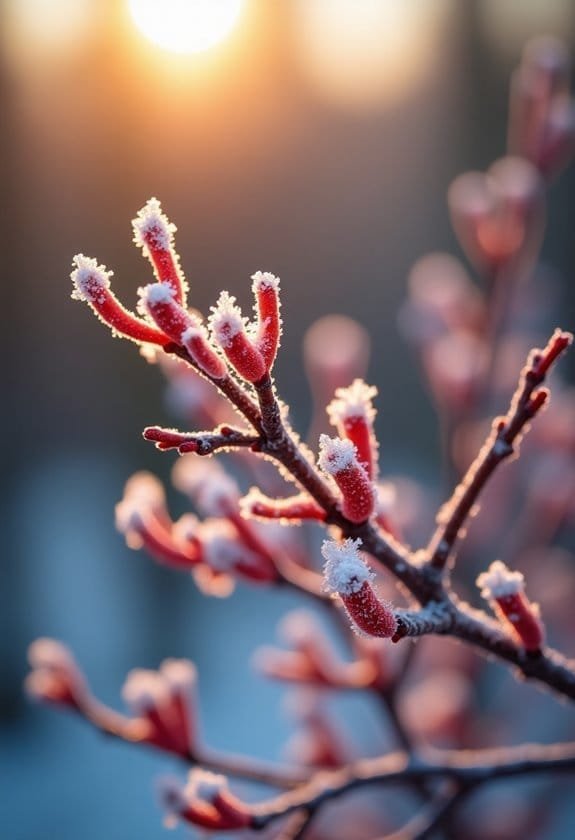
Cornus alba, commonly known as Red-Barked Dogwood, captivates gardeners and landscape enthusiasts alike with its vivid red stems that brighten winter settings.
This deciduous shrub, reaching heights of 4 to 7 feet, not only boasts creamy white flowers in late spring but also thrives in a range of soil conditions, adapting well to both sun and shade.
Known for its vigorous growth and ability to form colonies, Cornus alba serves a dual purpose, enhancing aesthetic appeal while effectively controlling soil erosion.
Common Name
One might easily recognize the Red-Barked Dogwood by its striking winter appearance, which makes it a popular choice for gardens and landscapes. With its vibrant coral-red stems, this shrub stands out against a snowy backdrop, infusing spaces with lively color when most plants are dormant.
Commonly referred to as Siberian Dogwood and Tatarian Dogwood, its alternative names reflect its origins in eastern and central Asia. This plant, belonging to the Cornaceae family, hasn't only aesthetic appeal but also functional value in landscaping.
The intense red hues of its stems, reaching heights of about 6 to 10 feet, derive from the plant's ability to retain pigments even in cold weather, creating a stunning visual contrast. Additionally, while "alba" translates to "white" in Latin—often alluding to its mid-summer drupes—the common name has become synonymous with the shrub's eye-catching winter demeanor.
Through the seasons, the Red-Barked Dogwood offers beauty and structure, proving to be a versatile component in various garden designs. With its hardiness and notable characteristics, Cornus alba continues to thrive in diverse climates, securing its popularity among gardeners.
Scientific Name
The scientific name Cornus alba** not only identifies the Red-Barked Dogwood but also highlights its botanical lineage within the Cornaceae family. This fascinating plant, commonly referred to as the Red Twig or Siberian Dogwood, thrives in eastern and central Asia. Its specific epithet, "alba,"** translates to "white," a nod to the color of the drupes it produces. This term underlines the significance of the fruit, giving both scientific and descriptive weight to the species.
Throughout its history, C. alba has undergone reclassification, previously known by the names Cornus pumila and Swida alba. Such changes reflect the evolving understanding within horticultural taxonomy, showcasing the dynamic nature of botanical classification.
In addition, several notable cultivars exist, including Cornus alba 'Sibirica,' renowned for its striking red stems that provide visual interest amidst winter landscapes.
Adaptability characterizes this species, as it flourishes across USDA zones 3 to 7. Its resilience makes it a cherished choice for gardeners and landscapers alike, providing both beauty and structure to diverse environments while inviting a closer look at nature's intricate classification systems.
Overview
Providing stunning seasonal interest, Cornus alba, or Red-Barked Dogwood, serves as a versatile addition to various landscapes. This multi-stemmed shrub, native to eastern and central Asia, showcases an impressive display year-round, with striking vibrant red stems that create a bold aesthetic during the winter months.
Generally reaching heights of 4 to 7 feet and widths of 3 to 5 feet, Cornus alba features dark green leaves that shift to vivid shades of yellowish to reddish-purple in autumn, enhancing its visual appeal.
In spring, clusters of creamy white flowers emerge, attracting a range of pollinators, followed by small, bluish-tinted drupes mid-summer, which provide sustenance for wildlife.
Thriving in well-drained, organically rich soils and preferring full sun to partial shade, this resilient shrub flourishes across USDA zones 3 to 7.
Its adaptability and ornamental characteristics make Cornus alba, particularly the cultivar Cornus alba Sibirica, a popular choice for erosion control, mass plantings, and naturalistic landscapes.
Through thoughtful placement, gardeners can leverage its vibrant attributes, transforming any outdoor space into a visually dynamic setting that changes with the seasons. Additionally, this species can support local wildlife by providing critical food sources for various insects and birds.
Key Features
Cornus alba, or Red-Barked Dogwood, showcases distinct growth characteristics that enhance any landscape.
Typically reaching heights of 4-7 feet and widths of 3-5 feet, its arching, erect growth habit enables it to form expansive colonies through natural suckering.
During late spring, this robust shrub bursts forth with clusters of yellowish-white flowers, leading to the emergence of small white drupes in mid-summer, further enriching its visual appeal.
Growth Size
Measuring between 4 to 7 feet tall, Cornus alba typically forms a compact shrub that spreads 3 to 5 feet across, offering an inviting presence in gardens and landscapes.
This dogwood exhibits moderate growth, particularly in certain cultivars like Cornus alba Sibirica, which can reach heights up to 9 feet. The plant's multi-stemmed growth habit allows it to maintain an upright posture, while the extensive suckering tendencies encourage colony formations that enrich its surroundings.
The most striking feature of Cornus alba is certainly its vibrant red stems, especially pronounced during the winter months. These stems create a vivid contrast against the often monochromatic winter landscape, adding exceptional aesthetic value.
Depending on specific cultivars and environmental conditions, some specimens may even soar to 10 feet in height, exemplifying their adaptability and resilience.
This dwarf shrub not only enhances garden structure but also serves as an essential habitat for various wildlife species.
Appearance
The vibrant appearance of Cornus alba, or Red-Barked Dogwood, captivates onlookers year-round. This multi-stemmed shrub typically reaches heights of 4 to 7 feet and a spread of 3 to 5 feet, showcasing a striking upright habit that commands attention in any landscape.
In summer, its stems display a greenish-red hue, shifting to bright coral red in winter, providing an evocative contrast against the snow, thereby earning its name.
The dark green, wrinkled leaves of Cornus alba heighten its visual appeal, morphing to a stunning fall color that ranges from brilliant yellowish to reddish-purple, igniting the garden with warmth before the winter chill sets in. Notable cultivars, such as 'Sibirica', exemplify this ornamental charm with their exceptional red stems in winter, drawing garden enthusiasts and nature lovers alike.
During its flowering season, the shrub produces flat-topped clusters of creamy white flowers, approximately 2.5 inches wide, which later yield small white drupes, often tinged with a hint of blue.
Flowering Season
In late spring, Cornus alba bursts into bloom with clusters of creamy white flowers that effortlessly enhance the landscape. These flat-topped flower clusters, approximately 2.5 inches wide (6 cm), form enchanting displays contrasting beautifully with the surrounding green foliage.
During the flowering season, which lasts several weeks, the delicate blooms not only provide visual interest but also play an essential role in the ecosystem by attracting butterflies and pollinators such as bees.
The allure of these flower clusters is more than ornamental; they serve as significant resources for various creatures, fostering pollination and ensuring the continuity of plant species.
Following the flowering season, Cornus alba yields small white drupes that may exhibit a subtle bluish tinge, typically appearing in mid-summer. These berries further contribute to the ecological significance of the dogwood, offering sustenance for birds and other wildlife, thereby enriching biodiversity.
Growing Requirements
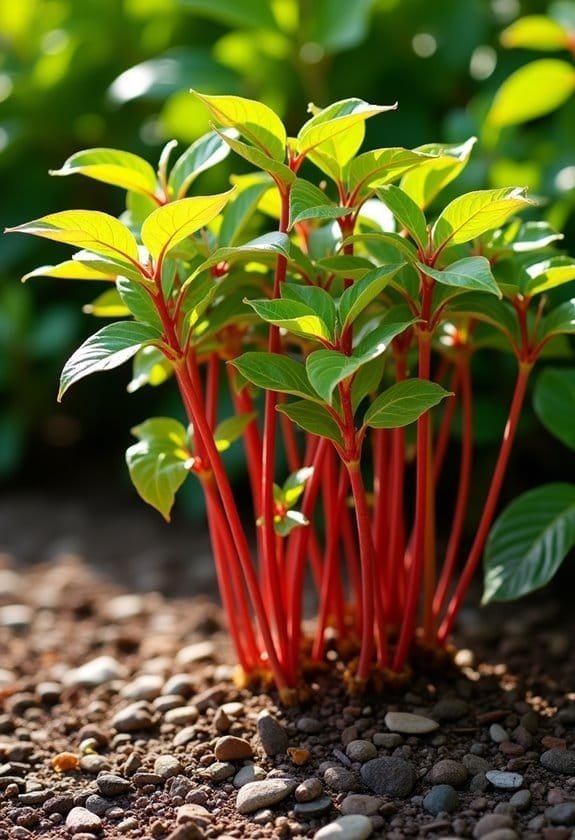
Cornus alba, known for its striking appearance, flourishes best in full sun to partial shade, showcasing its adaptability to light conditions.
This shrub prefers well-drained, organically rich soils, ensuring a balance of moisture that supports robust growth.
Understanding its water and temperature needs is vital, especially during the initial growing season, where consistent deep watering facilitates the establishment of a resilient root system.
Light
Thriving in full sun to partial shade, Cornus alba flourishes best when given ample sunlight. This deciduous shrub exhibits its full potential under direct light, as this exposure considerably enhances the vibrancy of its bright red stems. When placed in locations that receive full sun, the plant develops a striking appearance during the colder months, becoming a focal point in winter landscapes.
Conversely, when grown in shaded areas, it tends to become leggy, with diminished stem color, ultimately reducing its ornamental appeal.
While Cornus alba adapts to various conditions, it performs best in well-drained soils that are rich in organic matter. In these conditions, the plant exhibits robust growth, contributing to its overall health and aesthetic.
Consistent moisture, particularly during the plant's establishment phase, further supports vigorous development. Though it can tolerate dry and poor soils, establishing it in an environment that offers well-drained, medium moisture is essential for maximizing its beauty and resilience.
Soil
A well-chosen soil is essential for the success of Cornus alba in any garden setting. This striking plant thrives in well-drained soils that are rich in organic matter, ensuring medium moisture levels vital for ideal growth. Its adaptability is one of its notable strengths; once established, it can tolerate a range of soil conditions, including both wetter and drier environments. Consequently, gardeners can find success despite varying soil types.
For best results, the soil's pH should ideally range from slightly acidic to neutral, around 6.0 to 7.0, fostering efficient nutrient uptake.
When planning a garden, consider that Cornus alba flourishes in full sun, which enhances the vibrancy of its red stems, but it can also tolerate partial shade. Regular mulching effectively retains soil moisture and improves soil quality, creating an environment conducive to healthy growth in Red-Barked Dogwood.
Therefore, selecting the right soil not only nurtures the plant's growth but also allows it to showcase its dazzling aesthetic appeal. By understanding these requirements, gardeners can create a thriving habitat for this beautiful specimen in diverse landscape settings.
Water
Water plays an essential role in the growth of Cornus alba, as this plant prefers evenly moist, well-drained soils that are rich in organic matter. During the establishment phase, typically the first growing season, deep and regular watering is critical. This consistent moisture helps the plant establish an extensive root system, anchoring it firmly while promoting overall health.
While Cornus alba demonstrates an impressive adaptability to varying conditions, it thrives best in environments that maintain medium moisture levels. Monitoring the moisture content is essential; excessive dryness can lead to stress, hindering the plant's development, while prolonged waterlogging may pose risks of root rot and susceptibility to diseases.
Once established, however, this resilient dogwood showcases its versatility, tolerating both wet and dry conditions effectively. By maintaining balanced moisture levels, gardeners can cultivate a robust Cornus alba that flourishes throughout the seasons.
Hence, understanding the importance of water in soil dynamics becomes a key component of nurturing this visually striking plant. In sum, effective water management is vital to enhancing the health and longevity of Cornus alba in any landscape.
Temperature
Typically found in USDA zones 3 to 7, Cornus alba tolerates a wide range of temperatures, enduring winter lows that can drop to -40°F (-40°C). This remarkable hardiness equips the plant to thrive in climates that many other species find inhospitable. Notably, while Cornus alba flourishes in full sun to part shade, these light conditions are essential for enhancing its vibrant red stems, particularly during the stark winter months.
To support healthy growth, Cornus alba requires well-drained soils, ideally rich in organic matter. While the species can adapt to various soil conditions, poorly drained soils may hinder peak development. During the initial growing season, young plants necessitate regular watering to establish a robust root system, an essential foundation for future resilience.
Though established plants demonstrate some drought tolerance, they benefit from consistent moisture throughout the year, especially in warmer regions. The plant's preference for temperate environments and well-drained soils profoundly impacts its vigor and overall health.
Pollinator Criteria
Pollinator criteria for Cornus alba highlight the important role it plays in supporting a diverse array of pollinators.
With its late spring bloom timeframe, the plant's clusters of creamy white flowers, rich in nectar, effectively attract bees, who engage in cross-pollination, thereby enhancing genetic diversity.
This not only sustains pollinator populations but also contributes to the ecological health of the surrounding environment, transforming gardens into vibrant sanctuaries of life.
Attracted Pollinators
Attracted to the creamy white flowers of Cornus alba, bees and butterflies flourish in garden settings where this shrub thrives. During late spring, its flat-topped clusters of flowers release nectar, luring various pollinators and beneficial insects. This natural phenomenon creates a buzzing ecosystem, supporting vibrant wildlife populations.
As the flowers mature into small white drupes with a bluish tinge by mid-summer, they not only add visual interest but also provide edible berries that attract birds, further enhancing the garden's biodiversity. Additionally, Herb Robert (a known aggressive invasive species) can compete for resources, underscoring the importance of selecting suitable companion plants.
The shrub's abundant foliage offers both nourishment and habitat, making Cornus alba an important element for sustaining pollinator populations. Planting this dogwood species contributes to increased biodiversity, allowing significant pollinators to find food.
With its seasonal display, the shrub serves dual purposes: creating an aesthetically pleasing landscape while fostering essential ecological interactions. Additionally, planting flowering species like Cornus alba can support native pollinator populations, promoting healthier ecosystems overall.
Moreover, the seasonal interest of Cornus alba sustains pollinators throughout the spring and summer months, allowing them to thrive amid changing environments. This connection between flowers, pollinators, and the broader ecosystem highlights the fundamental role of such plants in maintaining ecological balance while encouraging greater biodiversity in garden spaces.
Pollination Method
The unique structure of Cornus alba's creamy white blooms plays a significant role in its pollination method. These flowers, clustered together, appeal to a variety of pollinators, including bees and butterflies, which are drawn here in search of nectar. While the blooms lack fragrance, their accessible design allows insects to easily navigate the floral architecture, ensuring effective pollination.
Primarily, pollination in Cornus alba occurs through insects, emphasizing the significance of cross-pollination. This method not only fosters genetic diversity but also enhances the resilience of the species. During the flowering period, which typically spans several weeks in late spring, the plant provides ample opportunities for visitors to engage with its blooms. Additionally, the presence of vibrant colors in floral structures, as seen in Rosa species, plays a crucial role in attracting pollinators.
Successful pollination leads to the formation of small, white drupes accented with a bluish tinge. These fruits become essential food sources for various wildlife, including birds, who are naturally attracted to their nutritional offerings. Additionally, the high nectar availability in flowers like Cornus alba fosters relationships with pollinators such as bees, which are essential for maintaining biodiversity in ecosystems.
The interdependence between Cornus alba and its pollinators, such as bees, highlights a rich ecosystem dynamic, where each element serves an important role in sustaining the growth and diversity of life surrounding these remarkable plants.
Care & Maintenance
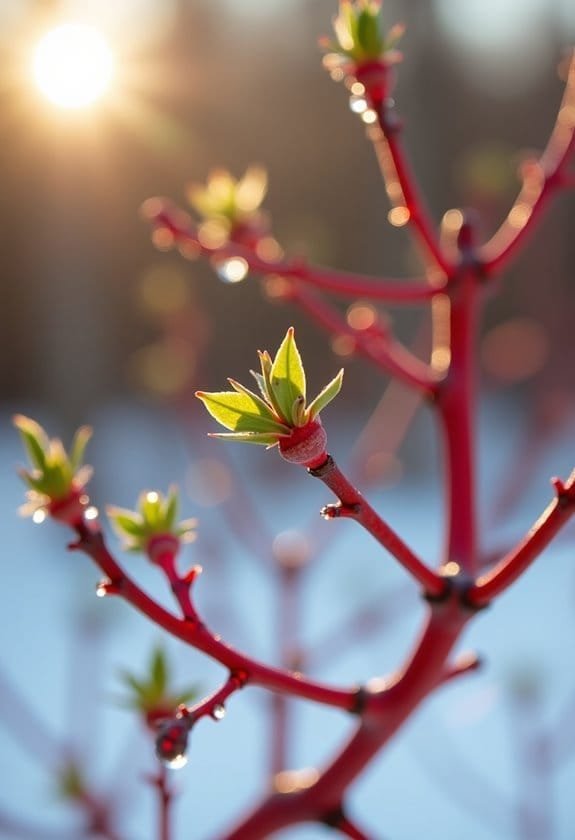
Caring for Cornus alba involves attentive practices that guarantee its vibrant health and striking appearance.
To cultivate this shrub effectively, one must consider ideal planting tips, ongoing care routines, and suitable companion plants that enhance its growth and aesthetics.
Planting Tips
When planting Cornus alba, it's essential to choose a spot with well-drained, organically rich soil and make certain it gets full sun to part shade for peak growth. This deciduous shrub thrives in environments that provide nutrition while preventing waterlogging.
During the initial growing season, deep and regular watering establishes a robust root system, enabling the plant to subsequently tolerate various moisture levels.
A valuable planting tip involves understanding the significance of annual pruning; gardeners should prune one-third of the oldest stems each late winter to stimulate new growth. This strategic cutting not only rejuvenates the plant but also helps maintain the vibrant red bark that characterizes winter landscapes.
Moreover, while Cornus alba roots can suckle, consider implementing root pruning techniques to manage its spread, especially in larger garden spaces.
Keep an eye out for pests like leaf miners and monitor for diseases such as powdery mildew, which can threaten plant health in warmer climates.
Ongoing Care
Proper ongoing care is vital for guaranteeing that Cornus alba thrives throughout its life cycle. Regular maintenance practices greatly contribute to the vibrancy of this striking shrub. Gardeners should prune one-third of the oldest stems every 2-3 years during late winter. This practice stimulates vigorous new growth while enhancing the plant's colorful bark, which is a hallmark of its appeal.
During the initial growing season, it's essential to provide deep and regular watering, especially in well-drained soils. This fosters robust root establishment, allowing the plant to withstand varying environmental conditions.
In spring, applying an organic, balanced fertilizer aids in supporting healthy growth and vibrant foliage.
Moreover, gardeners should monitor for common pests, such as dogwood anthracnose and powdery mildew, particularly in warmer climates, as early detection helps mitigate risks. Addressing these concerns promptly safeguards the plant's health.
Additionally, removing root suckers will help control suckering behavior, preventing the shrub from spreading where it's not desired. These thoughtful care practices guarantee that Cornus alba not only flourishes but also remains a striking fixture in the landscape.
Suggested Companions
Pairing Cornus alba with complementary plants can greatly enhance the overall beauty and functionality of a garden. Companion plants, such as Boxwood (Buxus), serve as a contrasting evergreen backdrop that highlights the striking red stems of the Red-Barked Dogwood, thereby enriching the winter landscape.
Summersweet (Clethra) offers delightful summer blooms, attracting valuable pollinators while thriving in the well-drained soils that Cornus alba prefers.
Furthermore, Japanese Sweet Flag (Acorus) complements the architectural structure of the dogwood, flourishing in wet conditions, making it a natural companion near water features.
Sweetspire (Itea) boasts attractive foliage along with fragrant flowers that coincide with the dogwood's blooming period, creating a cohesive visual motif throughout the garden.
In addition, Chokeberry (Aronia) shares similar growth habits and soil preferences with Cornus alba, providing a diverse ecosystem enriched with attractive berries.
This synergistic planting strategy guarantees a vibrant garden that survives seasonal challenges, ultimately fostering a resilient landscape filled with various textures and colors.
Common Issues
Cornus alba faces several common issues that can compromise its health and energy.
This shrub is vulnerable to diseases like dogwood anthracnose and powdery mildew, especially in hot climates where air circulation is limited.
Additionally, pests such as leaf miners and scales can weaken the plant, leading to unkempt foliage; therefore, proactive monitoring and timely intervention are essential for maintaining its beauty and vigor.
Pests/Diseases
Dogwood anthracnose poses a significant threat to Cornus alba, especially in warm and humid environments. This fungal disease manifests as leaf spots that can lead to wilting and dieback, severely compromising the health of the plant.
Additionally, powdery mildew adds to the challenges faced by this species. It appears as a white, powdery coating on leaves, obstructing photosynthesis and subsequently weakening the plant's overall vigor.
Another concern is the presence of scale insects, which can infest the stems and leaves. These tiny pests feed by sucking sap from the plant, and if their population isn't managed adequately, they may cause significant decline or even complete dieback.
Compounding these problems, leaf miner larvae tunnel between leaf layers. Their presence leads to discolored, distorted foliage, further reducing the plant's health and aesthetic appeal.
To mitigate these issues, gardeners need to adopt regular monitoring practices for these pests and diseases. Attributes such as good air circulation and avoiding overhead watering can play an essential role in lessening the impact of dogwood anthracnose, powdery mildew, and scale insects on Cornus alba.
Solutions
Effective management strategies can considerably improve the health of Cornus alba and mitigate common issues associated with pests and diseases. Regular monitoring is essential to detect diseases like dogwood anthracnose and powdery mildew, particularly in warmer climates where these threats flourish.
Pruning plays an important role in the overall vitality of the plant, as a hard prune every 2-3 years not only rejuvenates growth but also enhances the striking red stem color that characterizes this species.
Root pruning may be necessary to curb unwanted suckering, preventing the Cornus alba from becoming weedy if it's allowed to spread unchecked.
Conditions for ideal growth include ensuring deep, consistent watering to establish a robust root system, particularly in enriched yet well-drained soil.
Additionally, vigilance against pests such as leaf miners and scale is essential. Regular inspections for early signs of insect infestations enable prompt intervention, mitigating potential damage.
What Are the Differences Between Red-Barked Dogwood and Common Hawthorn?
The differences between Red-Barked Dogwood and common hawthorn plant are significant. While both are deciduous shrubs, the Red-Barked Dogwood features distinctive red-purple bark, while the Common Hawthorn plant is known for its thorny branches and clusters of white flowers. Each plant has unique ornamental and ecological benefits.
Summary
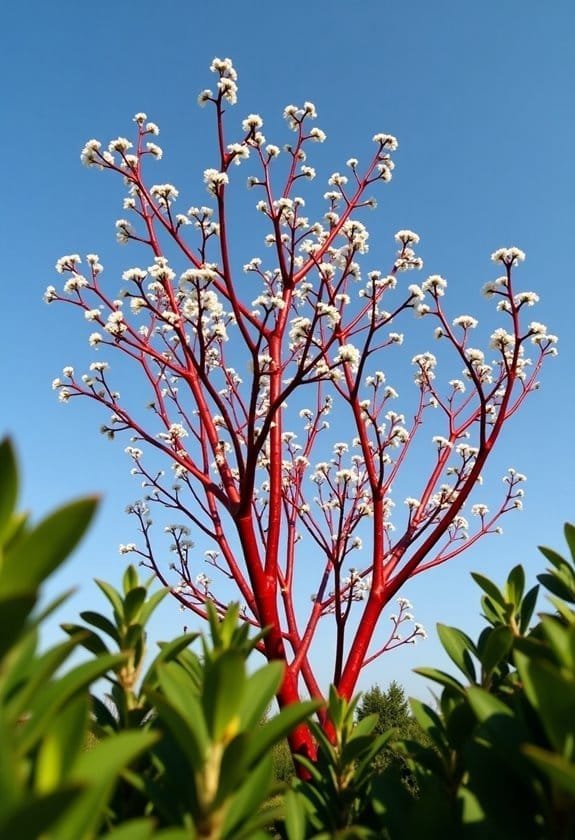
The vibrant beauty of Cornus alba, or Red-Barked Dogwood, captivates gardeners and landscape designers alike. This multi-stemmed shrub, reaching heights of 4-7 feet, showcases stunning bright red stems during winter that stand out beautifully against a snowy backdrop.
In spring, it delights the senses with creamy white blooms that add a delicate touch to any landscape. Cornus alba thrives in both full sun and part shade, favoring well-drained soils rich in organic matter, which enhances its adaptability across USDA hardiness zones 3-7.
Seasonally, this dogwood exhibits striking foliage; dark green leaves transform into brilliant purple-red hues during fall, creating a tapestry of color. Mid-summer brings small white drupes, which attract various wildlife and enrich the ecosystem.
However, potential challenges exist, such as susceptibility to dogwood anthracnose and powdery mildew, alongside vulnerability to sucking insect pests, particularly in warmer climates.
Noteworthy cultivars like 'Sibirica,' 'Elegantissima,' and 'Ivory Halo®' further diversify its appeal, boasting variegated foliage and colorful stems that enhance landscape aesthetics year-round.
Cornus alba is a remarkable choice for those seeking a dynamic and visually striking addition to their garden.