Cosmos bipinnatus, commonly referred to as Garden Cosmos or Mexican Aster, is an enchanting annual flower that graces gardens with its radiant cup-shaped blooms, measuring 5 to 7 centimeters in diameter. Typically reaching heights of 2 to 6 feet, it flourishes in well-drained soil under full sunlight, requiring moderate watering for ideal growth. Its vibrant hues attract crucial pollinators such as bees and butterflies, greatly enhancing biodiversity within the ecosystem. While relatively easy to cultivate, it faces challenges from pests and diseases, necessitating careful maintenance. To fully appreciate its qualities, further exploration reveals additional insights into its cultivation and ecological importance.
Main Points
- Cosmos Bipinnatus, commonly known as Garden Cosmos or Mexican Aster, features vibrant blooms in pink, violet, and white from July to October.
- This species thrives in well-drained soils with a pH between 6.0 and 7.0, requiring full sun for optimal growth.
- Established plants exhibit good drought resistance, but young plants need moderate and consistent moisture to avoid root rot.
- Cosmos flowers attract pollinators like bees and butterflies, enhancing biodiversity and supporting local ecosystems.
- Companion planting with vibrant annuals and herbs can improve garden health while providing wind protection for delicate stems.
Introduction
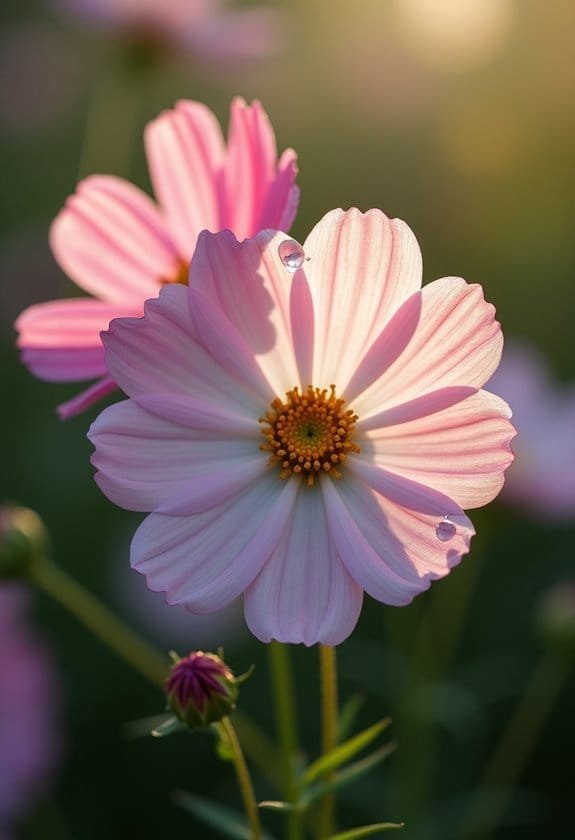
Cosmos bipinnatus, commonly recognized as Garden Cosmos, captivates gardeners and pollinators alike with its stunning cup-shaped flowers that bloom in vibrant shades of pink, purple, and white.
This enchanting annual, native to Mexico and Central America, typically reaches heights of 2 to 6 feet, complementing its delicate, feathery foliage that enhances any garden landscape.
Thriving in sunny spots and well-drained soil, Cosmos bipinnatus not only produces spectacular blooms from summer to early autumn but also plays an essential role in supporting local biodiversity by attracting crucial pollinators.
Common Name
The common name "Garden Cosmos" aptly describes the popularity of Cosmos bipinnatus in garden cultivation. This plant thrives in various conditions, earning its place among favored ornamental plants.
Acknowledged for its vibrant daisy-like flowers, the Garden Cosmos showcases a palette of rich hues, including striking shades of pink, purple, and white. These flowers bloom abundantly from summer to fall, creating a dazzling display that enhances any landscape.
Originating from Mexico and Central America, the Garden Cosmos is also referred to as "Mexican Aster," an homage to its roots. This species typically reaches a height of 2 to 4 feet, making it an ideal candidate for garden borders and wildflower gardens, where it adds verticality and a splash of color.
The term "Cosmos" derives from the Greek word for "order" or "ornament," aptly reflecting its aesthetic value in horticulture. Gardeners and landscape designers appreciate its ability to attract pollinators, further enriching biodiversity within cultivated environments.
To summarize, the Garden Cosmos not only elevates visual appeal but also fosters ecological harmony, embodying the essence of a beautiful, vibrant garden space.
Scientific Name
Identified within the Asteraceae family, Cosmos bipinnatus stands out as a remarkable species due to its vibrant blooms and delicate foliage. Commonly known as Garden Cosmos or Mexican Aster, this plant originates from warm regions in Mexico, Guatemala, and Costa Rica, adapting seamlessly to its sunshine-filled environment. The feathery foliage, resembling finely cut lace, enhances its aesthetic appeal and attracts various pollinators.
Typically, Cosmos bipinnatus grows to heights between 2 to 4 feet (0.61 to 1.22m), making it an ideal choice for garden borders or as a striking centerpiece. The large, daisy-like flowers bloom in enchanting shades of pink, purple, and white, often creating a vibrant tapestry in any garden.
Gardeners seeking guidance often consult the Royal Horticultural Society, which endorses this species for its ease of cultivation and beauty.
Thriving in full sun and well-drained soil, Cosmos bipinnatus exemplifies resilience and adaptability. This plant not only enhances garden aesthetics with its colorful display but also contributes to local biodiversity by supporting pollinators, thereby enriching the gardening experience for enthusiasts and casual gardeners alike.
Overview
Known for its stunning beauty and resilience, Cosmos bipinnatus captivates gardeners and plant enthusiasts alike. Native to South America, particularly Mexico and Central America, this annual plant is cherished for its cup-shaped flowers that come in vibrant colors such as pink, purple, and white.
Typically growing between 2 and 6 feet tall, Cosmos bipinnatus showcases delicate, feathery foliage that enhances its ornamental appeal.
Blooming from summer to early autumn, the plant produces large, daisy-like flowers that not only lend charm to gardens but also attract essential pollinators, including bees and butterflies. Thriving in well-drained soil with enough sun, it requires moderate watering while remaining sensitive to frost.
This adaptability allows it to flourish in USDA zones 2–11, making it a versatile option for diverse climates.
Furthermore, its ability to self-sow guarantees that, under favorable conditions, it may reappear in subsequent years, delighting gardeners with its resilience and charm.
Whether planted in borders, meadows, or pots, Cosmos bipinnatus presents an inviting spectacle, making it a celebrated choice for enhancing outdoor spaces with its lively colors and graceful presence.
Key Features
Cosmos bipinnatus reveals a striking presence in gardens, typically rising between 2 to 6 feet tall with an enchanting array of cup-shaped flowers that span 5 to 7 cm in diameter.
Its feathery, finely cut foliage adds to its bushy appeal, while the vibrant blooms attract essential pollinators, facilitating local biodiversity.
As an annual plant, the Cosmos flourishes during the warmer months, making its seasonal display a delightful, yet delicate, spectacle to behold.
Growth Size
Typically, Cosmos bipinnatus grows to a height of 2 to 4 feet (0.61 to 1.22 meters), though some exceptional specimens can reach up to 9 feet (2.74 meters). This remarkable plant features branched stems that are often densely covered with rough trichomes, which enhance its tactile appeal and provide a unique texture. In ideal conditions, the plant showcases a mature width of 12 to 18 inches (30 to 46 cm).
The leaves of Cosmos bipinnatus vary in shape from linear-filiform to narrow linear, exhibiting a finely cut appearance with widths measuring approximately 0.5 to 1.7 mm. This meticulous foliage creates a striking contrast with the plant's flowers.
The inflorescences form cup-shaped blooms, typically 5 to 7 cm (2.0 to 2.8 inches) in diameter, and reveal eight ray florets that can display colors ranging from white to pink. Additionally, nestled within these stunning blooms are tubular flowers that add depth to the overall floral architecture.
When cultivated with care, Cosmos bipinnatus thrives, enchanting observers with its graceful stature and vibrant blooms, blending both structural elegance and natural beauty seamlessly into any garden setting.
Appearance
With a striking profile, Cosmos bipinnatus captivates with its vibrant cup-shaped flowers that often span 5 to 7 cm (2.0 to 2.8 inches) in diameter. Each bloom typically showcases eight delicate ray florets, mainly in shades of pink, violet, or the alluring Click Rose Bonbon, with petal lengths ranging from 20 to 35 mm. These flowers possess unique tips, featuring three wavy teeth that add texture and charm.
Standing between 2 to 6 ft (0.61 to 2.74 m) tall, the plant showcases a diverse form, either branched or hairless, depending on the specific specimen. The finely cut leaves present a linear-filiform to narrow linear appearance, measuring 0.5 to 1.7 mm wide, further enriching the plant's ornamental value.
An essential aspect of its allure lies in the outer bracts, which are ovate to lanceolate-tail-shaped, ranging from 7 to 15 mm long and 3 to 5 mm wide.
Collectively, these features create a vivid tapestry in gardens, making the Cosmos bipinnatus an enchanting choice for floral enthusiasts, especially those drawn to varieties like Double Click for their exquisite, multi-layered blossoms.
Flowering Season
The flowering season of Cosmos bipinnatus delights gardeners and nature enthusiasts alike, occurring from summer through early autumn. Typically, the blooming cycles peak in July, August, September, and October, showcasing an array of seasonal colors.
The plant boasts cup-shaped inflorescences, ranging from 5 to 7 cm in diameter, adorned with eight distinct ray florets, characterized by hues of pink, violet, or white. Delicate stems support these large, daisy-like blooms, which, although striking, may need careful flower maintenance, especially during heavy rainstorms to prevent breakage.
In ideal growing conditions, mature Cosmos plants can reach heights between 2 to 4 feet, creating an abundant floral display that enhances any garden.
Gardeners can encourage continuous blooming by practicing regular deadheading of wilted flowers, effectively prolonging the season until the first frost arrives. This care not only guarantees a vibrant display but also supports the health of the plant, allowing it to thrive.
Cosmos bipinnatus, with its enchanting beauty and relatively low maintenance, remains a cherished choice among those seeking to fill their gardens with life and color.
Growing Requirements
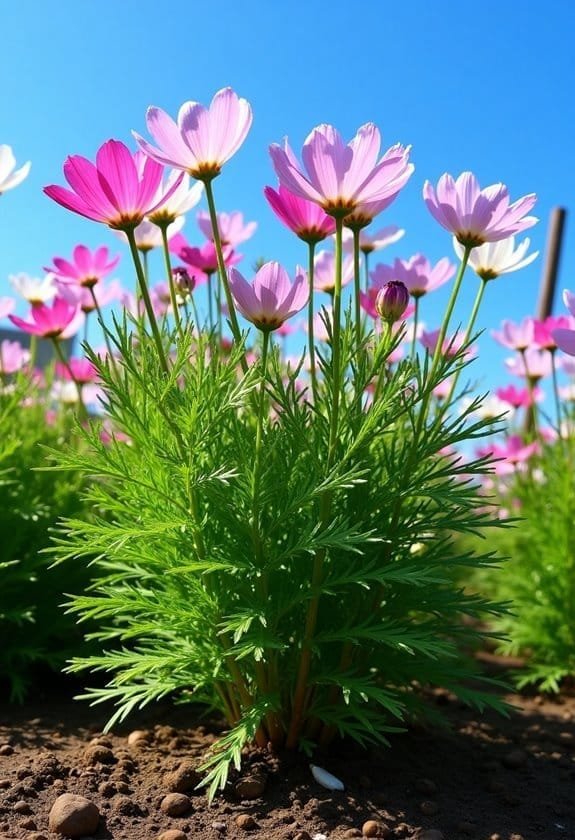
Cosmos bipinnatus flourishes best under the generous embrace of full sunlight, requiring a minimum of six hours of direct light each day to reach its blooming potential.
To cultivate this vibrant plant, gardeners should provide well-drained soil, ideally a mixture of potting soil and sand that promotes adequate drainage and aeration, while maintaining moderate watering to prevent the threat of root rot.
Additionally, awareness of temperature is essential, as these flowers are sensitive to frost and should ideally be planted in spring or early summer, allowing them to thrive throughout the growing season.
Light
Sunlight is essential for the thriving of Cosmos bipinnatus, as these vibrant flowers require at least six hours of direct sunlight each day to promote ideal blooming. The sunlight's impact on their growth habits can't be overstated; without adequate exposure, these plants can exhibit leggy growth, characterized by elongated stems with fewer flowers.
This lack of sturdy structure ultimately diminishes their blooming potential, resulting in a sparse display of color. For best results, gardeners should select bright, sunny locations when planting Cosmos.
Although they possess the ability to tolerate brief periods of drought, ongoing full sun conditions considerably enhance their longevity and strength, allowing for sustained blooms throughout the summer months.
Additionally, positioning Cosmos in sunlight-rich areas not only supports their health but also attracts a variety of beneficial pollinators, thereby enriching the surrounding ecosystem.
Soil
Well-drained soil is fundamental for Cosmos bipinnatus to flourish, as these flowers thrive best when their roots can breathe.
Optimal soil drainage importance can't be overstated; without it, waterlogging can lead to root rot and hinder growth. Ideally, a mix of sand enhances the soil's permeability, allowing excess moisture to escape while maintaining freshness in the root zone.
Maintaining a soil pH between 6.0 and 7.0 is essential since the soil pH impact directly affects nutrient absorption. In this range, Cosmos can efficiently take up necessary elements, establishing a healthy, vibrant plant.
Regularly amending the soil with organic matter improves its structure and boosts fertility, promoting a balanced nutrient profile critical for vigorous development.
It's important to avoid excessively heavy or compacted soils, as these can stifle root expansion, leading to poor flowering.
To guarantee healthy, resilient Cosmos plants, gardeners should prioritize aeration, enhancing the overall growing conditions.
Water
Watering requirements for Cosmos bipinnatus play a significant role in their growth and overall health. These plants thrive when given moderate watering that promotes proper soil moisture while avoiding waterlogged conditions.
Once established, Cosmos demonstrate impressive drought resistance, allowing them to endure temporary dry spells without significant harm. However, young plants necessitate consistent moisture, particularly in container settings, to support their delicate stems and foliage.
Effective watering techniques are important in ensuring that the soil remains adequately hydrated without succumbing to overwatering, which can lead to root rot and other detrimental issues. Maintaining a balance between moisture retention and drainage is essential for their vitality.
During dry spells, particularly in humid climates, gardeners should remain vigilant and water Cosmos regularly to prevent stress and encourage prolonged blooming.
In terms of drought management, understanding their natural resilience means that established plants can flourish with minimal intervention, as their roots tap into deeper soil layers.
Hence, adopting a conscious watering approach not only fosters healthy growth but also enhances the longevity and beauty of these charming flowers in any garden.
Temperature
Cosmos bipinnatus flourishes in warm to hot temperate climates, making it a favorite among gardeners in USDA zones 2–11. This annual plant thrives best within a temperature range of 59°F to 86°F (15°C to 30°C). While it can withstand some temperature fluctuations, temperature effects become evident when the thermometer dips.
Cosmos is sensitive to frost, typically succumbing after the first frost of the season, which necessitates careful temperature management.
For best growth, seedlings must develop in bright conditions, ideally at temperatures around 59°F (15°C). Once established, Cosmos bipinnatus can endure periods of drought, although they prefer moderate watering to prevent waterlogged roots.
Planting should ideally take place in spring to early summer, ensuring that the favorable warmth supports vibrant blossoms.
Gardeners should note the importance of monitoring local temperatures, as extended exposure to cold can severely stunt growth, leading to diminished blooms.
As a result, understanding the nuances of temperature management not only enhances the health of these flowers but also enriches the landscape with their striking presence, echoing summer's warmth and beauty.
With careful attention, gardeners can savor the lasting splendor of Cosmos even as seasons change.
Pollinator Criteria
Cosmos bipinnatus flowers entice a diverse array of pollinators, including bees and monarch butterflies, due to their abundant nectar supplies.
This crucial nectar not only sustains these insects but also supports garden biodiversity in essential ways.
With a flowering period extending from summer into early autumn, Cosmos optimizes its floral structure to enhance pollination efficiency, ensuring effective pollen transfer and fostering robust ecosystems.
Attracted Pollinators
In vibrant gardens, Cosmos bipinnatus stands out as a beacon for pollinators, particularly bees and butterflies like the monarch. This enchanting flower, renowned for its large, cup-shaped blooms, provides easy access for these important insects, enhancing their visitation rates.
Pollinator preferences tend to gravitate towards species that offer abundant nectar resources, and Cosmos fulfills this need with its rich nectar availability throughout its blooming season. Additionally, the striking blue blooms of other plants like cornflower are particularly effective in attracting a variety of pollinators.
Moreover, the ecological benefits of Cosmos bipinnatus extend beyond mere nectar provision. A single plant can support a plethora of beneficial insects, playing a pivotal role in promoting biodiversity within the local ecosystem.
As Cosmos blooms from summer into early autumn, it creates a prolonged habitat, ensuring continuous food sources for various pollinators at a time when resources may be scarce.
The striking array of colors and notable anthocyanin pigments not only enhances its visual appeal but also acts as a beacon, attracting countless visitors. Additionally, like selfheal, Cosmos bipinnatus provides valuable nectar resources that sustain pollinators during peak blooming periods.
This dynamic relationship between Cosmos bipinnatus and its pollinators showcases the essential role that these flowers play in sustaining not just pollinators but the intricate web of life within their environment.
Pollination Method
During the height of summer, the pollination method of Cosmos bipinnatus captivates a diverse range of pollinators. This plant, characterized by its striking flower structure, features tubular blossoms adorned with vibrant anthocyanin-stained ray florets in shades of pink, violet, or white. These colors enhance visibility, guiding bees and butterflies toward the ample nectar offer.
The flower's anatomy plays an important role in attracting these essential pollinators, who fulfill various ecological roles within their habitats. With a diameter of 5-7 cm, the Cosmos flowers stand out, ensuring successful visits that lead to effective pollination events. The plant offers a rich source of nectar during its flowering period, which spans from summer into early autumn—an ideal timing that aligns with the peak activity of many pollinators.
This harmonious relationship between Cosmos bipinnatus and its pollinators highlights the plant's significance in supporting healthy ecosystems. As pollinators flock to the flowers, they facilitate cross-pollination, which ultimately enhances genetic diversity critical for the plant's survival.
Understanding this intricate interplay not only underscores the significance of Cosmos in gardening but also exemplifies broader ecological principles necessary for sustaining biodiversity.
Care & Maintenance
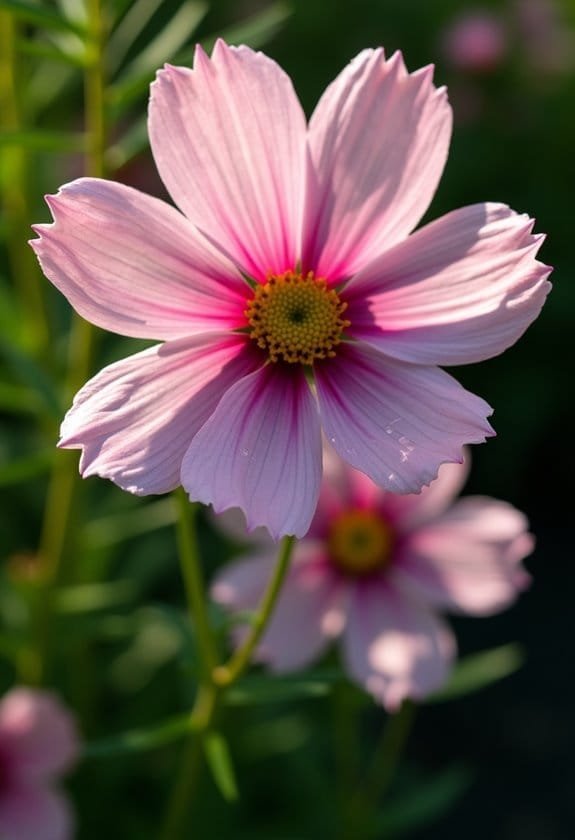
In the care and maintenance of Cosmos bipinnatus, attention to planting tips and ongoing care guarantees vibrant blooms and healthy plants throughout their growing season.
Regular deadheading, well-drained soil, and moderate watering can greatly enhance their flowering capabilities, while maintaining a spacing of 12 to 18 inches allows for proper air circulation.
Additionally, selecting suitable companion plants can create a harmonious garden environment that supports the thriving nature of these delightful flowers.
Planting Tips
For those looking to cultivate Cosmos bipinnatus successfully, understanding the essentials of care and maintenance is essential. Start by focusing on effective planting techniques, which include a planting distance of 12 to 18 inches between each seedling. This spacing promotes air circulation and allows each plant ample room to flourish.
Soil preparation is equally significant; aim for well-drained soil, as waterlogged conditions can hinder growth, particularly in container settings. Additionally, ensuring the soil pH aligns with optimal growth conditions for many flowering plants can enhance their development.
Companion planting can enhance the overall health of the garden. Cosmos bipinnatus pairs well with various flowering plants, attracting beneficial pollinators while deterring harmful pests like aphids and snails. Regularly monitoring for these pests is important; consider using barriers or traps when necessary, though Cosmos is generally resistant to many common nuisances.
Furthermore, don't overlook the delicate stems of this elegant flower. In areas prone to high winds, support can prevent breakage during stormy weather. Agrimony's characteristic of providing pollinator attraction can also be beneficial when mixed in the garden.
Including these strategies in the planting phase will establish a strong foundation for a vibrant, thriving garden filled with the cheerful blooms of Cosmos bipinnatus. Engage in these practices, and the plants will reward the careful gardener with a spectacular display.
Ongoing Care
Successful growth of Cosmos bipinnatus doesn't stop at planting; ongoing care plays a crucial role in maintaining their vibrant blossoms. Regular deadheading, which involves the removal of wilted flowers, encourages continuous blooming, guaranteeing these annuals extend their flowering season until the first frost.
Applying pruning techniques, gardeners should snip off spent blossoms to stimulate further growth and prevent energy from being diverted to seed production.
Watering must be done moderately, as Cosmos bipinnatus thrives in well-drained soil. Excess moisture can lead to detrimental waterlogging, jeopardizing root health. A light application of balanced fertilizer during the growing season promotes robust growth and vibrant flowers along their delicate stems, which may require additional support in exposed areas during heavy rains.
Minimal pest prevention is necessary, though a watchful eye for aphids and slugs can protect your plants from occasional infestations.
Implementing a straightforward fertilization schedule and maintaining proper watering practices are crucial for nurturing this resilient flower, cultivating a flourishing display throughout the blooming season.
Suggested Companions
Pairing Cosmos bipinnatus with compatible companions can enrich the garden's beauty while promoting healthier growth. Selecting vibrant annuals such as zinnias and marigolds enhances plant aesthetics, as they attract similar pollinators like bees and butterflies. Planting these colorful companions not only boosts visual appeal but also fosters a more inviting ecosystem.
Incorporating specific herbs, like basil and cilantro, offers additional companion benefits by acting as effective pest deterrents, particularly against aphids that threaten Cosmos plants. A strategic spacing of 12–18 inches between the Cosmos and their companions guarantees proper air circulation, notably reducing the risk of fungal maladies such as powdery mildew.
Furthermore, taller species like sunflowers or hollyhocks provide physical protection against strong winds, supporting the delicate stems of Cosmos and allowing them to thrive.
Additionally, beneficial plants like borage and nasturtiums attract both pollinators and beneficial insects, enhancing the overall biodiversity of the garden space. This symbiotic relationship not only bolsters the health of Cosmos but also cultivates a vibrant, dynamic landscape, where each plant contributes to the garden's ecological harmony.
Common Issues
Cosmos bipinnatus, while beautiful and resilient, faces a range of common issues that can hinder its growth and importance.
Pests like aphids can cause significant damage, leading to yellowing leaves and stunted development, while diseases such as powdery mildew thrive in humid environments, requiring careful management of air circulation and watering practices.
Effective solutions, including proper spacing and the use of barriers against pests, are essential for maintaining the plant's health and ensuring its stunning display.
Pests/Diseases
In gardens, Cosmos bipinnatus faces various pests and diseases that can hinder its growth and beauty. Among these, aphids are particularly notorious; they can induce leaf curling and considerable stunted growth if left unchecked. Employing pest identification techniques, such as closely inspecting plants for these small, sap-sucking insects, is critical for early intervention.
Additionally, snails and slugs threaten young plants, requiring barriers or organic deterrents to protect delicate stems and foliage from their voracious appetite.
On the disease front, powdery mildew poses a notable challenge, especially in humid conditions, with its signature white fungal growth blanketing leaves and diminishing overall plant vigor. Implementing disease prevention strategies, like maintaining good air circulation around Cosmos plants, greatly reduces this risk, allowing for healthier growth and flourishing blooms.
When infestations or diseases are detected, gardeners can resort to organic treatment options, including neem oil or insecticidal soap, to effectively manage these complications. Understanding these common issues not only guarantees the resilience of Cosmos bipinnatus but also cultivates a thriving garden environment, allowing this magnificent flower to grace landscapes with its vibrant presence.
Solutions
Maintaining the health of Cosmos bipinnatus in a garden can be achieved through a combination of proactive measures and careful observation.
To combat common pests like aphids, snails, and slugs, gardeners should implement effective pest management strategies, including organic treatments that safeguard not only the plants but also the surrounding ecosystem. Regular monitoring and timely interventions will keep infestations at bay.
Given their elegant but delicate structure, Cosmos plants can suffer from stem breakage during heavy rainfall. Employing rainfall support techniques, such as staking or using trellises, can mitigate this risk, preserving the integrity of the blooms. Additionally, using supportive plants like Salad Burnet can improve overall garden resilience during adverse weather conditions.
Furthermore, the threat of powdery mildew looms large for many gardeners. Consequently, mildew prevention methods are essential; ensuring proper air circulation around the plants while avoiding overhead watering can greatly reduce the chances of an outbreak.
Overwatering can also jeopardize the plants' health, so maintaining well-drained soil is vital for their survival. Additionally, incorporating native pollinator plants into the garden can attract beneficial insects that assist in natural pest control.
What are the differences between Cosmos Bipinnatus and Cosmos Sulphureus?
Cosmos Bipinnatus and Cosmos Sulphureus are both beautiful yellow cosmos plant species, but they have distinct differences. Cosmos Bipinnatus has feathery foliage and produces pink, white, or red flowers, while Cosmos Sulphureus has coarser leaves and blooms in varying shades of yellow and orange.
Summary

Why is Cosmos bipinnatus, or Garden Cosmos, such a popular choice among gardeners? This annual flowering plant, native to the vibrant landscapes of Mexico and Central America, boasts stunning cup-shaped blossoms in shades of pink, purple, and white, making it a visually striking addition to any garden.
Growing to heights of 2–4 feet, it showcases delicate, feathery foliage and thrives under full sun conditions. Its growing history highlights a remarkable resilience, with seeds yielding approximately 70 open-pollinated seeds per packet, best sown directly in the garden by early May.
Gardeners especially appreciate its ability to attract beneficial pollinators, such as bees and butterflies, symbolizing the interconnectedness of life and ecosystem health.
Additionally, Cosmos bipinnatus extends its appeal through culinary uses; its petals can add vibrant color and flavor to salads or garnishes, enhancing both dish aesthetics and enjoyment.