Crataegus monogyna, or common hawthorn, emerges as a quintessential species in temperate regions, particularly flourishing in Europe and parts of Asia. This deciduous shrub can reach heights of 10 meters, adorned with sharp thorns and glossy green leaves. The tree blooms spectacularly in late spring, producing fragrant, creamy-white clusters of flowers, attracting over 300 insect species for pollination. Preferring well-drained soils and full sun, hawthorn thrives under careful management, although it faces threats from pests and diseases. Its fruits nourish wildlife, reinforcing its ecological importance. Those interested in its extensive benefits and cultivation practices will discover much more.
Main Points
- Common hawthorn, or Crataegus monogyna, is a flowering tree adaptable to various climates, native to Europe and parts of Asia.
- It features sharp thorns, glossy green leaves, and produces clusters of white flowers in late spring.
- The tree supports over 300 insect species and serves as a crucial pollinator hub for bees and butterflies.
- Common hawthorn is vulnerable to pests and diseases, requiring regular monitoring and management for optimal health.
- Its small dark red fruits, known as haws, provide food for wildlife and aid in natural seed dispersal.
Introduction
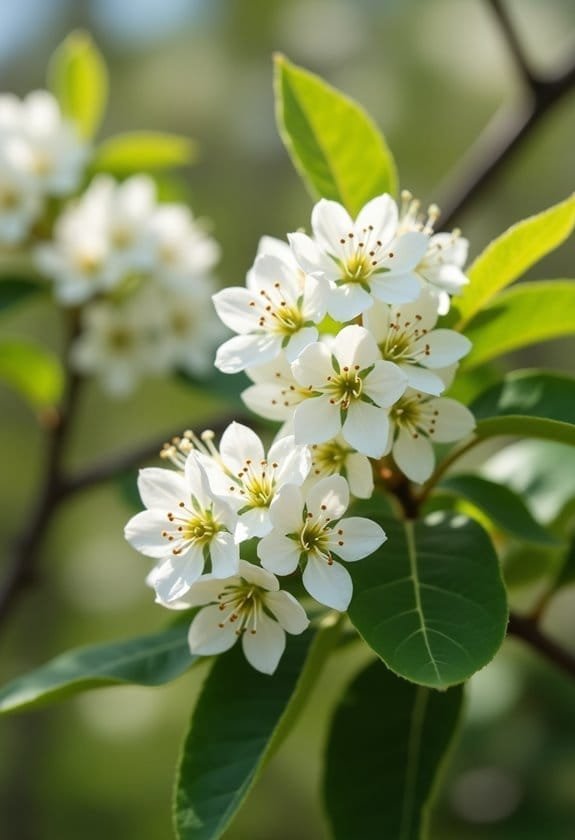
Commonly known as the common hawthorn, Crataegus monogyna is a remarkable deciduous shrub or small tree, easily recognizable by its sharp thorns and vibrant dark green leaves.
This species, which can reach heights of up to 10 meters, plays an essential role in its ecosystem by providing habitat and nourishment for various wildlife.
As it flourishes in hedgerows and woodlands across Europe, North Africa, and Western Asia, its ecological significance and traditional use in herbal remedies highlight its importance in both nature and human health.
Common Name
The common hawthorn, known scientifically as Crataegus monogyna, boasts several popular names, including May, mayblossom, maythorn, quickthorn, and whitethorn. Each of these names reflects certain characteristics or cultural associations tied to the plant. The name "May" refers to the tree's vibrant flowering, which typically occurs in late spring, heralding the arrival of warmer weather and symbolizing rebirth.
Historically, the common hawthorn was classified as Crataegus oxyacantha; however, confusion regarding its identification prompted a reclassification to the current name. The designation Crataegus monogyna highlights the distinctive single seed found within its small, red fruit. This unique attribute not only differentiates it from other species within the large Crataegus genus but also underscores its ecological significance.
In European folklore, the leaves and blossoms of the common hawthorn carry rich cultural interpretations, often representing fertility and the spirit of spring. These associations enhance its allure, making the common hawthorn an emblematic feature in various landscapes.
In this way, Crataegus monogyna embodies both ecological and cultural values, intertwining natural beauty with historical significance.
Scientific Name
Crataegus monogyna, a species frequently encountered in temperate regions, serves as an important representative of the hawthorn family within the Rosaceae. This plant, commonly known as the single-seed hawthorn, showcases a remarkable characteristic reflected in its species name. "Monogyna" indicates its unique feature of producing fruits, or haws, that typically contain a single seed.
Historically, Crataegus monogyna was also referred to as Crataegus oxyacantha; however, this designation faced rejection due to ambiguity issues, leading to the more precise current nomenclature.
Native to Europe, North Africa, and Western Asia, Crataegus monogyna has adapted to various climates and has successfully naturalized in regions such as the Pacific Northwest of the United States. Its presence in diverse locales highlights the species' resilience and adaptability.
Importantly, this hawthorn has become a subject of taxonomic classification challenges, as the frequent hybridization with other Crataegus species complicates accurate identification and distinctions. As scientists continue their scrutiny into these classification issues, Crataegus monogyna stands tall, both literally and figuratively, as an essential element in understanding the complexities and beauty of the hawthorn family.
Overview
Widely recognized for its distinctive beauty and ecological significance, Crataegus monogyna stands out as an emblematic fixture in temperate landscapes. Commonly known as the common hawthorn, this deciduous shrub or small tree typically reaches heights of up to 10 meters (33 feet), showcasing its striking dull brown bark adorned with vertical orange cracks and sharp thorns on younger stems. Its leaves, measuring between 20-40mm long, are obovate and deeply lobed, enhancing its visual appeal.
Blooming in late spring, the common hawthorn produces hermaphrodite flowers in clusters of 5-25, each leading to the development of small, oval, dark red fruits known as haws, approximately 10mm long, containing a single seed.
Beyond its aesthetic contributions, this species is ecologically important; it provides habitat and sustenance for more than 300 insect species while also nourishing winter wildlife such as thrushes and waxwings. Additionally, the common hawthorn serves as a crucial hub for various pollinators, supporting local ecosystems and enhancing biodiversity.
Interestingly, common hawthorn is celebrated for its medicinal properties, with extracts rich in antioxidant compounds traditionally used to support heart health and regulate blood pressure, thereby demonstrating its multifaceted role in both ecosystems and human wellness.
Key Features
Crataegus monogyna, or Common Hawthorn, showcases striking key features that define its character and ecological role. Standing up to 10 meters tall, it displays a dense crown adorned with sharp thorns, while its dark green, deeply lobed leaves turn a vibrant yellow in the autumn months.
In late spring, the tree bursts into life with clusters of delicate white or occasionally pink flowers, enriching the landscape and offering essential nourishment for local wildlife.
Growth Size
Growing up to 10 meters (33 feet) tall, the Common Hawthorn stands out as a robust shrub or small tree with a dense, rounded crown. Its impressive breadth can reach about 7.5 meters (25 feet), creating an eye-catching presence in gardens and landscapes.
This remarkable growth size not only contributes to its ornamental allure but also provides essential habitats for various wildlife.
Young stems showcase distinctive thorns that can grow up to 2.5 cm (1 inch) long, offering both a protective feature and an added element of interest. The leaves, measuring approximately 20-40 mm in length, present a glossy green appearance with deeply lobed edges, enhancing the tree's visual appeal as they rustle in the breeze.
Blooming in late spring, clusters of flowers, often numbering between five and twenty-five, transform the tree into a vibrant spectacle, inviting pollinators from far and wide. The Common Hawthorn serves as an essential resource for local wildlife, similar to how Echinops attracts pollinators with its vibrant and distinctive blooms.
This growth size, coupled with its dense crown and seasonal blooms, solidifies the Common Hawthorn's reputation as a cherished addition to diverse ecosystems and urban environments alike.
Its robust nature and intricate structure embody the beauty and complexity of the natural world.
Appearance
With its striking presence, the Common Hawthorn (Crataegus monogyna) showcases several key features that make it a unique addition to any landscape. This shrub or small tree typically attains heights of up to 10 meters (33 feet), boasting a dense, rounded crown that lends itself well to various garden designs.
The bark, a dull brown adorned with distinct vertical orange cracks, adds a rustic charm, while younger stems may surprise observers with their sharp thorns, reaching lengths of up to 12.5 millimeters. Interestingly, the fine-leaved water dropwort's toxic properties can serve as a cautionary note for gardeners looking to create a safe environment.
The leaves, measuring between 20 to 40 millimeters long, contribute considerably to the hawthorn's appeal. These obovate, deeply lobed leaves exhibit a rich dark green hue on the upper surface, contrasting beautifully with their paler underside.
During late spring, the tree reveals its hermaphrodite flowers, blooming in clusters of 5 to 25, adorned with creamy-white petals that create a breathtaking spectacle. The overall visual composition, accentuated by the delicate flowers and striking foliage, captivates any nature enthusiast, making the Common Hawthorn not just a tree, but a living piece of art in the landscape. Additionally, its blooming period coincides with that of other flowering plants, attracting a variety of pollinators like bees and butterflies, enriching the garden ecosystem.
Flowering Season
The enchanting beauty of the Common Hawthorn's flowering season occurs in late spring, particularly from May to early June, when its highly scented blossoms create a fascinating spectacle. During this period, the tree displays clusters, or corymbs, of flowers, typically ranging from five to twenty-five individual blooms per group.
These flowers, often pure white but occasionally tinted with a delicate pink, feature five petals and a single style, exemplifying the tree's hermaphrodite nature, which facilitates effective reproduction.
As the flowers bloom, they become a magnet for various pollinators, including bees and butterflies, which enthusiastically partake in the nectar. This interaction is essential, as it guarantees successful pollination and the subsequent development of fruits.
After flowering, the tree continues its seasonal transformation by producing small, oval-shaped fruits known as haws. These dark red berries mature throughout the summer months, enriching the landscape with their vibrant color, while providing sustenance for local wildlife.
In essence, the flowering season of the Common Hawthorn not only exhibits nature's aesthetic beauty but also plays a significant role in the ecosystem, highlighting the intricate connections between flowers and fruits.
Growing Requirements
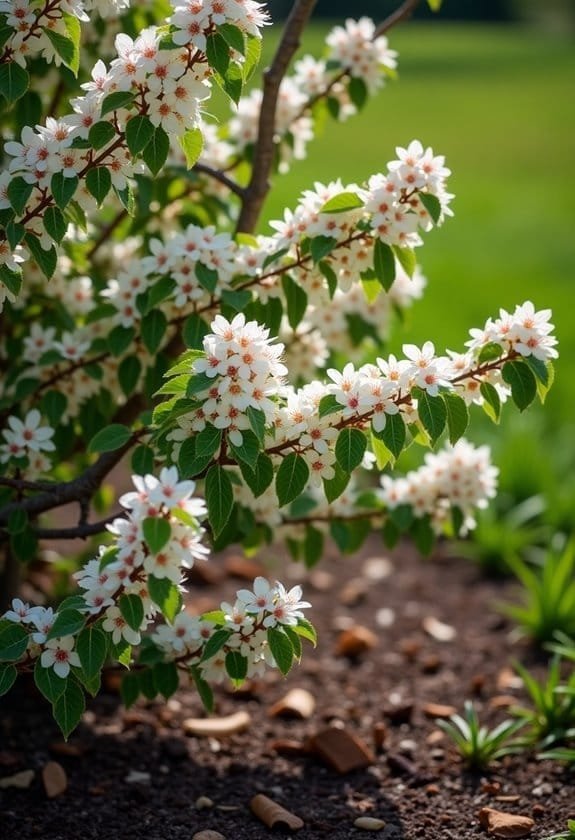
Crataegus monogyna flourishes when given the right conditions, requiring full sun to partial shade for ideal growth.
It thrives in moist, well-drained soils while remaining hardy in USDA zones 4 to 7, allowing it to adapt to a variety of temperate climates.
Regular watering during dry spells is essential, particularly in the establishment phase, as it encourages robust root development important for its long-term health.
Light
Light plays an essential role in the health and productivity of common hawthorn (Crataegus monogyna). This resilient species thrives best in full sun environments, where it receives direct sunlight for the majority of the day.
Ideal flowering and fruiting occur under these conditions, allowing the tree to display its vibrant blossoms and produce rich, nourishing berries. While common hawthorn can tolerate partial shade, its overall vigor diminishes without ample light, leading to reduced fruit production and less vigorous growth.
The ability to flourish in diverse light conditions makes common hawthorn an adaptable choice for various settings, from open fields to hedgerows. This versatility is crucial in providing ecological benefits, as it supports local wildlife and enhances landscapes.
In addition, the tree's hardiness in USDA Zones 4 to 7 means it can endure a range of climates, extending its presence across temperate regions.
Soil
Maintaining healthy growth of common hawthorn hinges on its soil conditions. This species, Crataegus monogyna, flourishes in moist, well-drained soils that promote ideal root aeration, which is crucial for growth.
While it shows versatility in adapting to various soil types—including clay and sandy compositions—common hawthorn exhibits peak growth in slightly acidic to neutral pH levels.
Moreover, regular moisture is essential, particularly during arid spells, as it enhances vigor. However, gardeners must exercise caution to avoid waterlogged soils, which can lead to detrimental root rot.
The common hawthorn's hardiness in USDA zones 4-7 underscores its capacity to endure varying temperature conditions, yet protection from extreme climates enhances its resilience.
Finally, when planted in full sun to part shade, the common hawthorn reveals its full potential for flowering and fruiting, thereby enchanting observers with its aesthetic charm. Water Avens serves as a reminder of the importance of maintaining moisture in similar species that thrive in wetland habitats.
As with any plant, the intricacies of its soil environment profoundly affect its overall health and productivity—much like a skilled artist requires a suitable canvas to create a masterpiece.
Hence, understanding and managing the soil conditions remains critical for cultivating a vibrant common hawthorn.
Water
Water is an essential factor in the growth and health of common hawthorn, as it thrives best in moist, well-drained soils. This species, Crataegus monogyna, flourishes when its roots have access to consistent moisture.
Once established, the tree shows a remarkable tolerance to drought conditions, yet regular watering is important during prolonged dry spells, especially during its flowering and fruiting seasons.
Maintaining ideal soil moisture aids not only in robust growth but also maximizes fruit production—an important feature for both habitat and horticultural pursuits. However, overwatering is detrimental; it can lead to root rot and other fungal diseases, jeopardizing the tree's vitality.
Thus, monitoring soil moisture levels becomes a fundamental practice. When cultivated in full sun to part shade, hawthorn exhibits better health and vigor. Additionally, this species can benefit from the nectar production that supports wildlife, similar to other native plants.
The ability to regulate water effectively empowers gardeners to enjoy the tree's enduring beauty and ecological benefits. A well-balanced approach guarantees the soil remains moist yet well-drained, allowing this charismatic plant to thrive and provide an attractive landscape feature or a valuable food source for wildlife.
Temperature
Crataegus monogyna thrives in a range of temperatures, making it a versatile choice for various climates. It demonstrates remarkable hardiness, flourishing in USDA Zones 4 to 7, and tolerates temperatures from a chilling -30°F (-34°C) to a brisk 0°F (-18°C).
Ideally, these trees prefer conditions that range between 60°F (15°C) and 75°F (24°C), where growth is optimal and flowering displays its splendor.
Young plants, however, do need protection; they're susceptible to frost damage, so planting in sheltered locations during early growth stages can improve their chances of thriving.
Established common hawthorn can withstand brief periods of drought, demonstrating resilience, but they truly flourish in moist, well-drained soils, which greatly enhances their growth rate.
While adaptable to various soil types, Crataegus monogyna prefers slightly acidic to neutral pH levels to achieve ideal health and productivity.
Essentially, the thoughtful management of temperature and moisture levels can lead to a robust and aesthetically pleasing addition to any landscape, showcasing both beauty and ecological value.
Pollinator Criteria
The common hawthorn (Crataegus monogyna) serves as a beacon for a diverse array of pollinators, primarily bees and butterflies, during its vibrant blooming period in late spring.
These hermaphroditic flowers, with their fragrant nectar and abundant pollen, play an essential role in attracting over 300 insect species, thereby enriching local biodiversity and enhancing ecosystem stability.
Through various pollination methods, primarily facilitated by these insects, hawthorn not only supports its own reproductive success but also fosters the health of surrounding flowering plants, creating a synergistic relationship within its natural habitat.
Attracted Pollinators
Nectar-rich flowers in late spring draw a variety of pollinators to common hawthorn (Crataegus monogyna), making it an indispensable plant for supporting local ecosystems. Flowering typically occurs from May to early June, coinciding with the emergence of various pollinators, including bees, butterflies, and hoverflies. These creatures depend on the abundant nectar, which serves as a crucial energy source.
Each flower features five petals and possesses hermaphroditic qualities, allowing for efficient self-pollination if pollinators are scarce. However, the presence of diverse pollinators greatly enhances reproductive success, as they transfer pollen between flowers. Interestingly, the flowering timeline of common hawthorn aligns with that of many early-season plants, such as Grey Willow, which also provides essential resources for pollinators in spring.
The dense foliage and thorny structure of common hawthorn also offer suitable nesting habitats, thereby promoting a supportive environment for birds and beneficial insects that contribute to ecological balance.
Moreover, the fruits of hawthorn, known as haws, attract birds, facilitating seed dispersal. This reciprocal relationship not only bolsters the plant's population but reinforces the accessibility of essential food resources for pollinators. Additionally, the hermaphroditic flowers of common hawthorn play a crucial role in ensuring successful reproduction in varying pollinator conditions.
Consequently, the common hawthorn emerges as a multifaceted species, intricately entangled with the survival and proliferation of various pollinators within its ecosystem.
Pollination Method
Pollination in common hawthorn relies heavily on insect activity, primarily bees, which are drawn to the plant's fragrant, creamy-white flowers. Blooming in corymbs during late spring, from May to early June, these flowers provide both male and female reproductive structures that facilitate self-pollination. However, cross-pollination is greatly encouraged as it enhances genetic diversity within the species.
The timing of the blooming period coincides perfectly with the activity of a variety of pollinator species, maximizing the chances for successful fertilization. This mutual interaction between common hawthorn and its pollinators guarantees the production of haws—its characteristic fruits.
Furthermore, the dense growth and thorny nature of the hawthorn offer shelter for numerous insect species, thereby playing an important role in supporting local pollinator populations. Additionally, the haws produced post-pollination serve as an indispensable food source for birds and mammals, underscoring the ecological significance of common hawthorn.
This intricate relationship exemplifies the beauty of nature's interdependence, where the hawthorn's flowers not only nourish pollinators but also propel a significant reproductive cycle that fosters biodiversity.
Care & Maintenance
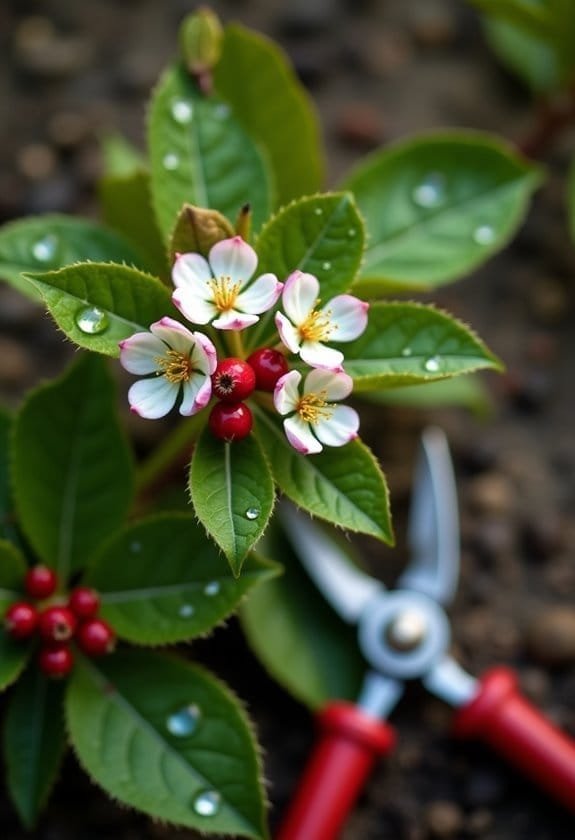
Crataegus monogyna, commonly known as hawthorn, flourishes with attentive care that begins with proper planting techniques.
Ensuring it receives adequate sunlight and well-drained soil sets the foundation for ongoing health, while regular maintenance practices, such as minimal pruning and monitoring for pests, keep this resilient tree thriving.
Complementing its growth with suitable companion plants not only enhances its appearance but also fosters a balanced ecosystem, encouraging beneficial interactions among species.
Planting Tips
When planting common hawthorn, gardeners should choose a location that enjoys full sun to part shade for ideal growth. This species thrives best in well-drained, moist soils, promoting peak flowering and fruiting. Selecting a spot in USDA zones 4-7 guarantees hardiness, though protection from extreme heat in warmer zones is crucial.
Before planting, it's advisable to prepare the soil, confirming it's rich in organic matter, which will support healthy root development. When the saplings are placed into the ground, gently backfill the hole, allowing ample space for future growth of the young leaves, flower buds, and fruits.
Remember that minimal pruning is required, but any necessary cuts should occur in late winter or early spring. This timing is critical, as it facilitates the removal of damaged growth and encourages robust new growth.
Furthermore, diligent gardeners should monitor for pests like aphids and gall mites, which could affect the health of the plant. By following these planting tips meticulously, gardeners can create a thriving environment for their common hawthorn, resulting in a beautiful, flourishing addition to their landscape.
Ongoing Care
After establishing a solid foundation for the common hawthorn, ongoing care becomes essential to secure the tree remains healthy and vibrant.
Regular monitoring is imperative for detecting pests such as caterpillars, gall mites, and aphids, which can jeopardize the well-being of the tree. By routinely inspecting the foliage and branches, one can manage potential infestations effectively, making sure the hawthorn thrives.
Pruning is another important aspect of ongoing care. While minimal pruning is usually necessary, any damaged or dead growth should be trimmed during late winter or early spring. This practice not only helps to maintain the tree's health but also encourages new growth as it prepares to enter the growing season.
Additionally, implementing disease prevention strategies is critical. Good air circulation around the tree, paired with avoiding overhead watering, can greatly diminish the risk of leaf spots and other ailments.
Fertilizing the common hawthorn with a balanced fertilizer during the growing season promotes its healthy growth and enhances flowering and fruiting potential.
Suggested Companions
Choosing the right companion plants for Common Hawthorn can greatly enhance both its aesthetic appeal and ecological health. Suitable companions include blackthorn (Prunus spinosa) and wild rose (Rosa spp.), as they thrive in similar conditions and foster biodiversity. Additionally, planting near moisture-retentive species can contribute to a more stable ecosystem.
When planting, it's important to maintain a distance of at least 3-5 feet from other dense shrubs. This spacing guarantees proper air circulation and light penetration, reducing the risk of disease and promoting healthy growth.
Regular mulching around the bases of companion plants proves beneficial in retaining moisture and suppressing weeds; as mulch decomposes, it enriches the soil, enhancing nutrient availability for both the hawthorn and its companions.
During dry spells, particularly within the first few years of growth, it's vital to keep companion plants well-watered to facilitate the establishment of a healthy ecosystem, as most prefer well-drained but consistently moist soil.
Implementing pest management practices becomes pivotal, with companion plants like marigolds serving as natural deterrents against common pests. This strategy not only protects the Common Hawthorn but also nurtures the surrounding flora, creating a vibrant, thriving landscape. Additionally, the presence of air-purifying capabilities in companion plants like English ivy can further enhance the ecological balance in the area.
Common Issues
Common hawthorn faces several challenges that can crucially compromise its health and vitality. Various pests, including aphids and caterpillars, alongside diseases like fireblight, threaten its flourishing, necessitating vigilant monitoring and prompt intervention.
Additionally, overgrazing by livestock and potential hybridization complicate not only its management but also the preservation of ecosystems where it resides, emphasizing the delicate balance required for its successful cultivation.
Pests/Diseases
Pests and diseases can pose significant challenges for Crataegus monogyna, threatening its health and overall vigor.
Among the most common pests affecting this tree are aphids, caterpillars, and gall mites, all of which can compromise its foliage and overall vitality. Young hawthorn trees are particularly vulnerable to these infestations, emphasizing the need for protective measures during their important early growth stages.
In addition to pest pressures, Crataegus monogyna faces various diseases, particularly fireblight, a bacterial affliction that leads to wilting and blackening of blossoms and young shoots.
To combat this, swift removal of the infected parts is imperative to prevent further spread. Leaf spot diseases can also manifest, creating unsightly lesions on leaves, which not only detract from the tree's aesthetics but also hinder photosynthesis.
Proactive monitoring becomes essential, as regularly inspecting for signs of these pests and diseases allows for timely intervention.
Solutions
To effectively manage the common issues faced by Crataegus monogyna, proactive strategies are vital. This species can become a prolific producer of dense thickets, displacing native flora and disrupting local ecosystems. Management approaches should prioritize the manual removal of seedlings and the careful cutting of mature trees to halt further expansion.
For mature plants, methods such as the cut stump or frilling herbicide application are important, as cutting alone often leads to stump-sprouting. Regular monitoring of hawthorn populations is indispensable. Overgrazing by livestock can't only stifle hawthorn growth but also threaten surrounding flora and fauna.
To restore balance, producers should consider planting native alternatives, promoting biodiversity which mitigates herbaceous overgrowth and curtails the invasive potential of common hawthorn, particularly in non-native areas.
In regions where C. monogyna is designated a noxious weed, adhering to management guidelines from local conservation authorities is imperative. These practices guarantee that ecological equilibrium is maintained, safeguarding plant and animal communities from the invasive tendencies of this resilient species.
What are the Uses and Benefits of Common Hawthorn?
The heliotropium arborescens plant profile reveals its diverse uses and benefits. Common Hawthorn is known for its medicinal properties, including improving heart health and reducing anxiety. It is also used in landscaping for its attractive flowers and berries. This versatile plant offers both aesthetic and health benefits.
Summary
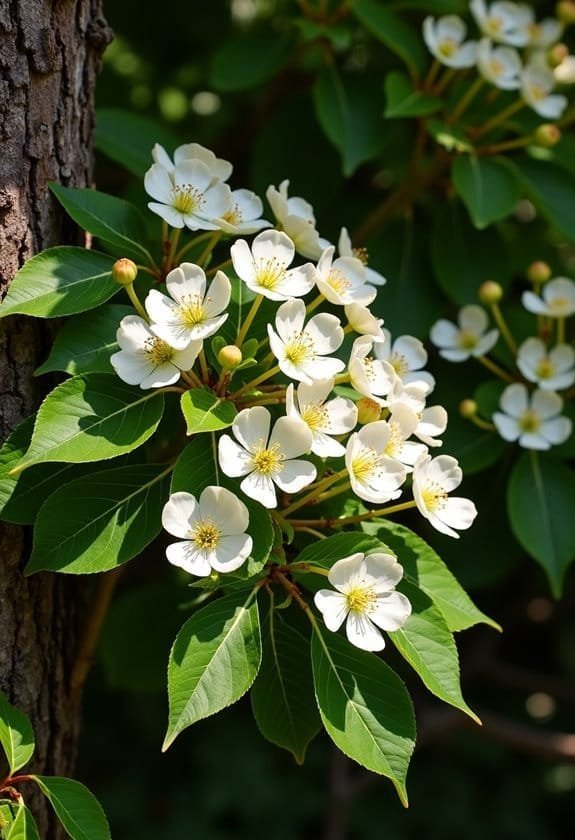
Crataegus monogyna, or the Common Hawthorn, is a small deciduous tree or shrub that thrives in various landscapes, reaching heights of up to 10 meters. Known for its dense thickets of thorny stems and deeply lobed leaves, this species creates a stunning visual display, particularly during late spring, when it produces creamy-white, highly scented flowers.
Following the blooming phase, it bears small, dark red fruits called haws, which are around 10 millimeters long and contain a single seed.
Ecologically, the Common Hawthorn is crucial, supporting over 300 insect species, providing essential habitat and food for numerous birds, and playing a significant role in soil stabilization. Additionally, its flowers attract various pollinators, similar to how cross-leaved heath does in heathland ecosystems.
In addition to its ecological contributions, many find its edible young leaves, flower buds, and haws valuable for preparing jams, syrups, and traditional herbal remedies for heart conditions.
Despite its classification as a species of least concern by the IUCN, the Common Hawthorn faces threats from habitat loss due to urbanization and overgrazing by livestock, which can impede its regeneration.
Consequently, conservation efforts are essential to preserve this remarkable species and its numerous benefits.