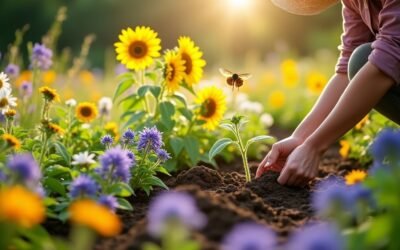
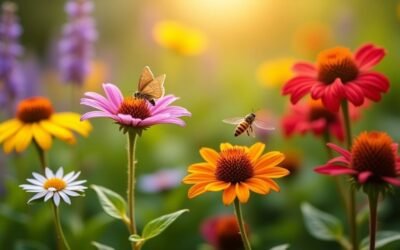
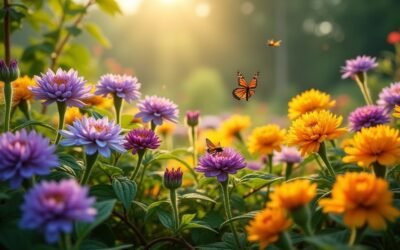
Dahlia species, part of the diverse Asteraceae family, boast over 42 recognized varieties primarily from Mexico and Central America. Each species displays unique colors and forms, making them beloved in ornamental gardening. Requiring 6 to 8 hours of sunlight daily, dahlias grow in well-drained, loamy soil and can reach heights from 30 centimeters (12 inches) to over 2.4 meters (8 feet). These vibrant blooms attract crucial pollinators like bees and butterflies, fostering ecological balance. However, diligent care is essential to address potential pests and environmental challenges. Understanding their intricacies can illuminate further aspects of these enchanting flowers.
Main Points
- Dahlias belong to the Asteraceae family, with over 42 recognized species originating from Mexico and Central America.
- The "Dahlia coccinea" species is notable for its significance in horticultural hybridization and cultivar development.
- Dahlias exhibit a vibrant color range, excluding blue, with various flower structures like single, pompon, and decorative types.
- They are essential for attracting pollinators, such as bees and butterflies, promoting local biodiversity.
- Continuous research is focused on discovering new dahlia species and improving cultivation practices within existing varieties.
Introduction
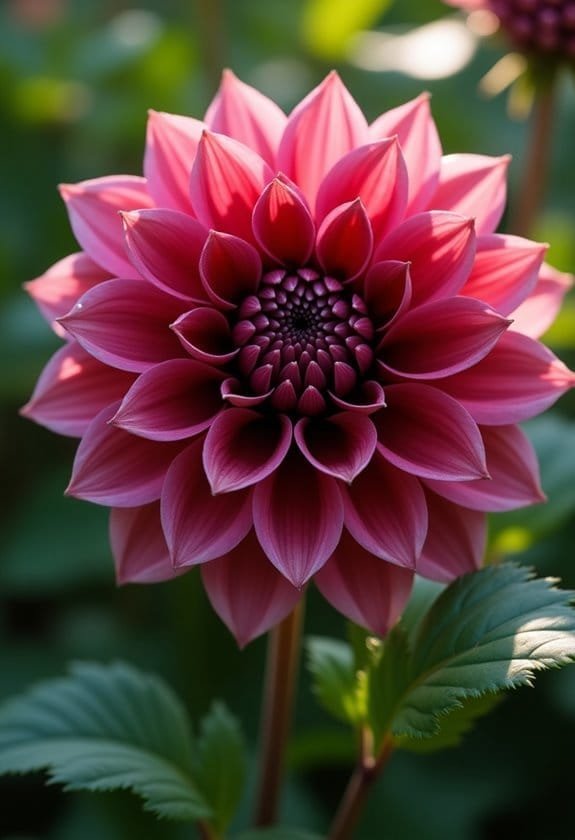
Dahlias, scientifically known as Dahlia spp., represent an enchanting group of flowering plants hailing from Mexico and Central America.
Known for their stunning blooms that range from soft pastels to vibrant hues, these perennial, tuberous plants have captivated gardeners and horticulturists alike since their introduction to Europe in 1789.
With 49 recognized species exhibiting remarkable genetic diversity, dahlias continue to inspire fascination through their numerous forms and classifications, each contributing to the rich tapestry of horticultural beauty.
Common Name
The common name "dahlia" stems from the genus name that honors Swedish botanist Anders Dahl, officially adopted in 1810. This name encapsulates the flowers' rich history and botanical significance, a tribute to both nature's beauty and botanical exploration.
Historically, dahlias were referred to as "Georgina" in some regions, a practice that led to considerable confusion and delay in the establishment of accurate nomenclature, hindering horticultural enthusiasts from fully understanding the plant's diverse characteristics.
Originating from a limited number of wild species native to Mexico and Central America, the hybrid "Dahlia coccinea" stands out as an essential parent in horticulture.
Over two centuries, extensive hybridization has resulted in over 42 recognized dahlia species, along with thousands of unique cultivars, each expressing an array of colors and forms. The dahlia's impressive blooming period—from mid-summer until the first frost—demonstrates its adaptability and charm, making it a perennial favorite among gardeners.
Thus, the dahlia's common name not only connects to its roots but also highlights its flourishing legacy in the world of ornamental gardening.
Scientific Name
Understanding the intricate world of dahlias begins with their scientific classification, rooted in both historical context and botanical precision. The scientific name for the genus is "Dahlia," a tribute to Carl Linnaeus's student, Anders Dahl. This designation was formally adopted in 1810, marking a pivotal moment in botanical nomenclature.
Over time, the genus has expanded to encompass 49 recognized species, primarily derived from one or two wild varieties cultivated and hybridized for over two centuries.
Despite its thorough classification, confusion has occasionally arisen, particularly with the colloquial term "Georgina" used in some regions. Current classifications within the genus are systematically divided into multiple sections, with four primary categories: Pseudodendron, Entemophyllon, Dahlia, and Epiphytum. Each houses a distinct diversity of species, reflecting the range of forms, colors, and growing habits dahlias display.
As ongoing taxonomic research probes deeper into the complexities of these stunning flowers, the scientific understanding of the genus continues to evolve, adapting to new discoveries and enhancing the appreciation of dahlias' rich diversity.
Such dynamic classification allows both enthusiasts and botanists to navigate the beautiful, yet complex, world of dahlias.
Overview
With a stunning array of shapes and colors, dahlias captivate gardeners and flower enthusiasts alike. Native to Mexico and Central America, these perennial plants belong to the Asteraceae family, which encompasses a rich tapestry of flowering relatives, including sunflowers and daisies. Over 42 recognized species exist, presenting a vibrant spectrum of dahlia varieties that range from miniature blooms to large, show-stopping flowers.
Dahlias are tuberous and herbaceous, thriving in well-drained, fertile soil and adapting well to various temperate climates. Their long blooming period, from mid-summer until the first frost, enhances their popularity for both garden displays and floral arrangements.
The extensive genetic diversity found within dahlias, a result of hybridization efforts over the last two centuries, contributes to the myriad of flower shapes and colors available today.
Gardeners often cherish dahlias for their ease of cultivation. With sufficient sunlight, regular watering, and care, these plants reward their caretakers with breathtaking displays of floral artistry.
Ultimately, dahlias embody the intricate balance of nature, offering joy and beauty in numerous forms, each reflecting the artistry of the natural world.
Key Features
Dahlias stand out for their incredible growth size and enchanting appearance, showcasing a remarkable diversity that ranges from 30 cm to over 2.4 meters in height.
Their vibrant blooms display an extensive palette of colors, almost encompassing every hue except blue, with flowers measuring from 5 cm to over 30 cm in diameter.
Blooming from June until the first frost, these extraordinary plants offer a stunning visual feast in gardens, transforming landscapes with their dazzling, long-lasting display.
Growth Size
Among flowering plants, dahlias stand out for their impressive range of growth sizes. These magnificent blooms display a height variation that spans from a modest 30 cm (12 inches) to an astonishing 2.4 meters (8 feet). This striking difference in growth habit reflects the extensive genetic diversity found within the varieties of dahlias, allowing a remarkable adaptability to various gardening conditions.
Their flower heads further exemplify this diversity, with diameters ranging from a delicate 5 cm (2 inches) to an impressive 30 cm (1 foot), corresponding to the plant's height.
Most dahlia species typically rely on tuber propagation rather than seed production, which plays a pivotal role in the size and scalability of their growth. This unique reproductive strategy leads to distinct cultivars categorized by size, such as the Dwarf Bedder for smaller spaces and the Giant-flowered variety, which astounds with its tall stature and massive blooms.
Each type's growth size ultimately affects garden design, influencing everything from spacing to visual impact. Collectively, these dahlia characteristics make them a cherished addition to gardens, offering both beauty and versatility.
Appearance
From vibrant colors to varied flower sizes, the appearance of dahlias captivates many gardeners. These stunning plants exhibit a remarkable range of flower sizes, with diameters spanning from 2 inches to over 12 inches, offering a dazzling display of diversity.
Gardeners delight in their ability to enhance landscapes with nearly every color imaginable, except for blue, creating a lively and visually appealing palette.
Dahlia flowers showcase an array of structures, featuring common varieties such as single, decorative, cactus, pompon, and ball forms, each distinguished by unique shapes and petal arrangements. This morphological variety arises from extensive hybridization, resulting in an impressive catalog of cultivars, each displaying specific visual characteristics.
Although most dahlia species lack a noticeable fragrance, they attract essential pollinators like bees and butterflies with their bright hues, fulfilling their ecological roles.
The extensive varieties of dahlias not only add beauty to gardens but also reflect the fascinating interplay between genetics and cultivation. This aspect of dahlia appearance illustrates the dynamic nature of plant breeding, ultimately enhancing the joy and engagement of gardening enthusiasts everywhere.
The vibrant visual attributes of dahlias resonate deeply, making them a favored choice for many flower lovers.
Flowering Season
Blossoming in the heart of summer, dahlias typically showcase their vibrant colors from mid-June until the first frost, creating a breathtaking display in gardens. This extended blooming period, lasting several months, allows gardeners to enjoy an array of exquisite flower heads that vary widely in size—from petite blooms of just 2 inches to impressive specimens exceeding 12 inches in diameter.
The flowering season, however, can vary depending on the specific cultivar chosen, with some dahlias emerging earlier or later within this overall timeframe. For ideal blooming, dahlias thrive in well-drained, fertile soil and bask in full sunlight, requiring 6 to 8 hours of direct exposure daily.
To enhance the charm of these dramatic flowers, regular deadheading—removing spent flower heads—can stimulate further blooms during the season, providing a seemingly endless array of stunning colors and shapes.
This practice not only elevates the plant's visual appeal but also encourages growth by redirecting energy from fading flowers to the development of new blooms. Consequently, the dahlia's flowering season becomes an enchanting spectacle, inviting admiration from those fortunate enough to witness it.
Growing Requirements
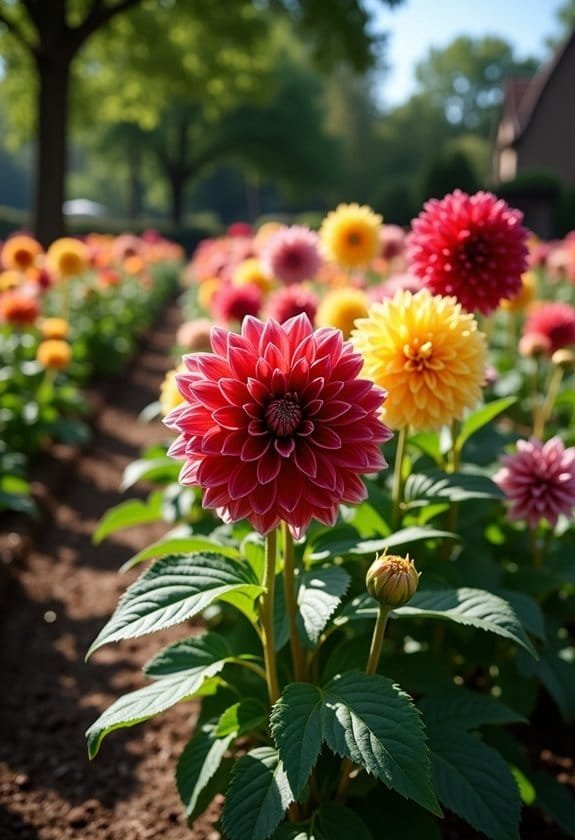
Growing dahlias successfully hinges on vital factors like light, soil, water, and temperature.
Ideally, these vibrant plants bask in 6 to 8 hours of sunlight each day, flourishing in well-drained, loamy soil with a pH of 6.0 to 6.8, which nourishes their roots and promotes robust blooms.
Maintaining a consistent watering routine, providing about an inch of moisture weekly while avoiding excessive saturation, creates a harmonious environment for these exquisite blooms to thrive.
Light
Providing dahlias with adequate light is indispensable for their health and vibrant blooms. These stunning flowers thrive in full sunlight, requiring at least 6 to 8 hours of direct sunlight each day to achieve their maximum blooming potential. Insufficient light can cause plants to grow leggy, resulting in weak stems and diminished flower production. Consequently, it's essential to choose planting locations that guarantee robust exposure to sunlight.
While dahlias need abundant light, they also benefit from occasional partial shade during particularly hot periods. Providing shelter in the afternoon can protect them from heat stress, allowing the plants to flourish without compromising their sunlight needs.
It's equally important to monitor light levels and adjust planting locations or use coverings as necessary, guaranteeing dahlias receive ideal light conditions throughout the growing season.
The interplay between light and health in dahlias is undeniable; the right amount of sunlight fosters impressive blooms and vigorous growth. When cultivated under suitable light conditions, these vibrant plants not only beautify gardens but also embody the dynamic connection between nature and nurturing.
Soil
Dahlia plants flourish best in well-drained, loamy soil enriched with organic matter, which guarantees robust growth and vibrant blooms. The perfect soil pH for dahlias is slightly acidic to neutral, ranging from 6.0 to 7.0. This specific pH range not only supports optimal nutrient absorption but also fosters an environment where these stunning flowers can thrive.
Before planting, it's wise to enrich the soil with compost or well-rotted manure, enhancing fertility and improving moisture retention essential for development. Adequate drainage is critical; dahlias are particularly susceptible to rot in overly moist conditions. If drainage proves problematic, utilizing raised beds can be an effective solution, allowing excess water to escape while promoting healthy root formation.
Regular soil testing serves as a proactive measure, helping gardeners monitor nutrient levels and pH. This essential step enables timely adjustments, ensuring the soil remains conducive to dahlia cultivation.
Water
Consistent moisture is essential for the health of dahlia plants, especially during their active growing season. Ideally, dahlias should receive 1-2 inches of water each week, supplied through natural rainfall or supplemental irrigation. This careful balance supports robust growth and encourages vibrant blooms.
However, attention to soil quality is imperative; well-drained soil is paramount for preventing waterlogged roots, which can lead to tuber rot and a myriad of diseases.
Watering practices should also consider the plant's needs. It's best to water dahlias at the base, directing water where it's most needed while minimizing the risk of fungal diseases on the foliage. During dry spells, deep watering becomes essential, fostering strong root development that anchors the plant and sustains healthy flowering.
Conversely, after planting the tubers, growers must avoid over-watering, as excess moisture can severely hinder tuber sprouting and stifle growth in these initial stages.
In essence, a delicate balance of consistent moisture, mindful watering, and well-drained soil synergistically promotes the flourishing health and beauty of dahlia plants, turning gardens into vibrant displays of color and vitality.
Temperature
For those wanting to cultivate beautiful dahlias, understanding their temperature preferences is important. These vibrant flowers thrive best in a temperature range between 60°F and 70°F (15°C to 21°C) during their growing season, which is essential for vigorous growth and abundant blooming.
In spring, careful timing is necessary; planting should occur after the last frost date to guarantee the delicate plants aren't exposed to damaging cold.
Though tubers can withstand brief dips to 20°F (-6°C), prolonged exposure to such low temperatures can lead to fatal outcomes. During winter, dahlias enter a dormant state; therefore, protecting them from freezing temperatures is crucial. Gardeners achieve this by lifting the tubers and storing them in a cool, dry location—offering shelter from icy conditions.
In hotter regions, providing partial shade during the afternoon can help prevent stress and maintain overall plant health. By understanding these temperature dynamics, gardeners can create an ideal environment, enabling their dahlias to thrive and produce the stunning flowers that grace gardens with their beauty.
Ultimately, attentive temperature management is key for achieving the desired bloom and longevity of these exquisite plants.
Pollinator Criteria
Dahlias attract a diverse array of pollinators, primarily bees and small beetles, through their vibrant hues rather than fragrance.
Single-flowered and collarette varieties boast structures that facilitate easier access for these insects, allowing for efficient pollination and nourishment.
This strategic design not only enhances pollinator visitation but also plays a crucial role in supporting local biodiversity, making dahlias invaluable in gardens dedicated to conservation.
Attracted Pollinators
While many flowers rely on scent to attract pollinators, dahlias captivate bees and small beetles primarily through their vibrant colors. The palette of dahlia flowers spans nearly every hue except blue, creating striking visual displays that lure various pollinating insects into gardens.
Single-flowered dahlias, with their open structures, effectively draw bees and butterflies, as these configurations allow easy access to precious pollen and nectar. Bluebells, known for their vital early-spring nectar source, may also attract similar pollinators to garden spaces.
Collarette dahlias are particularly remarkable; their distinctive central disc surrounded by rings of florets serves as a rich food source, making them prized in butterfly gardens. The arrangement, akin to a delightful buffet, facilitates foraging, attracting not just bees but numerous other pollinators as well.
Moreover, certain dahlia types exhibit tubular florets, densely packed within their central disc, offering an abundant and accessible pollen supply crucial for these industrious pollinating insects. Additionally, by attracting diverse pollinators, dahlias contribute to the overall biodiversity of ecosystems, supporting the health of garden habitats.
As beautiful flowers flourish in gardens, they play a critical ecological role, enhancing biodiversity and supporting the lifecycle of many species, much like bluebells which serve as a vital nectar source for pollinators in woodland ecosystems.
Pollination Method
How do dahlias guarantee effective pollination? Primarily, dahlias depend on bees and small beetles, drawn by the vibrant colors of their blossoms, despite many species lacking a noticeable fragrance.
The intricate structure of dahlia flowers, which features a central disc surrounded by ray florets, creates an ideal platform for these insects, providing them easy access to nectar and pollen. This design facilitates the pollination method necessary for reproduction in those varieties that do produce viable seeds.
Interestingly, numerous dahlia species propagate through tubers rather than seeds, which can limit the role of pollinators in certain cultivars.
Even so, their exquisite blooms contribute considerably to local ecosystems, supporting and enhancing pollinator populations vital to biodiversity.
The morphology of dahlia flowers, particularly broader ray florets in ornamental varieties, distinctly influences pollinator attraction and accessibility.
This diversity not only attracts various pollinators but also fosters a symbiotic relationship between dahlias and their insect visitors.
Consequently, dahlias, through their stunning aesthetics and strategic design, play an indispensable role in the intricate web of life surrounding them, bridging the gap between beauty and ecological responsibility.
Care & Maintenance
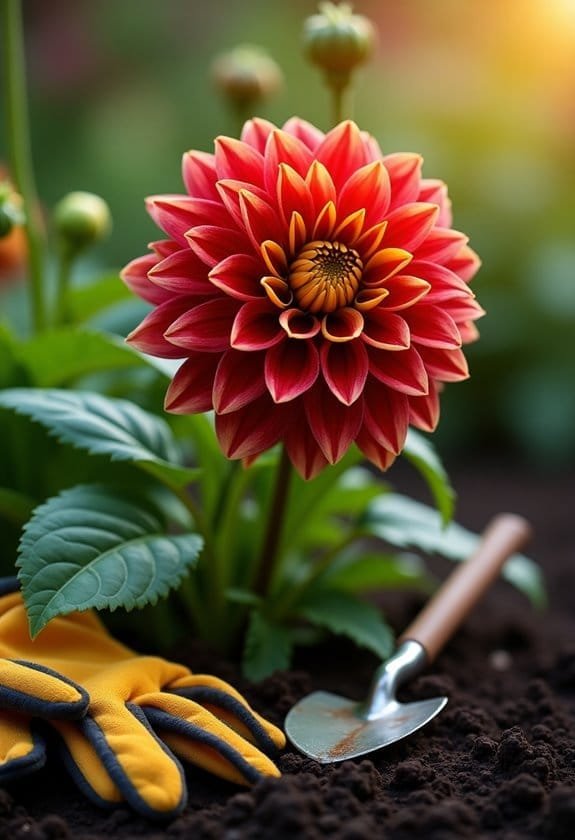
To achieve a thriving dahlia garden, careful attention to planting and ongoing care is essential.
Selecting a sunny spot that receives 6-8 hours of sunlight daily, alongside planting tubers at a depth of 4-6 inches in well-drained, loamy soil, provides a solid foundation for robust growth.
In addition, implementing regular watering routines and strategic deadheading not only nurtures the plants but also fosters a vibrant display of blossoms throughout the blooming season.
Planting Tips
When's the best time to plant dahlias for a stunning display? The ideal moment arrives in spring, after the last frost has dissipated, thereby minimizing the risk of freezing temperatures that can hinder healthy growth. To guarantee vibrant blooms, one must select a sunlit location receiving 6-8 hours of direct sunlight daily, as dahlias flourish in bright environments.
Next, the foundation for success lies in the soil; prepare well-drained, loamy soil rich in nutrients, aiming for a pH level between 6.0 and 7.0. This promotes robust tuber development and vibrant flowering.
When planting dahlia tubers, place them 4-6 inches deep, with the "eye" or growth bud facing upward, which encourages vigorous sprouting. Consistent hydration is also pivotal; throughout the growing season, maintain the soil's moisture level, avoiding waterlogging, as dahlias prefer balanced conditions.
For taller varieties, consider staking them for added support, guaranteeing they remain upright and resilient against wind or rain. With these essential planting tips, gardeners can create a breathtaking display of dahlias that grace their landscapes with striking beauty.
Ongoing Care
Caring for dahlias throughout the growing season is indispensable for achieving a thriving garden filled with beautiful blooms. To guarantee their health, gardeners must focus on ongoing care, which begins with planting dahlias in well-drained, loamy soil. They require full sun exposure, ideally receiving at least 6 to 8 hours of direct sunlight daily for ideal growth.
Regular watering is essential, especially during dry spells, as dahlias thrive on consistent moisture. However, it's important to avoid overwatering as excess moisture can lead to detrimental tuber rot. Supporting taller varieties with stakes helps prevent breakage as they grow, particularly when developing flowers add weight.
Additionally, deadheading spent blooms not only enhances the plant's appearance but also encourages continuous flowering throughout the season. This practice prevents energy depletion, enabling the plant to produce even more floral displays.
Gardeners should also vigilantly monitor for pests such as slugs, snails, and aphids, taking prompt action to minimize damage.
Fostering such an attentive ongoing care routine will result in a vibrant, flourishing display of dahlia blooms that captivate anyone who encounters them.
Suggested Companions
Selecting appropriate companions, such as marigolds, can greatly improve dahlias' resilience by deterring pests like nematodes and aphids, promoting healthier growth. Marigolds release compounds that repel these harmful insects, safeguarding dahlias from potential threats.
Integrating culinary herbs like basil and rosemary can further enhance dahlia health. The natural oils from these herbs repel unwanted insects while enticing beneficial pollinators, thereby fostering a balanced ecosystem within the garden. Additionally, introducing Echinops species can attract more pollinators and provide visual interest with their distinctive blooms.
Additionally, planting lower-growing annuals, such as petunias or nasturtiums, around dahlias not only creates visual harmony but also provides essential ground cover to suppress weeds.
Incorporating Solidago, commonly known as goldenrod, attracts diverse pollinators, which enriches biodiversity and encourages cross-pollination among dahlias, yielding even more vibrant blooms. Furthermore, including hardy perennials like Common Yarrow can enhance the garden's resilience while promoting healthy soil structure.
To maximize these benefits, gardeners should maintain adequate spacing, typically 12-24 inches apart for dahlias and their companions, ensuring each plant receives ample sunlight and nutrients, which is essential for ideal growth.
Common Issues
Dahlias, while stunning, often encounter a range of common issues, including pest infestations and diseases, which can greatly impair their health and beauty.
Gardeners must be vigilant against slugs, aphids, and diseases like powdery mildew, especially since these threats thrive in excessively damp conditions. This underscores the importance of good air circulation and well-drained soils.
Pests/Diseases
What common challenges do gardeners face when growing dahlias? These vibrant flowers are often susceptible to various pests and diseases that can compromise their health and beauty. Notable pests include slugs, snails, aphids, and red spider mites; their feeding habits can result in considerable damage if left unaddressed. These critters may leave the leaves ragged and the plants weakened, ultimately affecting blooming potential.
In addition to pests, dahlias frequently encounter diseases such as powdery mildew, which manifests as a white, powdery coating on leaves. This disease tends to thrive in humid conditions with inadequate air circulation, potentially leading to extensive leaf loss and reduced vigor.
Furthermore, grey mold, or Botrytis blight, can damage the blooms, creating brown, mushy patches on flowers and stems, particularly in damp, crowded environments.
To combat these adversities, regular inspections and strategic pest control can help manage slugs and snails. Implementing preventative measures, such as ensuring ample spacing for airflow and utilizing fungicides when needed, greatly reduces the risks posed by powdery mildew and grey mold.
Understanding these challenges equips gardeners to foster healthier dahlia plants.
Solutions
Growing dahlias can present various challenges, but effective solutions exist to help gardeners maintain their health and beauty. Common pests affecting dahlias include slugs, snails, aphids, and red spider mites; therefore, regular inspection and prompt management are essential. Introducing natural predators or using insecticidal soap can alleviate these infestations effectively.
Preventing diseases like powdery mildew and grey mould relies on ensuring good air circulation around the plants, so spacing dahlias appropriately is critical. Additionally, monitoring for early symptoms allows gardeners to implement control measures swiftly, preventing further spread.
As dahlias aren't frost-hardy, protecting them during colder months is necessary. One can mulch around the base or, when convenient, bring potted plants indoors, safeguarding their delicate foliage.
Proper watering practices are important, too. Ensuring the soil drains well and allowing the top inch to dry out before rewatering prevents rot in dahlia tubers.
Lastly, regular deadheading considerably encourages continuous blooming, preserving the vibrancy of these stunning cut flowers.
Are Caryopteris and Dahlia Plants Suitable for the Same Growing Conditions and Care?
Yes, Caryopteris x clandonensis plants and Dahlias can thrive in the same growing conditions with proper care. Both require well-draining soil, full sunlight, and regular watering. However, Caryopteris will also benefit from occasional pruning to promote new growth. Understanding the specific caryopteris x clandonensis plant information is essential for ensuring its successful cultivation alongside Dahlias.
Summary
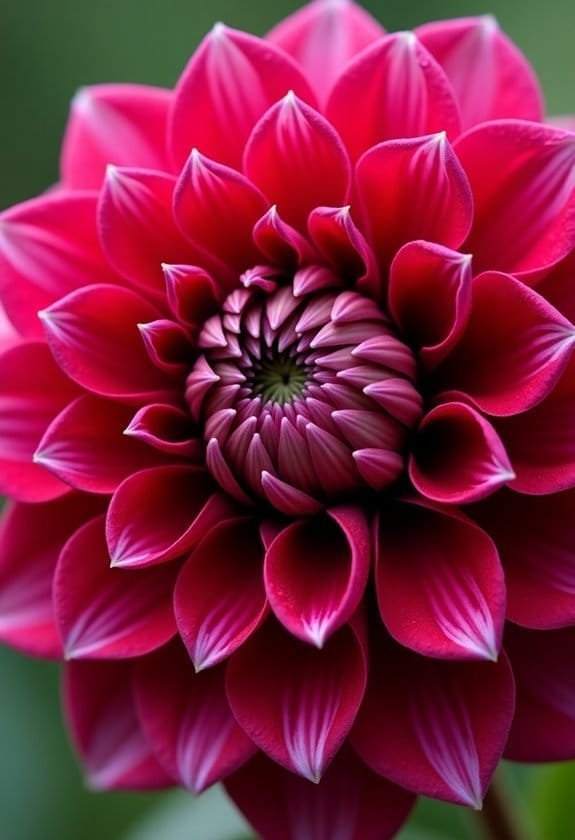
Celebrating their vibrant diversity, dahlias represent a fascinating genus within the Asteraceae family, with 42 recognized species and numerous hybrids. Originating from just 1-2 wild species, dahlias flourish in diverse temperate climates, exhibiting an extensive range of forms and colors. Their blossoming period extends from June until the first frost, offering a vivid palette that delights gardeners and enthusiasts alike.
The classification of dahlias falls into four primary sections: Pseudodendron, Entemophyllon, Dahlia, and Epiphytum. Each section showcases distinct morphological traits, highlighting the remarkable adaptability and variability of this genus.
Remarkably, dahlias have given rise to thousands of cultivars through rich hybridization, fascinating the attention of botanists and horticulturists worldwide.
Significant discoveries of new species continue to emerge from remote areas of Mexico, emphasizing the need for ongoing research and community collaboration. Engagement between growers and scientists facilitates continuous updates to dahlia species information, enriching the understanding of this fascinating genus.