Dictamnus albus, or Dittany, enchants with its fragrant five-petalled flowers, which bloom from late spring to mid-summer and vary in color from pale purple to white. This stunning perennial, reaching heights of 40 to 100 cm, thrives in well-drained, slightly alkaline soils and requires full sunlight for ideal growth. While its nectar-rich blossoms attract bees and butterflies, the entire plant is toxic, necessitating caution when handled. Additionally, its volatile oils can ignite in heat, echoing its nickname of the burning bush. Enthusiasts should consider the appropriate care and ecological impacts, revealing fascinating facets about this plant's complex nature.
Main Points
- Dictamnus albus, commonly known as burning bush or gas plant, is native to southern Europe and parts of Asia.
- This plant features fragrant, five-petalled flowers that bloom from late spring to mid-summer, attracting pollinators like bees and butterflies.
- It requires full sunlight and thrives in slightly alkaline, well-drained soils, taking about three years to mature.
- All parts of the plant are toxic, potentially causing stomach upset and skin irritation, necessitating caution when handling.
- Despite its toxicity, Dictamnus albus contributes ecological value by attracting pollinators and enhancing biodiversity in gardens.
Introduction
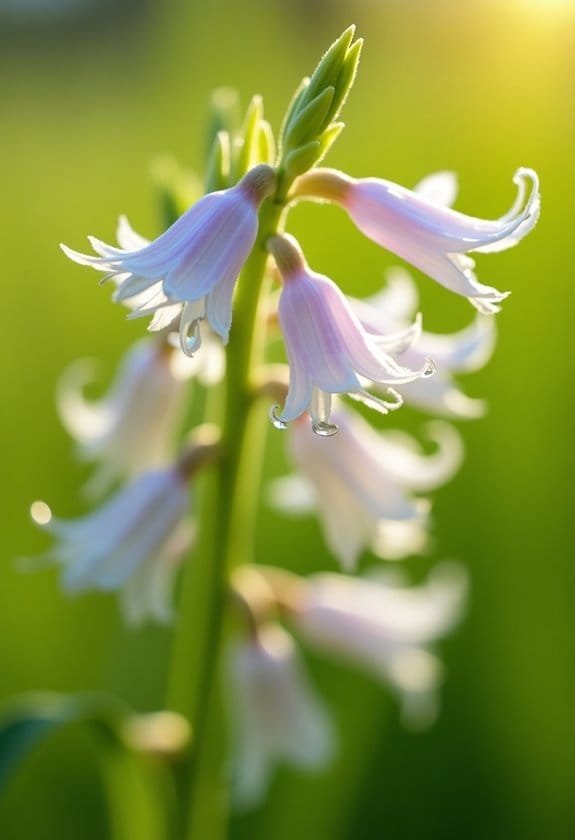
Known by the common name burning bush, Dictamnus albus captivates observers with its striking height and fragrant flowers, which range from pale purple to white.
This perennial herbaceous plant, native to southern Europe, North Africa, and parts of Asia, can reach impressive heights between 40 cm and 100 cm.
While its beauty enchants, it's essential to recognize that all parts of the plant are toxic, posing risks that demand respect and caution.
Common Name
Dittany, scientifically named Dictamnus albus, boasts a variety of common names, including burning bush and gas plant. These names stem from the plant's remarkable characteristics and traditional uses, embodying the essence of its natural properties.
The term "burning bush" reflects the volatile oils found within the plant, which can ignite under hot weather conditions, creating a striking visual effect reminiscent of flames. This phenomenon has elevated the plant's status in folklore, often symbolizing resilience and beauty.
Meanwhile, the common name "gas plant" emphasizes the flammable nature of the oils released during its flowering and seed production phases. These oils contribute not only to the plant's distinctive aroma but also to its ecological significance, attracting various pollinators.
Native to southern Europe, North Africa, and much of Asia, Dictamnus albus thrives in diverse habitats, showcasing white flowers that further enhance its allure.
Ultimately, both "burning bush" and "gas plant" illustrate the enchanting features of Dittany, seamlessly intertwining its botanical identity with cultural narratives. As awareness of its unique qualities spreads, so does appreciation for this remarkable plant and its role in the environment.
Scientific Name
The intriguing botanical identity of Dittany is encapsulated in its scientific name, Dictamnus albus. This name reveals a wealth of information about its classification and characteristics.
The genus name, Dictamnus, likely pays homage to Mount Dikte in Greece, which is steeped in mythology, while the species name "albus" translates to "white" in Greek, a nod to its delicate, pale flowers. Commonly known as the gas plant, burning bush, or simply dittany, this perennial plant captures the imagination with both its name and properties.
Native to southern Europe, Dictamnus albus thrives in well-drained, slightly alkaline soils, often gracing rocky landscapes with its presence. The plant stands out not only for its aesthetic appeal but also for the aromatic oils it produces.
These oils possess flammable qualities, aptly reflected in the common names that suggest combustion. The unique combination of its striking white flowers, potent oils, and historical significance creates a multifaceted plant that intrigues botanists and enthusiasts alike.
Its scientific name consequently serves as a gateway to understanding the deeper essence of Dittany, combining cultural references, botanical characteristics, and ecological preferences in one concise label.
Overview
Embodying both beauty and intrigue, Dictamnus albus, or burning bush, draws attention with its striking appearance and fascinating properties. This herbaceous perennial, native to southern Europe, North Africa, and much of Asia, typically reaches heights between 40 cm (16 in) and 100 cm (39 in).
Its fragrant, five-petalled flowers, which can range in color from pale purple to white, bloom at a relatively slow pace, often requiring up to three years for young plants to flower.
The plant's allure is heightened by its volatile oils, which render it flammable under hot conditions, hence earning it the evocative nickname "burning bush." While its beauty captivates many gardeners, caution is warranted; the foliage can be toxic, potentially causing mild stomach upset or phytophotodermatitis upon contact.
Handling precautions are consequently essential for those who wish to cultivate this remarkable species.
Despite its slow growth, once established, a mature Dictamnus albus can live for many years, contributing both ornamental value and unique characteristics to diverse gardens. This intriguing plant is indeed a witness to the wonders of nature, inviting curiosity and admiration wherever it flourishes.
Key Features
In exploring the key features of Dittany, one finds a plant that captivates with its striking appearance and notable growth characteristics.
Standing between 40 cm (16 in) and 100 cm (39 in) tall, it showcases fragrant, five-petalled flowers that shift from pale purple to white, arranged in elongated spikes.
In addition, its flowering season is prolonged, often requiring up to three years for young plants to mature into their full floral splendor, illustrating both the beauty and intricacy of its life cycle.
Growth Size
Dittany can reach impressive heights between 40 cm (16 in) and 100 cm (39 in) at maturity, showcasing its bushy growth habit. This perennial plant, native to southern Europe, typically spreads around 2 feet wide, providing a robust presence in gardens or natural landscapes.
Its growth rate can be slow initially; young plants often require three years to establish and produce blooms.
Once mature, Dittany thrives in well-drained, humusy, and slightly alkaline soils, which contribute to its longevity. The plant becomes a striking feature as it develops loose pyramidal spikes adorned with fragrant flowers that range from pale purple to white.
Each flower exhibits long projecting stamens, enhancing its overall allure. The structure of the flower spikes not only showcases the plant's unique beauty but also attracts various pollinators, ensuring the continuation of its species.
Appearance
With its upright, bushy growth habit, Dittany, or Dictamnus albus, enchants the eye as it stands between 40 cm (16 in) and 100 cm (39 in) tall. The plant's lush, glossy green leaves closely resemble those of ash trees, exuding a distinctive lemon-like fragrance when crushed. This aromatic quality enhances its appeal, particularly in garden settings.
Dittany's most striking feature is its flammable volatile oils produced from its leaves and stems. These oils can ignite in hot weather, aptly earning the plant its nickname "burning bush."
Though visually enthralling, it's crucial to note that consuming Dittany can lead to a stomach upset if eaten, highlighting the need for caution with this alluring species.
Predominantly found across North Africa and parts of Europe, Dittany can reach a width of up to two feet upon maturation. Its long taproot serves as both an anchor and a challenge, as it makes relocating or dividing mature specimens quite difficult.
Flowering Season
Although many plants bloom at various times of the year, Dictamnus albus stands out as it typically flowers from late spring to early summer, with an impressive peak around mid-summer.
The flowering season of this perennial herb showcases its striking, fragrant blooms, which measure between 1 to 3 inches across. The flowers display five delicate petals, complemented by long projecting stamens that create enchanting floral spikes, varied in hues from pale purple to pure white.
Notably, the flowers emit volatile oils, which can ignite in hot weather, adding to the intrigue surrounding this plant, often referred to as the "burning bush."
Fascinatingly, while young plants may take 3 to 4 years to reach maturity and flower, those that are fully established can bloom annually, enhancing the garden landscape over time.
After flowering, the plant produces seed heads, which require cold stratification for ideal germination. This process mimics winter conditions, ensuring that the seeds can sprout effectively when the warmth of spring returns.
Growing Requirements
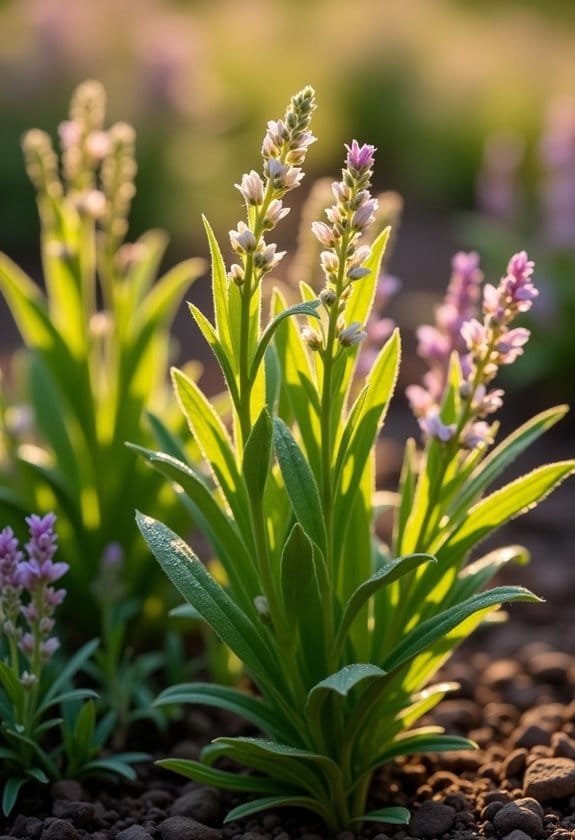
Dittany, or Dictamnus albus, flourishes under the warm embrace of full sunlight while thriving best in slightly alkaline, moist, well-drained soils enriched with humus.
With its remarkable drought tolerance, this perennial plant exhibits a resilience that allows it to adapt across varied climatic conditions, although it matures slowly over approximately three years, reaching impressive heights of up to 100 cm.
Understanding its specific requirements for light, soil composition, water, and temperature is essential for successful cultivation and ideal flowering.
Light
For anyone looking to grow Dictamnus albus, light exposure is essential for prime growth. This plant thrives under full sun conditions, basking in the warm embrace of sunlight, which considerably enhances its overall health and flowering potential.
While it can tolerate some light shade, positioning it in direct sunlight yields the best results, ensuring an abundance of vibrant blooms—this underscores the sunlight significance for this species.
Notably, once established, Dictamnus albus exhibits remarkable drought tolerance, adapting well to varying moisture levels prevalent in sunny locations.
Cooler summer nights further contribute to ideal conditions for growth enhancement; they stimulate robust flowering and overall development. Consistent, unfiltered sunlight helps prevent the common problem of leggy growth, promoting a sturdy and bushy appearance that gardeners find visually appealing.
When cultivating Dittany, enthusiasts should prioritize selecting an appropriate site that captures maximum light throughout the day.
Soil
Successful cultivation of Dictamnus albus heavily relies on selecting the right soil conditions. This enchanting plant flourishes best in moist, well-drained, and humusy soils that lean towards slightly alkaline pH levels, ideally between 6.5 and 8.0. Such soil composition allows for peak nutrient absorption, promoting vigorous growth and flowering.
To enhance the soil's inherent qualities, gardeners might consider employing soil amendments. Incorporating organic matter can improve soil structure and moisture retention, creating an environment conducive to the healthy development of Dictamnus albus.
Despite its preference for moisture, it's vital to guarantee adequate drainage; overly saturated soils can lead to detrimental root rot, ultimately compromising plant health.
Once established, however, Dittany exhibits remarkable drought tolerance, allowing it to adapt to a variety of soil conditions. It remains resilient, with the ability to thrive even when soil moisture fluctuates.
Hence, understanding these soil dynamics is fundamental. By carefully monitoring soil conditions and making necessary adjustments, gardeners can cultivate this exquisite plant effectively, reaping the rewards of its unique beauty and fragrance throughout the growing season.
Water
Adequate watering is fundamental for the health and life force of Dictamnus albus, especially during its early development. Young plants require consistent moisture to establish their roots, benefiting from thoughtful watering techniques that facilitate moisture retention in the soil.
It's imperative for gardeners to guarantee that the soil remains moist yet well-drained, as overly saturated conditions can hinder growth.
Once established, Dictamnus albus exhibits impressive drought resilience, thriving in conditions where water availability fluctuates. This adaptation allows the plant to survive periods of low moisture, especially in full sunlight, which it prefers for peak growth.
The sun's rays not only enhance its ability to withstand drier conditions but also promote overall health and liveliness.
To support its development, it's important to aim for slightly alkaline soil, which enhances nutrient availability, contributing to robust growth.
While young plants may necessitate regular watering, mature specimens can thrive with less frequent irrigation, demonstrating their remarkable capacity to endure challenging environments.
Temperature
Watering practices greatly influence the health of Dictamnus albus, but temperature plays an equally critical role in its growth requirements. This remarkable plant thrives in climates characterized by cooler summer nights, which enhances both its growth and flowering potential.
Hardy in USDA zones 3-9, Dictamnus albus exhibits a commendable adaptability to various temperature fluctuations, making it a resilient choice for diverse gardeners.
To attain ideal health, the plant requires full sun, ensuring that it receives adequate warmth, which is crucial for vigorous development. Ideal growth conditions include slightly alkaline, moist, and well-drained soils that support its deeply tap-rooted structure, anchoring it securely while providing essential nutrients.
Once established, Dictamnus albus showcases impressive drought tolerance, enabling it to withstand varying temperature extremes without sacrificing vitality.
Pollinator Criteria
As Dictamnus albus, or burning bush, blooms in late spring to early summer, it draws a delightful array of pollinators.
Its fragrant, five-petaled flowers release enticing aromas that captivate bees and butterflies, facilitating effective pollen transfer through its long projecting stamens.
This interaction not only supports pollinator populations but also emphasizes the plant's role in enhancing garden biodiversity.
Attracted Pollinators
Dictamnus albus, commonly known as the burning bush or gas plant, plays an important role in attracting various pollinators, greatly enhancing its ecosystem. By fostering pollinator diversity, it strengthens the intricate web of life surrounding it.
The fragrant flowers, blooming from late spring to early summer, release a sweet scent that entices bees, butterflies, and other beneficial insects, drawing them in. This strategic timing aligns with the heightened activity of many pollinators, ensuring that the plant garners attention when its blossoms are most vibrant.
Tall spikes of flowers serve as striking visual cues, effectively engaging pollinators from a distance. Additionally, the nectar-rich blooms not only encourage frequent visits but also promote cross-pollination, essential for maintaining genetic diversity among plant populations.
This ecological role of Dictamnus albus extends beyond its own survival; by attracting a variety of pollinators, it supports broader biodiversity, highlighting the interconnectedness of species within its environment.
The attraction strategies employed by this species exemplify nature's delicate balance, showcasing how a single plant can positively influence its surroundings while relying on collaborative interactions with pollinators to thrive.
Pollination Method
Insects play an indispensable role in the pollination of Dictamnus albus, as the plant primarily depends on them to facilitate reproduction. This herbaceous perennial employs unique pollination strategies, making it both fascinating and essential within its ecosystem.
The flower morphology of Dittany features long, projecting stamens that extend outward, providing easy access for visiting pollinators like bees and butterflies. This strategic design enhances the likelihood of successful pollination, particularly during the peak blooming period of late spring to early summer.
Insect behavior is pivotal, as the fragrant blooms attract these pollinators, guiding them to the nectar-rich flowers. The volatile oils released by the leaves can ignite in high temperatures, adding a layer of fascination and aroma that draws insects closer, establishing a mesmerizing connection between fragrance and reproduction.
Successful pollination subsequently leads to the formation of star-shaped seed capsules, which can explosively disperse seeds, ensuring the plant's propagation in its natural habitat.
Through these intricate relationships between flower morphology, insect behavior, and targeted pollination strategies, Dictamnus albus demonstrates the delicate balance of nature, where beauty fosters life.
Care & Maintenance
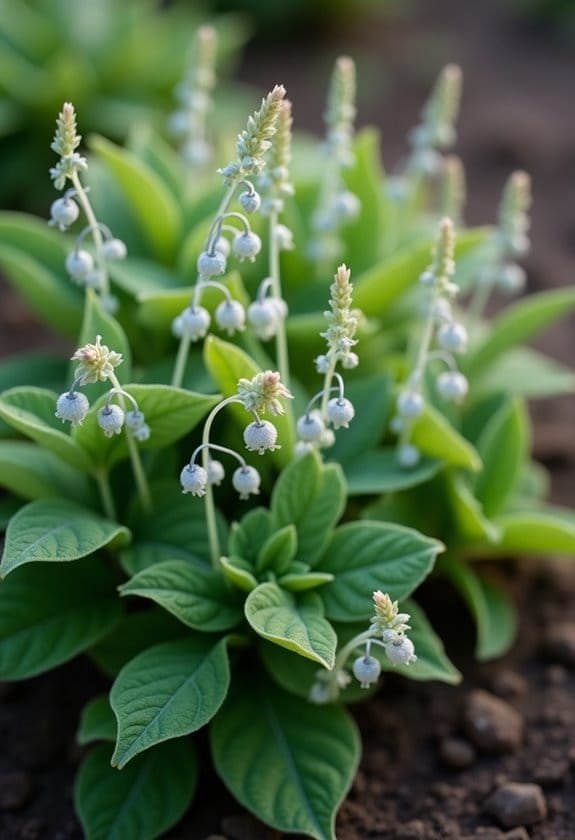
When caring for Dictamnus albus, attention to planting recommendations and ongoing maintenance is critical for thriving growth.
This sun-loving perennial flourishes in moist, well-drained, slightly alkaline soils and requires adequate protection during its formative years, typically about three, before showcasing its stunning flowers.
To guarantee maximum vigor, thoughtful companions can enhance its environment, but caution should be taken to prevent unnecessary stress to its deep taproot, which is fundamental for longevity.
Planting Tips
To successfully plant Dittany, it's essential to choose a location with moist, well-drained, humusy soil that has a slightly alkaline pH. This foundation supports ideal growth, encouraging stunning flowers that can reach impressive heights of up to 100 cm.
When considering planting techniques, it's important to amend the soil regularly with compost or other organic matter, which enriches the nutrient content and improves drainage capabilities.
Dittany thrives under full sun exposure, necessitating at least six hours of direct sunlight daily. However, once established, the plant can tolerate some light shade, which may help it adapt to varying environmental conditions and provide relief during heat waves.
Proper spacing is critical to avoid overcrowding; plants should be spaced to accommodate their potential width of 60 cm.
Watering is paramount for young plants, as they're slow to establish and prefer consistent moisture, particularly during dry spells.
Caution is advised when handling the Dittany's foliage, as it may cause skin irritation. Employing gloves during maintenance minimizes the risk while ensuring the gardener can appreciate the plant's beauty safely.
Ongoing Care
After successfully planting Dittany, ongoing care plays an essential role in maintaining its health and vigor. To guarantee ideal growth, the gardener must focus on suitable soil amendments, particularly emphasizing well-drained, humusy soils with a slightly alkaline pH.
Regular monitoring for pest management is critical, particularly because the foliage may irritate the skin, leading to phytophotodermatitis if touched in sunny conditions.
Pruning techniques, although not extensive, can benefit the plant's overall health when implemented properly. By trimming away spent flowers and any dead or damaged foliage, one can encourage air circulation and minimize the risk of disease.
However, due to its tap-rooted nature, one should avoid frequent relocation or division to safeguard the delicate root system, which is essential for the Dittany's sustainability.
Moreover, patience is key. Allowing young plants at least three years to mature before expecting blooms not only promotes stronger plants but also leads to more robust floral displays.
Consequently, with mindful attention to these elements, gardeners can cultivate a thriving Dittany that offers beauty and resilience in their landscape.
Suggested Companions
Selecting suitable companion plants for Dittany can enhance the garden's health and aesthetics. To create effective planting combinations, gardeners should prioritize heat-tolerant species such as lavender and sage, which flourish in similar full sun and well-drained soil conditions.
These companions not only harmonize with Dictamnus albus but also contribute to the garden's overall resilience against environmental stressors. Incorporating ornamental grasses adds visual interest and texture, while also attracting beneficial insects that promote a balanced ecosystem health, supporting the health of the Dictamnus plants.
Due to its deep tap root, it's important to avoid companions requiring frequent division; disrupting the roots may hinder its growth and stability. To prevent overcrowding and maintain adequate air circulation around the Dictamnus, pairing it with lower-growing perennials like heucheras is advantageous.
Additionally, selecting companion plants with similar water needs is significant. Drought-resistant varieties, including echinacea or sedums, not only preserve the plant's moisture requirements but also contribute to an aesthetically pleasing garden design, embodying harmony between different plant types while enriching the garden's biodiversity. Also, incorporating plants like Chaenomeles speciosa may provide great benefits since it draws early-season pollinators, enhancing the ecosystem around the Dittany.
Common Issues
When cultivating Dittany, gardeners often encounter a variety of common issues, particularly pests and diseases.
While its bitter-tasting leaves may deter some herbivores, aphids and fungal infections can still pose significant challenges, requiring proactive management strategies.
Understanding these potential threats equips growers with the knowledge to maintain the plant's health and guarantee its vibrant growth in a garden setting.
Pests/Diseases
Dittany, or Dictamnus albus, stands out for its strong resistance to pests and diseases, making it an excellent choice for gardeners seeking low-maintenance options. While this hardy perennial generally avoids significant pest issues, it can occasionally attract aphids or spider mites. Employing effective pest management strategies, like using insecticidal soap or neem oil, can adequately address such infestations without much effort.
Though fungal infections are rare, gardeners should still implement disease prevention techniques by ensuring proper spacing and good air circulation around plants. These practices are particularly vital in humid environments, where water accumulation may favor fungal growth.
It's also essential to avoid overwatering and maintain well-drained soil, as these cultural practices enhance the resilience of Dictamnus albus against potential pest and disease pressures.
It's important to note that contact with the plant's oils, especially when exposed to sunlight, can cause phytophotodermatitis in sensitive individuals, leading to skin irritation. Consequently, proper skin irritation precautions should be taken when handling Dittany.
Solutions
Establishing and maintaining Dictamnus albus can present some challenges for gardeners, primarily due to its deep taproot, which complicates division and relocation once the plants mature.
Typically, young plants require about three years to produce flowers, introducing a significant establishment challenge for impatient growers. The lengthy waiting period necessitates nurturing and patience.
Moreover, toxicity management is vital when dealing with this species. Its foliage can cause mild stomach upset if ingested, a concern particularly for households with pets or children.
Protective measures, including the use of gloves when handling the plant, are essential, as contact with the leaves may lead to phytophotodermatitis—a reaction intensified by sun exposure.
Additionally, it's prudent to plant Dictamnus albus in areas sheltered from extreme heat and direct flames to prevent issues associated with its flammable oils.
Ensuring a safe distance from cut grass or open flames will mitigate potential hazards while enhancing enjoyment of this striking plant.
What are the medicinal uses of Dictamnus Albus compared to Eryngium Planum?
The medicinal uses of Dictamnus Albus and Eryngium Planum differ significantly. While Dictamnus Albus has been used in traditional medicine to treat skin diseases and rheumatism, Eryngium Planum, also known as the blue eryngo plant, is used to aid in digestion and relieve respiratory issues.
Summary
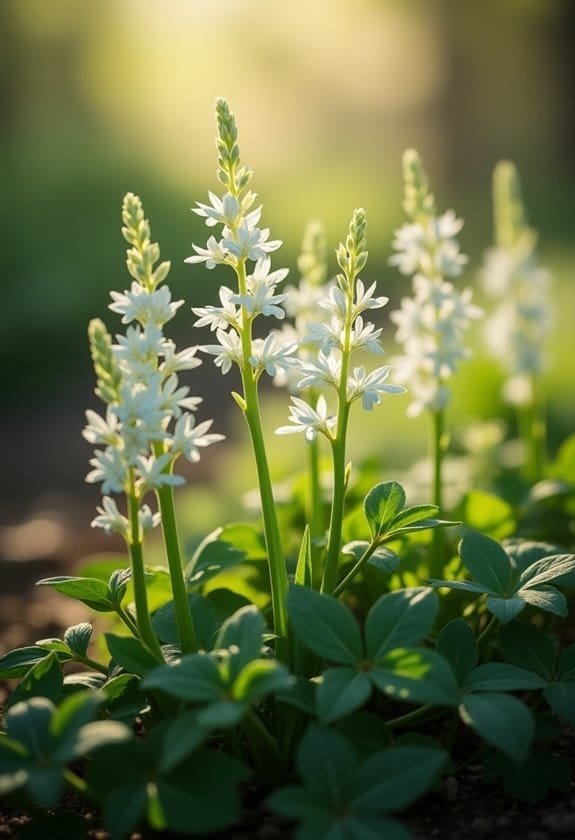
Throughout its growth cycle, Dictamnus albus, commonly known as burning bush or gas plant, showcases unique characteristics that intrigue gardeners and botanists alike. This perennial herbaceous plant attains heights between 40 cm (16 in) and 100 cm (39 in), adorned with fragrant white or pale purple flowers. Its significant cultural importance is underscored by historical folklore associating its flammable nature with mystical properties. The plant's volatile oils, primarily composed of isoprene, can ignite in hot weather, hence its nickname.
Despite its ornamental value and appeal to butterflies, cultivation in American gardens remains limited due to its toxic leaves, which, while reminiscent of ash trees, may cause mild stomach upset if consumed. These leaves can also provoke phytophotodermatitis in sensitive individuals; hence caution is warranted.
The medicinal uses of Dictamnus albus, although historically noted, require further scientific exploration. This plant typically takes about three years to produce flowers, presenting challenges in establishment and division due to its complex tap-root system.
As gardeners continue to admire its striking features, understanding its potential risks and benefits is essential for safe cultivation and appreciation.