Dipsacus fullonum, or Common Teasel, is a striking monocarpic perennial that towers between 1 and 2.5 meters, showcasing rosette formations of spiny flower heads. Introduced to North America during the 1700s, it exhibits aggressive growth patterns, often displacing native flora and leading to its classification as a noxious weed in some states. Flowering occurs from June to October, yielding thousands of seeds per head, enhancing its invasion potential. Preferring full sun and well-drained soils, this plant supports pollinator diversity while presenting significant ecological challenges. For those interested in its management and ecological impact, additional insights await further exploration.
Main Points
- Common Teasel (Dipsacus fullonum) is an invasive perennial herb introduced in North America in the 1700s.
- It features striking spiny flower heads that bloom from June to October with lavender to white flowers.
- Preferring full sun and well-drained soils, it competes aggressively with native flora for resources.
- The species produces thousands of seeds, exacerbating its invasive nature and displacement of native plants.
- Effective management includes regular monitoring, mechanical removal, and potential herbicide application during the rosette stage.
Introduction
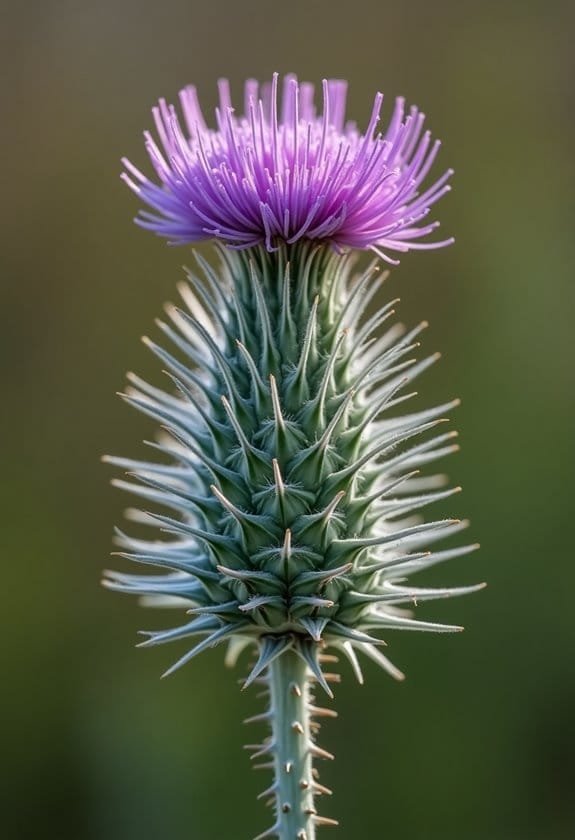
Dipsacus fullonum, widely known as Common Teasel, presents a fascinating yet troubling addition to North America's flora.
This monocarpic perennial, typically reaching heights of 1 to 2.5 meters and featuring distinctive egg-shaped flower heads, has flourished since its introduction in the 1700s for textile production. The plant's aggressive growth patterns mirror those of other invasive species, which can outcompete native flora and disrupt local ecosystems.
Though once valued for its utility, its rapid spread and significant seed production now pose serious ecological challenges, making it an essential subject of study in invasive species management. Its aggressive growth patterns and ability to produce large quantities of seeds contribute to significant ecological disruption in local ecosystems.
Common Name
Common Teasel, a biennial plant that thrives in various environments, showcases striking spiny flower heads and tall, lanceolate leaves. This species, scientifically recognized as Dipsacus fullonum, emerged as a fascinating addition to North American landscapes after its introduction from Europe and Asia in the 1700s.
Initially valued for its role in textile processing, its charm faded as it became evident that this common plant harbors invasive tendencies.
Reaching heights between 4 to 7 feet, Common Teasel develops densely packed, cylindrical flower heads that bloom from June through October, producing thousands of seeds that enhance its propensity for widespread growth. This invasive plant aggressively occupies disturbed habitats, often forming impenetrable stands that overwhelm native flora while adversely affecting local ecosystems.
Identifying Common Teasel is straightforward; its spiny, cylindrical flower heads and distinct rosette formation in its first growth year are key features.
In several regions, including Minnesota, it's classified as a noxious weed, necessitating the destruction of all plant parts to hinder propagation and protect the delicate balance of native plant communities. Understanding these attributes aids in fostering awareness of this persistent species.
Scientific Name
Belonging to the Dipsacaceae family, the scientific name for Common Teasel is Dipsacus fullonum. The genus name "Dipsacus" arises from the Greek term meaning "thirst," highlighting the plant's distinctive cup-like leaves that naturally collect water.
As a monocarpic perennial, Dipsacus fullonum has a fascinating lifecycle; it flowers just once before dying, producing an astonishing average of 850 seeds per flower head. This capacity for seed production contributes considerably to its proliferation in various habitats.
Growing up to an impressive 2.5 meters, or approximately 8.2 feet, Dipsacus fullonum showcases its stunning light purple to white flower heads from June to October.
Although initially introduced to North America in the 1700s for textile production, its journey took an unexpected turn. Today, it's recognized as a considerable invasive species in many regions, competing with native flora and altering ecosystems.
The rapid spread of this plant underscores the importance of understanding its scientific classification and behavior. Consequently, Dipsacus fullonum not only embodies a unique botanical legacy but also serves as a reminder of how human actions can inadvertently influence nature's balance.
Overview
Teasel, a striking monocarpic perennial, commands attention with its tall, prickly stalks and vibrant flower heads that bloom from June to October. Known scientifically as Common Teasel (Dipsacus fullonum), this visually enchanting plant can grow to heights of 4 to 7 feet.
Originally introduced to the United States in the 1700s for textile applications, Common Teasel has since escaped cultivation and established itself as an invasive species, posing a significant threat to native ecosystems.
This formidable plant flourishes in sunny, open habitats like roadsides, pastures, and other disturbed areas, where it easily proliferates and establishes dense stands that outcompete indigenous flora for essential natural resources.
Classified as a prohibited noxious weed in several states, including Minnesota, efforts are in place to curb its spread by mandating the destruction of all plant parts to prevent propagation.
With an astounding capability of producing up to 850 seeds per flower head—and potentially yielding as many as 34,000 seeds—Common Teasel's aggressive reproduction strategy solidifies its status as an ecological adversary.
Understanding this plant's characteristics and impact is key for effective management and ecological conservation.
Key Features
The common teasel, or Dipsacus fullonum, typically towers between 4 and 7 feet, establishing a robust taproot that supports its growth.
With its cylindrical flower heads showcasing light purple to white blooms from June to October, this plant's striking appearance captivates onlookers while hinting at its invasive potential.
Particularly, the long lanceolate leaves, measuring up to 12 inches, often form a cup-like structure at their base, provoking curiosity and illustrating its adaptation for capturing rainwater.
Growth Size
Common teasel can reach impressive heights of 4 to 7 feet (1.2 to 2.1 meters) during its flowering stage, showcasing its robust growth. This tall flowering plant species is characterized by thick, ridged, and often hollow flowering stalks, which can bear sharp prickles. These structural features provide not only stability but also protection against herbivores, ensuring the plant's survival in diverse environments.
Beneath the surface, common teasel develops a deep taproot, extending up to 2 feet long and 1 inch wide, enabling it to thrive in varied soil conditions, including drought-prone areas. This adaptability allows the plant to outcompete many others.
The leaves of common teasel are lanceolate, ranging from 20 to 40 cm (7.9 to 15.7 inches) in length, with distinct white midveins and scalloped edges, creating a visually striking foil for the flowering heads.
Each cylindrical cluster of flowers prominently displays over 850 seeds on average, highlighting the plant's potential for rapid propagation. This abundant seed production can lead to dense infestations, turning common teasel into a formidable presence within its native or introduced habitats.
Appearance
Standing tall, Dipsacus fullonum boasts a distinct appearance that sets it apart in various landscapes. This remarkable plant typically reaches heights of 4 to 7 feet, characterized by a stout, prickly, hollow stalk.
The leaves of the Common Teasel are unlobed and lanceolate in shape, measuring between 20 to 40 cm (7.9 to 15.7 inches) in length. Arranged oppositely along the stem, these leaves often form a cup-like shape, ingeniously designed to collect rainwater, enhancing the plant's adaptability in different environments.
At the top of the sturdy stalk, the flower heads emerge, resembling cylindrical structures adorned with lavender or white blooms. Each flower head can grow up to 4 inches tall and is encircled by long, prickly bracts, lending an eye-catching texture.
Impressive in its reproductive capabilities, a single Dipsacus fullonum plant can produce an astounding average of 850 seeds per flower head, with potential seed output soaring to 34,000. Even in winter, the dried flower heads persist, offering visual identification and highlighting the plant's resilience throughout the seasons. This species, like the Rowan Mountain Ash, displays a remarkable ability to adapt to various environmental conditions.
This blend of striking features makes the Common Teasel a fascinating presence in its native habitats.
Flowering Season
During the flowering season from June to October, Dipsacus fullonum reveals its stunning light purple to white blooms that attract the attention of passersby. These vibrant flowers grow in clusters around the plant's spiny cylindrical flower heads, which can reach an impressive height of up to 4 inches.
As the flowers progress outward from the central inflorescence, they create a visual spectacle that captivates admirers. In addition to their aesthetic appeal, the flower heads are essential for seed production. Each flower can yield an astounding average of 850 seeds, and some plants may produce up to 34,000 seeds during a single flowering season.
This prolific output guarantees the species' survival and encourages its spread across various environments. After the flowers fade, the robust seed heads remain on display throughout the winter months, providing structural interest and a stark beauty against the cold landscape.
This persistence not only highlights the plant's adaptability but also serves as a significant resource for various wildlife, guaranteeing the cycle of life continues even as nature rests. As a result, Dipsacus fullonum stands as a demonstration of resilience and ecological importance throughout the seasons.
Growing Requirements
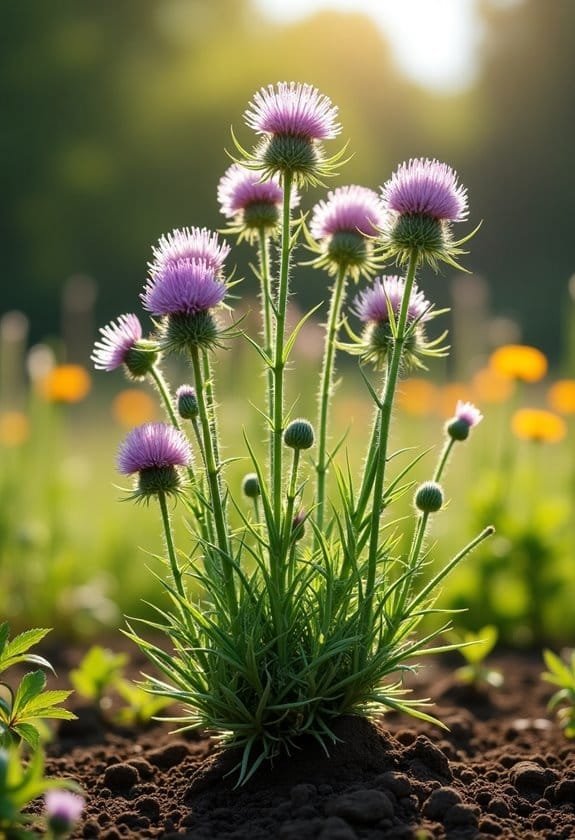
Dipsacus fullonum thrives in full sun, which enables it to flourish in open habitats like roadsides and pastures.
With a remarkable adaptability to various soil types, this plant effectively tolerates both wet and dry conditions, allowing it to secure moisture through its deep taproot, sometimes reaching lengths of two feet.
Ultimately, temperature plays a crucial role, influencing its growth and reproduction as the plant shifts from a rosette in its first year to towering stalks in its second, typically standing at heights between four and seven feet.
Light
For those looking to cultivate common teasel (Dipsacus fullonum), understanding its light requirements is crucial. This plant thrives in full sun, flourishing most vibrantly when exposed to direct sunlight. The flowering period, which occurs from June to October, sees the development of light purple blooms that reach their full potential under such conditions.
Remarkably, open habitats like roadsides, fields, and disturbed areas provide ideal settings, as they offer abundant light, ensuring robust growth.
While common teasel can tolerate some shade, insufficient light greatly hinders the development of healthy rosettes and flower heads. This limitation impacts overall seed production, underscoring the importance of reliable sunlight for the plant's success.
Additionally, its adaptability to various light conditions contributes to its invasive nature, allowing it to spread across diverse ecological landscapes. This adaptability can pose challenges in managing its growth in local ecosystems.
Soil
Understanding the soil requirements is key to successfully growing common teasel alongside its light needs. This hardy plant flourishes in well-drained, nutrient-rich soils, often thriving in disturbed habitats like roadsides and pastures.
Common teasel exhibits remarkable adaptability, tolerating a wide range of soil moisture conditions—from dry to wet soils—thanks to its deep taproot that can extend up to 2 feet. This extensive root system enables the plant to tap into moisture and nutrients from deeper soil layers, facilitating healthy growth.
Interestingly, soil pH poses minimal limitations, as common teasel establishes itself in both acidic and neutral soils. This adaptability allows it to proliferate across diverse environments, often competing effectively with native species in grassland ecosystems.
By forming dense stands, it can outcompete other plants for critical soil resources, which sometimes leads to concerns regarding biodiversity. Consequently, understanding these soil preferences not only promotes successful cultivation of common teasel but also highlights its ecological impacts. Notably, its tendency to establish robust root systems even in poor soils contributes to its invasive potential and ecological challenges.
Gardeners and land managers should carefully consider these aspects when incorporating this robust plant into their landscapes, ensuring that it thrives while maintaining balance within its ecosystem.
Water
Common teasel thrives with a careful balance of moisture, favoring moderate conditions while demonstrating impressive adaptability to both wet and dry soils. This remarkable versatility allows it to flourish in diverse habitats, such as sunny roadsides and disturbed pastures, where ample water and light are accessible.
While common teasel can endure drought, its ideal growth occurs in consistently moist soil, especially during the significant rosette and flowering phases.
The plant's deep taproot, capable of extending up to 2 feet, enables it to reach groundwater, enhancing its resilience in fluctuating water availability. This adaptability is invaluable, particularly when considering the varying soil conditions it may encounter.
However, while sufficient moisture is essential for healthy development, excessive saturation can hinder growth and increase susceptibility to root rot. Consequently, it's crucial that common teasel grows in well-drained soils, where too much water doesn't stagnate.
Ultimately, maintaining the right moisture levels not only enriches the plant's structural integrity but also contributes to its vibrant blooms, making it a fascinating addition to any environment.
Temperature
Thriving in full sun, Dipsacus fullonum flourishes with at least six hours of direct sunlight each day. This remarkable plant exhibits adaptability to a range of temperatures, yet it particularly thrives in temperate climates.
Prime growing conditions occur when average seasonal temperatures hover between 60°F and 75°F (15°C to 24°C), allowing the Common Teasel to effectively utilize sunlight for photosynthesis and growth.
The capacity of Common Teasel to endure fluctuations in temperature further highlights its resilience. It can establish itself in disturbed areas, demonstrating an ability to survive in less than ideal situations, including variations in soil moisture.
While this biennial, or monocarpic perennial, can tolerate a wider spectrum of temperatures, successful seed germination necessitates a period of cold stratification. This specific requirement typically aligns with the warming temperatures of spring when conditions favor seed activation and growth. Additionally, Common Teasel is known to thrive in well-drained soils, which further supports its growth in various environments.
Pollinator Criteria
Common teasel (Dipsacus fullonum) serves as a crucial attractant for a variety of pollinators, including bees and butterflies, drawn to its abundant nectar. Its tubular flowers are specifically structured, allowing certain bee species to efficiently access the nectar while simultaneously facilitating pollination. This interaction not only supports the pollinators themselves but also results in the production of up to 34,000 seeds per flower head, further enriching the ecosystem. Additionally, like Ajuga reptans, common teasel contributes to local ecosystem diversity by attracting key pollinators that enhance garden health and biodiversity, as seen with plants like Calluna vulgaris which provide sustenance for wildlife.
Attracted Pollinators
With its striking light purple to white flowers, Dipsacus fullonum attracts a variety of pollinators, playing an indispensable role in the ecosystem. Blooming from June to October, the flower heads offer a long flowering period that sustains bees, butterflies, and beetles during the summer and early fall. The unique structure of these flower heads creates an inviting landing platform, enhancing accessibility for insects while encouraging them to gather nectar and contribute to pollination.
In addition to attracting these crucial pollinators, the dense stands of teasel foster a rich wildlife habitat. Various species, including the European goldfinch, thrive in environments created by Common Teasel since they feed on the abundant seed heads, with each plant producing approximately 34,000 seeds.
This remarkable seed production not only supports the plant's survival but also provides essential food resources for wildlife, creating a cycle of life that benefits both flora and fauna.
Ultimately, the interplay between Dipsacus fullonum and its pollinators enhances biodiversity, demonstrating the interconnectedness of species within the ecosystem and highlighting the importance of conserving such plants for future generations.
Pollination Method
How does Dipsacus fullonum engage its pollinators?
This remarkable plant relies primarily on insects, especially bees and butterflies, to facilitate its pollination process. The dense clusters of lavender to white flowers bloom from June to October, providing a visual feast that attracts these essential pollinators. The flowers' structural design greatly benefits them; spiny bracts surround each head, creating a cage-like platform that allows pollinators to land easily and access the abundant nectar within.
As the flowering occurs in sequential bands along the stalk, it guarantees a continuous supply of nectar and pollen throughout the season, which keeps pollinators returning to Dipsacus fullonum.
Research indicates that these flowers produce considerable amounts of nectar, effectively drawing in both native and non-native pollinators alike. This strategic reproductive strategy results in the production of thousands of seeds post-pollination, underscoring the importance of pollinators in achieving successful seed set.
Therefore, by engaging these essential insects through visual and olfactory cues, common teasel not only enhances its reproductive success but also contributes to the ecological network that supports the health of its habitat.
Care & Maintenance
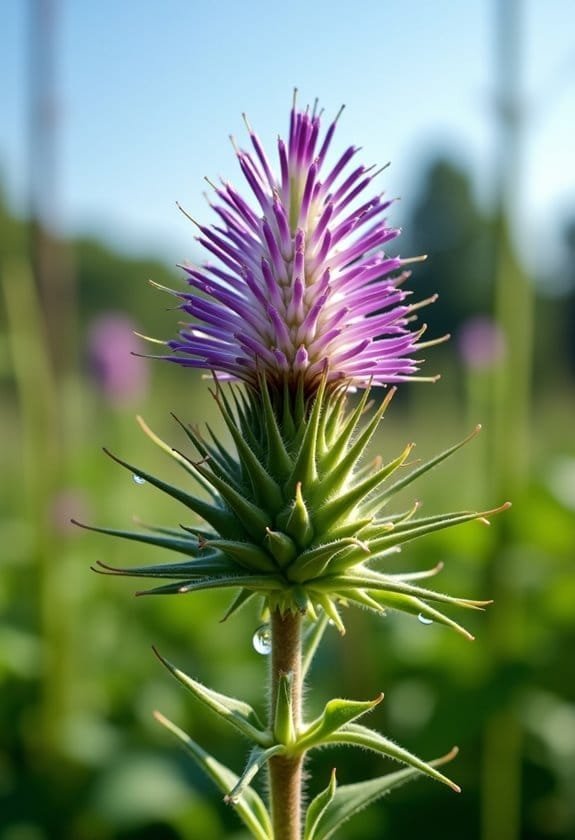
In cultivating Dipsacus fullonum, or common teasel, gardeners should focus on its specific needs for healthy growth.
The plant thrives best in full sun or partial shade, ideally nestled in well-drained soil, making it essential to monitor its conditions regularly.
Ongoing care involves timely pruning to prevent seed setting, along with pairing it judiciously with compatible companions to enhance its growth and resilience.
Planting Tips
When planting common teasel, it's crucial to create the right environment for its growth. This robust perennial prefers sunny, open areas and thrives best in well-drained soil that mimics its native habitat. For ideal establishment, gardeners should guarantee consistent moisture during the early growth stages.
Common teasel seedlings flourish in moderately moist conditions; however, as they mature, they can handle a wider range of soil moisture levels, from wet to dry.
A critical planting tip involves spacing the plants adequately, ideally 12 to 18 inches apart. This spacing accommodates their impressive height—sometimes reaching up to 7 feet—and minimizes competition for resources among the individuals.
After blooming, it's advised to deadhead flower stalks to limit excessive seed production, thereby preventing the plant from becoming invasive and outcompeting native flora.
Additionally, it's wise to be mindful of common teasel's propensity for spread in cultivated areas. Gardeners may consider using barriers or implementing proper cleanup methods to effectively manage seed dispersal and maintain control in their gardens.
Successful planting lays the foundation for both beauty and ecological balance.
Ongoing Care
Effective ongoing care for Common Teasel is essential to prevent it from becoming invasive. Regular monitoring of this weed is imperative, as its prolific seed production can quickly result in overwhelming infestations if left unchecked. Vigilant observation helps identify any emerging plants before they establish a stronger presence.
To control Common Teasel, removal of the entire plant, including its substantial taproot, is critical. For smaller populations, digging up the plants can be effective. Additionally, cutting flowering stems at ground level before they set seed greatly limits their spread; however, it's imperative to follow up by removing any flower heads to halt seed dispersal completely.
Herbicides also play an important role in management; applying effective options like glyphosate or triclopyr during the rosette stage yields the best results. Young plants are particularly susceptible to treatment during this phase.
Finally, to prevent further spread, maintaining cleanliness in equipment after use in infested areas is vital. By implementing these practices—monitoring, removal, herbicides, and cleaning—gardeners can maintain control over Common Teasel populations and safeguard local ecosystems from its invasive potential.
Suggested Companions
Choosing the right companions for Dipsacus fullonum (Common Teasel) enhances both its growth and the surrounding ecosystem. When planted in sunny locations with moderate to moist soil, Common Teasel thrives alongside robust native plants, such as echinacea and solidago species. These companions naturally compete for resources, reducing the risk of Common Teasel becoming invasive. Additionally, including Common Yarrow's vibrant blooms can further support pollinator populations in the garden.
While nurturing these plants, it's vital to monitor for seed production, as a single Dipsacus fullonum can generate up to 34,000 seeds. Consequently, timely removal of flower heads before they mature into seeds is fundamental in effective weed management.
Companion plants that attract beneficial insects, like bees and butterflies, offer additional ecological benefits. Their flourishing during the Common Teasel's flowering period from June to October aligns perfectly with the best pollination.
Additionally, employing mechanical control methods is advisable. This approach includes careful disposal of cuttings or roots, preventing further propagation and ensuring the integrity of the garden ecosystem. Incorporating plants that provide wildlife habitat can also enhance the overall biodiversity of the area.
Common Issues
Common teasel (Dipsacus fullonum) faces various challenges from pests and diseases that threaten its growth and control.
With its aggressive nature and ability to produce an astonishing 34,000 seeds, infestations can rapidly escalate, complicating management efforts.
Identifying these common threats and exploring effective solutions is essential for maintaining ecosystem balance and protecting native species from displacement.
Pests/Diseases
Dipsacus fullonum, or common teasel, shows impressive resilience against most pests and diseases, making it a reliable choice for various growing conditions.
Its ability to thrive with little interference is notable, as only a handful of herbivores, including specific insects, may occasionally feed on its leaves. Fortunately, these infestations rarely cause significant damage, ensuring the overall health and growth of the plant remains intact.
Fungal diseases do pose a potential threat, but infections are infrequent and typically result in minimal impact on the plant's vigor.
The dense stands formed by common teasel can create habitats for some pests, which may indirectly affect adjacent crops or native plants by leading to secondary infestations.
While common teasel doesn't exhibit characteristics of being invasive due to pests or diseases, its aggressive spread can lead to competition with local flora, contributing to ecological imbalance.
Consequently, while growers appreciate its hardy nature, they should remain vigilant about its growth patterns and their potential effects on surrounding ecosystems.
This inherent characteristic underscores the importance of monitoring interactions, fostering harmony within both cultivated and wild environments.
Solutions
Controlling common teasel effectively demands a proactive approach, especially given its capacity to produce vast amounts of seeds. With an average of 850 seeds per flower head and up to 34,000 seeds per plant, immediate action is essential to curb its proliferation.
State Noxious Weed Control Programs recommend implementing practical strategies to mitigate infestations.
Mechanical control methods, such as digging or mowing, prove effective, particularly when populations are low. These approaches require the complete removal of the root to thwart any chance of regrowth, much like pulling a stubborn weed from a garden patch. Additionally, garlic mustard's allelopathic compounds can pose similar threats to native flora, emphasizing the importance of controlling invasive species.
However, as populations escalate, more aggressive means become necessary.
Herbicides offer another compelling solution, especially applied during the rosette stage, when the plant is vulnerable. Glyphosate and triclopyr are frequently utilized to effectively manage common teasel populations, ensuring environmental safety when deployed judiciously.
Lastly, early detection is vital. Timely identification and reporting of new occurrences through platforms like EDDMapS can tremendously assist in controlling this invasive species, allowing for rapid intervention and reducing its chances of further spread. Additionally, understanding the seed dispersal mechanisms of invasive species like common teasel can improve management strategies and enhance control efforts.
What Are the Medicinal Uses of Dipsacus Fullonum (Common Teasel) Compared to Dictamnus Albus (Dittany)?
Dipsacus Fullonum, or Common Teasel, is known for its traditional medicinal uses in treating arthritis and joint pain. On the other hand, Dictamnus Albus, or Dittany, is famous for its healing properties in promoting digestive health and relieving stomach ailments. The healing properties of dictamnus albus make it a popular choice in traditional herbal medicine.
Summary
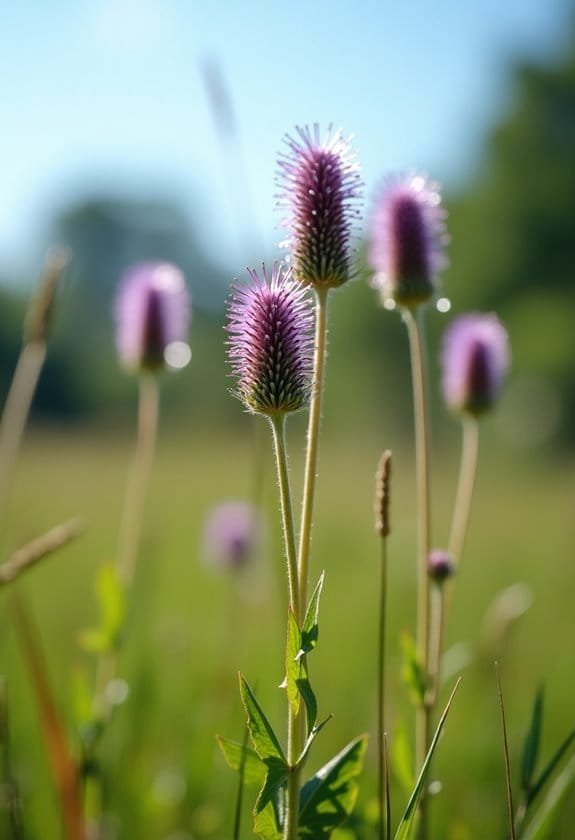
As a biennial or monocarpic perennial, the Common Teasel (Dipsacus fullonum) can grow between 4 to 7 feet tall and showcases light purple flowers from June to October.
This plant produces an astounding quantity of seeds, averaging 850 seeds per flower head and potentially yielding up to 34,000 seeds per individual. Such prolific seed production fuels its status as an invasive species, enabling it to dominate habitats like roadsides, pastures, and disturbed areas, where it often outcompetes native flora.
Classified as a Class C Noxious Weed in Washington and designated as a prohibited noxious weed in Minnesota, regulatory measures demand the destruction of all parts of the Common Teasel to curb its spread.
The plant's deep taproots, reaching up to 2 feet, fortify its tenacity and ability to thrive in diverse environments.
To manage its encroachment, standard control methods include mechanical removal and the application of targeted herbicides such as glyphosate.
Vigilant reporting of new infestations to local agencies plays a significant role in early intervention.
Understanding the implications of Common Teasel's invasiveness equips communities to implement effective control strategies and preserve their native ecosystems.