Echinops species, widely recognized as Globe Thistle, comprises about 120 resilient varieties flourishing in well-drained soils across Europe, Asia, and Africa. These plants typically reach heights of 2 to 4 feet and sport striking spherical flower heads in blue, light blue, or white, attracting essential pollinators like bees and butterflies from mid-summer to early fall. Adaptable to various environments, they thrive in USDA zones 3-9, showcasing their drought resistance and preference for poorer soil types. Regular maintenance, including deadheading, enhances their visual appeal, ensuring these botanical artists continue to delight in garden landscapes. More insights await regarding their remarkable cultivation traits.
Main Points
- Echinops, also known as Globe Thistle, comprises around 120 species primarily native to Europe, Asia, and Africa.
- Notable species include Echinops bannaticus and Echinops ritro, popular among gardeners for their striking appearance.
- Globe Thistles thrive in full sunlight and prefer well-drained, poor, sandy, or rocky soils.
- The flowers bloom from mid-summer to early fall, attracting pollinators like bees and butterflies.
- Echinops plants are drought-resistant, making them suitable for low-maintenance gardens and xeriscapes.
Introduction
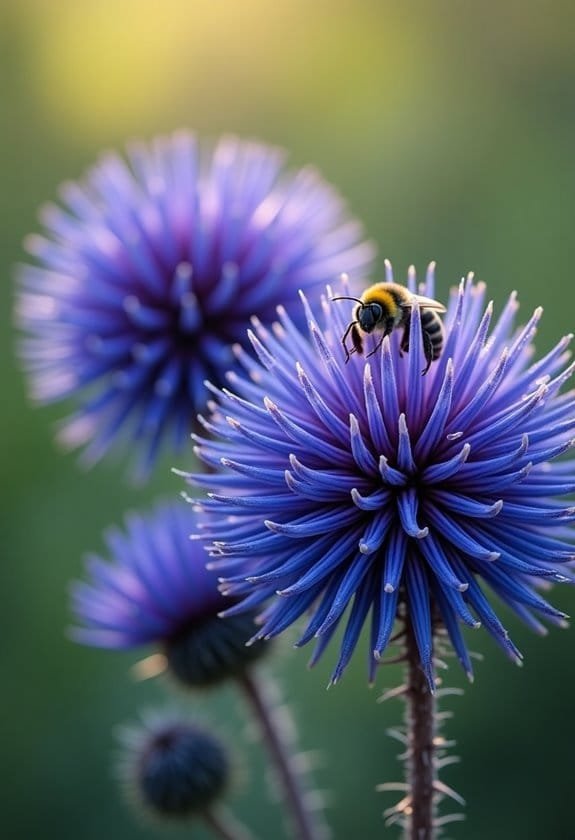
Echinops, widely recognized as Globe Thistle, encompasses approximately 120 species thriving across Europe, Asia, and Africa.
This genus captivates with its stunning spherical flower heads, which bloom in hues of blue, white, or light blue during the mid to late summer months, while its spiky foliage gives it a unique, hedgehog-like charm.
Understanding the ecological significance and horticultural applications of Echinops not only enriches gardening practices but also supports biodiversity by attracting essential pollinators like bees and butterflies.
Common Name
Known commonly as "Globe Thistle," plants in the genus Echinops are easily recognized by their distinctive spherical flower heads. These remarkable flowers typically bloom in shades of blue, white, or light blue, making them visually striking in various garden settings. Their unique coloration and intriguing form contribute to their popularity among gardening enthusiasts.
Echinops perennials are native to diverse regions across Europe, Asia, and Africa, where they flourish in well-drained soils under full sun. One of the most significant ecological roles of Globe Thistles is their ability to attract pollinators. Their rich nectar serves as a crucial resource for bees and butterflies, encouraging these essential species to thrive alongside Echinops plants.
The name "Echinops" is derived from Greek origins, specifically the words "echinos," meaning hedgehog, and "ops," meaning appearance, which aptly reflects the spiky nature of the foliage and flowerheads.
Incorporating Globe Thistle into gardens not only enhances visual appeal but also supports biodiversity by providing a habitat for pollinators, ultimately fostering a vibrant and flourishing ecosystem. Their beauty and ecological value make Echinops a delightful addition to any garden landscape.
Scientific Name
The scientific classification of plants helps horticulturists and gardeners understand their relationships and characteristics, and Echinops serves as a prime example within the Asteraceae family. This genus comprises approximately 120 recognized species, each boasting unique features yet sharing common traits that enhance their appeal in various landscapes.
The name "Echinops," derived from Greek roots, intriguingly translates to "hedgehog appearance," aptly referring to the spiky formation of the plant's flowering heads.
Among the notable species within this genus, Echinops bannaticus and Echinops ritro stand out, celebrated for their stunning blue, spherical flower heads that capture attention in any garden setting. These remarkable plants exhibit impressive adaptability, thriving in USDA hardiness zones 3-9, which indicates their resilience across diverse climates.
In addition, Echinops species are drought-resistant, enabling them to flourish even in poor, sandy, or rocky soils, offering both aesthetic charm and practical garden solutions.
Overview
Well-adapted to diverse soil types, Echinops thrives in well-drained, poor, sandy, or rocky conditions, showcasing remarkable resilience, particularly within USDA zones 3-9.
Once established, they tolerate drought, making them an excellent choice for low-maintenance gardens.
The striking blooms of Globe Thistles aren't only visually stunning but also incredibly beneficial, attracting pollinators such as bees and butterflies, thereby enhancing the ecosystem's biodiversity.
With such appealing traits, Echinops has secured its place as a favored selection among garden enthusiasts.
Key Features
Echinops, or Globe Thistle, presents a striking display with its growth height ranging from 2 to 4 feet, characterized by clump-forming habits that enhance garden borders.
The spherical flower heads, often painted in mesmerizing shades of blue, white, or light blue, typically bloom from mid-summer to early fall, creating a vibrant allure for pollinators like bees and butterflies.
With deeply dissected, spiny gray-green leaves, this species not only attracts the eye but also demonstrates resilience by thriving in well-drained soils, making it a favored choice for diverse landscapes.
Growth Size
Reaching impressive heights of 2 to 4 feet (60 to 120 cm), Echinops species are perfect for diverse garden settings. Their growth size not only enhances vertical interest but also allows for effective space utilization in a variety of landscapes.
These plants exhibit a healthy spread between 2 and 2.5 feet wide, creating a sturdy presence that attracts both garden enthusiasts and pollinators alike.
The range in height is especially remarkable among certain cultivars, such as Echinops bannaticus 'Blue Glow,' which can reach its maximum height of 4 feet, and 'Star Frost,' averaging at approximately 3.4 feet. This variation in growth size allows gardeners to select the perfect plant for their specific aesthetic and spatial requirements.
Echinops thrive in USDA zones 3 to 9, demonstrating resilience in full sun and well-drained soil, further emphasizing their adaptability across various climates.
Their gray-green, spiny leaves add a textural element that complements their impressive stature, enriching the overall gardening experience.
Appearance
The stunning appearance of Echinops species captivates gardeners and passersby alike. Renowned for their distinctive spherical flowers, these plants display blooms that can be strikingly blue, white, or light blue, exhibiting diameters that range from 1 to 3 inches (2 to 5 cm). Typically reaching heights of 2 to 4 feet (60 to 120 cm), Echinops plants form an impressive architectural presence within any garden.
Their gray-green hairy leaves aren't merely decorative; they're spiny and deeply dissected, contributing to the plant's rugged aesthetic.
The blooms grace sturdy, stiff stems, making them perfect for cut flower arrangements, providing both durability and elegance. Each cultivar, such as 'Blue Glow' and 'Star Frost', showcases unique color variations while still embodying the quintessential characteristics of the species.
Remarkably, Echinops thrives in arid conditions, showcasing drought-tolerant traits as it flourishes in well-drained, low-fertility soils under full sun. This capability not only emphasizes their adaptability but also enhances their ornamental value, providing resilience alongside their breathtaking beauty.
Ultimately, these features make Echinops species a compelling choice for both novice and experienced gardeners seeking vibrant yet hardy additions to their landscapes.
Flowering Season
During mid-summer to early fall, Echinops species, commonly known as Globe Thistle, come alive with vibrant blooms that draw attention in gardens. The flower heads of Echinops, which can range in color from striking blue to pristine white, measure between 1 to 3 inches in diameter, making them quite a visual spectacle.
These striking colors not only enhance the garden's aesthetic appeal but also attract a myriad of pollinators, including bees and butterflies, ensuring a lively ecosystem.
Cultivars such as 'Star Frost' showcase frosty white spherical flowers, while others like 'Taplow Blue' present intense blue blooms that enrich seasonal displays. Gardeners can further extend the bloom period by deadheading the spent flower heads, encouraging self-seeding opportunities that perpetuate interest beyond the initial blooming phase.
Echinops blooms possess significant value not just in the garden but also in floral arrangements. The cut flower heads can last between 6 to 12 days, maintaining their enchanting beauty in decorative displays.
This combination of resilience and attraction makes Echinops an essential choice for both garden aesthetics and ecological balance.
Growing Requirements
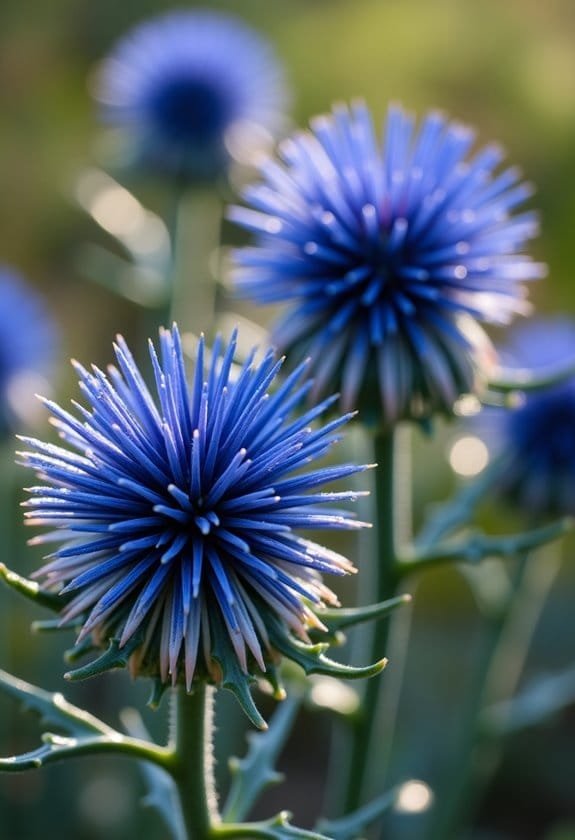
Echinops species, commonly known as Globe Thistle, flourish under full sunlight and prefer well-drained soil, making them adaptable to various gardening environments.
With a remarkable hardiness across USDA zones 3-9, these plants demonstrate resilience in diverse climates, while their drought resistance once established emphasizes their low-water landscape suitability.
To cultivate Echinops effectively, gardeners should guarantee consistent moisture until establishment, employ compost in spring, and monitor their light and soil conditions closely for peak growth.
Light
For ideal growth, globe thistle (Echinops) needs full sun, soaking up at least 6 hours of direct sunlight each day. This exposure fuels the photosynthesis process, essential for vibrant blooms and robust plant development. In prime conditions, these sun-loving perennials thrive, showcasing their striking spherical flowers that attract pollinators and enhance garden aesthetics.
Once established, globe thistles exhibit impressive drought tolerance, enduring periods of limited water while still retaining their structural integrity.
However, during their initial growth stages, they require consistent moisture to support proper root establishment. This early investment in water will reward gardeners with healthy, drought-resistant plants over time.
Echinops can adapt to diverse soil types, including poor, sandy, or rocky soils, which ultimately makes them suitable for low-maintenance gardens. Additionally, they perform well in poor to moderately fertile soils, further increasing their appeal for gardeners seeking resilient plants.
Utilizing mulch can further bolster their health in sunny environments by retaining soil moisture and regulating temperature. Such practices not only protect the roots but also guarantee that the plant reaches its full potential in harsh conditions.
Soil
Choosing the right soil is fundamental for the success of globe thistle (Echinops) cultivation. These resilient plants thrive in well-drained soil, which is essential for preventing root rot and fostering robust growth.
While Echinops species exhibit adaptability to various soil types—including poor, sandy, or rocky compositions—they demonstrate a marked preference for environments with low fertility. Such conditions enable the plants to flourish without the excess nutrients that can often inhibit their natural vigor. Additionally, these plants have a reputation for being long-lived perennials, contributing to their garden resilience.
When establishing globe thistle in the garden, it's important to guarantee that the soil is kept evenly moist until the plants are firmly settled.
Once established, however, these hardy specimens become drought-resistant, allowing them to withstand dry spells with ease.
To enhance soil quality during planting, incorporating compost presents an effective strategy, as it bolsters nutrients and encourages stronger growth during the early stages.
The combination of well-drained soil and specific moisture management techniques not only guarantees the survival of globe thistle but also contributes to its thriving, vibrant presence in landscaping and natural settings, making it an excellent choice for eco-friendly gardening. Furthermore, ensuring moist, nutrient-rich soils can be essential for the successful growth of companion plants like Grey Willow, which thrive in similar conditions.
Water
Proper watering is essential for the successful growth of globe thistle. During the establishment phase, newly planted Echinops requires thorough watering to develop strong, expansive roots. It's imperative to keep the soil evenly moist, which not only nourishes the plants but also provides them a sturdy foundation in their early growth stages.
This significant period typically lasts until they become well-rooted, empowering them to thrive.
Once established, however, globe thistle displays remarkable drought resistance, allowing it to flourish in relatively dry conditions. These resilient plants can withstand periods of limited water, making them an excellent choice for low-maintenance gardens.
To further enhance moisture retention, gardeners should consider mulching around the base of the plants, particularly during dry spells; this practice creates a protective barrier that reduces evaporation.
Temperature
During their growing season, Echinops species thrive in a range of temperatures that support their robust nature. These hardy plants flourish in USDA zones 3-9, reflecting their adaptability to diverse temperate climates.
With an impressive capacity for resilience, globe thistles can endure temperatures plummeting to -30°F (-34°C) in frigid environments, yet this isn't the limit of their tolerance, as they can also withstand sweltering heat in zones 1-11.
Optimal growth and crimson-blue bloom production hinge on full sun exposure, which enhances photosynthesis and strengthens their overall significance.
Echinops exhibit remarkable drought resistance once established, making them remarkable candidates for low-water gardens during warmer months. This characteristic enables them to flourish even in less-than-ideal soil conditions, such as poor, sandy, or rocky substrates, provided the earth drains efficiently.
The interplay of temperature and sunlight positions Echinops species as a perennial choice for gardeners wanting a resilient yet striking addition to their landscape. As they gracefully adapt to the conditions around them, these globe thistles not only enrich the ecosystems they inhabit but also stand as enduring symbols of nature's incredible capacity for resilience.
Pollinator Criteria
Echinops species, particularly the Globe Thistle, draw an impressive array of pollinators, especially bees and butterflies, due to their rich nectar and colorful blooms.
The flowers' unique spherical shapes not only enhance aesthetic appeal but also serve as excellent landing platforms, facilitating efficient foraging.
This symbiotic relationship underscores the importance of Echinops in sustaining healthy garden ecosystems, as they provide reliable nourishment during peak pollinator activity from mid-summer to early fall. Additionally, like Comfrey, Echinops also contributes to soil improvement by attracting beneficial insects that aid in pollination and soil health.
Attracted Pollinators
Attracting a diverse array of pollinators, Echinops species, commonly known as Globe Thistle, play an important role in supporting ecosystem health. These remarkable plants are particularly appealing to bees and butterflies, offering crucial nectar sources during the mid to late summer months when many other flowers are flourishing.
The spherical flower heads create not only a visually striking display but also provide a rich nectar supply, making them highly desirable for various pollinator species.
Certain cultivars, such as Echinops bannaticus 'Blue Glow', may attract an even wider array of pollinators due to their intense blue coloration and densely packed flowers. This increased visibility serves as a beacon for hungry pollinators seeking nourishment.
Additionally, the spiny foliage of Globe Thistle deters larger herbivores, effectively reducing competition for these treasured blooms.
Pollination Method
Echinops Species (Globe Thistle)
Pollination Method (Pollinator Criteria)
Globe Thistles employ a unique pollination method that relies heavily on their enchanting flower structure and robust nectar supply.
These spherical flower heads, brimming with enticing nectar, attract a diverse array of pollinators, particularly bees and butterflies. Blooming from mid-summer to early fall, Echinops flowers serve as a reliable food source during an essential period when many pollinators are actively foraging. Additionally, they thrive in sites that offer full sun exposure, enhancing their growth and nectar production.
The striking blue steel coloration of these flowers increases their visibility in gardens, drawing in insects that navigate by sight. This vibrant hue, coupled with the plant's architectural elegance, acts like a beacon, ensuring that pollinators can locate the blooms from a distance.
Additionally, the spiny foliage effectively deters herbivores, safeguarding the flowers and their nectar from significant damage. Furthermore, like Birds Foot Trefoil, Echinops species benefit from attracting essential pollinators that enhance biodiversity and contribute to the overall health of the ecosystem.
Care & Maintenance
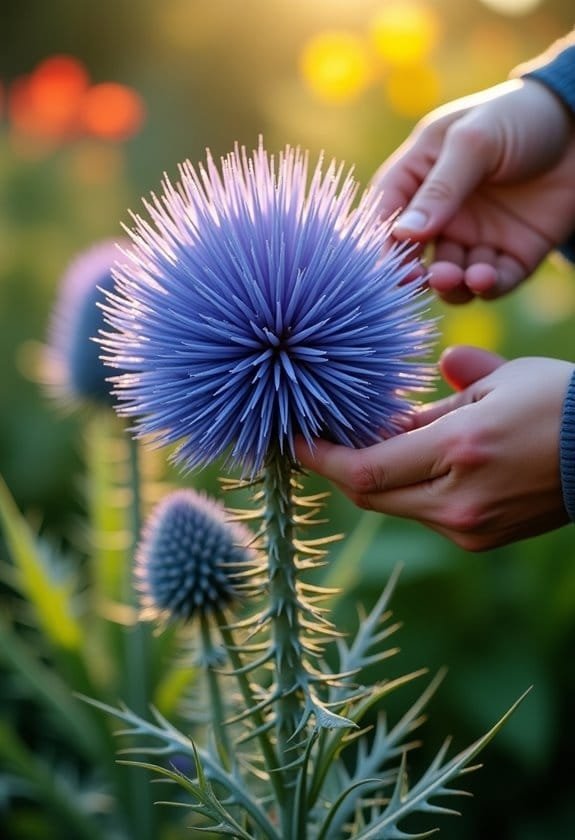
In caring for Echinops species, attention to planting conditions and ongoing maintenance guarantees vibrant, enduring blooms.
These striking Globe Thistles thrive in well-drained, low-fertility soils, and regular practices, such as deadheading and seasonal fertilization, promote robust growth while minimizing self-seeding. Additionally, planting them in full sun ensures they receive adequate light for optimal development.
Complementing them with suitable garden companions enhances both aesthetics and ecological benefits, creating a flourishing environment that delights both gardeners and pollinators alike.
Planting Tips
Echinops plants flourish in sunny, well-drained locations, making careful selection of the planting site crucial for their success. These striking perennials thrive in full sun, ideally placed in soil that drains well, thereby preventing root rot. When planting, water newly established Echinops thoroughly, keeping the soil evenly moist until their roots settle in; afterward, these resilient plants exhibit remarkable drought tolerance. Additionally, Common Water Crowfoot(Ranunculus Aquatilis) serves as an excellent example of a plant thriving in freshwater, showcasing the importance of selecting plants suited to their specific habitats.
Once planted, incorporating regular maintenance practices can boost the health and aesthetics of the garden. Deadheading spent flowers is particularly beneficial, as it encourages prolonged blooming while managing self-seeding, which can lead to a more organized garden layout. Additionally, Echinops may attract various pollinators, similar to the role of the Water Forget-Me-Not(Myosotis Scorpioides), further enhancing biodiversity in your garden.
To maintain continued vigor and liveliness, Echinops should be replaced every three to four years. In the fall, applying compost alongside a balanced fertilizer enriches the soil for enhanced growth.
Additionally, it's imperative to cut back Echinops hard in mid-spring. This practice not only promotes healthy new growth but also lays the groundwork for abundant and robust blooms during the summer months.
Ongoing Care
Once Echinops are established in the garden, ongoing care is vital to guarantee their longevity and vibrancy. Deadheading the blooms not only prolongs the flowering period, allowing these stunning globe thistles to shine, but also helps control self-seeding.
This strategy promotes better garden management, making certain that plants remain where they're desired. To maintain the plants' vigor, it's advised to replace Globe Thistle every 3-4 years due to their short lifespan in domestic gardens.
In the fall, applying high-quality compost or products like Yum Yum Mix can greatly enhance growth and flowering potential.
Come mid-spring, it's essential to cut the plants back hard, which invigorates healthy growth while also removing any winter-damaged stems or foliage. Additionally, Echinops can be divided during the growing season to rejuvenate the plants, though gardeners must take care since these species don't appreciate disturbance.
For those interested in cut flowers, maintaining Echinops through these practices guarantees vibrant blooms that can brighten any arrangement. Such committed ongoing care not only enriches the garden but also provides stunning visual rewards.
Suggested Companions
Pairing Echinops with compatible companions enhances both their aesthetic appeal and environmental benefits in the garden.
Globe thistle flourishes in full sun and well-drained soil, making it an ideal partner for drought-tolerant plants like Lavender and Sedum. These companions share similar water and light preferences, guaranteeing a harmonious coexistence in a cutting garden. Additionally, both plants exhibit drought tolerance which allows them to thrive in similar conditions.
In terms of supporting biodiversity, combining Echinops with pollinator-friendly plants, such as Echinacea and Salvia, creates a vibrant ecosystem. These pairings not only provide essential food sources for bees and butterflies but also highlight Echinops' striking round flower heads against a backdrop of softer blooms.
For visually appealing layouts, positioning lower-growing species like Phlox or Campanula in front allows the Globe thistle's distinctive spiky texture to shine.
For those aiming to create cohesive Mediterranean gardens, consider integrating Echinops with established drought-tolerant species like Rosemary and Olive trees. This synergy capitalizes on their shared environmental preferences and dramatically enhances garden aesthetics.
Ultimately, by placing Globe thistle at the back of mixed borders, gardeners can guarantee that its architectural interest serves as a stunning backdrop for their shorter companions, crafting an engaging visual story in any garden setting. Additionally, cultivating Echinops alongside pollinator-friendly plants not only boosts garden aesthetics but also supports the vital role of pollinators in sustaining life on Earth.
Common Issues
Echinops species, while hardy, can face several common challenges that gardeners should be aware of.
Root rot can occur in poorly drained soils, leading to significant plant decline, while pests like aphids or spider mites, although infrequent, may invade under dry conditions.
Proactive measures, such as ensuring adequate air circulation to prevent diseases like powdery mildew and practicing careful fertilization, can help maintain the health and vigor of these striking plants.
Pests/Diseases
Despite their resilience, Echinops plants can face a few common pests and diseases. While their spiny foliage effectively deters many herbivores, pests like aphids may still emerge, posing a threat to their health. Aphids, known for their rapid reproduction, can accumulate on the foliage, siphoning essential nutrients. Fortunately, natural predators, such as ladybugs, often keep these pests in check, and insecticidal soaps can also provide an effective management approach.
In terms of diseases, powdery mildew can flourish under overly humid conditions. This fungal infection manifests as white, powdery spots on leaves, diminishing photosynthesis. To combat this, gardeners should guarantee adequate air circulation by spacing plants correctly and avoiding the overhead watering that promotes moisture accumulation.
Additionally, root rot can develop in poorly drained soil, starve the roots of oxygen, and ultimately compromise plant viability. Guaranteeing Echinops are planted in well-drained garden beds facilitates healthy root development.
Regular monitoring for signs of pests and fungal infections allows for early intervention, guaranteeing that Echinops continue to thrive and showcase their stunning globe-like flowers despite potential challenges.
Solutions
To guarantee the health and beauty of Globe Thistle, gardeners should focus on a few essential solutions for common issues. First and foremost, ensuring well-drained soil is vital. Heavy, waterlogged conditions can lead to root rot, ultimately endangering the plant's longevity.
Additionally, regular deadheading of spent blooms not only extends the flowering period but also controls self-seeding, maintaining the garden's aesthetic allure.
Gardeners must also be mindful of watering during the establishment phase, as Globe Thistle requires moist conditions initially. Once established, these plants become drought-resistant, showcasing their remarkable adaptation.
Though resistant to deer and rabbits thanks to their spiny foliage, vigilance is still necessary, as pests like aphids may sometimes appear. Monitoring plants and utilizing insecticidal soap can effectively manage such infestations.
Finally, some Globe Thistle varieties can be short-lived, necessitating replacement every three to four years to maintain vigor and a consistent bloom.
What are the differences between Echinops and Echinacea plants in terms of their appearance and care requirements?
Echinops and Echinacea plants differ in appearance and care needs. Echinops have prickly, globe-shaped flowers while Echinacea has daisy-like petals. Echinops thrives in full sun and well-drained soil, while Echinacea prefers partial shade and medium moisture. Both plants have unique qualities and echinacea purpurea benefits are well-known in herbal medicine.
Summary
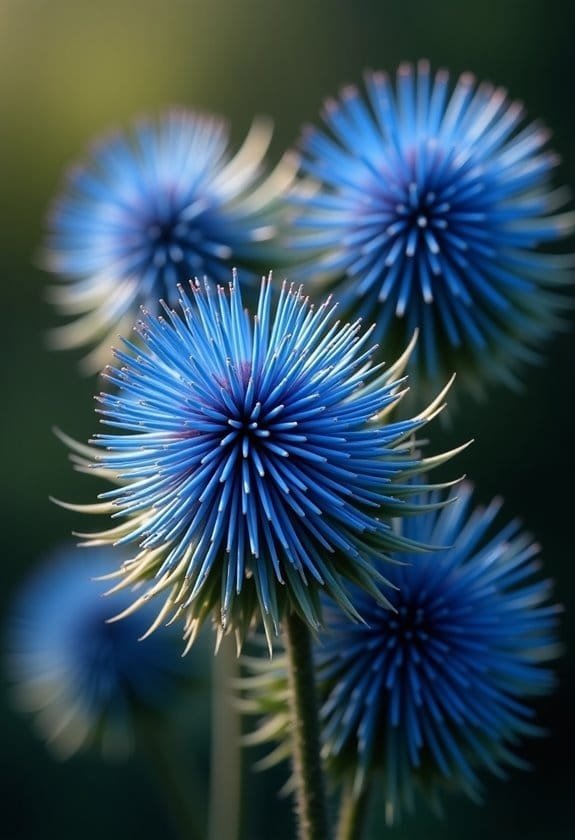
The Globe Thistle family, known for its fascinating spherical blue flowers, includes around 120 species that thrive primarily in full sun. This genus, Echinops, derives its name from the Greek word for "hedgehog appearance," aptly describing the spiky flower heads. These perennials grow impressively to heights of 2 to 4 feet, making a striking presence in any garden.
Hardy in USDA zones 3-9, Globe Thistles flourish in well-drained, low-fertility soils, demonstrating remarkable drought tolerance once established. This resilience makes them a prime choice for low-maintenance gardens, contributing to water conservation efforts.
Additionally, they play an essential role in supporting local ecosystems by attracting pollinators like bees and butterflies.
Several cultivars, particularly 'Blue Glow' and 'Star Frost', offer unique variations in color and shape, further enriching garden biodiversity and aesthetics. Furthermore, dried Globe Thistle flowers can serve as enchanting additions to floral arrangements, maintaining their appeal long after the garden season has ended.