Echium vulgare, or Viper's Bugloss, is a biennial plant notable for its striking violet-blue flowers and robust growth, reaching 12 to 30 inches (30 to 75 cm) in height. Native to Southern Europe and temperate Asia, it flourishes in lean, well-drained soils and requires full sun exposure. Its flowering period extends from late spring to early fall, providing essential nectar for pollinators like bumblebees. While generally resilient, it can become invasive if allowed to self-seed unchecked. With a range of ecological and aesthetic benefits, it remains an intriguing subject for enthusiasts, promising further insights into its unique qualities.
Main Points
- Viper's Bugloss, or Echium vulgare, features striking violet-blue flowers and grows 12 to 30 inches tall.
- This biennial plant thrives in well-drained, average to dry soils in full sun for at least 6 hours.
- It attracts various pollinators, enhancing local biodiversity and supports ecosystems from May to September.
- Caution is needed as it contains mild toxins that can affect humans and horses if ingested.
- The plant can become invasive; management practices like deadheading are essential to control self-seeding.
Introduction
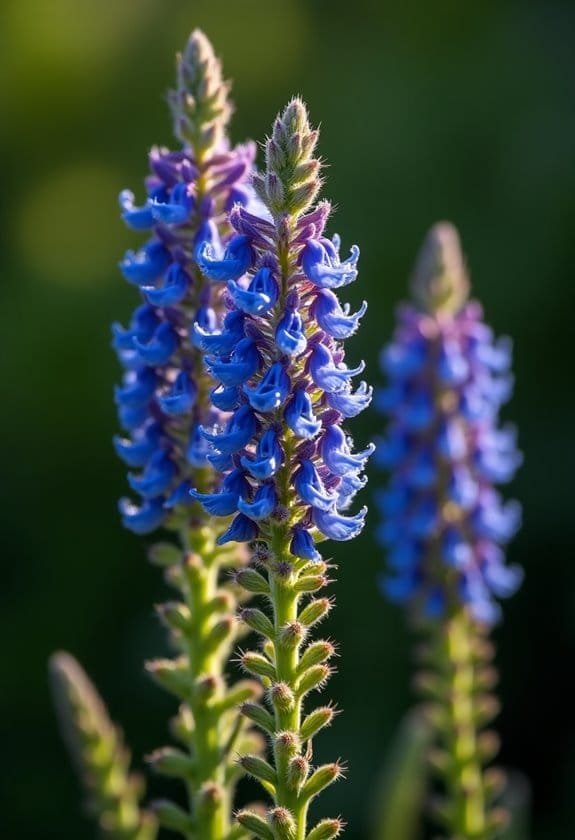
Echium vulgare, commonly known as Viper's Bugloss, is a striking biennial or annual plant that flourishes in Southern Europe and temperate Asia.
Reaching heights of 12 to 30 inches, it captivates gardeners and pollinators alike with its dense spikes of vibrant violet-blue flowers from late spring through early fall.
However, its propensity to self-seed and potential for invasiveness in certain regions necessitate careful consideration when cultivating this attractive yet tenacious species.
Common Name
The common name "Viper's Bugloss" captures attention with its intriguing origin, which stems from the nutlets' resemblance to a viper's head. This vivid imagery connects to the plant's scientific nomenclature, as "Echium" translates to "viper" in Greek.
In addition to Viper's Bugloss, other popular common names include Blueweed and Blue Thistle, both highlighting the striking violet-blue flowers that bloom spectacularly. These blossoms undergo a fascinating transformation, shifting from delicate pink to vibrant blue, which naturally attracts diverse pollinators like bees and butterflies.
While Viper's Bugloss enchants with its beauty, it possesses notable characteristics that demand caution. Native to Southern Europe and parts of Asia, it has been introduced to North America, where it sometimes behaves invasively.
Moreover, this engaging plant isn't entirely harmless; it contains toxic compounds that can be detrimental to horses, potentially causing mild stomach upset in humans if ingested. Understanding the implications behind the common name and the plant's impact on ecosystems forms an essential part of responsible botanical appreciation, enabling enthusiasts to cultivate a deeper respect for nature's complexities. Additionally, it plays a significant role in promoting biodiversity and pollinator health as an important nectar source for various insects.
Scientific Name
Often admired for its striking beauty, Viper's Bugloss is scientifically designated as Echium vulgare. This intriguing plant belongs to the Boraginaceae family and features a name that bears historical significance. The genus name "Echium" stems from the Greek word "echis," which translates to viper, a nod to the plant's nutlet shape resembling a viper's head, evoking a sense of natural wonder.
Echium vulgare is native to Southern Europe and temperate Asia, though it has made its way to regions like North America and New Zealand, adapting to diverse environments. This biennial or monocarpic perennial typically reaches heights of 30 to 80 centimeters, or 12 to 31 inches, exhibiting a magnificent display of vivid blue flowers from May to September.
The plant's striking spikes of bell-shaped flowers not only enchant the eye but also draw in a variety of pollinators, thanks to their characteristic red stamens.
Ultimately, the scientific name Echium vulgare embodies the plant's rich botanical heritage while signifying its role within ecosystems, where it contributes beauty and sustenance alike.
Overview
With its vibrant violet-blue flowers and unique snake skin-like texture, Viper's Bugloss captivates gardeners and nature enthusiasts alike. Known scientifically as Echium vulgare, this biennial or monocarpic perennial plant originates from Europe and Asia. It displays an upright growth habit, achieving heights of 12 to 30 inches (30 to 75 cm).
The plant's rough, hairy leaves, accented by striking red-flecked stems, contribute to its charming appeal. Blooming from late spring to early fall, Viper's Bugloss attracts a multitude of pollinators, boasting red stamens that contrast beautifully with its blooms.
Resilient in nature, Echium vulgare flourishes in average to dry, well-drained soils, while resisting rich, fertile conditions that may inhibit flowering. However, its beauty can be misleading, as it poses an invasive threat in certain U.S. regions, necessitating careful management.
After flowering, the seeds form nutlets that bear an uncanny resemblance to viper heads, reinforcing the plant's intriguing characteristics. Additionally, Viper's Bugloss contains mild toxins, making it potentially hazardous to humans and livestock.
Despite its risks, the allure of Echium vulgare remains strong among those who appreciate its unique beauty and ecological importance.
Key Features
Echium vulgare exhibits a striking physical presence, reaching heights between 12 to 30 inches.
The plant's dense spikes of bell-shaped violet-blue flowers bloom from late spring to early fall, creating a vivid display that captures the eye and attracts pollinators.
With its rough, hairy leaves and uniquely textured stems, Viper's Bugloss not only boasts an interesting aesthetic but also thrives in challenging environments, showcasing its remarkable adaptability.
Growth Size
Viper's Bugloss showcases a striking growth size, typically reaching heights between 12 to 30 inches (30 to 75 cm). This biennial plant grows upright, creating a visually commanding presence in gardens and natural landscapes. The stems, often red-flecked, contribute to its unique appeal, while the leaves are rough and hairy, adopting an oblanceolate shape that aids in distinguishing it from other flora.
Interestingly, this plant's resilience allows it to thrive in well-drained, average to dry soils, making it an excellent choice for drought-prone areas. However, potential gardeners should note that over-fertilization can detract from its flowering capabilities, impairing its vibrancy.
Viper's Bugloss typically blooms from late spring to early fall, producing dense spikes filled with bell-shaped flowers that shift beautifully from pink to vivid blue as they mature.
After flowering, these spikes develop rough nutlets, resembling the heads of vipers—hence the plant's evocative name.
With its impressive height and striking blooming cycle, Viper's Bugloss not only enhances the beauty of its surroundings but also contributes considerably to local biodiversity, serving as a resource for various pollinators.
Appearance
Displaying an array of enchanting features, Viper's Bugloss (Echium vulgare) stands out in gardens and natural settings alike. This striking plant showcases dense spikes adorned with bell-shaped violet-blue flowers, each measuring approximately 15–20 mm. These blossoms, with contrasting red stamens, present an arresting visual during their blooming period, which unfolds from May to September. Initially, the buds emerge in soft pink, evolving to a vivid spectrum of blue flowers that capture the eye and invite admiration.
The appearance of Viper's Bugloss is further enhanced by its rough, hairy, oblanceolate leaves and stems, which sport red flecks reminiscent of snake skin, a nod to the plant's common name. Flowering spikes can reach heights of up to 30 inches (75 cm), making them a prominent landscape feature that draws attention.
Additionally, the resultant fruit consists of rough nutlets that echo the shape of viper heads, adding to the plant's intriguing aesthetics. Collectively, these characteristics create an impression that's both bold and delicate, making Viper's Bugloss a celebrated addition to any botanical collection. Its unique appearance guarantees that it remains a conversation piece among gardeners and nature enthusiasts alike.
Flowering Season
The flowering season of Viper's Bugloss (Echium vulgare) is an enchanting spectacle that draws eyes from late spring to early fall, peaking between May and September. During this vibrant period, the plant showcases its remarkable transformation, beginning with delicate pink buds that unfurl into striking blue flowers, reaching sizes of approximately 15-20 mm (0.59-0.79 in).
Each flowering spike presents a lavish array of bell-shaped blossoms, featuring intriguing red stamens that provide a stunning contrast against their blue petals. This colorful display not only enchants human observers but also plays a significant role in local ecosystems by attracting pollinators, mainly skipper butterflies, which are crucial for effective pollination. The plant's relationship with pollinator sustenance during its extended flowering period from May to September highlights its importance in maintaining biodiversity.
To maintain its beauty and prevent excessive self-seeding, gardeners often practice deadheading—removing spent blooms throughout the flowering season. This thoughtful intervention guarantees that Viper's Bugloss remains under control while still providing essential habitat for beneficial insects.
As they bloom, the flowers create a mesmerizing tapestry in gardens, reflecting the intricate relationship between flora and the wildlife it nurtures, making the flowering season a wondrous celebration of nature's artistry.
Growing Requirements
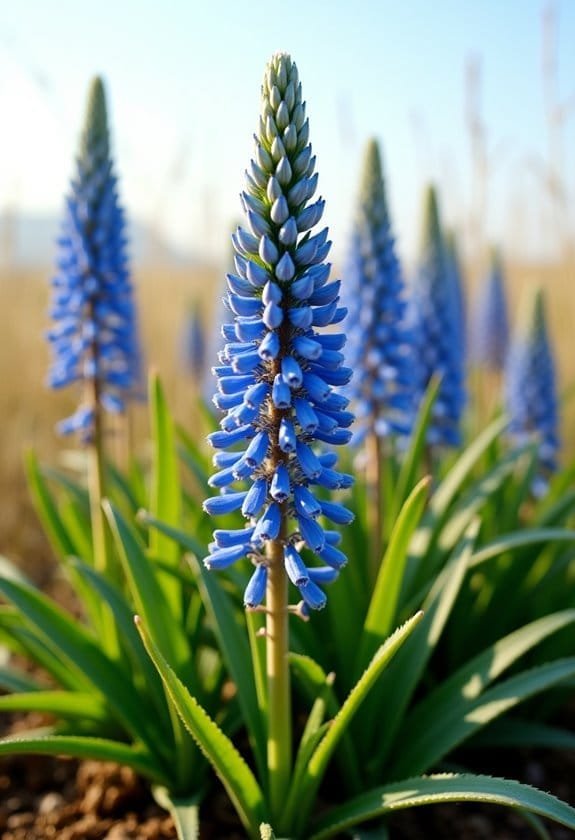
Echium vulgare requires specific growing conditions to flourish, primarily favoring well-drained soil and ample sunlight exposure.
This resilient plant demonstrates remarkable drought resistance, making it an excellent choice for gardens in arid climates, where water availability can be a concern.
Understanding its light preferences, soil type, and minimal watering needs will greatly enhance its growth potential and longevity in the landscape.
Light
For ideal growth and blooming, Vipers Bugloss flourishes in full sun exposure, requiring at least 6 hours of direct sunlight each day. This light is vital for its best development, as the plant thrives on solar energy, which fosters its vibrant growth.
In sunny locations, the extended exposure enhances its flowering period, which spans from late spring to early fall, enchanting observers with its vivid blue flowers that evolve from delicate pink buds.
With proper light conditions, Vipers Bugloss demonstrates remarkable resilience, becoming drought-resistant and capable of thriving in dry environments. Adequate sunlight not only supports its hardiness but also guarantees an energetic metabolism, translating into a vigorous flowering display.
The brilliance of the blue flowers, brought to life by this essential light, adds significant aesthetic value to any garden or landscape.
Thus, gardeners aiming for a flourishing Vipers Bugloss should prioritize sunlit areas, guaranteeing ample exposure to light for ideal results. Beyond mere survival, the right conditions propel the plant to exhibit a breathtaking array of colors, showcasing nature's artistry in a simple yet powerful manner.
Proper sun exposure truly transforms Vipers Bugloss into a visual delight.
Soil
Growing Vipers Bugloss requires well-drained soil that leans towards average to dry conditions. This plant thrives in soil that isn't overly rich or fertile, as such circumstances can hinder its flowering potential.
Instead, it flourishes best in lean, moderately sandy, or rocky soils that encourage robust growth. With a remarkable drought resistance, Echium vulgare is well-suited for dry or drought-prone gardens, successfully adapting to less than ideal moisture levels.
Furthermore, the plant's biennial nature means it develops a substantial taproot. Consequently, careful consideration must be given when sowing seeds directly into the soil to guarantee proper establishment and growth.
Excessive fertilization is detrimental; too many nutrients can lead to diminished flowering and reduced vigor. Instead, a natural balance in the soil without heavy amendment sustains the plant's unique characteristics.
Full sun exposure is essential for peak growth. Choosing a location that maximizes sunlight enhances their blooming performance, allowing the striking blue flowers to flourish and attract pollinators. Additionally, Vipers Bugloss benefits from a plant's drought tolerance and can coexist with other drought-resistant plants in garden settings.
Water
Proper watering is essential for maintaining the health and vigor of Viper's Bugloss. This biennial plant, known for its striking blue flowers, thrives in full sun and well-drained soil. While it exhibits drought resistance, especially once established, regular watering is important during extreme dry spells to sustain its aesthetic appeal and vitality.
The plant's robust taproot allows it to access moisture deeper in the soil; however, without adequate surface water, the foliage may wilt and the vibrant blooms may diminish. Additionally, Common Yarrow's drought resilience serves as a valuable comparison for Viper's Bugloss, highlighting the adaptability of both species to varying environmental conditions.
In average to dry soils, Viper's Bugloss flourishes best, as over-fertilizing or excessive moisture in rich soils can stifle flowering, leading to disappointing results. Monitoring water levels, particularly after the initial sowing of seeds, guarantees successful establishment and encourages healthy growth.
Seedlings should be checked regularly, as their self-seeding tendency maintains their presence without becoming invasive. Therefore, balancing the water supply—enough to prevent drought stress without creating overly moist conditions—significantly influences the overall performance of this resilient plant.
Adhering to these watering principles fosters a spectacular display of Viper's Bugloss while promoting its long-term growth and health. Additionally, Scabiosa plants also benefit from consistent moisture to promote their vibrant blooms and robust growth.
Temperature
Temperature plays an important role in the cultivation of Echium vulgare, influencing its growth and blooming cycle. Known as Viper's Bugloss, this biennial herb thrives effectively in hardiness zones 3 to 8, indicating a robust adaptability to temperate climates.
It flourishes best under full sun, requiring at least six hours of direct sunlight daily to guarantee healthy development and vibrant flowering. Temperature extremes can impact its growth; as a result, a well-balanced climate, preferably warm but not excessively hot, supports its longevity and flowering potential.
While Viper's Bugloss exhibits remarkable drought resilience, it still stands to gain from adequate watering during particularly arid periods. Its preference for average to dry soils further underscores its acclimatization to less fertile environments, which often promote rather than hinder blooming.
In its first year, the plant establishes a rosette, storing energy before completing its lifecycle with impressive blooms in the second year. Consequently, understanding temperature requirements and creating the right conditions are crucial for enhancing the cultivation of this beautiful species.
In doing so, gardeners can enjoy the unique charm of Echium vulgare alongside its ecological benefits.
Pollinator Criteria
Echium vulgare, or Viper's Bugloss, serves as an essential nectar source, particularly for bumblebees and skipper butterflies that are attracted to its stunning blue flowers.
Through the process of entomophily, these pollinators effectively transfer pollen among the blooms, promoting important cross-pollination which enhances genetic diversity.
This plant not only fosters a habitat for these species but also plays an integral role in maintaining the overall health of local ecosystems.
Attracted Pollinators
Vipers bugloss is a magnet for a variety of pollinators, thanks to its striking blue flowers and generous nectar supply. The plant's blooms undergo a remarkable color transformation from delicate pink to vibrant blue, enhancing their visibility to pollinators during the entire blooming period from May to September.
The sensorily appealing colors serve as beacons, inviting essential pollinators such as bumblebees and burnet moths to indulge in their sweet rewards.
Additionally, the dense spikes of bell-shaped flowers provide ample landing platforms for these diligent visitors, promoting easy access to nutrient-rich nectar. This design not only supports insects but also fosters improved biodiversity within local gardens.
Among the frequent visitors, skipper butterflies can often be observed, adding to the dynamic interplay of life that echium cultivates.
The abundant floral display and allure of nectar make Echium vulgare a favored choice for gardeners looking to bolster local pollinator populations, ensuring a thriving ecosystem.
Pollination Method
Pollination plays an essential role in the reproductive success of Vipers bugloss (Echium vulgare), which thrives by attracting a variety of pollinators. This plant mainly relies on skipper butterflies, drawn in by its vibrant bluish flowers. The unique flower structure features long stamens and strikingly vivid blue pollen that create a visual feast, effectively luring these important pollinators.
Pollination occurs largely from May to September, optimizing the plant's reproductive capabilities during the warmest months of the year. The open, accessible floral design of Vipers bugloss not only invites skipper butterflies but also various insect pollinators, including bumblebees. This diversity in pollination sources considerably contributes to the local ecosystem's biodiversity.
Furthermore, the abundant nectar serves as an irresistible incentive for pollinators, enhancing the likelihood of effective cross-pollination, which is essential for genetic diversity. As pollinators flit from flower to flower, they unwittingly participate in the intricate dance of nature, ensuring Vipers bugloss's survival and prosperity in its habitats.
Hence, recognizing the importance of these relationships highlights the intricate balance of ecosystems, where each flower and pollinator plays a significant role in life's larger tapestry.
Care & Maintenance
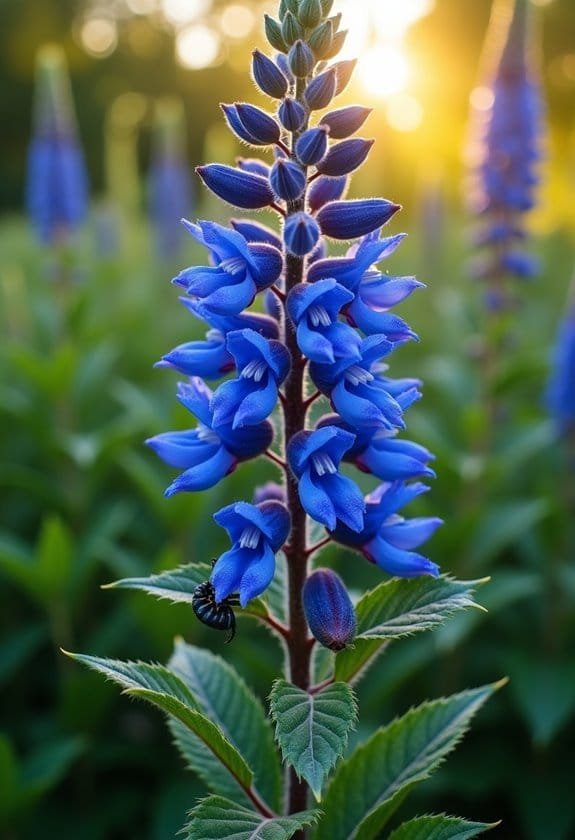
Caring for Echium vulgare, commonly known as Viper's Bugloss, involves understanding its specific needs to thrive in gardens.
With its preference for well-drained soils and full sun, it's vital to limit watering and avoid excessive fertilization, as both can impede its spectacular flowering.
Regular maintenance tasks, such as deadheading and monitoring for seedlings, foster a lush, organized appearance while supporting the plant's intended growth and spread.
Planting Tips
Understanding the essential growing conditions for Echium vulgare, commonly known as Viper's bugloss, is crucial for successful planting. This resilient plant flourishes in well-drained soil and requires full sun exposure, making it ideal for gardens that experience average to dry conditions.
When sowing seeds, it's best to plant them directly in the ground, lightly covering them with soil. This approach accommodates Viper's bugloss's large taproot, a characteristic feature of its biennial nature.
New gardeners must also be aware of the plant's self-seeding tendency. To control this, they should regularly deadhead spent blooms or remove seedheads, preventing excessive spread and ensuring the garden remains orderly.
After establishing the plants, minimal care is needed; however, occasional watering during extreme dry spells can greatly enhance the plant's appearance.
Cutting back flowering stems can stimulate the growth of side spikes, boosting the overall visual spectacle Viper's bugloss provides. By understanding these planting tips, gardeners can cultivate a thriving display of this striking blue-flowered plant, celebrating its beauty while maintaining balance within their gardens.
Ongoing Care
Viper's bugloss thrives with minimal maintenance, making it an excellent choice for busy gardeners. Ongoing care for this resilient plant involves a few key practices to enhance its performance.
Although it flourishes in full sun and well-drained soil, occasional cutting back in late winter or early spring can greatly support the plant's growth and promote blooms for the following season. Similar to Creeping Cinquefoil, Viper's bugloss is adaptable to diverse soil conditions, allowing it to thrive in a variety of environments.
In particularly dry conditions, it's vital to water Viper's bugloss to maintain its vibrant appearance during prolonged droughts. Additionally, regular deadheading of spent flower spikes will deter self-seeding while making sure the plant remains tidy and visually appealing.
Moreover, monitoring new seedlings is advisable to manage its spread; Viper's bugloss can reseed freely, yet it doesn't pose an invasive threat. Corncockle's flowering period, which occurs from May to September, highlights the importance of timely care for flowering plants.
By maintaining ideal growing conditions, including ample sunlight and proper drainage, gardeners can guarantee the robust health of their plants, leading to a spectacular display of blooms.
In essence, with simple yet attentive techniques, ongoing care enhances not only the longevity of Viper's bugloss but also its impressive visual impact in any garden setting.
Suggested Companions
To create a stunning garden display, pairing Viper's bugloss (Echium vulgare) with compatible plants can enhance both beauty and ecological health. Thriving in well-drained soils and basking in full sun, Viper's bugloss forms an excellent foundation for an array of drought-tolerant plants. Adding Common Broom's companion species to the arrangement can further improve the garden's resilience.
For instance, lavender and salvia not only share these environmental preferences, but their contrasting textures and colors create an inviting visual dynamic.
To further elevate aesthetics, consider incorporating flowering companions like echinacea or rudbeckia, which contribute vibrant hues and attract beneficial pollinators. When selecting plants, verify they've similar soil and water requirements, which promotes a harmonious growing environment, fostering overall garden resilience.
Additionally, many Nepeta species create a diverse ecosystem by attracting pollinators, contributing to a balanced garden habitat.
Regular deadheading of Viper's bugloss is essential, as it curtails self-seeding and maintains a tidy appearance, allowing other companions to shine.
Common Issues
Viper's Bugloss, or Echium vulgare, presents several common issues that gardeners need to be aware of.
While generally resistant to disease, this plant can attract slugs in moist environments, which may compromise its growth; consequently, maintaining dry conditions is essential.
Additionally, quick self-seeding can lead to uncontrolled spreading, necessitating regular removal of spent flower spikes to preserve the garden's desired appearance and biodiversity.
Pests/Diseases
Managing pests and diseases is fundamental for maintaining the health of Echium vulgare, commonly known as Viper's Bugloss. This resilient plant is virtually disease-free, making it a low-maintenance addition to gardens.
However, slugs pose a notable concern, especially in damp conditions. These voracious pests can inflict significant damage to the leaves and stems, potentially compromising the plant's robust appearance and vitality.
Viper's Bugloss sports bristly hairs that may irritate the skin of sensitive individuals, adding another layer of complexity to its care. Regular monitoring for slugs is imperative, as early detection of these pests can prevent extensive foliage damage.
Moreover, gardeners should conduct weekly inspections to identify any signs of stress or unusual growth in their plants. This proactive approach not only helps maintain the overall health of Echium vulgare but also enhances the flowering potential and aesthetic appeal.
In essence, the occasional challenge posed by slugs requires diligence and attentiveness. By keeping a watchful eye on these issues, gardeners can guarantee that their Viper's Bugloss thrives, showcasing its vibrant blue petals and lush foliage throughout the growing season.
Solutions
Addressing common issues with Echium vulgare involves proactive measures to guarantee its health and aesthetic appeal. This hardy plant, reminiscent of snakes basking in the sun due to its vibrant spikes, can nonetheless present challenges.
To manage its self-seeding nature, regular deadheading of spent flower spikes is necessary. This practice not only limits the plant's spread but also enhances the overall visual allure of the garden.
Though Echium vulgare is highly drought-resistant, it may require supplemental irrigation during exceptionally dry spells to maintain its vibrant appearance.
Gardeners should remain vigilant for slugs, as these pests can occasionally harm the foliage, although the plant generally proves disease-free.
When managing Echium vulgare, it's essential to wear protective gear, as its bristly hairs can cause skin irritation.
Additionally, in equine environments, caution is necessary, given the plant's toxicity to horses.
In addition, those planting in invasive regions must adhere to local regulations and consider incorporating native alternatives, fostering ecological balance while supporting biodiversity.
What are the Similarities and Differences Between Viper’s Bugloss and Fleabane?
When it comes to an erigeron species overview, Viper’s Bugloss and Fleabane share some similarities, such as both being flowering plants and belonging to the Asteraceae family. However, their differences lie in their appearance, with Viper’s Bugloss having vibrant blue flowers and Fleabane producing delicate white or pink blooms.
Summary
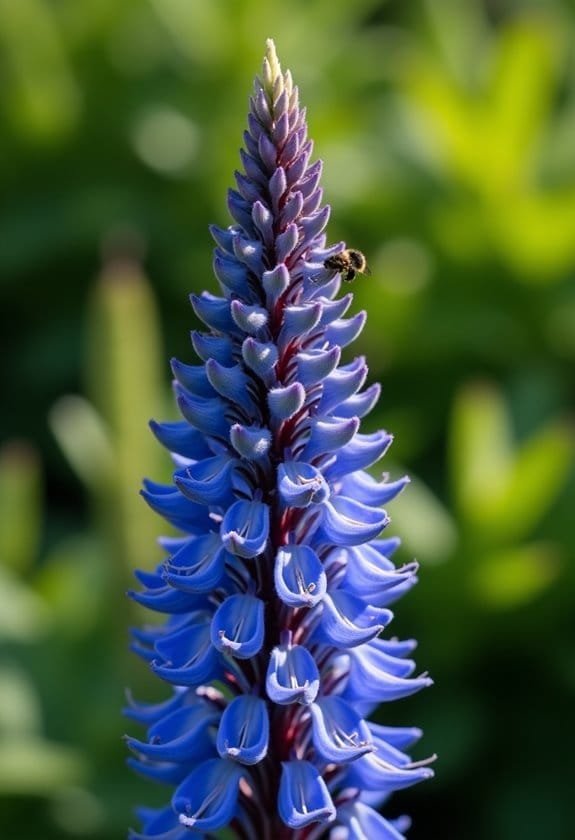
Echium vulgare, commonly known as Viper's Bugloss, is a biennial or monocarpic perennial that flourishes from late spring to early fall, showcasing striking violet-blue flowers. This plant typically reaches heights between 12 to 30 inches, forming dense spikes of bell-shaped blossoms that capture the attention of passersby.
Native to Southern Europe and temperate Asia, Viper's Bugloss has adapted well to regions across North America, where it has become an invasive species, particularly in Washington state.
Thriving in well-drained, average to dry soils, Viper's Bugloss exhibits remarkable drought tolerance and frequently populates disturbed habitats, such as roadsides and waste areas.
However, caution is warranted, as all parts of the plant contain pyrrolizidine alkaloids that render it mildly toxic to humans and livestock, potentially leading to stomach upset and skin irritation upon contact.
Furthermore, Viper's Bugloss is self-seeding, allowing it to proliferate unchecked when flowering spikes remain intact. As a result, effective management of its spread is vital in areas where it poses an ecological threat, ensuring that this alluring yet potentially hazardous plant doesn't disrupt local ecosystems.