Erica erigena, known as Irish Heath, is a notable native species found mainly in the heathlands and coastal regions of Ireland and the British Isles. Typically reaching heights of 20 to 75 cm, this resilient plant thrives in well-drained, acidic soils, preferring a pH of 4.5 to 6.0. Its needle-like leaves, maturing to a dark green, complement its small, bell-shaped flowers, which bloom from late summer to early autumn in vibrant pinks and whites. Irish Heath plays an essential ecological role by attracting pollinators, such as bees and butterflies, while offering shelter to various wildlife. There's much more to uncover about this fascinating plant's characteristics and benefits.
Main Points
- Erica erigena, or Irish Heath, is a native plant to Ireland and the British Isles, thriving in heathland and coastal areas.
- This evergreen plant features dark green, needle-like leaves and blooms with small, bell-shaped flowers in pink or white during late summer to autumn.
- It requires well-drained, acidic soils with a pH of 4.5 – 6.0, and at least 6 hours of direct sunlight daily.
- Irish Heath serves as a soil stabilizer, provides habitat for wildlife, and attracts pollinators like bees and butterflies.
- Regular pruning and proper watering are essential for maintenance, with susceptibility to pests like aphids and spider mites.
Introduction
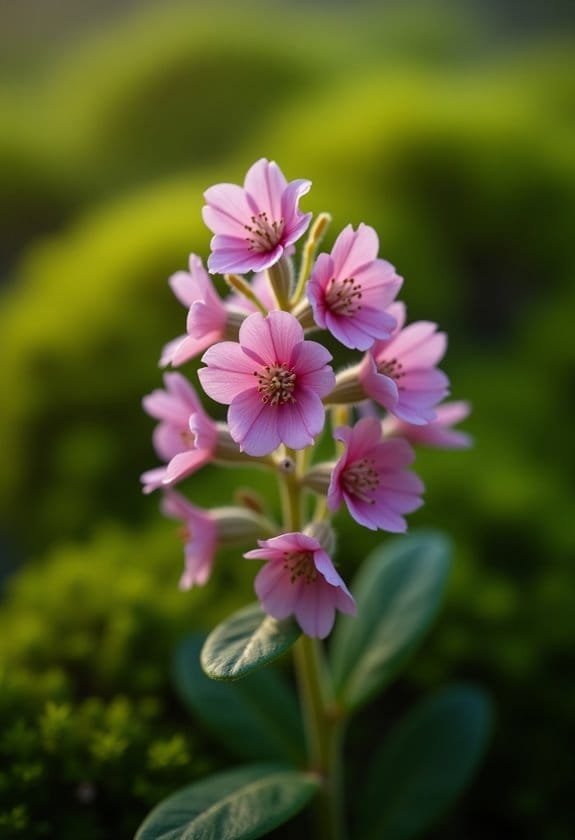
Erica erigena, commonly known as Irish heath, stands as a valuable evergreen shrub native to the unique landscapes of Ireland and the British Isles.
Typically reaching heights between 20 to 75 cm, this plant features distinctive needle-like leaves and produces charming bell-shaped flowers, which bloom in hues of pink and white.
As it thrives in acidic, low-nutrient soils, Irish heath not only enhances the beauty of its environment but also plays a key role in soil stabilization and ecological health.
Common Name
Irish Heath, scientifically known as Erica erigena, is a charming evergreen shrub that graces the landscapes of Ireland and the British Isles. This delightful plant typically thrives in heathland and coastal regions, showcasing its resilience and adaptability. With growth heights ranging from 20 to 60 cm (approximately 8 to 24 inches), Irish Heath captivates garden enthusiasts and nature lovers alike.
The most notable feature of this exquisite shrub is its small, bell-shaped flowers, which bloom in a lovely palette of pink to white hues from late summer to early autumn. These blossoms not only enhance the visual appeal of the landscape but also attract a variety of pollinators, contributing to local ecosystems.
Irish Heath is celebrated for its low maintenance requirements and exceptional drought tolerance, making it an ideal choice for ornamental gardening and ecological restoration projects. Its ability to thrive in challenging conditions underscores its importance in horticulture.
Scientific Name
The scientific name of Irish Heath, Erica erigena, reveals much about this unique species. Belonging to the Ericaceae family, Erica erigena serves an important role in the ecosystems of Ireland and the British Isles, demonstrating its ecological significance.
Its taxonomy classification hasn't always been straightforward; it was previously identified as Erica hibernica and Erica mediterranea before being officially recognized as Erica erigena. This evolution in naming showcases the plant's intricate relationship with its environment and highlights the ongoing developments in botanical science.
Erica erigena thrives in acidic soils and heathland habitats, where it reaches heights typically ranging from 20 to 60 centimeters. Its evergreen nature, characterized by slender, needle-like leaves arranged in enchanting whorls, contributes to the plant's adaptation in its native regional distribution.
In late summer and early autumn, it adorns the landscape with delicate, small, bell-shaped flowers that exhibit a charming palette of pink to white, creating a striking visual on the heathlands. These flowering attributes not only enhance its aesthetic appeal but also support local wildlife, emphasizing the species' crucial role within its ecosystem.
Overview
Native to Ireland and the British Isles, Erica erigena, or Irish heath, thrives within the unique ecosystems of heathlands. This evergreen shrub, reaching heights of 20 to 75 centimeters, is adorned with narrow, needle-like leaves arranged in whorls. Its small, bell-shaped flowers bloom vibrantly from late summer to early autumn, adding beauty to its rugged habitat.
Irish heath thrives in well-drained, acidic soils, frequently found in coastal and mountainous regions, including bogs and cliffs. In these habitats, it forms dense communities similar to Dorset Heath in Britain, showcasing its role in maintaining ecosystem balance.
The ecological significance of Erica erigena can't be overstated; it plays a vital role in stabilizing soil and providing habitat for various wildlife. Historically, Irish heath has been utilized for its ornamental value in gardening, often serving as attractive ground cover in rock gardens or landscapes. Its drought tolerance and low maintenance features enhance its desirability for cultivation.
Moreover, this plant embodies cultural symbolism in Irish heritage, representing resilience and adaptability amid the region's harsh conditions. Additionally, Erica erigena, like its cousin Calluna vulgaris, thrives in acidic soils which is essential for its growth. Despite facing environmental challenges, the conservation status of Erica erigena remains stable, categorized as Least Concern by the IUCN, ensuring its continued presence in Ireland's natural beauty.
Key Features
Erica erigena, or Irish heath, showcases a unique growth size, reaching heights of 20 to 60 cm, characterized by its bushy, branching structure.
The plant's needle-like leaves, measuring 5 to 8 mm, exhibit a rich dark green at maturity, providing a striking appearance amidst heathland ecosystems.
During late summer to early autumn, its small, bell-shaped flowers—ranging in hue from delicate pinks to soft whites—emerge, enchanting pollinators and enriching biodiversity within its native habitats.
Growth Size
Irish heath showcases a remarkable growth size, reaching heights between 20 to 75 cm (8 to 30 inches) while also expanding horizontally to form a bushy, compact shrub. This growth pattern is particularly evident in its distinctive branching habit, contributing to its dense and appealing appearance.
The narrow, needle-like leaves, typically arranged in whorls, further enhance its bushy characteristics, adding texture and depth to the landscape.
As a versatile plant, Erica erigena can also be shaped into cone topiary, achieving a maximum height of up to 120 cm (47 inches) in certain cultivars. This adaptability allows gardeners to manipulate its growth through attentive pruning techniques, ensuring ideal shape and density. Regular pruning not only encourages bushiness but also promotes healthy growth, allowing the plant to thrive and retain its vibrant coloration.
In garden settings, Irish heath excels as an ornamental choice, thriving in well-drained soils while tolerating coastal conditions, making it a fitting addition for various landscapes.
Its enchanting small, bell-shaped flowers, blooming from late summer to early autumn, serve as a delightful complement to its glorious growth size and overall form.
Appearance
With its compact growth habit and visually striking features, Irish heath offers a delightful presence in any garden. Erica erigena, as it's scientifically known, typically reaches heights between 20 to 75 cm (8 to 30 inches), creating a bushy appearance that draws the eye.
The shrub's foliage consists of narrow, needle-like leaves, measuring 5 to 8 mm (14 to 38 inches) in length, which develop a dark gray-green color as they mature. This distinctive foliage texture not only adds depth but also enhances its allure throughout the seasons.
Irish heath exhibits excellent frost tolerance, allowing it to thrive even in challenging climates. As seasons change, its foliage may subtly shift, introducing seasonal colors that enliven the garden landscape.
Notable cultivars, such as Irish Dusk and Erica erigena alba, showcase variations in color and density, thereby increasing their ornamental value. These attributes harmonize beautifully with other garden plants, providing both contrast and continuity.
Flowering Season
The beauty of Erica erigena unfolds during its flowering season, which runs from late summer to early autumn, although some cultivars may bloom as early as March. This plant showcases small, bell-shaped flowers that vary in color from rich deep pink to delicate white, often emanating a sweet honey scent that attracts various pollinators.
The flowering impact of Erica erigena is significant, as its prolonged blooming period can extend until late May, providing a vibrant display that enhances the seasonal landscape.
Seasonal care during this period is vital, as proper watering and pruning can promote robust growth and flowering. Gardeners should pay attention to companion dynamics, as the blooms of Erica erigena often follow those of related species like Erica carnea. This sequencing creates a harmonious visual effect in heathland gardens, combining colors and forms.
Moreover, the presence of different cultivars, such as the white-flowered Erica erigena alba and the striking salmon pink Irish Dusk, guarantees that the flowering season remains enchanting.
Growing Requirements
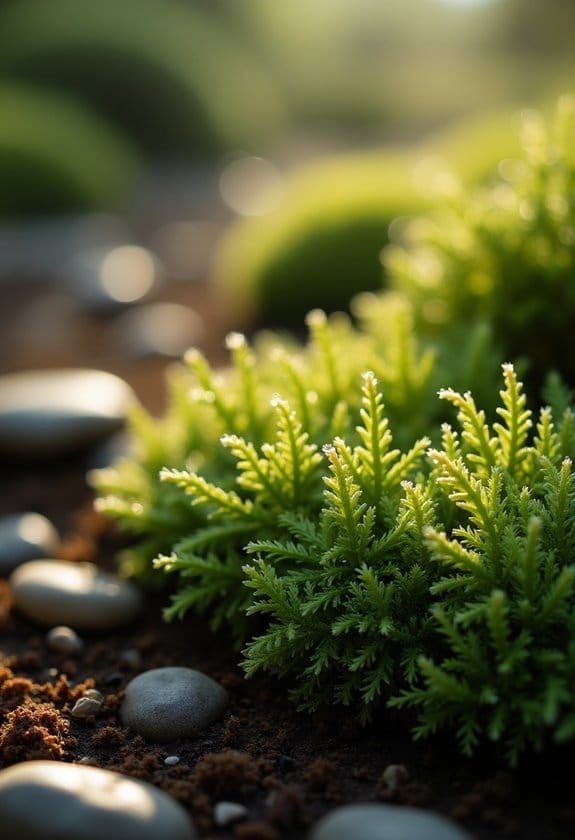
Erica erigena flourishes under full sun, requiring at least six hours of direct sunlight daily to produce vibrant blooms and robust growth.
It prefers well-drained, acidic to slightly alkaline soils, particularly heavy clay enriched with organic matter, as this combination promotes ideal development.
Additionally, while it's sensitive to extreme frost and wind, this resilient species thrives when provided with regular bi-weekly watering during its initial growth stages, ensuring it doesn't succumb to drought stress. Bell heather is recognized for its impressive drought tolerance once established, showcasing the adaptability of heaths to various conditions.
Light
To thrive, Erica erigena needs plenty of sunlight—at least 6 hours of direct exposure each day. This hardy plant flourishes in full sun, reflecting its preference for bright environments that bolster its growth habits. Insufficient sunlight can stunt its development, impacting branched growth and flowering potential.
The light requirements of Erica erigena are non-negotiable, as consistent sunlight exposure enhances both vigor and liveliness. In ideal conditions, Erica erigena's leaves shimmer under the sun, working diligently to photosynthesize and transform light into life-sustaining energy.
When planted in sunny, exposed locations, the plant demonstrates robust health, characterized by lush foliage and stunning blooms. It's crucial to mention that while Erica erigena can tolerate a variety of soil types—including some alkaline conditions—it thrives best when sunlight saturates its environment.
Gardening enthusiasts should be mindful: providing this desired sunlight isn't just a suggestion, it's essential for achieving an abundance of flowering beauty in garden settings.
Hence, ensuring ample direct light is fundamental for maintaining the plant's overall health, resilience, and enduring charm. In this way, Erica erigena beautifully embodies the adage that "the sun is the giver of life."
Soil
Healthy growth of Erica erigena hinges on well-drained, acidic soils that are typically low in nutrients, mimicking the natural heathland ecosystems where it thrives. This remarkable plant exhibits a preference for specific soil characteristics; while it can tolerate various soil types, its performance peaks in heavy clay soils amended with peat or coarse grit. Such soil amendments enhance drainage and improve structure, creating an ideal environment for root development.
Moreover, consistent soil moisture is essential, especially in the plant's first year, as it establishes strong roots crucial for long-term health. Erica erigena demonstrates sensitivity to extreme drought, making it important to maintain evenly moist conditions for its lush, evergreen foliage and vibrant blooms.
Notably, being a calcifuge, this species doesn't flourish in calcareous soils, further underscoring the significance of soil composition in successful cultivation.
To guarantee healthy growth, gardeners should test their soil's pH and amend it accordingly. The appropriate balance of acidity and moisture, combined with carefully selected soil amendments, can lead to a thriving Erica erigena, echoing the beauty of its natural habitat.
Fundamentally, understanding these soil dynamics allows for a rewarding gardening experience.
Water
Water consistency is essential for the successful growth of Erica erigena, as it thrives in environments that provide adequate moisture without becoming waterlogged. This heath prefers well-drained, acidic soils, which support effective moisture management.
During its first year of growth, consistent moisture is critical for establishing robust roots and fostering ideal conditions. Bi-weekly watering can greatly enhance its vitality, particularly during dry spells, as this species isn't tolerant of extreme drought conditions.
Irrigation techniques play an important role in ensuring Erica erigena receives the necessary hydration. Utilizing drip irrigation or soaker hoses can deliver water directly to the roots while minimizing runoff and evaporative losses. The plant flourishes when positioned in sunny locations, allowing it to maximize water uptake from both the soil and the atmosphere.
Moreover, effective drainage solutions are necessary to prevent waterlogging, which can lead to root rot and other detrimental conditions. The native habitats of Erica erigena often include wet environments, underscoring its preference for moisture-rich surroundings, especially near water sources.
This balance between sufficient moisture and efficient drainage sets the foundation for thriving, healthy growth.
Temperature
Erica erigena flourishes in cooler climates, thriving in temperature ranges typical of coastal and mountainous regions. This hardy species demonstrates remarkable climate adaptability, preferring ideal growth temperatures between 10°C and 20°C (50°F to 68°F). Within this range, the plant showcases vigorous blooming and robust foliage development.
However, it's crucial to mention that Erica erigena is sensitive to temperature extremes; harsh cold and frost can severely damage the plant, particularly during its early growth stages.
While this species can withstand moderate temperatures, prolonged high heat can hinder its health. In regions prone to elevated temperatures, special care should be taken to provide some degree of protection against the scorching sun. Additionally, shielding the plant from harsh northern winds contributes greatly to its overall growth success, especially in colder climates.
Consequently, gardeners aiming to cultivate Erica erigena should remain vigilant about temperature fluctuations and work to maintain an environment that adheres to its preferred climate parameters. By doing so, they can guarantee the plant not only survives but thrives, enhancing their garden with its striking beauty.
Pollinator Criteria
Erica erigena captivates a variety of pollinators, particularly bees and butterflies, with its bell-shaped, nectar-rich flowers.
Blooming from late summer to early autumn, this shrub employs a cross-pollination method, where these insects transfer pollen, essential for genetic diversity and reproductive success.
The presence of distinct floral traits not only lures beneficial species but also underscores the importance of Irish heath in maintaining ecological balance and promoting biodiversity in heathland ecosystems. Additionally, the nitrogen-fixing benefits of coexisting plants can enhance soil fertility, further supporting the health of these ecosystems.
Attracted Pollinators
Many pollinators are drawn to the bell-shaped flowers of Erica erigena, which bloom from late summer to early autumn. These alluring flowers, ranging in color from deep pink to white, exude a honey-like fragrance, appealing particularly to pollinators with specific nectar preferences. Bees and butterflies, essential agents of pollination, flock to the plants, enhancing the ecological impact of this species within its habitat. Additionally, like Bird Cherry, Erica erigena serves as an important nectar source for early-season pollinators, supporting biodiversity within its ecosystem.
The diverse morphology of the blooms and the plant's dense evergreen foliage create a nurturing microhabitat, offering shelter and foraging opportunities. Pollinator diversity thrives, benefiting from the abundance of food sources and protective plant structures.
As Erica erigena specializes in attracting a variety of pollinators, it plays a significant role in the reproductive success of the species, promoting cross-pollination that elevates genetic diversity within the population. This genetic richness is important for resilience against environmental changes, showcasing how interdependent ecosystems function. Additionally, Common Hawthorn serves as another vital plant for pollinators, highlighting the interconnectedness of plant species within ecosystems.
Additionally, by supporting various pollinator species, Erica erigena helps sustain the broader heathland ecosystem, ultimately fostering an environment where biodiversity can flourish and contribute to the ecological balance. This incredibly intricate relationship highlights the importance of understanding and preserving such crucial plant-pollinator dynamics.
Pollination Method
Insect pollinators, particularly bees, play a significant role in the pollination of Erica erigena. The plant's small, bell-shaped flowers, adorned with a honeyed aroma, effectively summon these essential pollinators during their late summer to autumn flowering period. This adaptive feature not only enhances the attractiveness of the blooms but also fosters mutualistic relationships, where both the plant and the bees gain valuable benefits.
The flower architecture allows bees to access nectar effortlessly, facilitating the transfer of pollen, which is necessary for successful seed development. Such interactions are important for the reproductive success of Erica erigena, ensuring genetic diversity within the population. The reliance on pollinators such as bees is critical for species like Viburnum opulus that also thrive through similar interactions. Similarly, the plant-pollinator interactions of other species reflect the intricate ties that sustain our ecosystems.
In addition, pollinator diversity enriches this delicate ecosystem, providing resilience and stability amid environmental changes. However, these intricate relations underscore the significance of ecosystem conservation. Habitat degradation can lead to decreased pollinator populations, jeopardizing Erica erigena's survival. Protecting these natural environments is thus essential—not just for the plant but for the myriad life forms that depend on them.
As these interactions unfold, they represent a beautiful tapestry of life, illustrating the vital balance between species and the ecosystems they inhabit.
Care & Maintenance
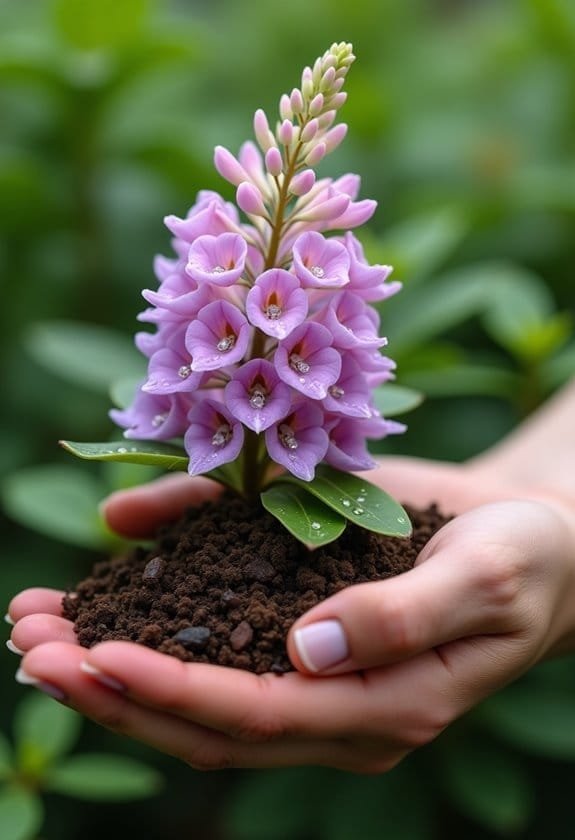
Caring for Erica erigena involves specific planting and maintenance practices to guarantee its thriving growth.
With its preference for well-drained, acidic soils and full sun exposure, this plant requires careful attention during its initial establishment year, which includes bi-weekly watering to maintain consistent moisture levels.
As the seasons progress, regular pruning and vigilance against pests will help preserve its lush, bushy form, ultimately enhancing the overall beauty of any garden landscape.
Planting Tips
When planting Erica erigena, gardeners should focus on ensuring ideal growing conditions for this beautiful plant. Best practices dictate that it thrives in well-drained, acidic soil, ideally with a pH of 4.5 to 6.0, maximizing its vibrant growth and prolific flowering.
When determining the planting layout, select a location that receives full sun exposure, as this not only enhances flowering but also boosts overall health. Incorporating soil amendments before planting can improve drainage and acidity, enriching the environment for healthy root development.
As the plant becomes established, gardeners should water bi-weekly during dry spells, particularly in the first year, avoiding excessive moisture that could lead to root rot.
To maintain an ideal microclimate around the plant, applying a layer of mulch around its base retains moisture, suppresses competing weeds, and promotes an acidic soil environment, which is essential for the health of Erica erigena.
Additionally, light pruning post-flowering is important, encouraging bushier growth while removing any dead or damaged stems. Finally, those in colder regions must monitor frost sensitivity, providing protection such as burlap wraps during harsh winter months to safeguard this exquisite plant.
Ongoing Care
Ongoing care for Erica erigena is fundamental to guarantee its thriving health and robust flowering season. This plant requires bi-weekly watering, especially in its first year, assuring adequate moisture to establish a strong root system. Sensitive to extreme drought, monitoring soil moisture is essential for maintaining its vitality.
Erica erigena flourishes in well-drained, acidic soil, making it necessary to provide ideal growing conditions. Sunlight plays a significant role; it ideally thrives in full sun exposure, enabling vibrant growth and profuse blooming from late summer to early autumn.
Incorporating appropriate fertilizer options can further enhance the plant's health. Organic fertilizers with low nitrogen levels often yield satisfactory results, promoting lush foliage and vibrant flowers.
Pruning techniques also contribute to the plant's aesthetics and health; regular pruning, especially after flowering, fosters new growth and maintains a bushy appearance.
Additionally, applying mulch around the base offers multiple benefits, including moisture retention and weed suppression, creating a nurturing environment for the Irish heath.
Suggested Companions
To enhance the thriving environment of Erica erigena, selecting suitable companion plants considerably contributes to its overall health and aesthetic appeal. Ideal companions include other acid-loving plants, such as Rhododendrons and Azaleas, which flourish in similar soil conditions. This combination not only enriches the landscape but also provides notable ecological benefits, ensuring that the environment remains balanced and sustainable. Additionally, Erica erigena can benefit from the incorporation of species like Geranium pratense, which also thrive in similar soil types and can contribute to the biodiversity of the garden.
It's essential to avoid aggressive species that compete for nutrients, as Erica erigena prefers low-nutrient conditions. Consequently, integrating low-growing perennials along with additional heathers fosters a diverse understorey, mirroring its natural heathland habitat. Furthermore, regular pruning of these companion plants promotes airflow and minimizes sunlight competition, encouraging the desirable bushy growth characteristic of Irish heath. Ground cover plants like mosses play an important role in moisture retention, particularly during the establishment phase of Erica erigena. Additionally, companion planting with species such as foxglove blooms can attract beneficial pollinators, further supporting the ecosystem surrounding Irish heath.
Common Issues
Erica erigena faces several challenges, particularly from pests like aphids and spider mites, which can weaken its overall health and resilience.
Additionally, conditions such as root rot, resulting from poorly drained soil, further complicate its cultivation, as this evergreen shrub thrives best in well-drained, acidic environments.
Understanding these common issues allows gardeners to adopt effective solutions, ensuring the robust growth and flourishing appearance of this delicate yet hardy plant.
Pests/Diseases
Pests and diseases can pose significant challenges to the health of Erica erigena, with root rot, scale insects, and powdery mildew being some of the most common issues.
Root rot, often triggered in poorly drained or excessively moist soils, underscores the necessity for proper drainage to foster robust growth. Scale insects and aphids also threaten the plant, as they feed on its sap, leading to visible nutrient deficiency signs like yellowing leaves and stunted growth.
Additionally, fungal diseases such as powdery mildew emerge in humid conditions, affecting the foliage and diminishing the shrub's aesthetic appeal.
For effective management, an integrated pest management approach proves essential; it emphasizes not only monitoring but also preventative strategies. Fungal disease prevention involves maintaining good air circulation around plants and limiting humidity through careful watering practices.
Regular observation and maintenance play an important role in controlling these issues. By removing dead or infected plant material and promptly addressing any signs of infestation or disease, gardeners can create an environment conducive to the health of Erica erigena, helping this resilient plant thrive despite potential challenges.
Solutions
Addressing common issues with Erica erigena starts with creating the right growing environment. This plant thrives in well-drained, acidic soils, preferring full sun exposure to enhance its compact, bushy structure.
Fertilizer options should focus on slow-release formulations enriched with organic matter, promoting healthy growth and resilience against pests. Regular bi-weekly watering during its initial establishment is essential, as this species is sensitive to extreme drought conditions, preventing desiccation. Additionally, maintaining adequate soil moisture is critical, as it supports the overall health of the plant.
Employing effective pruning techniques can help mitigate structural damage due to frost and snow loading. By selectively removing weakened or dead branches, gardeners allow for better airflow and light penetration, enhancing overall plant vigor.
Companion planting is another valuable strategy, as pairing Erica erigena with complementary species can reduce pest infestations and enrich soil conditions through varied nutrient uptake.
Lastly, maintaining vigilant monitoring against potential diseases is critical. This entails consistently checking for signs of stress or pest activity, which can compromise plant health. Understanding the importance of well-drained soil is essential for both Erica erigena and white campion, as both thrive in similar growing conditions.
What are the similarities and differences between Erica Erigena and Erica Vagans?
Ericica Erigena and Erica Vagans are both ericaceous plants, but they have some differences. While Erica Erigena is native to Ireland and Western Europe, Erica Vagans is found in the UK and Europe. Both plants prefer acidic soil and require erica vagans plant information for proper care.
Summary
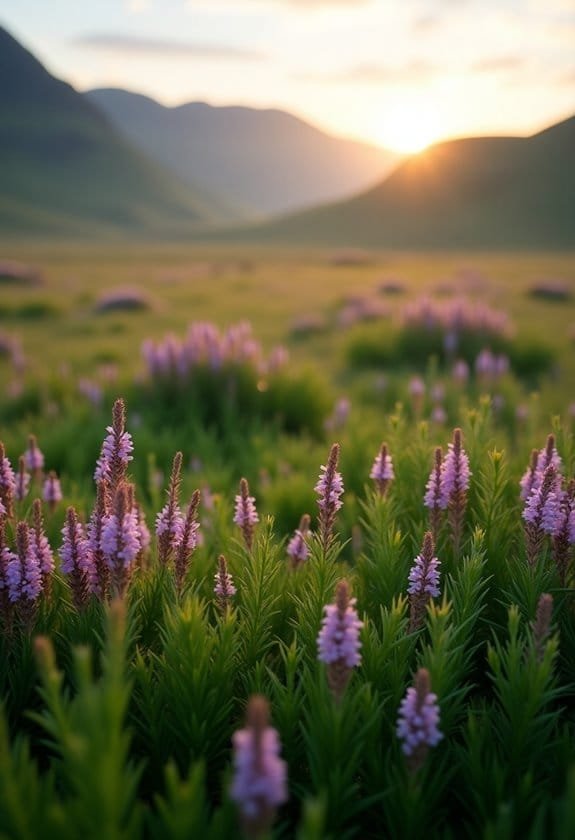
Native to the lush landscapes of Ireland and the British Isles, Erica erigena, also known as Irish heath, is an evergreen shrub that typically grows up to 75 cm (30 inches) in height. This resilient plant thrives in the acidic, well-drained soils characteristic of heathland and coastal regions, often favoring sunny sites for its compact growth habit.
The small, bell-shaped flowers, blooming from late summer to early autumn in shades of pink to white, not only attract pollinators but also enhance the visual allure of gardens.
Historically, Irish heath has held cultural relevance, cherished in traditional practices and local folklore. Its ecological importance can't be understated, as it contributes to soil stabilization, offers refuge for diverse wildlife, and enriches biodiversity in heathland ecosystems.
Furthermore, it's been recognized for its medicinal uses, with various parts historically consumed for their purported health benefits.
Valued for its low maintenance needs, Erica erigena serves as an excellent ground cover among dwarf conifers and in rock gardens, making it a versatile choice for ornamental gardening. Its ability to thrive in challenging conditions underscores its significance to both nature and culture within its native habitat.