Ferula communis, or Giant Fennel, is an impressive perennial that can reach heights of 7 to 8 feet and spans 2 to 3 feet in width. Its striking yellow-green umbels, complemented by mauve-tinged flower stalks, create a vibrant spectacle throughout the growing season. Thriving in well-drained soils, it's drought-tolerant once established and requires full sunlight for ideal growth. This plant plays an essential role in supporting biodiversity by attracting bees and butterflies with its nectar-rich flowers during peak bloom from March to July. Understanding its care requirements and historical significance reveals fascinating aspects of this botanical giant's allure.
Main Points
- Giant Fennel (Ferula communis) thrives in well-drained soils and requires full sunlight for optimal growth.
- The plant features striking yellow-green flowers and thread-like leaves that turn golden in fall.
- It supports biodiversity by attracting bees and butterflies during its peak flowering season from March to July.
- Regular care includes summer irrigation and monitoring for pests or diseases to ensure healthy growth.
- Historically significant, Giant Fennel was used as measuring rods in ancient Rome and may have inspired Olympic torches.
Introduction
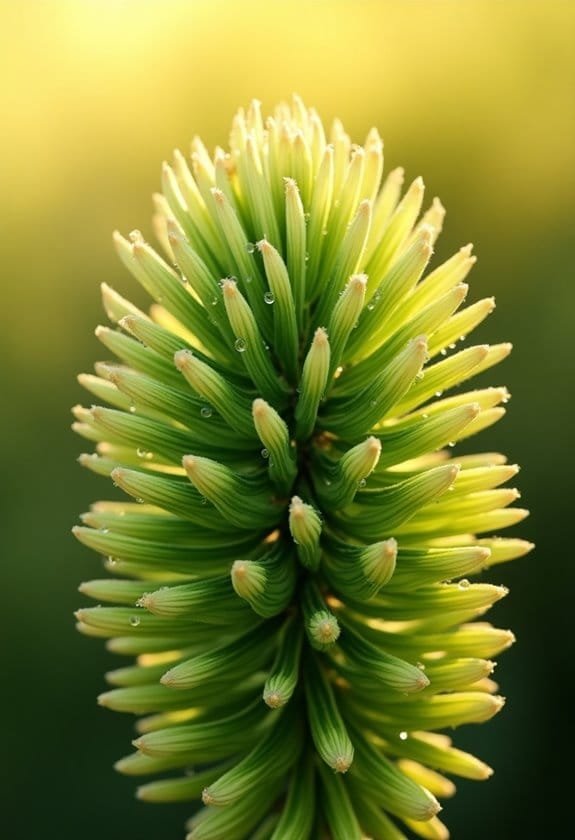
Ferula communis, commonly referred to as Giant Fennel, is an impressive perennial plant known for its remarkable height, reaching up to 8 feet, and its vibrant yellow-green floral structures.
This species, which includes five distinct subspecies, thrives in sunny habitats and prefers well-drained soils, making it adaptable to various gardening environments.
Beyond its botanical significance, it carries historical and cultural weight, having served ancient Romans not only as a practical tool but also as a symbol rich in mythological narratives.
Common Name
Known for its imposing stature, the plant commonly called "Giant Fennel" grows impressively tall, reaching heights of 7-8 feet and widths of 2-3 feet.
This remarkable plant, scientifically known as Ferula communis, captivates garden enthusiasts with its grandeur and visual appeal. While the name "Giant Fennel" might suggest culinary use, it primarily serves as an ornamental asset in landscapes rather than as an ingredient in the kitchen.
Characterized by brilliant yellow-green umbels and delicate thread-like leaves, the giant fennel stands out, providing an eye-catching focal point in various garden settings. With its striking features, the plant demands attention, adding an exotic touch to any environment.
For ideal growth, Giant Fennels require well-drained soil and often thrive when shielded from high winds, which can otherwise damage their tall structures.
Historically significant, this plant wasn't only admired for its aesthetic qualities but also utilized in ancient Rome and Greece, where people employed its sturdy dried stems as measuring rods, known as ferules.
This blend of ornamental beauty and historical depth makes the Giant Fennel an intriguing choice for any garden.
Scientific Name
The remarkable plant commonly called Giant Fennel is scientifically designated as Ferula communis. This towering perennial can soar up to 7-8 feet in height and spread 2-3 feet wide, showcasing an imposing yet elegant stature. Belonging to the Apiaceae family, Ferula communis is easily identifiable by its thick, mauve-tinged flower stalks and the grand yellow-green umbels that bloom overhead, creating a stunning visual display in gardens and natural habitats alike.
This species comprises five distinct subspecies, including Ferula communis ssp. brevifolia, cardonae, catalaunica, communis, and linkii, each presenting unique traits while embodying the core characteristics of the species. The plant's foliage, adorned with vast, unscented, thread-like leaves, turns a radiant golden color in the fall, enhancing its ornamental appeal.
Ferula communis thrives mainly in well-drained soils and sunny locales, proving unsuitable for overly moist environments.
Its adaptive nature enables it to flourish in varied landscapes, yet it requires careful consideration of soil and sunlight conditions to reach its full potential.
In all, Ferula communis captures the attention of both horticulturists and nature enthusiasts alike.
Overview
Towering majestically in gardens and landscapes, Giant Fennel captivates with its impressive height and striking visual appeal. Ferula communis is a perennial plant, reaching heights between 7 and 8 feet while expanding to widths of 2 to 3 feet. Its vivid yellow-green umbels and delicate, thread-like leaves, which turn a dazzling golden in fall, enhance its ornamental charm.
Thriving in full sunlight and well-drained soils, it demonstrates impressive drought tolerance, enduring temperatures as low as 0º F. Flowering typically occurs between March and July, though it takes two growing seasons for the Giant Fennel to mature before revealing its iconic blooms.
Historically, the stalks of Ferula communis served various roles, ranging from disciplinary tools to symbolic representations in mythological tales, significantly linking to the story of Prometheus. While primarily grown for aesthetic purposes, its culinary potential remains limited, despite its name suggesting otherwise.
Gardeners value Giant Fennel not only for its imposing stature but also for its unique foliage, which, when strategically placed, effortlessly uplifts and enriches any landscape's visual narrative.
Key Features
Ferula communis, or Giant Fennel, showcases remarkable growth, often towering between 7 to 8 feet, making it an eye-catching addition to any garden.
Its vast, thread-like leaves shift to a golden hue in the fall, complementing the striking yellow-green umbels that bloom from March to July, creating a vivid landscape.
With its impressive size and distinctive flowering season, this drought-tolerant plant commands attention while thriving in sunny, well-drained conditions.
Growth Size
Growing up to 7-8 feet tall and reaching a width of 2-3 feet, Giant Fennel becomes a striking presence in any garden. This towering plant, scientifically known as Ferula communis, showcases its impressive stature by producing flowering stems that can exceed heights of 3 meters, or approximately 10 feet, within a single growing season.
Such rapid growth not only establishes the plant as an impressive focal point but also cultivates an inviting atmosphere.
The robust flower stalks, characterized by their thick, mauve-tinged, glaucous appearance, culminate in gigantic yellow umbels, lending a unique visual allure. Adding to its charm, Giant Fennel features enormous, thread-like leaves that undergo an enchanting transformation, turning golden in the fall and contributing seasonal variability to the landscape.
Successful growth of Giant Fennel hinges on two essential factors: ample sunlight and well-drained soil. The plant thrives best in sheltered locations, which enhance its structural integrity and overall resilience.
This preference for specific environmental conditions guarantees that gardeners who provide the right setup can witness the awe-inspiring growth of this remarkable botanical specimen.
Appearance
With an impressive height of 7 to 8 feet, Giant Fennel captures attention in any garden setting. Towering at widths of 2 to 3 feet, this massive plant dominates its surroundings, providing striking vertical interest.
Its leaves are truly distinctive—large, unscented, and thread-like, they create an ethereal green backdrop that transforms into a rich golden hue in the fall, enriching the seasonal palette of any landscape.
One can't overlook the unique architecture of Giant Fennel, which evokes an animal-like quality, contributing to its visual allure. The thick flower stalk features a delicate mauve tint and rises to support enormous branched yellow umbels.
Although these blooms spring to life from March to July, the plant's aesthetic appeal rests not just in its flowers, but also in its formidable stature and overall structure.
Thriving in sunny conditions, Giant Fennel flourishes in well-drained soils, showcasing remarkable drought tolerance, making it ideally suited for arid environments.
Its majestic height, combined with an intriguing silhouette, guarantees that Giant Fennel becomes a focal point in any garden design, inviting admiration all season long.
Flowering Season
Towering over gardens, Giant Fennel boasts a spectacular flowering season from March to July, during which it displays clusters of vibrant yellow umbels. These umbels form an impressive visual spectacle, attracting various pollinators while contributing to the plant's overall aesthetic charm.
During the flowering period, the flower stems can reach heights of up to three meters, making them a dominant presence in any landscape. Every flowering plant exhibits a well-distributed arrangement of new spikes, enhancing its striking appearance.
However, it's crucial to note that Ferula communis requires two full growing seasons to achieve maturity before undergoing a resting phase aimed primarily at foliage growth, following its fruitful bloom. This two-year cycle underscores the importance of patience when cultivating this magnificent plant.
Once the flowering concludes, the Giant Fennel may experience a noticeable dip in visual appeal, creating a design challenge for gardeners. Careful planning regarding complementary plants and the timing of their growth can mitigate this aesthetic gap, ensuring a garden flourishes year-round.
Understanding the flowering dynamics of Giant Fennel empowers gardeners to create cohesive and visually pleasing landscapes.
Growing Requirements
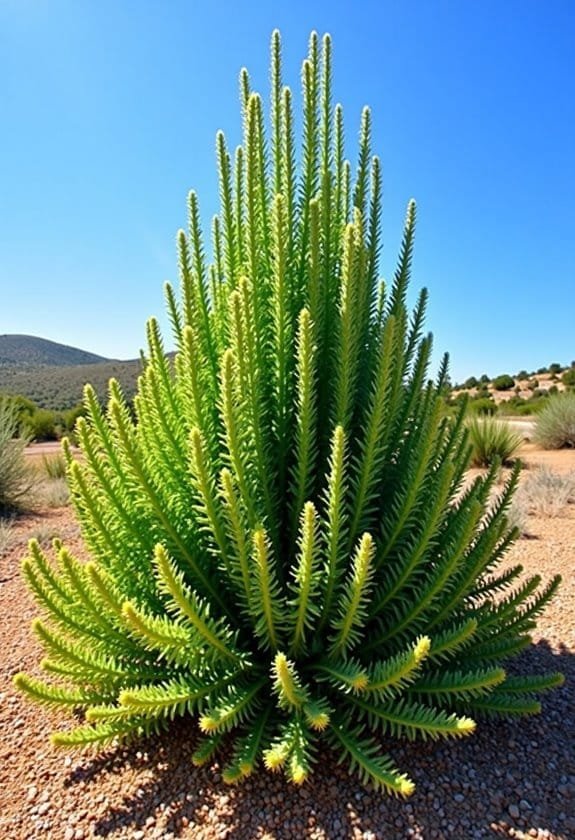
Growing Ferula communis requires an understanding of its specific environmental needs.
This remarkable plant flourishes in well-drained soils, basking in full sunlight as it grows to an impressive height of up to 8 feet, while also demonstrating strong drought resistance.
Essential temperature considerations include a minimum tolerance of 0º F, allowing it to thrive across diverse climates and guarantee stability as it matures over two seasons before shifting its energy towards foliage rather than flowering.
Light
A successful cultivation of Ferula communis, or Giant Fennel, hinges on its need for abundant sunlight. This remarkable plant flourishes in full sun conditions, demanding ample light for ideal growth and the development of its impressive foliage.
While Giant Fennel shows resilience to varying environmental factors, insufficient sunlight can considerably hinder its growth and flowering potential, ultimately affecting its overall vigor.
Ideally, gardeners should position the plant in sheltered locations that still provide direct sunlight, as this combination not only enhances growth but also protects the structure from high winds that may cause damage.
Under perfect circumstances, with adequate sunlight exposure, Giant Fennel achieves remarkable heights; flowering stems can reach up to three meters within a growing season. The relationship between light and growth in this species exemplifies how essential proper light conditions are to its development.
Furthermore, while growers focus on light, they must also guarantee that the soil drains well, allowing light penetration while preventing moisture retention that could compromise root health.
Soil
Sunlight isn't the only factor that influences the growth of Ferula communis; the quality of the soil also plays a significant role.
This striking plant, known for its potential height of 7 to 8 feet, flourishes best in well-drained soils. Excessive moisture can lead to detrimental effects, hindering its development. Ideal soil conditions have a balanced pH that allows for effective nutrient uptake, promoting the plant's characteristic dark green foliage and vigorous growth.
While Ferula communis demonstrates remarkable resilience, especially during wet winters, it achieves peak performance when planted on well-draining slopes.
Its drought-tolerant nature makes it well-suited for arid environments, although a modest amount of summer watering can support its flourishing abilities.
Water
Water plays an essential role in the successful growth of Ferula communis, with the plant thriving best when it receives some summer irrigation. While this giant fennel demonstrates a remarkable drought tolerance, an inadequate supply of moisture may prompt dormancy, stunting its vibrant growth.
The plant's preference for well-drained soils is imperative; too much water can lead to detrimental conditions, including root rot.
During its growth cycle, especially throughout the flowering phase, adequate hydration is essential for maintaining structural integrity, enhancing the plant's resilience and overall aesthetic appeal. Ferula communis excels during wet winters as long as it's situated on well-draining slopes, which helps to manage excess water effectively.
When given the appropriate balance of water, this perennial reaches heights of up to 5 meters, showcasing its impressive stature.
Gardeners must strike a balance between hydration and drainage, ensuring that Ferula communis receives enough water without saturating its roots.
Especially during hot summer months, light irrigation becomes indispensable, allowing the plant to flourish, as it derives strength and energy from nature's hydrating embrace. Such attentiveness fosters a healthier, more vigorous plant, ultimately rewarding the gardener's dedication.
Temperature
Successful growth of Ferula communis hinges on its ability to adapt to a range of temperatures. This remarkable plant demonstrates hardiness, tolerating minimum temperatures as low as 0º F. Such resilience enables it to thrive in cooler climates, making it a suitable choice for diverse regions.
Additionally, Ferula communis flourishes under ample sunlight, which is essential for its ideal development and overall vigor.
The plant exhibits significant frost resilience, with its netted foliage intact even during colder months, showcasing an impressive adaptation to high-contrast seasonal conditions. In regions prone to wet winters, ensuring well-draining slopes is important to prevent root rot, maintaining the plant's health despite fluctuating moisture levels.
Interestingly, Ferula communis also possesses remarkable drought-tolerant properties, allowing it to survive in arid environments.
However, for those seeking to promote robust growth, periodic summer watering can substantially enhance liveliness, especially during high-temperature periods.
Pollinator Criteria
Ferula communis serves as an essential resource for a variety of pollinators, such as bees and butterflies, drawn to its generous nectar within the large, yellow-green umbels.
During its flowering period from March to July, the plant not only attracts these beneficial insects but also facilitates their foraging habits through its considerable height and diverse structural form.
This thriving ecosystem enhances pollination efficiency and genetic diversity, illustrating the indispensable role of Ferula communis in supporting pollinator populations.
Attracted Pollinators
The vibrant yellow umbels of Ferula communis are a beacon for various pollinators, drawing in bees and butterflies with their striking appearance and sweet fragrance. This influential plant, commonly known as Giant Fennel, boasts a flowering period from March to July, aligning perfectly with the active foraging times of many essential pollinator species. The robust structure and impressive height of Ferula communis create an inviting landing platform for larger pollinators, which tend to favor stable, prominent flowers.
The high nectar production of Giant Fennel considerably contributes to its appeal, attracting both solitary and social bees. This high availability of nectar fosters biodiversity, benefiting not just the individual species but also the overall garden ecosystem. Moreover, the nitrogen-fixing abilities of red clover and its role in enhancing soil quality can create a more supportive environment for Ferula communis. Additionally, companion planting with other pollinator-attracting species can further enhance the pollination success of Ferula communis, creating a synergistic, pollinator-friendly environment. Furthermore, the attraction of essential pollinators like honey bees supports the overall health of the ecosystem and promotes nitrogen-fixing capabilities, which contribute to soil fertility and plant growth.
Pollination Method
Insect pollinators play an essential role in the reproduction of Giant Fennel by facilitating the transfer of pollen between flowers. Primarily, various species of bees are the key pollinators, attracted by the plant's unique large, branched umbels that create an ideal landing platform. The flowering period, which lasts from March to July, draws a diverse array of pollinators, enhancing the chances of successful reproduction.
Giant Fennel's bright yellow flowers not only produce sweet nectar but also emit a robust scent, ensuring a steady influx of enthusiastic visitors. This aromatic allure serves to amplify pollinator attraction, increasing visitations to the flowers. Each visit allows for the critical pollination process, necessary for the production of seeds that sustain the plant's life cycle.
Furthermore, the architectural structure of Giant Fennel's flower stalks optimizes exposure to pollinators, ultimately enhancing cross-pollination efficiency. As pollen moves between flowers, the genetic diversity among seeds increases, contributing to the resilience and adaptability of this remarkable species.
Consequently, through intricate design and strategic attraction, Giant Fennel successfully engages in a crucial ecological partnership with its insect pollinators.
Care & Maintenance
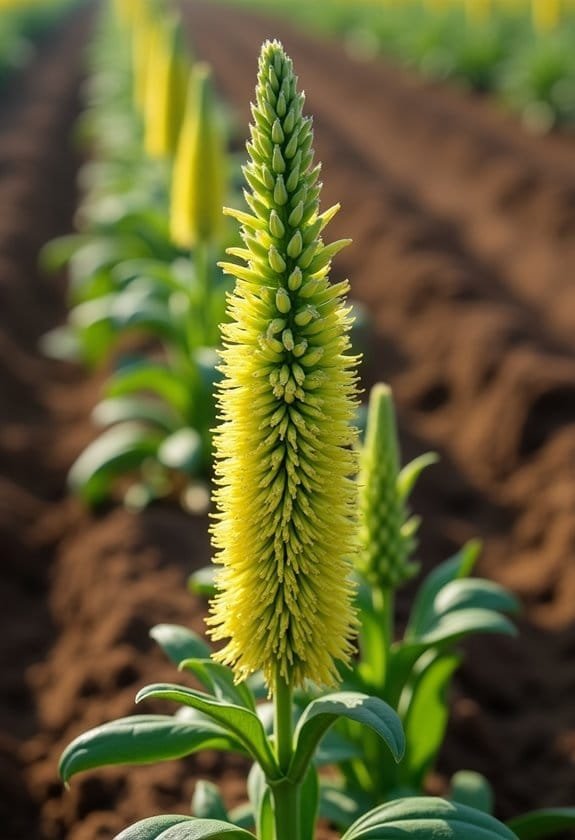
Caring for Ferula communis involves understanding its specific environmental needs and ongoing maintenance requirements.
This stately plant flourishes in well-drained soil under bright sunlight, demanding some summer watering to sustain its vibrant growth; neglecting these needs could hinder its majestic stature.
Companion planting, particularly with species like Lathyrus rotundifolius, can further enhance its aesthetic appeal, filling in gaps after flowering and creating a dynamic garden environment.
Planting Tips
Growing Ferula communis, or giant fennel, requires thoughtful attention to a few key factors for successful planting and maintenance. First, when selecting a location, it's essential to provide shelter from high winds, as giant fennel can reach impressive heights of up to 8 feet. Without adequate support, these majestic plants may suffer structural damage.
Moreover, the soil composition plays a vital role; giant fennel thrives in well-drained soils, which prevent excessive moisture that can lead to root rot. As a result, gardeners should guarantee that their chosen site doesn't retain excess water.
For peak growth, planting seeds or early transplants during the spring harnesses the season's ideal conditions. Additionally, during periods of drought, it's beneficial to implement some summer watering to prevent the plant from entering dormancy—especially in areas with prolonged dry spells.
Lastly, consider companion planting by introducing species like Ballota pseudodictamnus; this often enhances the growth dynamics and creates an aesthetically pleasing environment, showcasing not only the beauty of the giant fennel but also promoting biodiversity in the garden.
Ongoing Care
Ongoing care for Ferula communis is essential to guarantee these impressive plants thrive throughout their life cycle. Regular watering during the summer months promotes peak growth; however, allowing some drought can induce dormancy, which aids in preserving energy.
With flower stems reaching impressive heights of up to three meters, staking may be necessary after heavy rains to prevent structural weaknesses, ensuring the plant remains steadfast against harsh weather.
Maintaining well-drained soil is critical for Ferula communis, as excessive moisture can lead to root rot, compromising the plant's health. Consequently, gardeners should carefully monitor watering practices and soil conditions to promote longevity.
Additionally, early preparation is crucial for managing aesthetic gaps once flowering occurs, as Ferula communis emphasizes foliage growth during its resting period following bloom.
As these magnificent plants continue their life cycle, thoughtful planning regarding companion plants will prevent overcrowding while ensuring ongoing garden health. By strategically positioning these companions, gardeners can maintain visual interest and balance throughout various growth stages, enriching the overall landscape.
Proper ongoing care transforms Ferula communis into not only a resilient specimen but a spectacular feature within any garden setting.
Suggested Companions
Pairing Ferula communis with suitable companion plants enhances both aesthetic appeal and overall garden health. Selecting early flowering species like Lathyrus rotundifolius creates a delightful visual harmony, as their blooms complement the later flowering of giant fennel. The juxtaposition of delicate, round-leaved sweet peas against the towering stature of Ferula communis fosters a layered garden appearance, appealing to the eye.
Strategically introducing Ballota pseudodictamnus among Ferula communis provides a rich, low-growing foliage that enhances garden texture. This contrast allows the imposing fennel to emerge prominently, commanding attention without overwhelming its companions.
Additionally, including striking scarlet oriental poppies near giant fennel introduces vivid splashes of color, maintaining visual interest throughout the growing season.
Ensuring ample spacing around companion plants is vital for the success of the garden. This practice prevents competition for sunlight and nutrients between plants, promoting robust growth in Ferula communis.
Additionally, exploring crossbreeding opportunities between Ferula communis and F. tingitana can yield unique foliage variations, enriching the garden's diversity and encouraging ecological balance.
With thoughtful plant pairings, gardeners can create harmonious and thriving landscapes.
Common Issues
When cultivating Ferula communis, gardeners often encounter various pests and diseases that can threaten the plant's health and aesthetic appeal.
For instance, aphids and powdery mildew may infest the plant, causing significant stress and compromising its vigorous growth.
Recognizing these issues early and implementing effective solutions, such as integrated pest management strategies, guarantees the longevity and visual splendor of this striking herbaceous plant.
Pests/Diseases
Giant fennel (Ferula communis) is largely resistant to pests and diseases, but it's not completely immune. In gardens, particularly in the Golan Heights where conditions vary, it's vital to be vigilant about potential threats.
While giant fennel thrives in various environments, it can suffer from specific issues, most importantly fungal infections like root rot. Such infections typically arise when the soil retains too much water, highlighting the importance of well-drained planting conditions.
Additionally, aphids and spider mites may occasionally target this hardy plant. Though their presence can be concerning, their impact can be effectively managed with regular monitoring and care.
Conversely, overwatering poses another significant risk, often leading to powdery mildew, a fungal disease that appears as a white, dusty coating on leaves. Preventing mildew is a matter of employing proper watering practices and ensuring good air circulation around the plants.
Regular inspection for signs of stress or disease is essential. By staying alert to potential problems, gardeners can intervene early, thereby minimizing the likelihood of serious infestations or infections and maintaining the health of their giant fennel.
Solutions
Besides managing pests and diseases, gardeners need to address several common issues that can affect the health and aesthetics of Ferula communis.
This robust plant, known for its impressive height, can exhibit structural weaknesses as it rapidly grows, especially after heavy rainfall. To prevent the stalks from collapsing under their own weight as they bolt skyward, staking becomes vital.
Post-flowering gaps in the garden's landscape can form if preparations aren't made in advance.
Gardeners should plan carefully, selecting complementary plants to maintain visual interest and mitigate any potential overshadowing. Additionally, competition from surrounding vegetation might require periodic trimming or repositioning to guarantee that Ferula communis thrives.
Drought conditions pose another challenge, often inducing dormancy in giant fennel; consequently, summer watering is essential for peak growth.
In addition, maintaining well-drained soils is vital, as excessive moisture can hinder the health of this plant.
What Are the Uses and Benefits of Ferula Communis (Giant Fennel) Compared to Campanula Glomerata (Clustered Bellflower)?
Ferula communis, or giant fennel, has been used for centuries in traditional medicine for its medicinal properties. It is known for its anti-inflammatory and analgesic effects. On the other hand, campanula glomerata (clustered bellflower) information and care, while also having medicinal uses, is more commonly cultivated for its ornamental value in gardens and landscapes.
Summary
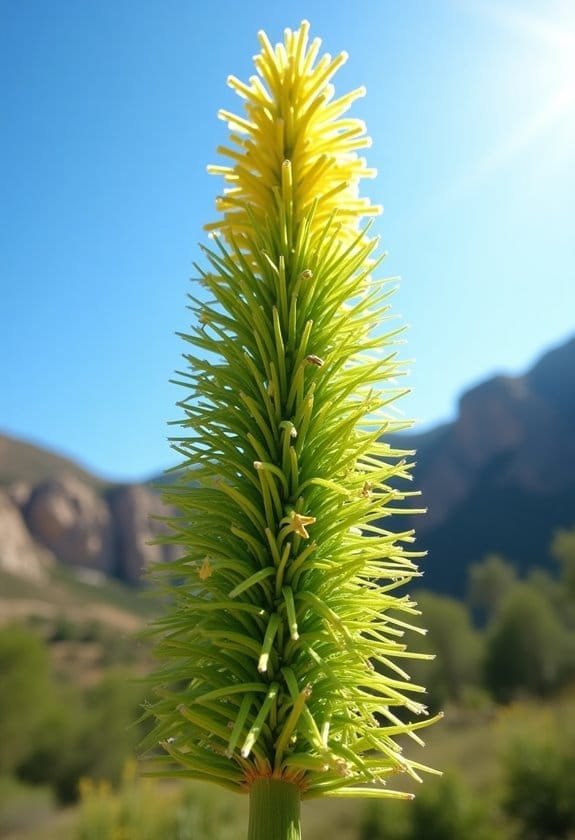
Ferula communis, or Giant Fennel, is an impressive perennial herb that can soar up to 7-8 feet tall, characterized by its striking mauve-tinged flower stalk and large yellow umbels. Blooming from March to July, it produces massive branched umbels that attract attention, while its unscented, thread-like leaves turn a golden hue in the fall, contributing to its ornamental appeal.
Thriving in well-drained soils, Ferula communis prefers full sunlight and requires protection from strong winds.
Historically, this remarkable plant served multifaceted purposes, from a disciplinary tool in Roman times to a potential source for the original Olympic torches, showcasing its cultural significance.
In addition, it exhibits resistance to deer and demonstrates drought tolerance, making it ideal for ecosystems with minimal moisture. However, it isn't suitable for overly wet conditions.
Despite its ornamental beauty, Ferula communis is unsuitable for culinary uses, and while its sap has been historically collected for medicinal applications, caution is advised.