Fragaria × ananassa, or the garden strawberry, is an octoploid perennial in the Rosaceae family, resulting from an unintentional cross between North American and Chilean species. Thriving in USDA hardiness zones 3 to 10, these plants prefer full sun and well-drained, fertile loam or clay soil, requiring about one inch of water weekly. With a flowering period from April to May, they attract essential pollinators, enhancing fruit size and genetic diversity through both self and cross-pollination. Regular care, including pest management and consistent moisture, is critical for peak growth. Those interested will discover further insights into successful cultivation techniques.
Main Points
- Fragaria × ananassa, or garden strawberry, is a hybrid species between Fragaria virginiana and Fragaria chiloensis, belonging to the Rosaceae family.
- This octoploid species has eight sets of chromosomes, resulting in larger fruit size and better adaptability across climates.
- Strawberries thrive in full sun and well-drained soil, needing about 1 inch of water weekly, with optimal temperatures between 60°F and 80°F.
- Flowering occurs from April to May, with cross-pollination enhancing fruit size and genetic diversity, particularly benefiting from pollinators like bees.
- Garden strawberries are rich in Vitamin C and dietary fiber, versatile in culinary uses, and thrive alongside companion plants like spinach and lettuce.
Introduction
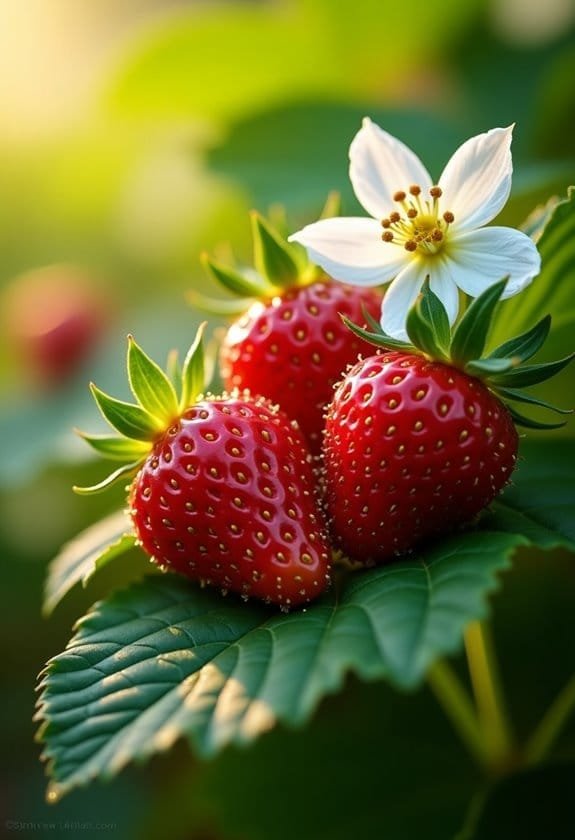
The garden strawberry, scientifically known as Fragaria × ananassa, is a fascinating perennial belonging to the Rosaceae family.
This remarkable plant results from an unintentional cross between North America's Fragaria virginiana and Chile's Fragaria chiloensis, showcasing a unique adaptation to various environments.
As an integral part of gardens worldwide, its vibrant fruit and appealing flowers not only delight the senses but also offer significant nutritional benefits.
Common Name
Commonly referred to as the garden strawberry, Fragaria × ananassa is a popular hybrid species cultivated across various regions.
This hybrid results from a cross between North American and Chilean strawberry species, producing a plant that thrives in diverse climates. Garden strawberries are typically classified into two main types: June-bearing strawberries, which produce fruit in early summer, and ever-bearing strawberries that yield multiple harvests throughout the growing season.
These strawberries grow to a height of 6-12 inches, spreading 1-2 feet wide, and they form a broadleaf evergreen perennial rosette that adds greenery to gardens year-round.
The allure of garden strawberries lies not just in their delightful fruit; they also exhibit showy white to reddish-pink flowers that bloom in spring, effectively attracting a variety of pollinators, including bees and butterflies.
Curiously, garden strawberries aren't true berries; they're classified as aggregate accessory fruits. In these fruits, the fleshy part originates from the flower receptacle, with tiny seeds sitting conspicuously on the outside, creating a striking contrast.
Together, these characteristics make the garden strawberry a fascinating subject of botanical interest and a cherished addition to gardens around the world.
Scientific Name
Fragaria × ananassa, the scientific name for garden strawberries, embodies a fascinating hybrid that showcases the union of North American and Chilean strawberry species. This remarkable plant, belonging to the rose family, was first identified in the 18th century in Brittany, France, where intentional breeding was employed to improve fruit quality and yield.
By combining the genetic traits of Fragaria virginiana with Fragaria chiloensis, cultivators created a species renowned for its sweetness, vibrant color, and aromatic flavor.
Classified as an octoploid organism, Fragaria × ananassa possesses eight sets of chromosomes, a characteristic that greatly contributes to its larger fruit size and the development of diverse cultivars. This genetic complexity allows the garden strawberry to thrive in various climates and conditions, making it easy to grow and immensely popular in both commercial agriculture and home gardening.
As of 2022, China leads global production, accounting for an astonishing 35% of the world's strawberry supply.
The widespread appeal and adaptability of this hybrid plant have firmly established Fragaria × ananassa as a staple in gardens and agricultural settings alike, delighting consumers with its delectable fruit.
Overview
With a rich history and diverse adaptability, garden strawberries stand out as one of the most cherished fruits in home gardens and commercial farms alike. Known scientifically as Fragaria × ananassa, this octoploid hybrid species originates from the convergence of North American Fragaria virginiana and Chilean Fragaria chiloensis.
Typically forming a rosette that reaches heights of 6 to 12 inches, garden strawberries can expand 1 to 2 feet wide, making them ideally suited for various gardening spaces, such as raised beds.
Garden strawberries are primarily classified into two categories: June-bearing strawberries and ever-bearing varieties. June-bearing strawberries produce a single, abundant harvest during late spring to early summer, while ever-bearing types yield multiple crops throughout the growing season, ensuring a steady supply of sweet, juicy fruit.
Thriving in full sun to partial shade, they prefer organic loam or clay soil and require about 1 inch of water per week for ideal growth and fruit production.
This species not only captivates gardeners with its luscious fruit but also plays a crucial role in agricultural ecosystems, attracting specialized bees and other pollinators essential for plant reproduction.
Key Features
The garden strawberry, scientifically known as Fragaria × ananassa, typically reaches a height of 6 to 12 inches, sprawling 1 to 2 feet wide, which makes it a compact yet prolific addition to any garden.
With showy, five-petaled flowers that bloom in spring, these plants exhibit an appealing visual presence, often attracting essential pollinators such as specialized bees.
This combination of moderate growth size and vibrant flowering serves not only to enhance garden aesthetics but also supports ecological balance, highlighting their dual significance as both a fruitful crop and a contributor to biodiversity.
Growth Size
Garden strawberries, known for their appealing stature, typically reach heights of 6 to 12 inches while spreading 1 to 2 feet wide. These plants exhibit a rosette growth habit, characterized by broadleaf evergreen foliage that enhances their attractiveness throughout the seasons.
Depending on their type, strawberries can be classified as either June-bearing or ever-bearing. June-bearing varieties produce larger, concentrated crops at specific times, while ever-bearing types yield consistently throughout the growing season.
For ideal growth, gardeners should plant strawberries in designated rows or mounds, maintaining a spacing of 1 to 2.5 feet apart, with rows spaced 3 to 5 feet apart. This arrangement promotes adequate air circulation, essential for preventing issues like root rot.
During the establishment period, it's important for growers to remove blooms in the first year, ensuring that the plants devote their energy to developing stronger roots. This practice leads to more robust yields in subsequent growing seasons, benefiting both novice and experienced gardeners.
As these resilient plants flourish, their delicate pink flowers often emerge, adding charm and allure to any garden setting while heralding the promise of summer fruit.
Appearance
Although often overlooked in home gardens, garden strawberries (Fragaria × ananassa) display a range of enchanting features that make them quite appealing. These remarkable strawberry plants typically exhibit a rosette growth habit, characterized by their broadleaf evergreen foliage, which can reach heights of 6 to 12 inches and widths of 1 to 2 feet. The serrated leaves boast a glossy appearance, adding an element of vibrancy to the garden space.
In spring, each plant produces showy flowers that feature five delicate petals, generally varying in color from white to a soft reddish-pink, providing a picturesque accent against the green foliage.
The fruit, recognized as an accessory fruit due to its unique structure, is strikingly vibrant red, with a shiny surface that entices the senses. A distinctive aroma envelops the garden when the strawberries ripen, enhancing their allure.
The size of strawberries varies considerably across different cultivars; some yield medium-sized, firm fruits, while others produce large, glossy, or elongated berries.
This incredible diversity, coupled with the presence of the anthocyanin pigment pelargonidin-3-glucoside, contributes not only to their visual appeal but also to their nutritional value.
Flowering Season
During spring, flowering season for Fragaria × ananassa kicks off, typically spanning from April to May, depending on regional climate. This period heralds the arrival of delicate white to reddish-pink flowers, each possessing five petals, which actively attract diverse pollinators, particularly specialized bees. The intricate relationship between these blossoms and their pollinators showcases nature's remarkable synergy.
At the heart of this flowering process are structures known as flower trusses. Each strawberry plant produces these essential stems, which can support multiple flowers, ultimately enhancing the plant's fruiting potential. Once pollination occurs, cropping may begin approximately four to six weeks later, introducing the predictability of the garden strawberry cycle.
June-bearing varieties showcase a single, heavy crop, while ever-bearing types boast an ongoing production of flowers and fruits throughout the summer.
It's significant to mention that for peak growth, gardeners are advised to remove any flowers during the first year of planting. This practice encourages stronger root establishment, ensuring robust fruit production in subsequent years.
Consequently, the flowering season not only marks the beauty of Fragaria × ananassa but also lays the groundwork for fruitful harvests.
Growing Requirements
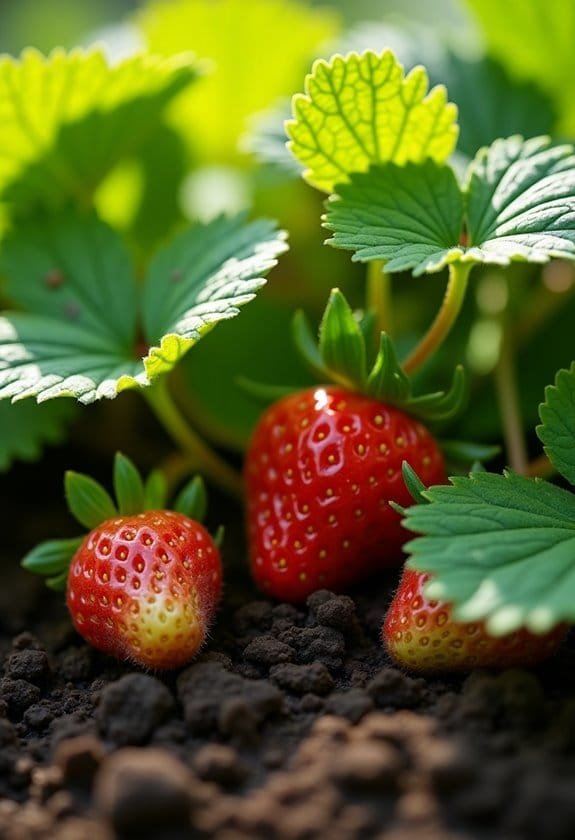
Strawberries flourish in specific growing conditions that greatly impact their development and yield.
With a preference for fertile, well-drained soils that boast a pH between 5.5 and 6.8, these plants also require ample sunlight, typically thriving in full sun or partial shade.
Regular watering, about one inch weekly, is critical to support their short root systems, allowing for healthy growth and bountiful harvests.
Light
Garden strawberries thrive best with 6 to 8 hours of direct sunlight daily, essential for their healthy growth and fruit production. This ample sunlight not only promotes ideal growth but also guarantees robust flowering, which is critical for maximizing fruit yield. When deprived of sufficient light, strawberry plants may produce inferior fruit quality and fewer blooms, leading to disappointing harvest outcomes.
To achieve perfect conditions, gardeners should space strawberry plants 1 to 2.5 feet apart in rows. This spacing prevents the plants from shading one another, ensuring that each plant receives adequate exposure to sunlight.
In regions characterized by intense heat, however, partial shading during the hottest parts of the day can mitigate the risk of sunburn damage, protecting both fruits and foliage.
Thus, a balance must be struck—while strawberries require plentiful sunlight for flourishing, occasional shading can be beneficial under extreme conditions. For the best results, guaranteeing that these plants bask in sunlight while avoiding overcrowding will support their development and enhance fruit production considerably, allowing gardeners to enjoy the fruits of their labor with gratifying satisfaction.
Soil
Healthy strawberry growth relies not only on sunlight but also on the right soil conditions. Strawberries thrive best in highly organic loam or clay soil that's well-drained and rich in nutrients. The ideal soil pH ranges from 5.5 to 6.8, ensuring that essential nutrients remain available for healthy plant development. Additionally, it is crucial to maintain nutrient availability to support robust plant growth and overall yield.
Before planting, gardeners should enrich the soil by incorporating compost or well-rotted manure, which enhances both fertility and structure.
Regular soil moisture is essential; however, it's important to avoid conditions that lead to waterlogging, since these environments can foster diseases like root rot, red stele, and verticillium wilt, which devastate strawberry crops. Rough Hawkbit, known for its drought tolerance, demonstrates how deep root systems can help prevent such issues by accessing moisture deeper in the soil.
Gardeners should aim to maintain consistent moisture, providing approximately an inch of water per week depending on rainfall.
Conducting soil tests before planting is beneficial, allowing gardeners to assess nutrient levels and overall soil health. This process enables them to make proper amendments, ensuring that their strawberry plants receive the ideal growing conditions.
Water
Consistently watering strawberry plants is fundamental for their growth and productivity. As members of the rose family, Fragaria × ananassa thrives with approximately 1 inch of water per week. Their short root systems require frequent watering to maintain health, particularly during the significant flowering and fruiting stages.
Maintaining consistent moisture during these periods is essential for best fruit production, as dehydration can dramatically affect yield.
However, growers must be cautious not to overwater, as excessive moisture can lead to root rot, a detrimental condition that jeopardizes the entire plant. Hence, cultivating soil that drains well is imperative to avoid waterlogging, which can suffocate roots.
Utilizing organic mulches not only aids in moisture retention but also mitigates evaporation while suppressing pesky weeds that compete for vital resources.
Regularly checking soil moisture allows gardeners to adjust their watering practices based on varying weather conditions, especially during dry spells. This vigilance promotes healthier plants and more abundant harvests.
Temperature
Strawberries flourish in a range of climates, ideally suited for USDA hardiness zones 3 to 10, where temperatures hover between 60°F to 80°F (15°C to 27°C). These temperature effects are essential for achieving ideal conditions for growth. When the mercury rises above 90°F (32°C), the plants can experience heat stress, which often results in diminished fruit yield and compromised quality.
The stress also disrupts flowering, risking the overall fruiting success.
Maintaining the soil temperature around 70°F to 78°F (21°C to 26°C) is critical for ideal root growth; mulching acts as a protective layer, helping to regulate both soil temperature and moisture levels. Additionally, strawberries require at least 1 inch of water per week during the growing season, particularly important in warmer climates.
Conversely, frost can pose a significant threat, particularly to flowering plants sensitive to spring frosts that may damage blossoms and reduce potential fruit set.
Ultimately, understanding how temperature influences strawberry cultivation allows gardeners to create an environment conducive to robust growth, rich yields, and the sweet, succulent berries that everyone loves.
Pollinator Criteria
Strawberries, particularly Fragaria × ananassa, gain significant benefits from specific pollinators, primarily specialized bees.
These bees, lured by the plants' striking white to reddish-pink flowers, facilitate an effective pollination method that directly influences fruit quality and yield.
Attracted Pollinators
Attracting a variety of pollinators, the garden strawberry thrives on the essential contributions of specialized bees and other insects during its flowering stage. With striking white to reddish-pink blooms that showcase five petals, these plants require external pollination to enhance fruit production and improve overall yields.
Pollinator diversity plays an important role in this process, as different species contribute varying benefits to strawberry crops, from increased fruit size to enhanced flavor. Additionally, incorporating plants like the Common Cowslip can attract even more pollinators, thanks to its early blooming period and prolific nectar production.
Garden design that incorporates complementary flowering plants can greatly amplify pollinator visitation, benefiting the strawberries. By synchronizing the flowering periods of different plants, gardeners can create a vibrant ecosystem that fosters active pollination.
This approach not only supports healthy pollinator populations but can also lead to an increase in fruit set, as studies reveal that bees are responsible for up to 90% of the pollination needed for ideal strawberry development.
Consequently, maintaining a balance of flowering synchronization and plant diversity is essential for maximizing the health of pollinators and the quality of strawberry yields. Additionally, including plants like Greater Birds-Foot Trefoil can provide valuable nectar sources for pollinators, enhancing overall garden biodiversity.
Therefore, a thoughtful garden design becomes paramount, ensuring a resilient habitat that benefits both the strawberries and their important insect allies.
Pollination Method
Pollination methods for garden strawberries involve both self-pollination and cross-pollination, which greatly enhance fruit yield and size. The Fragaria × ananassa species features flowers that possess both male and female reproductive organs, allowing for effective self-pollination.
While self-pollination benefits the plant by ensuring some level of fruit production, cross-pollination techniques considerably increase fruit size and overall yield due to genetic diversity.
Specialized bees are naturally drawn to the bright, showy flowers, employing pollinator attraction strategies that optimize the fertilization process.
Successful pollination tends to occur on warm, dry days with low humidity, as these conditions promote bee activity and pollen transfer.
In addition, planting multiple cultivars boosts the likelihood of cross-pollination, as differing flowering times allow for overlapping blooming periods. This synchronization can result in a more robust harvest. Cats Ear can also be managed effectively to support the surrounding ecosystem and enhance the pollination efforts for other plants.
Care & Maintenance
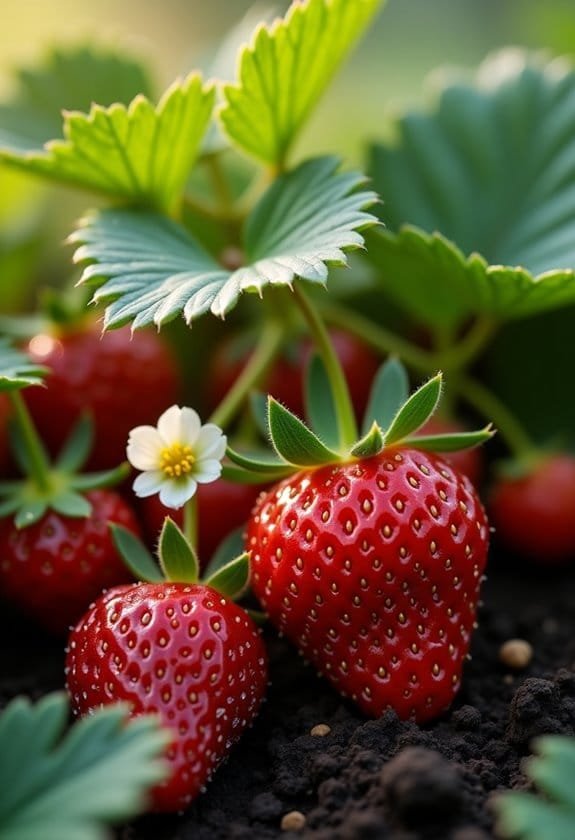
Caring for garden strawberries involves understanding the key components of planting, ongoing maintenance, and suitable companions for optimal growth.
These delicate plants thrive when provided with consistent moisture and a balanced fertilizer, which considerably enhances their establishment and productivity, particularly during critical stages like flowering and fruiting.
Furthermore, selecting appropriate companion plants can foster a supportive growth environment, improving overall health and resilience against pests while creating a harmonious garden ecosystem.
Planting Tips
Planting strawberries successfully requires a commitment to their specific needs and conditions. First, one must select well-drained, fertile soil with a pH ranging from 5.5 to 6.5, preferably enriched with organic matter for peak growth.
Spacing the plants 1-2 feet apart in rows that are 3-5 feet apart allows ample sunlight and airflow, which helps to reduce susceptibility to diseases.
To promote strong plants, it's advisable to remove flower buds during the first year, diverting energy to root and foliage development.
Regular watering is essential, providing about 1 inch of water weekly, especially during dry spells, as strawberry plants possess shallow root systems that are prone to dehydration.
Implementing effective weed management is critical; applying a heavy layer of mulch, such as straw or pine needles, aids in suppressing weeds, retaining moisture, and insulating the roots from temperature extremes.
For successful growth, don't forget fertilization; a balanced fertilizer application supports robust development.
Additionally, early pest control methods guarantee that emerging threats don't compromise plant importance.
Each of these elements contributes to a fruitful strawberry harvest, securing an abundant yield in the seasons to come.
Ongoing Care
Once strawberry plants are established, ongoing care becomes indispensable for guaranteeing their health and productivity. Regular pest inspection is important since strawberry plants are vulnerable to nearly 200 pest species, alongside common diseases like powdery mildew and fruit rot. Gardeners should scrutinize their plants consistently and intervene promptly when issues arise.
These plants require about 1 inch of water weekly, as their short roots demand frequent moisture to avoid drought stress. Additionally, fertilizer application is necessary; applying a balanced fertilizer in early spring and again after harvest considerably supports ongoing plant health and enhances fruit production, while avoiding chemical applications post-fruit set safeguards the berries' quality.
Mulching with organic materials, such as sawdust or grass clippings, retains indispensable moisture while effectively suppressing weeds, creating a healthier growing environment.
Also, competent runner management is essential. Limiting the number of runners to a few per plant encourages more vigorous growth and better fruit yield, ultimately leading to a bountiful harvest.
With attentive care and mindful practices, gardeners can guarantee their strawberries thrive throughout the growing season, transforming their patch into a veritable haven of sweet, succulent fruit.
Suggested Companions
What companion plants thrive alongside strawberries to enhance their growth and protect them from pests? Companion planting plays an essential role in effective garden layout, allowing strawberries to flourish alongside crops like spinach, lettuce, and onions.
These companion plants not only optimize space but also serve as natural pest control, deterring unwanted insects that might threaten strawberry health. For instance, marigolds are particularly beneficial; they attract helpful insects while simultaneously repelling harmful nematodes that can damage strawberry roots.
Conversely, gardeners ought to avoid pairing strawberries with members of the brassica family, such as cabbage and broccoli, as these plants can greatly hinder strawberry growth and yield.
Additionally, incorporating herbs like basil not only may enhance the flavor of strawberries but also aids in repelling pesky aphids and other detrimental insects.
Regular maintenance strategies, including mulching with organic materials, further promote a thriving environment for strawberries and their companions, retaining moisture and suppressing weeds.
Therefore, when selecting companions, gardeners can cultivate a robust strawberry crop marked by health and liveliness, ensuring successful cultivation through strategic plant partnerships.
Common Issues
The garden strawberry faces numerous threats from pests and diseases, impacting both fruit quality and yield.
With around 200 pest species lurking, including the notorious strawberry aphid, diligent monitoring and integrated pest management strategies become essential to safeguard these beloved fruits.
Pests/Diseases
Strawberry plants face numerous challenges, with around 200 pest species known to threaten their health and productivity. Among these, the strawberry aphid stands out due to its ability to transmit harmful viruses like the strawberry mild yellow-edge virus. Additionally, these plants often grapple with diseases such as powdery mildew, leaf blight, gray mold, and rhizopus rot, conditions that thrive under stressed growing circumstances.
Regular monitoring of rotting fruits and root issues, particularly red stele, is crucial, as unchecked problems can devastate crop quality.
Implementing effective pest management strategies is significant in combatting both pests and disease vectors. Growers can enhance their crops' resilience by selecting disease resistance varieties, which offer some protection against prevalent diseases.
Moreover, organic control methods, which include natural predators and environmentally safe treatments, can mitigate the reliance on chemicals, thereby safeguarding not just the plants but also the surrounding ecosystem.
It's important to avoid chemical pesticide applications post-fruit set to protect developing berries. With careful adherence to label instructions, growers can navigate the challenge of keeping their strawberries healthy and flourishing throughout the growing season.
Solutions
Facing common issues like pests and diseases, growers must take proactive steps to guarantee healthy strawberry plants. Key strategies include robust pest control measures and effective disease prevention techniques, which together support ideal soil health.
Regular inspections for signs of stress are essential, allowing growers to catch issues like powdery mildew and root rot early. Maintaining proper watering practices helps keep soil adequately moist but never waterlogged, thereby reducing risks of fungal infections.
Additionally, selecting disease-resistant cultivars such as Albion or Jewel greatly minimizes susceptibility to the many pests and diseases that plague strawberry crops. Implementing integrated pest management strategies, which incorporate beneficial insects and organic pesticides, effectively combats common threats like aphids and spider mites.
Moreover, removing flower buds during the first year fosters strong root development, leading to a more resilient plant poised for increased yields in future growing seasons. Heavy mulching with organic materials not only retains soil moisture but also inhibits weeds and provides a protective barrier against rot-related diseases.
Together, these practices form a thorough approach to nurturing thriving strawberry plants, producing bountiful, delicious fruit for harvest.
Are Garden Strawberries and Annual Baby’s Breath Compatible for Companion Planting?
When considering companion planting, it’s important to note that garden strawberries and annual baby’s breath plant can be compatible. Garden strawberries can benefit from the pest-repelling qualities of annual baby’s breath plant, while the delicate flowers of the baby’s breath add visual interest to the garden.
Summary
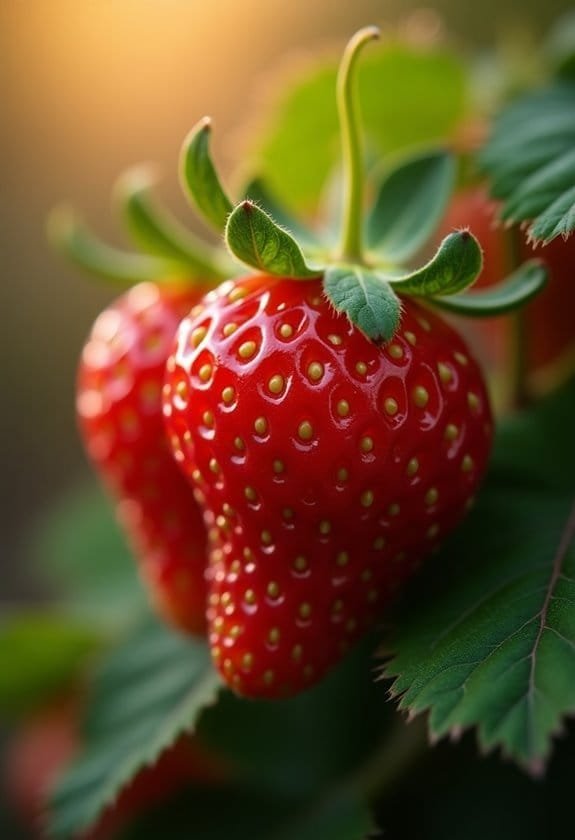
Garden strawberries, scientifically known as Fragaria × ananassa, are a delightful hybrid that originated from North American and Chilean strawberry species in 18th century France.
This remarkable plant showcases a unique blend of inherent traits, enabling it to deliver both cultural significance and culinary versatility. As a beloved choice in gardens, garden strawberries not only symbolize fruitful abundance but also serve as a delicious addition to numerous dishes, whether consumed fresh or incorporated into desserts and salads.
Cultivated primarily in sunny patches of organic loam or clay soil, these perennial plants flourish, growing 6-12 inches high and extending 1-2 feet wide. With June-bearing and ever-bearing varieties, they offer bountiful harvests throughout their growing seasons.
Beyond their tempting flavors, garden strawberries boast substantial health benefits; they're rich in Vitamin C, dietary fiber, and numerous phytochemicals, which may contribute to overall wellness.
Thus, Fragaria × ananassa embodies profound cultural importance, diverse culinary uses, and remarkable health benefits, making it a staple in both home gardens and kitchens around the world. The garden strawberry remains a cherished icon of both nature's bounty and human creativity.