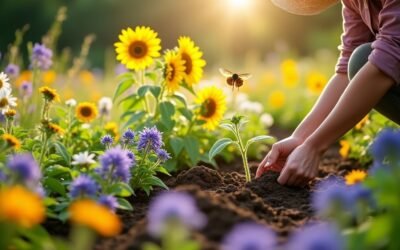
Glebionis segetum, or corn marigold, is a striking annual herbaceous plant from the Asteraceae family, celebrated for its bright yellow, daisy-like flowers, which bloom from June to October. These blooms, measuring 3.5 to 5.5 cm in diameter, not only enhance landscapes but also provide crucial nectar and pollen to various pollinators, including bees and butterflies. It thrives in well-drained, nutrient-rich soils, requiring sunlight and moderate moisture management. Although it serves an essential ecological role, its robust growth can become competitive in agricultural settings, posing challenges that necessitate careful management. Further insights into its historical uses and ecological contributions await exploration.
Main Points
- Glebionis segetum, also known as corn marigold, features bright yellow flowers and deeply lobed leaves, blooming from June to October.
- This plant offers ecological benefits by attracting pollinators like bees and butterflies, supporting local biodiversity.
- Originally classified as Chrysanthemum segetum, it highlights the importance of plant taxonomy and ecological relationships in agricultural environments.
- Glebionis segetum thrives in sunny, well-draining soils and requires regular watering; it adapts well to disturbed agricultural fields.
- While ecologically significant, it can compete with crops, necessitating effective management strategies to control its growth in agricultural landscapes.
Introduction
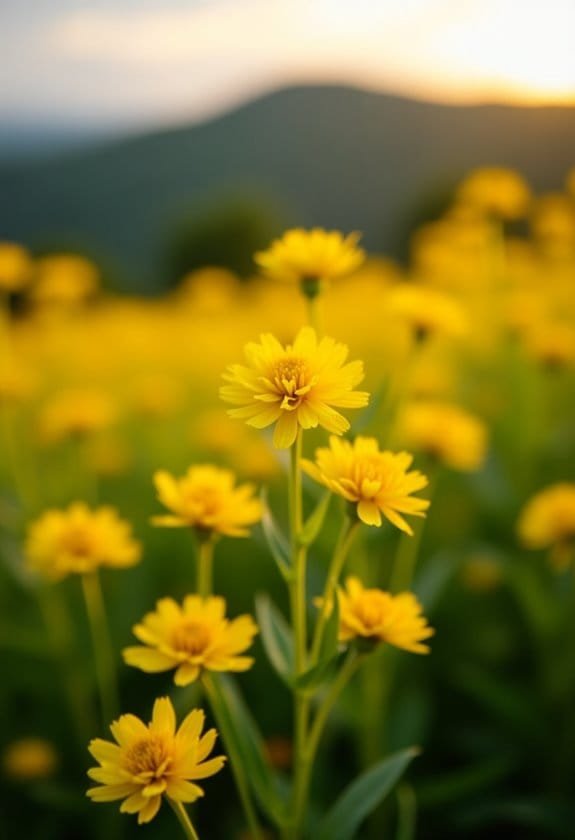
Glebionis segetum, often referred to as corn marigold or field marigold, presents a vibrant display with its striking yellow flowers that resemble daisies.
As an annual herbaceous plant from the Asteraceae family, it plays a pivotal role in supporting local ecosystems by providing nectar and pollen for various pollinators.
Originally classified under the genus Chrysanthemum, this plant's reclassification highlights the dynamic nature of botanical taxonomy and its profound implications for biodiversity. Additionally, corn marigold is recognized for its essential role as a nectar source for various pollinators throughout its blooming season.
Common Name
Often found in agricultural landscapes, corn marigold—also known as field marigold or yellow horse daisy—has a close connection to farming and disturbed soils. This visually engaging plant, scientifically identified as Glebionis segetum, thrives in settings that have experienced human impact, such as plowed fields or pastures. Its common names reflect its historical ties to agriculture, emphasizing both its location in cornfields and its resemblance to other marigold species.
The epithet "segetum," translating to "of the cornfields," further underscores its association with agricultural environments. With bright yellow, daisy-like flowers blooming from June to October, corn marigold provides a stunning display, brightening the landscape while attracting essential pollinators like bees and butterflies.
Glebionis segetum often features in seed mixes designed for wildflower meadows, appreciated not only for its aesthetic charm but also for its ecological contributions. As awareness grows about the importance of biodiversity, the corn marigold stands out as a key species, bridging the gap between ecological health and agricultural practice.
Its varied common names serve as a reminder of the plant's significant role in both natural and cultivated environments, enhancing ecosystems across many regions.
Scientific Name
The scientific name of corn marigold is Glebionis segetum, which reflects its classification in the Asteraceae family. This species, previously known as Chrysanthemum segetum, underwent a notable reclassification in 1999 by the International Botanical Congress. Such changes in nomenclature underscore the evolving understanding of plant taxonomy, where scientific accuracy is paramount.
The epithet "segetum" translates to "of the cornfields," illuminating the corn marigold's natural habitat and its strong associations with agricultural areas, particularly those dominated by cereal crops. Glebionis segetum is renowned for its striking yellow, daisy-like flowers, which can span up to 5.5 cm in diameter, creating a vibrant display across fertile landscapes.
Additionally, this species is characterized by its deeply lobed leaves that typically measure between 5-20 cm in length, arranged spirally along the stem in a unique, mesmerizing fashion. These morphological features not only contribute to the plant's aesthetic appeal but also aid in its survival in the wild.
Together, the scientific name and its components provide insight into the identity and ecological significance of this charming flower, illustrating its connection to agricultural ecosystems.
Overview
Corn marigold, or Glebionis segetum, thrives in disturbed soils and agricultural fields, showcasing its resilience and adaptability. This herbaceous annual plant, featuring vibrant yellow daisy-like flowers, typically blooms from June to October. Originating from the eastern Mediterranean region, it has since naturalized across western and northern Europe, as well as in parts of North America and China.
Glebionis segetum greatly contributes to local biodiversity by providing nectar and pollen, essential resources for various pollinators. Despite its ecological contributions, this plant has historically posed challenges for agriculture, particularly during the 13th century when it competed with crops for nutrients and sunlight.
Currently classified as Vulnerable due to habitat loss and extensive agricultural practices, its survival hinges on conservation efforts. Interestingly, corn marigold's relevance extends beyond its role as a weed; in certain cultures, the young shoots are consumed as vegetables, reflecting its historical and culinary significance.
The duality of Glebionis segetum—both as a weed and a food source—highlights its intricate relationship with humans and ecosystems, emphasizing the need for awareness in managing this resilient species. Additionally, like Common Tansy, this plant can support local pollinators, feeding various bees and butterflies that are vital to ecosystem health.
Key Features
Glebionis segetum, or Corn Marigold, boasts impressive characteristics that define its charm.
Reaching heights of up to 80 cm, the plant displays spirally arranged, deeply lobed leaves that span 5 to 20 cm in length, providing an alluring backdrop for the vibrant yellow flowerheads.
With a remarkable blooming season stretching from June to October, this species not only brightens its surroundings but also plays an essential role in supporting pollinators through its abundant nectar and pollen resources.
Growth Size
Standing tall, Glebionis segetum reaches impressive heights of up to 80 cm. This herbaceous annual plant showcases a robust growth size, making it an enchanting addition to any garden. Its deeply lobed leaves can measure between 5–20 cm in length, spirally arranged to create a lush, bushy appearance.
These leaves, with their mid-green to blue-green hues, not only offer aesthetic appeal but also complement the vibrant blooms that emerge during its long blooming period.
The flowers of Glebionis segetum are particularly notable, featuring a charming composition of bright yellow ray florets encircling a central disk. The flowerheads, often measuring between 3.5 to 5.5 cm in diameter, contribute to the plant's eye-catching presence, attracting pollinators and enhancing biodiversity.
Thriving in sunny, free-draining soils, this resilient species demonstrates its adaptability and ease of cultivation.
Appearance
One can easily recognize Glebionis segetum by its striking bright yellow flowers that resemble daisies, with a diameter ranging from 3.5 to 5.5 cm. These vivid blooms, often referred to as corn marigold, showcase an intriguing arrangement of ray florets encircling a center filled with disc florets, creating an inviting spectacle in meadows and fields.
Additionally, the plant presents spirally arranged, deeply lobed leaves, typically measuring between 5 and 20 cm in length, which contribute to its feathery appearance. The mid-green to blue-green color of these leaves contrasts beautifully with the vibrant yellow flowers. Covered in a waxy layer, the leaves acquire a slightly fleshy texture, an adaptation that minimizes water loss, making Glebionis segetum resilient in various habitats.
Reaching heights of up to 80 cm, this herbaceous annual often flourishes in arable fields, waste areas, and disturbed soils. Its long, divided leaves and radiant blooms serve as key identifiers of this species, forming a graceful tapestry in the landscape during its extended growing cycle from spring through autumn. Each of these features contributes to the corn marigold's unique charm and ecological role.
Flowering Season
Blooming from June to October, Glebionis segetum showcases its vibrant yellow flowers at their peak during the warmer months. These daisy-like blooms, 3.5 to 5.5 centimeters in diameter, feature a delicate ring of ray florets encircling the central disc florets, creating an eye-catching display.
The flowering season isn't just a visual feast; it also plays a crucial ecological role. With a long blooming period, the plant excels in nectar production, inviting an array of pollinators, including bees and butterflies, to its sunny embrace.
Thriving in disturbed habitats such as roadsides and agricultural fields, Glebionis segetum flourishes under the sun, enhancing its appeal to the local ecosystem.
The extended flowering season supports diverse insect populations, allowing pollinators to gather nourishment throughout the summer and early autumn. As these pollinators visit the flowers, they facilitate cross-pollination, which is fundamental for the plant's reproductive success and genetic diversity.
Growing Requirements
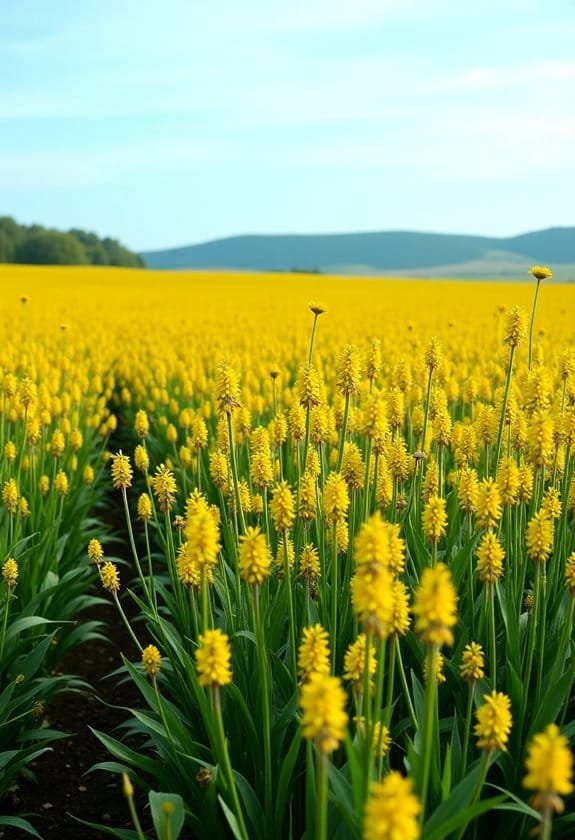
Glebionis segetum flourishes in bright sunlight and requires well-drained soil, which is essential for its development.
This remarkable herb thrives best when soil disturbance remains minimal, allowing it to establish itself and grow vigorously.
In addition, ideal water conditions and temperature management play critical roles in fostering healthy growth, ultimately supporting its vibrant, daisy-like blooms that attract beneficial pollinators.
Light
For ideal growth and blooming, this species thrives in full sun exposure. Glebionis segetum, commonly known as Corn Marigold, requires bright, direct light to achieve optimal growth and lush flowering. While it can tolerate partial shade, the plant's vitality markedly diminishes in less favorable light conditions, leading to fewer blooms and weaker foliage. In fact, excessive shade hampers its vibrant display, reducing the overall appeal that cultivators so desire.
The relationship between light and plant health is critical; monitoring environmental conditions guarantees that Glebionis segetum receives adequate sunlight without the stress of prolonged dampness or heat extremes. These outdoor conditions can stunt growth and compromise the plant's inherent resilience.
Additionally, cultivators should recognize that this species accommodates minimal soil disturbance, promoting an untroubled root environment, which further supports strong growth.
To summarize, guaranteeing full sun exposure not only fosters ideal growth but also paves the way for a stunning blooming period, transforming gardens into a lively array of color and texture.
Certainly, the right light conditions can create an enduring partnership with this marigold, rewarding gardeners with vibrant and flourishing displays throughout the growing season.
Soil
Healthy soil is fundamental for the successful growth of Glebionis segetum, as this plant flourishes in sunny, free-draining environments. It thrives best in disturbed soils, commonly found in arable fields, roadsides, and waste areas, where minimal soil disturbance allows for optimal conditions. This species demonstrates remarkable adaptability, but it truly excels in rich, fertile soils that are teeming with nutrients, enhancing its vibrant blooms.
To support the growth and blooming of Glebionis segetum throughout its long flowering period, regular monitoring of soil moisture and fertility is essential. Adequate moisture content enables the plant to absorb critical nutrients, promoting robust development. Furthermore, the plant benefits from a consistent supply of nectar production to sustain local pollinators, which can enhance overall garden health.
Additionally, minimizing soil compaction not only improves aeration but also fosters healthier root systems, maximizing the plant's blooming potential. The correlation between soil quality and plant health can't be overlooked; the right nurturing environment greatly influences the blooming splendor of Glebionis segetum. Moreover, Common Yarrow can also thrive in similar soil conditions, showcasing the adaptability of many wildflowers.
Ultimately, creating and maintaining an ideal soil condition, characterized by well-draining, fertile properties, is crucial for cultivating this charming wildflower, ensuring it can flourish beautifully in gardens and natural landscapes alike.
Water
Water is an indispensable component for the successful growth of Glebionis segetum, as it thrives in well-drained soils but can also withstand dry conditions. Although this plant exhibits remarkable drought tolerance, providing adequate water during germination and early growth stages is essential. This initial moisture promotes robust development, allowing seedlings to establish strong root systems.
Glebionis segetum benefits from occasional watering, especially during prolonged dry spells, which helps sustain its blooming and overall health. While it adapts well to limited moisture, the plant doesn't tolerate waterlogging; thus, ensuring proper drainage in planting areas is critical. Waterlogging can lead to root rot, severely undermining the plant's vigor.
Regularly monitoring soil moisture levels, particularly in sandy or light soils, enhances the chances of ideal growth conditions for the corn marigold. This proactive approach allows gardeners to adjust their watering practices, striking a balance that supports the plant without risking the detrimental effects of excess moisture.
Temperature
Glebionis segetum flourishes best in warm temperatures, thriving with full sun exposure that promotes vigorous growth. This herbaceous annual is particularly adapted to climates averaging between 15°C to 25°C (59°F to 77°F).
During this temperature range, the plant exhibits a stunning and prolonged blooming period from June to October, where it's at its most vibrant. However, Glebionis segetum's delicate nature becomes evident as frost can severely damage young plants, necessitating protection from unexpected cold snaps.
Temperature management becomes essential for successful cultivation, as this plant prefers well-drained soils. Excessive moisture in cooler conditions can lead to root rot and stunted growth, jeopardizing overall health.
To guarantee peak growth, gardeners should monitor both temperature and soil moisture, creating an environment where Glebionis segetum can thrive.
In essence, maintaining the right temperature and guaranteeing well-drained soils won't only enhance the growth potential of Glebionis segetum but also extend its lush blooming period, providing a stunning display in summer and early autumn gardens.
Pollinator Criteria
Glebionis segetum plays an essential role in attracting a diverse array of pollinators, particularly bees, small butterflies, and hoverflies.
Its flowers, adorned with striking ray florets encircling disc florets, serve as an effective nectar source, facilitating successful pollination through a method known as cross-pollination, where pollen transfers between different plants. Additionally, Bugloss's role as a pollinator attractant highlights the importance of diverse plant species for maintaining healthy ecosystems. The presence of Creeping Cinquefoil in the vicinity can further enhance the habitat's appeal to pollinators, providing additional resources and promoting local biodiversity.
Attracted Pollinators
In the vibrant ecosystem of UK meadows, Glebionis segetum plays a fundamental role in attracting a variety of pollinators. This species is highly regarded for its exceptional nectar production, making it a vital food source for numerous beneficial insects. Its bright yellow flowers, which bloom from June to October, not only create a stunning visual display but also provide considerable quantities of nectar and pollen.
As these flowers flourish throughout the warmer months, they support a diverse array of pollinator species, including bees and small butterflies, enhancing overall pollinator diversity in the region.
Particularly, hoverflies are drawn to the nectar-rich blooms of Glebionis segetum, highlighting the importance of this plant in urban flower meadows. The presence of such attractive and nutritious offerings guarantees that various insect species find the necessary resources to thrive. Additionally, the nectar and pollen source provided by such plants is crucial for supporting local biodiversity and sustaining pollinator health.
Consequently, Glebionis segetum greatly contributes to maintaining healthy pollinator populations in disturbed habitats, underscoring its ecological role in promoting biodiversity.
As the meadows resonate with life, the essential interactions between Glebionis segetum and its pollinators vividly demonstrate nature's intricate dance, harmonizing the needs of both flora and fauna within this delicate ecosystem.
Pollination Method
The vibrant yellow blooms of Glebionis segetum not only attract a host of pollinators but also facilitate their interactions through specialized pollination methods. These nectar-rich flowers serve as an essential food source, offering a robust supply of nectar and pollen from June to October.
This extended blooming period effectively supports a variety of pollinators, including bees and beneficial insects, enhancing pollinator diversity within local ecosystems. Moreover, Glebionis segetum exhibits strong adaptability to diverse environments, such as cultivated fields, which supports increased pollinator activity.
Glebionis segetum's attractive flowers exhibit traits that encourage foraging behavior among pollinators. The arrangement and color of the flowers help to captivate their attention, while the richness of the nectar acts as a strong incentive for them to visit repeatedly.
Research shows that the nectar production of Glebionis segetum is on par with that of Centaurea cyanus, underscoring its significance in urban flower meadows. By thriving in disturbed soils, this plant not only attracts diverse insect species but also plays a crucial role in ecological restoration. Additionally, like Centaurea cyanus, Glebionis segetum can support biodiversity by enhancing habitats for various pollinators.
Ultimately, the interactions between Glebionis segetum and its pollinators highlight the plant's significant contributions to biodiversity, making it an invaluable component of sustainable ecosystems.
Care & Maintenance
Caring for Glebionis segetum involves understanding its specific requirements and ongoing needs to foster healthy growth.
It thrives in well-draining, sunlit environments, demanding minimal soil disturbance for effective weed control. White clover, for instance, is another plant that enhances soil quality through nitrogen fixation as a legume.
Regular observation during its pivotal flowering months, from June to October, prevents it from becoming overly invasive.
Selecting suitable companion plants further enhances its growth, creating a balanced ecosystem that supports both cultivation and wildlife. Additionally, regular deadheading can help manage seed production in Glebionis segetum, similar to practices for maintaining Ox-Eye Daisy.
Planting Tips
To successfully plant Glebionis segetum, choose a sunny location and prepare well-draining soil that requires minimal disturbance. This vibrant plant flourishes in sunlight, allowing its bright blooms to thrive during the natural blooming period from June to October.
When selecting a site, ascertain that the soil remains well-draining, as excessive moisture can impede growth and lead to detrimental conditions.
For prime growth, it's best to sow the seeds in the spring, aligning with the plant's natural lifecycle. Regular hand weeding proves essential for controlling Glebionis segetum's spread, as this method helps maintain the desired density without disrupting the underlying soil structure.
Monitoring the area for overcrowding is important; too many plants can compete for limited resources, diminishing their beauty and vigor.
In addition, keep a vigilant eye on environmental conditions that may affect growth. With its adaptability to disturbed habitats and various soil types, this plant can flourish if provided with care.
Ongoing Care
Successful ongoing care for Glebionis segetum hinges on a few key practices that assure its vibrant blooms continue to thrive. This hardy plant flourishes in sunny, free-draining soils, requiring minimal soil disturbance to maintain its health.
Throughout its flowering period, from June to October, regular monitoring of environmental conditions is essential. Growers should pay attention to both moisture and light levels to guarantee ideal growth, as maintaining optimal moisture is crucial for optimal growth similar to other flowering plants.
Weed management plays a critical role in ongoing care. Hand-pulling offers a gentle yet effective method for removing unwanted plants without causing soil disruption. This approach allows Glebionis segetum to flourish in its intended habitat.
Additionally, although the plant self-sows naturally, integrated weed management strategies can be employed to avoid infestations and maintain a healthy population.
While Glebionis segetum presents a medium difficulty level for care, it rewards attention with bountiful blooms. Research shows that similar flowering plants, like Calendula officinalis, can enhance pollinator activity due to their abundant nectar and pollen transfer capabilities.
Occasional checks on growth habits offer insights into the plant's well-being, enabling gardeners to adjust their maintenance strategies as needed.
With diligent care, this enchanting flower can be a stunning addition to any garden, enhancing its ecological and aesthetic value.
Suggested Companions
Pairing Glebionis segetum with compatible companions can enhance both its beauty and ecological value in the garden. Remarkably, this plant thrives alongside Centaurea cyanus (cornflower) and Papaver rhoeas (corn poppy), which flourish under similar sunlight and soil conditions. Additionally, the presence of pollinator interactions supports the health of companion plants in the garden ecosystem.
Ideally situated in sunny, well-drained areas, Glebionis segetum promotes peak growth and vibrancy from June through October, especially when supported by regular watering during dry spells.
Incorporating a variety of nectar-providers through companion planting can effectively attract beneficial insects, enriching pollinator diversity and enhancing the overall garden ecosystem. This strategic integration not only supports Glebionis segetum's health but also contributes to a balanced environment, crucial for ecological sustainability. Additionally, planting with Papaver rhoeas can improve genetic diversity through enhanced cross-pollination.
Moreover, maintaining adequate spacing between the plants facilitates air circulation, greatly reducing the likelihood of diseases while allowing Glebionis segetum's golden blooms to flourish magnificently.
While less disturbed soils yield better results, the careful selection of companions can create a rewarding and visually stunning landscape, where the interplay of colors and fragrances captivates both insects and gardeners alike.
Ultimately, thoughtful planning guarantees that every element within the garden contributes to a harmonious, thriving habitat.
Common Issues
The challenges posed by Glebionis segetum extend beyond its competitive nature in agricultural landscapes, as pests and diseases can greatly exacerbate its impact.
These issues are often intertwined, with weakened crops becoming more susceptible to infestations, hence creating a vicious cycle that jeopardizes yield and quality.
To effectively address these common concerns, implementing targeted management solutions, such as specific herbicide applications and vigilant monitoring, becomes essential for maintaining crop health and productivity.
Pests/Diseases
While Glebionis segetum (Corn Marigold) is largely resistant to pests and diseases, it can face challenges from specific infestations and conditions. Common pests, such as aphids and slugs, may occasionally target the plant, detracting from its overall vigor and liveliness. These unwelcome visitors often lead to a noticeable decline in plant health if not effectively addressed.
In addition to these pests, fungal diseases can emerge under humid conditions. Both powdery mildew and rust can cause significant leaf discoloration, impairing the plant's ability to photosynthesize efficiently, consequently affecting growth and flowering potential. This is particularly concerning as healthy foliage is crucial for optimal photosynthesis.
Another significant concern involves root-knot nematodes, which can inflict considerable damage. These microscopic parasites invade the roots, causing wilting and stunted development, ultimately reducing flowering and vigor.
Effective management of these pests and fungal diseases involves ensuring good air circulation around plants and maintaining proper drainage to prevent excess moisture accumulation. Furthermore, integrating other plants like Cirsium vulgare in the garden can support beneficial insect populations and enhance natural pest control mechanisms.
Regular monitoring is essential; early intervention is critical for preserving the health and ecological benefits of Glebionis segetum. Through attentive care, gardeners can mitigate these challenges, safeguarding the resilience of this vibrant plant.
Solutions
Addressing the challenges posed by Glebionis segetum requires a proactive approach to weed management. This problematic weed can notably undermine crop health, competing fiercely for essential resources such as nutrients, water, and light.
With seeds that can persist in the soil for several years, persistent infestations become particularly intimidating for farmers.
The adoption of integrated weed management strategies stands out as an effective means to combat Glebionis segetum. Regular monitoring of agricultural settings allows for early detection and intervention.
Hand pulling, although labor-intensive, provides a viable method of removal without disrupting the soil structure, thereby preserving its integrity and health.
Additionally, applying targeted herbicides, such as Nufarm's Paramount Max and Eagle, effectively controls Glebionis segetum in cereal crops, aiding in the suppression of this aggressive weed.
However, careful identification remains vital due to Glebionis segetum's resemblance to other similar species, complicating removal efforts.
Summary
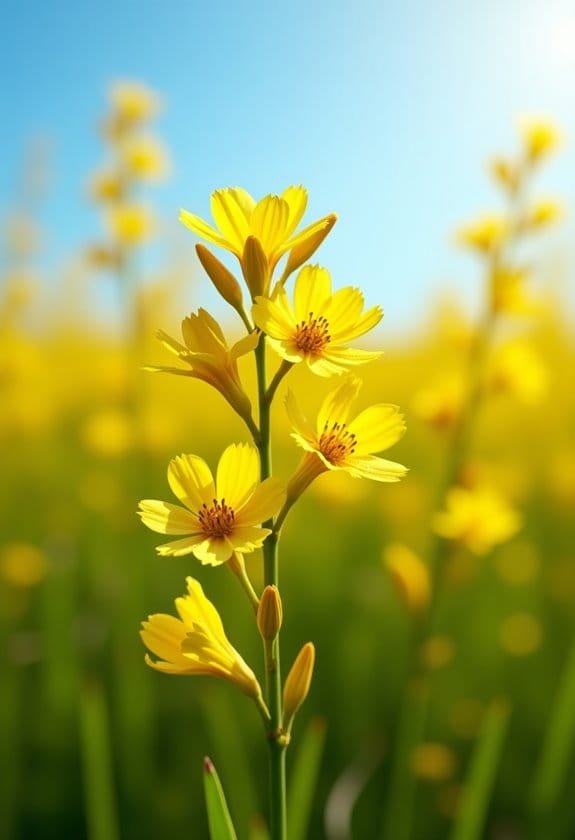
Glebionis segetum, or corn marigold, is an herbaceous annual plant known for its striking bright yellow flowers and extensive blooming period from June to October.
Originating in the eastern Mediterranean, it has naturalized in various regions, including Europe, China, and North America. The plant boasts daisy-like flowers ranging from 3.5 to 5.5 cm in diameter, providing essential resources for pollinators during its long flowering season.
Despite its aesthetic appeal, Glebionis segetum is recognized as a serious agricultural weed. Its competitive nature rendered it a target for historical penalties in 13th century Scotland, where it threatened arable crops.
Unfortunately, this species has been classified as Vulnerable and Near-Threatened, primarily due to habitat loss and detrimental agricultural practices, underscoring the urgent need for conservation efforts to preserve its existence.
Culturally, young shoots of corn marigold find their place in traditional cuisines, showcasing the plant's historical significance and adaptability to disturbed environments.
The dual nature of Glebionis segetum highlights both its ecological importance and challenges, urging a balanced perspective toward its management and preservation in modern landscapes.