Gypsophila elegans, or Annual Baby's Breath, is an exquisite flowering plant native to Eastern Europe and Western Asia. This charming species grows between 12 to 24 inches tall and spreads 18 to 24 inches, displaying small, star-shaped flowers in delicate shades of white and carmine-pink in late spring and early summer. Preferring full sun and well-draining soil with a neutral pH, it requires consistent moisture during growth but shows remarkable drought tolerance once established. Additionally, its nectar-rich blossoms attract essential pollinators, enhancing local biodiversity. For those intrigued by this enchanting plant, further exploration reveals more about its care and unique attributes.
Main Points
- Gypsophila elegans, known as Annual Baby's Breath, thrives in USDA zones 3-10, reaching heights of 12-24 inches with a spread of 18-24 inches.
- It features small, star-shaped flowers in white and carmine-pink, blooming from late spring to early summer, peaking in May and June.
- This plant prefers full sun and well-draining soil, requiring consistent moisture during growth but becoming drought-tolerant once established.
- Annual Baby's Breath attracts beneficial pollinators like bees and butterflies, enhancing biodiversity in gardens.
- It is popular for use in floral arrangements, symbolizing purity and adding elegance to landscaping designs.
Introduction
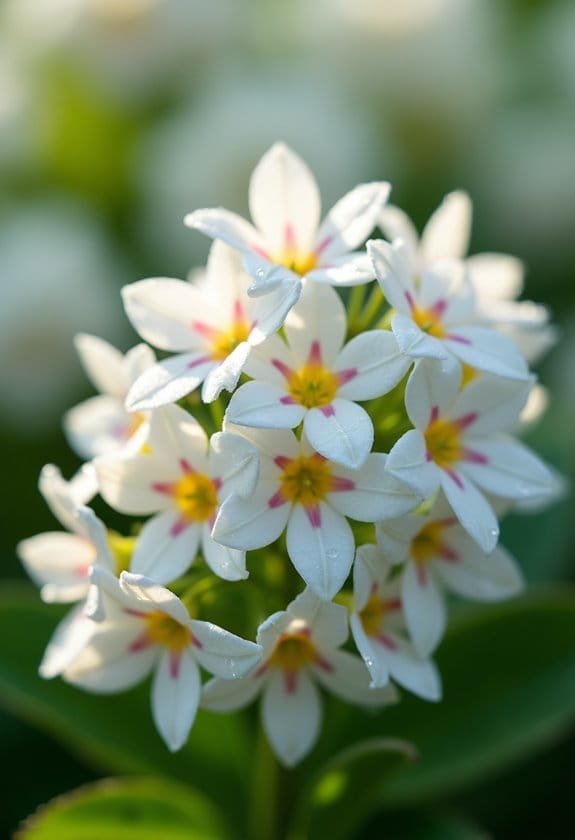
Gypsophila elegans, better known as Annual Baby's Breath, is a stunning addition to any garden, offering a profusion of small, star-shaped flowers in delightful white or carmine-pink shades.
This annual plant, native to Eastern Europe and Western Asia, typically reaches a height of 12-24 inches while spreading out 18-24 inches, creating a lovely visual presence.
Its remarkable attributes, including drought tolerance and ability to attract pollinators, make it both a practical and aesthetically pleasing choice for various floral arrangements and garden designs.
Common Name
Annual Baby's Breath, often characterized by its bushy growth and delicate clusters of small, star-shaped flowers, is a popular plant in gardens. Known scientifically as Gypsophila elegans, this annual plant completes its life cycle within a single growing season, producing enchanting blooms typically from late spring to early summer.
The flowers display charming hues, primarily in white or carmine-pink, and when grouped together, they create a breathtaking cloud-like effect that captures the eye.
Often referred to by alternative names such as Maidens Breath and Showy Baby's Breath, Annual Baby's Breath emphasizes its ornamental value, adding a beautiful layer of texture and elegance to garden beds.
Additionally, the plant's ethereal blooms are frequently utilized in floral arrangements, particularly in wedding bouquets. It provides a soft touch and functions effectively as an attractive filler, balancing more vibrant flower varieties.
The versatility of Baby's Breath makes it a staple choice for both professional florists and amateur gardeners alike, allowing for creative expression through its lovely formations.
Scientific Name
Known scientifically as Gypsophila elegans, Annual Baby's Breath reveals much about its identity through its classification. This delicate flowering plant, belonging to the Caryophyllaceae family, showcases a distinct departure from perennial varieties through its larger, more open blooms. These features not only enhance its appeal in floral arrangements but also make it a favorite choice in gardens, where creativity thrives.
Originating from Eastern Europe and Western Asia, Gypsophila elegans exhibits remarkable adaptability to various climates, thriving in USDA hardiness zones 3-10.
Gardeners will find that this species flourishes after the frost has passed, often becoming a canvas for new products as they experiment with contrasting colors and textures. Its cloud-like clusters of small star-shaped flowers bloom splendidly from late spring to early summer, creating a breathtaking visual spectacle.
For ideal growth, Gypsophila elegans prefers well-draining soil with a neutral to slightly alkaline pH.
Understanding its scientific classification and ecological requirements, gardeners can easily incorporate this enchanting plant into their landscapes, enriching their environments with charm and elegance, while celebrating nature's beauty.
Overview
With its delicate clusters of star-shaped flowers, Annual Baby's Breath, or Gypsophila elegans, captivates garden enthusiasts and floral arrangers alike. This charming annual, native to Eastern Europe and Western Asia, typically reaches heights of 12 to 24 inches while spreading 18 to 24 inches. Its small white or carmine-pink blooms grace the garden from late spring to early summer, offering a visually stunning backdrop for various plantings.
The cultural significance of Annual Baby's Breath lies in its extensive decorative uses, frequently appearing in bridal bouquets and floral arrangements, where it symbolizes purity and everlasting love. Its historical origins date back to ancient practices, with the plant often revered for its beauty and gentle grace.
Thriving in full sun with 6 to 8 hours of sunlight and preferring well-draining soil, this drought-tolerant flower requires consistent moisture during its growth phase to prevent root rot.
Beyond its aesthetic appeal, Annual Baby's Breath attracts essential pollinators like bees and butterflies, contributing to a thriving ecosystem. Through its beauty and ecological importance, Gypsophila elegans remains a timeless choice for gardeners and floral designers alike.
Key Features
Gypsophila elegans, or Annual Baby's Breath, showcases an impressive growth size, reaching heights between 12 and 24 inches, while spreading out 18 to 24 inches.
Its enchanting small, star-shaped blooms adorn gardens from late spring to early summer, creating a delicate cloud-like effect that captivates onlookers.
With its preference for full sun and well-draining soil, this charming plant becomes a versatile addition to various landscape designs, all while promoting an inviting and vibrant atmosphere.
Growth Size
Reaching heights of 12-24 inches (30-60 cm), Annual Baby's Breath (Gypsophila elegans) displays a bushy and branching growth habit that's particularly appealing when planted in groups. This plant can spread approximately 18-24 inches (45-60 cm), creating an inviting presence in gardens and landscapes.
Its dense form not only enhances visual interest but also offers practical plant benefits, such as improved air circulation, especially when spaced 12-18 inches (30-45 cm) apart.
Thriving in USDA hardiness zones 3-10, Gypsophila elegans adapts well to diverse climates, allowing gardeners in various regions to enjoy its charming allure. Under ideal conditions, the plant exhibits vigorous growth habits, producing small, star-shaped flowers that gather into cloud-like clusters.
This floral display maximizes visual impact, ensuring that the Annual Baby's Breath can serve as a lively backdrop or a charming focal point in floral arrangements.
For those seeking a low-maintenance yet enchanting addition to their gardens, Gypsophila elegans proves to be a delightful choice, combining beauty with resilience and adaptability in a wide range of environments.
This delightful perennial invites admiration and curiosity among gardening enthusiasts.
Appearance
In vibrant displays, Annual Baby's Breath (Gypsophila elegans) captivates with its bushy, branching habit, reaching heights of 12-24 inches (30-60 cm) and spreading 18-24 inches (45-60 cm). This plant showcases small, star-shaped flowers that exhibit enchanting color variations, primarily in shades of pure white and delicate carmine-pink. These blossoms bloom in cloud-like clusters, creating a soft, romantic appearance that enhances garden design, attracting both the eye and the heart.
Characteristically, Gypsophila elegans features larger, open blooms compared to its perennial counterparts, which makes it an esteemed choice for crafting floral arrangements. These clusters not only provide aesthetic charm but also serve a critical ecological function; their nectar-rich flowers draw in pollinators like bees and butterflies, fostering biodiversity.
The delightful combination of graceful aesthetics and ecological utility positions this species as a favorite among gardeners and floral designers alike. Moreover, its ability to thrive over several weeks when planted every 3-4 weeks until July guarantees a lasting display, allowing gardeners to enjoy the enchanting beauty of Annual Baby's Breath throughout the growing season.
This harmonious interplay of beauty and function solidifies its role in both landscapes and arrangements.
Flowering Season
The flowering season of Annual Baby's Breath (Gypsophila elegans) typically bursts with color from late spring to early summer, delivering a stunning display of star-shaped blooms. This flowering schedule is characterized by a bloom duration that spans several weeks, with the luscious display reaching its zenith between May and June.
The plant's petite flowers, appearing in shades of white or carmine-pink, evoke a sense of airy delight, particularly when clustered together to create a cloud-like effect in garden beds or bouquets.
To guarantee peak production of these charming seasonal colors, the plant thrives in full sun, requiring about 6-8 hours of sunlight each day. Regular deadheading of spent blooms not only enhances the visual appeal but also encourages continuous blooming throughout its flowering season.
As a strategic planting tip, sowing seeds every 3-4 weeks until July allows for an extended display, ensuring that the garden remains vibrant. This approach fosters an ongoing spectacle of blooms, contributing to the allure of summer gardens and floral arrangements alike.
Consequently, Annual Baby's Breath effortlessly enriches any landscape, embodying the essence of classic summertime elegance.
Growing Requirements
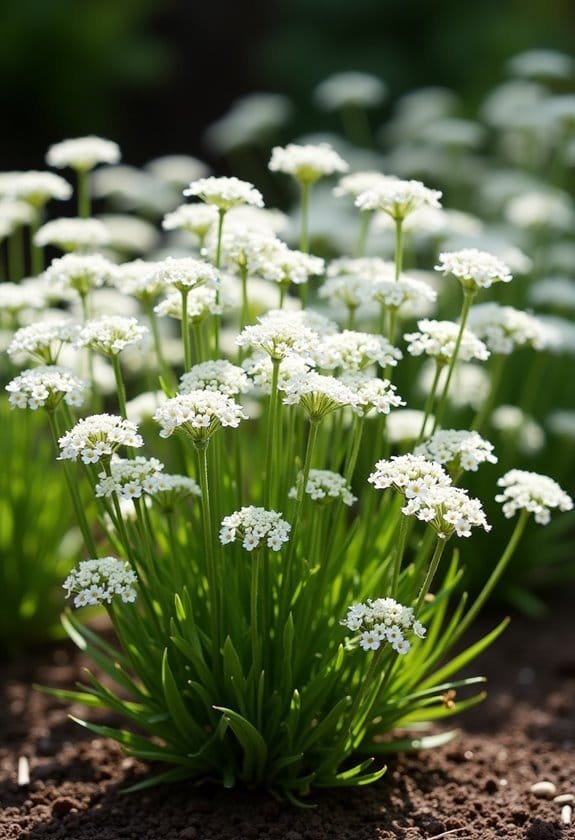
Gypsophila elegans flourishes under specific growing conditions that enhance its elegant blooms. This annual plant thrives in full sunlight, requiring 6-8 hours daily, while it also prefers well-drained soil with a neutral to slightly alkaline pH, ensuring robust root development and air circulation.
Regular watering is essential to maintain consistent moisture, especially during its early growth stages, enabling the plant to withstand moderate drought once it's established.
Light
Full sun is crucial for Gypsophila elegans, also known as Annual Baby's Breath, as it thrives with 6-8 hours of direct sunlight each day. This light duration fosters ideal flowering, allowing the plant to reach heights of 12-24 inches, creating a bushy and vibrant display.
The intensity of sunlight directly impacts flower quality; insufficient light can weaken stems and diminish bloom production, ultimately detracting from the plant's visual appeal.
Furthermore, light exposure greatly influences the blooming season's duration, which typically spans from late spring through early summer. In these well-lit environments, the Annual Baby's Breath produces an abundance of delicate, airy blooms, enchanting those who encounter it.
Conversely, inadequate light results in a lackluster display, illustrating the importance of fulfilling its light requirements.
Therefore, prospective gardeners should confirm that they plant Annual Baby's Breath in areas with ample sunlight, avoiding shaded spots. By prioritizing these conditions, they maximize growth potential and minimize the risk of poor flowering, contributing to a breathtaking landscape adorned with alluring, ethereal blossoms.
Ultimately, robust light conditions are the cornerstone of a flourishing Gypsophila elegans garden.
Soil
Providing sufficient light sets the stage for the overall health of Gypsophila elegans, but achieving optimum growth also hinges on proper soil conditions.
This charming flower thrives best in well-draining soil types, as heavy clay can lead to disastrous root rot and impede healthy development. A neutral to slightly alkaline pH range of 6.0 to 8.0 not only supports effective nutrient availability but enhances overall nutrient balance essential for vibrant blooms.
The importance of drainage can't be overstated; Gypsophila elegans requires consistent moisture, yet the soil should allow for slight drying between watering sessions. Maintaining appropriate moisture levels encourages vigorous growth while preventing potential fungal issues.
Sowing seeds in soil warmed to at least 70°F further guarantees that seedlings develop robustly.
Air circulation also plays an integral role in maintaining healthy soil conditions and preventing disease; spacing plants 12-18 inches apart enables fresh airflow, which is critical for both soil health and plant vitality.
Water
Maintaining consistent moisture is essential for the healthy growth of Annual Baby's Breath. This plant thrives in soil that remains slightly moist, particularly during its early development phase. Regular watering is important right after sowing to guarantee successful seed germination and robust growth. It's important, however, to allow the soil to dry slightly between waterings, as excess moisture can lead to root rot and stem diseases.
Once established, Gypsophila elegans exhibits moderate drought resilience, allowing it to endure dryer conditions with less frequent watering. Nevertheless, for peak performance and vibrant blooms, maintaining a consistent watering frequency greatly aids in moisture retention within the soil.
In particularly dry spells or drought conditions, gardeners should monitor the plants vigilantly, confirming adequate hydration to prevent stress and maintain their health.
Employing well-draining soil is essential, as it promotes healthy root development and minimizes the risk of overwatering. By balancing moisture levels, gardeners pave the way for lush, flourishing displays of Annual Baby's Breath, creating a visual delight, reminiscent of clouds scattered across a summer sky.
Ultimately, understanding these water requirements is critical for their overall success and vibrancy in any garden setting.
Temperature
Ideal temperature conditions are important for the vigorous growth of Gypsophila elegans, commonly known as Annual Baby's Breath. This plant flourishes best in temperatures ranging from 68°F to 75°F (20°C to 24°C) during the spring and summer months. Such a favorable range enables it to develop robustly, producing the delicate blooms it's cherished for.
When germinating, these seeds require soil temperatures to reach at least 70°F (21°C) for healthy development.
However, temperature extremes can hinder its growth. Excessive heat, particularly when temperatures exceed 85°F (29°C), may lead to stress, causing wilting and diminishing flower quality. Consequently, temperature regulation is essential, especially during the hottest periods.
Conversely, this plant exhibits a light frost tolerance, which allows it to endure brief spells of cold weather early in the growing season, a resilience that gardeners often appreciate.
Consistent moisture during warmer periods remains significant to support healthy growth and blooming, counteracting any temperature effects that might seek to jeopardize its vigor.
Therefore, a balanced approach to temperature management is fundamental for successfully cultivating Annual Baby's Breath and achieving a vibrant display in the garden.
Pollinator Criteria
Annual Baby's Breath, or Gypsophila elegans, attracts a diverse array of pollinators, especially bees and butterflies, thanks to its nectar-rich, star-shaped flowers.
The plant's open, flat blossoms, blooming in dense clusters, provide an accessible and abundant food source during the vital late spring to early summer foraging period.
This remarkable relationship not only aids in the plant's pollination but also supports biodiversity by fostering local pollinator populations in increasingly fragmented habitats.
Attracted Pollinators
Attracting a variety of pollinators, Gypsophila elegans showcases its nectar-rich, small star-shaped flowers, which bloom in striking clusters. This annual plant primarily draws in pollinators like bees and butterflies, due to its favorable nectar sources.
These insects have distinct pollinator preferences that align perfectly with the flower's accessibility, as the blooms are arranged in cloud-like formations, ensuring abundant resources during late spring to early summer.
The non-toxic nature of Baby's Breath markedly aids in promoting garden biodiversity, as it provides a safe, consistent food supply that supports various pollinator species.
The showy display of white and carmine-pink flowers enhances attractiveness, resulting in increased visitation rates, thereby benefiting neighboring plants through enhanced pollination opportunities.
In wildflower mixes, Gypsophila elegans proves particularly effective, offering an essential, sustained resource as pollinators search for nourishment.
Beyond its aesthetic appeal, this plant stands as a cornerstone of healthy ecosystems within garden settings. Additionally, its ability to support local biodiversity mirrors the role of plants like Common Vetch in enhancing ecosystem productivity through their contributions to nitrogen fixation.
Pollination Method
When it comes to pollination, Gypsophila elegans employs a method that greatly relies on visual cues and nectar rewards to entice its pollinators. The plant showcases small, star-shaped flowers that bloom in abundance from late spring to early summer, creating a cloud-like appearance. These formations serve as powerful visual signals for bees and butterflies, enhancing their foraging activities. The plant's nectar preferences are ideally matched to the needs of these pollinators, promoting frequent bee interactions that increase pollination success.
Pollination mechanisms in Gypsophila elegans benefit considerably from regular deadheading. By removing spent blooms, gardeners can stimulate continuous flowering, ensuring a steady supply of nectar and pollen.
Ideal growing conditions further bolster pollinator attraction; full sun exposure and well-draining soil enhance the plant's health and flower production. Importantly, Annual Baby's Breath is non-toxic to pets, allowing these crucial insects to thrive in gardens where curiosity and playfulness abound. Additionally, its role as a ground cover supports local biodiversity by providing habitat and nectar sources for various pollinators.
Observing these dynamics in action reveals the intricate relationships between plants and their pollinators, underscoring the essential role of Gypsophila elegans in local ecosystems.
Care & Maintenance
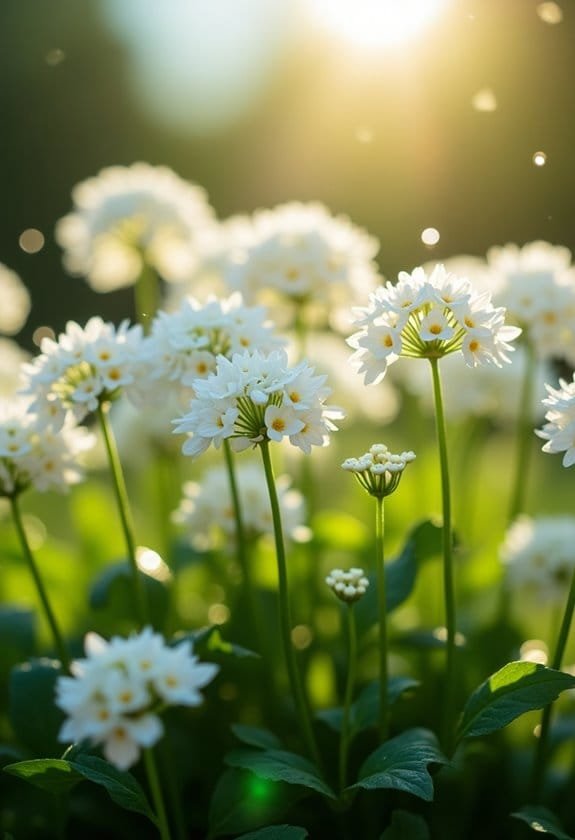
When it comes to caring for Gypsophila elegans, attention to detail is essential to guarantee robust growth and vibrant blooms.
Planting in well-draining soil with a neutral to slightly alkaline pH sets the foundation for success, while consistent moisture during the growth phase encourages healthy development.
Regular maintenance, including deadheading and monitoring for pests, can transform a modest garden into a stunning tapestry of delicate flowers, inviting admiration and enjoyment.
Planting Tips
To achieve stunning blooms, plant Annual Baby's Breath (Gypsophila elegans) in well-draining soil with a neutral to slightly alkaline pH, ideally between 6.0 and 8.0. This soil composition helps to prevent root rot while promoting vibrant growth.
When employing effective planting techniques, consider enriching the soil with organic soil amendments, such as compost, to enhance nutrient availability.
Position the plants in a location that receives full sun, ensuring they bask in at least 6 to 8 hours of daily sunlight, which is vital for peak blooming.
Following proper spacing guidelines is equally important; space each plant 12 to 18 inches apart. This distance allows for adequate air circulation, effectively minimizing the risk of disease development due to stagnant moisture.
During the establishment phase, it's imperative to keep the soil consistently moist, fostering robust root development.
Once mature, these resilient plants will become moderately drought-tolerant, allowing for some drying between waterings.
Finally, regularly deadheading spent flowers encourages a continuous display of blooms, contributing to a tidy and enchanting garden throughout the growing season.
With attentive care, Annual Baby's Breath can thrive and elevate the beauty of any landscape.
Ongoing Care
Maintaining the health and vibrancy of Annual Baby's Breath (Gypsophila elegans) requires regular attention. Gardeners should prioritize deadheading spent flowers, as this simple task encourages continuous blooming and enhances overall plant health.
To foster peak growth, a balanced, slow-release fertilizer should be applied during planting or shortly after germination. This nourishment supports the plant's vigor, allowing it to thrive throughout the season.
Moisture control is equally essential; gardeners need to guarantee consistent soil dampness during the growth period while allowing the soil to slightly dry between waterings. This practice helps prevent root rot, a common affliction in overly saturated conditions.
In addition, spacing plants 12-18 inches apart promotes air circulation, reducing the risk of diseases, especially in humid environments.
Pest management is crucial as well; gardeners should diligently monitor for common pests such as aphids and slugs. Taking preventive action against these intruders helps to maintain plant health and resilience.
Integrating these ongoing care practices enhances the longevity and display of Annual Baby's Breath, transforming garden spaces into ethereal, cloud-like arrangements of delicate blooms.
Suggested Companions
Choosing the right companions can greatly enhance the aesthetic and health of garden spaces featuring Annual Baby's Breath (Gypsophila elegans). Pairing it with blue cornflowers and red poppies creates vibrant color combinations that not only captivate the eye but also promote biodiversity in the garden.
These companion plants thrive alongside Baby's Breath, drawing attention to its delicate blooms.
For ideal growth, make sure both Annual Baby's Breath and its companions are spaced 12-18 inches apart. This spacing is essential for adequate air circulation, which helps prevent fungal diseases and pest infestations, such as aphids, that could compromise plant health.
Regular monitoring and swift removal of these pests contribute considerably to a thriving garden environment.
At the start of the growing season, applying a balanced, slow-release fertilizer to both Baby's Breath and its companion plants will encourage robust blooming throughout late spring and early summer.
To further enhance garden aesthetics, consistent deadheading of spent flowers in all plants fosters continued blooming, painting the landscape with perpetual vibrancy.
Common Issues
When cultivating Gypsophila elegans, gardeners should remain vigilant against pests and diseases that could impede the plant's health.
Aphids, slugs, and snails can swiftly compromise the foliage and flowers, necessitating prompt intervention.
Additionally, understanding the balance between adequate moisture and well-draining soil is essential, as overwatering can invite root rot, a common threat to this delicate yet resilient beauty.
Pests/Diseases
Pests and diseases can greatly impact the health and growth of Gypsophila elegans, often leading to disappointing results for gardeners. Among the most common pests are aphids, small insects that infest plants, causing stunted growth and distorted leaves. Early monitoring and the adoption of effective pest management strategies are essential to control these infestations.
Slugs and snails also threaten Annual Baby's Breath, particularly in damp conditions; utilizing barriers and organic control methods can help mitigate their impact.
In addition to pest issues, Gypsophila elegans faces diseases like stem rot, which arises from excessive moisture. Implementing disease prevention techniques, such as ensuring well-draining soil and proper watering practices, is vital in reducing this risk.
Furthermore, maintaining adequate air circulation between plants by spacing them 12 to 18 inches apart further diminishes the likelihood of disease occurrence. Regular inspections for signs of pests or diseases, coupled with the practice of deadheading spent blooms, greatly enhances overall plant health and longevity.
Solutions
To maintain the health and aesthetic appeal of Gypsophila elegans, gardeners should focus on proactive solutions that address common issues. Confirming soil quality is essential; well-draining soil prevents stem rot, a condition exacerbated by excessive watering.
When planting, spacing the plants 12-18 inches apart not only enhances air circulation but also reduces the risk of diseases, promoting overall plant health.
Pest management is another significant component in nurturing this delicate flower. Monitoring for pests like aphids, slugs, and snails is vital, as these can severely damage the plant.
Gardeners can implement organic pest control methods, which offer an effective and environmentally friendly route to manage these nuisances. Additionally, regular deadheading of spent flowers encourages prolonged blooming, creating a more visually appealing display throughout the season.
Finally, attention to soil enrichment should be tempered; overly rich soil can lead to leggy growth and reduced blooms. A balanced, slow-release fertilizer, used sparingly, provides the necessary nutrients without overwhelming the plant.
Summary
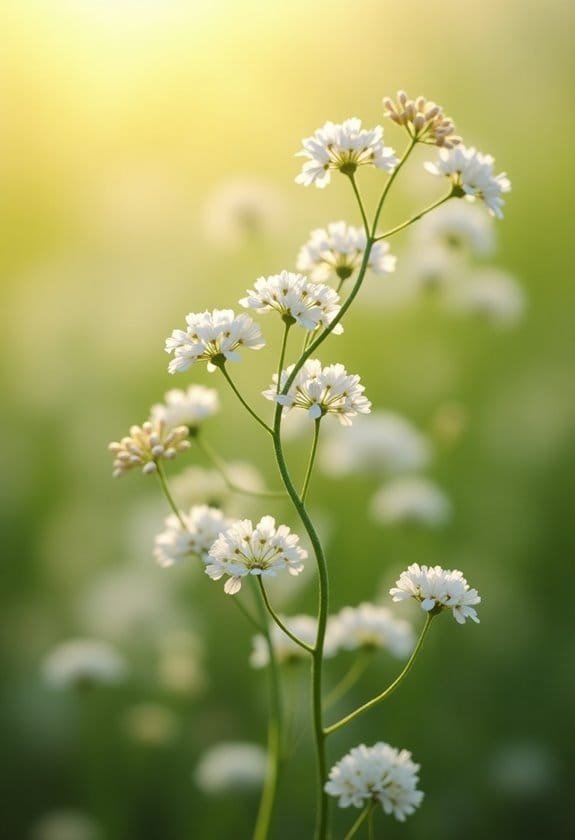
Gypsophila elegans, commonly known as Annual Baby's Breath, is a charming flowering plant celebrated for its star-shaped blooms in white or carmine-pink. Blooming from late spring to early summer, these delicate flowers grace gardens for several weeks, providing a stunning backdrop to any landscape.
With a height ranging from 12 to 24 inches, this plant thrives in full sun, requiring 6-8 hours of sunlight daily, and prefers well-draining soil with a neutral to slightly alkaline pH.
The growing benefits of Annual Baby's Breath extend beyond its aesthetic appeal, as it exhibits moderate drought tolerance once established, making it a resilient addition to gardens. It fits beautifully into floral arrangements and serves as an elegant filler in wedding bouquets, attracting pollinators like bees and butterflies. This encourages biodiversity, highlighting its significant environmental impact; by drawing these essential species, it supports ecosystem health.
Furthermore, proper spacing of 12 to 18 inches guarantees adequate air circulation, thereby mitigating disease risks.