Hesperis matronalis, commonly referred to as Dame's Violet or Dames Rocket, is a biennial plant native to Europe. This species typically reaches heights of 1 to 4 feet, showcasing fragrant blossoms in shades of lavender, white, and pink from March to mid-spring. Thriving in well-drained soils, it prefers full sun to partial shade. Despite its beauty, Dame's Violet is classified as invasive in North America, crowding out native flora and disrupting ecosystems. With young leaves rich in vitamin C, this plant serves culinary purposes too. Its ecological impact and management strategies warrant further exploration for enthusiasts and gardeners alike.
Main Points
- Hesperis matronalis, commonly known as Dame's Violet, is a biennial plant with colorful flowers, often found in North America as an invasive species.
- It thrives in moist, well-drained soils and prefers full sun to partial shade for optimal growth and blooming.
- The young leaves are edible and nutritious, rich in vitamin C, and can be used in various culinary dishes.
- Dame's Violet attracts pollinators like butterflies and bees, contributing positively to local ecosystems, despite being classified as a noxious weed.
- Effective management strategies include manual removal, herbicide use, and proper spacing to control its spread and protect native flora.
Introduction
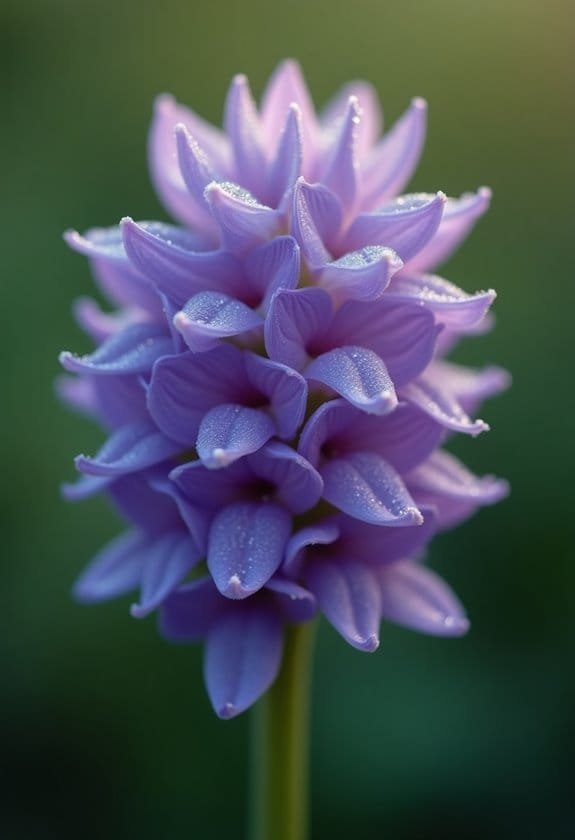
Hesperis matronalis, more commonly known as Dame's Violet, captures attention with its charming, fragrant blossoms that emerge each spring.
This biennial plant, native to Europe and introduced to North America, thrives in diverse conditions, ranging from full sunlight to partial shade, exhibiting its adaptability.
However, while the plant's young leaves are a nutritious addition to culinary dishes, it poses a risk of invasiveness, potentially overshadowing native flora in its quest for survival.
Common Name
Known commonly as Dames Rocket, this perennial flower also goes by several other names, including Dames Violet, Mother-Of-The-Evening, and Sweet Rocket. The name "Dames Rocket" originates from its historical ties to women and the ancient Roman Festival of the Matrons, celebrated around March 1st. This connection to femininity adds cultural richness to the flower's identity.
Referred to fondly as "Sweet Rocket," the plant's aromatic qualities are notable, especially its delightful evening fragrance that captivates anyone who encounters it. This redeeming quality makes it a desirable addition to gardens and landscapes.
The designation "Dames Violet" aptly describes its stunning blooms, which can be found in shades of purple, white, and pink, displaying a visual appeal that catches the eye.
Dame's Rocket often confuses gardeners, as it resembles native wildflowers, leading to its inclusion in various wildflower seed mixes. This trait contributes to its spread across multiple regions, revealing its adaptability.
As it flourishes, it enriches environments with vibrant colors and enchanting scents, making it a cherished perennial for many.
Scientific Name
The scientific name for dame's violet, accepted in botanical classifications, is Hesperis matronalis. This designation was established by the renowned botanist Carl Linnaeus in 1753 and reflects both the plant's unique characteristics and its historical significance. The genus name, Hesperis, translates to 'evening,' capturing the plant's enchanting fragrance that often becomes pronounced as twilight descends, inviting admiration from evening strolls.
Meanwhile, the species name, matronalis, originates from the Latin term for 'of married women,' underscoring the plant's cultural connections throughout history, particularly in gardens.
Belonging to the diverse Mustard family, known scientifically as Brassicaceae, Hesperis matronalis displays features similar to various vegetables and other flowering plants within this family. This biennial or short-lived perennial primarily blooms during its second year of growth, offering a delightful spectacle with its vibrant purples and whites. Additionally, its appeal to key pollinators contributes to the overall health of the ecosystem in garden environments.
Consequently, the scientific classification of Hesperis matronalis not only provides essential information regarding its botanical lineage but also encapsulates a blend of historical and cultural narratives entwined with its existence. Ultimately, these classifications enrich appreciation for this fascinating plant in gardens and wild landscapes alike.
Overview
Recognized for its enchanting blooms and evening fragrance, Hesperis matronalis, or Dame's Violet, serves as a striking addition to gardens and landscapes. This biennial or short-lived perennial plant originally hails from Europe and showcases vibrant flowers ranging from soft lavender to pristine white. Typically, it grows between 1 to 4 feet tall, blooming mainly in early to mid-spring, filling the air with its mesmerizing scent, especially in the evenings.
Dame's Rocket thrives in alkaline to neutral soils, favoring full sun to partial shade for ideal growth. The plant can rapidly self-seed, resulting in dense stands that can outcompete native flora, leading to its classification as invasive in many regions of North America. Despite this, the young leaves are edible and rich in vitamin C, providing a unique culinary twist.
Culturally, the name "Dame's Violet" references the Roman Festival of the Matrons, aligning blooming around March 1st, further enhancing its significance.
While admired for its beauty, understanding the ecological implications of Dame's Rocket is essential for gardeners and conservationists alike.
Key Features
Hesperis matronalis, commonly referred to as dames violet, possesses distinct features that make it an enchanting addition to any garden. This biennial plant can reach heights of over 100 cm, showcasing its multiple hairy stems and rosette foliage during its first year.
Its striking flowers bloom in various shades, including lavender, purple, and white, particularly in early to mid-spring. The elegant appearance and delightful fragrance not only enhance its aesthetic appeal but also underscore its historical significance tied to the evening scent it offers.
Growth Size
Although often overlooked, Dame's Violet showcases impressive growth characteristics. Typically reaching heights of 1 to 3 feet, this perennial herbaceous plant displays a robust growth nature. Its stems can climb over 100 centimeters, presenting a vertical elegance that's hard to ignore. This growth allows Dame's Violet to form vibrant stands, especially when left unmanaged, as it can spread 1 to 2 feet wide.
In its initial growth phase, Dame's Violet develops rosette foliage during its first year, providing a lush green carpet before blooming spectacularly in the following year.
The multiple hairy stems, a unique feature, contribute to its overall aesthetic appeal while enhancing its aromatic qualities. Particularly, the fragrant stem invites sensory exploration, enriching garden landscapes with delightful scents. Scented Mayweed, known for its apple-like fragrance, shares this aromatic feature, attracting various pollinators in gardens.
The combination of size and aromatic properties not only captures attention but also serves ecological purposes, attracting pollinators that assist in reproduction.
Consequently, Dame's Violet exhibits a compelling tapestry of growth and sensory characteristics, reinforcing its value in both cultivated and wild environments.
This plant, with its remarkable dimensions and fragrant nature, presents opportunities for diverse landscape designs, encouraging gardeners and enthusiasts to appreciate its exceptional potential.
Appearance
Dame's Violet displays a striking appearance with its impressive height ranging from 1 to 4 feet, making it a significant addition to any garden. This perennial plant, also known as Dame's Rocket (Hesperis matronalis), showcases multiple hairy stems that lend a textured quality to its overall look.
The flowers are particularly enchanting; they bloom in early to mid-spring, featuring a delightful fragrance that attracts pollinators. The blossoms come in a lovely palette, varying from lavender to white and pink, with each flower unique in its cross-shaped formation of four petals, unlike the five-petal structure of phlox.
The plant's leaves are equally remarkable, exhibiting an alternate arrangement and a hairy texture. Measuring 2 to 6 inches long, these broadly lanceolate leaves boast toothed margins that enhance the plant's overall aesthetic.
As it matures, Dame's Rocket produces slender, cylindrical fruit that gently arches upwards, containing oblong seeds about 3 to 4 mm long. This combination of height, striking flowers, and distinct leaf structure makes Dame's Rocket a fascinating botanical specimen, perfect for home gardens and wildflower patches alike.
Flowering Season
Typically, gardeners can expect Hesperis matronalis to start blooming around March 1st, coinciding with the Roman Festival of the Matrons. This flowering season marks the shift into early to mid-spring, a time when vibrant colors grace the landscape.
The plant features large, showy flowers that display hues of lavender, purple, white, and pink, making it an enchanting addition to any garden. Each flower, characterized by its four distinct petals, belongs to the Mustard family. Remarkably, these blooms release a delightful fragrance, particularly alluring during the evening hours.
Often, Hesperis matronalis flowers emerge in the plant's second year, following the development of rosette foliage in the first year. Flowering stems can reach heights of 1 to 3 feet, adorned with numerous blossoms that naturally attract pollinators such as bees and butterflies.
This characteristic not only enhances biodiversity but also fosters a thriving ecosystem. As the flowering season unfolds, it's essential for gardeners to appreciate this delightful spectacle, engaging with the plant's unique role in their gardens and the broader ecological ballet of spring.
Growing Requirements
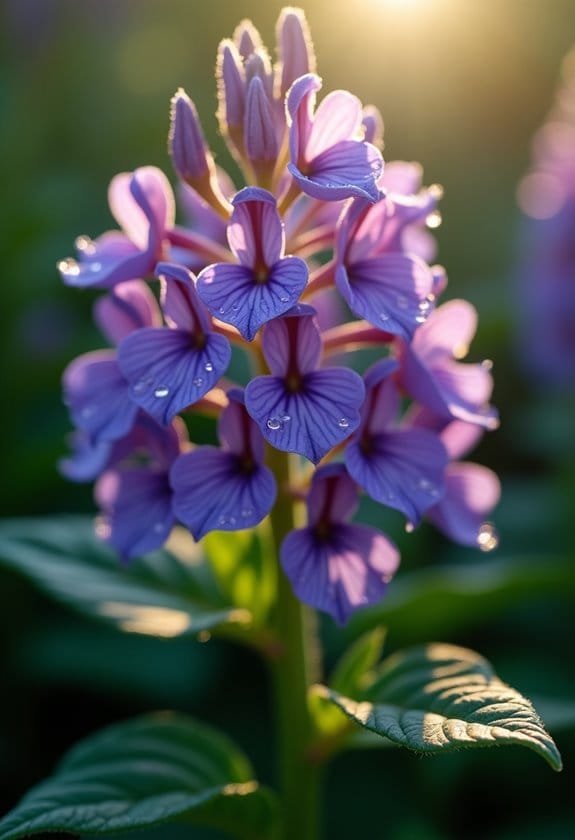
Hesperis matronalis thrives under specific conditions that directly influence its growth and flowering success.
It requires well-drained soils, ideally with a pH between 6.0 and 8.0, accommodating its preference for alkaline environments, while enjoying the warmth of full sun to partial shade.
Understanding these essential growing requirements will better equip gardeners to cultivate this charming biennial effectively in their landscapes.
Light
Generally, Hesperis matronalis does best in full sun to partial shade, which guarantees excellent growth and abundant flowering. This biennial plant flourishes under bright conditions, ideally positioned in areas that receive direct sunlight for most of the day.
When exposed to full sun, Hesperis matronalis can achieve impressive heights of up to 3 feet, boasting lush foliage and vibrant blossoms. Although the plant can tolerate shaded spots, such an environment often results in diminished blooming, with fewer flowers produced compared to their sun-drenched counterparts.
The key to maximizing the magnificent blooms often seen in the second year of growth lies in its light requirements. Additionally, for peak performance, these flowers benefit from being planted in the fall, allowing them to establish robust root systems as they prepare for the next growing season.
While Hesperis matronalis demonstrates adaptability to various conditions, the importance of adequate sunlight can't be overstated. Ensuring the plant receives sufficient light won't only support growth but also create a lively spectacle of color in gardens, enhancing visual appeal and drawing the eye of the beholder.
Soil
For ideal growth and blooming, Hesperis matronalis thrives in alkaline soils with a pH between 6.0 and 8.0. This beautiful plant flourishes best in moist, well-drained conditions, emphasizing the importance of soil quality in its cultivation.
Though it can adapt to a variety of soil types, Hesperis matronalis particularly prefers fertile soils enriched with organic matter, which promote its vigorous growth. Ensuring that the soil isn't too compacted is essential, as good aeration and drainage prevent detrimental root rot.
To establish Dames Violet successfully, seeds should be sown directly into the soil during fall or early spring, allowing for germination in a superior nutrient-rich environment.
Regular soil testing plays a key role in maintaining the ideal conditions for this plant, therefore supporting healthy growth and an abundance of flowers during its second year.
Cultivating Hesperis matronalis can become a rewarding experience when attention is focused on the soil's characteristics, enhancing the garden's beauty. Overall, understanding the specific soil requirements not only empowers gardeners but also contributes to the sustainable growth of these elegant blooms, ensuring delightful displays year after year.
Water
Consistency is key when it comes to watering Dames Violet (Hesperis matronalis), as this plant thrives in moist, well-drained soils. Proper water levels are essential for robust foliage development during the initial year, setting the stage for a flourishing display in the following year.
Ideally, the soil should remain consistently damp but not waterlogged, as overwatering can lead to detrimental root rot, a condition that compromises the plant's health.
To guarantee that the Dames Violet receives adequate hydration, gardeners should inspect the soil moisture regularly. During dry spells, particularly in full sun exposure, supplemental watering may be necessary to maintain an ideal moisture level.
One effective technique is to provide approximately one inch of water per week, allowing for adjustment based on rainfall and temperature variations.
Moreover, utilizing well-draining soil enhances water efficiency by preventing stagnation. Attention to drainage is paramount, as this plant requires a delicate balance; it flourishes with enough water yet suffers when inundated.
As the Dames Violet navigates through its growing cycles, maintaining vigilant care will guarantee its vibrant contribution to the landscape, marking the arrival of spring with blooming elegance and vigor.
Temperature
Hesperis matronalis thrives in a range of temperatures, flourishing in USDA hardiness zones from 3a to 8b. This extensive adaptability allows it to prosper in diverse temperate climates.
Although the plant can withstand varying conditions, it exhibits a preference for full sun to partial shade, which indicates its reliance on adequate sunlight for robust growth and stunning blooms.
Temperature plays an essential role in its life cycle; planting Hesperis matronalis in the fall is particularly beneficial. This practice enables the plant to establish its roots before winter's chill, setting the stage for vibrant flowering in spring.
The ideal soil conditions, characterized by moist, well-drained substrates with a pH ranging from 6.0 to 8.0, further emphasize the significance of the right environmental factors.
Once established, this resilient plant can tolerate drought and poor soil conditions, proving its tenacity in the face of varying environmental stresses.
Pollinator Criteria
Hesperis matronalis, commonly known as Dame's Violet, captivates a wide array of pollinators, with butterflies and bees frequently seeking its fragrant flowers.
The plant's structure, characterized by four easily accessible petals, facilitates efficient pollination, making it an essential resource as many other native flowers remain dormant in early spring. Additionally, like heather (Calluna vulgaris), it thrives in acidic soils, contributing to its ecological significance in supporting local biodiversity.
Attracted Pollinators
The fragrant blooms of Hesperis matronalis, commonly known as Dame's Violet, effectively attract a diverse range of pollinators. Its nectar-rich flowers—available in attractive colors like lavender, purple, white, and pink—serve as a beacon for butterflies and bees, which are simultaneously drawn to both their vibrant hues and sweet aroma.
Blooming in early to mid-spring, the timing aligns perfectly with the heightened activity of these springtime pollinators, making it a fantastic foraging source during this critical period. Dame's Violet excels in creating dense patches through rapid self-seeding, considerably enhancing foraging opportunities for pollinators in disturbed habitats, where they might otherwise struggle to find sustenance.
An often-overlooked aspect is its exceptional evening fragrance; this irresistible scent attracts nocturnal pollinators, including moths, who are drawn to the blossoms under the moonlight. Gathering at dusk, these essential agents of pollination contribute to the plant's reproductive success. The plant's ability to thrive in well-draining, organically enriched soil further supports its role in attracting an array of pollinators.
The interaction between Hesperis matronalis and its pollinators is a striking example of nature's intricate relationships, ensuring a vibrant ecosystem while inviting an array of beneficial species to partake in its beauty.
Pollination Method
Pollination in Dame's Violet hinges on its vibrant blooms and enticing fragrance, which effectively draw a range of insect visitors. The primary pollination method for Hesperis matronalis involves reliance on insects, particularly bees and butterflies, due to their attraction to the flower's sweet scent.
In spring, when these insects are most active, the large, showy blooms serve as both visual beacons and nectar sources, encouraging pollinator visitation. The structure of the flowers, featuring a unique cross shape with four petals, optimizes access for these diligent pollinators while enhancing visibility in the landscape.
As insects gather nectar, they unwittingly transfer pollen from one bloom to another, facilitating cross-pollination and enhancing genetic diversity within the plant population. This exchange is essential, as genetic variation promotes resilience against diseases and environmental changes.
Furthermore, Dame's Violet's propensity to self-seed rapidly reinforces its role in fostering additional pollinator activity through a prolific flowering pattern. By ensuring that many flowers bloom simultaneously, Hesperis matronalis maximizes pollinator visits, ultimately promoting a thriving ecosystem supported by these significant interactions.
Care & Maintenance
Hesperis matronalis, commonly known as Dames Violet, requires specific care and maintenance to flourish in the garden.
Ideal growth begins with proper planting, placing it in full sun or partial shade, and ensuring the soil remains well-drained yet moist.
Ongoing care includes regular watering, balanced fertilization in spring, and vigilant management of weeds, ensuring this vigorous plant thrives without overwhelming native species.
Planting Tips
For ideal results, gardeners should plant Dame's Violet (Hesperis matronalis) in the fall, allowing the plant to establish before its vibrant blooms emerge in spring. This timing is critical, as Dame's Rocket typically requires a year for proper establishment and the development of robust roots.
Gardeners should select moist, well-drained soils with a pH range of 6.0 to 8.0, ideally incorporating heavy fertilizer to enhance growth and flowering potential.
Spacing is another essential aspect; plants should be placed 1 to 2 feet apart, granting them sufficient room to flourish, as they can reach heights of 1 to 3 feet.
To guarantee healthy growth during dry periods, consistent watering is necessary even though Dame's Violet demonstrates drought resistance. However, maintaining moisture contributes to more luxuriant blooms.
In addition, to prevent overcrowding of native flora, gardeners should manage Dame's Rocket's self-seeding propensity by removing spent flower stalks before they set seed.
Ongoing Care
Dame's Violet thrives best with ongoing care that guarantees it remains vibrant and healthy in the garden. To achieve ideal growth, it requires moist, well-drained soil and can flourish in full sun to partial shade. Regular deadheading of spent flowers is essential; this practice encourages Dame's Rocket to produce additional blooms and prolongs its flowering period, particularly during the second year of growth.
While the plant is hardy in USDA zones 3a to 8b, gardeners must remain vigilant about its invasive tendencies, which can lead to overcrowding of native species in their landscapes.
Additionally, harvesting young leaves during flowering enhances their culinary value, as these leaves are rich in vitamin C and offer superior flavor when fresh.
Although resistant to deer and drought, consistent monitoring is critical due to its rapid self-seeding. Proper care involves balancing maintenance with containment strategies, ensuring that Dame's Violet contributes harmoniously to the garden without overwhelming other plants.
Adopting these ongoing care practices not only guarantees the plant's health but also promotes an aesthetically pleasing and biodiverse garden environment, where each species can thrive together.
Suggested Companions
Choosing companion plants that thrive in similar conditions can enhance the beauty and functionality of a garden featuring Hesperis matronalis. Plants such as Astilbe and Aquilegia not only complement the evening fragrance of Dame's Violet, but they also flourish in moist, well-drained soils. This compatibility creates a harmonious setting, enhancing the overall aesthetic of the garden. Additionally, integrating companions like foxglove can attract bumblebees and hummingbirds to your garden, enriching the biodiversity.
When selecting these companion plants, it's essential to space Hesperis matronalis at least 18 inches apart to minimize competition for nutrients and light, which can hinder growth. Mulching around their base can further retain soil moisture, safeguarding against invasive weeds encroaching on their space.
Regular deadheading of Dame's Violet is beneficial, as it encourages continuous blooming while also limiting aggressive self-seeding amidst companion plants. Additionally, incorporating plants like Vipers Bugloss can attract various pollinators to the garden, promoting ecosystem health.
A vigilant gardener should monitor the growth of these companions, removing any Hesperis matronalis that threatens to outcompete them, particularly in settings where protecting native flora is a priority.
Common Issues
Hesperis matronalis, or dames rocket, faces several common issues that can complicate its management.
Primarily, it attracts various pests and may suffer from specific diseases, which can further stress its growth and proliferation.
Understanding the effective solutions available—notably integrated pest management approaches and diligent monitoring—proves essential for maintaining ecological balance and ensuring the health of surrounding native species.
Pests/Diseases
Managing pests and diseases is crucial for maintaining the health of dames violet (Hesperis matronalis). While these plants exhibit considerable resistance to most issues, they can still fall prey to specific pests.
Aphids, for example, might invade and distort leaves, which weakens the overall vitality of the plant. Additionally, caterpillars and beetles pose a threat as they feast on the lush foliage, potentially requiring interventions such as hand-picking or insecticidal soap for control.
In humid conditions, particularly where air circulation around the plants is inadequate, fungal problems like powdery mildew can emerge. This results in unsightly white fungal growth that diminishes aesthetic appeal.
Moreover, constant overwatering can lead to root rot, especially in heavier soils with poor drainage. Root rot stalls growth and may ultimately lead to plant death.
Regular monitoring and proper spacing between plants can greatly reduce the chance of encountering these pests and diseases.
Solutions
Dames rocket can pose considerable challenges in maintaining balanced ecosystems, particularly when it becomes invasive. This plant can quickly crowd out native flora, leading to a decline in biodiversity. Common Whitebeam (Sorbus aria) is a great native alternative that helps restore biodiversity in areas affected by such invasive species.
To effectively manage its spread, regular monitoring is essential, coupled with manual removal—making sure to extract the entire root system, as even fragments can lead to re-sprouting. This meticulous approach requires ongoing vigilance to catch any new infestations early.
For established dames violet populations, systemic herbicides provide a viable option for eradication. However, caution is critical to prevent unintended harm to non-target species within the ecosystem.
Alongside these methods, educating local communities about distinguishing dames violet from similar species, like phlox, plays an essential role in preventing accidental planting and further spread.
Implementing alternative native plants can greatly enhance local biodiversity and offer ecological benefits, thereby reducing reliance on invasive species such as dames rocket. By promoting these native varieties, we foster a healthier ecosystem where diverse species can thrive, ensuring that the delicate balance of nature remains intact.
Invasive species like dames rocket can disrupt local ecosystems, similar to the effects seen with Common Tansy when they outcompete native plants.
Effectively addressing these challenges requires a thorough strategy, integrating education, manual intervention, and careful chemical management.
Summary
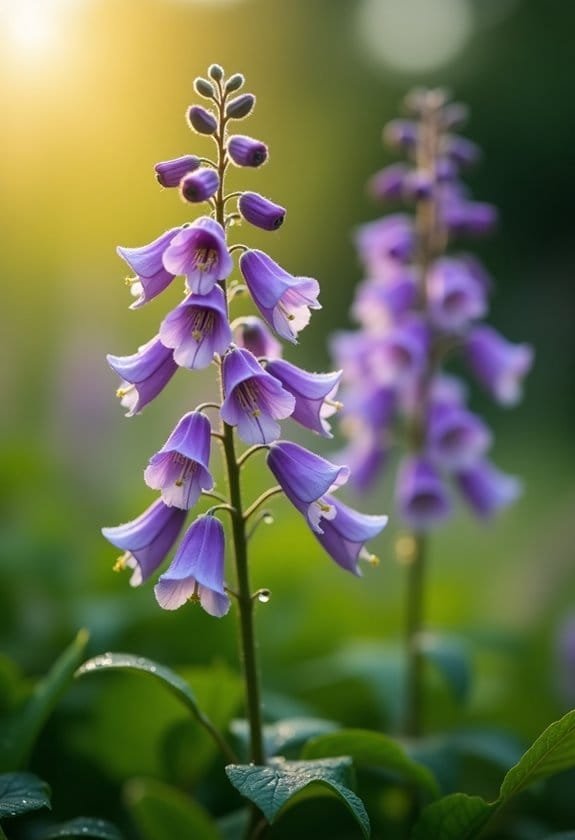
The Hesperis matronalis, commonly called Dame's Violet or Dames Rocket, is a biennial plant known for its fragrant blooms in various colors during early to mid-spring. This enchanting species typically showcases flowers in shades of lavender, purple, white, and pink, drawing the eye and nose alike.
Originally native to Europe, Hesperis has unfortunately become invasive in North America, aggressively overcrowding native flora and disrupting local ecosystems. Classified as a noxious weed in several U.S. states, its ability to self-seed rapidly contributes to its dominance in disturbed environments.
Despite its invasive tendencies, Dame's Violet offers culinary benefits. The young leaves are edible, rich in vitamin C, and can be added to salads or cooked dishes, while the seeds can be sprouted for additional nutrition.
Hesperis matronalis thrives in moist, well-drained soils and flourishes in full sun to partial shade, reaching heights between 1 and 4 feet. To manage this persistent plant effectively, manual removal and monitoring for re-establishment are essential steps.
Ultimately, understanding Hesperis matronalis and its implications allows for informed decisions regarding its presence in local habitats, ensuring the well-being of native ecosystems.