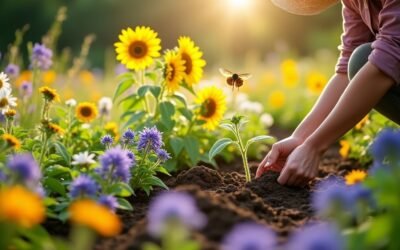
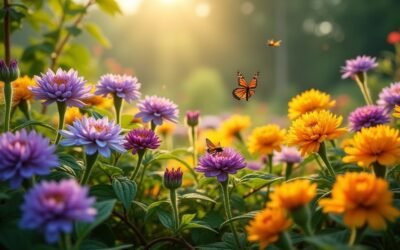
Hydrangea anomala subsp. petiolaris, or Climbing Hydrangea, is a stunning perennial vine indigenous to Japan and Korea. This climber can reach impressive heights of 30-50 feet and spreads 5-6 feet, utilizing aerial roots for support. Thriving best in USDA zones 4-9, it prefers moist, well-drained soil and shade, blooming mid-summer with elegant lacecap flowers up to 8 inches across. Its heart-shaped leaves shift to vibrant gold in autumn, enriching the garden ecosystem by attracting pollinators like bees and butterflies. Understanding its specific care requirements is essential for ideal growth and visual impact, revealing deeper insights into its long-term potential.
Main Points
- Growth Habit: Climbing hydrangea can reach heights of 30-50 feet using aerial roots, thriving on walls and trellises.
- Soil Preferences: It prefers moist, well-drained, organic-rich soil with a slightly acidic to neutral pH of 6.0 to 7.5.
- Light Conditions: Best grown in partial to full shade with morning sun; excessive shade reduces flowering potential.
- Flowering: Produces large lacecap-like flowers mid-summer, typically blooming 3-5 years after planting, showcasing year-round visual interest.
- Care Needs: Requires minimal pruning, seasonal fertilization, and vigilance against pests like aphids and diseases such as powdery mildew.
Introduction
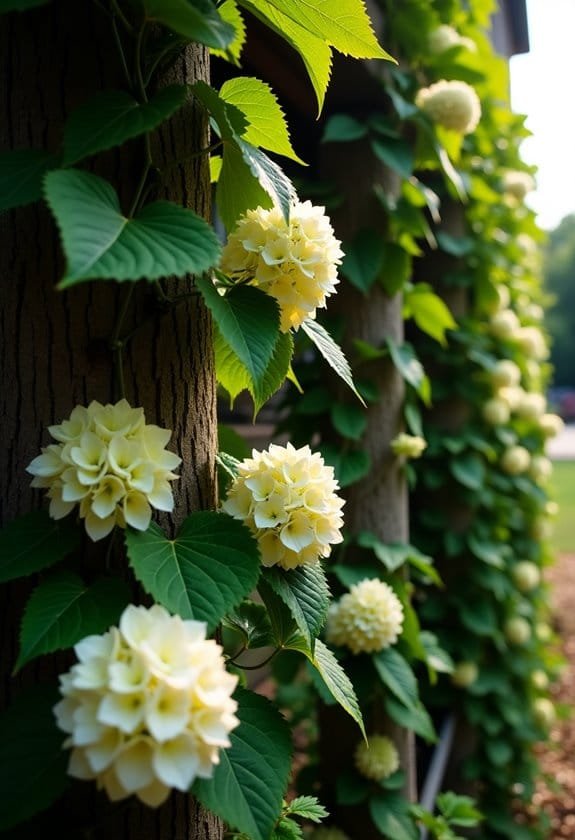
Known commonly as Climbing Hydrangea, Hydrangea anomala ssp. petiolaris captivates with its stunning white flower clusters that can measure up to 8 inches across.
This perennial vine, native to the woodlands of Japan and Korea, exhibits remarkable adaptability, thriving in shady, moist conditions while reaching heights of 30 to 50 feet.
With its graceful growth and year-round foliage interest, this plant presents an appealing choice for enhancing garden landscapes throughout various seasons.
Common Name
Climbing Hydrangea, also called Japanese Climbing Hydrangea, highlights its unique growth habit with its ability to ascend walls and trellises. This enchanting name reflects its climbing nature, which captivates gardeners seeking an elegant vertical accent for their landscapes.
Hailing from Japan and Korea, the Climbing Hydrangea boasts both a rich geographic heritage and remarkable adaptability, thriving in USDA zones 4-9.
Characterized by its large, stunning white flower clusters, the Climbing Hydrangea flourishes from late spring to early summer, creating a breathtaking display that draws the eye. The impressive blooms contrast beautifully with the plant's heart-shaped leaves, which can grow up to 5 inches long, providing lush green foliage that enhances any garden setting.
This combination of striking visuals and hardy demeanor makes the Climbing Hydrangea a popular choice for both seasoned and novice horticulturists.
Importantly, this versatile plant's climbing prowess allows it to establish a graceful presence on fences, walls, or arboreal support, bringing a touch of natural elegance to urban and rural gardens alike.
Scientific Name
Relying on its scientific classification, the Climbing Hydrangea is identified as Hydrangea anomala subsp. petiolaris, belonging to the Hydrangeaceae family. This striking plant captures attention with its heart-shaped leaves, offering a lush, green backdrop for its large white flower clusters that bloom elegantly in mid-summer.
Originating from the woodlands of Japan and Korea, Hydrangea anomala subsp. petiolaris thrives in shady, moist environments, showcasing a remarkable adaptability to varying climates.
When fully established, this climbing species can achieve a height of 30–50 feet and can spread 5–6 feet wide, employing aerial roots that provide essential support for its vertical ascent. Such impressive growth underscores the plant's resilience, as it flourishes in USDA zones 4-9, proving capable of enduring diverse environmental conditions.
The scientific importance of Hydrangea anomala subsp. petiolaris extends beyond its aesthetic appeal, reflecting a complex interaction with its native ecosystem. Its unique characteristics contribute not only to its survival but also to the ecological balance in the habitats where it thrives, enriching both flora and fauna alike.
Overview
With its vigorous growth and stunning floral display, Hydrangea anomala subsp. petiolaris captivates garden enthusiasts and landscape designers alike. Known commonly as Climbing Hydrangea, this remarkable vine can reach impressive heights of 30 to 50 feet while spreading 5 to 6 feet wide once established.
Its distinctive large flower clusters, resembling delicate lacecaps, bloom from mid-summer and can measure up to 8 inches in diameter, creating a mesmerizing visual impact.
Thriving in shady, moist environments, the Climbing Hydrangea prefers well-drained, slightly acidic soil, allowing it to flourish in USDA hardiness zones 4 to 9. Characterized by heart-shaped leaves, which can reach up to 5 inches long, this plant provides seasonal interest, as its foliage transforms into a brilliant golden-yellow in the fall.
While it exhibits a slow to moderate growth rate of 1 to 2 feet per year, the plant takes 3 to 5 years to begin flowering after planting, emphasizing the importance of patience during its establishment phase.
In gardens, this vine not only provides a lush cover but also adds elegance and charm, making it a cherished choice for enhancing both residential and commercial landscapes.
Key Features
The climbing hydrangea, a remarkable vine, can reach an impressive height of 30-50 feet while spreading 5-6 feet wide, making it a stunning addition to any garden.
Its large flat-topped flower clusters, blooming from mid-summer through early fall, create an enchanting display, attracting attention from both gardeners and pollinators alike.
With heart-shaped leaves that transform into a striking golden-yellow in the fall, this plant offers year-round visual interest and appeal, ensuring it remains a focal point throughout the seasons.
Growth Size
Climbing hydrangea impresses with its substantial growth potential, reaching heights of 30-50 feet and spreading 5-6 feet wide when well-established. This vigorous climber excels in vertical gardening, as it can adapt its growth based on available structures for support.
Initially slow to establish, climbing hydrangeas typically take about 3-5 years post-planting to begin blooming; however, once established, they can achieve a remarkable growth rate of 1-2 feet per year.
In addition to their climbing abilities, these plants can also assume a sprawling shrub form, reaching heights of 3-4 feet if left unsupported, showcasing their remarkable flexibility.
When mature, climbing hydrangeas can exceed lengths of 40 feet, utilizing aerial roots to cling to surfaces, which facilitates upward growth and extensive coverage. This characteristic rooting mechanism allows the plant to create a lush, green tapestry over trellises, fences, or walls.
Consequently, climbing hydrangeas can be an ideal solution for adding vertical interest and texture to any garden, further enhancing landscapes while providing shelter and habitat for various birds and beneficial insects.
Appearance
Hydrangea vine exhibits striking visual features that make it a standout choice for any garden. One of its most enticing attributes is the large clusters of white flowers that bloom in mid-summer, each measuring up to 8 inches in diameter and resembling delicate lacecaps.
These enchanting blooms consist of tiny fertile flowers bordered by larger sterile ones, creating a stunning visual contrast that draws the eye.
Accompanying these flowers are heart-shaped, glossy dark green leaves that can grow up to 5 inches long, forming a lush backdrop that enhances the overall beauty.
While climbing up to 60-80 feet in height, this vine can transform your garden into a verdant oasis. When unsupported, it takes on a shrub-like form, reaching a height of 3-4 feet, which adds depth and texture.
In winter, the exfoliating bark reveals an intriguing texture, complementing its already appealing branching structure.
This unique feature provides visual interest even when the white flowers fade, ensuring that the Climbing Hydrangea maintains its charm throughout the year, making it a versatile and enchanting addition to any landscape.
Flowering Season
Typically, flowering occurs in mid-summer when this beautiful vine showcases its spectacular display. Climbing Hydrangea, known for its graceful growth habits, produces large, flat-topped clusters of flowers called corymbs, which can reach up to 8 inches in diameter.
These eye-catching arrangements consist of numerous tiny fertile blooms surrounded by larger, sterile creamy white flowers, manifesting an enchanting lacecap appearance that delights botanists and garden enthusiasts alike.
It's important to note that this stunning spectacle doesn't happen overnight; flowering typically begins 3-5 years after planting, as the Hydrangea takes time to establish itself in its new environment. The fragrant blooms serve an essential role, attracting pollinators such as bees and butterflies, which enhances biodiversity within the garden ecosystem.
While the plant's flowering period stretches from late spring to early summer, its heart-shaped leaves offer a lush green backdrop, effectively enhancing the overall floral display throughout the growing season.
Consequently, the Climbing Hydrangea becomes a focal point in the landscape, enchanting viewers with both its seasonal blossoms and verdant foliage, creating a tranquil yet lively garden setting.
Growing Requirements
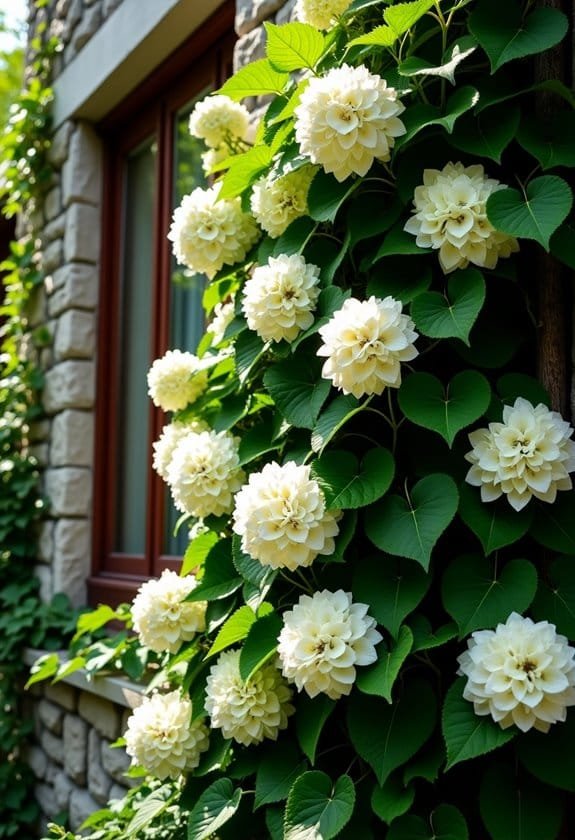
Climbing hydrangea requires specific conditions to flourish, with a preference for partial to full shade where it can bask in filtered sunlight.
This vine thrives in moist, well-drained soil enriched with organic matter, ideally maintaining a slightly acidic to neutral pH range of 6.0 to 7.5.
Understanding these growing requirements not only guarantees robust health but also leads to the enchanting blooms that define this plant's beauty over time.
Light
Light plays an essential role in the growth and blooming potential of climbing hydrangea. This exquisite plant thrives best when it receives filtered light from a high canopy, allowing it to bask in gentle sunlight while avoiding harsh rays that can scorch its delicate leaves.
Although it can survive in dense shade, the flowering diminishes considerably in such conditions, leading to a lackluster display and stunting overall growth.
Ideally, climbing hydrangea benefits from exposure to morning sun paired with afternoon shade, which promotes healthy growth and vigor. This balance not only facilitates photosynthesis but also helps retain moisture within the soil, vital for the plant's sustained health. Conversely, insufficient light can impede vegetative growth, resulting in a weaker and less resilient plant.
To maximize its potential, cultivators should endeavor to create an environment where climbing hydrangea can flourish under these specific light conditions.
Ultimately, achieving the right amount of filtered light greatly impacts not only the plant's beauty but also its ability to thrive, showcasing its iconic blossoms in full glory.
Soil
Moist, well-drained soil is fundamental for climbing hydrangea's robust growth and vibrant blooms. This plant flourishes best in conditions that retain moisture without succumbing to waterlogging, which could harm its delicate roots. Ideally, it prefers slightly acidic soils with a pH balance between 6.0 and 8.0. This range fosters healthy root development, allowing the climbing hydrangea to thrive and produce its enchanting flowers.
However, soil compaction and poor drainage pose serious threats to the establishment and growth of climbing hydrangea. When soil becomes compacted, it inhibits both air and moisture movement, leading to inadequate growing conditions. Consequently, regular watering is essential, particularly during dry spells, to maintain a consistent moisture level in well-drained soil.
Moreover, incorporating organic matter, such as compost, enhances soil fertility and improves its structure. This practice promotes better aeration, ensuring that the climbing hydrangea's roots receive critical nutrients and access to air.
Ultimately, providing the right soil conditions isn't merely a suggestion; it's foundational for ensuring that climbing hydrangeas flourish and grace gardens with their extraordinary beauty throughout the growing season.
Water
How can gardeners ensure their climbing hydrangeas thrive through varying weather conditions? By understanding their water requirements, gardeners can guarantee these fascinating climbers flourish.
Climbing hydrangeas demand regular watering, particularly during their establishment phase and the warmer months when evaporation rates increase. They thrive best in moisture-retentive, well-drained soils, which allow roots to access consistent hydration while avoiding detrimental waterlogging that could cause root rot.
Maintaining soil moisture is vital; however, it's important to strike a balance, as excessive moisture can be just as harmful as drought. Gardeners must monitor soil moisture levels closely, adjusting their watering routines to cater to the plant's needs.
When planted among trees, these hydrangeas may struggle to compete for moisture, necessitating additional watering to maintain optimum conditions.
Through thoughtful and attentive care, including regular monitoring and adjustments, gardeners can foster an environment where their climbing hydrangeas exhibit vigorous growth and vibrant blooms.
Temperature
Successful cultivation of climbing hydrangea also involves understanding its temperature preferences. This stunning plant, scientifically known as Hydrangea anomala subsp. petiolaris, exhibits remarkable hardiness, thriving in USDA zones 4-9.
Its versatility allows it to withstand freezing temperatures, making it a resilient choice for various climates, even those with harsh winters.
While it can bear full sun conditions, particularly if moisture is adequately maintained, climbing hydrangea truly flourishes in partial to full shade. This mirrors its native woodland habitat, where dappled sunlight filters through the dark green canopy overhead. Such environments are essential, as they prevent stress and promote healthier growth.
The plant's slow growth rate—approximately 1-2 feet per year during its establishment phase—demands patience from gardeners. They must be aware that ideal conditions often include slightly acidic soil with a pH range of 6.0 to 7.0, which sustains its overall health.
Recognizing these temperature nuances enables enthusiasts to provide the perfect environment for climbing hydrangea, ensuring a verdant display of foliage and flowers throughout the seasons.
Ultimately, understanding these requirements leads to a thriving, enduring plant.
Pollinator Criteria
Climbing hydrangea, with its enchanting blooms, serves as an enticing sanctuary for a variety of pollinators, particularly bees and butterflies.
By producing fragrant flowers that embody a harmonious blend of tiny fertile and larger sterile blooms, the plant attracts these crucial creatures during peak pollination activity in mid-summer.
This not only enhances garden biodiversity but also fosters robust pollinator populations, essential for sustaining the delicate balance of the ecosystem.
Attracted Pollinators
Pollinators flock to the fragrant blooms of Climbing Hydrangea, which serve as an essential resource during the mid-summer flowering season. The large, white flower clusters can reach up to 8 inches in diameter and consist of numerous tiny fertile flowers surrounded by prominent sterile blooms. This unique arrangement not only captivates the eye but also delivers a rich source of nectar that bees, butterflies, and other pollinators keenly seek.
The fragrant flowers enhance the garden's biodiversity while playing a crucial role in sustaining local pollinator populations throughout the growing season. By nurturing Climbing Hydrangea, gardeners create inviting habitats for beneficial insects, effectively improving pollination for adjacent plants.
The combination of nectar and pollen-rich blooms supports a sustainable ecosystem, encouraging a diverse array of pollinator species to thrive in the garden.
Moreover, the presence of these vibrant, fragrant clusters invites important interactions within the ecosystem, assisting in the symbiotic relationship between plants and pollinators. As Climbing Hydrangea flourishes, it becomes an indispensable resource, ensuring the continuation of dynamic, interdependent life cycles in their natural settings.
As a result, their contribution transcends mere aesthetics, resonating with ecological importance.
Pollination Method
Attracting a diverse array of pollinators, Climbing Hydrangea employs its unique floral structure and enticing fragrance to draw in bees, butterflies, and other beneficial insects. The plant produces sweetly fragrant blooms that form flat-topped clusters, or corymbs, with a diameter of up to 8 inches. These clusters comprise small, fertile flowers enveloped by larger, sterile white blooms, which effectively lure pollinators looking for sustenance.
Flowering occurs in mid-summer, coinciding with a period of peak foraging activity among local pollinators. The Climbing Hydrangea's adaptations enhance visibility and scent, ensuring that pollinators can locate the blooms easily while benefiting from the nectar-rich offering. This synchronous relationship notably boosts garden biodiversity, as insects gather critical resources during their foraging routine. Additionally, the plant's ability to attract nocturnal moths further enriches the ecosystem, promoting a healthy balance of pollinator activity. Moreover, the blooming season aligns perfectly with the plant's role as a food source for pollinators, enhancing local biodiversity in garden settings.
Native to Japan and Korea, Climbing Hydrangea plays an essential role in supporting local ecosystems. By fostering plant-pollinator interactions, it contributes to the health and resilience of its environment.
Pollination not only aids the reproductive success of Climbing Hydrangea but also nourishes an array of pollinator species, weaving a rich tapestry of life within gardens and natural habitats.
Care & Maintenance
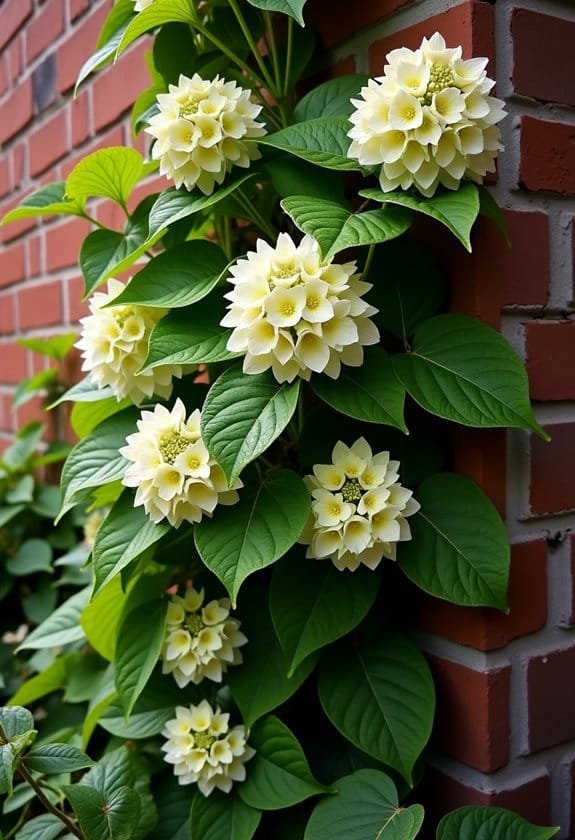
To guarantee a thriving climbing hydrangea, proper care and ongoing maintenance are essential.
This enigmatic vine flourishes in moist, well-drained soil, ideally with a slightly acidic to neutral pH, requiring consistent watering, especially during dry spells, to sustain its health.
With minimal pruning needed for shape and size, gardeners can focus on selecting suitable companions that enhance the growing environment, fostering a vibrant and cohesive garden display.
Planting Tips
Climbing hydrangeas need careful attention to thrive, so planting them in the right conditions is fundamental. These plants flourish in partial to full shade, thriving in filtered light, though dense shade can lead to diminished flowering. It's essential to select a spot that balances sunlight and shade, ensuring those stunning white blossoms can shine.
The soil must be well-drained yet moisture-retentive, ideally boasting a slightly acidic pH. Rich, fertile soils foster robust growth, allowing climbing hydrangeas to establish deep roots.
During dry spells, consistent watering is important; maintaining moist conditions encourages overall health and subsequently enhances bloom production.
Pruning is minimal—focus primarily on removing any dead or damaged branches to maintain vigor. Annual pruning helps achieve the desired size and shape, allowing for a neat appearance while preserving the plant's natural form.
To nourish your climbing hydrangea effectively, fertilize in early spring with a slow-release organic option, but be cautious; over-fertilization can harm its delicate balance and growth.
With proper planting techniques and attention to detail, climbing hydrangeas can create a lush, verdant backdrop, ultimately showcasing their beautiful, white floral displays.
Ongoing Care
Maintaining consistent moisture levels is vital for the ongoing care of climbing hydrangeas, especially during hot or dry spells. These plants thrive in environments that feature slightly acidic soil, ideally within a pH range of 6.0 to 7.0. Regular watering guarantees that the roots remain hydrated, bolstering healthy growth.
Minimal pruning is necessary, focusing on the removal of dead or damaged wood to sustain the plant's size and shape while fostering vigorous development.
Fertilizing in early spring emerges as a significant practice, but it's important to limit application—over-fertilization can deter growth and harm overall plant health. Organic fertilizers are highly recommended, as they enhance soil quality without introducing harmful chemicals.
Climbing hydrangeas flourish in partially shaded to full shade areas; however, those planted in full sun require careful attention to soil moisture, guaranteeing well-drained conditions.
Furthermore, gardeners appreciate the stunning aesthetic value of the plant, with its unique exfoliating bark adding texture and depth to landscapes.
Suggested Companions
Selecting the right companions for climbing hydrangeas can greatly enhance garden aesthetics and plant health. Opting for shade-tolerant plants like hostas and ferns satisfies the climbing hydrangea's preference for filtered light while adding texture and color to the garden layers. These companions may be slow to establish, but they contribute considerably to the overall visual appeal once matured.
Incorporating other climbers, such as clematis or climbing roses, promotes a diverse vertical garden. These species can coexist harmoniously, enriching the landscape without overshadowing the climbing hydrangea.
Ground covers, like creeping thyme or ajuga, serve a dual purpose; they thrive in similar soil and moisture levels while suppressing weeds around the hydrangea's base.
To maintain a cohesive aesthetic, it's essential to choose plants that offer seasonal interest, such as shrubs that display vibrant fall color. This combination can extend visual importance throughout the year.
Ensuring companions share the same water and soil requirements fosters a healthier environment, promoting growth and sustainability while minimizing maintenance efforts. Consequently, selecting suitable companions not only beautifies the space but also supports the climbing hydrangea's robust health.
Common Issues
Climbing hydrangeas can face common issues like pests and diseases, which, if left unchecked, may impact their health and beauty.
Gardeners should be vigilant for signs of infestation, such as aphids or powdery mildew, which can hinder the plant's growth and flowering potential.
Implementing solutions like organic insecticides or ensuring adequate air circulation can effectively mitigate these challenges, allowing the climbing hydrangea to flourish in its intended environment.
Pests/Diseases
Residing in serene gardens, climbing hydrangeas face few threats from pests and diseases, making them an attractive option for gardeners. This woody vine generally demonstrates remarkable resistance to common pests/diseases, yet it isn't entirely impervious to problems.
One such issue is powdery mildew, which may arise in excessively humid conditions. Gardeners can typically manage this concern through maintaining proper air circulation and adequate spacing between plants.
Occasionally, aphids may invade the climbing hydrangea, but their presence usually doesn't inflict significant harm. Simple interventions using insecticidal soap or neem oil can effectively control these pests.
However, root rot poses a more serious threat, especially when the plant is cultivated in poorly drained soil or receives excessive watering. This highlights the significance of managing soil moisture.
Fungal infections like botrytis blight can also impact climbing hydrangeas, particularly during wet weather. Maintaining good garden hygiene by removing debris and guaranteeing proper drainage remains essential for preventing such outbreaks.
Ultimately, while climbing hydrangeas are relatively low-maintenance, recognizing and addressing these common pests/diseases confirms they flourish beautifully in any garden setting.
Solutions
To promote the healthy growth of climbing hydrangeas, addressing common issues with effective solutions is fundamental. Despite their reputation as a hardy hydrangea, these plants require specific environmental conditions to flourish.
First, it's imperative to plant them in well-drained, moisture-retentive soils, ensuring they receive adequate watering, particularly during dry spells. This practice nurtures the root system, ultimately facilitating better growth.
Additionally, regular maintenance, including pruning dead or damaged wood, encourages a manageable size and enhances flowering during their blooming period. Pruning should occur in late winter or early spring, promoting robust growth cycles.
Light exposure plays an essential role as well; while climbing hydrangeas thrive in partial to full shade, dense shade can impede their flowering capability, requiring careful site selection. Providing proper support structures, such as trellises or walls, aids in their climbing ability and overall health, as these vines are slow to establish initially.
Finally, fertilizing in early spring with minimal organic options fosters growth without risking harm from over-fertilization. By implementing these strategies, gardeners can greatly improve their climbing hydrangeas' vitality and aesthetic appeal.
Summary
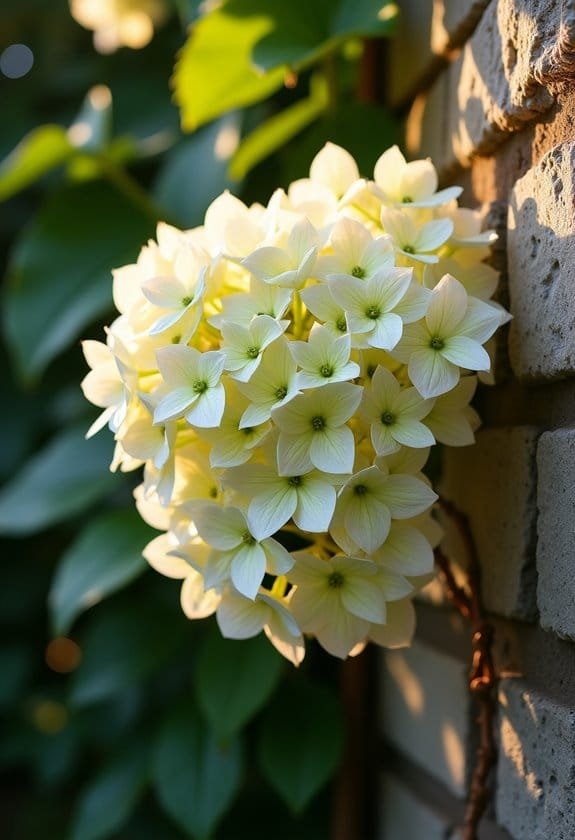
Hydrangea anomala subsp. petiolaris, commonly known as Climbing Hydrangea, is an enchanting vine celebrated for its stunning, large white flower clusters that bloom in mid-summer.
Reaching up to 8 inches in diameter, these blooms create a breathtaking visual display against its lush, glossy, heart-shaped leaves. This perennial vine thrives in USDA zones 4-9 and prefers shady, moist environments reminiscent of its native woodland habitat, favoring well-drained, slightly acidic soil for ideal growth.
With a slow to moderate growth rate, it typically requires 3-5 years to establish itself fully before producing blossoms. Once mature, Climbing Hydrangea can grow impressively, achieving heights of 30-50 feet and spreads of 5-6 feet when provided with adequate support like a trellis or wall.
Utilizing aerial roots for anchoring, this plant is non-invasive, making it a harmonious addition to diverse garden landscapes.
Notably, it offers year-round appeal; its leaves turn a striking golden-yellow in fall, and its peeling bark adds winter interest. Consequently, Climbing Hydrangea serves as both a delightful aesthetic feature and a proof of nature's intricate beauty in early summer and beyond.