Ilex aquifolium, or Common Holly, is an impressive evergreen shrub that typically grows between 30 to 50 feet tall. Its glossy, dark green leaves, measuring 1 to 3 inches, feature spiny margins, creating a striking visual appeal. This dioecious plant produces small, fragrant white flowers in spring, developing bright red or yellow berries by fall, serving as crucial food sources for wintering birds. Thriving in well-drained, moist soils and requiring 4-6 hours of sunlight daily, it enhances biodiversity and attracts essential pollinators, like bees, contributing greatly to ecosystem stability. Exploring its care and maintenance reveals even further intricacies.
Main Points
- Ilex aquifolium, commonly known as Common Holly, is a dioecious evergreen tree reaching heights of 30 to 50 feet.
- It features glossy dark green leaves with spiny margins and produces fragrant white flowers in spring.
- The plant is native to Europe, North Africa, and Western Asia, thriving in well-drained, moist, and slightly acidic soils.
- Common Holly is vital for wildlife, providing winter food through bright red or yellow berries and attracting pollinators like bees.
- Caution is advised due to its toxicity; ingestion of leaves and berries can cause nausea in humans and pets.
Introduction
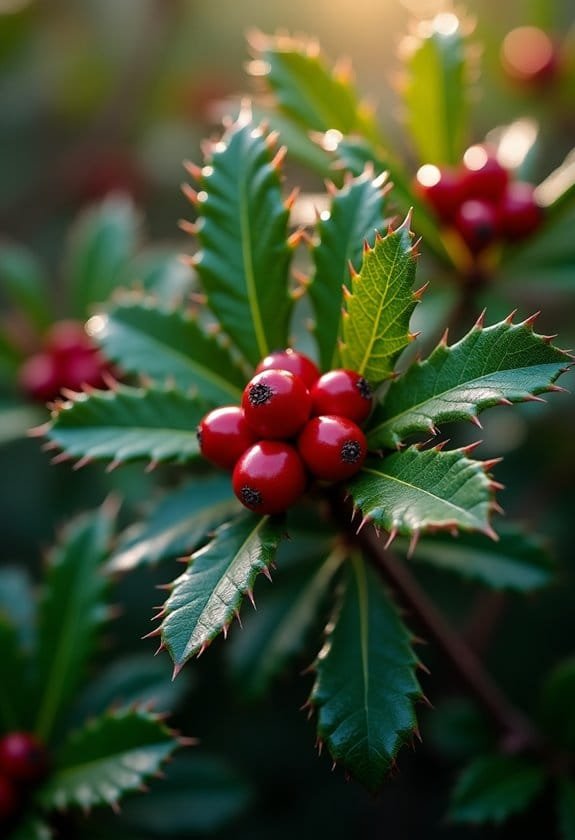
Ilex aquifolium, widely known as English holly, epitomizes the essence of a broadleaf evergreen, often reaching heights between 30 and 50 feet with its striking pyramidal shape.
Native to regions such as Europe and North Africa, this species captivates observers with its glossy, dark green leaves, measuring 1 to 3 inches and featuring spiny margins that effectively deter herbivores.
With its dioecious nature, English holly showcases small, fragrant clusters of white flowers in spring, followed by bright red or yellow drupes that mature in the fall, making it an essential food source for wintering birds.
Common Name
Known for its festive charm, Ilex aquifolium is commonly referred to as Christmas Holly, Common Holly, English Holly, or European Holly. These names reflect the plant's extensive cultural significance and its ornamental use throughout history. The term "Holly" originates from the Old English word "holegn," meaning "to prick," which aptly describes the spiny edges of its glossy green leaves.
Widely recognized for its association with winter festivities, Ilex aquifolium has become a symbol of protection and good fortune in folklore. Its bright red drupes, or berries, serve as not only a striking winter decoration but also a vital food source for birds during the cold months. This ecological importance is further emphasized by its ability to attract pollinators with fragrant flowers in the summer.
However, it's important to note that while Christmas Holly enhances seasonal celebrations, its leaves and berries contain toxic compounds harmful to humans and pets if ingested. Consequently, careful handling is recommended when incorporating Ilex aquifolium into any festive arrangements or home decor.
Ultimately, this plant encapsulates a blend of beauty and caution, enriching holiday traditions while demanding respect for its potential hazards.
Scientific Name
Renowned for its striking presence in gardens and holiday decor, the scientific name of Common Holly is Ilex aquifolium. First described by the esteemed botanist Carl Linnaeus in 1753, Ilex aquifolium belongs to the family Aquifoliaceae and the genus Ilex.
As an evergreen tree or shrub, it can attain impressive heights of 30 to 50 feet, showcasing a pyramidal growth habit that adds elegance to landscapes.
The leaves of Ilex aquifolium are a breathtaking dark green, exhibiting a glossy sheen and a leathery texture, with spiny margins accentuating their unique form. Each leaf measures approximately 1 to 3 inches long, providing an exquisite contrast to both the vibrant foliage and the delicate seasonal blooms.
Notably, Ilex aquifolium is dioecious, which means that male and female flowers arise on separate plants, lending complexity to its reproductive process.
Female plants, in particular, captivate the eye with their showy bright red or yellow drupes, which serve as a crucial food source for various birds during the winter months. Consequently, Ilex aquifolium remains a cherished species in both natural and cultivated environments.
Overview
Commonly referred to as English Holly, Ilex aquifolium fascinates observers with its evergreen beauty and seasonal allure. This remarkable plant, thriving as either a tree or shrub, can reach astonishing heights of 30 to 50 feet, and widths of 15 to 25 feet, creating a dense and lush landscape.
Its dark green, glossy leaves exhibit leathery textures and spiny margins, measuring between 1 and 3 inches long, contributing to its striking appearance.
Native to Europe, North Africa, and Western Asia, Ilex aquifolium flourishes in well-drained, moist soils under full to partial sunlight, often populating woodlands and hedges.
In spring, the plant blooms with small, fragrant white flowers, which, upon fertilization, give way to vibrant red or yellow drupes. These berries, maturing around October or November, serve as an important food source for birds during the colder months.
With over 200 cultivars, including those prized for ornamental purposes, Ilex aquifolium remains a favorite in gardens and holiday decorations.
Nevertheless, it's important to acknowledge that in certain regions, this fascinating evergreen is considered invasive, warranting mindful cultivation practices.
Key Features
Ilex aquifolium stands out with its impressive growth size, reaching up to 50 feet, and a visually striking pyramidal form that enhances landscape aesthetics.
Its glossy, dark green leaves, adorned with sharp spiny margins, lend a distinctive charm, while the small, fragrant flowers bloom in spring, attracting pollinators with their delicate beauty.
Additionally, the seasonal transformation into bright red or yellow drupes not only captivates the eye but also plays a critical role in supporting local wildlife during the colder months.
Growth Size
English holly typically grows to impressive heights, reaching between 30 to 50 feet (about 10 to 15 meters) and spreading out to widths of 15 to 25 feet (approximately 5 to 8 meters) when conditions are ideal.
This imposing growth size allows the species, scientifically known as Ilex aquifolium, to create a striking presence in landscapes, whether utilized as a robust garden feature or as part of a naturalized setting.
As an evergreen tree, English holly maintains its lush, green foliage throughout the year, demonstrating its capacity to thrive in varying climates. Its average growth rate can fluctuate based on local climate conditions and site selection, often resulting in a dense, pyramidal form.
The adaptability of Ilex aquifolium is notable; it flourishes in humic, moist, well-drained soils, while also tolerating both acidic and calcareous environments. Mature specimens display leathery, spiny-margined leaves, averaging between 1 to 3 inches (5 to 12 centimeters) in length, contributing to the species' rugged, enduring aesthetic.
The impressive growth characteristics of English holly make it a valuable addition to diverse ecosystems and ornamental gardens alike.
Appearance
What makes the appearance of Ilex aquifolium so striking? This evergreen tree, commonly known as English holly, exhibits a pyramidal to broad oval crown, often reaching heights of 30 to 50 feet and widths of 15 to 25 feet.
Its glossy dark green leaves, measuring 1 to 3 inches long, convey a sense of resilience and beauty. These leathery, ovate leaves sport sharp spines along their margins, particularly on the lower limbs, creating a dramatic contrast that captivates the eye.
The bark adds another layer of intrigue; its smooth texture shifts from dark gray to black, enhancing the plant's overall sturdiness while developing unique patterns over time due to environmental influences.
When the autumn months arrive, the bright red or yellow drupes emerge, each housing 3 to 4 seeds, indicating the promise of new life. They glow against the backdrop of the leaves, serving as an essential food source for wintering birds, thereby intertwining the plant with the natural ecosystem.
In essence, Ilex aquifolium's distinctive appearance through its striking leaves, bark, and vibrant fruit solidifies its appeal, making it a cherished addition to gardens and landscapes.
Flowering Season
During May, one can expect to see the charming emergence of Ilex aquifolium's flowers, adding a delicate touch to its robust form. This flowering season, while brief, is essential for the species' reproduction.
Ilex aquifolium is dioecious, meaning it features distinct male and female flowers on separate plants; the male blooms present themselves with subtle yellowish tones, while the female flowers exhibit small white or occasionally slightly pink clusters. Each flower, approximately an inch in size, may not dominate the visual landscape but provides crucial ecological benefits.
These small, fragrant flowers attract various pollinators, especially bees, which play a significant role in the successful pollination of female plants. Without this important step, these females wouldn't produce the striking red berries that typically mature around October or November.
The presence of these vibrant drupes adds a fundamental food source for wildlife during the colder months, enhancing the plant's ecological importance. Consequently, the flowering season of Ilex aquifolium isn't just an aesthetic enhancement; it's a foundational phase ensuring the continuity of its lifecycle, fostering a connection between flora and fauna within its native habitats.
Growing Requirements
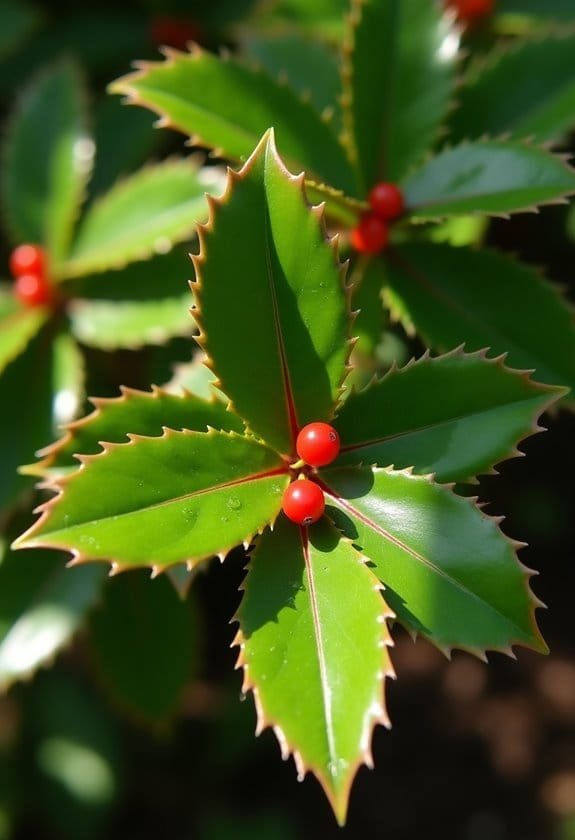
Ilex aquifolium, often celebrated for its resilience, flourishes in environments with full to partial sunlight, showcasing its adaptability.
Thriving in well-drained, moist soils—whether acidic or calcareous—this species dodges the pitfalls of harsh summers and waterlogged conditions.
To cultivate this remarkable plant effectively, one must consider ideal planting periods and the importance of protecting it from extreme weather, which collectively nurtures its growth potential.
Light
Ideal light conditions are crucial for the healthy growth of Ilex aquifolium, commonly known as holly. This plant thrives best in full to partial sun and requires at least 4-6 hours of direct sunlight each day to flourish. While it can tolerate a variety of light conditions, excessive shade often leads to sparse foliage and diminished berry production, impairing the vibrancy of its striking, green leaves.
In prime growing situations, exposure to morning sun is particularly beneficial. Morning light helps to dry any dew lingering on the leaves, thereby preventing the onset of fungal diseases that could threaten its health. Conversely, inadequate light along with overly moist soils can lead to root complications and stunted growth, depriving the plant of its inherent vigor.
During hot, humid summers, maintaining moisture becomes paramount. Growers must be vigilant in ensuring that holly receives enough water while avoiding poor drainage, which it strongly dislikes.
Implementing the right light conditions not only enhances the plant's overall appearance but also supports its resilience and productivity, ensuring it remains a cherished element of gardens and landscapes alike.
Soil
For ideal growth, Ilex aquifolium needs moist but well-drained soils enriched with humic content. This species shows remarkable adaptability, thriving in various soil types, including both acidic and calcareous soils.
However, while Ilex aquifolium can tolerate different conditions, it struggles in poorly drained soils, where excess moisture can lead to detrimental root rot and health issues.
The humic content in the soil plays an essential role in providing necessary nutrients, fostering a vibrant environment for robust growth. Additionally, planting during the dormancy of the plant, typically between mid-November and late April, allows for successful establishment.
During this significant phase, consistently moist soil is imperative, as it promotes stronger root development and overall vitality.
While Ilex aquifolium can adapt to drought conditions, the initial establishment period requires careful attention to moisture levels to maintain lifelong health.
Gardeners should aim to create an ideal soil environment by incorporating organic matter, which enhances moisture retention without compromising drainage.
Proper soil management not only sustains plant life but also encourages a flourishing habitat, rich in biodiversity and ecological balance.
Water
Moisture levels play a significant role in the growth of Ilex aquifolium. This versatile plant thrives best in well-drained moist soils, which support the root system and overall health.
While Ilex aquifolium can tolerate brief periods of drought, consistent access to water during its establishment phase is vital, particularly in arid regions. The roots need a reliable supply to anchor themselves firmly, much like a ship needs stable waters to remain expertly moored.
Despite its resilience, the common holly dislikes hot, humid summers and poorly drained soils, which can result in detrimental root rot. Mature specimens develop a degree of drought tolerance; however, during extended dry spells, supplemental watering becomes necessary for maintaining their vibrancy and longevity.
Regular monitoring of soil moisture helps prevent the perils of waterlogging and guarantees the plant receives the right balance of hydration. Additionally, it is crucial to ensure that the plant is located in well-drained moist soils, akin to the requirements for other species that thrive in damp environments.
For ideal growth, gardeners should aim for both consistent moisture and excellent drainage. The careful cultivation of these moisture levels lays the foundation for a thriving landscape, where Ilex aquifolium can flourish, showcasing its stunning foliage and berries as a sign of diligent care.
Temperature
Although Ilex aquifolium can exhibit some resilience to temperature fluctuations, it thrives best in temperate climates where moderate temperatures prevail. These evergreen trees prefer environments that provide full to partial sun exposure and well-drained, moist soils. During the growth period, cool temperatures greatly enhance their vitality and overall health.
While Ilex aquifolium can tolerate frost and endure summer drought, prolonged exposure to extreme temperature conditions can prove detrimental. This species particularly dislikes hot and humid summers, which might lead to stress and decline. Cold hardiness varies within the species, revealing pronounced issues in the temperature extremes found in both the southern and northern regions of the U.S.
Optimal growth is achieved when temperatures remain consistent and moderate, ideally ranging between 60°F to 75°F. In such conditions, their lush, green foliage flourishes, contributing to their aesthetic appeal.
Conversely, sustained exposure to either severe cold or excessive heat can compromise their robustness, emphasizing the importance of understanding temperature preferences. Therefore, for gardeners and landscapers, cultivating Ilex aquifolium in suitable climates guarantees healthier and more vibrant plants.
Pollinator Criteria
Ilex aquifolium attracts a variety of pollinators, including bees, wasps, and butterflies, drawn by its nectar-rich white flowers that bloom in May.
This plant's dioecious nature necessitates the separate male and female blooms, ensuring successful pollination through specialized visitors like Colletes banksi, a bee adept at maneuvering its floral structure.
Attracted Pollinators
Holly's fragrant, clustered flowers bloom in spring, drawing in a variety of pollinators such as bees, wasps, and butterflies. The small but noticeable flowers play a crucial role in the ecosystem, showcasing their allure to numerous insects.
Particularly, they attract specialized bee species like Colletes banksi, which depend on holly for nectar, highlighting the plant's significance in supporting specific pollinator populations. In addition, the scented flowers of holly offer a valuable nectar source that can enrich pollinator diversity, reinforcing its role in fostering a healthy ecosystem.
The dioecious nature of Ilex aquifolium means that both male and female plants are essential for fruit production, fostering a dynamic interaction among pollinators during the flowering season.
As pollinators transfer pollen between male and female flowers, they facilitate successful reproduction, leading to the formation of berries in the fall. These berries not only serve as a food source for various birds, enriching biodiversity, but also guarantee the holly's continued contribution to its habitat. The rich biodiversity supported by holly helps ensure a healthy ecosystem, similar to how the Rowan Mountain Ash provides essential sustenance for wildlife.
Pollination Method
Successful pollination in Ilex aquifolium hinges on the interaction between male and female plants, as each plant's distinct floral characteristics play a critical role in attracting specific pollinators. This dioecious species necessitates the presence of both male and female plants for effective reproduction, making pollination a collaborative endeavor.
When spring arrives, the male plants produce yellowish blooms that contrast with the slightly pink or white flowers of the females. These variations not only enhance visual appeal but also guide pollinators, mainly bees, towards the significant task of pollen transfer.
The fragrance of the small, delicate flowers further entices visitors like Colletes banksi, a specialized bee species adept at traversing this floral landscape. As pollinators initiate their journey, they facilitate the essential transfer of pollen from male to female flowers, which is necessary for the production of bright red or yellow drupes, commonly known as berries.
Maturing around October or November, these berries become a key winter food source for birds, highlighting the interdependence between pollinators, plants, and larger ecosystems. Fundamentally, the success of Ilex aquifolium's reproductive cycle is intricately linked to the rhythm of nature's pollination dance.
Care & Maintenance
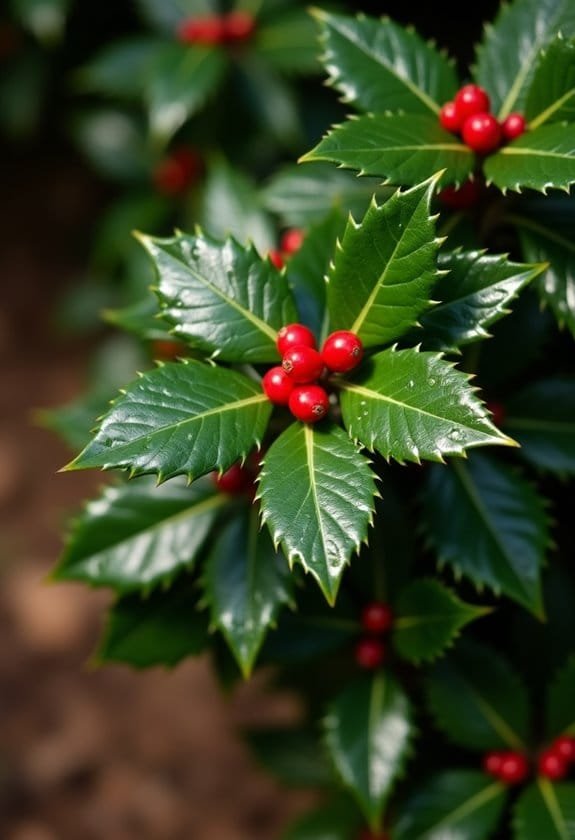
Caring for Ilex aquifolium involves several essential practices that guarantee its vibrant growth and health.
To start, planting in well-drained, humic soil under full to partial sunlight lays a strong foundation for the plant's long-term success.
Ongoing care includes regular pruning and consistent watering, especially during dry spells.
Planting Tips
Typically, planting Ilex aquifolium during its dormant period—from mid-November to late April—ensures the best chance for successful establishment. This evergreen shrub, often found in its native forest habitat, thrives in locations receiving full to partial sunlight and benefits from well-drained, moist soils.
It's paramount to avoid poorly drained areas, as excess moisture can lead to root rot and hinder growth.
Once planted, the newly established holly requires regular watering, especially during dry spells, to promote ideal conditions for development. Proper hydration supports robust root systems and enhances the plant's resilience.
In early spring, pruning becomes essential; this process not only shapes the shrub but also stimulates new growth and potentially increases berry production in female plants, further contributing to the ecological landscape.
To enhance the survival rates of young plants, protect them from extreme weather, including frost and strong winds. Such precautions enable Ilex aquifolium to flourish and adapt to its environment, ensuring its role in maintaining biodiversity. Additionally, planting holly in diverse ecosystems can help support native flora and improve overall habitat quality.
With careful attention to these planting tips, gardeners can cultivate a healthy holly that enriches their local ecosystem.
Ongoing Care
Ongoing care for Ilex aquifolium is vital to guarantee its health and vigor. This elegant landscape plant thrives in well-drained, moist soils; as a result, it's important to water it during prolonged dry spells to prevent leaf desiccation.
Regular pruning, ideally conducted in late winter or early spring, maintains its shape and density, while also encouraging robust berry production, a highlight in any garden.
In early spring, a balanced fertilizer supports healthy growth, but care should be taken to avoid over-fertilization, which can harm the delicate root system.
Mulching around the base of the plant plays a significant role in retaining soil moisture, suppressing weeds, and enhancing soil quality over time, especially during the establishment phase.
Moreover, vigilant monitoring for pests and diseases, such as leaf miners and scale insects, is necessary. Early detection allows for prompt treatment, ensuring the continued health and aesthetic appeal of the plant.
With these ongoing care practices, Ilex aquifolium can flourish, providing vibrant green foliage and attractive berries, thus enriching the landscape and delighting onlookers throughout the seasons.
Suggested Companions
Ilex aquifolium, with its glossy leaves and vibrant berries, thrives best when paired with companion plants that enhance its beauty and support its growth. Dwarf conifers, such as Juniperus or Taxus, create a striking contrast with holly's rich foliage while thriving in similar soil and light conditions. Guelder Rose is an excellent option for companion planting as it also flourishes in damp environments and provides additional visual interest.
Integrating flowering perennials, like Helleborus and Pulmonaria, not only boosts visual interest but also attracts essential pollinators, enriching the ecosystem. These pollinators are particularly drawn to the clusters of creamy-white or pink Guelder Rose flowers, which bloom from May to July.
Additionally, plants such as Sanguisorba and Astilbe flourish in the shade provided by holly's dense canopy, benefiting from the moist environment that Ilex aquifolium prefers. Incorporating deciduous shrubs like Camellia or Rhododendron alongside holly introduces seasonal diversity, supporting a variety of wildlife and playing counterpoint to the evergreen holly.
To enhance textural dynamics and moisture retention, ornamental grasses such as Carex or Miscanthus can be positioned at the base of Ilex aquifolium. This thoughtful arrangement minimizes nutrient competition while fostering an inviting habitat for various species. Furthermore, plants like Boston Ivy may be included to improve erosion control, which benefits the surrounding ecosystem by enhancing soil stability.
Common Issues
Ilex aquifolium faces several common issues that can greatly impact its health and longevity.
Among these concerns are the invasive leaf-mining insect, Phytomyza ilicis, and the potential for overcrowding, both of which can diminish the plant's vitality and attractiveness.
To effectively manage these challenges, gardeners must adopt proactive solutions, including regular maintenance practices and careful monitoring for pests, ensuring the holly's resilience in diverse conditions. Additionally, understanding the importance of pollinator relationships can further enhance the holly's ecosystem support and promote healthy growth.
Pests/Diseases
Pests and diseases can pose significant challenges to the health of Ilex aquifolium, commonly known as English holly. Among the most prevalent pests are aphids, which cause leaf curling and stunted growth, greatly diminishing the plant's vitality. Additionally, leaf miners create visible tunnels in the leaves, leading to unsightly damage and potential stress on the plant's resources. The invasive leaf-mine insect, Phytomyza ilicis, specifically targets holly leaves, inflicting further harm and compromising overall health.
Fungal diseases, particularly powdery mildew, thrive under high humidity conditions, resulting in a telltale white powdery coating on the leaves. This coating obstructs sunlight, ultimately reducing photosynthesis and weakening the plant's resilience. Scale insects may also infest the bark of Ilex aquifolium, exhibiting sap-sucking behavior that leads to weakened branches and the risk of dieback.
To cultivate healthy English holly, diligent cultural practices are essential. Maintaining healthy soil management, monitoring for pests, and addressing fungal diseases proactively contribute to a more robust and resilient plant, ensuring its beauty and vitality for years to come.
Solutions
Effective management of common issues related to Ilex aquifolium hinges on several key strategies. This evergreen species, often labeled an invasive plant in certain regions, particularly poses a threat to ecosystems in North America by outcompeting native flora.
In fact, Ilex aquifolium is classified as a Washington State Noxious Weed due to its prolific seed production, which is facilitated by birds. To mitigate its spread, early removal of small Ilex aquifolium plants is best conducted when the soil is moist, as this guarantees easier uprooting.
However, mature specimens present a more significant challenge; their deep roots necessitate labor-intensive removal techniques. It's critical to recognize that simply cutting the plant at the base often leads to re-sprouting, which underscores the necessity for herbicidal treatments like the cut stump or frilling method for effective long-term control.
Moreover, homeowners should remain vigilant, as both the berries and leaves of Ilex aquifolium are toxic to humans and pets, potentially causing nausea and vomiting upon ingestion.
In areas frequented by children or animals, caution is essential, making it imperative to choose planting locations wisely.
Summary
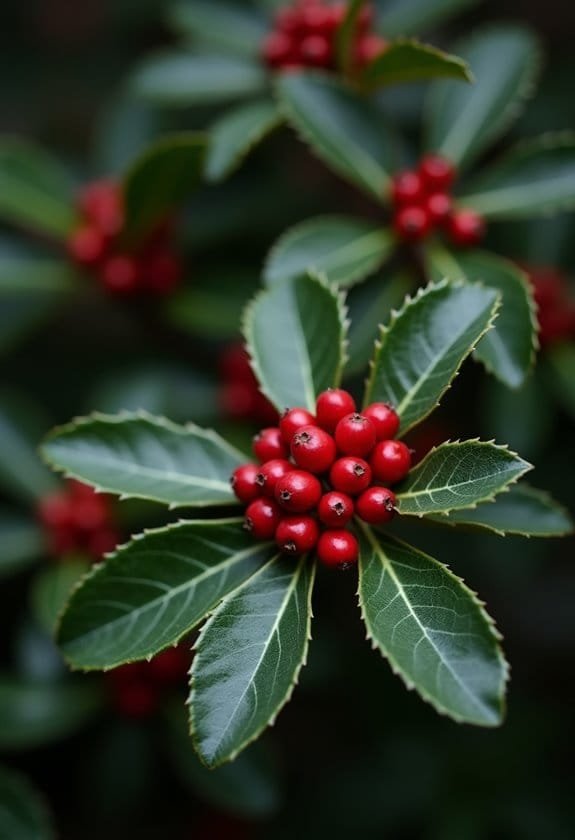
Common Holly, known scientifically as Ilex aquifolium, is an evergreen species that can reach impressive heights of 30 to 50 feet. Its dark green, glossy leaves, adorned with distinctive spiny margins, are often recognized across landscapes.
Native to Europe, North Africa, and Western Asia, Ilex aquifolium thrives in well-drained moist soils, preferring full to partial sun exposure, although it struggles during hot, humid summers.
In spring, this resilient species produces small, fragrant white flowers, with female plants later developing charming, bright red or yellow drupes, which provide vital winter sustenance for birds.
However, its ecological presence is a double-edged sword. While it attracts pollinators and provides essential habitats for various wildlife, Ilex aquifolium is considered an invasive species in certain regions, particularly parts of the United States, where its growth can disrupt local ecosystems.
Caution is advised, as the berries, while appealing to wildlife, can cause minor toxicity in humans if consumed.