Knautia arvensis, known as Field Scabious, is a notable herbaceous perennial thriving in Europe's dry habitats. Ranging from 25 to 100 cm in height, this plant features distinctive bluish-purple flower heads, often reaching an inch across, and lance-shaped leaves. Flourishing in full sun, it prefers well-drained, dry soils, embodying resilience with its capacity to endure brief droughts. Field Scabious attracts various pollinators, particularly bees and butterflies, enhancing local biodiversity during its peak flowering period from July to September. While offering ecological benefits, its aggressive growth can manifest challenges, signaling the importance of effective management strategies. Further insights on this fascinating plant await.
Main Points
- Knautia arvensis, or Field Scabious, is a perennial plant with distinctive bluish-purple flowers, thriving in dry, open habitats.
- It flower from July to September, attracting a variety of pollinators, especially bees and butterflies.
- This plant grows in well-drained sandy or loamy soils, preferring full sun to partial shade and requires regular moisture during flowering.
- Field Scabious can be invasive, forming dense stands that outcompete native flora, necessitating management strategies for control.
- Companion plants like lavender and sedum can enhance biodiversity and support local ecosystems when planted alongside Knautia arvensis.
Introduction
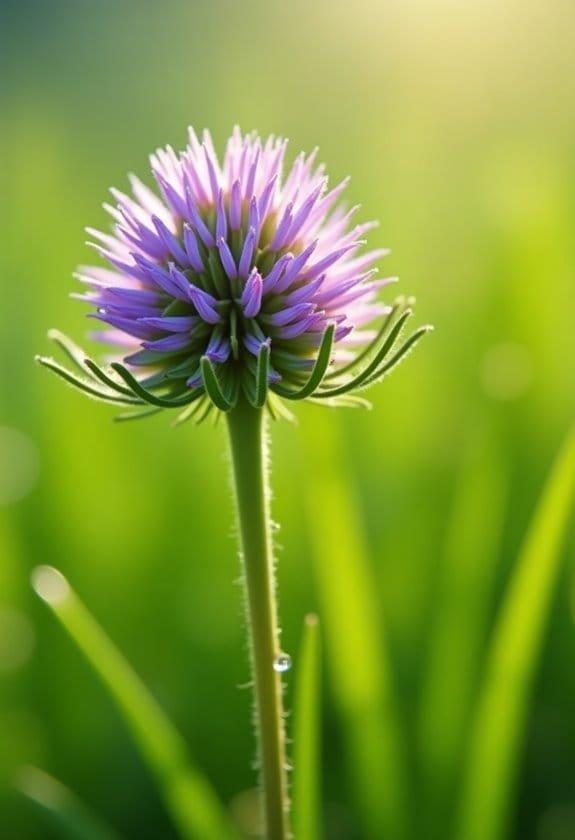
Knautia arvensis, known commonly as Field Scabious, captivates with its delicate, bluish-purple flower heads and impressive ability to thrive in various environments.
This herbaceous perennial, native to Europe, reaches heights between 25 and 100 cm, showcasing its adaptability in dry, open habitats.
With a rich history in medicine, it not only enchants gardeners but also serves as a reminder of the intricate connections between plant species and human wellbeing. Additionally, Field Scabious provides essential resources for pollinators by offering nectar-rich flowers that attract various beneficial insects.
Common Name
Field Scabious is a enchanting wildflower that enchants with its striking bluish to purplish blooms. Commonly known as Knautia arvensis, this charming plant often goes by alternative names such as blue buttons and gipsy rose.
The flowers exhibit a unique dome-shaped arrangement that resembles a square pincushion, creating an eye-catching display in meadows and grasslands. This species has been known to grow between 25-100 cm tall, making it a prominent feature in its native habitats.
The term "scabious" has historical roots, derived from the Latin word "scabere," which translates to "to scratch." This name reflects the plant's earlier medicinal applications, where it was used to treat skin ailments.
However, while it has its charms, Field Scabious also has a reputation as an invasive species in certain areas, where it has adapted aggressively after being introduced from Europe as an ornamental plant.
In its natural habitat, Knautia arvensis thrives, often forming dense stands that can outcompete native flora. It is worth noting that this plant's adaptability to various conditions enables it to flourish across diverse environments, contributing to its invasiveness in certain regions.
This duality—a beautiful wildflower with invasive tendencies—captures the complexities of its role within ecosystems. Appreciating its allure requires awareness of its ecological implications, creating a wide-ranging discussion around this captivating species.
Scientific Name
What makes the scientific name of the Field Scabious so significant? The designation Knautia arvensis not only classifies this herbaceous perennial plant but also connects it to its rich botanical lineage and ecological importance.
The genus name, Knautia, pays tribute to Christian Knaut, a 17th-century botanist whose work laid foundational stones in plant taxonomy. Meanwhile, the species epithet "arvensis," derived from the Latin word for "field," emphasizes the plant's natural habitats, indicating its frequent presence in meadows and disturbed areas—a hallmark of native plant vigor.
This scientific classification serves as an essential tool for researchers and conservationists alike, facilitating effective communication about the plant's characteristics and requirements.
Historically, Knautia arvensis has garnered attention not just for its aesthetic appeal but also for its medicinal applications, having been utilized to treat skin ailments and even the bubonic plague. Such multifaceted importance makes understanding its scientific name crucial for appreciating both its ecological role and cultural history.
Consequently, this nomenclature encapsulates a narrative of heritage, survival, and ecological diversity, intertwining the plant's identity with the natural world that surrounds it.
Overview
Known for its striking flower heads and resilience, Knautia arvensis, or Field Scabious, is a perennial herbaceous plant that thrives in a variety of environments. This species grows to a height of 25 to 100 cm (9.8 to 39.4 in), typically inhabiting grassy areas and dry soils.
Its notable flowering period spans from July to September when it showcases distinctive dome-shaped flower heads measuring 1 inch across, adorned with tiny flowers in shades of pink to lilac. The plant's ability to attract pollinators, including bees and butterflies, highlights its role in supporting local biodiversity.
Field Scabious features a unique basal rosette of leaves that can be lance-elliptic, coarsely toothed, or lobed, enhancing its aesthetic and ecological appeal. The stems aren't only hairy but also display stiff hairs angled downwards, contributing to the plant's resilience against environmental stresses.
Originally introduced from Europe for ornamental purposes, Knautia arvensis has become an invasive weed in regions like northwest British Columbia, where its rapid spread can considerably disrupt prairie ecosystems. Remarkably, a single plant can produce up to 2,000 seeds, with ants aiding in their dispersal thanks to the presence of elaiosomes. This ability underscores the plant's adaptability and potential ecological impact. Additionally, it shares similarities with common knapweed in its invasive growth patterns and ecological effects.
Key Features
Knautia arvensis, or Field Scabious, showcases an enthralling growth size and appearance that make it easily recognizable in its habitat.
With its dome-shaped flower heads measuring 1 to 1 inch across, the plant blooms from July to September, producing delicate pink or lilac flowers that serve as a striking feature against its green to purplish stems.
This perennial thrives in dry, grassy areas, so understanding its key characteristics can provide insight into its ecological role and potential for spread.
Growth Size
Field Scabious typically reaches heights of 25 to 100 centimeters (about 9.8 to 39.4 inches), showcasing its robust growth as a perennial herb. This growth is characterized by erect, hairy, and sparsely branched stems that emerge multiple times from the base, forming a striking structure in natural habitats.
At the plant's base, a substantial basal rosette of leaves can be found, which helps to anchor its presence. The leaves are distinctly different, measuring between 8 to 20 centimeters long, displaying varied shapes that range from lance-elliptic to coarsely toothed or lobed. This diversity in leaf morphology contributes to the overall aesthetic of the plant, allowing it to blend harmoniously with its surroundings.
As Field Scabious thrives in meadows and grasslands, its height and leaf structure enable it to reach for sunlight, maximizing photosynthesis, which is essential for its development.
Flowering occurs prominently from July to September, during which time the plant focuses its energy on producing bright, dome-shaped inflorescences, further enhancing its growth. Furthermore, Field Scabious serves as a vital nectar source for pollinators like bees, supporting the local ecosystem.
Field Scabious stands tall, a symbol of nature's resilience, flourishing in various environments while maintaining its unique characteristics.
Appearance
The charming dome-shaped flower heads of Knautia arvensis measure 1 to 1 inch across, showcasing a lovely palette of pink to lilac hues with their distinctive 4-lobed structure. Each flower head features small florets that vary in size; the outer blooms are noticeably larger than the central ones, creating a visually striking effect akin to a pincushion topped with violet-tipped stamens. This unique arrangement draws pollinators and adds to the plant's aesthetic appeal.
The foliage, forming a basal rosette near the base of the plant, consists of leaves measuring 3 to 8 inches long. These leaves exhibit a range of shapes, from lance-elliptic to coarsely toothed or lobed, contributing to the plant's overall texture.
Green bracts encase the flower heads, providing additional visual interest along with the plant's multiple, branched, and hairy stems. These stems can grow between 25 to 100 cm tall and often display a blend of green and purplish hues, enhanced by unmistakable purple spots.
Although the initial beauty captivates, potential invasiveness looms as the hairy, angular seeds—about an inch long—develop from the flower heads, ready to disperse.
Flowering Season
During the warm summer months, this perennial herb graces the landscape with its vibrant blooms from July to September. Field scabious, scientifically known as Knautia arvensis, features enchanting flower heads that can measure between 1 to 1 inch across.
These delightful inflorescences display hues ranging from gentle pink to soft lilac, enthralling anyone who encounters them. Each flower head showcases a unique structure, characterized by a 4-lobed corolla. Within each dome, the outer flowers appear larger than their central counterparts, contributing to the visual allure of this species.
The flowering period is significant not only for aesthetic appreciation but also for ecological contributions. Field scabious attracts a variety of pollinators, including bees and butterflies, due to its nectar-rich offerings, thereby supporting local biodiversity. These plants are also known to play a significant role in attracting essential pollinators during their extended blooming period. Additionally, like the Greater Stitchwort, the nectar production of field scabious enhances its appeal to early spring pollinators.
After the bloom phase, the flower heads convert into distinctive dome-shaped seed heads, playing an essential role in reproduction and, potentially, invasiveness. This remarkable change underlines the plant's adaptability and importance within its habitat, illustrating how flowering seasons not only herald beauty but also bolster the ecosystem's health and liveliness.
Growing Requirements
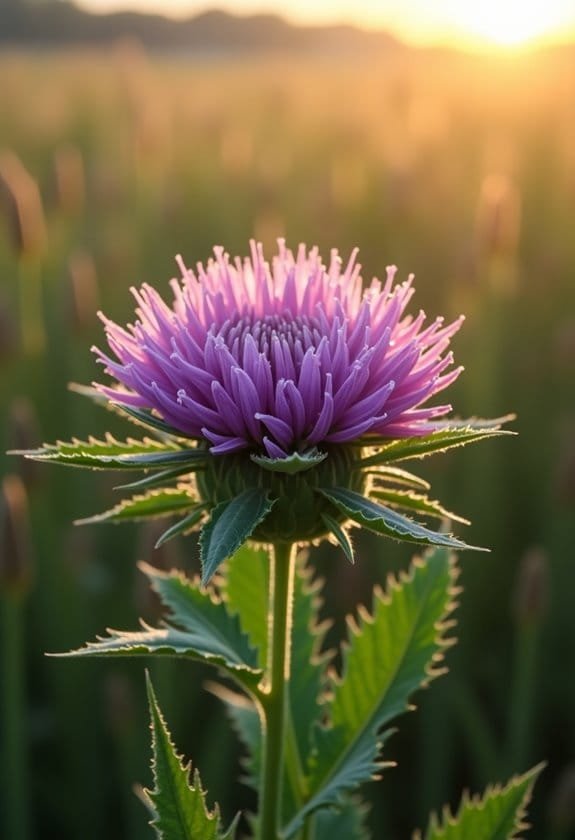
Knautia arvensis flourishes under bright sunlight, thriving best in open, dry environments.
It demands well-drained soils, steering clear of heavy or waterlogged conditions that hinder its growth.
Typically, it reaches impressive heights of 25 to 100 cm. This plant is also known for its ability to attract various pollinators, making it an excellent addition to biodiversity promotion in garden ecosystems. Understanding its requirements for light, soil, and water not only aids in successful cultivation but also promotes biodiversity in garden ecosystems, benefiting both the plant and its surrounding environment. Additionally, it is important to consider the plant's pollination strategies, as this can enhance its role in attracting beneficial insects.
Light
In sunny locations, Knautia arvensis thrives best, favoring full sun to partial shade to guarantee ideal growth. This resilient plant commonly establishes itself in disturbed habitats, such as roadsides, meadows, and grasslands, where it receives direct sunlight.
It's essential to avoid heavy, shaded soils, as Knautia arvensis flourishes only under conditions that are well-drained and relatively dry. The meadow widow, a delightful nickname for this species, underscores its affinity for open, sun-drenched landscapes.
During its flowering period, from July to September, adequate sunlight markedly enhances the plant's ability to attract various pollinators, drawn to its nectar-rich inflorescences. Exposure to full sun not only plays a significant role in pollinator attraction but also supports Knautia arvensis' reproductive processes, leading to successful seed development and dispersal. Additionally, like the Common Cowslip, Knautia arvensis can enhance biodiversity within its ecosystem.
For those interested in cultivating Knautia arvensis, please check that light conditions align with its preferences. By ensuring ample sunlight, gardeners can promote robust growth and vibrant blooms, contributing to the ecological tapestry of their environment.
Ultimately, Knautia arvensis exemplifies the symbiotic relationship between plants and their light requirements, revealing the intricate dance of nature.
Soil
Generally, Knautia arvensis thrives in dry, well-drained soils that often characterize sunny, grassy areas with minimal compaction. Belonging to the honeysuckle family, this resilient plant flourishes in sandy or loamy substrates, frequently found in disturbed habitats.
It actively avoids heavy soils, making it particularly adept at colonizing meadows, roadsides, and waste areas, where soil quality can vary considerably.
Knautia arvensis can adapt to poorer soil conditions, allowing it to establish itself in environments where other plants struggle. This characteristic is essential; ideal growth occurs when the plant receives adequate sunlight, underscoring how fundamental light exposure and soil quality are intertwined in promoting healthy development.
The flowering stalks can reach up to 36 inches long, producing clusters of delicate, lavender blooms that not only enhance the aesthetic appeal but also contribute considerably to local ecosystems. Furthermore, its ability to thrive in well-drained soils is beneficial for surrounding plants, helping to maintain a balanced ecosystem in the area.
Moreover, this plant plays a significant role in soil stabilization, assisting in maintaining ecological balance within its preferred environments.
Water
Providing adequate water is crucial for Knautia arvensis to thrive, especially during its flowering period from July to September. This remarkable perennial exhibits a preference for well-drained, dry soils, flourishing in open, sunlit locations while avoiding heavy, waterlogged ground.
While it requires regular moisture during bloom, its adaptive nature allows it to endure brief droughts without adverse effects. Additionally, wild strawberries (Fragaria vesca) achieve optimal growth with consistent moisture during fruit development, highlighting the importance of maintaining appropriate watering practices.
However, gardeners must employ effective water conservation techniques to guarantee Field Scabious receives just enough without becoming inundated. Utilizing water drainage solutions, such as raised beds or strategically placed drainage channels, can help direct excess moisture away from the roots, preventing detrimental conditions like root rot.
It's vital to monitor the soil's moisture levels closely, as overly saturated environments can hinder growth considerably. Additionally, Ajuga reptans serves as a natural weed suppressor, offering eco-friendly garden benefits that complement the overall landscape.
Moreover, awareness of water temperature effects can further optimize the plant's health. Colder water may stress the plant, while warmer water—ideally at ambient temperature—helps maintain vigorous growth.
Temperature
Knautia arvensis thrives best within a temperature range of 15°C to 25°C (59°F to 77°F) during the growing season. This ideal thermal environment fosters robust growth and flowering between July and September, which correspond to the warmest months.
Climate adaptability plays a significant role in the plant's survival, allowing it to flourish in various disturbed habitats despite possible temperature extremes.
While it prefers moderate temperatures, Knautia arvensis exhibits some resilience to fluctuations, demonstrating an ability to withstand seasonal variations without substantial detriment to its health.
Yet, the plant can struggle in heavy, clayey soils that retain moisture, leading to less than desirable conditions. Ideally, Field Scabious thrives in well-drained, dry soils that complement its requirements for ample sunlight.
Given its relatively low dependence on fertility, this perennial demonstrates a remarkable capacity to thrive in less-than-ideal environments. However, to guarantee excellent growth and reproduction, gardeners should note these temperature preferences and aim to maintain favorable conditions.
When the right temperature is achieved—like the warmth of a nurturing sun—the Field Scabious blooms beautifully, enriching local ecosystems.
Pollinator Criteria
Knautia arvensis, with its rich nectar and distinctive four-lobed flowers, draws various pollinators, particularly bees and butterflies, during its flowering period from July to September.
The plant's dense inflorescences not only provide essential sustenance but also play an important role in pollination, fostering the reproductive success of surrounding flora and promoting biodiversity. Additionally, the presence of Geum rivale in nearby habitats enhances the overall attraction of pollinators by providing another nectar source.
Consequently, its thriving presence in local ecosystems underlines the interconnectedness of nature, where every pollinator contributes notably to maintaining ecological balance. Additionally, the attraction of various pollinators supports the biodiversity in gardens, enhancing the overall health of the environment.
Attracted Pollinators
How does Knautia arvensis attract a variety of pollinators? This remarkable plant entices an array of beneficial insects, mainly bees and butterflies, through its rich nectar availability.
The floral structure, characterized by numerous small florets, guarantees substantial pollinator diversity as each floret presents unique foraging opportunities tailored to different species. Visitation peaks during the plant's blooming period, which spans from July to September—an ideal timeframe coinciding with the heightened activity levels of many pollinators.
Moreover, the plant serves as a vital food source for specific lepidopteran species, including the marsh fritillary caterpillar, thereby broadening its ecological impact. The four-lobed flower morphology not only attracts these insects but also enhances pollen transfer, emphasizing its significant role in pollinating adjacent flora. Additionally, Knautia arvensis provides essential nectar for important pollinators like bumblebees, which thrive on its abundant floral resources.
In addition to its effective pollination technique, Knautia arvensis plays a crucial role in enhancing biodiversity across meadow ecosystems, fostering an environment that supports various life forms. The fascinating interplay between Knautia arvensis and its pollinators showcases the intricate web of life within its ecosystem, underscoring its importance in maintaining pollinator populations.
As these insects engage in flower visitation, they contribute to the continuation of both the plant and the diverse life forms reliant on it, fostering a balanced and thriving environment.
Pollination Method
Attracting a variety of pollinators, Knautia arvensis employs several methods to enhance its pollination effectiveness. Its intricate flower structure, characterized by numerous small florets, offers ample landing spaces for visiting insects, thereby bolstering the potential for successful pollination.
The plant's generous nectar availability, especially from July to September, coincides with peak activity among bee populations that rely on floral resources during the summer months. This synchronous timing not only attracts diverse pollinators, such as bees and butterflies, but also supports local biodiversity by providing essential sustenance.
For instance, the narrow-bordered bee hawk-moth (Hemaris tityus) heavily depends on Knautia arvensis as a food source, highlighting the plant's role within its ecosystem.
Furthermore, the enchanting blue to purple blooms draw increased pollinator visitation, which consequently enhances pollination processes for surrounding flora. This interdependence showcases a delicate balance of nature, where Knautia arvensis facilitates a network of interactions among various species.
Care & Maintenance
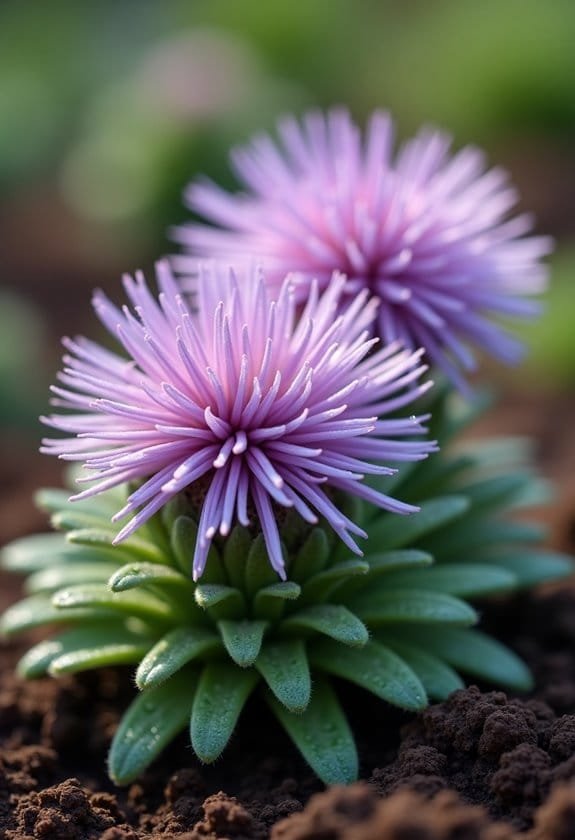
When caring for Knautia arvensis, understanding its preferred conditions is essential for successful growth.
It thrives in well-drained, dry soils and sunny locations, making it an excellent choice for open meadows, while ongoing maintenance—like regular watering and pruning to promote airflow—ensures its health and resilience. Additionally, Knautia arvensis is known to attract various pollinators, primarily due to its high nectar production, which further supports its thriving natural habitat.
Thoughtfully selecting companion plants can also enhance biodiversity, creating a vibrant ecosystem that attracts various pollinators, further supporting the plant's thriving natural habitat. Additionally, incorporating plants like ox-eye daisies can further enhance pollinator activity and contribute to ecological stability.
Planting Tips
Knautia arvensis thrives in well-drained, dry soils that receive ample sunlight, making careful site selection essential for successful planting. Start with proper soil preparation; loamy or sandy substrates with excellent drainage will enhance plant health and longevity. Avoid heavy, waterlogged soils, as these conditions jeopardize the viability of Knautia arvensis.
When employing effective planting techniques, consider the ideal spacing of 12 to 18 inches between plants. This spacing accommodates the upright, branched structure, allowing each specimen adequate room to flourish without competing for crucial resources.
During the first growing season, regular watering helps establish robust root systems, though it's critical to steer clear of over-watering, as Knautia prefers drier conditions.
Lastly, it's wise to be vigilant regarding invasiveness, especially in disturbed habitats; monitor populations closely and implement control methods if they proliferate beyond desired boundaries.
Ongoing Care
Successful planting lays the groundwork for ongoing care of Knautia arvensis. Regular monitoring strategies are essential, especially in regions where the plant exhibits aggressive tendencies, ensuring infestations remain manageable.
Active evaluation helps identify early signs of overgrowth, such as excessive flowering or leaf proliferation.
Implementing mechanical control methods, like cutting or mowing, should ideally occur before seed set, markedly curtailing new plant establishment and seed production.
For more stubborn cases, chemical control with herbicides, such as metsulfuron-methyl, can be applied during the active growth phase to achieve effective management of Field Scabious.
If hand-pulling is preferred, it's critical to remove the entire taproot, as partial removal often induces regrowth, thereby complicating sustainable practices.
Furthermore, collaboration with local conservation groups and agricultural extensions can enhance these management strategies, fostering habitat restoration while promoting community awareness of effective control techniques.
Suggested Companions
In sunny garden settings, Knautia arvensis makes an excellent companion for other drought-tolerant perennial flowers. Its striking, nectar-rich flowers attract a multitude of pollinators, such as bees and butterflies, enriching the garden's biodiversity.
To achieve colorful combinations, gardeners can pair this resilient plant with options like lavender or sedum, both of which share similar soil and light requirements. These low maintenance partners thrive in well-drained soil, eschewing overly moist environments that Knautia arvensis finds detrimental.
Seasonal pairings enhance visual appeal from July to September, as the bloom's unique pincushion shape complements the spiky silhouettes of lavender. Additionally, these plants require minimal care; occasional deadheading curtails self-seeding while promoting continued flowering.
Creating a cohesive landscape not only improves aesthetics but also establishes a resilient ecosystem where pollinators thrive, ensuring gardens flourish with life.
When combined thoughtfully, Knautia arvensis and its companions invite a medley of colors and textures, transforming any garden into a vibrant sanctuary that celebrates the beauty of nature.
Consequently, selecting the right companions amplifies the charm and functionality of outdoor spaces, creating a harmonious relationship among plants and wildlife alike.
Common Issues
Field Scabious, a resilient weed, poses significant challenges in agricultural contexts, particularly in regions like northwest British Columbia.
With its ability to produce up to 2,000 seeds, this invasive species aggressively competes with native vegetation and diminishes hay production.
Although pests and diseases may affect its growth, addressing these issues requires strategic interventions, such as targeted herbicide application or thorough removal techniques, to mitigate its impact on grassy ecosystems.
Pests/Diseases
Despite its robust nature, Knautia arvensis can occasionally face challenges from pests and diseases. While this perennial species generally showcases impressive disease resistance traits, it can still experience some common issues. One such concern is the occasional infestation of aphids, which may weaken the plant's structural integrity and overall vigor. When aphids settle on stems and leaves, they extract crucial nutrients, potentially stunting growth and causing distress.
Additionally, environmental factors, like humidity, can promote leaf spot diseases, leading to chlorosis—where leaves turn yellow—and compromising the plant's photosynthetic capabilities. Moreover, powdery mildew, a common fungal infection, often flourishes in densely planted areas or during particularly wet seasons, underscoring the significance of maintaining appropriate spacing between plants.
Effective pest management strategies, including regular monitoring and implementing cultural practices, play a critical role in preserving the health of Field Scabious. For instance, encouraging adequate air circulation reduces the likelihood of fungal growth, while employing aphid control measures—such as introducing natural predators—can effectively mitigate their impact, ensuring Knautia arvensis continues to thrive in its preferred habitats.
Solutions
A variety of solutions can effectively address common issues associated with Knautia arvensis and its potential invasiveness. One of the most notable concerns is the ecological impact caused by its high seed production, as a single plant can yield up to 2,000 seeds.
To combat this, effective seed management strategies, such as timely mowing or cutting before seed set, can be beneficial. Although pulling individual plants may prove ineffective due to their long, branched roots, tilling can reduce seed viability when annual crops rotate through heavily infested areas.
Chemical treatments, including products like Escort (metsulfuron-methyl), offer excellent control when applied to actively growing plants. For ideal effectiveness, herbicides should be administered before the early flower bud stage, highlighting the importance of precise timing in management efforts.
Spring and fall applications targeting rosettes and bolting plants further enhance control strategies.
Additionally, exploring biological control options could provide sustainable methods to mitigate invasive populations. By combining mechanical methods, chemical applications, and an understanding of seed dynamics, land managers can considerably reduce the presence of Knautia arvensis, thereby preserving the integrity of fragile prairie ecosystems.
Summary
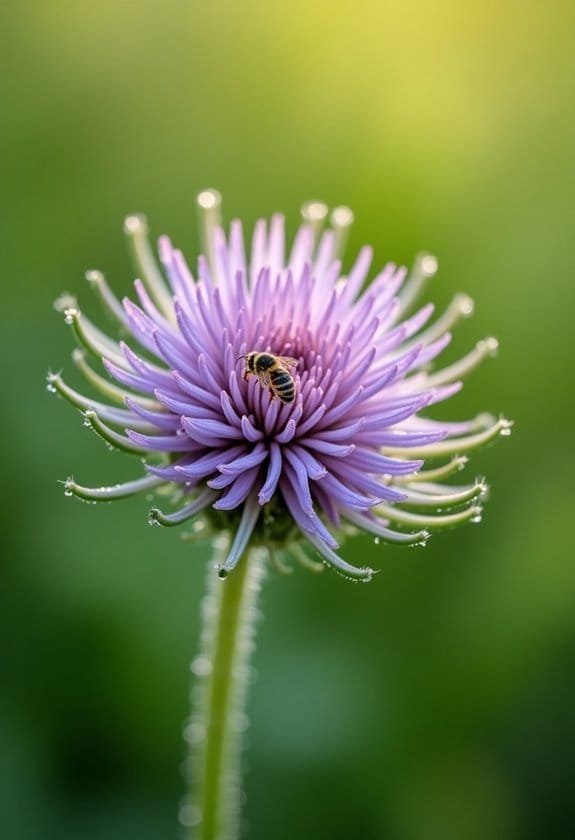
Knautia arvensis, known for its striking dome-shaped flower heads, is a perennial plant thriving in dry, well-drained soils found in meadows and grassy areas. This species typically reaches heights of 25 to 100 cm (9.8 to 39.4 in) and displays beautiful pink to lilac blossoms, which bloom from July to September. The unique pincushion-like centers, featuring violet-tipped stamens, enhance its visual appeal.
However, Knautia arvensis poses an invasive impact in certain regions, rapidly spreading through aggressive seed dispersal, particularly in disturbed habitats. Its hairy seeds, measuring around 1 inch long, contribute to its ability to overtake native grassland ecosystems, often resulting in diminished biodiversity.
Despite these ecological concerns, the plant's attractive flowers present intriguing landscaping potential, drawing attention for creating colorful garden spaces. Gardeners and landscapers should carefully consider its invasiveness when planning; while it might beautify an area, it could inadvertently disrupt local flora.
For those aiming for ecological balance, awareness regarding Knautia arvensis's dual nature is vital. It serves as a reminder of the intricate relationship between beauty and ecological responsibility.