Laurus nobilis, known as the Bay Tree, is a distinguished evergreen that epitomizes culinary excellence, reaching heights between 12 to 40 feet. Its glossy, lanceolate leaves, which can extend up to four inches, offer a distinctive flavor in various dishes, particularly in soups and stews. Thriving in well-drained soil and favoring full sun, this dioecious plant requires both male and female specimens for fruitful reproduction, with aromatic berries following its inconspicuous yellow-green flowers. Additionally, the Bay Tree plays a crucial role in ecosystems, attracting pollinators. Curiously, there's much more profound significance intertwined within its history and uses.
Main Points
- Laurus nobilis, commonly known as the Bay Tree, is an evergreen shrub or small tree that can reach heights of 12 to 40 feet.
- It produces aromatic leaves widely used in culinary dishes, particularly in soups and stews, and is a key component of bouquet garni.
- Only female Bay Trees produce aromatic berries, which help in plant reproduction and contribute to local biodiversity by attracting pollinators.
- The plant thrives in well-drained soil and requires full sun to partial shade, making it suitable for USDA hardiness zones 8-10.
- Historically, the Bay Tree symbolizes victory and achievement, often used in wreaths and ceremonies across various cultures.
Introduction
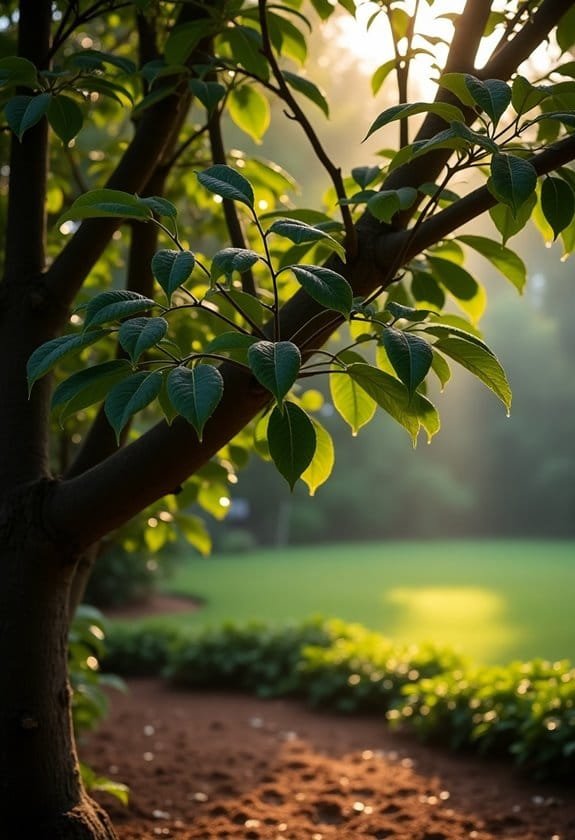
Laurus nobilis, commonly known as Bay Laurel, is a remarkable evergreen shrub native to the Mediterranean, often reaching heights of 12 to 40 feet.
This versatile plant not only enhances culinary dishes with its aromatic leaves but also carries deep cultural significance, symbolizing victory and accomplishment throughout history.
With its dioecious nature and distinctive growth preferences, Bay Laurel captures the attention of botanists and chefs alike, making it a fascinating subject of study.
Common Name
What makes Laurus nobilis a staple in kitchens around the world? Commonly known as bay laurel or sweet bay, this aromatic culinary herb is cherished for its distinct flavor and fragrance.
Renowned for its versatility, the leaves of true laurel are often utilized whole or dried, adding depth to soups, stews, and numerous savory dishes. They play a crucial role in bouquet garni, enhancing the richness of culinary creations.
In addition to its culinary applications, Laurus nobilis holds historical significance. Also referred to as Grecian laurel, this plant has been associated with victory and achievement since ancient Greek and Roman times. The lush, evergreen foliage provides a symbol of resilience, making it a beloved emblem across cultures.
While Laurus nobilis is typically distinguished from its relative, California bay laurel, it's important to recognize its unique characteristics.
The laurel tree bears small, dark purple to black berries following inconspicuous yellow-green flowers in the spring, further showcasing its ecological diversity. With its rich heritage and culinary significance, the bay laurel continues to enrich kitchens and traditions worldwide.
Scientific Name
Recognizing Laurus nobilis by its scientific name highlights its botanical significance and cultural legacy. This remarkable evergreen tree, a member of the Lauraceae family, thrives mainly in the Mediterranean region, where it can reach impressive heights of up to 60 feet under ideal growing conditions.
Known for its dioecious flowering characteristics, Laurus nobilis possesses distinct male and female plants, with only the latter producing the aromatic, berry-like drupes that contribute to its allure.
The glossy, lanceolate leaves of Laurus nobilis are perhaps its most celebrated feature, widely recognized as bay leaves in culinary applications for their rich flavor and fragrance.
These leaves not only enhance dishes with their zest but also play a crucial role in traditional cuisines throughout history.
Moreover, Laurus nobilis carries profound cultural significance, symbolizing victory and honor during ancient Greece and Rome.
The iconic laurel wreaths crafted from its leaves remain an enduring symbol of achievement, illustrating the deep-rooted connections between this evergreen tree and human history.
Essentially, Laurus nobilis encompasses a complex tapestry of scientific and cultural elements, solidifying its status as a remarkable plant in both academic and culinary domains.
Overview
Known for its culinary applications and rich history, Laurus nobilis, or Bay Laurel, plays a significant role in both gardens and kitchens around the world.
This evergreen shrub or small tree can reach impressive heights of 12 to 40 feet, featuring aromatic leaves that are used extensively to enhance the flavors of various dishes. Renowned for their robust taste, bay laurel leaves are commonly added to soups, stews, and sauces, with dried leaves enjoying a shelf life that can extend to roughly one year.
In spring, the plant produces dioecious flowers, manifesting as inconspicuous pale yellow-green blooms that later give way to glossy purple-black berries in autumn. Thriving in well-drained soil, bay laurel is ideally suited for Mediterranean climates, flourishing in hardiness zones 8 to 11.
Besides its culinary significance, bay laurel holds a deep cultural importance—symbolizing victory and honor in ancient Greek and Roman traditions. Wreaths made of bay laurel leaves were awarded to victors in competitions, reflecting the plant's enduring legacy as a revered emblem of achievement.
Key Features
Laurus nobilis, known for its impressive stature, typically reaches heights between 12 to 40 feet, while showcasing its distinctive leathery leaves that can measure up to 4 inches in length.
During spring, the tree adorns itself with small, pale flowers, which ultimately give way to glossy purple-black berries in the fall—a true demonstration of its duality in beauty and utility.
The combination of its growth size, visual appeal, and seasonal flowering elevates Bay Laurel from a mere herb to a remarkable fixture in both culinary and ornamental contexts.
Growth Size
The impressive stature of Laurus nobilis, also known as Bay Laurel, makes it a striking addition to gardens and landscapes. This plant can reach heights of 8 to 40 feet (approximately 2.5 to 12 meters), typically taking on the form of a small tree or a large shrub. The lush foliage exhibits a pyramidal-oval growth habit, which enhances its versatility in various landscaping contexts.
Though regarded for its grandeur, Bay Laurel generally displays a slow growth rate, which varies depending on environmental factors and cultivation practices. Its thick, leathery, and glossy green leaves can grow up to 4 inches (about 10 cm) long, adding to its aesthetic appeal.
When cultivated in containers, Laurus nobilis is frequently pruned to maintain a more compact size, making it an ideal choice for herb gardens and patios. This careful pruning encourages a visually pleasing shape and promotes healthier growth.
Appearance
Bay Laurel showcases a distinct appearance that enchants gardeners and plant enthusiasts alike. This evergreen shrub or small tree typically reaches heights between 12 to 40 feet (3 to 12 meters), exhibiting a pyramidal-oval growth habit. Its glossy, dark green, leathery leaves, which can grow up to 4 inches (10 cm) in length, aren't only visually striking but also aromatic—often finding their way into culinary dishes.
The tree's bark, smooth and ranging from olive green to gray, adds to its year-round aesthetic appeal, emphasizing its robust character.
A notable feature of Laurus nobilis is its dioecious flowering system; though the tree produces small, pale yellow-green flowers in spring, these blossoms appear on separate male and female plants, presenting a unique aspect of its reproductive strategy.
After the flowering period, small purplish-black berries develop, each containing a single seed, maturing in autumn and measuring approximately 1/4 to 1/2 inch. Overall, the Bay Laurel's combination of impressive size, striking leaf structure, and unique reproductive features creates an enchanting specimen in any landscape, echoing nature's artful craftsmanship and resilience.
Flowering Season
In spring, the flowering season of Laurus nobilis brings a subtle yet enchanting display to gardens. This period, spanning from March to May, reveals dioecious flowers that appear in delicate pairs alongside the plant's lush leaves.
These pale yellow-green flowers, which measure approximately 1cm (0.39 inches) in diameter, tend to remain inconspicuous, yet their presence contributes markedly to the overall visual charm of bay trees.
For successful pollination, both male and female plants are essential. Only the female flowers yield the coveted berry-like drupes, which emerge after the flowering season concludes.
These drupes, maturing in the autumn, exhibit a purplish-black hue and typically contain a single seed, embodying the tree's reproductive success.
The flowering season not only acts as the precursor to these small fruit but also enhances the garden aesthetic by contrasting beautifully with the evergreen foliage.
Growing Requirements
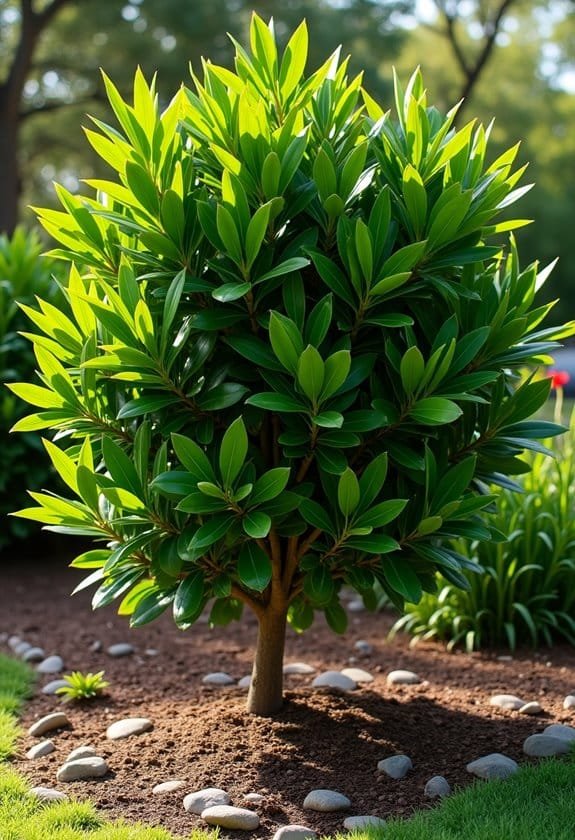
Laurus nobilis, or the bay tree, flourishes in environments that offer well-drained soil combined with ample sunlight, showcasing its adaptability across different landscapes.
This evergreen thrives particularly in hardiness zones 8 through 10, necessitating a careful balance of regular moisture while developing drought resistance over time.
Understanding these growing requirements is essential for nurturing vigorous growth and ensuring the plant remains a staple in any garden or indoor setting.
Light
Thriving in various light conditions, Laurus nobilis prefers full sun to partial shade for ideal growth. In cooler climates, this resilient plant flourishes best with at least six hours of direct sunlight each day.
The bright rays not only promote healthy foliage but also enhance its aromatic qualities, making it a valuable addition to any herb garden. Conversely, during hotter summers, providing a little afternoon shade is wise, as it helps prevent leaf scorch, ensuring the bay tree remains vigorous and vibrant.
For indoor cultivation, placing the bay tree near a bright window is imperative. Adequate light exposure fosters its strength, while insufficient illumination results in legginess and weakened stems, ultimately detracting from the plant's aesthetic appeal.
Without sufficient light, Laurus nobilis struggles to thrive, losing its robust stature as it leans toward light sources. Consequently, understanding these light requirements is essential to successfully growing this herbaceous gem.
Soil
Achieving ideal growth for Laurus nobilis hinges on providing well-drained, rich soil. This plant exhibits remarkable tolerance to various soil types; however, it flourishes best in moderately fertile soil that supports efficient moisture retention. The ideal environment fosters healthy root systems, which are essential for successful nutrient uptake.
An important aspect of caring for bay trees involves avoiding conditions where excessive moisture leads to waterlogged soil, a situation that ultimately stresses the roots and may trigger root rot.
To cultivate Laurus nobilis effectively, gardeners should aim for a soil pH ranging from 6.0 to 7.5, as this specific range promotes robust root development and enhances nutrient availability.
For container-grown bay laurels, selecting a high-quality potting mix with adequate drainage is vital. These plants should be repotted every two years, using fresh soil to maintain nutrient levels and prevent compaction.
Water
Providing the right water conditions is just as important as guaranteeing suitable soil for Laurus nobilis. This venerable bay tree flourishes in consistently moist soil, yet it abhors stagnation—overwatering can lead to devastating root rot. Bay laurel thrives best when planted in well-drained mediums, allowing excess water to escape effortlessly.
During the vibrant growing season, regular watering becomes crucial; particularly during scorching summer months, maintaining moderately moist soil greatly enhances the tree's liveliness.
Once established, bay trees exhibit admirable drought tolerance, offering resilience during periods of diminished rainfall. For those nurturing bay laurel in containers, vigilance is paramount—pots should always possess drainage holes, and the moisture levels should be meticulously monitored to avert detrimental drying out.
As winter casts its chill, the frequency of watering should be judiciously reduced; letting the soil dry slightly between waterings becomes increasingly beneficial, especially if the tree is brought indoors.
This careful management helps guarantee that Laurus nobilis remains a thriving centerpiece throughout the year, showcasing its lush foliage and aromatic leaves, while effectively adapting to its environment. Proper water management, then, is key to cultivating a healthy bay tree.
Temperature
Laurus nobilis flourishes best within USDA hardiness zones 8-11, where mild climates with minimal frost create ideal growing conditions. This aromatic bay tree thrives at temperatures ranging from 60°F to 75°F (15°C to 24°C), making well-drained soils essential for its best growth.
While the plant exhibits some heat tolerance, extreme cold can pose serious risks. Protecting bay laurel from temperatures below 20°F (-6°C) is important to prevent damage and maintain its health.
In colder regions, growers should bring their bay trees indoors during winter months, ensuring they experience stable temperatures and minimal frost exposure. This indoor relocation not only safeguards the plant but also enhances its resilience.
During the summer, outdoor placement in full sun to partial shade further invigorates the Laurus nobilis, promoting robust leaf production and overall liveliness. Such balanced temperature regulation, combined with appropriate watering and soil drainage, establishes a thriving environment for this ancient herb.
Ultimately, understanding the temperature needs of Laurus nobilis is essential for fostering its growth, ensuring it's not merely a plant, but a vibrant addition to gardens or culinary endeavors.
Pollinator Criteria
In exploring the pollinator criteria for Laurus nobilis, one recognizes its dioecious nature, necessitating both male and female plants for successful fertilization.
The inconspicuous, pale yellow-green flowers, approximately 1 cm in diameter, bloom in spring, enticing bees and other pollinators with their fragrant aroma.
Consequently, when these pollinators vigorously transfer pollen between the flowers from March to May, they not only catalyze fruit production but also enhance the ecosystem by providing sustenance to birds and wildlife. Moreover, like chicory, Laurus nobilis plays a vital role in attracting pollinators like bees, which are essential for various agricultural and natural ecosystems.
Attracted Pollinators
Bay trees play an essential role in attracting pollinators to gardens and natural habitats. During their spring flowering period, which spans from March to May, Laurus nobilis produces inconspicuous flowers that emit a subtle fragrance, drawing in various pollinators, particularly bees. This fragrant invitation not only benefits the tree but supports local ecosystems by promoting biodiversity.
The dioecious nature of bay trees, with separate male and female plants, underscores the significance of cross-pollination for successful berry production and genetic diversity. This genetic variation helps maintain robust populations, critical for ecological balance. The attractive flowers and aromatic foliage offer more than mere beauty; they provide shelter and foraging opportunities for small insects, with their leaves bustling with life.
Gardeners who incorporate bay trees into their landscapes create sanctuaries for these essential pollinators. By doing so, they weave a vibrant tapestry of biodiversity within their gardens, enhancing the ecological richness.
The synergistic relationship between bay trees and pollinators exemplifies how a single species can profoundly influence its environment, fostering a thriving habitat where both plants and pollinators flourish.
Pollination Method
Pollination in Laurus nobilis hinges on its dioecious nature, requiring both male and female plants for successful reproduction. This separation of sexes necessitates an intricate system for transferring pollen from the male flowers to the female flowers, which reside on different individuals.
The male flowers, which appear from March to May, release fine pollen that must travel, mainly via wind or insect vectors, to achieve fertilization. In this setup, at least one male plant should be strategically positioned near female plants to facilitate effective cross-pollination.
Despite their critical role, the inconspicuous flowers of Bay Laurel feature small, pale yellow-green blooms that emit a delicate fragrance rather than vivid colors to attract pollinators considerably. This subtlety suggests that their reliance on external forces for pollination is nuanced and carefully adapted to their environment.
Once the pollen reaches the receptive female blooms, fertilization occurs, eventually leading to the production of berry-like drupes, which serve as the reproductive seeds for future generations.
As a result, maintaining a healthy ratio of male to female plants is essential for ensuring the ongoing fertility and sustainability of Laurus nobilis in its natural habitat.
Care & Maintenance
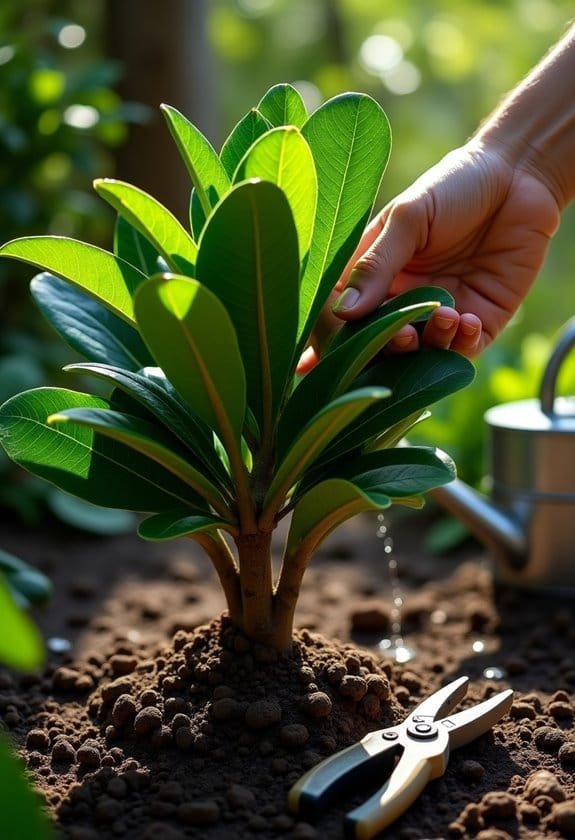
Caring for Laurus nobilis, or bay trees, requires attention to specific needs in their environment and routine maintenance practices.
These elegant plants thrive when planted in well-drained soil under full sun or partial shade, necessitating regular moisture without the risk of complete desiccation.
Ongoing care includes annual pruning for ideal leaf production and ensuring companionship with compatible plants, which fosters a thriving garden ecosystem that benefits all involved species.
Planting Tips
When planting Laurus nobilis, or bay laurels, it's important to choose well-drained, consistently moist soil that allows for proper growth. This species flourishes best in a location with full sun or partial shade, which supports optimum photosynthesis and overall health.
When preparing the planting site, mix organic matter into the soil to enhance its drainage capabilities, helping prevent root rot. One significant planting tip involves proper spacing; bay laurels should be positioned at least three to five feet apart to provide an adequate environment for growth.
For container gardening, select a pot with drainage holes and repot every two years. This practice guarantees a healthy balance between root and top growth, promoting robust foliage.
Water the bay laurel moderately, letting the top inch of soil dry out between waterings. Although the plant demonstrates drought tolerance once established, it appreciates regular moisture to thrive.
Additionally, periodic pruning helps control the size and shape of the bay laurel, fostering vigorous growth and maximizing leaf production. Keeping these planting tips in mind will set the foundation for a thriving Laurus nobilis, enhancing both its aesthetic and culinary contributions.
Ongoing Care
Ongoing care for Laurus nobilis is vital to guaranteeing its health and vigor. This aromatic evergreen thrives in well-drained soil, requiring moderate watering, particularly during its early growth stages. Once established, the bay tree demonstrates remarkable drought tolerance; however, it mustn't be allowed to completely dry out, as this could impede its growth.
Annual pruning is an essential component of ongoing care, as it helps maintain the plant's shape while promoting vigorous leaf production—a trait valued in culinary applications. Regularly trimming back overgrown branches not only enhances aesthetics but also encourages denser foliage.
In colder climates, winter protection is paramount; placing the bay tree indoors or in a sheltered area prevents frost damage during harsh months.
Fertilizing with a balanced liquid fertilizer every few weeks during the growing season will further support robust growth and improve leaf quality, enriching the culinary experience.
Additionally, vigilant monitoring for pests such as scale insects and mealybugs is vital. Timely intervention with appropriate treatments guarantees the plant remains healthy, safeguarding the rewarding aromatic treasures it offers to any garden or kitchen setting.
Suggested Companions
Typically, Laurus nobilis flourishes alongside other herbs that share its preference for well-drained soil and moderate watering, making rosemary, thyme, and sage excellent companions. These plants not only thrive under similar conditions but also create an aesthetically pleasing and harmonious garden environment. Additionally, incorporating herbs such as Origanum vulgare, which also attracts pollinators, promotes a vibrant ecosystem within the garden.
When incorporating companion plants, it's essential to maintain a spacing of at least three feet between them and the bay tree, as this allows for adequate air circulation, greatly reducing the risk of pests and diseases.
Regular pruning of Laurus nobilis is fundamental—this practice helps maintain its structure and compatibility with smaller companions, ensuring that the bay tree doesn't overshadow its neighbors. Additionally, mulching around the base of the bay tree with organic materials can greatly contribute to moisture retention, suppressing weeds while promoting the overall health of its companion plants.
Moreover, diligent monitoring of nearby plants for early signs of pests like scale and mealybugs is imperative. This vigilance enables gardeners to tackle potential infestations before they compromise the bay tree or its companions.
Furthermore, incorporating companion plants that attract pollinators can enhance the ecological balance of the garden, much like how Origanum vulgare serves as a nectar source for beneficial insects.
In principle, the right selection and nurturing of companion plants enhance not only the garden's vitality but also its sustainability.
Common Issues
Laurus nobilis faces several common issues that can hinder its growth and overall health.
Pests such as scales and the bay sucker can weaken the plant, while environmental factors like excessive moisture and humidity can lead to diseases such as root rot and powdery mildew.
Addressing these challenges promptly requires vigilance and a balanced approach, ensuring well-drained soil conditions and a suitable fertilization plan to promote resilience.
Pests/Diseases
While bay trees can thrive in a variety of conditions, they aren't immune to several common pests and diseases. One of the most significant threats is scale insects, which latch onto leaves and sap the plant's energy, causing noticeable leaf yellowing and premature drop. To mitigate these issues, treatments like insecticidal soap or horticultural oil can be employed effectively.
Additionally, the bay sucker, a jumpy plant louse, might infest Laurus nobilis, resulting in leaf curling and stunted growth. Cultural controls and encouraging natural predators can deter this pest effectively.
When humidity levels rise, bay plants may also suffer from powdery mildew, a fungal condition that manifests as a white, powdery coating on leaves. Proper air circulation is fundamental for prevention, while fungicides may be necessary during severe outbreaks.
Moreover, bay trees risk developing root rot in waterlogged soils, particularly if drainage is inadequate. Recognizing that well-drained soil is critical can help in maintaining ideal health.
Constant vigilance in monitoring for these pests and diseases enables early detection, essential for effective treatment, ensuring the bay tree continues to flourish.
Solutions
To maintain the health and significance of bay trees, gardeners should actively address common issues through a combination of preventative measures and timely interventions. This evergreen shrub is prone to pests like scale insects and psyllids, which can be effectively managed using horticultural oils or insecticidal soap.
Additionally, proper watering techniques are essential; overwatering can lead to root rot, while drought can stress the plant, so maintaining consistently moist, well-drained soil is vital for ideal growth.
In colder climates, particularly in zones below 8b, bringing bay trees indoors during winter protects them from freezing temperatures, ensuring their survival. Annual pruning not only helps maintain shape but also encourages vigorous leaf production, important for culinary use and herbal medicine. Regular monitoring allows gardeners to manage their growth effectively.
To enhance flavor and minimize bitterness, it's essential to dry fresh bay leaves before use, as this process extends shelf life and enriches culinary dishes.
Summary
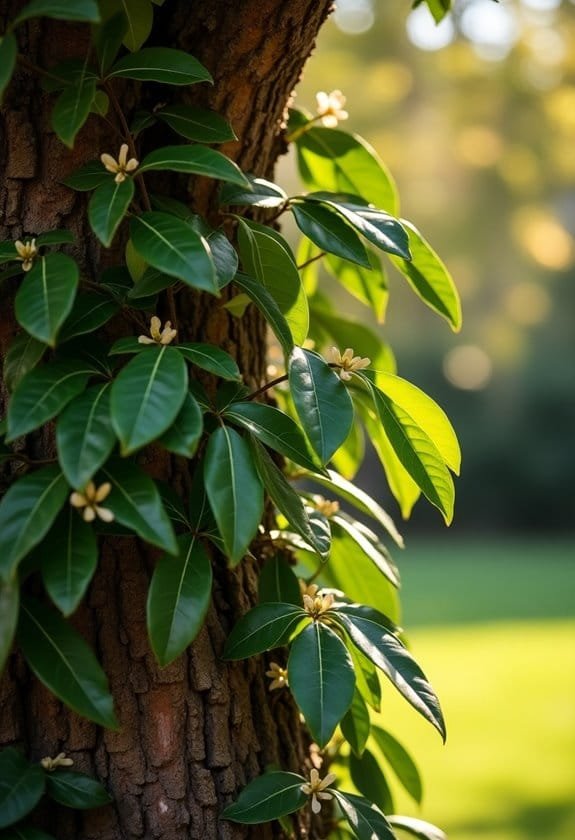
Bay Laurel, scientifically known as Laurus nobilis, is a versatile evergreen shrub or small tree that can reach heights of 12 to 40 feet.
This attractive plant boasts aromatic, leathery leaves, which play a significant role in culinary applications, enhancing the flavors of soups, stews, and sauces. Often a key component of bouquet garni, these leaves are cherished not only for their taste but also for their essential oils, which possess medicinal properties.
Beyond its culinary uses, Bay Laurel holds cultural significance, symbolizing victory and honor in ancient Greek and Roman traditions. Wreaths made from its leaves were awarded to victors, evoking a sense of achievement and prestige.
Thriving in well-drained soils, this evergreen shrub prefers full sun or partial shade to flourish. Bay Laurel shows resilience, being hardy in USDA zones 8-11, often cultivated as an elegant topiary or hedging plant.
In the spring, it produces small pale greenish-yellow flowers, yielding glossy, purple-black berries, though these are typically avoided due to their bitter taste.