Lavandula angustifolia, known as English lavender, is a resilient evergreen perennial renowned for its enchanting fragrance and vibrant bluish-purple to white-pink blooms. Typically growing between 1 to 3 feet in height and spread, it flourishes in full sun with 6 to 8 hours of light daily. Preferring well-drained, slightly alkaline soil, this hardy shrub thrives in USDA zones 5 to 9, showcasing drought tolerance once established. The plant attracts pollinators like bees and butterflies, enhancing local ecosystems. Essential maintenance includes regular pruning and careful watering to prevent root rot, ensuring ideal health and beauty. Discovering its varieties and uses can further enrich one's gardening experience.
Main Points
- English lavender (Lavandula angustifolia) is a fragrant, evergreen perennial shrub that thrives in full sun and well-drained, slightly alkaline soil.
- It typically grows 1 to 3 feet tall, producing vibrant flowers that range from bluish-purple to white-pink during early to mid-summer.
- Drought-tolerant once established, it requires minimal water and fertilization, making it low-maintenance for gardeners.
- English lavender attracts beneficial pollinators like bees and butterflies, enhancing local biodiversity in gardens.
- Popular varieties include Munstead, Hidcote, and Vera, offering diverse aesthetics for landscaping projects.
Introduction
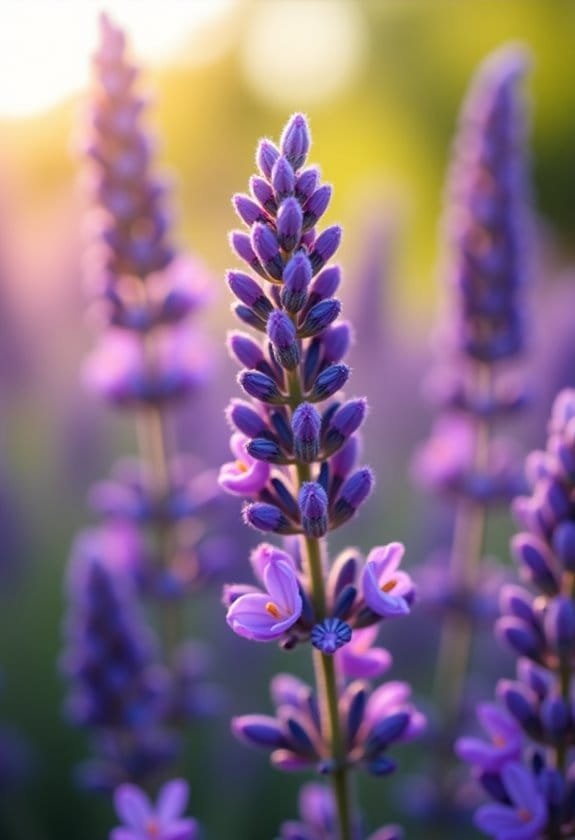
English Lavender, or Lavandula angustifolia, represents a cherished species within the Lamiaceae family, distinguished by its delightful fragrance and vibrant blooms.
This evergreen shrub typically attains a height and width of 1 to 3 feet, showcasing stunning flowers that range from bluish-purple to white-pink, especially during the summer months.
With its low maintenance and drought-tolerant nature, this plant not only enhances gardens but also plays a crucial role in supporting pollinator populations, making it an essential addition to both aesthetic and ecological landscapes.
Common Name
Lavandula angustifolia, commonly known as English Lavender, boasts several alternate names, including Common Lavender and Narrow-Leaved Lavender. This elegant plant is celebrated for its sweet fragrance, which many people particularly seek for producing true lavender oil, esteemed for aromatherapy and culinary uses alike.
English Lavender typically reaches heights of 1 to 3 feet, showcasing stunning bluish-purple flowers that bloom in early to mid-summer, offering a picturesque display in gardens and landscapes.
As an evergreen perennial shrub, Lavandula angustifolia is native to the Mediterranean region, thriving best in environments with full sun exposure and well-drained, slightly alkaline soils. This hardiness allows it to endure various growing conditions, making it a popular choice for both novice and experienced gardeners.
Pronounced as "lah-VAN-dew-lah an-gus-tih-FOH-lee-ah," the name Lavandula angustifolia conveys a sense of sophistication, mirroring the plant's graceful appearance and delightful scent.
Through its various common names, this remarkable lavender variety continues to captivate the hearts of many, symbolizing beauty and tranquility throughout diverse cultures.
Scientific Name
One might be surprised to learn that the scientific name for English lavender is Lavandula angustifolia, which belongs to the Lamiaceae family. This designation reflects its classification within a well-known group of flowering plants, often recognized for their aromatic properties.
Originating from the Mediterranean region, Lavandula angustifolia serves as a perennial shrub that typically grows to heights and widths ranging from 1 to 3 feet (30-90 cm), making it an excellent choice for both gardens and landscapes.
Characterized by its sweetly fragrant purple flowers, this species blooms from early to mid-summer, often rewarding gardeners with an occasional weak flush of blossoms after pruning. The scientific name underscores its adaptability, as the plant thrives in USDA zones 5 to 9, accommodating a variety of climates.
Beyond its aesthetic appeal, Lavandula angustifolia is highly valued for its essential oil, widely utilized in aromatherapy and culinary applications. The name not only reflects botanical classifications but also hints at the rich sensory experiences this extraordinary plant offers, inviting both admiration and utility in numerous contexts.
Overview
Known for its vibrant bluish-purple blooms and delightful fragrance, this hardy perennial shrub brings a touch of elegance to gardens and landscapes.
Lavandula angustifolia flourishes in sunny environments, requiring 6 to 8 hours of direct light daily. Its resilience shines through as it thrives in well-drained, slightly alkaline soil, displaying drought tolerance once established. This species is classified as hardy in USDA zones 5 to 9, capable of withstanding temperatures plummeting below 0°F, ensuring its adaptability across various climates.
The aromatic properties of English Lavender are celebrated for their diverse applications, from enhancing culinary dishes and producing essential oils to creating soothing sachets and fragrant potpourri.
Furthermore, Lavandula angustifolia plays an important role in supporting local ecosystems, attracting beneficial pollinators such as bees and butterflies, which are crucial for plant reproduction.
Maintenance of this remarkable shrub includes light watering and minimal fertilization, complemented by pruning in early spring or post-bloom.
Such practices promote vigorous growth and continuous flowering, allowing gardeners to enjoy the elegance of Lavandula angustifolia throughout the blooming season and beyond.
Key Features
Lavandula angustifolia, commonly known as English Lavender, typically reaches heights between 1 to 3 feet, exuding an irresistible charm with its aromatic, gray-green foliage accompanied by striking bluish-purple blooms.
Flowering from early to mid-summer, this compact shrub showcases its vibrant blooms for approximately 3 to 4 weeks, often providing a delightful second wave of flowers after judicious pruning.
Its overall appearance and flourishing nature make it a standout choice for gardens, as well as an essential contributor to local ecosystems by attracting beneficial pollinators.
Growth Size
English Lavender typically reaches heights between 1 to 3 feet (30-90 cm) and exhibits a similar width, creating a compact and bushy appearance. This compact growth habit is one of its defining characteristics, making it perfect for gardens with limited space.
The structure allows it to fit well alongside other plants without overwhelming them, providing a delightful contrast with its aromatic foliage.
The plant thrives in full sun, requiring 6-8 hours of light daily to achieve peak growth. Such exposure guarantees that the lavender not only flourishes but also produces its signature wispy inflorescences, which display a stunning range of colors from bluish-purple to white-pink.
With regards to resilience, English Lavender is hardy in USDA zones 5 to 9, showcasing its adaptability to a variety of warmer climates.
As it reaches maturity, the foliage transforms from gray-green to green-purple narrow leaves that emit a delightful fragrance when crushed, further enhancing the sensory experience this plant offers.
Its growth size and compactness don't just beautify outdoor spaces; they also invite pollinators, fostering a vibrant ecosystem within gardens.
Appearance
With its compact growth size, this evergreen shrub showcases a range of striking features that capture attention in any garden.
Typically reaching heights and widths between 1 to 3 feet (30-90 cm), English Lavender (Lavandula angustifolia) presents a bushy, well-defined silhouette. The narrow leaves, varying in shades from gray-green to green-purple, release a delightful, aromatic fragrance when crushed, enriching the sensory experience of any outdoor space.
One of the plant's most enchanting attributes is its stunning flower spikes, which grace the shrub with wispy blooms in hues of bluish-purple, lavender, violet-blue, or even white-pink. These delicate flowers emerge during the early to mid-summer months, charming onlookers for 3 to 4 weeks, often producing a subtle secondary bloom after pruning.
This combination of vibrant colors and aromatic foliage not only elevates the appearance of English Lavender but also attracts pollinators, enhancing the garden's ecological vibrancy.
Adaptable to various climates and resilient in USDA zones 5 to 9, this hardy perennial thrives in full sun, requiring 6-8 hours of light daily, ensuring it remains a favored choice for gardeners seeking beauty and practicality.
Flowering Season
The flowering season of Lavandula angustifolia captivates garden enthusiasts with a display of vibrant colors and delightful fragrances. Typically occurring in early to mid-summer, this enchanting period lasts around 3–4 weeks, showcasing blossoms in stunning shades of bluish-purple, lavender, violet-blue, or soft white-pink.
The sweet aroma of its flowers not only pleases the senses but also contributes to its popularity for use in essential oils, sachets, and potpourri. During this period, rosemary, a companion plant known for attracting pollinators, can enhance the garden's biodiversity.
During the flowering season, English lavender thrives best with full sun exposure, ideally receiving 6–8 hours of light daily. This supports peak flower production, ensuring a vigorous display during bloom time. Additionally, for those looking to maximize bloom potential, pruning can encourage a weak second flush of flowers, extending the lavender's charm throughout the growing season.
Beyond its aesthetic and aromatic qualities, the flowering season of Lavandula angustifolia provides crucial ecological benefits, attracting important pollinators such as bees and butterflies. This not only enriches the garden environment but also supports local ecosystems, illustrating how beauty, utility, and nature beautifully intertwine. Moreover, the presence of fragrant flowers and bright petals serves as signals for pollinator interactions, enhancing biodiversity just like the Dog Rose does in the wild.
Growing Requirements
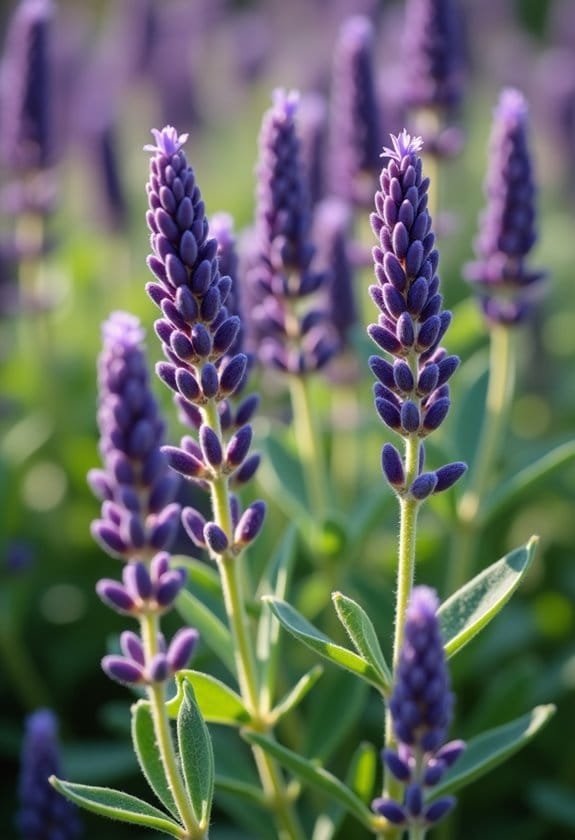
English Lavender's thriving requires careful attention to its growing conditions.
It seeks full sun, with a requirement of 6 to 8 hours of direct light daily, while its roots flourish in well-drained, slightly alkaline soil, as waterlogged environments can lead to detrimental root rot.
Additionally, once established, this resilient plant demonstrates remarkable drought tolerance, flourishing in USDA zones 5 to 9, making it a versatile choice for various climates.
Light
For ideal growth and flowering, Lavandula angustifolia needs plenty of sunlight, ideally basking in 6-8 hours of full sun each day. This aromatic perennial thrives on bright, direct sunlight, which fosters robust development and vibrant blooms. Insufficient exposure to sunlight can have detrimental effects, leading to leggy growth and a conspicuous reduction in flowering, underlining the necessity for ample light.
When cultivated in well-lit conditions, English Lavender also exhibits enhanced drought tolerance, as it develops a resilient root system that establishes more effectively in sunny environments. Thus, it's essential for gardeners to position this plant strategically to capture the sun's rays during the hotter parts of the day.
In shaded or low-light environments, Lavandula angustifolia may struggle considerably, failing to achieve its full potential. Essentially, the right light conditions are critical not just for aesthetics but also for the overall health and vigor of the plant. Furthermore, like heather, it thrives in acidic soils which supports its growth and bloom quality.
Soil
Proper soil conditions are indispensable for Lavandula angustifolia to thrive and produce its aromatic blooms. English lavender flourishes best in well-drained soil, as it struggles in waterlogged conditions. Ideally, the soil pH should range between 6.5 and 7.5, aligning with its preference for slightly alkaline environments.
The plant exhibits a remarkable ability to grow in poor, sandy, or gravelly soils, where excellent drainage helps prevent root rot, a common issue in overly moist settings. To cultivate ideal health, gardeners should avoid rich, organic soils, which can lead to detrimental consequences, including stunted growth and disease.
While a light application of compost may enhance particularly poor soil, moderation is key; excessive fertilization can disrupt the delicate balance that English lavender requires. Blackberry infestations can also impact nearby plant health by depriving them of essential nutrients.
Thus, ensuring a well-drained soil that leans towards neutral or slightly alkaline pH is essential for vibrant bloom production. Employing gritty substances can help achieve the proper drainage, promoting robust root development and overall plant importance.
With the right soil conditions, Lavandula angustifolia can truly flourish, displaying its beautiful blooms and filling the air with delightful fragrances.
Water
Water plays an essential role in the cultivation of Lavandula angustifolia, especially during its establishment phase. Newly planted lavender requires consistent watering to promote healthy root development, though it's vital to avoid overwatering, which can lead to detrimental root rot.
Initially, while the plant is establishing, maintaining soil moisture is paramount, allowing for regular watering throughout its growth cycle.
Once well-established, English lavender exhibits remarkable drought tolerance, thriving with minimal water inputs. It flourishes in well-drained, slightly alkaline soil, where waterlogged conditions remain a significant threat.
Gardeners should be vigilant, ensuring the soil dries out between waterings, particularly during the active growth phases in spring and summer, when the plant prefers a balance of consistent moisture without excess stagnation.
To aid in moisture retention while keeping the roots cool and dry, gardeners can utilize mulch cautiously. However, organic mulch should be avoided, as it may inadvertently retain excess moisture, exacerbating the risk of root diseases.
Consequently, mastering the art of watering is essential for cultivating the vibrant, fragrant blooms of Lavandula angustifolia. Proper hydration strategies allow this resilient plant to thrive, offering both beauty and aromatic benefits in gardens. Additionally, the knowledge of proper watering techniques is crucial to prevent issues like root rot, which can significantly hinder plant growth.
Temperature
Lavandula angustifolia flourishes in a range of temperatures, making it a versatile choice for many gardens. This resilient plant thrives in USDA hardiness zones 5 to 9, showcasing its ability to endure winter temperatures as low as 0°F. Such remarkable hardiness enables gardeners in colder regions to enjoy the beauty of English Lavender without fear of harsh winters harming their crop.
Ideal growth of Lavandula angustifolia occurs when it receives full sun exposure, necessitating at least six to eight hours of sunlight daily. Once established, the plant exhibits considerable drought tolerance, making it an excellent candidate for low-maintenance gardens.
However, during its initial growth period, regular watering is imperative. Adequate hydration prevents stress, which can hinder development and increase vulnerability to diseases.
To secure the best results, this plant prefers well-drained, slightly alkaline soil, as poor drainage can lead to root rot, a detrimental condition that often arises from excess moisture.
Pollinator Criteria
English lavender, with its vibrant purple flowers, entices a variety of pollinators, primarily bees, that seek its rich nectar and pollen.
Its blooming period, lasting three to four weeks during early to mid-summer, creates an essential sustenance supply for these insects, underscoring the shrub's contribution to sustaining healthy ecosystems. Moreover, like Nepeta species, English lavender attracts diverse pollinators, including bees, butterflies, and hummingbirds, enhancing biodiversity in garden settings. Additionally, the presence of native plant species in the surrounding area can further support pollinator populations, ensuring a thriving ecosystem.
Attracted Pollinators
When garden enthusiasts seek to attract pollinators, few plants prove as effective as English lavender due to its vibrant flowers that offer abundant nectar and pollen. This species, *Lavandula angustifolia*, serves as an essential resource for various pollinators, including bees, butterflies, and beneficial insects, during its flowering period that lasts three to four weeks in early to mid-summer. The deep taproot system of plants like Salad Burnet enhances drought tolerance, allowing them to thrive alongside English lavender in supporting pollinator habitats.
The aromatic qualities of English lavender particularly draw honey bees, which instinctively gravitate toward its fragrant blooms, enhancing their foraging efficiency.
Additionally, planting English lavender fosters biodiversity within ecosystems, providing critical habitats and sustenance for pollinators. This symbiotic relationship contributes to the overall health of both garden environments and the larger ecosystem by supporting pollinator populations.
Notably, English lavender's drought tolerance and minimal care requirements allow it to thrive in diverse garden settings, ensuring a consistent supply of nectar throughout the growing season. Such resilience not only enhances the appeal of gardens but also fortifies local pollinator communities. Moreover, *Musk Mallow* is also known to attract numerous beneficial insects due to its musky fragrance and extended blooming season, further enhancing pollinator activity in the garden.
Pollination Method
Pollinators play a critical role in the reproductive process of plants, including those found in gardens. English lavender (Lavandula angustifolia) showcases an effective pollination method by attracting beneficial insects, particularly bees and butterflies, through its fragrant flowers.
These blooms, which flourish in early to mid-summer, align perfectly with the heightened activity of many pollinator species, providing a crucial food source. The striking flower spikes of similar plants like Ajuga reptans enhance their appeal to pollinators as well.
The unique structure of English lavender supports its pollination strategy; compact and bushy, it offers an accommodating habitat for both nesting and foraging behaviors.
Its flowers yield a generous supply of nectar and pollen, essential nutrients that fuel pollinators during their active season. The rich nectar serves as a lure, inviting these creatures to visit and inadvertently facilitating the plant's reproductive cycle through cross-pollination. Additionally, the extended blooming period of English lavender provides continuous foraging opportunities, similar to chicory's role in ecosystems.
Care & Maintenance
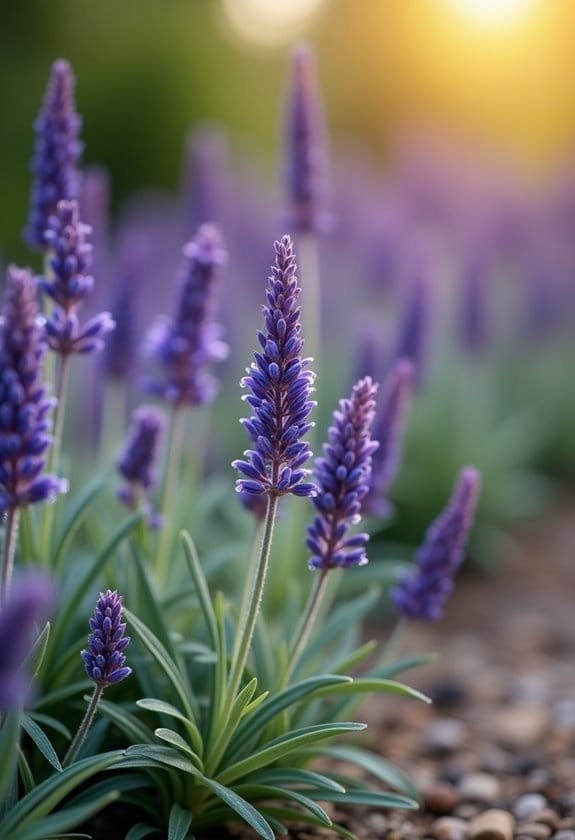
Caring for Lavandula angustifolia requires a balanced approach to guarantee its vibrant growth and longevity. Gardeners should prioritize essential practices, such as proper watering techniques during the establishment phase, alongside significant pruning in early spring for ideal shape and flower production.
Additionally, selecting suitable companions and implementing thoughtful mulching strategies will further enhance the environment for this fragrant perennial.
Planting Tips
Establishing a thriving English lavender garden depends on thoughtful planting and maintenance techniques. First, one must select a location that guarantees good air circulation and receives 6-8 hours of full sun daily; this exposure is crucial for ideal growth and flowering.
During the establishment phase, it's important to water English lavender regularly while assuring the soil remains well-drained to prevent root rot, as this plant doesn't tolerate waterlogged conditions.
Another helpful tip involves pruning English lavender in early spring or after blooming; this process shapes the plant and encourages vigorous growth, typically by reducing its size by about 30%.
Additionally, applying light-colored mulch around the base keeps roots cool and dry, but avoid organic mulch, which can retain moisture and promote rot.
Regarding fertilization, minimal intervention is preferable; when soil is particularly poor, light compost can be applied, as English lavender thrives in less nutrient-rich environments.
Ongoing Care
To maintain a vibrant English lavender garden, regular monitoring and care are essential. Initially, English lavender requires consistent watering to establish a robust root system; however, once matured, it exhibits impressive drought tolerance, making it a true low-maintenance option in arid conditions.
Overwatering should be strictly avoided, as saturated soil can lead to root rot, jeopardizing the plant's health.
Pruning is crucial for ongoing care. Gardeners should trim back approximately 30% of the plant in early spring or just after flowering, a practice that promotes a bushy appearance and encourages vigorous new growth.
Additionally, English lavender flourishes in well-drained, slightly alkaline soil, so if the ground is particularly poor, applying a light layer of compost can greatly benefit the plants, with minimal fertilization generally needed.
Using light-colored mulch helps keep the roots cool and dry, aiding in moisture management. Organic mulch should be sidestepped, as it may retain excess moisture, detrimental to lavender's health.
While vigilance against pests is necessary, English lavender typically resists deer and rabbits, simplifying maintenance and enhancing the overall gardening experience.
Suggested Companions
English lavender thrives in the company of various companion plants that enhance both its aesthetic appeal and garden health. As an evergreen, lavender maintains its foliage year-round, creating a lush backdrop for vibrant partners.
Ornamental poppies (Papaver) bring striking contrasts with their fiery blooms, flourishing in the same sunny, well-drained conditions as lavender.
Yarrow (Achillea), known for its low water requirements, complements lavender's moisture needs while attracting beneficial insects to improve pollination. Additionally, Yarrow serves as a vital food source for pollinators, further boosting garden vitality. Likewise, milkweed (Asclepias) not only boosts pollinator activity, drawing butterflies into the garden but also harmonizes beautifully with lavender's aromatic qualities.
Montbretia (Crocosmia) is another stellar companion; its vivid colors provide a charming visual feast while sharing similar light and soil requirements, ensuring compatibility.
Collectively, these plants embody resilience and beauty, contributing to a visually appealing garden that thrives on mutual drought tolerance and low maintenance needs. Additionally, plants like Blue Eryngo can also be effective companions, as they serve as a vital nectar source for pollinators and enhance garden biodiversity.
When combined, they create a symbiotic ecosystem, each playing a role in a healthy garden environment. Consequently, these companions symbolize the interconnectedness of nature, enhancing the overall vibrancy and liveliness of landscapes featuring English lavender.
Common Issues
English lavender faces several common issues that can hinder its health and vibrancy, such as pests and diseases. Aphids and whiteflies, notorious for their ability to damage foliage, require vigilant monitoring and, if necessary, targeted treatments like insecticidal soap.
Additionally, maintaining proper air circulation and promptly removing dead flower spikes can help mitigate the risks of leaf spot diseases, ensuring that this aromatic plant thrives in ideal conditions.
Pests/Diseases
Lavandula angustifolia faces a few common pests and diseases that gardeners should be aware of. While this aromatic herb is generally resilient, it can fall prey to pests such as aphids, spider mites, and whiteflies. These tiny invaders sap energy, leading to weakened plants and diminished blooms.
Encouraging natural predators or utilizing insecticidal soaps can effectively manage these infestations, preserving the plant's health.
Additionally, English lavender is susceptible to diseases like root rot and leaf spot. Overwatering can trigger root rot, a condition that thrives in poorly drained, waterlogged soils, an environment that Lavandula angustifolia decidedly dislikes.
Leaf spot, on the other hand, emerges from excess moisture and poor air circulation, indicating a need for well-spaced plants to facilitate airflow and promote healthy conditions.
To maintain robust growth, regular maintenance, such as pruning and removing any infected foliage, is essential. Such care not only enhances aesthetics but also serves as a proactive approach to ward off disease.
With proper awareness and attention to detail, gardeners can nurture their lavender plants, ensuring they thrive despite potential challenges from pests and diseases.
Solutions
When it comes to tackling common issues with this resilient herb, implementing effective solutions can greatly improve its health and vigor. To prevent root rot, gardeners must guarantee well-drained soil, given English Lavender's natural drought tolerance once established.
Overwatering is detrimental, as the root system thrives in arid conditions. Additionally, proper spacing and airflow are essential. Planting these herbs in areas with good airflow minimizes the risk of leaf spot diseases.
Regularly pruning in early spring or post-blooming enhances growth vigor and keeps the plant healthy. It's also important to remove spent flower spikes, prompting continued blooming.
Mulching with light-colored materials keeps the roots cool and dry. Avoid organic mulch, as it can retain moisture, compromising the root system.
Moreover, if the plant exhibits poor flowering, light compost can be beneficial. While English Lavender prefers less fertile soil, a gentle nutrient boost may resolve blooming issues without overwhelming the plant's natural preferences. Additionally, ensuring adequate sunlight is critical for optimal growth and flowering, as English Lavender thrives in conditions requiring 6 to 8 hours of direct sunlight daily.
Summary
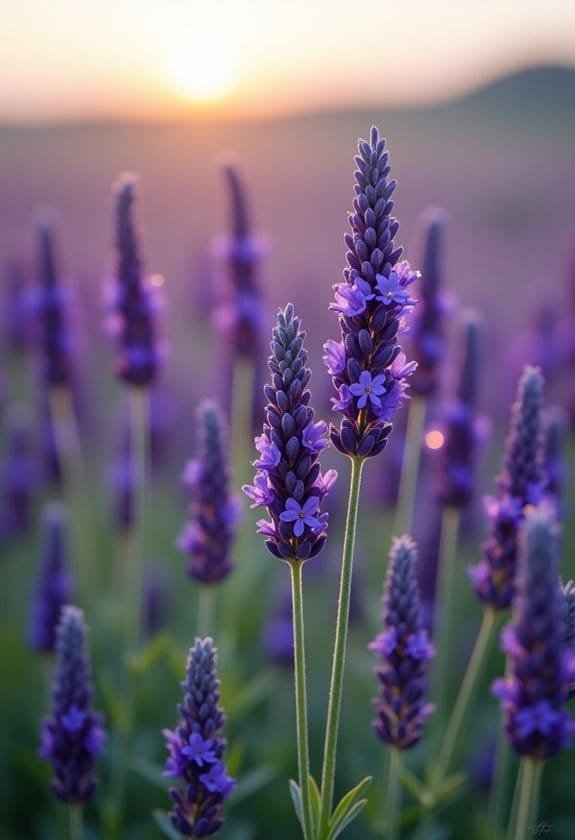
Known for its aromatic blooms and low-maintenance care, Lavandula angustifolia is a popular choice among gardeners. This evergreen perennial shrub, commonly referred to as English lavender, typically grows to heights ranging from 1 to 3 feet.
Thriving in full sun and slightly alkaline, well-drained soil, English lavender flourishes with minimal intervention. Its enchanting bluish-purple to white-pink flowers bloom for three to four weeks in early to mid-summer, providing visual appeal while attracting valuable pollinators.
Hardy in USDA zones 5 to 9, this resilient plant showcases drought tolerance once established, requiring little water overall. Pruning in early spring or post-bloom not only fosters vigorous growth but also helps maintain desired shapes, while light compost can enhance poorer soil conditions without excessive fertilization.
With remarkable varieties like Munstead, Hidcote, and Vera, gardeners can explore diverse options that appeal to a range of aesthetic preferences and growing conditions. Each variety presents unique traits, enriching the gardening experience.
Ultimately, English lavender stands out not only for its practical advantages but also for its ability to transform landscapes into tranquil spaces, evoking a sense of serenity that mirrors its aromatic presence.