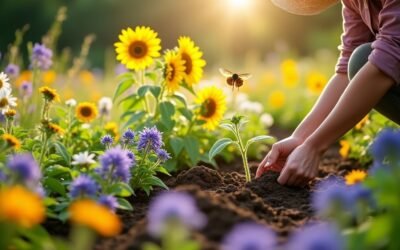
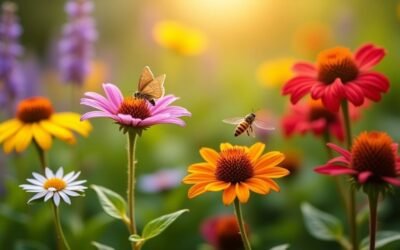
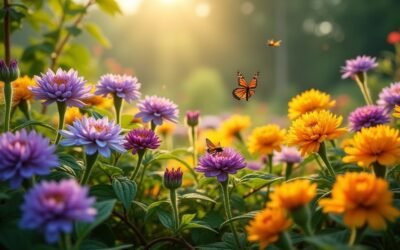
Leucanthemum vulgare, or Ox-eye Daisy, captivates with its striking white flowers and vibrant yellow centers, typically growing 1 to 3 feet tall. This perennial thrives in sunny locations with well-drained soil, requiring 1 to 2 inches of water weekly. Blooming from May to August, it attracts essential pollinators like bees and butterflies, thereby enhancing local biodiversity. With the ability to produce up to 26,000 seeds, this resilient plant can spread aggressively, necessitating careful management practices like deadheading. Its aesthetic appeal, coupled with ecological benefits, offers gardeners both beauty and purpose, hinting at further intriguing insights about this remarkable species.
Main Points
- Leucanthemum vulgare, commonly known as Ox-eye daisy, is native to Europe and naturalized in places like North America and Australia.
- This perennial grows 1 to 3 feet tall and blooms from May to August, peaking in June and July.
- The plant features large, white flower heads and oval to spatulate basal leaves that attract various pollinators.
- Ox-eye daisy is drought-tolerant once established but needs regular watering, especially during its early growth stages.
- It can become invasive if not managed properly, requiring practices like regular deadheading and monitoring to control spread.
Introduction
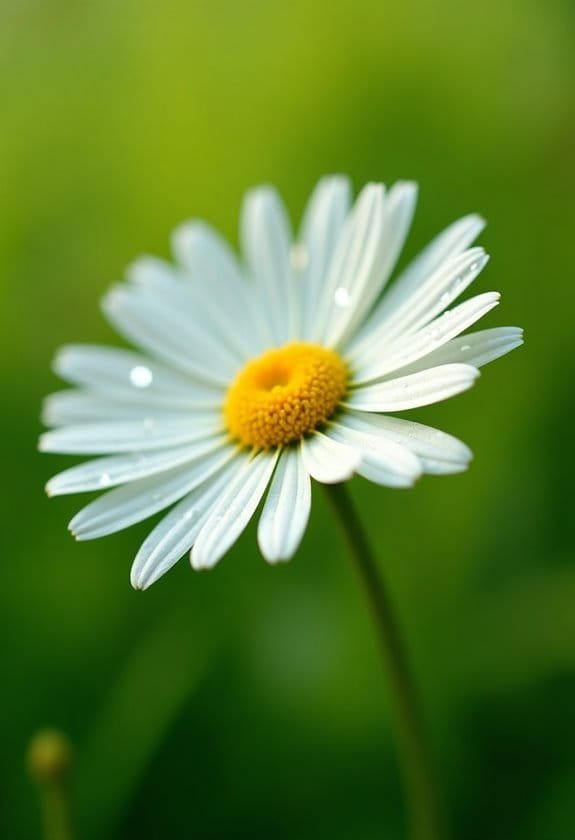
Leucanthemum vulgare, commonly known as the Ox-eye daisy, stands as a striking perennial wildflower belonging to the Asteraceae family.
First described by Jean-Baptiste Lamarck in 1778, this species typically reaches heights of 1 to 3 feet, showcasing white flowers that beautifully contrast with a vivid yellow center. The self-sowing nature of the Ox-eye daisy allows it to thrive in disturbed environments, echoing the adaptability seen in other wildflowers such as the Common Poppy.
Understanding its ecological role and widespread distribution, particularly as an invasive species in various regions, provides essential insights into both its influence on native ecosystems and its lasting legacy in horticulture. Additionally, the plant's ability to produce up to 26,000 seeds significantly contributes to its aggressive spread across different environments.
Common Name
Known to many as the "Ox-eye daisy," this charming flower is celebrated for its large, white blooms that resemble the eyes of cattle in grassy meadows. The common name "Ox-eye" is fitting, capturing the essence of this perennial's striking appearance.
Other prevalent common names that reflect its widespread recognition include "moon daisy," "mayweed," "white daisy," and "field daisy." Each title adds to the flower's identity, showcasing its prominence across diverse regions and landscapes.
Interestingly, the name "Marguerite" is sometimes used as well, although this can lead to confusion, since it refers to other flowering plants as well.
Botanical classification isn't static; the Ox-eye daisy was historically categorized under the Chrysanthemum genus. However, it has since been reclassified as Leucanthemum vulgare, demonstrating the evolving nature of botanical taxonomy. This reclassification aligns the plant more accurately within the Asteraceae family, commonly referred to as the daisy family. Additionally, like the Common Cowslip, the Ox-eye daisy plays a crucial role in attracting early-season pollinators, enhancing biodiversity in its natural habitat. These flowers, similarly to Common Yarrow with its pollinator attraction, contribute significantly to ecosystem health.
Scientific Name
The scientific name of the ox-eye daisy, Leucanthemum vulgare, reflects its rich botanical history and classification evolution. First described in 1778 by the esteemed botanist Jean-Baptiste Lamarck, this name signifies not only the plant's identity but also its lineage.
Originally classified under the genus Chrysanthemum, Leucanthemum vulgare's classification under the Asteraceae family, commonly known as the daisy family, underscores the intricate relationships among flowering plants.
This species showcases several synonyms, including Bellis major and Matricaria leucanthemum, indicating its varied nomenclature through history. Each name change reveals the evolving understanding of plant relationships and morphological characteristics within the botanical community.
Native to Europe, the ox-eye daisy has elegantly adapted beyond its original habitat, becoming naturalized in diverse regions such as North America, Australia, and New Zealand.
This adaptability highlights the resilience and ecological significance of Leucanthemum vulgare, paving the way for its recognition as a common garden plant and a key player in various ecosystems.
Through its scientific name, enthusiasts can appreciate not only its beauty but also its fascinating background within the rich tapestry of plant life.
Overview
Celebrated for its striking appearance and adaptability, the Ox-eye daisy has become a familiar sight in gardens and wild fields alike. Scientifically known as Leucanthemum vulgare, this perennial flowering plant belongs to the Asteraceae family and features charming white ray flowers encircling a vibrant yellow central disc.
Originally described by Jean-Baptiste Lamarck in 1778, it has since naturalized in various regions, including North America, Australia, and New Zealand.
The Ox-eye daisy thrives in diverse environments, often populating meadows, fields, and disturbed areas. Remarkably, a single mature specimen can produce an astounding 26,000 seeds, which maintain viability for nearly 40 years, contributing to its classification as an invasive species in over 40 countries.
While its aesthetic appeal enchants gardeners, the ecological implications are significant. Not only does it enhance landscapes with its beauty, but it also serves as a crucial source of nectar and pollen for numerous pollinators.
This duality—invaluable garden asset and invasive species—underscores the need for careful management in areas where it proliferates uncontrollably. Consequently, the Ox-eye daisy embodies nature's complex balance of beauty and adaptability.
Key Features
Leucanthemum vulgare, commonly known as the Ox-eye daisy, showcases distinct characteristics that make it a notable perennial.
The plant typically grows between 1 to 3 feet tall, featuring eye-catching 1-3 inch flowers with white petals encircling a vibrant yellow center, blossoming from May to September.
With its adaptability to various soil types and conditions, the Ox-eye daisy proves to be a resilient species in diverse habitats.
Growth Size
How tall can an Ox-eye daisy actually grow? This charming perennial wildflower, known scientifically as Leucanthemum vulgare, typically reaches heights between 1 to 3 feet, while spreading 1 to 2 feet wide. In mountain environments, the plant demonstrates remarkable adaptability, often maxing out at around 1 foot.
Its growth habit features flowering stems that can produce a vibrant array of blooms, enhancing its appeal in various landscapes. The robust basal leaves, measuring 1 to 5 inches in length, form a distinctive rosette at the plant's base.
As a perennial, Ox-eye daisies thrive in their environment, spreading through seeds and shallow rhizomes over multiple years, ensuring their presence in meadows and gardens alike. With the capacity to bloom repeatedly, these flowers not only beautify spaces but also contribute to local ecosystems by attracting pollinators. Furthermore, their adaptability to diverse soil types allows them to flourish in various environments, similar to other wildflower species.
This impressive growth size and habit make the Ox-eye daisy a resilient asset to any horticulturist's collection, capable of weathering different environmental conditions. Gardeners often admire its ability to provide consistent floral displays year after year, embodying the essence of nature's artistry.
Appearance
During the blooming season, the Ox-eye daisy displays its striking features, enchanting gardeners and nature enthusiasts alike. The plant boasts large flower heads, measuring between 1 to 3 inches in diameter, characterized by their charming white ray petals that gracefully encircle a vibrant yellow disk. Each bloom emanates a mild, sage-like scent, contributing to its allure in both garden beds and wildflower meadows.
The overall appearance of the Ox-eye daisy is complemented by its basal leaves, which are toothed and spatulate to ovate in shape, adding visual interest. Measuring 1 to 5 inches long, these leaves form a basal rosette, creating a lush green backdrop that enhances the flowers' brilliance once they unfurl from May to August.
Typically reaching heights of 1 to 3 feet, the plant can spread 1 to 2 feet wide, forming dense clumps that create an eye-catching habitat for pollinators. With the remarkable ability to produce up to 26,000 seeds per mature plant, the Ox-eye daisy guarantees its continuity, dominating suitable environments and enchanting all who encounter its vivid display of nature's beauty.
Flowering Season
From May to August, the flowering season of the Ox-eye daisy captivates with its vibrant displays. This period showcases the plant's distinctive blooms, which typically reach their peak during June and July. Each flower spans 1 to 3 inches in diameter and consists of 7 to 20 delicate white ray petals encircling a striking yellow central disk, offering a stunning contrast that attracts the eye.
The individual blooms, with their mild, sage-like fragrance, not only delight human observers but also entices various pollinators essential for the ecosystem.
Each mature Ox-eye daisy plant can produce up to an astonishing 26,000 seeds, enhancing its reproductive success and potential invasiveness in certain environments. Remarkably, individual flowers can endure for up to two weeks when placed in a vase, allowing enthusiasts to appreciate their charm long after they bloom in the wild.
The flowering season, thus, plays an essential ecological role, fostering biodiversity as plants and pollinators interact. Overall, the Ox-eye daisy thrives through a flowering season that enriches gardens, meadows, and natural landscapes alike, making it a cherished sight in temperate regions.
Growing Requirements
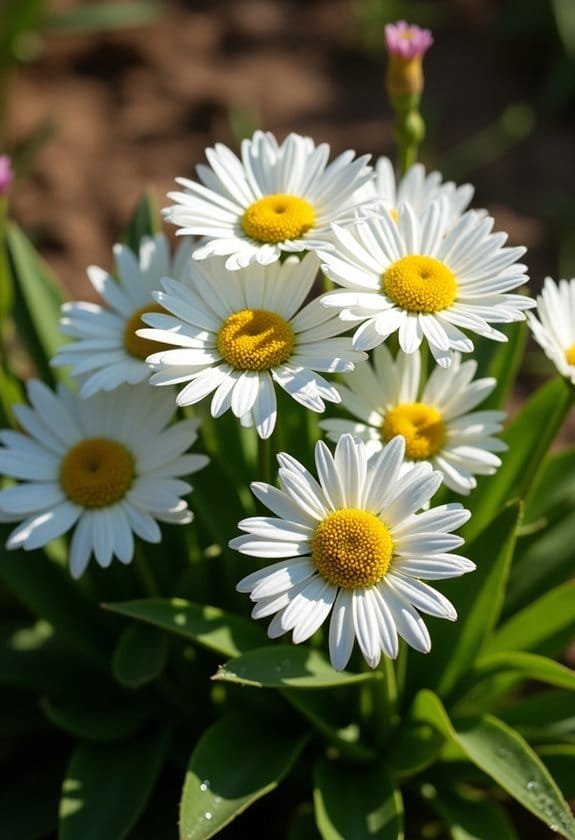
When considering the growing requirements of Leucanthemum vulgare, it's crucial to recognize its preference for full sun and well-drained soil, which allows for ideal growth and vibrant blooms.
Mature ox-eye daisies demonstrate impressive drought tolerance, needing only 1-2 inches of water weekly during early growth stages, showcasing their resilience in various climates.
In addition, this hardy perennial flourishes across a range of temperatures, ensuring its adaptability in different garden settings while providing stunning floral displays from May to August.
Light
For ideal growth, Leucanthemum vulgare, or the Ox-eye Daisy, flourishes in full sun, requiring at least six hours of direct sunlight each day. This perennial exhibits a remarkable adaptability, thriving not only in full sun but also tolerating part sun or afternoon shade, especially in hot, humid climates.
However, the leaves of this plant can become less robust in shaded environments, adversely affecting its blooming potential and overall vigor.
When positioned in areas with abundant light exposure, the Ox-eye Daisy exhibits enhanced longevity and a profusion of blossoms, making it a favored choice for vibrant gardens.
Lower light levels may certainly diminish the intensity of its flowering, creating challenges for gardeners who desire a lively display. To optimize its performance, it's crucial to plant Ox-eye Daisies where sunlight penetrates effectively throughout the day; consequently, well-drained soil must accompany these light requirements.
In essence, the interplay between sunlight and the health of Leucanthemum vulgare determines the degree to which these stunning daisies can take center stage, resonating with their sunlit surroundings and enchanting observers.
Soil
Sunny conditions greatly impact the health of Leucanthemum vulgare, and the right soil complements these light requirements. This resilient plant thrives in well-drained soil, showcasing its impressive adaptability to average and dry, sandy soils.
Its shallow root system allows it to establish quickly, making it less dependent on nutrient-rich environments; consequently, it can flourish in less conventional conditions. Additionally, white clover's nitrogen-fixing capabilities enhance soil fertility, similarly benefiting surrounding plants.
Optimal growth occurs within a soil pH range of 6.0 to 7.0, providing favorable circumstances for nutrient uptake and stability. While Leucanthemum vulgare doesn't necessitate fertilizer, caution is advisable, as nitrogen application can trigger invasive growth tendencies. As a result, a natural approach suffices for maintaining its robust presence.
Furthermore, ox-eye daisies exhibit remarkable drought tolerance, thriving even when receiving only 1-2 inches of water per week during early growth stages. This ability to conserve moisture is especially advantageous for gardeners seeking low-maintenance, hardy plants.
Additionally, the ox-eye daisy's ability to thrive in well-drained soils reflects its adaptability, similar to the soil pH tolerance range of Common Holly, which can grow in a variety of soil conditions while supporting local biodiversity.
Hence, the right soil not only aligns with their light and moisture preferences but enhances their overall resilience, fostering a vibrant display that can brighten any landscape.
Water
Water plays an essential role in the growth and health of Leucanthemum vulgare. Young Ox-eye daisies require approximately 1 to 2 inches of water per week to establish robust root systems that underpin their overall liveliness. This initial water intake sets the foundation for successful growth.
Once these daisies are established, they exhibit remarkable drought tolerance, thriving in well-drained soils with minimal water intervention.
Nevertheless, during their bloom period, which spans from May to September, Leucanthemum vulgare prefers moderate to high moisture levels to achieve ideal flowering. Consistent moisture plays a significant role in supporting lush blooms and healthy foliage.
However, gardeners must be cautious, as overwatering can lead to detrimental root rot and various diseases that could threaten the plant's well-being.
To maintain continuous blooming, regular watering is especially important during dry spells or extended periods without rainfall. By monitoring soil moisture levels and adjusting watering practices accordingly, growers can promote the flourishing of these delightful daisies, guaranteeing they remain a vibrant addition to any garden.
Moreover, integrating moisture-loving plants can enhance the overall health of the garden ecosystem, providing beneficial interactions that support the growth of Leucanthemum vulgare.
Ultimately, understanding the water requirements of Leucanthemum vulgare fosters greater appreciation for their resilience and beauty.
Temperature
Leucanthemum vulgare thrives best in temperate climates, where it can easily adapt to a wide range of temperatures. This remarkable plant can withstand summer heat and even endure winter lows nearing 28°F (-2°C). Such resiliency is a proof of its adaptable nature, allowing it to flourish in diverse environments.
Young ox-eye daisies require consistent moisture during their initial growth phases, necessitating about 1-2 inches of water per week, ensuring robust development.
However, once established, these daisies demonstrate exceptional drought tolerance, requiring minimal watering due to their well-developed root systems.
To optimize growth, Leucanthemum vulgare prefers full sun exposure, although it can tolerate some afternoon shade, particularly in hot and humid conditions.
The plant thrives in a variety of soil types, including average and dry sandy soils, which enhances its versatility in landscaping applications.
Pollinator Criteria
The Ox-eye daisy attracts a diverse range of pollinators, including bees and butterflies, due to its abundant nectar and pollen resources.
Its flowering period from May to August coincides with peak pollinator activity, enhancing its role as an essential food source. Additionally, like selfheal, the ox-eye daisy plays a vital role in attracting pollinators, which contributes to local biodiversity. Gypsywort, known for its habitat stability, also provides crucial support to pollinators in wetland ecosystems, highlighting the interconnectedness of plant species in promoting ecological health.
Understanding the specific pollination methods and the variety of pollinators it attracts provides insight into the ecological significance of Leucanthemum vulgare in supporting healthy ecosystems.
Attracted Pollinators
During the warmer months, ox-eye daisies are a beacon for numerous pollinators due to their abundant nectar and pollen resources. These vibrant flowers attract a variety of beneficial insects, including bees and butterflies, which are fundamental for maintaining healthy ecosystems. Among the plants in UK flower meadows, the ox-eye daisy ranks prominently for its impressive pollen production, highlighting its importance in supporting diverse pollinator populations.
Typically blooming from May to August, ox-eye daisies guarantee a consistent food supply for pollinators, allowing them to thrive during the significant growing season. A single mature plant can produce up to 26,000 seeds, enabling it to proliferate and attract pollinators year after year. This prolific nature not only sustains these critical insects but also enriches local biodiversity.
Furthermore, the adaptability of ox-eye daisies to various soil types and their presence across diverse habitats foster environments conducive to increased pollinator visitation. By creating a range of microhabitats and ample food sources, the ox-eye daisy stands as a cornerstone of ecological resilience, reflecting its essential role in the interconnected tapestry of life.
Pollination Method
Pollination plays an important role in the reproduction of ox-eye daisies, with these vibrant flowers relying on various pollinators to transfer pollen effectively. Leucanthemum vulgare attracts a diverse array of insects, such as bees and butterflies, by producing a substantial volume of pollen. This abundance not only supports their own successful reproduction but also sustains local ecosystems.
The flowers' composite structure, characterized by bright white petals around a striking yellow disk, greatly increases visibility to pollinators, drawing them into the flower's embrace. Each mature plant can generate up to 26,000 seeds, underscoring the essential nature of effective pollination in maximizing reproductive output.
The blooming period spans from May to September, creating a continuous supply of food resources for pollinators throughout the growing season. This strategic timing guarantees that these important insects find nourishment consistently. Additionally, by offering diverse nectar and pollen resources, ox-eye daisies play a key role in supporting local biodiversity, fostering habitats where various species can thrive together.
Ultimately, the synergy between these flowers and their pollinators exemplifies the interconnectedness of life within ecosystems.
Care & Maintenance
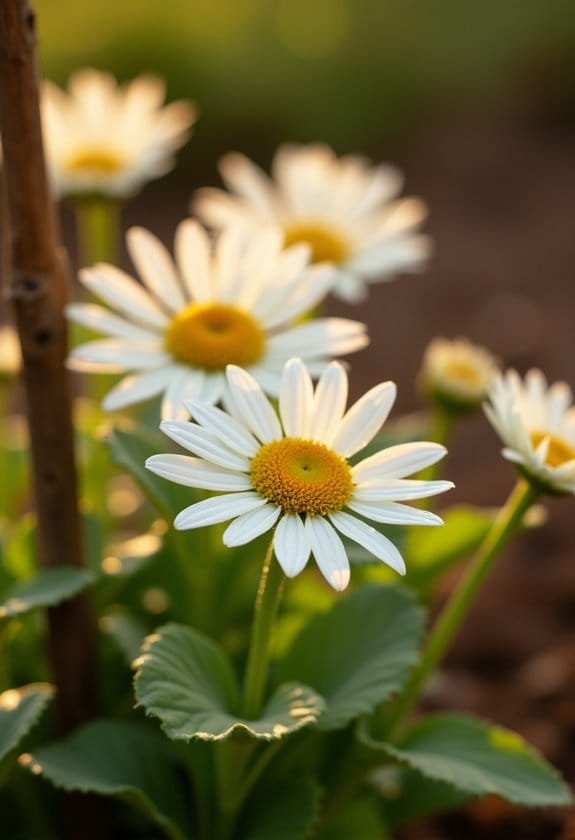
In caring for Leucanthemum vulgare, understanding ideal planting conditions and ongoing maintenance is vital for thriving growth. These vibrant daisies flourish in well-drained soil and full sunlight, requiring consistent watering in their early stages, while their established counterparts exhibit impressive drought tolerance. Selecting the right companion plants is essential, as it can enhance their beauty while also managing their vigorous nature, promoting a harmonious ecosystem. Additionally, they share similar growing requirements with corn chamomile, making them compatible in diverse landscapes. The addition of plants like Meadow Cranesbill can provide essential resources for pollinators, enriching the garden's ecosystem even further.
Planting Tips
Successful planting of Leucanthemum vulgare, or ox-eye daisies, hinges on a few key factors. These resilient plants thrive in well-drained soil, ideally basking in full sun for at least six hours daily; however, they can also adapt to part sun or even afternoon shade, particularly in hotter regions.
When planting, it's important to space them adequately, allowing for airflow and growth to prevent overcrowding.
Regular deadheading of spent flowers is necessary, as it encourages further blooming and curbs unwanted reseeding, enhancing the plant's liveliness. Initially, young ox-eye daisies require 1-2 inches of water weekly; established plants, reminiscent of their more well-known cousin, the shasta daisy, become remarkably drought-tolerant, needing even less.
To manage spreading, gardeners should perform clump division every 2-3 years, reinforcing ideal growth and guaranteeing each plant has adequate space to flourish.
Finally, while generally hardy, it's wise to monitor for pests like aphids, as well as occasional diseases such as verticillium wilt, which can jeopardize the health of these charming daisies. Embracing these tips will promote a flourishing garden display filled with vibrant blooms.
Ongoing Care
Ongoing care for Leucanthemum vulgare is crucial to maintain their vibrant blooms and overall health. Implementing regular deadheading of spent flowers not only encourages continuous blooming but also prevents the plant from diverting energy toward seed production, thereby mitigating its invasive tendencies.
During the early growth stage, Ox-eye daisies thrive with 1-2 inches of water weekly; this initial hydration is essential for establishing a robust root system. In order to enhance soil quality, incorporating nitrogen-fixing plants can be beneficial for nearby flora.
To manage aggressive growth and guarantee peak plant density and vigor, clumps should be divided every 2-3 years. While Ox-eye daisies flourish in well-drained soil under full sun exposure, they can tolerate some afternoon shade, particularly in warmer regions. This adaptability can enhance their growth patterns and prolong bloom duration.
Additionally, vigilant monitoring for pests, such as aphids and mites, is critical. Quick removal of these nuisances can protect the plants' health and aesthetic appeal, guaranteeing that their cheerful daisies continue to brighten any landscape.
Furthermore, incorporating plants like Ajuga reptans can help attract pollinators, enriching the ecosystem in which the daisies thrive.
With attentive care and responsive management, Leucanthemum vulgare can thrive impressively, providing delight in gardens and natural habitats alike.
Suggested Companions
To enhance the beauty and health of Leucanthemum vulgare, choosing suitable companion plants can make a significant difference. Selecting partner species such as lavender, catmint, or Russian sage not only thrive in similar conditions but also helps deter pests that could harm the daisies.
Additionally, incorporating Echinacea and Rudbeckia elevates the garden's biodiversity, attracting a plethora of pollinators that benefit all the flowering plants. The presence of pollinators like butterflies encourages cross-pollination, enhancing the overall health of the garden.
Salvia and Monarda (Bee Balm) deserve consideration too; they share a preference for full sun and well-drained soil, contributing to a robust garden ecosystem that fosters growth and resilience among existing plants.
Moreover, pairing Ox-eye daisies with lower-growing options like thymes or creeping phlox helps manage soil nutrients effectively, providing necessary ground cover without overshadowing the daisies themselves.
Regular deadheading of the Ox-eye daisies not only prolongs their blooming duration but also encourages companion plants to showcase their blossoms throughout the growing season.
Furthermore, as with bugloss, choosing fast-growing companions can help create a resilient garden ecosystem that effectively competes for resources and promotes overall plant health, ensuring natural pollinator attraction is sustained across the growing season.
Together, these companion plants create a vibrant tapestry of colors and textures, enriching both the visual appeal and ecological health of the garden space.
Common Issues
The ox-eye daisy, while admired for its cheerful blooms, faces several common issues that impact its health and the surrounding ecosystem.
Pests like aphids and mites can infiltrate the plant, diminishing its vigor and resilience, while dense colonies often choke out native species.
To counteract these challenges, gardeners should implement timely solutions, including regular inspections and management practices, ensuring the harmonious balance of their gardens is maintained.
Pests/Diseases
Ox-eye daisies, while resilient and appealing, can face a variety of pests and diseases that jeopardize their health. Among the most common issues are aphids, mites, and leaf miners, all of which can inflict significant damage on the plant's foliage.
Leaf miners, in particular, burrow into the leaves, creating unsightly trails and compromising the plant's photosynthesis. Additionally, ox-eye daisies can succumb to verticillium wilt, a fungal affliction that manifests through wilting and yellowing of leaves, ultimately diminishing the plant's vigor.
In addition to these pests, leaf spots and stem rots may develop, particularly under overly humid conditions or when soil moisture levels are excessive. This moisture can create an environment conducive to detrimental fungi, leading to further complications.
To mitigate these threats, maintaining good air circulation and avoiding overcrowding are crucial practices for gardeners. Regular monitoring allows for early intervention, which is critical in preventing infestations or diseases from escalating.
Solutions
Managing common issues with Leucanthemum vulgare requires a proactive approach. This invasive plant can quickly dominate landscapes by forming dense monocultures, overshadowing native flora and leading to ecological imbalances. Regular deadheading of flowers is critical; it prevents seed formation and curbs its spread, maintaining a healthier environment.
For more immediate removal, hand-pulling can be effective, provided the roots are completely extracted. The plant's shallow root system simplifies this process but demands thoroughness to guarantee regrowth doesn't occur.
Moreover, employing targeted herbicides like Milestone can serve as an effective weed control measure. This method selectively attacks the Ox-eye Daisy without adversely affecting neighboring plants, although adherence to local regulations regarding herbicide use is critical.
Dividing the plants every 2-3 years not only mitigates overcrowding but also supports a controlled population that can thrive without becoming invasive.
Finally, consistent monitoring and maintenance are critical in vulnerable areas, as the Ox-eye Daisy can heavily outcompete native vegetation, leading to soil erosion and diminished biodiversity. Additionally, aggressive growth patterns of other invasive species like Hounds Tongue may exacerbate the challenges faced by native ecosystems. Together, these strategies form an all-encompassing solution to managing this persistent threat.
Summary
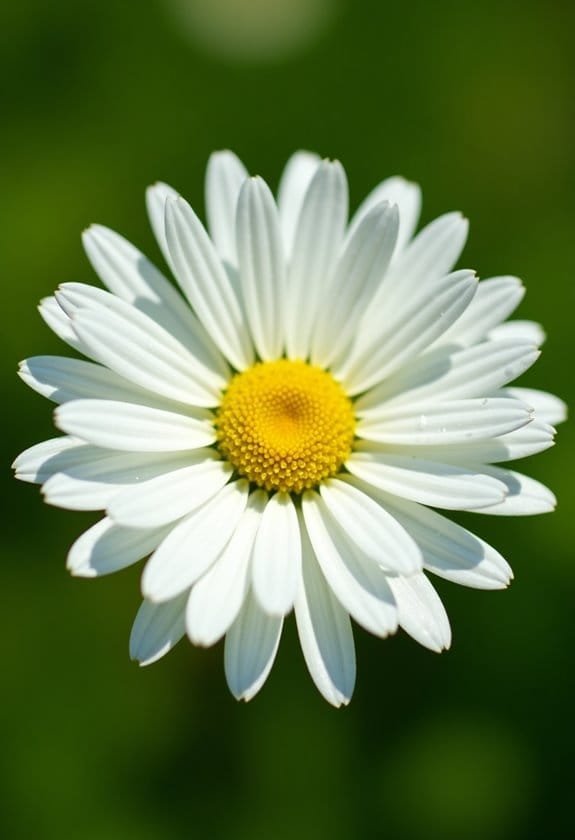
Commonly recognized as the Ox-eye Daisy, Leucanthemum vulgare is a resilient perennial found in various habitats across Europe and Western Asia.
With its striking white petals framing a flattened yellow center disk, this flower blooms from May to September, contributing to the rich biodiversity of meadows, fields, and roadsides. Importantly, a single mature plant can produce up to 26,000 seeds, each capable of remaining viable for nearly 40 years, which allows it to thrive and spread rapidly in disturbed environments.
Though it provides resources for pollinators and can enhance landscapes, Leucanthemum vulgare poses challenges, particularly in agricultural regions.
Its invasive nature can outcompete native flora, resulting in ecological disruptions and becoming a problem in pastures, where it may alter competitive dynamics among plant species.
Curiously, the young leaves of the Ox-eye Daisy are edible, adding culinary value, while its unopened flower buds serve as a delicate caper substitute.
Understanding the dual nature of the Ox-eye Daisy stands essential for managing its impact, balancing its ecological benefits against the threats it poses to local ecosystems.