Ligustrum ovalifolium, commonly referred to as Garden Privet, is a robust semi-evergreen shrub favored for its dense, dark green foliage, typically growing from 10 to 15 feet tall. This hardy plant thrives in USDA zones 5-9 and flourishes in various light conditions, requiring at least six hours of sunlight for ideal growth. In late spring, it produces fragrant white flowers, enhancing its ornamental value while attracting pollinators like bees and butterflies. However, it's worth noting that all parts of the plant are toxic if ingested, necessitating caution, particularly around children and pets. Further exploration reveals additional aspects of its ecological impact.
Main Points
- Ligustrum ovalifolium, or Garden Privet, is a semi-evergreen shrub that thrives in USDA hardiness zones 5-9, reaching heights of 10 to 15 feet.
- It produces fragrant white flowers in late spring, followed by small, shiny black fruits that are toxic to humans but attractive to wildlife.
- Garden Privet prefers well-drained soil and requires at least 6 hours of direct sunlight daily for optimal growth and flowering.
- Regular pruning in early spring is essential for maintaining its shape, promoting healthy growth, and preventing excessive seeding.
- As an invasive species in some regions, its management is crucial to protect local biodiversity and ecosystems.
Introduction
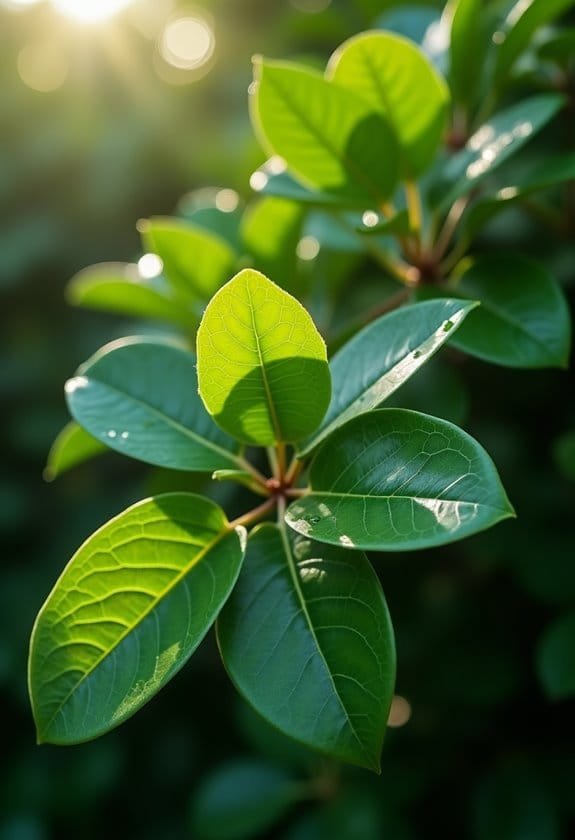
Ligustrum ovalifolium, often referred to as Garden Privet or California Privet, is a robust shrub that captivates with its dense, semi-evergreen foliage and impressive height of 10 to 15 feet.
This versatile plant thrives across a range of climates, specifically in USDA hardiness zones 5-9, showcasing its adaptability to various landscapes.
While its fragrant white flowers in late spring may charm gardeners, the plant's propensity for invasiveness raises significant environmental concerns that merit careful consideration.
Common Name
Known for its rapid growth and dense foliage, the California Privet, or Oval Leaf Privet, stands out in many landscapes. Categorized scientifically as LIGUSTRUM OVALIFOLIUM, this deciduous shrub typically reaches heights of 10 to 15 feet, offering a robust presence that enhances any garden.
Its rich, dark green oval leaves, which are semi-evergreen in warmer climates, create a lush backdrop for various plant species. In early spring, California Privet showcases its adaptability by thriving in diverse light conditions, preferring everything from full sun to partial shade.
As June and July roll around, it produces clusters of fragrant white flowers, which aren't just visually appealing but also provide a pleasant aroma. However, these clusters are soon followed by shiny black fruits, which, although toxic to humans, attract a variety of birds that feast on them.
Due to its resilience in urban environments, the California Privet is often used for privacy screening and ornamental purposes. With its impressive growth rate and versatility, this shrub continues to captivate landscape designers and gardeners alike, making it a favored choice for delightful outdoor spaces.
Scientific Name
The California Privet is scientifically classified as Ligustrum ovalifolium, a name that highlights its defining features. The genus, Ligustrum, indicates its affiliation with plants known for their binding properties, often manifesting in the dense, protective foliage characteristic of this species. The epithet ovalifolium means "oval-leaved," a reference to its distinctively shaped leaves, which contribute to the plant's ornamental appeal.
Belonging to the Oleaceae family, Ligustrum ovalifolium represents a group of shrubs and trees celebrated for both aesthetic and practical uses. This species, commonly known as California privet, can grow rapidly, often reaching heights of 10 to 15 feet, making it a popular choice for hedging.
The thick, dark green leaves create a sturdy visual barrier, offering privacy during warm winters when most other plants may not thrive.
In summer, the plant produces fragrant white flowers, which develop into small black drupes. While these drupes attract birds, they're toxic to humans, reminding us of nature's duality—beauty intertwined with a caution.
Consequently, Ligustrum ovalifolium stands as an emblem of both ecological allure and responsibility.
Overview
Often sought after for its ornamental value and practicality, California Privet (Ligustrum ovalifolium) serves as a versatile addition to landscapes. This fast-growing shrub typically reaches heights of 10 to 15 feet and is distinguished by its dense, dark green, oval leaves.
Thriving in USDA hardiness zones 5-9, it flourishes in full sun to partial shade, making it adaptable to various conditions. The plant produces clusters of white, fragrant flowers in June and July, which are followed by shiny black fruits that, while attractive to birds, are toxic to humans.
Due to its rapid growth and ability to adapt to different soil types—excluding overly saturated conditions—California Privet is especially well-suited for hedge applications, providing both privacy and structure in landscape design.
Various propagation methods, including cuttings and layering, further enhance its accessibility for gardeners. Regular pruning in early spring and summer is essential, promoting bushy growth while maintaining the plant's shape and preventing unwanted flowering.
Therefore, California Privet not only enriches outdoor spaces but also offers a practical solution for those seeking both beauty and functionality in their gardens.
Key Features
Ligustrum ovalifolium, or California Privet, boasts an impressive growth size, often reaching heights of 10 to 15 feet, which makes it a favored selection for creating privacy hedges.
Its striking appearance features rich, dark green, oval leaves, remaining semi-evergreen in milder climates, alongside clusters of fragrant white flowers that bloom in midsummer, leading to shiny black fruits that delight songbirds.
Growth Size
California Privet boasts impressive growth, reaching heights and widths of 10 to 15 feet, which establishes it as a dense shrub or small tree. This fast-growing species typically attains its mature size within just a few years, thriving robustly in full sun to partial shade. Its thick, oval-shaped, dark green leaves contribute notably to its visual appeal, adding an attractive foliage display throughout the growing seasons.
Homeowners and landscape designers often appreciate California Privet for its versatility in landscape uses, particularly for hedges and privacy screens. The plant's rapid growth and dense branching structure create an effective barrier against prying eyes, making it a sought-after choice for enhancing privacy in gardens and yards. Additionally, employing proper pruning techniques allows for better control over its size and shape, promoting healthier growth and an aesthetically pleasing form.
In ideal conditions, California Privet can display a semi-evergreen or evergreen growth habit, depending on winter climate severity, delivering year-round benefits.
This adaptability underscores its value in various landscapes, elevating any garden's overall design while showcasing nature's resilience and beauty effectively.
Appearance
Boasting a bushy silhouette, California Privet showcases dense, semi-erect stems that enhance its overall appearance. This shrub, reaching heights of 10 to 15 feet, exudes a lush and robust growth habit, making it a favored choice for privacy hedges and landscape borders.
The stem structure is conspicuously strong, supporting the various layers of foliage that produce an impressive visual density.
The leaf texture of Ligustrum ovalifolium plays a significant role in its appeal. Its oval-shaped leaves are deep green on the upper surface, while the underside presents a softer greenish-yellow hue. This contrast creates a vibrant display of color that enhances the shrub's ornamental qualities.
As leaves shimmer in sunlight, they contribute to an atmosphere of rich foliage, further accentuating its bushy form.
Additionally, small glossy fruits shift from purple to black, inviting attention from local wildlife, although they pose toxicity to humans.
Flowering Season
Blooming in June and July, Ligustrum ovalifolium showcases clusters of small, fragrant white flowers that create a striking contrast against its dark green foliage. These delicate blossoms, typically measuring around 0.5 to 1 centimeter across, emerge in dense clusters, each featuring four petals and abundant stamens. Their charming aroma not only enhances the garden ambiance but also plays an essential role in pollinator preservation, attracting various beneficial insects, such as bees and butterflies.
The flowering benefits extend beyond mere aesthetics; they contribute considerably to local ecosystems, supporting pollinator populations critical for plant reproduction. The anatomy of these flowers facilitates easy access for visiting insects, which gather nectar and pollen, fostering a symbiotic relationship.
After the flowering season, Ligustrum ovalifolium produces small, shiny black fruits. While these fruits delight songbirds, they're particularly toxic to humans.
Gardeners often opt for regular pruning in early spring, strategically preventing flowering and seeding. This practice guarantees a more compact and dense hedge, enhancing both visual appeal and health while protecting the plant's growing environment.
Accordingly, the flowering season signifies a key period for the life cycle of Ligustrum ovalifolium and the benefits it brings to its surroundings.
Growing Requirements
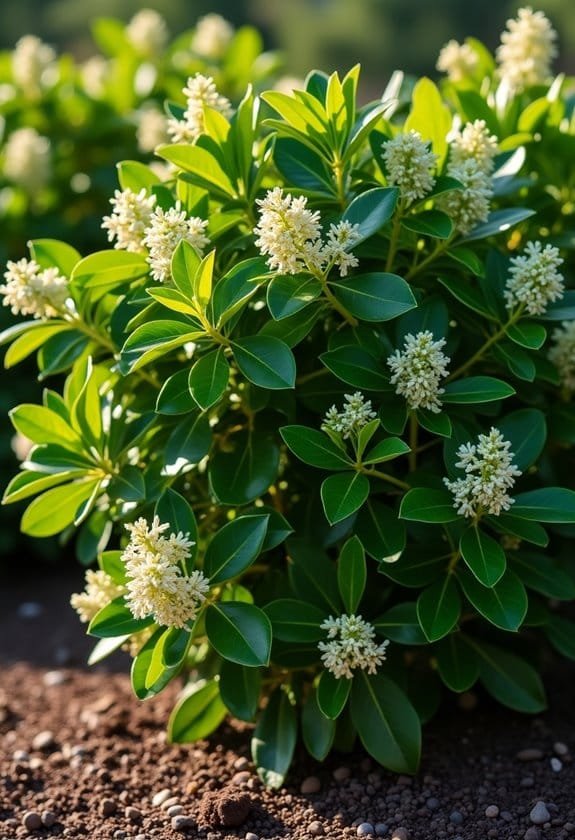
Ligustrum ovalifolium thrives best in environments that provide full to partial sun, ideally growing in USDA zones 5-9.
This adaptable shrub flourishes in well-drained soils, embracing a variety of conditions while requiring regular watering when the soil dries out to 3-4 inches deep.
Understanding its growing requirements—light exposure, soil conditions, and watering needs—can greatly enhance its performance, ensuring a lush and vibrant appearance in any garden landscape.
Light
How important is light for the growth of Ligustrum ovalifolium? Light plays a vital role in determining the health and vigor of this versatile shrub. Ligustrum ovalifolium thrives best in full sun, ideally requiring at least six hours of direct sunlight each day for ideal growth.
While it exhibits light adaptability and can grow in various lighting conditions, a stark growth comparison reveals that it flourishes under full sun exposure, leading to denser foliage and a robust structure.
In shaded areas, however, the plant's growth may become leggy, resulting in a less attractive appearance that can detract from its effectiveness as a privacy hedge. This lack of adequate sunlight can also diminish flowering potential, as the plant may produce fewer fragrant white blooms, typically observed in mid-summer.
Regular exposure to sunlight not only fosters vibrant, dark green foliage but also enhances the overall aesthetic value of the shrub, making it a favored choice in landscape design. Therefore, ensuring sufficient sunlight is essential for maintaining the Ligustrum ovalifolium's health and maximizing its ornamental charm.
Soil
Soil quality is essential for the successful growth of Ligustrum ovalifolium. This adaptable plant thrives in well-drained soils, shunning consistently wet conditions that can lead to root rot. Maintaining appropriate pH levels—ideally slightly alkaline to neutral—enhances nutrient uptake, fostering peak growth. For Ligustrum ovalifolium, sandy, loamy, or clay soils can all support vigorous development, as long as moisture levels are regularly monitored.
Incorporating soil amendments, such as organic matter, greatly improves soil fertility and drainage solutions, making it beneficial for this species. These amendments not only enhance the soil structure but also improve moisture retention, providing a perfect balance for the plant's needs.
Additionally, applying mulch around the base of the shrub aids in retaining moisture while regulating soil temperature, which ultimately promotes the plant's resilience against environmental stressors.
When planting Ligustrum ovalifolium, practitioners should pay attention to the soil condition, tailoring it to suit the plant's requirements. A well-prepared soil environment not only encourages healthy growth but also leads to a more robust and attractive landscape feature.
Therefore, committing to the right soil management practices is essential for success.
Water
Proper watering practices are essential for the health and growth of Ligustrum ovalifolium. To maintain ideal vitality, gardeners should monitor the soil moisture, watering when the topsoil dries to a depth of 3-4 inches. While this plant adapts to various soil types, it has a low tolerance for overly saturated conditions; excessive water can induce root rot, stunting its growth.
During periods of dry weather, increasing the watering frequency becomes critical to support its rapid growth. Providing consistent moisture in the early stages fosters the development of deep, extensive roots, enhancing the plant's capability to withstand varying environmental conditions.
Once established, Ligustrum ovalifolium exhibits remarkable drought resilience, requiring considerably less attention. This low-maintenance aspect makes it an attractive option for gardeners seeking a hardy yet striking plant.
Moreover, effective moisture retention techniques, such as mulching, can bolster the plant's vigor by regulating soil temperature and preventing excessive evaporation.
Ultimately, understanding the watering nuances of this garden privet encourages thriving plants that can weather both dry spells and neglect, transforming gardens into lush oases.
Temperature
Ligustrum ovalifolium flourishes in USDA growing zones 5-9, showcasing its adaptability across various temperate climates. This remarkable plant exhibits a robust temperature tolerance, thriving in environments that experience temperature extremes, ranging from freezing winters to warm summers.
In colder regions, it may adopt a deciduous growth habit, losing its leaves, whereas in milder winters, it remains semi-evergreen or evergreen, maintaining its lush foliage.
Full sun exposure is ideal for Ligustrum ovalifolium; however, it demonstrates impressive temperature adaptation, also flourishing under partial sunlight. This adaptability is particularly beneficial in diverse urban areas, including regions with coastal exposure and pollution.
These environmental challenges hardly deter the California Privet, adding to its appeal as a resilient landscape choice.
To enhance its growth, gardeners should guarantee adequate watering practices. When soil moisture dips to 3-4 inches, especially during temperature extremes, the shrub requires hydration to thrive.
Proper moisture levels not only support health but also boost flowering potential. Consequently, understanding temperature dynamics and monitoring environmental conditions will guarantee that Ligustrum ovalifolium remains a robust and attractive addition to any garden.
Pollinator Criteria
Pollinators are drawn to Ligustrum ovalifolium primarily due to its dense clusters of fragrant white flowers that bloom during the warm months of June and July. These highly attractive blooms not only provide essential nectar rewards but also create a vibrant feeding ground for bees and butterflies, which play significant roles in the pollination process. The fragrant blossoms of Ligustrum attract various pollinators, much like the tubular flowers of Common Honeysuckle, ensuring effective pollination and the support of local biodiversity. Additionally, the blooming season of Ligustrum coincides with that of many native pollinator species, enhancing the garden's ecological interactions.
Attracted Pollinators
The fragrant white flowers of Ligustrum ovalifolium bloom in June and July, drawing in a variety of bees and butterflies. These pollinators exhibit specific behavior patterns, seeking abundant nectar sources to sustain their energy during the warm summer months. The nectar-rich blooms of garden privet serve as essential sustenance, especially when other food sources diminish, demonstrating the plant's significant role in supporting local pollinator populations.
The dense foliage and clusters of flowers create an inviting habitat, offering refuge and nourishment for these beneficial insects. Habitat conservation is fundamental to maintaining biodiversity, and Ligustrum ovalifolium thrives in urban environments, seamlessly integrating into diverse landscapes. Its widespread cultivation as an ornamental hedge fosters healthier ecosystems, encouraging pollinator activity in less-than-ideal conditions. Additionally, the early bloom season of Common Cowslip enhances pollinator foraging opportunities, linking this plant to urban biodiversity efforts.
As pollinators flit between blooms, their role in the wider ecosystem can't be understated; they contribute to plant reproduction and the overall vitality of the environment. By enriching urban green spaces, Ligustrum ovalifolium plays a significant part in the conservation of habitats and the promotion of flourishing communities of bees and butterflies. Wild Thyme is another important plant for pollinators due to its extended flowering period and dense clusters of flowers.
Consequently, it proves to be indispensable for nurturing these essential species.
Pollination Method
Although many flowering plants depend on specific pollinators for reproduction, Ligustrum ovalifolium's open and accessible blooms cater to a broad range of insects. Blooming in June and July, the clusters of white, fragrant flowers attract bees and butterflies, effectively enhancing pollinator interaction.
The flower morphology notably impacts its pollination method, as the design allows easy access for visiting insects, which promotes cross-pollination benefits. This broad accessibility not only guarantees a diverse pollination strategy but also helps maintain genetic diversity within the species.
As these insects gather nectar and pollen, they facilitate the transfer of male gametes between flowers, leading to the successful development of small purple to black drupes. These fruits serve as an important food source for birds, thereby integrating Ligustrum ovalifolium into the wider ecological web.
Interestingly, while the plant flourishes in a variety of environmental conditions and supports pollinator populations, regular pruning during early spring may prevent flowering, resulting in reduced seed production.
Balancing pollinator attraction strategies and aesthetic considerations ultimately strengthens the plant's contribution to urban green spaces and natural habitats alike.
Care & Maintenance
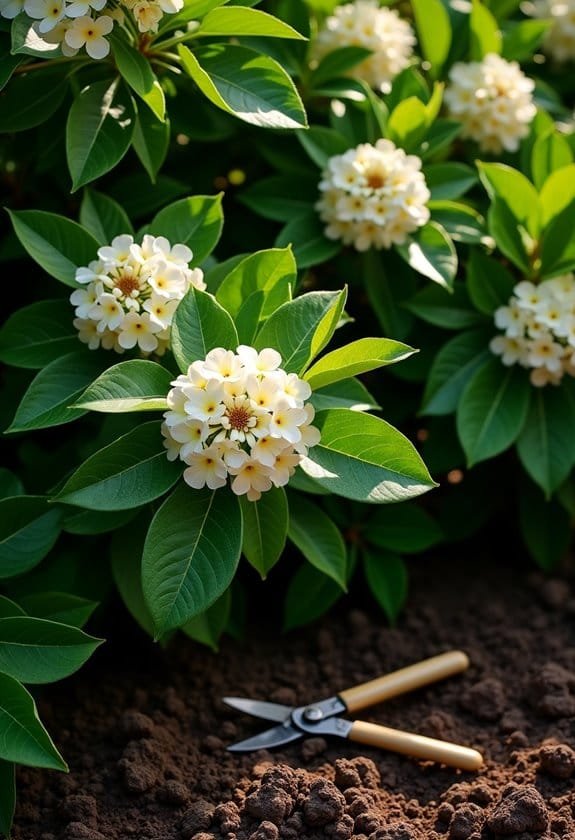
Caring for Ligustrum ovalifolium involves understanding its unique needs to foster robust growth and aesthetic appeal.
By implementing effective planting strategies and ongoing maintenance practices, gardeners guarantee that California Privet remains healthy and vibrant throughout the seasons.
Suggested companions can enhance its landscape value, promoting ecological harmony and visual interest in various garden settings.
Planting Tips
Regularly monitoring the moisture levels in the soil is vital for maintaining healthy Ligustrum ovalifolium, commonly known as California Privet. This robust shrub thrives when the soil is kept moist, particularly when the top 3-4 inches dry out, as this promotes vigorous growth while preventing waterlogging.
When planting, spacing considerations are important; each California Privet should be placed approximately 12-15 inches apart. This distance allows for ideal air circulation, enabling each plant to develop into a dense, lush hedge without competing for resources.
Employing proper planting techniques also plays an important role in their establishment. Digging holes that are twice the width but not deeper than the root ball will encourage healthy root expansion.
In addition to this, California Privet flourishes in full sun to partial shade, adapting seamlessly to various soil types, thereby enhancing its versatility across diverse gardening conditions.
To promote a thriving hedge formation, early spring pruning is recommended, as this maintains shape and density while preventing unwanted flowering.
Ongoing Care
To keep Ligustrum ovalifolium thriving, consistent care and maintenance are essential. Regular watering is important; the shrub should receive moisture when the soil dries to a depth of 3 to 4 inches. This practice not only promotes healthy growth but also prevents drought stress, guaranteeing the plant remains robust and vibrant.
A well-structured fertilization schedule enhances the shrub's health during the growing season, thereby contributing to denser foliage and improved flowering. It's advisable to apply a balanced fertilizer to nourish the plant adequately.
Pruning techniques play a significant role in shaping the Ligustrum and controlling its size. Early spring marks the ideal time for pruning, as it encourages bushier growth while inhibiting unwanted flowering and seed production. For those cultivating formal hedges, additional summer pruning helps maintain the desired shape and density throughout the growing season.
In terms of light requirements, Ligustrum ovalifolium flourishes in full sun or partial shade, which is essential for maximizing its growth potential.
Suggested Companions
Ligustrum ovalifolium pairs beautifully with a variety of companion plants, enhancing both visual appeal and ecosystem health in the garden. Employing effective plant pairing strategies can lead to a stunning landscape, especially when combined with flowering plants like Hydrangeas or Roses. The shrub's dense foliage serves as a rich backdrop, highlighting the vibrant hues of these blooms. Common ivy can be a great option for climbing around this shrub, providing an attractive climbing vine that brings additional visual interest.
Design considerations are essential; regular early spring pruning maintains aesthetics, preventing unwanted flowering and fostering robust new growth, which complements neighboring varieties.
This species thrives alongside tolerant perennials like Boxwood and Juniper, introducing diverse textures that enrich the garden.
Additionally, ensuring companion plants possess similar watering needs is important, as Ligustrum prefers soil that dries to about 3-4 inches deep, preventing root rot from over-saturation.
Seasonal benefits arise from grouping Ligustrum with native plants such as coneflowers or black-eyed Susans, enhancing biodiversity and supporting local wildlife. The privet acts as a natural shelter and windbreak, integrating seamlessly into the ecosystem. Viburnum tinus, with its fragrant white flowers, can also complement the surroundings by attracting beneficial pollinators.
Ultimately, thoughtful companions enhance the garden's liveliness, offering both aesthetic pleasure and ecological harmony.
Common Issues
Ligustrum ovalifolium, while resilient, faces several common issues that can hinder its growth and health.
Pests such as aphids and diseases like powdery mildew thrive in humid conditions, requiring vigilant monitoring and timely interventions.
Proper cultivation practices, including well-draining soils and strategic pruning, greatly mitigate these challenges, ensuring the plant remains robust and aesthetically appealing.
Pests/Diseases
Pests and diseases can pose considerable challenges for Ligustrum ovalifolium, impacting its health and aesthetic appeal. Common pests, such as aphids, scale insects, and spider mites, tend to feed on the foliage, leading to unsightly leaf damage and diminished plant vigor. Effective pest identification strategies, including regular inspections and surveillance, are essential for early detection of these invaders.
In addition to insect pests, Ligustrum ovalifolium may also suffer from various fungal diseases, including powdery mildew and leaf spot, particularly when exposed to humid conditions and poor air circulation.
Disease prevention techniques, such as maintaining proper spacing and implementing regular pruning, can markedly enhance air flow, reducing the likelihood of such afflictions.
Moreover, integrated pest management practices that combine cultural, biological, and chemical controls can help safeguard the plant against pest and disease pressures. For instance, ensuring that water drains adequately to prevent pooling around the base of the plant helps mitigate risks of root rot and moisture-related diseases.
Staying vigilant and proactive ultimately contributes to the robust health and longevity of these garden privets, preserving their beauty in landscapes.
Solutions
Maintaining the health and appearance of Ligustrum ovalifolium often requires proactive solutions to common issues that may arise. One of the primary concerns involves the essential pruning techniques, which should be conducted regularly to sustain the shrub's shape, while also curbing excessive flowering and seeding. This practice not only enhances aesthetic appeal but also minimizes the risk of invasive tendencies, given that the robust shrub can outcompete native plants in fertile environments.
Equally important is ensuring adequate soil drainage; Ligustrum ovalifolium thrives in diverse conditions but struggles in wet soils that may lead to root rot. Gardeners should practice vigilant watering, allowing the soil to dry to a depth of 3-4 inches between sessions, especially during periods of drought.
Moreover, toxicity awareness is paramount—every part of the plant is poisonous if ingested, necessitating careful handling and safeguarding against children and pets. Additionally, attention to invasive species management can help mitigate competition with native flora in local ecosystems.
Summary
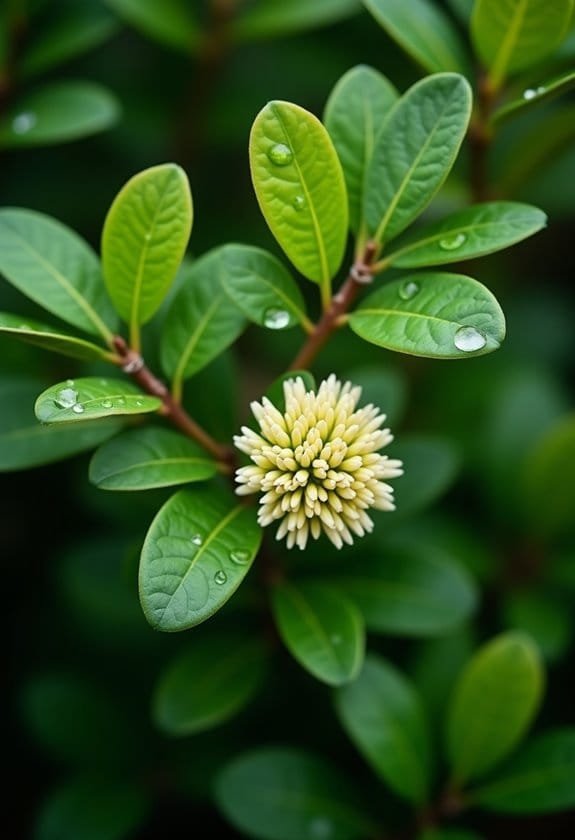
Often considered a versatile choice for landscaping, California Privet, or Ligustrum ovalifolium, is a fast-growing shrub prized for its dense foliage and adaptability. Reaching heights of 10 to 15 feet, it thrives in full sun to partial shade, showcasing dark green, oval leaves that are semi-evergreen in warmer winters. In June and July, clusters of fragrant white flowers emerge, adding visual interest.
Despite its numerous benefits in landscaping, including its use as an effective privacy hedge and offering an essential wildlife habitat for birds, California Privet poses significant challenges as an invasive species in some regions. Its adaptability to various soil types can lead it to outcompete native plants, disrupting local ecosystems and diminishing biodiversity. Additionally, similar to the behavior of invasive species like Japanese barberry, it can proliferate rapidly and lead to ecological imbalances.
This aspect requires careful management and regular pruning to maintain desired growth and suppress its flowering, ensuring balance in cultivated areas.
Available for around $63.99 for a #3 container, California Privet serves both aesthetic and ecological purposes in gardens. This remarkable shrub exemplifies the duality of introducing non-native plants—beautiful yet potentially problematic, urging gardeners to weigh their landscaping decisions carefully.