Lythrum salicaria, or Purple Loosestrife, is a robust perennial plant that can soar up to 2 meters in height. Originally from Europe and Asia, it aggressively invades North American wetlands, overwhelming indigenous flora and disrupting local ecosystems. This species boasts an astonishing reproductive capacity, capable of producing over 2 million seeds yearly, and thrives in nutrient-rich, moist soils but can adapt to drier conditions. While it attracts essential pollinators such as bees and butterflies, its invasive nature poses significant ecological challenges. Understanding its growth and ecological roles sheds light on effective management strategies for this prolific plant.
Main Points
- Lythrum salicaria, or Purple Loosestrife, is a non-native invasive species introduced to North America in the 1800s, disrupting native ecosystems.
- It grows up to 2 meters tall and thrives in wetland areas, producing over 2 million seeds per plant annually.
- The plant requires full sun and nutrient-rich, moist soils for optimal growth but can adapt to drier conditions.
- Purple Loosestrife relies on cross-pollination from insects and blooms from mid-summer to early fall, aiding local pollinator populations.
- Management strategies include manual removal, selective herbicides, and biological controls, but its high seed production complicates eradication.
Introduction
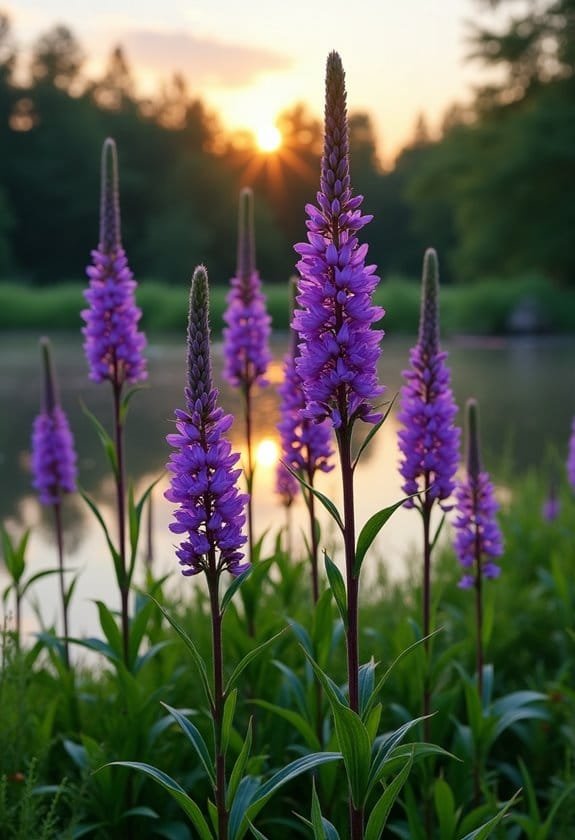
Purple Loosestrife, or Lythrum salicaria, stands as a striking perennial wetland plant with origins in Europe and Asia.
This species, introduced to North America in the 1800s, showcases vibrant purple flowers and can grow up to 2 meters tall, forming dense clusters that captivate observers.
However, its remarkable ability to reproduce—yielding over 2 million seeds each season—has led to significant ecological challenges as it invades and disrupts native wetland ecosystems.
Common Name
Known commonly as Purple Loosestrife, *Lythrum salicaria* captivates with its striking purple flowers that grace wetlands from mid-summer to fall.
This perennial plant, which can reach heights of up to two meters, features a loose, sprawling growth habit that enhances its charm. Despite its beauty, Purple Loosestrife's invasive nature poses a significant threat to native ecosystems, as it often displaces indigenous flora, diminishing biodiversity. The plant's aggressive growth can prevent other species, including beneficial plants that attract pollinators, from thriving in the same habitat.
Originally native to Europe, Asia, and northern Africa, Purple Loosestrife was introduced to North America in the 1800s, where it swiftly established itself in various wetland areas, particularly along shorelines and disturbed sites.
Its resilient nature and vivid blooms have, paradoxically, led to its cultivation as an ornamental garden plant, despite the environmental consequences. The term "loosestrife" derives from the plant's vigorous growth, which can easily choke out and overshadow native vegetation.
As a result, it's deemed a noxious weed in many regions, emphasizing the looming challenge of managing its spread while appreciating its aesthetic contribution to the landscape. Additionally, like wild parsnip, this plant can spread aggressively through viable seeds that remain dormant for extended periods, complicating efforts for effective management.
Understanding the duality of Purple Loosestrife's allure and threat is essential for ecological balance and conscientious horticultural practices.
Scientific Name
The scientific name of Purple Loosestrife, *Lythrum salicaria*, represents a critical aspect of its identity within the botanical world. This perennial herbaceous plant belongs to the family Lythraceae and boasts flowers that bloom in dense spikes, enchanting onlookers with their vibrant hues.
The genus name, *Lythrum*, derives from the Greek word for "blood," reflecting its rich coloration, while the specific epithet, *salicaria*, highlights the plant's leaf similarity to willows (*Salix*).
First described by renowned botanist Carl Linnaeus, *Lythrum salicaria* is classified as a non-native invasive species in numerous regions, particularly in North America. Originally native to Europe, Asia, and northern Africa, it was introduced to North America in the 1800s, where it has proliferated rapidly.
Its expansion has raised concerns, ultimately leading to inclusion on the IUCN Red List of Threatened Species due to its significant ecological impacts. The sheer dominance of *Lythrum salicaria* in wetland ecosystems endangers native flora and alters important habitats, disrupting the delicate balance necessary for biodiversity to thrive. One major threat is its ability to produce up to 2 million seeds annually, allowing for rapid colonization of wetlands.
Overview
As an invasive perennial plant, *Lythrum salicaria* poses significant challenges to wetland ecosystems across North America.
Native to Europe and Asia, this plant was introduced in the 1800s and has since proliferated, thriving in nearly every Canadian province and most U.S. states, except Hawaii and Florida.
*Lythrum salicaria* primarily invades temperate wetlands, favoring wet soil conditions found in marshes, lakesides, and riverbanks, although it can also establish itself in drier environments.
Remarkably, a single purple loosestrife plant can produce over 2 million seeds in one growing season, with seeds able to germinate even in standing water.
This astonishing reproductive capacity makes it a formidable invasive species, capable of overwhelming native species that play fundamental roles in their respective ecosystems.
The dense growth of *Lythrum salicaria* disrupts aquatic habitats, leading to decreased biodiversity and altering nutrient cycles.
As it competes aggressively for resources such as light and space, this species not only diminishes the presence of critical native flora but also impairs the overall health of wetland ecosystems.
Understanding and managing its impact remains imperative for the preservation of these essential habitats.
Key Features
Purple Loosestrife (Lythrum salicaria) showcases impressive growth, typically reaching heights between 60 cm and 2 m, characterized by its bushy form and square, woody stem.
During mid-summer, it delights observers with clusters of striking purple flowers, featuring 5 to 7 petals and arranged on spikes that can extend up to 40 cm tall.
The lance-shaped leaves, up to 10 cm long and smooth-edged, are strategically arranged oppositely or in whorls, further enhancing the plant's aesthetic appeal.
Growth Size
Growing between 60 to 120 cm in height, Lythrum salicaria can even exceed 2 meters under ideal conditions. This impressive growth size is largely attributed to its erect, branching stems, which possess a unique square shape, enhancing its bush-like appearance. As it matures, a single plant may reach significant heights, dominating the vegetation in wetlands and riparian zones.
The plant's leaves exhibit a lance-like shape, measuring between 6 and 15 cm long, arranged oppositely or in whorls around the stem. These foliage characteristics not only contribute to its overall aesthetic but also allow the plant to effectively utilize light and resources.
Flower spikes emerge from the upper portions of the stems, rising 10 to 40 cm tall. These spikes produce enthralling purple flowers, characterized by 5 to 7 petals that bloom from mid-June to late summer.
Notably, a single mature purple loosestrife plant can generate over 2 million seeds in a single growing season. This remarkable reproductive capacity facilitates rapid population growth, enabling Lythrum salicaria to thrive in diverse environments and potentially outcompete native species. Such attributes make it a prominent species in its native habitat.
Appearance
Lythrum salicaria's striking appearance makes it easily recognizable in wetlands and riparian zones. This robust plant stands tall, reaching heights between 60 cm to 2 meters, often presenting a bush-like silhouette due to its multiple stems.
The stems are square-shaped, featuring 4-6 angular sides, and possess a woody texture that contributes to its sturdy demeanor.
The lance-shaped leaves of purple loosestrife can extend up to 10 cm long, arranged oppositely or in whorls along its resilient stems. This arrangement not only enhances its aesthetic appeal but also maximizes sunlight exposure for effective photosynthesis.
During its blooming period, the plant displays its showy flowers, each adorned with 5-7 petals.
These clusters form on elongated spikes, reaching heights of 10-40 cm, creating a vibrant spectacle in mid-summer through fall. The colorful flowers attract pollinators, playing an essential role in the surrounding ecosystem while drawing attention with their vivid hues.
Flowering Season
In mid-June, the vibrant flowering season of purple loosestrife kicks off, drawing attention in wetland environments. This plant showcases an impressive display of showy purple flowers that are arranged in dense spikes, often reaching heights of 10 to 40 centimeters. Each flower, characterized by 5 to 7 distinct petals measuring between 7 and 10 millimeters, creates an eye-catching spectacle that beckons various pollinators like bees and butterflies.
As the flowering season unfolds, which peaks from early July to September, the purple loosestrife considerably boosts its seed production capabilities. Remarkably, a single plant can produce over 2 million seeds in a single growing season.
This extraordinary reproductive surge has far-reaching implications for the surrounding ecosystems, as the plant's invasive potential escalates with each blooming cycle. The seeds primarily disperse during the fall and winter, contributing to the plant's establishment in new areas.
Consequently, while the flowering season offers a stunning visual feast, it also signals a growing concern regarding the ecological balance of wetlands, necessitating careful monitoring and management.
Growing Requirements
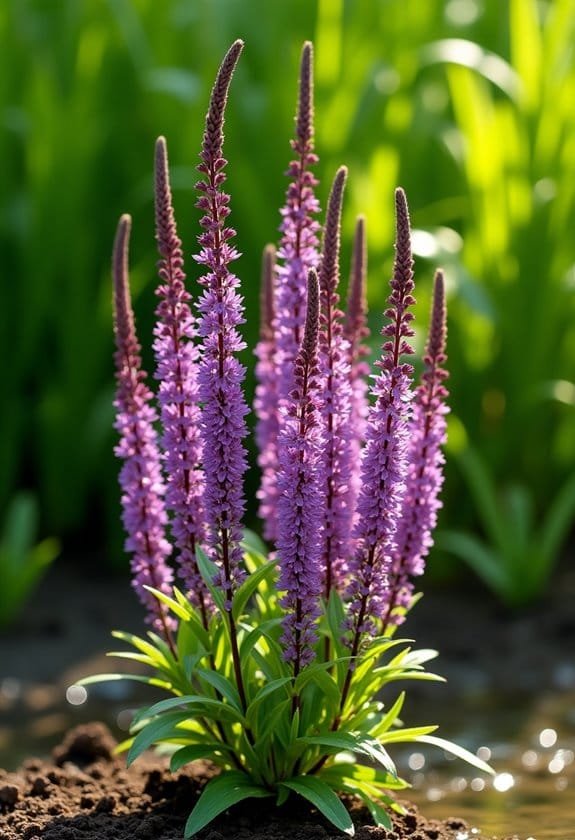
Purple loosestrife's growing requirements are vital for its flourishing in various environments.
This perennial plant thrives in full sun, targeting specific moisture levels and demonstrating remarkable adaptability to both wet and drier soils, enabling it to inhabit diverse ecosystems.
Understanding its need for ideal light, nutrient-rich soil, consistent water, and suitable temperature ranges is essential for any gardener aiming to cultivate this vibrant species effectively.
Light
For ideal growth, purple loosestrife thrives in full sun exposure while also showing adaptability to partial shade. This remarkable plant flourishes in wet habitats such as marshes and lake shores, where abundant sunlight penetrates effectively, providing the necessary energy for peak growth.
With its ability to establish itself in drier soils, purple loosestrife demonstrates notable flexibility regarding moisture and light availability, making it well-suited for various environments.
Flowering typically begins in mid-June, as the plant requires adequate sunlight to support blooming and seed production. During this critical phase, the intricate interplay between light and moisture becomes essential.
The unique stem tissue of purple loosestrife allows for respiration, even when submerged, enabling its success in fluctuating wetland light conditions. This adaptability not only enhances its chances for reproduction but also allows it to persist in diverse settings.
Soil
Lythrum salicaria flourishes in moist, nutrient-rich soils typical of wetlands like marshes, lakesides, and riverbanks. This robust perennial thrives in conditions where saturated soils dominate, yet its remarkable adaptability enables it to establish in drier soils as well. Such versatility allows purple loosestrife to invade a range of habitats, securing its presence even outside its preferred wet environments.
To achieve ideal growth, purple loosestrife requires full sun but can tolerate partial shade, broadening its potential territories. The plant's unique stem tissue facilitates effective respiration, even when submerged, enabling it to endure fluctuating water levels while continuing to thrive in its wet habitats. This adaptability greatly impacts its distribution and local ecosystems.
Furthermore, seed germination for purple loosestrife is most successful in warm, moist soils, aligning perfectly with moist soils prevalent in its favored ecosystems. Consequently, the plant's rapid spread can result in dominance over native species, showcasing the complexities of its growth requirements.
Awareness of these soil preferences and germination needs underscores the challenges of managing this invasive species, as it easily capitalizes on suitable environmental conditions.
Water
Thriving in wet habitats, Lythrum salicaria relies heavily on abundant water for ideal growth. This perennial plant flourishes along marshes, lakesides, riverbanks, and ditches, although it can adapt to somewhat drier environments. Optimal germination occurs in saturated, warm soils—often under standing water—which greatly enhances its reproductive success in diverse settings.
With a unique stem tissue allowing for oxygen uptake, Lythrum salicaria can remain resilient despite submersion, enabling it to thrive where many other plants would falter. The continuous availability of water also supports a robust root system that plays a critical role in trapping sediments, thereby affecting local water table levels and altering wetland hydrology.
In addition, Lythrum salicaria's preference for areas with substantial water flow guarantees its vigor. The interaction between this plant and its aquatic surroundings highlights a delicate balance within these ecosystems, as its presence can lead to both beneficial and adverse effects.
Ultimately, while this engaging plant exhibits remarkable adaptability, its considerable water requirements underscore the importance of conserving wet habitats for sustaining its growth and the broader environmental equilibrium.
Temperature
Purple loosestrife's ideal growing conditions hinge on warm temperatures that foster peak germination and growth. This resilient perennial flourishes best in wet, warm soil, typically thriving during the warmer months. *Best* germination occurs when temperatures rise, enabling the plant to capitalize on favorable conditions.
With an impressive flowering period from mid-June to late August, purple loosestrife relies heavily on the nurturing embrace of warm temperatures to spur rapid growth and prolific seed production.
While it primarily inhabits temperate wetlands, this adaptable plant can tolerate a spectrum of soil moisture levels, demonstrating its remarkable ability to flourish in varying temperature and environmental conditions. The adaptability of purple loosestrife becomes especially evident in its capacity to respire even when submerged in water, showcasing its resilience against both temperature fluctuations and changing water levels associated with climate change.
Thus, maintaining suitable temperature conditions not only encourages vigorous growth and flowering but also enhances its reproductive success.
Gardeners and ecologists alike should account for these temperature requirements to support the thriving of purple loosestrife in diverse ecosystems, balancing the intricate relationship between temperature, soil, and overall plant health.
Pollinator Criteria
Pollinator criteria for Lythrum salicaria focus on the long-tongued insects it attracts, such as bees and butterflies, which are crucial for its reproduction. Each flower, adorned with six petals and twelve stamens, showcases an intricate design that not only invites these essential pollinators but also fosters cross-pollination among plants.
However, the invasive nature of purple loosestrife has significant implications for local ecosystems, as it competes for resources with native plants that also rely on these pollinators.
Attracted Pollinators
Attraction plays an important role in the relationship between Lythrum salicaria and its pollinators, primarily long-tongued insects like various species of bees and butterflies. The striking, purplish flowers bloom in dense spikes, providing a generous supply of nectar during the flowering season from mid-June to September. Each flower typically comprises five to seven petals and twelve stamens, creating an ideal setting for cross-pollination as these insects visit multiple flowers in search of nourishment. The extended blooming period from mid-June to September, similar to the blooming season of Birds Foot Trefoil, enhances the synergy between these plants and their pollinators.
The timing of purple loosestrife's bloom aligns seamlessly with the lifecycle of many essential pollinators, promoting high rates of pollination success and extensive seed production. Remarkably, a single plant can yield over two million seeds, ensuring its proliferation. Additionally, the plant's pollinator support contributes to its ecological impact, attracting a variety of species that could otherwise rely on native flora for survival.
However, while purple loosestrife does foster some level of pollinator activity, its invasive nature poses significant ecological challenges. By competing with native plants for resources, it may diminish local biodiversity and disrupt existing pollinator populations.
Consequently, understanding the relationship between purple loosestrife and its pollinators provides insight into the broader implications of invasive species on ecosystem dynamics and the health of pollinator communities.
Pollination Method
Exhibiting a cross-pollination method, Lythrum salicaria relies heavily on long-tongued insects, particularly bees and butterflies, to guarantee its reproductive success. The plant's vibrant flowers bloom from mid-summer to early fall, showcasing six petals and 12 stamens that attract various pollinators. This intricate design fosters effective pollination, which is critical for the plant's survival and ecological role.
Pollination not only guarantees that the flowers produce seeds—over 2 million per plant in a single growing season—but also amplifies the genetic diversity of purple loosestrife populations. This genetic variety equips the species to adapt to diverse habitats, bolstering its competitiveness in various environments. Notably, similar to the pollination efficiency seen in Common Cowslip, effective interactions with pollinators are essential for sustaining the reproductive capacity of purple loosestrife.
However, the presence of certain insects, like Galerucella beetles, can negatively influence pollination success by damaging flowers and diminishing seed production. Such interactions illustrate the complex relationships within ecosystems, as pollinators secure the future of Lythrum salicaria while simultaneously facing threats from herbivorous species.
Ultimately, understanding the pollination methods of purple loosestrife elucidates its rapid spread, supporting the idea that a plant's reproductive strategies materially impact its ecological dynamics.
Care & Maintenance
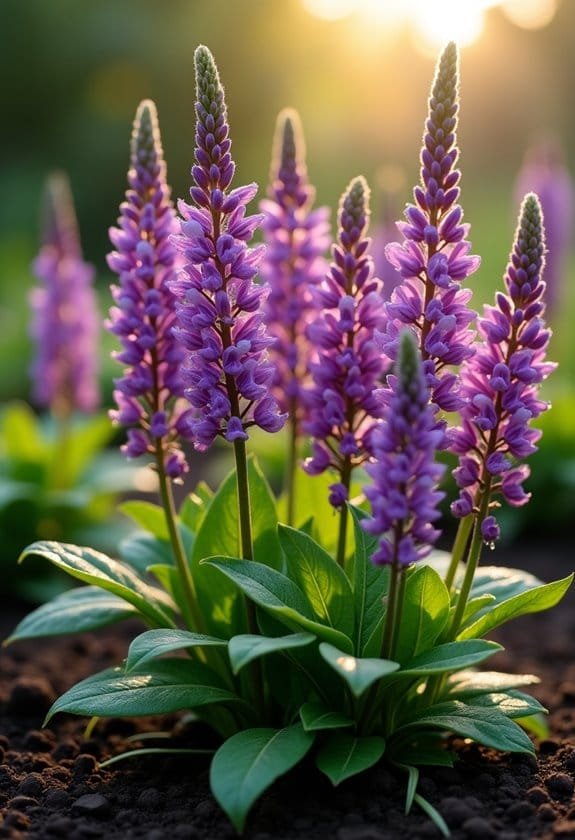
When caring for Lythrum salicaria, gardeners should prioritize its specific growing conditions and companion plants to enhance its health and beauty.
This vibrant plant flourishes best in full sun, though it can adapt to partial shade, making regular monitoring essential to maintain ideal soil moisture and prevent overcrowding.
Selecting suitable companions not only enriches the garden's aesthetic but also fosters a balanced ecosystem, encouraging beneficial interactions among species.
Planting Tips
Planting Lythrum salicaria (Purple Loosestrife) requires careful consideration of its environment to guarantee successful growth. This alluring but potentially invasive plant thrives best in wet habitats such as marshes and riverbanks, favoring areas that receive full sun to partial shade.
Soil quality is fundamental; well-draining soil supports its growth, although Lythrum salicaria can adapt to drier conditions as well.
When engaging in the control of purple loosestrife, it's important to monitor its growth during the flowering season, from mid-June to late summer. This vigilance helps prevent the plant from overtaking regions and outcompeting native plants.
For gardening enthusiasts focused on ecological restoration, selecting sterile cultivars is a wise choice, as these variants don't produce seeds, limiting the risk of unwanted spread.
Lastly, to promote prosperous growth while minimizing potential issues, garden caretakers should establish a routine for removing old stems and dead materials, ideally in late fall or early spring.
This proactive approach nurtures the plant's health, ensuring that Lythrum salicaria contributes positively to its environment.
Ongoing Care
Regular care is essential for managing Lythrum salicaria and ensuring it doesn't become invasive. Ongoing care consists of diligent monitoring, which aids in identifying and managing new infestations promptly before they can spread extensively. Regular checks during the growing season, especially in the flowering months from June to early August, are critical.
During this time, manual removal of small infestations proves effective; cut flower stalks need to be sealed in plastic bags to prevent seed dispersal, thereby curbing potential new growth.
In addition to these hands-on methods, implementing biological control offers further support. For instance, releasing specific leaf beetles, such as *Galerucella spp.*, can greatly reduce both growth rates and seed production in larger stands of purple loosestrife. This ecological intervention complements ongoing care strategies.
Moreover, promoting native vegetation and maintaining wetland hydrology creates a more balanced ecosystem, aiding in the suppression of purple loosestrife's expansion. By fostering biodiversity, these practices not only protect local flora but also enhance resilience against invasive species, reinforcing the importance of continuous efforts for sustainable management.
With informed strategies, one can successfully navigate the challenges posed by this formidable plant.
Suggested Companions
Selecting the right companion plants for Lythrum salicaria can enhance both aesthetics and ecosystem health. One should consider native wetland species such as blue flag iris (Iris versicolor) and swamp milkweed (Asclepias incarnata), which thrive in similar moist conditions. These companions coexist harmoniously without excessively competing for resources, enriching the habitat. Additionally, introducing plants like Sea Kale (Crambe maritima) can provide edible shoots while contributing to coastal ecosystems and enhancing biodiversity.
Regular care involves monitoring for invasive species, as purple loosestrife can assert aggressive growth. Hand-pulling seedlings is essential to prevent them from overshadowing native plants, fostering a balanced ecosystem.
Additionally, maintaining soil moisture mimics its natural habitat, ensuring healthy growth, particularly during drier spells. Watering effectively encourages blooming, so keep the soil consistently moist. Properly grown Sea Kale demonstrates drought resistance, making it a valuable addition to such gardens.
Fertilizing once in early spring with a balanced formula enhances growth; however, over-fertilization should be avoided since it may promote excessive lushness that could further elevate competition with desired native plants.
Furthermore, ensuring proper spacing—ideally between 12 to 24 inches—allows for adequate air circulation and sunlight exposure. This proactive approach not only benefits the purple loosestrife but also promotes the thriving of complementary companions, reinforcing the beauty and health of the garden ecosystem. Additionally, incorporating plants like Water Forget-Me-Not(Myosotis scorpioides) can support biodiversity and provide crucial resources for pollinators.
Common Issues
Purple loosestrife isn't just a striking plant, but it also faces various pests and diseases that threaten its growth and ecological balance.
Monitoring for issues like leaf spot fungi or aphid infestations is essential, as these pests can impede its health while underscoring the delicate interplay within wetland ecosystems.
While some solutions exist, including the strategic use of biological control agents, their success hinges on a multitude of environmental factors, making effective management a complex endeavor.
Pests/Diseases
Managing pests and diseases is vital for the health of Lythrum salicaria, as various insects can greatly impact its growth and reproductive success. Notable among these pests are the leaf-feeding beetles, Galerucella calmariensis and Galerucella pusilla. These insects help reduce both growth and seed production, thereby affecting overall population sustainability.
In addition, the Hylobius transversovittatus weevil directly targets the root crown of purple loosestrife, weakening its root system and stunting growth and reproductive capacity.
Another significant threat comes from Nanophyes marmoratus, a flower weevil that lays its eggs within the plant's blossoms. This behavior compromises seed viability and inhibits reproductive success.
Moreover, the caterpillars of Ectropis crepuscularia moths may feed on purple loosestrife, and while they can help regulate populations, large infestations potentially diminish the plant's vigor.
Although these pests can serve as biological control agents, their effectiveness often wavers based on environmental conditions and the overall health of purple loosestrife populations.
Understanding these dynamics is essential for maintaining a balanced ecosystem, highlighting the intricate relationships within natural environments that constantly evolve.
Solutions
Controlling Lythrum salicaria poses various challenges, particularly due to its ability to produce vast quantities of seeds each growing season. This prolific nature can lead to rapid population growth, displacing native species and disrupting local ecosystems.
Effective solutions include manual removal, especially for small infestations, where diligent efforts can markedly reduce the plant's presence. Cutting flower stalks before they produce seeds further curtails seed dispersal.
For larger infestations, the application of targeted herbicides, like glyphosate and triclopyr, guarantees effective chemical control. Additionally, biological control measures have emerged as a promising strategy; the introduction of specific beetles, such as Galerucella calmariensis and Galerucella pusilla, targets the plant's growth and reproductive capacity, providing a more sustainable approach.
Implementing integrated management practices that combine mechanical, chemical, and biological strategies is crucial for long-term reduction of purple loosestrife in wetlands.
Preventative measures are equally important—cleaning watercraft, reporting sightings to local authorities, and properly sealing removed plants can prevent the further spread of this invasive species.
Summary
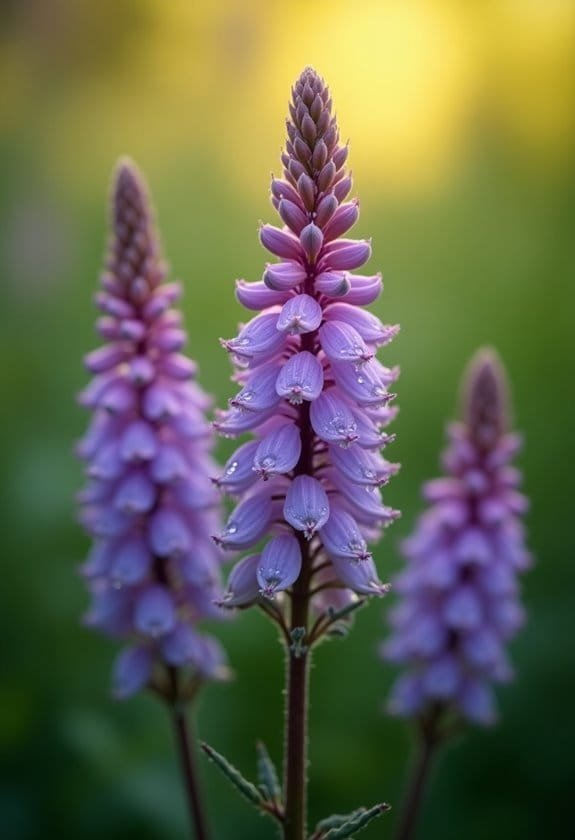
Originating from Europe and Asia, Lythrum salicaria, commonly known as Purple Loosestrife, has become a significant concern in North America since its introduction in the 1800s. As a perennial wetland plant, it can reach heights of up to 2 meters and produces over 2 million seeds each growing season, making it a formidable invasive species. This rapid reproduction allows purple loosestrife to outcompete native plants, often displacing them and jeopardizing the delicate balance of wetland ecosystems.
The invasion of purple loosestrife can lead to a substantial decline in biodiversity, replacing as much as 50% of native flora in affected areas. Its striking square stems, lance-shaped leaves, and clusters of vibrant purple flowers facilitate easy identification in marshy habitats. Additionally, Flowering Rush is another invasive perennial aquatic plant similarly threatening North American wetlands, highlighting the urgent need for comprehensive management strategies.
To mitigate its impact, various control strategies exist, including manual removal techniques, herbicide applications, and the introduction of specific beetle species for biological control.
These integrated management practices highlight the urgent need for cooperation among conservationists, land managers, and local communities to preserve the integrity of native plant communities and restore ecological balance in North America's wetlands.