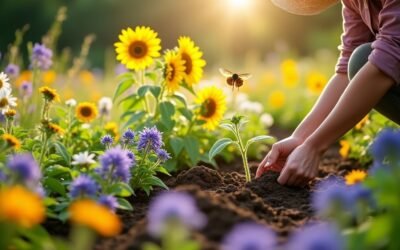
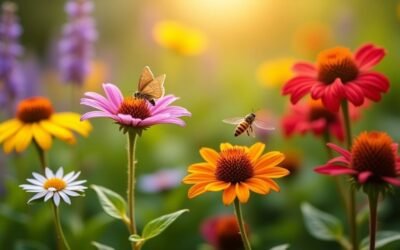
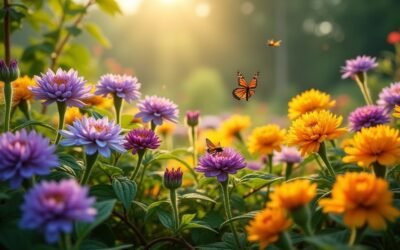
Lythrum virgatum, or wand loosestrife, is a enchanting perennial native to wetland environments in eastern Europe and western Asia. This plant can reach heights of up to 1.2 meters (4 feet) and features striking reddish-purple flowers that bloom from April to August, attracting various pollinators, including bees and butterflies. Its square-shaped, hairy stems and heart-shaped leaves distinguish it from similar species. Wand loosestrife thrives in moist, sunny conditions, preferring a pH range of 6.0 to 8.0 in loamy or silty soil. As it contributes to biodiversity, its careful management is crucial for maintaining local ecosystems, and further insights await those curious for more.
Main Points
- Wand loosestrife (Lythrum virgatum) thrives in wetland environments and grows up to 1.2 meters tall, featuring square-shaped hairy stems.
- Notable for its reddish-purple to magenta flowers, it blooms from April to August, attracting various pollinators.
- This species enhances biodiversity, serving as a significant nectar source for bees and butterflies, contributing to local ecosystems.
- It requires moist soil and full sunlight, with optimal growth in loamy or silty substrates and a pH of 6.0 to 8.0.
- Regular care, including watering and pruning, is essential, along with monitoring to prevent hybridization with related invasive species.
Introduction
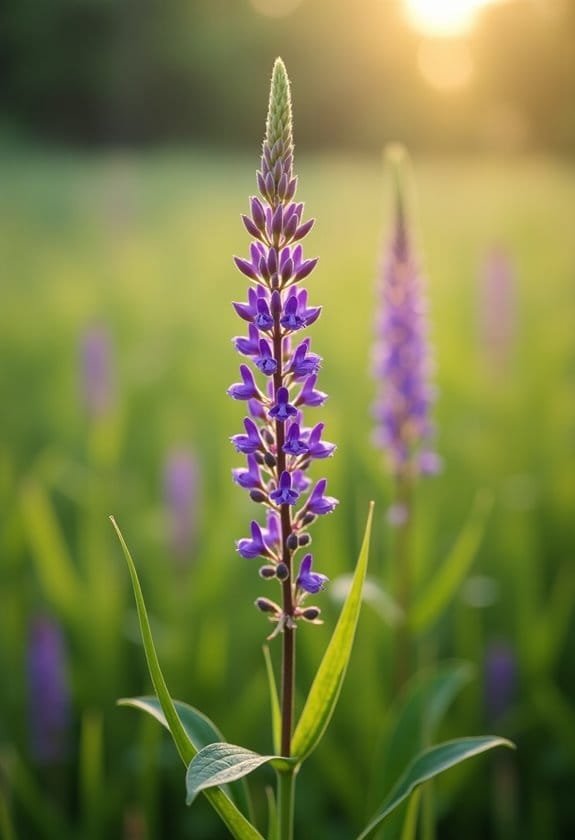
Lythrum virgatum, widely recognized as wandering loosestrife, stands out for its striking appearance and ecological significance.
This perennial plant, reaching heights of up to 1.2 meters, offers vibrant reddish-purple flowers from April to August, contributing both beauty and biodiversity to wetland habitats.
However, its ability to hybridize with the invasive purple loosestrife raises concerns about potential ecological disruptions, underscoring the importance of understanding this species within its native context.
Common Name
Often referred to as wand loosestrife, this plant captures attention with its elegant flowering spikes and vigorous growth. Lythrum virgatum, native to eastern Europe and western Asia, thrives in various wetland environments, often adorning marshes or disturbed habitats.
While marketed as a sterile alternative to the invasive species purple loosestrife (Lythrum salicaria), Lythrum virgatum can hybridize with its invasive counterpart, resulting in viable seeds. This hybridization poses environmental concerns, especially given the similarities in their characteristics, which can lead to confusion among gardeners and ecologists alike.
Reaching heights of up to 1.2 meters, wand loosestrife features square-shaped stems adorned with fine hairs. Its striking blooms, occurring from April to August, further enhance its appeal as a garden ornamental.
However, potential complications arise, as the rapid growth and adaptability of Lythrum virgatum can inadvertently encourage hybrid traits with purple loosestrife, potentially contributing to ecological imbalance. Consequently, while its common name might suggest innocuous beauty, understanding the implications of its cultivation requires careful consideration of its relationship with invasive species.
Scientific Name
The scientific name for wand loosestrife is Lythrum virgatum, a member of the Lythraceae family and the Lythrum genus. This perennial wetland plant, boasting vibrant reddish-purple to magenta flowers, typically blooms from April to August, enriching its habitat with color during the spring and summer months.
Lythrum virgatum can grow up to 1.2 meters high, featuring distinctive square-shaped, woody, and hairy stems, each exhibiting evenly spaced nodes. Its leaves are narrow and characterized by heart-shaped bases, creating a visually appealing structure, particularly with the lower leaves often arranged in whorls around the stem.
Despite its beauty, Lythrum virgatum is frequently confused with purple loosestrife, scientifically known as Lythrum salicaria, which poses significant ecological threats due to its invasive nature. However, this confusion can be alleviated by noting key differences—particularly, Lythrum virgatum possesses shorter intersepalar appendages and other distinct morphological traits that set it apart.
Understanding these distinctions not only aids in proper identification but also underscores the importance of preserving this native species in its natural habitat, promoting biodiversity within wetland ecosystems.
Overview
Wand loosestrife, scientifically known as Lythrum virgatum, captivates garden enthusiasts with its striking flowers and adaptability to wetland environments. Native to eastern Europe and western Asia, this perennial plant reaches impressive heights of up to 1.2 meters. Characterized by its square-shaped, hairy stems and narrow leaves with heart-shaped bases, Lythrum virgatum is primarily cultivated as an ornamental garden feature.
From April to August, wand loosestrife reveals its breathtaking reddish-purple to magenta flowers, which not only enhance its visual appeal but also attract various pollinators, enriching the ecosystem.
While marketed as a sterile alternative to invasive species like purple loosestrife, Lythrum virgatum's ability to hybridize with Lythrum salicaria poses a potential risk. This hybridization can yield viable seeds, inadvertently contributing to the spread of invasive loosestrife in disturbed habitats, such as marshes and waste sites.
Thriving in anthropogenic environments, Lythrum virgatum adapts remarkably well to disturbed habitats, demonstrating resilience and flexibility within varying ecosystems.
Understanding its ecological implications and ornamental value helps gardeners and conservationists alike appreciate this alluring species while addressing the challenges it presents.
Key Features
Lythrum virgatum, or wand loosestrife, impressively reaches heights of up to 1.2 meters, showcasing its vibrant reddish-purple to magenta flowers from April to August.
Its square, hairy stems and heart-shaped leaves arranged in whorls contribute to a striking appearance that captivates observers.
The plant's remarkable reproductive capabilities further enhance its role in wetland ecosystems, as it produces millions of seeds annually, ensuring its persistence and potential for rapid expansion.
Growth Size
Reaching impressive heights, wand loosestrife can grow up to 1.2 meters (approximately 4 feet), making it a striking addition to gardens and landscapes. This perennial plant, scientifically known as Lythrum virgatum, boasts square-shaped, hairy stems adorned with evenly spaced nodes, contributing to its distinctive structural appearance.
Leaves typically exhibit a narrow form, arising from heart-shaped bases, and are arranged in attractive whorls around the lower portion of the stem.
As a member of the loosestrife family, European wand loosestrife displays its vibrant flowers from April to August. These flowers, ranging from vivid reddish-purple to deep magenta, enhance the plant's ornamental appeal, often attracting pollinators and enriching the ecosystem.
With the ability to reproduce both by seeds and vegetatively from rhizome segments, the wand loosestrife demonstrates remarkable resilience and adaptability.
Ultimately, its impressive growth size and lush foliage can transform any garden into a vibrant haven, making it a popular choice among horticulturists.
Those considering the incorporation of purple loosestrife (Lythrum salicaria) should note the differing characteristics, ensuring the selection aligns with their aesthetic and ecological goals.
Appearance
Boasting an impressive height of up to 1.2 meters, this perennial plant captures attention with its square-shaped, hairy stems. Importantly, Lythrum virgatum exhibits a unique structure that enables its identification within wetland environments, characterized by pubescent stems and leaves.
The leaves, narrow with heart-shaped bases, grow in whorls at the lower nodes, contributing to the plant's overall appearance. Their texture feels slightly coarse, a feature that enhances their visual interest.
As for color variations, wand loosestrife's foliage displays a rich green hue, effectively contrasting the distinctive reddish-purple to magenta flowers that bloom from April to August; however, the plant's striking stems and leaves stand out even before flowering begins.
Those intersepalar appendages, measuring 2.5 to 3 mm in length, serve as additional markers for distinguishing this species from similar varieties, such as Lythrum salicaria.
The wand loosestrife thrives in wetland habitats, where it flourishes in moist soils, often forming dense colonies. This adaptability to specific habitats not only enhances its resilience but also embellishes landscapes with its tall stature and rich foliage, making it a delightful sight in its natural environment.
Flowering Season
During its flowering season from April to August, wand loosestrife bursts forth with vibrant reddish-purple to magenta blooms that capture the attention of both humans and pollinators alike.
This striking display not only enhances the aesthetic appeal of wetland environments but also provides significant flowering benefits. The elongated spikes of flowers grow in dense clusters, creating a visual spectacle that signals to various pollinators, including bees and butterflies, the availability of nectar.
Nectar availability during this flourishing period is substantial, encouraging an influx of pollinator activity. These insects are essential for the ecosystem, facilitating plant reproduction through effective pollen transfer. Each wand loosestrife plant can produce several million seeds annually, ensuring rapid reproduction and, unfortunately, potential invasiveness in local habitats.
The timing and duration of its flowering coincide with ideal conditions; abundant sunlight and moist soils promote vigorous growth. Consequently, wand loosestrife occupies a crucial role in its habitat, contributing to biodiversity while simultaneously showcasing nature's artistry during its lush flowering season.
Its ability to attract a plethora of pollinators highlights the intricate interconnectedness of plant and animal life within ecological systems.
Growing Requirements
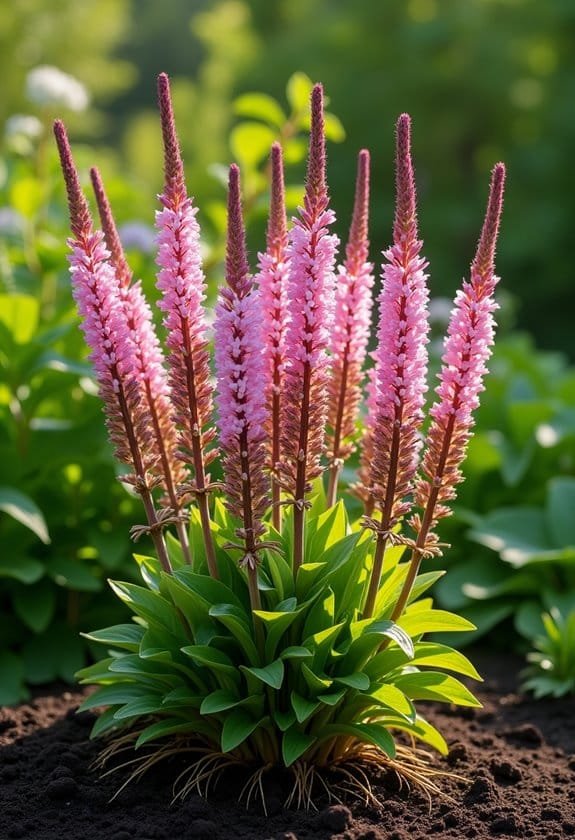
Lythrum virgatum flourishes in conditions that mimic its natural wetland habitats, thriving under full sunlight while requiring ample moisture for optimal growth.
This perennial plant prefers nutrient-rich, loamy soils and can endure a range of temperatures, although it truly excels in warmer environments. Additionally, Lythrum virgatum is adaptive to various wet habitats, similar to its invasive relative, purple loosestrife, showing its versatility in different ecological conditions.
Light
To thrive, Lythrum virgatum requires full sunlight, making it essential for gardeners to contemplate light conditions in their cultivation efforts. This remarkable plant flourishes under these ideal conditions, where abundant sunlight greatly enhances its growth and flowering. Full sunlight not only meets the light requirements of Lythrum virgatum but also stimulates its impressive germination rates, which can exceed 90% when conditions are favorable.
Found in disturbed areas and marshes, the plant seamlessly integrates into environments that provide both light and moisture. The interaction between sunlight and moisture is crucial, facilitating photosynthesis—the process by which the plant converts light energy into sustenance.
Typically reaching heights of up to 1.2 meters, Lythrum virgatum harnesses available light to ascend, competing effectively with other flora in its vicinity.
For optimal flourishing, adequate sunlight exposure is essential, as it directly influences the plant's overall health and blooming potential. By understanding the sunlight importance in the care of Lythrum virgatum, gardeners can create the perfect conditions, ensuring a lush and vibrant display that celebrates the beauty of this enchanting species.
Soil
Growing Lythrum virgatum requires attention to soil conditions that complement its need for sunlight. This vibrant species flourishes in wet, nutrient-rich soils typically found in marshes, demonstrating a distinct preference for environments that guarantee soil moisture retention.
It adapts well to various soil types, although it particularly thrives in loamy or silty substrates that provide the necessary nutrient availability vital for its growth. Effective soil pH management plays a pivotal role in cultivating Lythrum virgatum, as this plant favors pH levels between 6.0 and 8.0.
Such parameters facilitate ideal nutrient uptake and enhance flowering potential. Additionally, poorly drained or compacted soils can severely impede the establishment and overall health of the species, as they limit essential moisture and airflow to the root system.
Gardeners must, consequently, prioritize creating an environment that not only retains moisture but also fosters rich nutrient availability while maintaining the appropriate pH levels. By carefully evaluating and amending soil conditions when necessary, cultivators can guarantee the successful growth of Lythrum virgatum, allowing this striking plant to thrive and add beauty to wetland gardens.
Water
During the growing season, consistent water availability is imperative for the health and vigor of Lythrum virgatum. This plant flourishes in wetland environments, particularly in marshes and riverbanks, where it thrives in damp soils.
It shows impressive adaptability to fluctuating water levels, yet favorable growth occurs in areas with uninterrupted moisture throughout the season. Implementing effective water conservation strategies becomes essential, especially in regions experiencing variable precipitation patterns.
Lythrum virgatum's competitive nature allows it to outpace native flora for available water resources, raising concerns about its impact on local ecosystems. Water stress impacts the plant's growth, potentially leading to reduced flowering and vigor if moisture levels drop considerably.
As a result, vigilant water quality management is crucial to maintain the delicate balance of nutrients and prevent adverse effects on both the plant and surrounding wildlife.
Gardeners and ecologists should make sure that the water remains clean and abundant, as this will support sustainable growth while preserving the rich biodiversity of wetlands.
Temperature
Temperature requirements play an important role in the successful cultivation of Lythrum virgatum. This plant exhibits impressive temperature tolerance, thriving particularly well in temperate climates found in eastern Europe and western Asia. During its active growth phase, spanning spring through summer, temperatures exceeding 20°C (68°F) are most favorable, fostering vigorous flowering and robust growth.
Additionally, Lythrum virgatum showcases remarkable climate adaptability, allowing it to flourish in various seasonal variations. While it can endure fluctuating temperatures, maintaining consistent warmth notably enhances its growth potential. This adaptability extends to moisture levels as well, enabling the plant to prosper in both inundated and drier conditions.
The wand loosestrife, consequently, effectively copes with the dynamic nature of its habitat, a quality that underscores its resilience.
Gardeners should note that ensuring hours of full sun, along with appropriate moisture, complements the required temperature to maximize the plant's flourishing capabilities. In this context, understanding the interplay between temperature and other growing conditions remains vital for cultivating this stunning perennial, creating a vibrant focal point in any garden.
Pollinator Criteria
Lythrum virgatum acts as a magnet for numerous pollinators, including bees and butterflies, particularly from April to August when its stunning reddish-purple flowers are in full bloom.
This plant's structure facilitates efficient pollination, as the vibrant petals not only attract but also provide easy access for these essential insects, enhancing reproductive success through effective pollen transfer.
As a cornerstone in wetland ecosystems, Lythrum virgatum enriches the floral diversity, thereby creating a supportive environment for many pollinator species.
Attracted Pollinators
Throughout spring and summer, wand loosestrife captivates a variety of pollinators with its vibrant reddish-purple to magenta flowers. This plant serves as a significant nectar source, appealing to species such as bees, butterflies, and hummingbirds. Pollinator behavior reveals that these creatures are particularly attracted to the wand loosestrife due to its abundant flowering and prolonged blooming period, which spans from April to August.
The consistency of food supply is essential, enhancing nectar preferences among pollinators during the growing season. Wand loosestrife plays an important ecological role in supporting local pollinator populations, thereby contributing to the overall health and biodiversity of wetland ecosystems.
These pollinators not only assist in the reproduction of the plant itself, but they also promote the flourishing of various other plant species within the habitat. Despite its invasive nature, the interactions between wand loosestrife and pollinators underscore the habitat importance of understanding plant-pollinator relationships.
This comprehension is critical for effective management strategies in dealing with invasive species while recognizing their role in ecological networks, illustrating nature's intricate balance where both beauty and complexity coexist harmoniously.
Pollination Method
In wetland ecosystems, the pollination method of wand loosestrife heavily relies on various insect pollinators that are drawn to its colorful flowers. Specifically, Lythrum virgatum showcases vibrant reddish-purple to magenta blooms, which thrive from April to August. This extended flowering period offers a sustained nectar source for visiting insects, ensuring a steady flow of pollinator interactions.
Principally, bee and butterfly species serve as the most effective pollinators, engaging in essential insect interactions that facilitate the plant's reproductive success. The pollination mechanisms of wand loosestrife are fine-tuned, as these insects transfer pollen while collecting nectar, a mutual relationship highlighting the ecological significance of this plant. Wand loosestrife not only enhances its habitat through these interactions but also supports diverse pollinator populations by providing crucial resources, especially in disturbed or anthropogenic environments.
Interestingly, similar to common foxglove, many wildflowers are adapted to attract specific pollinators with their colorful blooms and nectar which plays a critical role in supporting biodiversity in various ecosystems. Thus, the presence of Lythrum virgatum in wetlands serves a dual purpose: promoting plant reproduction and fostering biodiversity among pollinators.
The intricate balance between plant and pollinator exemplifies the interconnectedness of life within these ecosystems, showcasing how small actions can lead to substantial ecological change.
Care & Maintenance
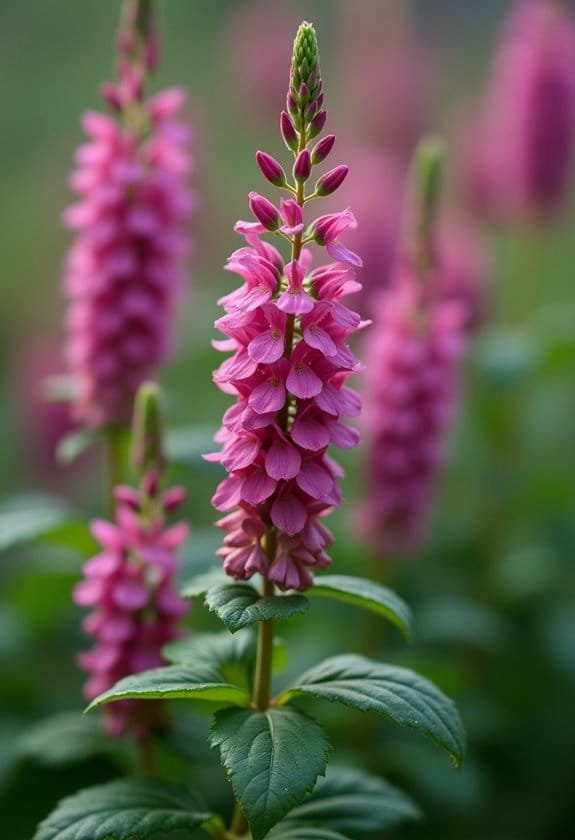
When it comes to planting Lythrum virgatum, selecting a location with moist soil and ample sunlight is essential, as these conditions reflect its natural wetland habitat.
Ongoing care involves consistent watering, particularly during dry spells, regular pruning to enhance flowering, and thoughtful fertilization to promote vibrant growth and color.
Additionally, choosing companion plants that can coexist harmoniously will create a flourishing ecosystem, ensuring this beautiful species thrives while preventing invasive tendencies that might disrupt local flora.
Planting Tips
For successful planting and care of Lythrum Virgatum, gardeners should prioritize full sunlight and moist soil conditions. This hardy plant thrives in wetlands and disturbed areas, making it a prime candidate for wetland gardens or naturalized settings.
When selecting planting locations, verify the soil is well-draining and enriched with organic matter, while still being able to tolerate a variety of soil types.
Seed propagation can be effective, given that this species produces millions of seeds annually; however, gardeners must actively monitor for potential invasiveness, as it may outcompete native flora.
To establish robust growth, especially in the early stages, regular watering during dry spells is essential. Mulching around the plants retains soil moisture, suppresses weeds, and enhances overall maintenance.
Consider companion planting with species that share similar moisture and light requirements, which can create a more harmonious garden ecosystem. This practice also minimizes competition among plants, aiding in the establishment of Lythrum Virgatum.
Ultimately, by carefully choosing planting locations and maintaining a supportive environment, gardeners can foster a thriving habitat for this distinctive species while enjoying its special beauty.
Ongoing Care
Ongoing care for Lythrum virgatum requires consistent attention to moisture levels; this plant thrives in wetland conditions and needs regular watering to guarantee ideal growth. Proper moisture management is essential, as too much water can lead to root rot and other detrimental fungal issues, while too little can hinder development. Maintaining a balance is critical for optimal health.
Adopting effective pruning techniques can greatly enhance the plant's aesthetic appeal. By regularly deadheading spent flowers, gardeners can curb excessive seed production, thereby preventing overcrowding and maintaining the plant's vigor. This process supports not just the wand loosestrife but also the surrounding ecosystem.
In addition to these care practices, invasive monitoring remains important for Lythrum virgatum. As this species can hybridize with the more aggressive purple loosestrife, gardeners should remain vigilant. Regularly checking for invasive behaviors and managing their growth mitigates the risks associated with their spread.
Additionally, planting native species nearby encourages biodiversity, which can further suppress competition and lessen Lythrum's invasive tendencies. In sum, thoughtful ongoing care promotes a flourishing, harmonious environment for both the plant and its surrounding ecosystem.
Suggested Companions
Choosing the right companion plants for Lythrum virgatum can enhance both its growth and the overall health of a wetland garden. When paired with moisture-loving companions like irises, cattails, and marsh marigolds, wand loosestrife thrives, contributing to greater biodiversity benefits within the ecosystem. These companions flourish in similar conditions, including full sunlight and nutrient-rich, consistently moist soil. Brooklime, known for its ability to prevent soil erosion, can also be a great addition to the garden.
Incorporating diverse companion plants not only enhances garden design but also promotes a resilient habitat, attracting various pollinators and beneficial insects. Lythrum virgatum requires regular watering, especially during dry spells, as it prefers its roots to remain damp. Additionally, its ability to attract various pollinators enriches the ecological interactions within the garden.
To further enhance its flourishing potential, gardeners should apply a thick layer of mulch around the plant's base. This practice retains soil moisture, suppresses weeds competing for nutrients, and creates an ideal microenvironment.
Additionally, routine pruning of spent flowers encourages a longer blooming period for wand loosestrife, maintaining its vibrancy and overall vigor. By thoughtfully selecting companion plants, garden enthusiasts can cultivate a flourishing wetland garden that epitomizes harmony, beauty, and ecological stability.
Such an approach maximizes the potential of Lythrum virgatum while enriching the surrounding ecosystem.
Common Issues
Wand loosestrife (Lythrum virgatum) may encounter several common issues, including susceptibility to pests and diseases that can considerably disrupt its growth and ecosystem balance.
When invasive species interact with native flora, they often amplify competition for resources, resulting in diminished biodiversity and potential disease transmission. For instance, *garlic mustard* (an invasive plant) can overtake areas, significantly reducing the diversity of native species present.
Addressing these challenges requires a thorough understanding of management practices and interventions, ensuring that this striking plant contributes positively to its environment without overwhelming it. Additionally, similar to Alder Buckthorn, it is important to monitor for invasive tendencies to prevent adverse ecological impacts.
Pests/Diseases
Lythrum virgatum is typically resistant to most pests and diseases, which makes it a strong choice for various gardens. This resilience stems from robust pest resistance strategies that enable it to thrive in diverse conditions.
However, gardeners must be vigilant, as fungal infections, like powdery mildew, can emerge, particularly in consistently humid environments. For fungal infection prevention, ensuring good air circulation and appropriate spacing can greatly reduce the risk of such issues.
Moreover, excessive moisture can lead to root rot, a condition that arises when drainage is insufficient, ultimately leading to the decline of the plant. To combat this, maintaining well-drained soils serves as a fundamental practice.
Interestingly, herbivorous insects, such as Galerucella beetles, play a crucial role in integrated pest management. These beetles target invasive loosestrife species, providing effective biological control methods while protecting native populations.
Regular monitoring for signs of stress or infestation becomes essential, allowing gardeners to act swiftly and maintain the health of wand loosestrife. By adopting these strategies, one can enjoy the beauty of Lythrum virgatum while minimizing potential threats to its vitality in gardens and natural landscapes.
Solutions
How can gardeners effectively manage the challenges associated with Lythrum virgatum? One significant difficulty lies in the identification challenges posed by its morphological similarities to the invasive Lythrum salicaria, making accurate differentiation essential for effective management practices.
Gardeners should thoroughly familiarize themselves with both species, as misidentification can lead to ineffective control strategies.
Wand loosestrife can produce millions of seeds each year, facilitating its rapid establishment in disturbed habitats, particularly marshy wetlands. To combat this, preventing its spread into native ecosystems becomes critical.
Effective management practices include hand-pulling, which requires diligent removal of root fragments to thwart regrowth. However, the physical effort must be sustained over time to guarantee success.
Additionally, biological control presents a sustainable method to mitigate wand loosestrife populations. The introduction of Galerucella beetles has demonstrated remarkable effectiveness in specific infestations, strategically leveraging nature to achieve balance.
In addressing these approaches, gardeners not only protect their landscapes from the ecological impact of wand loosestrife but also contribute to the preservation of biodiversity in affected wetland ecosystems.
Consequently, concerted efforts can yield promising results in managing this resilient perennial.
Summary
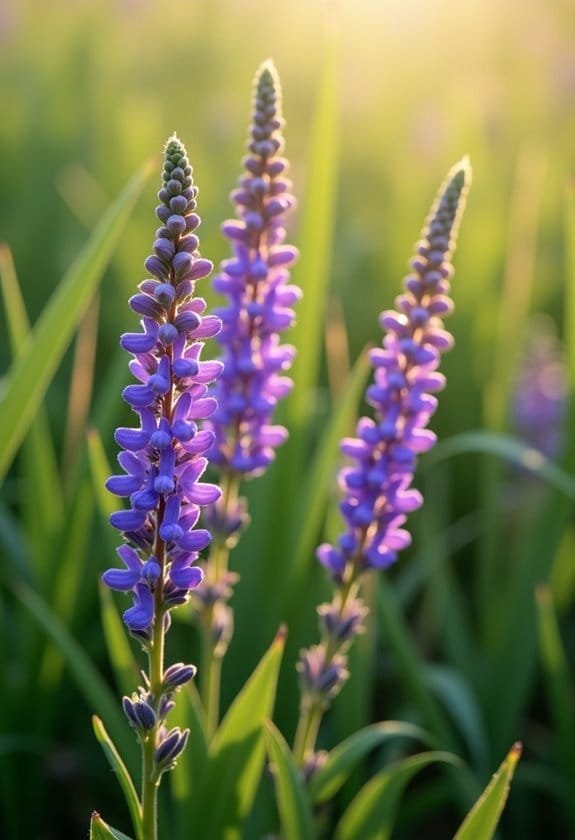
The plant known as Lythrum virgatum, or wand loosestrife, serves as a distinctive alternative to invasive species like purple loosestrife. Native to eastern Europe and western Asia, this perennial wetland plant can reach an impressive height of 1.2 meters. Its square, hairy stems and narrow, heart-shaped leaves allow for confusion with the invasive Lythrum salicaria, highlighting the necessity of accurate identification.
Wand loosestrife flourishes in various disturbed and anthropogenic habitats, particularly wetlands and marshes, where it benefits from abundant moisture and full sunlight.
One of the critical aspects of Lythrum virgatum lies in its capability for robust reproduction; a single plant can produce millions of seeds annually while also propagating through rhizome segments, potentially leading to significant ecological impacts. Despite its prolific nature, this species has shown fluctuations in its presence across New England, raising concerns for effective management strategies.
Areas historically populated by wand loosestrife exhibit alarming gaps in observation over the last two decades, emphasizing the importance of monitoring and research to maintain ecological balance while taking advantage of its ornamental potential in sustainable landscaping practices.