Monarda didyma, widely recognized as bergamot or red beebalm, is an enchanting herbaceous perennial with a height ranging from 2 to 4 feet. Its vibrant scarlet flowers bloom from July to September, attracting an array of pollinators, including hummingbirds and butterflies. This plant thrives in well-drained, moist soils and prefers full sunlight, while its aromatic foliage effectively deters common herbivores. Care includes regular moisture and annual pruning to promote lush growth, as overcrowding can lead to mildew. Additionally, this species holds historical medicinal value among Indigenous peoples, suggesting rich cultural significance. Explore further to uncover its multifaceted role in gardening and ecology.
Main Points
- Monarda didyma, commonly known as Red Beebalm or Bergamot, features bright red tubular flowers that attract hummingbirds and butterflies.
- This herbaceous perennial thrives in full sunlight and prefers moist, well-drained soils, growing 2 to 4 feet tall.
- It blooms from July to September, providing a continuous nectar source for various pollinators while enhancing local biodiversity.
- Certain cultivars, like Jacob Cline, are resistant to downy mildew, making them a resilient choice for gardeners.
- Historically, the plant has culinary and medicinal uses, recognized for its antiseptic properties by Indigenous peoples and often infused in herbal teas.
Introduction
Monarda didyma, popularly known as Red Beebalm, presents an enchanting example of the rich biodiversity found in the Appalachian Mountains.
This herbaceous perennial, with its striking scarlet flowers and distinctive growth patterns, grows between 2 and 4 feet tall and thrives in well-drained soil with ample sunlight.
As a crucial source of sustenance for pollinators like hummingbirds and specialized bees, Red Beebalm plays an essential role in maintaining ecological balance and local plant diversity.
Common Name
Red Beebalm, a vibrant flowering plant, is widely recognized for its role in attracting pollinators like bees and hummingbirds to gardens. The common name, Red Beebalm, stems from its affinity for drawing in various pollinators, enhancing the biodiversity of garden ecosystems.
Alternatively, it's commonly referred to as Bee Balm, a nod to its popularity among these essential creatures. The term "Bergamot" derives from the fragrant oil present in the plant's leaves, which bears a resemblance to the scent of the bergamot orange, often utilized in the much-loved Earl Grey tea. Moreover, it's also known as Oswego Tea, a reference to its historical use by Native Americans who brewed the leaves as a herbal infusion.
This stunning plant, native to the Appalachian Mountains, flourishes in moist, well-drained soils and prefers full sun exposure. The bright scarlet flowers not only contribute striking colors to landscapes but also enhance habitats for wildlife, offering food sources and shelter.
With these attributes, Monarda didyma captivates gardeners and nature enthusiasts alike, solidifying its place in both horticultural practices and ecological balance.
Scientific Name
The scientific name of Red Beebalm, Monarda didyma, highlights its rich botanical heritage and significance in the ecosystem. The genus name "Monarda" pays homage to Nicolas Monardes, a 16th-century Spanish physician who first documented American flora. This tribute underscores the historical importance of the plant, which plays a crucial role in its native habitat.
Monarda didyma is a herbaceous perennial that thrives mainly in the Appalachian Mountains, showcasing its adaptability to a range of environments. Typically growing to a height between 2 to 4 feet, this species flourishes in moist, well-drained soils, preferably under full sun conditions, although it exhibits a commendable tolerance for partial shade.
From July to September, its striking bright red tubular flowers bloom, serving as a dazzling attractant for a plethora of pollinators, including hummingbirds and butterflies.
Additionally, the plant's aromatic leaves and flowers hold historical medicinal and culinary significance for various Native American tribes, further enriching its narrative. Understanding the scientific name of Monarda didyma provides insight into both its ecological roles and cultural relevance.
Overview
Known for its stunning beauty and ecological significance, Monarda didyma, or Red Beebalm, captivates gardeners and wildlife enthusiasts alike. This herbaceous perennial, a native plant thriving in the Appalachian Mountains, typically grows between 2 to 4 feet tall and flourishes in moist, well-drained soils under full sun.
The plant showcases a breathtaking display of bright red, tubular flowers, which bloom from July to September, drawing numerous pollinators such as hummingbirds and butterflies.
Monarda didyma possesses a unique growth habit, spreading through underground stolons while featuring square stems adorned with oppositely arranged, aromatic leaves—crushed leaves exude a pleasant minty fragrance.
Gardeners often appreciate specific cultivars, such as Jacob Cline and Petite Delight, which boast vibrant blooms along with a degree of resistance to downy mildew, making them favorable choices for diverse gardens.
Historically, Indigenous peoples recognized the plant's antiseptic properties, while its leaves have found a place in herbal teas and various culinary dishes.
Ultimately, Monarda didyma not only enhances garden aesthetics but also supports essential pollinator populations, embodying the rich interplay between nature and cultivation.
Key Features
Monarda didyma, or Red Beebalm, typically reaches heights of 2 to 4 feet, showcasing its striking scarlet flowers that grace gardens from July to September.
Its lush green foliage, notable for a delightful minty aroma, is arranged oppositely on square stems, enhancing its visual appeal and drawing various pollinators.
Growth Size
Reaching heights of 2 to 4 feet (0.6 to 1.2 meters), Red Beebalm showcases a robust growth size that's perfect for adding vertical interest to gardens. This perennial plant not only grows tall but also spreads from 1.5 to 2 feet (0.4 to 0.6 meters) wide, creating a striking presence in any landscape.
The erect, square stems contribute to its distinctive posture, while the opposite leaves extend from 3 to 6 inches (7 to 15 cm) long, fragrant with a reviving minty aroma when crushed.
Monarda didyma's growth size serves various roles in garden design, offering a vibrant backdrop or an eye-catching focal point. As the plant flourishes, its densely clustered inflorescences, blooming from early to late summer for about eight weeks, enhance its visual appeal.
Thriving best in rich, well-drained soils and full sun, Red Beebalm's growth size is also resilient, tolerating light shade and requiring moisture, particularly during sweltering summer months.
With an ideal growing zone range of 4 to 7, this plant rewards gardeners with a dynamic display that annually rejuvenates the landscape.
Appearance
This perennial's striking appearance is highlighted by its erect, square stems that support a lush canopy of coarse, pubescent leaves, which release an invigorating minty fragrance when crushed.
Monarda didyma, commonly known as Red Beebalm, typically grows to a height of 2 to 4 feet and demonstrates a vigorous spreading habit thanks to its underground stolons. The leaves, measuring between 3 to 6 inches long, are ovate to ovate-lanceolate in shape, displaying serrate margins and a rich, medium to deep green color that enhances the plant's visual appeal.
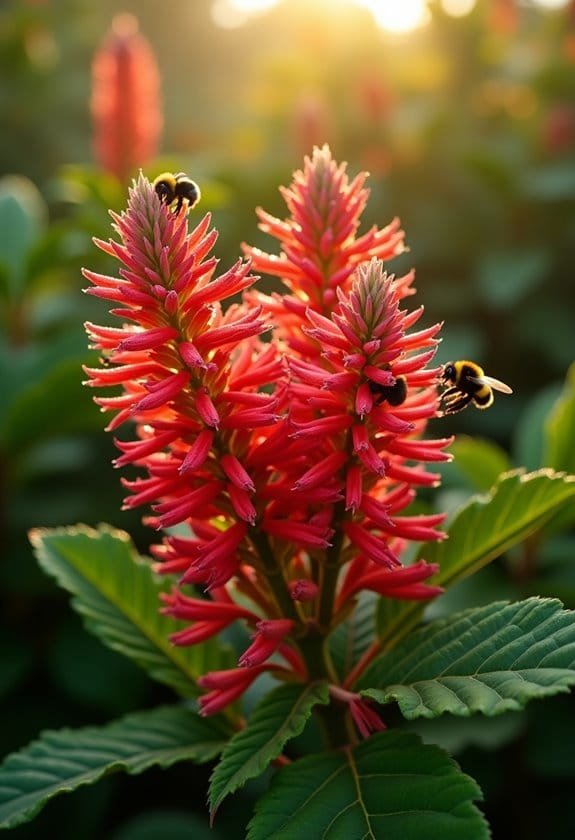
The true spectacle unfolds when considering the magnificent red flowers, characterized by their tubular, two-lipped structure. Arranged in dense clusters, these striking inflorescences, often comprising about 30 ragged flowers, emerge from leafy bracts that add further vibrancy to the overall display.
The arrangement leads to a mesmerizing visual impact, inviting pollinators and gardeners alike. As the season progresses, the combination of lush foliage and vivid flowers creates a lush tapestry of color and texture that stands as a tribute to nature's artistry.
Flowering Season
Typically, Red Beebalm showcases its vibrant blooms from early summer through late summer, with a peak flowering period lasting about eight weeks. This spectacular flowering season spans from July to September, enriching gardens with bright scarlet flowers clustered in heads, each containing around thirty blooms. The distinctive shape of each flower, featuring two lips and ragged tubular forms, draws the eye and adds texture to the landscape.
During this time, the plant becomes an essential resource for local wildlife. The vibrant colors and sweet nectar attract a variety of pollinators, including hummingbirds, butterflies, and specialized bee species, enhancing biodiversity in the area. This interaction not only supports the health of the ecosystem but also highlights the plant's role in flourishing gardens.
As the flowering season progresses, the Red Beebalm not only offers a stunning visual display but also promotes the survival of these pollinators by providing necessary habitats.
As a result, growers should appreciate the dual benefits offered by the blooming of Monarda didyma: a breathtaking spectacle that invigorates the garden while simultaneously supporting the delicate balance of nature.
Growing Requirements
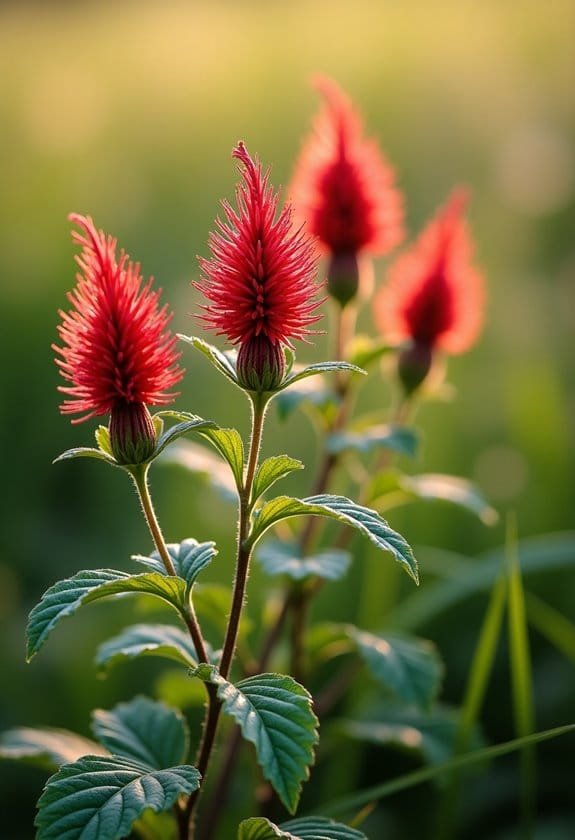
Monarda didyma flourishes in diverse garden settings, demanding attention to specific growing requirements.
To thrive, it needs rich, well-drained soil, consistent moisture, and full sun, though it can adapt to light shade; these conditions support its vibrant blooms throughout the summer months.
Understanding and accommodating these needs guarantees that this striking plant not only survives but also thrives, showcasing its beauty effectively in the landscape.
Light
Growing well in full sun, Monarda didyma, commonly known as Red Beebalm, can also tolerate some light shade. This adaptability allows gardeners to incorporate this perennial plant into various settings, enhancing the landscape's aesthetic appeal.
Without sufficient sun exposure, however, it might struggle to achieve its full potential, particularly regarding flowering.
Optimal conditions for Monarda didyma emerge when it receives at least six hours of direct sunlight daily. In addition to boosting its growth, proper sun exposure plays an essential role in attracting pollinators like bees and butterflies, which contribute to the ecological diversity in gardens.
Such interactions facilitate a thriving ecosystem and promote pollination in nearby plants.
For those in USDA hardiness zones 4-7, this hardy plant offers significant resilience; still, gardeners must guarantee that Monarda receives adequate light to enhance its vibrant blooms.
While it can withstand light shade, prolonged neglect of sunlight may lead to a decline in overall vigor, resulting in sparse flowers and compromised health.
As a result, positioning Red Beebalm in an area that embraces the sun will maximize its lively displays and ecological contributions.
Soil
To succeed, Monarda didyma needs rich, well-drained soil enriched with organic matter that supports healthy growth and flowering. This native plant thrives best in soil that retains moisture without becoming waterlogged, suitable for promoting robust development throughout the growing season.
The pH level should ideally range from neutral to slightly acidic, typically between 6.0 and 7.0, as this pH range enhances nutrient availability, ensuring the plant receives essential elements required for vibrant blooms.
While Monarda didyma flourishes in well-drained conditions, it exhibits remarkable versatility, tolerating some shade, which expands its potential habitat.
Regularly amending the soil with compost not only improves moisture retention but also enriches the environment with crucial nutrients, fostering an ecosystem conducive to excellent growth.
Gardeners should consider this plant's natural habitat, which includes rich, loamy soils often found in moist meadows and along forest edges. By mimicking these conditions within their gardens, cultivators can create the perfect sanctuary for this striking perennial to thrive, resulting in a robust display of fragrant flowers that attract pollinators and enhance any landscape.
Water
Consistently moist soil is essential for the thriving of Monarda didyma, particularly during the hot summer months. This vibrant plant, commonly known as Red Beebalm, thrives when it receives regular water, making careful irrigation indispensable for its health.
Rich soil imbued with ample organic matter not only retains moisture but also supports robust growth, lending the plant resilience against environmental stressors. Furthermore, adequate drainage plays an important role in Monarda didyma's success. The species flourishes best in well-drained locations, as excess water can lead to root rot and other moisture-related issues.
During drought conditions, the need for supplemental watering becomes apparent; a lack of water can result in wilting foliage and diminished vibrancy. Monarda didyma benefits from proper plant spacing, which facilitates better air circulation and moisture levels, reducing the risk of powdery mildew—an ailment to which the plant can be especially susceptible. Additionally, like Water Forget-Me-Not, it thrives in organically enriched soil that supports both moisture retention and plant vigor.
Temperature
Monarda didyma flourishes best in temperatures suited for its growth, aligning well with the conditions found in USDA hardiness zones 4 to 7. In these regions, temperature ranges generally fall between 32°F and 60°F (0°C to 15°C) during winter months and rise to a comfortable 70°F to 80°F (21°C to 27°C) during the growing season.
This temperature range promotes robust blooming, allowing the plant to thrive while producing its striking red flowers. Additionally, Monarda didyma thrives in rich, well-drained soil and requires consistent moisture, particularly during summer heat. While it excels in full sun, it can adapt to light shade, demonstrating remarkable versatility. However, proper air circulation around the plant is essential, as humid conditions increase the risk of powdery mildew, a common ailment that can compromise its health.
Ultimately, selecting the right temperature and conditions for Monarda didyma guarantees not just survival but vibrant growth, making it a valued addition to gardens. Furthermore, cultivating companion plants like wood sage can enhance biodiversity and support pollinator populations in your garden, similar to the ecological benefits provided by Monarda didyma.
Pollinator Criteria
Monarda didyma's vibrant scarlet flowers serve as a beacon for a variety of pollinators, primarily attracting hummingbirds and long-tongued bees.
These tubular, two-lipped blooms, perfectly designed for efficient nectar access, create an inviting environment for creatures like bumblebees and specific moth species such as the Hermit Sphinx.
Attracted Pollinators
Many garden enthusiasts find Red Beebalm (Monarda didyma) an important addition due to its remarkable ability to attract a variety of pollinators. The plant's vibrant scarlet flowers act as beacons for hummingbirds, which fervently seek out its rich nectar. This alluring feature not only captures the attention of these delightful birds but also serves significant purposes within the ecosystem.
Red Beebalm stands out as a essential host for particular moth species, such as the Hermit Sphinx and Pyralid Moth, thereby bolstering biodiversity in garden settings. Additionally, its blooms provide important nectar resources for bumblebees and swallowtail butterflies, underscoring Monarda didyma's significance in pollinator-friendly gardens.
Furthermore, the plant's long blooming period aligns perfectly with many pollinators' needs, enhancing the sustainable garden coverage of local ecosystems. With its extended blooming period from July to September, the plant guarantees a consistent food supply for various pollinators throughout the summer months, supporting their crucial roles in pollination and plant reproduction. Furthermore, it's beneficial to incorporate plants like Common Cowslip to create a diverse habitat that attracts even more pollinators.
Pollination Method
Pollination in Red Beebalm relies heavily on its unique flower structure and appealing characteristics to draw in various pollinators. The bright scarlet flowers, rich in nectar, attract a plethora of species, with hummingbirds being particularly fond of this robust food source. The two-lipped morphology of the flowers allows easy access for pollinators, enhancing the efficiency of pollination as they seek nourishment.
Additionally, Red Beebalm blooms from July to September, providing a crucial resource during the peak activity of summer pollinators. The plant not only feeds hummingbirds but also hosts specific moth species like the Hermit Sphinx and the Gray Marvel, showcasing its ecological significance. Its aromatic scent serves a dual purpose: while it lures in pollinators, it simultaneously repels deer and rabbits, helping maintain its health and abundance. Moreover, like the Common Foxglove, Monarda didyma also maximizes pollination efficiency by attracting diverse pollinator species, which assists in its successful reproduction. Notably, Red Beebalm's ability to attract beneficial pollinators enhances the stability of garden ecosystems.
Through these adaptations, Monarda didyma contributes to its environment by promoting extensive pollination, which is essential for plant reproduction and genetic diversity. As pollinators visit the flowers, they inadvertently facilitate cross-pollination, ensuring robust and resilient populations of Red Beebalm thrive in gardens and natural landscapes alike.
Care & Maintenance
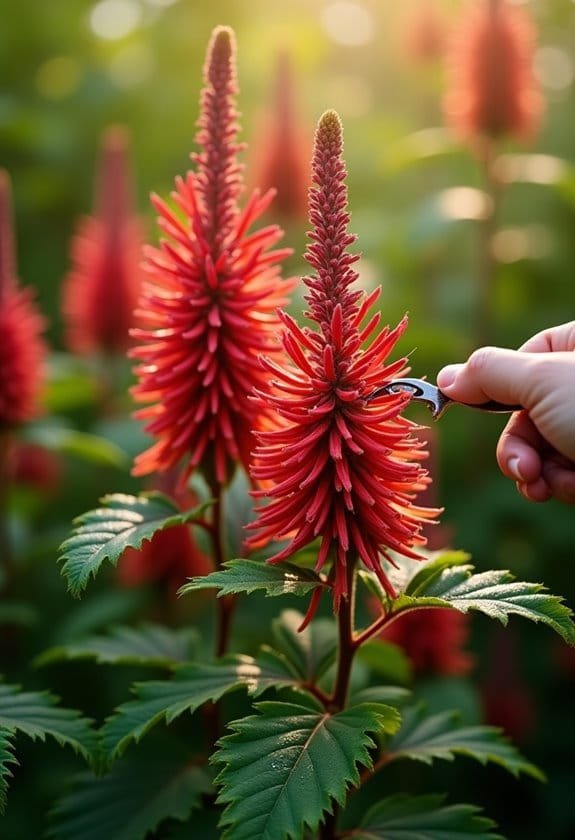
Caring for Monarda didyma involves understanding its specific needs to guarantee thriving, vibrant growth.
It requires rich, well-drained soil enriched with balanced fertilizers and ample moisture, particularly during hotter months, while spacing plants adequately fosters essential air circulation to deter mildew.
Cultivating compatible companions will enhance its appeal and promote a harmonious garden ecosystem, as thoughtful planning yields a lush, thriving landscape.
Planting Tips
When planting Monarda didyma, also known as Red Beebalm, it's essential to choose a site with well-drained, rich soil enriched with organic matter. This perennial plant thrives in environments that receive full sun to partial shade, allowing its vibrant flowers to flourish.
To create an ideal habitat, gardeners should guarantee ample sunlight, while recognizing the plant's tolerance for some shade, which can be critical during particularly hot summers. Adding nitrogen-fixing plants to the garden can improve soil health and support the growth of surrounding species.
Once the site is selected, it's crucial to maintain consistent moisture, as Monarda didyma benefits from regular watering during hot months to prevent stress. Furthermore, spacing Red Beebalm plants approximately 12 inches apart is necessary, as this allows for their aggressive spreading via underground stolons, promoting good air circulation and preventing disease.
Additionally, every 2-3 years, gardeners should consider dividing the plants. This practice not only prevents overcrowding, which can inhibit growth, but it also enhances flowering vigor. Moreover, providing a diverse range of plants, such as nectar-producing species, can support local pollinators that benefit the overall garden ecosystem.
Ongoing Care
To maintain a thriving Monarda didyma, gardeners must guarantee regular watering, especially during dry spells, as these plants prefer consistently moist soil. This is essential during the sweltering summer months, when moisture levels can plummet.
In addition to proper hydration, it's important to prune back spent blooms after flowering. This practice not only encourages additional growth but also prevents the plant from becoming too leggy and unattractive.
Good air circulation around the plant is critical in ongoing care, as it helps mitigate the risk of powdery mildew, a common fungal affliction for beebalm. Gardeners should aim to plant Monarda didyma in a location that fosters airflow among plants.
To further enhance their vigor, mature specimens should be divided every 2-3 years, capturing the essence of rejuvenation while managing their spread.
Finally, early spring fertilization with a balanced fertilizer supports lush foliage and abundant flowering throughout the growing season. Additionally, proper placement in moist soil is vital for sustaining healthy growth, a consideration that applies to many other plants, including Wild Angelica.
Together, these strategies create an engaging environment conducive to health and beauty, ensuring that Monarda didyma flourishes as a vibrant part of the garden landscape, bringing joy and biodiversity to any space.
Suggested Companions
Pairing Monarda didyma with the right companions can enhance both the health and beauty of a garden. Ideal companion plants include native species such as Echinacea purpurea (Purple Coneflower) and Rudbeckia hirta (Black-eyed Susan), which flourish under similar conditions and attract compatible pollinators.
To guarantee ideal growth, it's advisable to maintain a spacing of 24-36 inches between Monarda didyma and its neighbors to combat overcrowding and mitigate the risk of powdery mildew. The Common Poppy can also serve as an interesting companion, adding vibrant color and attracting additional pollinators.
Moreover, incorporating plants like Salvia spp. (Sage) and Achillea millefolium (Yarrow) enriches the aesthetic appeal and promotes biodiversity by luring beneficial insects. Each of these companions thrives in rich, moist soils, mirroring the preferences of Monarda didyma.
During planting, the addition of organic matter can further support these plants' moisture requirements. Silverweed, which is resilient to temperature fluctuations, can also be beneficial as a companion due to its moisture preferences in a garden setting.
Regularly dividing clumps of Monarda didyma every two to three years helps sustain vigor and encourages bushier growth, allowing companion plants to capture adequate sunlight.
Common Issues
Monarda didyma, while a beautiful addition to any garden, faces several common issues that require vigilant attention.
From pests like spider mites and aphids to fungal diseases such as powdery mildew, these problems can markedly hinder the plant's growth and flowering potential.
To maintain its vigor, gardeners mustn't only monitor for these threats but also implement effective strategies like regular inspections and maintaining adequate moisture levels. Additionally, understanding the plant's aggressive growth patterns can help gardeners prevent it from outcompeting other species in the garden.
Pests/Diseases
Red Beebalm (Monarda didyma) faces several common pests and diseases that can impact its health and blooming potential. One concerning disease is powdery mildew, which thrives in humid conditions and manifests as a white, powdery substance on leaves, thereby reducing the plant's vigor. To combat this, proper air circulation is vital.
Additionally, downy mildew can compromise the plant, leading to diminished flower production; selecting resistant cultivars, such as Jacob Cline, can aid in managing this issue effectively.
Among pests, aphids often infest Red Beebalm, sucking sap from the leaves and causing distortion. These tiny insects can lead to significant stress for the plant as they reproduce rapidly. Natural predators like ladybugs can play an important role in controlling their population.
Moreover, spider mites can thrive in dry, dusty conditions, resulting in stippled or discolored leaves, which can weaken the plant. Maintaining adequate humidity and consistent watering practices can prevent these infestations.
While leafcutter bees do exhibit minor leaf damage by cutting pieces for their nests, they generally pose minimal threat to the overall health of Red Beebalm. Addressing these common issues promptly guarantees that this vibrant plant continues to flourish.
Solutions
Addressing common issues with Monarda didyma is vital for maintaining its beauty and vigor in the garden. Solutions begin with managing the plant's susceptibility to powdery mildew, which thrives in overcrowded conditions. Ensuring ample air circulation encourages a healthy environment, minimizing fungal spread.
In addition, regular division every two to three years not only invigorates the plant but also curtails aggressive growth caused by underground stolons.
Another concern for gardeners involves herbivorous host animals, like deer and rabbits. Enhancing the minty aroma of Monarda didyma's leaves can deter these animals, promoting a flourishing garden without the hindrance of unwanted nibbling.
As summer heat intensifies, keeping the soil consistently moist becomes essential for ideal growth and flowering performance. A well-hydrated plant is less susceptible to stress and disease.
Additionally, vigilant monitoring for pests, such as aphids, is imperative. Early detection combined with natural treatments, such as insecticidal soap or neem oil, effectively controls these infestations.
Implementing these thorough solutions cultivates a resilient Monarda didyma, ensuring it remains a vibrant addition to any garden setting.
Summary
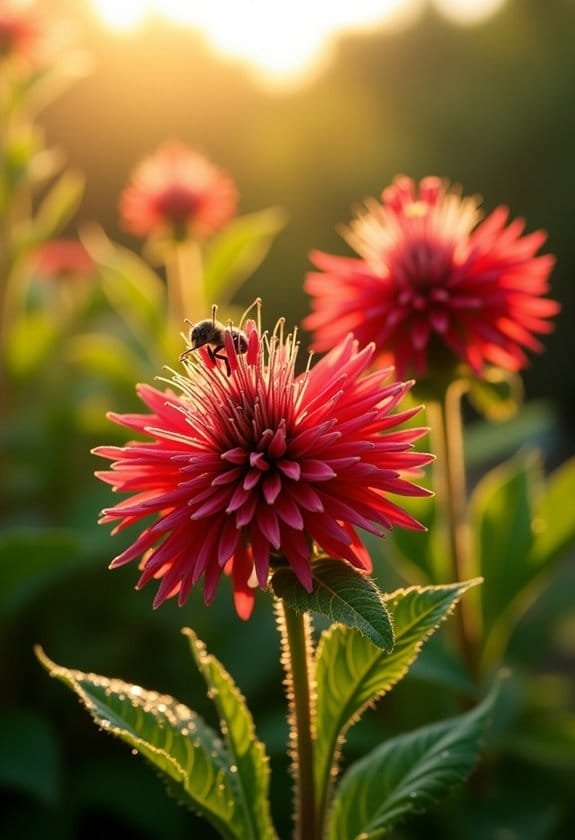
A stunning addition to gardens, Monarda didyma, or Red Beebalm, captivates with its vivid scarlet blooms that appear from July to September. This herbaceous perennial, native to the Appalachian Mountains, typically reaches heights of 2 to 4 feet, thriving in moist, well-drained soils.
It favors full sun but tolerates partial shade, making it adaptable to diverse garden environments.
Monarda didyma plays an essential role in enhancing local biodiversity; its bright flowers attract various pollinators, especially hummingbirds, while serving as a larval host for specific moth species.
These interactions not only enrich the garden ecosystem but also contribute to the overall health of pollinator populations.
Historically, Native Americans recognized the plant's medicinal properties, utilizing its leaves for antiseptic poultices and brewing tea to alleviate mouth and throat infections.
The distinctive foliage, with its minty aroma, adds sensory richness to any setting.
Additionally, Monarda didyma spreads through underground stolons, demonstrating resilience against common garden pests like deer and rabbits, making it an ideal choice for wildlife gardens.