Nemophila menziesii, known as Baby Blue Eyes, is a charming annual herb native to California, Oregon, and Baja California. This adaptable plant thrives in meadows and canyon habitats, reaching heights of 6 to 10 inches while spreading 6 to 12 inches. Its enchanting bowl-shaped blooms, measuring up to 40 mm in diameter, feature vibrant blue petals with contrasting white centers, attracting pollinators like bees and butterflies. Baby Blue Eyes prefers well-drained, nutrient-rich soils and thrives in full sun to part shade. With minimal water needs, it supports local biodiversity by providing essential nectar, enriching ecosystems throughout the growing season. Further insights await on its growth habits and ecological importance.
Main Points
- Nemophila menziesii, commonly known as Baby Blue Eyes, is an annual herb native to California, Oregon, and Baja California.
- It thrives in meadows, sandy to loamy soils, and elevations up to 6,500 feet, preferring full sun to part shade.
- The plant features vibrant blue flowers with white centers and blooms from late winter to early summer, attracting pollinators.
- Baby Blue Eyes is drought-tolerant and requires minimal watering, with rich, well-drained soil for optimal growth.
- It supports biodiversity by providing nectar for pollinators and self-seeds for long-term visual appeal in gardens.
Introduction
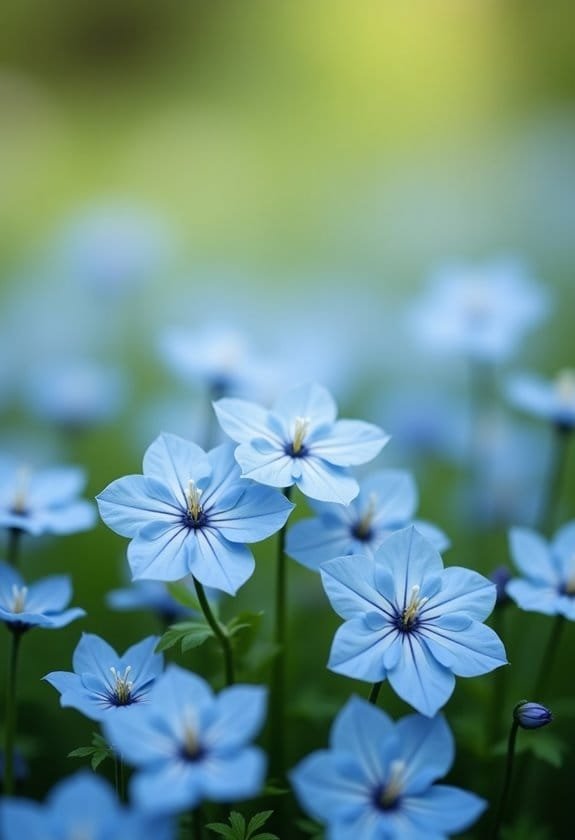
Commonly known as Baby Blue Eyes, Nemophila menziesii is an enchanting annual herb native to the diverse landscapes of California, Oregon, and Baja California.
With its striking cup-shaped flowers, which exhibit an arresting blue hue complemented by delicate white centers, this plant flourishes in various habitats, from serene meadows to rugged canyons.
As it ascends to altitudes of nearly 6,500 feet, Baby Blue Eyes demonstrates remarkable versatility, making it a favored choice for creating vibrant wildflower displays in gardens and natural settings alike.
Common Name
The plant Nemophila menziesii, known by its delightful common name "Baby Blue Eyes," captivates with its stunning cup-shaped blue flowers.
This annual herb, primarily found in California, Oregon, and Baja California, thrives in meadows, grassy areas, and canyons, flourishing at elevations ranging from sea level up to 6,500 feet.
Baby Blue Eyes is characterized by its vibrant blooms, which not only enchant human observers but also attract pollinators with their vivid blue hues and striking white centers.
Typically blooming in spring, Baby Blue Eyes features distinctive foliage, including lobed, hairy leaves that enhance its delicate overall appearance.
The plant's growing habit reaches heights of 6 to 10 inches, making it a charming addition to any landscape.
Various color forms of Nemophila menziesii exist, with the most notable being var. atomaria, renowned for its nearly white flowers, and var. integrifolia, which displays deeper blue shades.
Scientific Name
Known scientifically as Nemophila menziesii, Baby Blue Eyes belongs to the Boraginaceae family. This enchanting annual herb is characterized by its stunning bright blue, bowl-shaped flowers, which typically measure between 6 and 40 millimeters wide. They feature distinct black dots and vibrant veins that enhance their visual appeal, attracting numerous pollinators.
The species name "menziesii" pays homage to the Scottish botanist Archibald Menzies, whose explorations greatly enriched our understanding of North American flora. Within Nemophila menziesii, three recognized varieties exist: var. atomaria, var. integrifolia, and the eponymous var. menziesii. Each variety showcases unique flower colors and demonstrates distinct ecological preferences, allowing it to thrive in diverse environments.
Notably, Nemophila menziesii adapts well to elevations ranging from sea level up to approximately 6,500 feet, showcasing its resilience and versatility. This adaptability indicates its capacity to flourish in various habitats, making it an intriguing subject of study for botanists and gardeners alike.
Such features guarantee Baby Blue Eyes not only enchants observers but also holds ecological importance within its native ranges.
Overview
Native to California, Oregon, and Baja California, Nemophila menziesii, or Baby Blue Eyes, captivates with its striking blossoms and ecological adaptability. This annual herb thrives in a variety of habitats, including meadows and canyons, flourishing at elevations ranging from sea level to nearly 6,500 feet.
Characterized by its variable bright blue flowers, often featuring white centers with black dots, Baby Blue Eyes bursts into bloom during the spring, considerably enhancing the aesthetic appeal of gardens and wildflower meadows.
Remarkably, the plant prefers sandy to loamy soils with a pH range of 6.0 to 8.0 and requires minimal water, making it an excellent choice for water-conserving gardening practices. Different varieties of Nemophila menziesii, such as var. atomaria, produce nearly white flowers, while var. integrifolia showcases deeper blue hues, contributing to the plant's ornamental diversity.
Admired for its attractiveness to pollinators, ease of establishment from seed, and potential for self-seeding in landscape settings, Baby Blue Eyes is increasingly popular among gardeners.
Its resilience and beauty provide not only a stunning visual but also support local ecosystems, demonstrating the harmonious relationship between aesthetics and environmental stewardship.
Key Features
Nemophila menziesii, often referred to as Baby Blue Eyes, showcases a modest growth size, typically reaching heights of about 6 to 10 inches.
Its enchanting bowl-shaped flowers, bright blue with distinctive white centers, bloom from late winter through early summer, painting the landscape and inviting pollinators like butterflies.
With small, lobed, hairy leaves, this annual herb offers an elegant ground cover, thriving in a variety of soil types and elevating natural beauty wherever it grows.
Growth Size
For those looking to add a charming touch to their gardens, Baby Blue Eyes boasts a compact growth size that makes it a delightful addition. Typically, Nemophila menziesii grows to a height of 6-10 inches (15-25 cm), with a spread ranging from 6-12 inches (15-30 cm). This modest stature allows it to fit neatly into flower beds and borders, creating a delicate carpet of vibrant color.
The plant's compact growth size is ideal for smaller spaces, where it can flourish without overwhelming its surroundings. Additionally, the annual herb is adept at self-seeding, enabling it to create a self-sustaining cover over time.
This feature highlights its resilience and adaptability, particularly in USDA hardiness zones 2-11, where it thrives in cool summer climates.
The leaf structure enhances the plant's overall aesthetic, with lower leaves being lobed and stalked, measuring between 10-50 mm (0.4-2.0 inches), while upper leaves appear less lobed and sessile.
The careful balancing of these elements guarantees that Baby Blue Eyes remains an enchanting, low-maintenance choice for any garden enthusiast.
Appearance
In gardens, Baby Blue Eyes enchants with its bright blue flowers, standing out as a cheerful beacon among greenery. The vivid blossoms, measuring between 6 and 40 mm (0.2 to 1.6 inches) in diameter, are adorned with delicate blue veins and striking black dots, creating an enchanting visual. Among its variations, the nearly white flowers of the var. atomaria provide intriguing contrast, enriching the landscape.
The foliage further enhances the plant's appeal, characterized by lower leaves that are stalked, lobed, and oppositely arranged, while the upper leaves are sessile with minimal lobing. This unique leaf structure contributes to the plant's overall aesthetic, resembling intricately designed green lace woven beneath the radiant blue eyes.
Typically growing to a modest height of 6-10 inches (15-25 cm), Nemophila menziesii serves as a low and delicate ground cover, inviting gentle breezes to dance through its charming display.
Each flower is elevated by an inflorescence stalk that ranges from 20 to 60 mm (0.8 to 2.4 inches) long, ensuring that these charismatic blooms rise gracefully above its lush foliage. Together, these features create a mesmerizing visual experience in any garden setting.
Flowering Season
With its enthralling appearance established, the flowering season of Baby Blue Eyes takes center stage from late winter to early summer, varying by regional climate. Typically, these enchanting flowers emerge during cooler temperatures, thriving best when conditions stay below 70°F.
The blooms, characterized by their cup-shaped, bright blue petals adorned with white centers, measure approximately 1.5 inches (4 cm) across, creating a striking display in any garden.
During this vibrant season, Baby Blue Eyes actively attracts a variety of pollinators, such as butterflies, drawn to its vivid blossoms. Each flower unfurling contributes to the plant's display of dazzling color, which can transform landscapes into enchanting vistas of blue.
Varietal differences also play a significant role in the timing of flowering. Certain adaptations to specific habitats or elevations can result in some varieties of Baby Blue Eyes blooming earlier or later, showcasing nature's incredible diversity.
Understanding the nuances of the flowering season not only enhances one's appreciation for this charming plant but also underscores the importance of conditions that nurture its remarkable beauty.
Ultimately, Baby Blue Eyes embodies the ephemeral joy of springtime, inviting all who behold it to pause and admire nature's artistry.
Growing Requirements
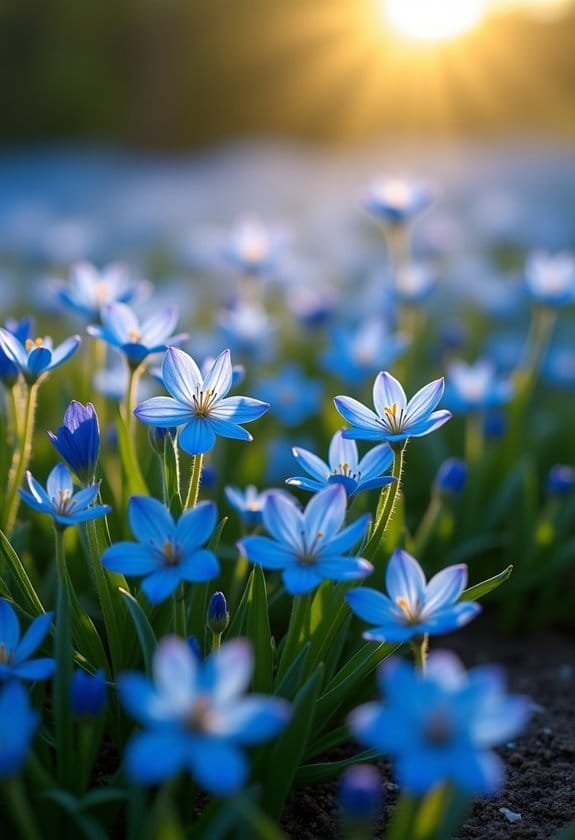
Growing Nemophila menziesii successfully hinges on understanding its specific environmental needs.
This hardy annual flourishes in full sun to part shade and requires fertile, moist, well-drained soils to thrive, making soil composition essential for vibrant growth.
Temperature plays a pivotal role as well, with germination necessitating cool conditions below 70°F, ensuring these delicate blue flowers can flourish across varied climates.
Light
Nemophila menziesii flourishes in bright environments, thriving in full sun to part shade. This plant prefers at least six hours of direct sunlight each day, particularly in cooler climates where it achieves ideal growth. Exposure to adequate light not only supports the health of this species but also enhances the vivid blue hue of its charming cup-shaped flowers, making them particularly alluring to pollinators such as bees and butterflies.
While it can tolerate some shade, excessive darkness can inhibit flowering, resulting in leggy growth that detracts from its natural beauty. The balance of light is vital, as it directly influences the blooming period—these delightful flowers typically grace gardens from late winter to early summer, depending on their light conditions.
In essence, providing Nemophila menziesii with the right light conditions is pivotal for its flourishing. The vibrant blossoms serve not only as a feast for the eyes but also play an essential role in local ecosystems, attracting beneficial insects.
Therefore, understanding and enhancing light exposure will foster a healthy, visually stunning addition to any garden, enriching both its aesthetic and ecological value.
Soil
Healthy light exposure pairs with the right soil conditions to support Nemophila menziesii's growth and vibrancy. This delightful plant thrives best in sandy to loamy soils, which have a preferred pH range of 6.0 to 8.0. Such soil compositions guarantee that the roots receive essential nutrients while providing adequate drainage.
Well-drained, fertile soils are vital, as they retain moisture yet avoid waterlogging—this balance allows for peak development without the risk of root rot.
When establishing Baby Blue Eyes from seed, planting in these ideal soil conditions simplifies the process, allowing for vigorous growth. While their low water requirements might seem advantageous, the importance of regular checks on soil moisture can't be overstated.
Nemophila menziesii flourishes in cooler, moist environments, making them less suited for hot and humid conditions, which can stress the plant and hinder its performance.
Water
Water management is essential for the successful growth of Nemophila menziesii. This charming plant, known as Baby Blue Eyes, thrives in well-drained soils and requires minimal water, making it an excellent choice for gardens emphasizing water conservation.
While it prefers moist conditions, once established, it can survive with limited watering. During the germination phase, consistent moisture greatly enhances seedling establishment, ensuring a robust start for these delicate plants.
However, caregivers must maintain soil moisture without succumbing to waterlogging, as excess water can harm their delicate root systems, inhibiting growth and blooming potential. Optimal watering practices should be tailored to local climate conditions; in hot and humid environments, it's vital to avoid overwatering, which can negatively impact plant health.
Regularly checking soil moisture levels can help gardeners gauge the precise water needs of Nemophila menziesii, thereby fostering vibrant blooms. By attentively managing water resources, one can cultivate a flourishing environment where these lovely blue flowers can thrive, providing a spectacular display while supporting sustainable gardening practices.
Temperature
The delicate blooms of Baby Blue Eyes flourish best in cool temperatures, which are vital for their growth and development. Nemophila menziesii thrives within a specific temperature range; the coldest month ideally averages between 28.2°F and 54.4°F, while the warmest can reach approximately 49.8°F to 83.3°F. Germination occurs most effectively around 59°F or lower, particularly in darkness for the initial three days, which mimics its natural habitat's conditions.
This species demonstrates a remarkable adaptability, as it can thrive from sea level up to about 6,500 feet in elevation, proving its suitability for diverse environments. However, it's important to avoid extremes in temperature, especially hot and humid conditions that can stifle its growth.
Baby Blue Eyes prefers cool summers, which enhance its resilience and vibrancy.
Moreover, the plant tolerates humidity levels ranging from 0.31% to 34.53%, which aids its establishment across various climates.
Fundamentally, understanding and optimizing the temperature for Baby Blue Eyes will foster a flourishing display of its enchanting azure blooms, fulfilling its potential as a alluring addition to any garden.
Pollinator Criteria
Nemophila menziesii attracts a variety of pollinators, including butterflies and bees, thanks to its vibrant blue flowers.
These bowl-shaped blossoms, blooming in spring, serve as an inviting landing platform, facilitating effective pollination through mechanisms like nectar rewards and visual cues. The plant's ability to thrive in cool, loamy soil ensures that it provides reliable food sources for pollinators throughout its blooming period, similar to how Water Forget-Me-Not supports wetland ecosystems.
The plant's strategic growth in lightly shaded areas not only provides essential resources for these pollinators during their active seasons but also enhances overall habitat health, sustaining ecological balance. Additionally, like Salad Burnet, its nectar and pollen sources contribute to the stability of garden ecosystems, supporting relationships with local fauna.
Attracted Pollinators
Brightly colored flowers often attract a variety of pollinators, and Baby Blue Eyes is no exception. These delicate blooms, scientifically known as Nemophila menziesii, are especially favored by bees and butterflies due to their vibrant blue petals. The flowers possess distinct adaptations, including blue veins and small black dots, which act as visual cues, guiding these crucial insects toward their nectar-rich centers.
Blooming in spring, Baby Blue Eyes plays a significant role in enhancing biodiversity by providing critical food resources during a time when pollinator populations are most active. Its low growth habit allows it to flourish in wildflower meadows, creating ideal habitats that promote diverse pollinator interactions. Additionally, plants like Baby Blue Eyes are important for attracting vital nectar sources, which further supports various pollinator species. The blooms occur during the same season as Clematis vitalba, which also offers important nectar resources for local pollinators.
By thriving alongside companion plants like California Poppy, Baby Blue Eyes noticeably contributes to a rich ecosystem, thereby fostering an environment conducive to various pollinator activities.
Pollinators, such as different species of bees and colorful butterflies, rally around these pretty flowers, creating a bustling scene in nature. By supporting these essential creatures, Baby Blue Eyes not only enriches the landscape but also guarantees the continued health of local ecosystems, highlighting its importance as a flowering plant in conservation efforts.
Pollination Method
While many flowers rely on wind for pollination, Baby Blue Eyes employs a method that heavily depends on its visitors—pollinators like bees and butterflies. The vivid blue flowers, adorned with a striking white center and delicate blue veins, act as natural signposts, helping pollinators locate the nectar plentifully available during spring's bloom. This vibrant color scheme not only captivates the eye but also efficiently guides pollinators toward the reproductive structures, encouraging effective pollination.
Pollination in Nemophila menziesii typically occurs when these insects visit multiple flowers, transferring pollen from one bloom to another, thereby increasing genetic diversity within the population.
The flower's annual life cycle contributes to its adaptability, allowing it to thrive in various habitats, from coastal regions to lush meadows. Each successful pollination event subsequently leads to the formation of seeds, creating an ongoing cycle of rejuvenation, as the plant self-seeds for future generations.
Significantly, Baby Blue Eyes offers an essential food source for its insect visitors, forming a critical link within the ecosystem. These symbiotic relationships highlight the significance of preserving such species for maintaining ecological balance and supporting biodiversity across different environments.
Care & Maintenance
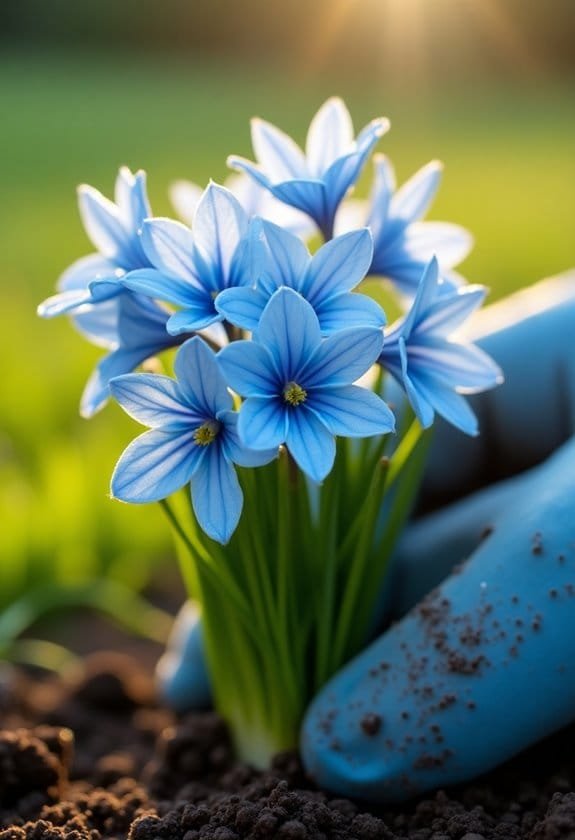
When cultivating Baby Blue Eyes (Nemophila menziesii), it's crucial to take into account ideal planting techniques and ongoing care for remarkable growth.
This beautiful annual thrives in a range of conditions, flourishing in well-drained, nutrient-rich soil, and it often self-seeds, creating a lush tapestry of color over time; consequently, gardeners need minimal intervention for maintenance.
Selecting suitable companion plants can enhance the garden's biodiversity while contributing to the overall health and vigor of these charming blossoms.
Planting Tips
For those looking to cultivate the beauty of Nemophila menziesii, proper planting techniques are vital. This enchanting plant, commonly known as Baby Blue Eyes, flourishes in well-drained, fertile, moist soil, ideally with a pH ranging from 6.0 to 8.0. When selecting a location, one should aim for areas receiving full sun to part shade, as these conditions promote peak growth.
Sowing seeds outdoors is best accomplished in late fall or early spring, taking care to guarantee soil temperatures remain cool, ideally around 59°F, for the first three days to encourage germination.
Once established, Baby Blue Eyes require minimal watering, making them an excellent choice for low-maintenance gardens. It's important to regularly inspect for common pests such as aphids and to monitor for powdery and downy mildew, which can compromise plant health.
Encouraging self-seeding by allowing spent flowers to remain enhances the plant's presence in the landscape, creating a lively and enduring display.
With these thoughtful planting tips, gardeners can yield stunning results from their Blue Eyes, transforming any space into a delightful retreat of color.
Ongoing Care
Ongoing care for Nemophila menziesii is vital to guarantee vibrant blooms and healthy growth. Once established, this plant thrives in well-drained soils with regular moisture, but it's important to avoid waterlogging. It adapts to full sun or part shade, enhancing its versatility in various garden settings.
Regular maintenance includes monitoring for pests—particularly pests like aphids and white mildew—which, while rarely serious, can affect plant health. Routine checks should be conducted, allowing for early intervention if necessary. Despite being relatively low-maintenance, keeping an eye out for these issues makes certain the plant remains vigorous.
The self-seeding nature of Baby Blue Eyes allows for natural expansion, enriching the landscape without demanding excessive effort from gardeners. Optimal watering practices involve making sure soil remains consistently moist without becoming soggy.
The flowering period, typically in spring, benefits immensely from proper ongoing care, as it encourages a succession of blooms. Finally, performing annual sowing in suitable hardiness zones (2-11) facilitates continuous growth, assuring that this delightful flower not only survives but thrives throughout the seasons, exhibiting its charming blue hues for years to come.
Suggested Companions
Pairing Baby Blue Eyes (Nemophila menziesii) with companion plants can greatly enhance a garden's biodiversity and visual appeal. In California, this native plant thrives alongside California Poppy (Eschscholzia californica) and Clarkia spp., creating vibrant wildflower meadows.
These combinations not only enrich biodiversity but also attract essential pollinators like butterflies, fostering a dynamic ecological environment.
Sidalcea spp. and Brodiaea spp.—geophytes—add varied textures and colors, enhancing the overall aesthetic. The diverse blooms create a delightful visual tapestry that pleases the eye.
Incorporating Dudleya spp. (succulents) alongside Baby Blue Eyes introduces attractive contrasts while providing water-saving benefits. Such pairings optimize garden maintenance, as these plants share similar low water requirements, streamlining care in native plant gardens.
Moreover, the gentle blue hues of Baby Blue Eyes beautifully complement more vivid flowers, resulting in an enchanting display.
This thoughtful approach to companion planting encourages a thriving ecosystem within the garden, proving beneficial not only to the plants but also to the local fauna.
Ultimately, by selecting the right companions, one can cultivate a lush, inviting landscape that celebrates both beauty and function.
Common Issues
Common issues affecting Nemophila menziesii, or Baby Blue Eyes, often arise from pests and diseases that require vigilant management.
Aphids may infiltrate these delicate plants, necessitating monitoring to prevent significant damage, while the threat of powdery and downy mildew looms in humid conditions, underscoring the importance of air circulation.
Effective solutions, such as employing insecticidal soaps or adjusting watering techniques, can enhance the resilience of Baby Blue Eyes, ensuring their vibrant presence in gardens.
Pests/Diseases
While Baby Blue Eyes (Nemophila menziesii) is generally resilient, it can encounter a few pests and diseases. Among the most common pests are aphids, small but voracious insects that suck essential nutrients from leaves, potentially stunting growth and affecting overall plant health.
Although the impact may not be severe, monitoring is vital to prevent population explosions.
Additionally, two notable diseases can arise under specific conditions. Powdery mildew may develop in overly humid environments, especially when air circulation is poor, leading to a powdery, white coating on leaves.
Downy mildew presents another concern, preferring damp conditions, which can undermine plant vigor. Good drainage and proper spacing between plants are important measures to mitigate this risk.
Regular monitoring of these pests and diseases can greatly enhance the health of Baby Blue Eyes. Though they require minimal maintenance once established, attentive care guarantees that these delightful blossoms continue to flourish.
Solutions
To guarantee the vibrant blooms of Baby Blue Eyes (Nemophila menziesii) thrive, gardeners can implement several effective strategies to tackle common issues. Ideal germination occurs under cool conditions, ideally below 70°F, and in darkness for the first three days. Consequently, starting seeds indoors before the last frost can greatly enhance the initial success rate, ensuring robust blue eyes for the upcoming garden.
Additionally, nurturing these delicate plants in sandy to loamy soils with a pH between 6.0 and 8.0 is essential, as it fosters proper root development and overall plant health. Given Baby Blue Eyes' low water requirements, this resilient flower flourishes in drought-tolerant landscapes, making it an ideal choice for environmentally conscious gardeners. The plant also benefits from good sunlight exposure, akin to how Horseshoe Vetch thrives in well-drained calcareous soils.
Regular monitoring for pests, such as aphids, and diseases, including powdery mildew, is advisable despite the rarity of severe infestations. Moreover, keeping an eye on competition from other aggressive plants in the garden can help promote optimal growth conditions for Baby Blue Eyes.
Summary
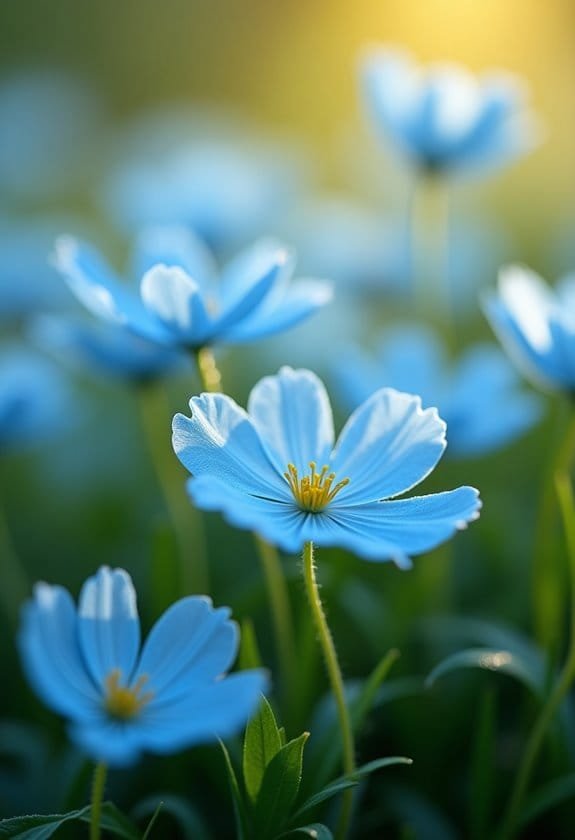
Beloved for its striking blue flowers, Nemophila menziesii, or Baby Blue Eyes, is an annual herb that thrives in the meadows and grassy areas of California, Oregon, and Baja California. This enchanting plant flourishes at elevations reaching up to 6,500 feet, showcasing variability in flower color; while most exhibit delightful bright blue hues, the variety atomaria reveals nearly white blossoms, often found adorning coastal bluffs.
Baby Blue Eyes is well-suited for sandy to loamy soils, preferring a pH range of 6.0 to 8.0, and it establishes effortlessly from seeds sown during the cooler late fall or early spring months. Its resilience to diverse climatic conditions allows it to flourish with minimal water, benefiting from full sun to partial shade as it blooms vibrantly from late winter to early summer.
In addition to its aesthetic appeal, Baby Blue Eyes attracts various pollinators, making it a valuable asset in gardens. Its compatibility with other native Californian flora, such as the iconic California Poppy, enriches the biodiversity of any landscape, enhancing both beauty and ecological health.