Nigella damascena, or Love-in-a-Mist, captivates with its enchanting blooms and distinctive seed pods, flourishing in regions from southern Europe to Southwest Asia. This hardy annual, reaching heights of 12 to 24 inches, boasts vibrant flowers in hues of blue, white, pink, or lavender. Thriving in full sun and well-drained soil, it requires minimal care after establishment, with proper watering essential for ideal blooming. Its unique balloon-shaped seed pods, holding culinary and medicinal value, continue to charm post-bloom. As a favorite among pollinators like bees, Love-in-a-Mist enriches gardens ecologically and aesthetically; there's even more to discover about its fascinating attributes.
Main Points
- Nigella damascena, commonly known as Love-in-a-Mist, features vibrant blooms in various colors like blue, white, and pink.
- This hardy annual grows 12 to 24 inches tall and thrives in full sun with well-drained, fertile soil.
- It can be directly sown; germination occurs within 2-3 weeks under optimal soil temperatures of around 60°F (15°C).
- The plant attracts pollinators and produces unique balloon-shaped seed pods, which hold culinary and medicinal value.
- Love-in-a-Mist blooms from late spring to early summer, providing continuous visual interest and supporting local biodiversity.
Introduction
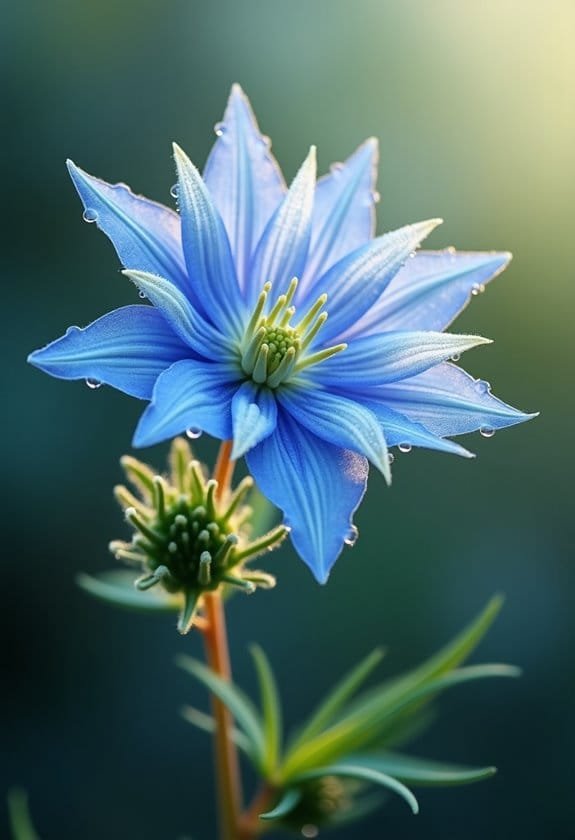
Known commonly as love-in-a-mist, Nigella damascena captivates with its ethereal blossoms and intricate foliage.
This hardy annual, native to southern Europe and northern Africa, reaches heights of 12 to 24 inches, showcasing vibrant blue, white, or pink flowers from late spring to early summer.
Beyond its striking appearance, this plant's unique seed pods, resembling small green balloons, not only enhance visual intrigue but also hold culinary and medicinal value, particularly in Middle Eastern cuisine.
Common Name
The charming flowering plant Nigella damascena is widely recognized by the common name "Love-in-a-Mist," due to its enchanting blooms surrounded by intricate, lacy foliage.
This name evokes a romantic image, suggesting how the flowers appear to emerge from a delicate fog formed by their own leaves. Love-in-a-Mist is celebrated for its flowers, which blossom in vibrant shades of bright blue, white, pink, or lavender during late spring to early summer, enthralling garden enthusiasts and casual observers alike.
Additionally, this plant holds alternative names such as Ragged Lady or Emir of Buchara, reflecting its diverse cultural significance and aesthetic appeal across various regions.
The remarkable structure of Love-in-a-Mist's blooms, coupled with the striking balloon-shaped seed pods it produces, adds visual interest even after the flowering period has concluded.
These seed pods, adorned with a unique sculptural quality, continue to engage the viewer's attention, making Nigella damascena a treasured addition to ornamental gardens.
Therefore, Love-in-a-Mist not only enchants with its foliage and flowers but also offers enduring beauty throughout the seasons, creating a delightful haven in any garden setting.
Scientific Name
Nigella damascena, commonly referred to as Love-in-a-Mist, displays its enchanting blooms under a scientific name rooted in rich history. The genus name "Nigella" originates from the Latin word "niger," meaning black, a reference to the striking black seeds that characterize this plant. This distinctive nomenclature highlights the importance of these seeds in identifying the species.
The species name "damascena" signifies a historical association with Damascus, Syria, where this plant was presumably cultivated or recognized for its beauty and utility.
Belonging to the Ranunculaceae family, widely acknowledged as the buttercup family, Nigella damascena thrives in various regions, primarily native to southern Europe, northern Africa, and Southwest Asia. This plant's adaptability allows it to flourish in diverse environments, showcasing its resilience and charm in gardens and natural landscapes alike.
The scientific name not only classifies the plant within botanical domains but also serves as a gateway to understanding its ecological significance, cultural heritage, and potential medicinal properties. This intricate web of scientific nomenclature provides insights into the historical journey of Love-in-a-Mist, connecting it deeply to various cultures and regions throughout time.
Overview
Displaying a blend of beauty and resilience, Love-in-a-Mist fascinates gardeners and plant enthusiasts alike. Known scientifically as Nigella damascena, this hardy annual flourishes in southern Europe, northern Africa, and Southwest Asia.
Typically reaching a height of 15-24 inches, it showcases intricately cut, feathery foliage reminiscent of fennel, contributing to its delicate appearance. The plant produces striking flowers in shades of blue, white, or pink, each measuring approximately 1½ inches in diameter, blooming enchantingly from late spring to early summer.
Once the flowering period concludes, Love-in-a-Mist generates unique, balloon-shaped seed pods that twist in intriguing formations, often exhibiting purple or bronze stripes. These seed pods not only provide visual interest but also play an essential role in the plant's propagation, as they self-seed effortlessly.
This remarkable quality guarantees that these delightful plants grow consistently in gardens with minimal maintenance, highlighting their adaptability and resilience.
As such, Love-in-a-Mist offers a fascinating blend of aesthetic appeal and ecological functionality, making it a cherished companion in diverse gardening schemes, proving that natural beauty often intertwines with practicality.
Key Features
Nigella damascena, commonly known as Love-in-a-Mist, showcases an impressive growth size, reaching heights of 15 to 24 inches.
Its delicate, finely cut foliage and vibrant flowers, which can be deep blue, pale blue, white, pink, or lavender, add charm to any garden.
This hardy annual flowers from late spring to early summer and, when sown in succession, promises an ongoing display of beauty throughout the season.
Growth Size
At maturity, Love-in-a-Mist typically grows to a height between 15 and 24 inches, with a spread of up to 12 inches. These dimensions make it an appealing choice for various garden settings, offering both presence and substance without overwhelming surrounding plants.
The growth habit of Nigella damascena is well-suited to a range of landscapes, enhancing visual interest with its delicate foliage and unique form.
The plant features finely cut, bright green leaves that resemble those of fennel, contributing textural variety to garden compositions. This textured foliage beautifully frames the plant's striking flowers, which bloom primarily in shades of blue but may also appear in white, pink, or lavender.
As the season progresses, Love-in-a-Mist cultivates balloon-shaped seedpods that can grow up to 2 inches long, often exhibiting eye-catching striped patterns in purple or bronze.
Due to its long taproot, Love-in-a-Mist displays a sensitivity to transplantation. Therefore, gardeners should sow seeds directly in the desired location to guarantee ideal growth, maximizing the plant's potential and enabling it to adapt effectively to its environment.
Appearance
Gracefully rising from the garden, Love-in-a-Mist, or Nigella damascena, boasts intricate, feathery leaves that resemble delicate fern foliage, adding a touch of elegance to any planting scheme.
This charming plant typically reaches heights of 15 to 24 inches and extends up to 12 inches wide, making it ideal for borders and garden beds.
The plant's enchanting blooms, measuring approximately 1½ inches across, display a mesmerizing range of colors. Particularly, bright and deep blue hues dominate, although pale blue, white, pink, and lavender varieties occasionally grace the scene, enriching the garden with diversity.
Each flower features five petal-like sepals that create a unique layered appearance, enhancing its ornamental appeal.
As the bloom period concludes, Nigella damascena transforms into a fascinating visual treat with its distinctive balloon-shaped seed pods.
These pods can reach up to 2 inches in length, often adorned with striking purple or bronze stripes, serving as an illustration of the plant's enduring beauty.
Consequently, Love-in-a-Mist not only enchants with its ephemeral flowers but continues to offer aesthetic charm long after its blooms have faded.
Flowering Season
The beauty of Love-in-a-Mist unfolds from late spring to early summer, when its enchanting flowers take center stage. Typically, the flowering season commences about 65-70 days after planting, marking a time of vibrant blossoming in gardens.
Each flower, measuring approximately 1½ inches across, captivates with five petal-like sepals, showcasing a dazzling array of colors that can include bright blue, pale blue, white, pink, or lavender. These intricate blooms, surrounded by delicate foliage, create a stunning display, drawing the eye of passersby.
To prolong this floral spectacle, gardeners often sow seeds every three weeks during the ideal planting times in early spring and fall. This strategy guarantees a continuous parade of flowers throughout the growing season, enhancing their ornamental value.
After flowering, balloon-shaped seed pods develop, providing visual interest even after the petals have fallen, further extending the plant's appeal within the landscape.
Growing Requirements
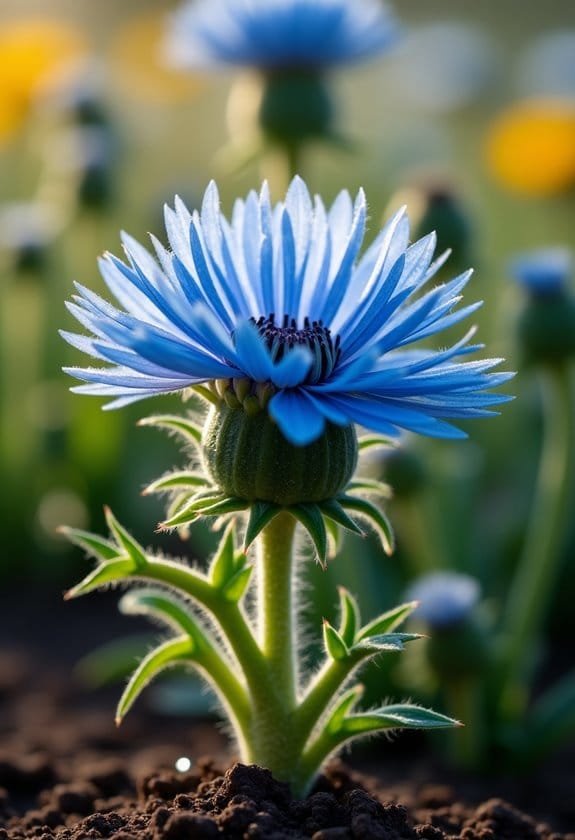
Nigella damascena, commonly known as Love-in-a-Mist, flourishes under full sun and thrives in well-drained, fertile soil with a neutral to slightly alkaline pH.
For ideal growth, gardeners should sow seeds at a depth of ⅛ inch when soil temperatures hit 60°F, ensuring consistent moisture while avoiding waterlogged conditions.
As seedlings emerge, thinning them to 8-10 inches apart promotes better air circulation, fostering robust plant development as they shift from delicate sprouts to vibrant blooms.
Light
How essential is sunlight for Love-in-a-mist's growth? Sunlight is critical, as this vibrant plant requires full sun to truly thrive. Ideally, it should receive at least six hours of direct sunlight daily to achieve peak growth and abundant blooming. In bright sunny locations, the stunning flowers flourish, exhibiting their full splendor.
Although love-in-a-mist can tolerate partial shade, it's clear that maximum blooms and the healthiest plants develop under prime lighting conditions. This flowering annual prefers outdoor growth instead of indoor placement, which can restrict light exposure and reduce air circulation.
When cultivated in full sun, love-in-a-mist not only benefits from improved light but also adapts well to various soil types, whether sandy or clay, as long as they're well-draining. It's important to maintain consistent moisture, particularly during dry spells, ensuring the soil doesn't become overly saturated.
Once established in a sunny environment, love-in-a-mist thrives in relatively dry conditions, showcasing its ability to adapt and flourish. Consequently, selecting the right location with abundant sunlight greatly impacts the overall health and vibrancy of this enchanting plant.
Soil
Proper soil conditions are crucial for love-in-a-mist's successful growth, as this charming plant thrives in well-drained, fertile soil. Ideally, the soil can range from sandy to loamy or even clay types, providing versatility in cultivating this resilient flower.
While love-in-a-mist does prefer fertile soil, it can adapt effectively to less-than-ideal conditions, which makes it an excellent choice for various gardeners.
To guarantee peak growth, care should be taken when sowing seeds. Covering the seeds with approximately 1/8 inch of soil protects them during the delicate germination process. Maintaining soil temperatures around 60°F greatly enhances the likelihood of successful germination, allowing the plant to establish its roots firmly.
Although consistent moisture is crucial, especially during dry spells, it's important to avoid overwatering. Excess water can lead to root rot, threatening the health of the plant.
Love-in-a-mist, with its capacity to thrive in average soil conditions, truly embodies nature's ability to adapt and flourish. By providing the right environment, gardeners can enjoy this alluring flower's beauty year after year.
Water
Consistent moisture is crucial for love-in-a-mist to thrive and reach its full blooming potential. These delicate flowers flourish in well-drained soil that retains adequate moisture, particularly during periods of drought.
Gardeners should guarantee deep watering occurs regularly, but they must avoid saturation, as excess moisture can lead to detrimental root rot. Prior to sowing, it's essential to hydrate dry ground thoroughly to create ideal conditions for effective seed germination.
Once love-in-a-mist becomes established, it exhibits a remarkable resilience, displaying the ability to tolerate brief droughts. However, supplemental moisture during the growing seasons, especially in spring and fall, greatly enhances the overall health of the plants.
Regular watering not only encourages robust growth but also contributes to a more abundant and vibrant display of blooms.
Maintaining soil moisture—especially during dry spells—allows the plant to channel its energy toward creating an impressive array of ethereal blossoms.
To guarantee gardening success, attentiveness to water requirements establishes a nurturing habitat, ultimately leading to an exquisite and flourishing love-in-a-mist garden, full of charm and allure.
Temperature
Love-in-a-mist (Nigella damascena) thrives best in a temperature range of 65-72°F (18-22°C), making spring and fall the perfect seasons for planting.
This delightful plant showcases a unique resilience, as it's frost-tolerant; it can withstand cooler temperatures, effectively extending its growing season beyond what many annuals can withstand.
Seeds germinate within 2-3 weeks when soil temperatures reach about 60°F (15°C), facilitating early emergence that sets the stage for abundant blooms.
To enhance flowering potential, gardeners can employ a staggered planting method, introducing seeds at three-week intervals.
This approach guarantees that love-in-a-mist receives the moderate temperatures perfect during its growing season, thereby promoting continuous blooming throughout its life cycle.
While the plant exhibits some adaptability to partial shade, it fundamentally requires full sunlight to achieve its prime growth and vibrant flowering, translating sunlight into energy, which nourishes the plant.
Pollinator Criteria
Nigella damascena, commonly known as love-in-a-mist, serves as a vibrant attraction for various pollinators, particularly bees and butterflies, thanks to its colorful blooms.
These delicate flowers employ a strategy of open pollination, which not only promotes genetic diversity but also enables adaptability across different environments; this is vital for sustaining healthy ecosystems.
As nectar-rich blooms emerge from late spring to early summer, they provide essential resources for pollinators, fostering increased garden biodiversity and productivity through effective pollination activities.
Attracted Pollinators
How does Nigella damascena entice a diverse array of pollinators to its blooms? This exquisite plant, commonly known as Love-in-a-Mist, captivates bees and butterflies with its vibrant flowers, which display hues ranging from brilliant bright blue to delicate white and pink.
Each bloom produces generous amounts of nectar, attracting these beneficial insects enthusiastic for nourishment during their active foraging periods.
The blooming season of Love-in-a-Mist extends from late spring to early summer, aligning perfectly with when numerous pollinators seek food sources. This strategic timing increases the likelihood of successful pollination, fostering a thriving ecosystem.
Furthermore, the plant's airy, feathery foliage not only enhances its aesthetic appeal but also serves as shelter and habitat for these industrious insects, providing protection from predators and adverse weather conditions.
The self-seeding nature of Nigella damascena further promotes ongoing pollinator visits by ensuring an ample supply of blossoms year after year.
This continual availability of flowers not only supports local bee and butterfly populations but also underscores the crucial role such plants play in maintaining ecological balance.
Ultimately, Love-in-a-Mist creates a harmonious environment, essential for nurturing diverse pollinator communities.
Pollination Method
The pollination process of Nigella damascena relies heavily on a variety of pollinators, particularly bees and butterflies that are drawn to its unique floral structure.
These beautiful flowers bloom from late spring to early summer, coinciding with the peak activity of foraging pollinators, which increases their chances of successful pollination. Their exquisite shapes and vibrant colors act as visual cues, enchanting pollinators and inviting them to feed on the abundant nectar produced.
As pollinators visit the flowers, they unwittingly transfer pollen from one bloom to another, promoting cross-pollination. This crucial interaction not only guarantees successful reproduction but also contributes to the genetic diversity of the species, which is essential for its resilience.
Following successful pollination, Nigella damascena develops distinctive seed pods, notable for their ornamental appeal. These pods contain seeds that can self-seed effectively, creating new plants.
Ultimately, the relationship between planting and pollinators underlines the importance of biodiversity in maintaining healthy ecosystems.
Protecting these pollinators not only sustains the lifecycle of Nigella damascena but also supports a wealth of other flora and fauna dependent on similar interactions.
Care & Maintenance
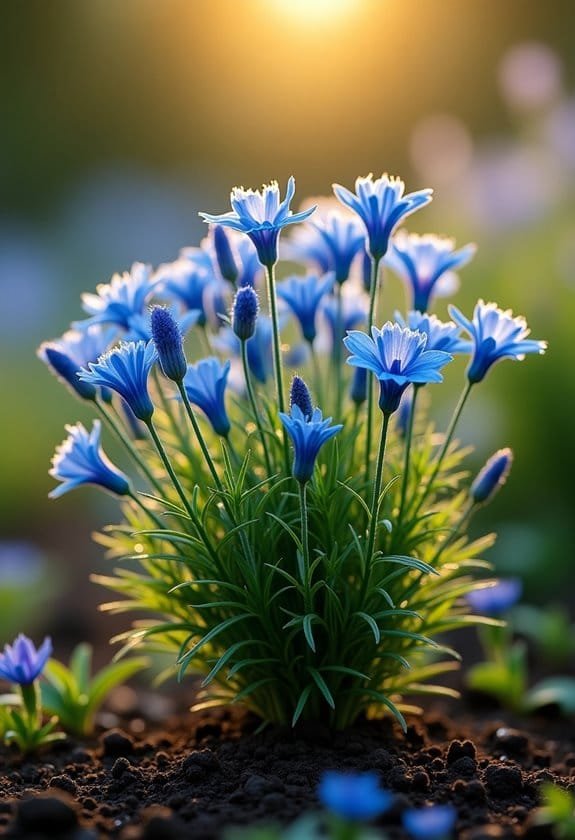
When caring for Nigella Damascena, or Love-in-a-Mist, understanding its needs can greatly enhance its growth.
This plant thrives in well-drained soil and prefers a moderate level of moisture, making it crucial to balance watering during dry periods without risking over-saturation.
To promote healthy development, gardeners should also consider planting companions that complement its unique qualities and guarantee adequate spacing between seedlings for ideal air circulation.
Planting Tips
In spring, gardeners can achieve ideal results by sowing Nigella damascena seeds directly into well-drained soil at a depth of just ⅛ inch. This method guarantees the seeds germinate effectively, establishing a strong foundation for growth.
When planting, it's important to space the seeds 8–10 inches apart to allow ample room for the delicate plants to flourish without competition.
During the germination period, which typically spans 2–3 weeks, maintaining consistent moisture is significant, particularly in dry soil conditions. This moisture helps activate the seeds, encouraging healthy sprouting.
As the seedlings mature, thinning them to 10–15 centimeters apart promotes robust health and ideal air circulation, key factors in preventing disease.
While fertilization is minimal, over-fertilizing can adversely affect the plant. Instead, focus on guaranteeing adequate water during dry spells to support vibrant growth.
Regularly deadheading the flowers can extend the blooming period, though gardeners should consider that this practice may hinder the formation of ornamental seed pods, a charming feature of Nigella damascena.
Ongoing Care
Caring for Nigella damascena, or Love-in-a-Mist, after planting involves minimal effort, thanks to its pest-resistant nature and low fertilization needs. Though the plant generally thrives with little intervention, ongoing care remains important to guarantee vibrant blooms.
Regular monitoring for pests like aphids and spider mites is wise, but issues are rare due to the plant's short lifespan.
To enhance plant health, it's vital to thin the seedlings, spacing them about 8-10 inches apart. This spacing not only improves air circulation but also reduces disease risk, allowing each plant to flourish without competition.
Monthly deadheading of spent flowers promotes continuous blooming, extending the flowering period throughout the growing season.
During dry spells, deep watering is necessary to maintain consistent moisture levels, yet it's important to avoid overwatering, as this can lead to root rot, greatly jeopardizing the plant's health.
Additionally, practitioners might consider succession planting every three weeks, further guaranteeing an uninterrupted display of the plant's ethereal flowers.
Suggested Companions
The charming Love-in-a-Mist (Nigella damascena) thrives beautifully when paired with suitable companions in the garden. Its feathery foliage and unique flowers create a fascinating contrast, particularly when partnered with silver-leaved plants such as artemisia or lamb's ear. These pairings not only highlight the striking beauty of love-in-a-mist, but also enhance the overall aesthetic of garden beds and borders.
Moreover, integrating Love-in-a-Mist with vibrant annuals like cosmos and snapdragons fosters an impressive summer display, as they harmonize well in color and texture.
Meanwhile, planting alongside perennials like salvia or catmint provides a colorful backdrop, ensuring their simultaneous bloom times offer continuous visual interest.
For ideal growth, gardeners should maintain approximately 8-10 inches of spacing between each plant. This spacing improves air circulation, which is essential for preventing diseases and supporting companion plants.
The self-seeding nature of love-in-a-mist makes it an excellent choice in mixed garden settings, where its companions can fill gaps left by fading plants at the end of the season.
Common Issues
While Nigella damascena, or love-in-a-mist, often thrives with minimal intervention, it can still encounter occasional pests like aphids and spider mites that require vigilant monitoring.
Additionally, over-fertilization can compromise the plant's strength and flowering potential, emphasizing the importance of moderation in nutrient application.
Finally, self-seeding may create crowded conditions, necessitating strategic thinning to guarantee ideal growth and health for each delicate specimen.
Pests/Diseases
In the garden, Nigella damascena, also known as love-in-a-mist, faces fewer threats from pests and diseases due to its short lifespan. This ephemeral nature contributes to its resilience, allowing gardeners to enjoy vibrant blooms without excessive worry.
Common pests include aphids and spider mites, which, if unchecked, can weaken the plant. However, the presence of natural predators helps maintain a balanced ecosystem and keeps these pests at bay.
Fungal diseases may emerge in overly damp conditions. To mitigate this risk, gardeners should guarantee well-drained soil and practice proper spacing among plantings every three to four inches. This spacing not only enhances air circulation but also reduces the potential for disease development.
Remarkably, the plant's aromatic foliage acts as a protective barrier, deterring some pests naturally, thereby providing an intrinsic advantage.
Healthy plants thrive with minimal intervention, although thinning seedlings is essential. When seedlings are thinned appropriately, it improves air circulation, effectively lowering the likelihood of disease incidence.
Consequently, maintaining vigilant observation of these plants can lead to a flourishing display, showcasing the alluring beauty of love-in-a-mist while keeping common issues firmly in check.
Solutions
Addressing common issues with Nigella damascena requires a proactive approach to guarantee vibrant growth and blooms. To start, maintaining robust moisture levels during dry spells is essential; this plant thrives in consistently moist soil, but be wary of waterlogging.
In addition, confirming that Love-in-a-Mist receives full sun exposure greatly contributes to maximizing its bloom production, leading to an impressive display of delicate flowers.
Gardeners should regularly deadhead the blooming flowers, a practice that promotes additional blossoms but limits the formation of those visually appealing seed pods.
Moreover, spacing seedlings 8-10 inches apart facilitates better air circulation, thereby reducing the risk of overcrowding-related diseases that can inhibit flowering.
Pest management is also key. While Nigella damascena is relatively resilient against pests such as aphids and spider mites, it's wise to monitor for their presence. A few minor interventions usually suffice.
Finally, to prevent poor growth, verify the soil is well-drained, as stagnant moisture can compromise plant health considerably.
Summary
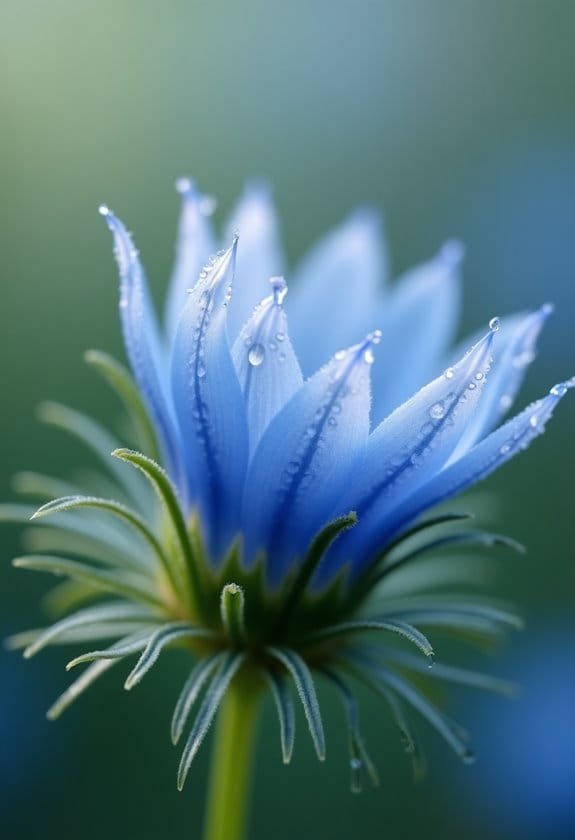
Nigella damascena, commonly known as Love-in-a-Mist, is a captivating hardy annual flower that flourishes in southern Europe and northern Africa.
This charming plant typically grows to heights of 15 to 24 inches, showcasing delicate, finely cut green foliage that beautifully frames its striking 1½ inch blossoms. These flowers, blooming from late spring to early summer, can boast vibrant hues of blue, white, pink, or lavender, adding an enchanting charm to any garden.
Renowned for its balloon-shaped seed pods, which can reach up to 2 inches in length and are often adorned with purple or bronze stripes, Love-in-a-Mist also presents culinary potential.
In Middle Eastern cuisine, its seeds add unique flavors while serving ornamental purposes in gardens. Thriving in full sun and well-drained soil, this plant prefers to be directly sown into the earth and is known for its ability to self-seed, ensuring easy establishment in any garden setting.
Additionally, Love-in-a-Mist attracts beneficial insects such as bees and butterflies, emphasizing its ecological importance.
This beautiful flower stands not only as a visual delight but also enriches both cultural and natural landscapes considerably.