Oenothera species, widely known as Evening Primrose, includes around 145 varieties, primarily thriving in the Americas. Significantly, Oenothera biennis features vibrant yellow, cup-shaped flowers that bloom nocturnally, measuring 2.5 to 5 cm across. This biennial plant, which can reach heights of 1.6 meters (5 feet 3 inches), flourishes in well-drained, sandy soils and requires full sun for ideal growth. Its hermaphroditic blooms attract essential nocturnal pollinators, supporting rich biodiversity. The seeds offer health benefits, including gamma-linolenic acid (GLA), renowned for its anti-inflammatory properties. Exploring further reveals additional fascinating insights about this remarkable genus.
Main Points
- Oenothera, commonly known as Evening Primrose, includes approximately 145 species primarily found in the Americas.
- Oenothera biennis is a biennial plant with striking yellow, cup-shaped flowers that bloom at night, attracting nocturnal pollinators.
- The plant thrives in well-drained sandy or gravelly soils and requires full sun exposure for optimal growth.
- Evening Primrose seeds are rich in gamma-linolenic acid (GLA), known for anti-inflammatory and skin health benefits.
- Oenothera biennis supports biodiversity by attracting various nocturnal pollinators and plays a role in enhancing ecological balance.
Introduction
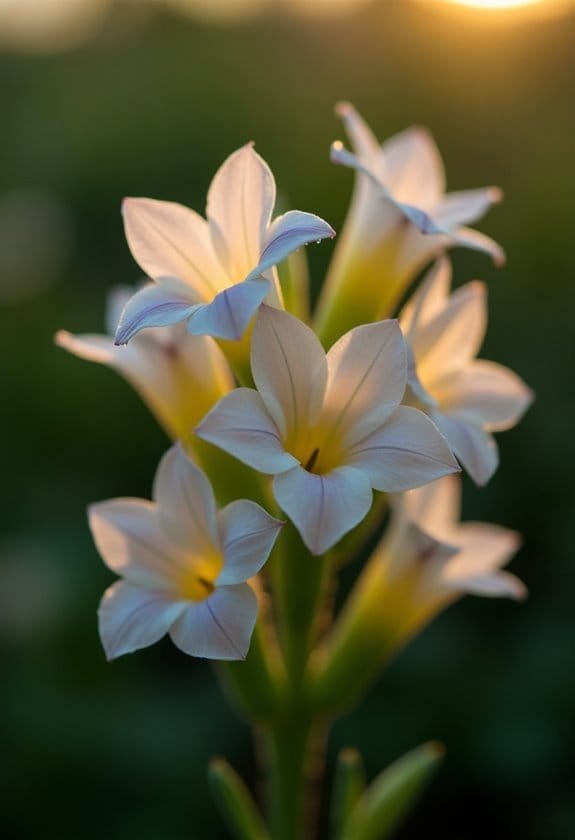
Evening Primrose, scientifically known as Oenothera, encompasses approximately 145 distinct species, primarily flourishing in the Americas.
Among these, Oenothera biennis, or the Common Evening Primrose, stands out with its striking yellow, cup-shaped flowers that elegantly bloom under the night sky, drawing a variety of nocturnal pollinators.
This genus not only showcases remarkable adaptability to disturbed environments but also offers valuable seeds rich in gamma-linolenic acid (GLA), which are sought after for their numerous health benefits.
Common Name
The Common Evening Primrose, known scientifically as Oenothera biennis, stands out with its striking yellow flowers that bloom under the cover of night. This biennial flowering plant, which belongs to the Onagraceae family, hails from North America but has spread globally, thriving in diverse environments.
Typically, it showcases rosettes of leaves during its first year, reaching only 6 inches in height, while in its second year, it can grow up to an impressive 1.6 meters (about 5 feet 3 inches), adorned with eye-catching flowers.
Characterized by its elongated leafy spikes, the flowers feature four heart-shaped petals and distinctive yellowish-green, hairy sepals. Such traits help in identifying this species, despite frequent confusion with similar Evening Primrose relatives, including Northern and Hairy Evening Primrose.
The plant's nocturnal blooms attract various pollinators, from moths to butterflies and bees, thereby playing an essential role within its ecosystem. As a part of the native plants of North America, the Common Evening Primrose not only adds aesthetic value to gardens and landscapes but also contributes to biodiversity and pollinator health.
Scientific Name
Among the many fascinating species within the Onagraceae family, Oenothera biennis stands out not just for its beauty but also for its unique adaptations.
Commonly known as the Common Evening Primrose, this species flourishes throughout North America, showcasing its striking yellow flowers. The genus Oenothera encompasses approximately 145 species, renowned for their enchanting night-blooming blossoms, which capture the attention of both botanists and casual enthusiasts alike.
Originating from Greek roots, the name Oenothera translates to "wine carrier," an evocative nod to the vivid colors of its blooms, suggesting a connection to elegance and allure.
Oenothera biennis is a biennial plant, engaging in robust vegetative growth during its first year, only to reveal its mesmerizing flowers in the subsequent season. Each flower exhibits a distinct cup shape, with petals measuring around two to three inches in diameter, blooming primarily at dusk to attract specialized nocturnal pollinators—such as moths.
This cyclical growth pattern, coupled with its vivid presentation, elevates Oenothera biennis as a notable ambassador of the Oenothera genus, thriving in diverse habitats while embodying the essence of resilience in nature.
Overview
With approximately 145 species under the Oenothera genus, these enchanting plants offer a stunning display of night-blooming beauty and ecological significance. Commonly known as Evening Primrose, Oenothera species thrive in diverse environments, showcasing their adaptability.
For instance, Oenothera biennis, a biennial native to North America, displays a remarkable growth habit, achieving heights of about six inches during its first year before erupting into vibrant yellow blooms in the second.
These cup-shaped flowers, measuring one to two inches across, attract essential pollinators such as moths and butterflies, fostering a thriving ecosystem. Evening Primrose typically flourishes in disturbed soils, fields, and along roadsides, favoring full sun and well-drained conditions, which further emphasizes its resilience.
Beyond their aesthetic appeal, these fascinating native plants possess significant health benefits, particularly due to their high gamma-linolenic acid (GLA) content. This compound is celebrated for its potential to support skin health and exhibit anti-inflammatory properties.
As a whole, Oenothera species not only enhance the beauty of landscapes but also play critical roles in supporting biodiversity and human health, making them invaluable components of our natural world.
Key Features
The Common Evening Primrose, or Oenothera biennis, showcases impressive growth with heights reaching up to 1.6 meters (5.2 feet) in its second year.
Its striking yellow, cup-shaped flowers, which bloom at night, lend an enchanting quality to its appearance, with petals measuring 1 to 2 inches across and attracting pollinators like moths and bees.
Such characteristics not only enhance its visual allure but also highlight the plant's essential role in its ecosystem during the flowering season.
Growth Size
Evening primrose species, particularly Oenothera biennis, can be striking in their growth size and form. This remarkable plant can reach heights of up to 1.6 meters (5 feet 3 inches) during its second year of growth, showcasing its impressive vertical development.
In its initial year, it follows a more reserved rosette form, featuring lanceolate leaves that average between 8–18 cm (3–7 inches) in length and 2–6 cm (0.75–2.25 inches) in width.
During this first year, the plant focuses on energy storage within a thick root, preparing for the considerable growth it will undertake later. Once this energy reserves are established, Oenothera biennis shoots up notably taller, with flowering emerging on semi-woody stems in the subsequent year.
While the growth patterns typically exhibit this biennial character, some species within the Oenothera genus adapt to lower competition environments, demonstrating annual growth cycles.
The fascinating lifecycle culminates in vibrant yellow blooms, measuring 2.5–5 cm (1–2 inches) in diameter, which delightfully last only until the following midday, highlighting the ephemeral beauty of these resilient plants.
Appearance
Boasting vivid yellow, cup-shaped flowers, Oenothera biennis captivates with its distinct appearance. This flowering plant features blooms measuring 1 to 2 inches across, showcasing four heart-shaped petals and a striking arrangement of eight stamens.
In its first year, the plant reaches about 6 inches in height, but in its second year, it can grow impressively to 1.6 meters (5 feet 3 inches) when it blooms, creating a striking visual presence.
The leaves of Oenothera biennis are lanceolate, measuring between 4 and 12 inches long, exhibiting a slightly rough texture and varying shades from olive to light green. This combination not only contributes to the overall aesthetic but also emphasizes the plant's robust adaptability to its environment.
The sepals, which are hairy and yellowish-green, can extend up to 1 inch long, remaining connivent until the flowers finally bloom in the evening.
Though easily confused with the Northern and Hairy Evening Primrose due to similarities in size and flower characteristics, subtle distinctions in sepal shape and hair types enable enthusiasts and botanists alike to identify Oenothera biennis with relative ease.
This compelling appearance makes it a fascinating subject for study and admiration.
Flowering Season
During its flowering season, Oenothera biennis showcases an enchanting display that captivates both gardeners and pollinators alike. Blooming from late spring to late summer, the Common Evening Primrose exhibits flowers that open in the evening, only to wilt by the following noon. Each delicate bloom features four bilobed petals, measuring between 2.5 to 5 cm in diameter, creating a striking visual effect in the twilight hours.
These hermaphroditic flowers not only attract a variety of pollinators, such as moths and bees, but also facilitate efficient pollination through their unique ability to reveal nectar guide patterns under ultraviolet light. The blooming phase lasts throughout the growing season, highlighting the plant's semi-woody stems that can reach heights of up to 1.6 m by its second year.
As a biennial, the seeds germinate in the first year, with flowering mainly occurring in the second before the plant succumbs to frost. This remarkable life cycle not only enriches gardens with beauty but also plays an essential role in supporting local ecosystems, fostering connections between flora and their pollinators.
The Common Evening Primrose reminds us of nature's intricate interdependence.
Growing Requirements
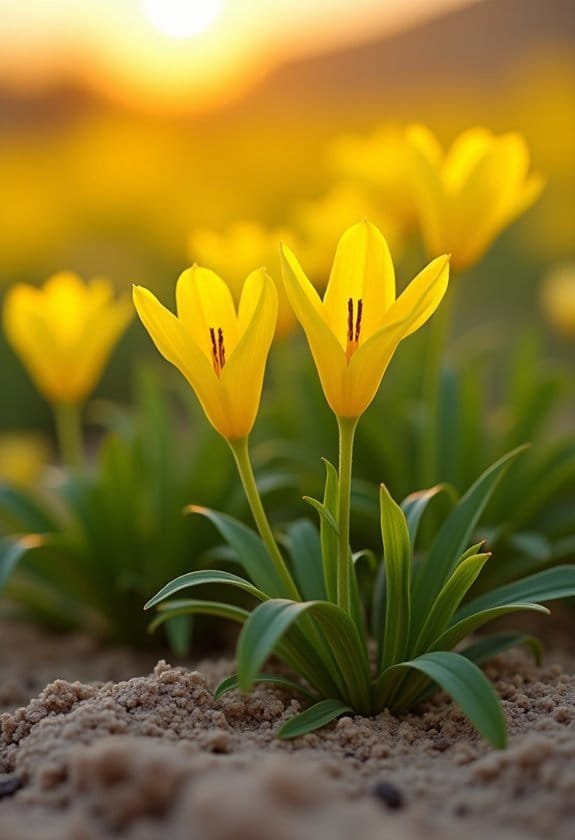
Evening primrose thrives in a combination of well-drained soil and full sun, creating an ideal environment for robust growth.
Its ability to tolerate drought once established underscores its resilience, requiring only the natural hydration provided by rainfall.
Understanding the specific light, soil, and water needs will guarantee that these vibrant plants flourish, showcasing their remarkable flowering potential.
Light
To thrive and produce vibrant blooms, the Common Evening Primrose needs full sun exposure, requiring at least 6 to 8 hours of direct sunlight each day. This plant excels in brightly lit environments and is well-suited for sunny gardens or open fields.
While it exhibits adaptability to various lighting conditions, it achieves ideal growth and flowering under unshaded circumstances. Insufficient light can detrimentally impact its development, resulting in leggy growth and diminished flowering, as the plant struggles to convert sunlight into the energy required for robust health.
Moreover, the importance of adequate light extends beyond mere aesthetics; it influences the plant's overall health and resilience. Evening Primrose demonstrates drought tolerance once established, allowing it to thrive in sunny, dry garden areas without excessive irrigation. Salad Burnet, similar to Evening Primrose, also requires adequate sunlight for optimal growth, making it essential for gardeners to consider light exposure when planting.
This resilience highlights the importance of strategic planting in locations that can provide ample sunlight while maintaining dry conditions. Consequently, when considering growth conditions, an understanding of the plant's light requirements forms the foundation for successful cultivation, leading to healthy, flourishing specimens adorned with stunning flowers.
Soil
Successful cultivation of the Common Evening Primrose also hinges on its soil preferences. This plant thrives in well-drained soils, particularly sandy or gravelly substrates, which facilitate ideal growth conditions. These preferences enable the Evening Primrose to take root in both urban and rural gardens, showcasing its versatility and adaptability. Remarkably, it exhibits significant drought tolerance once established, requiring minimal watering, primarily benefiting from natural rainfall.
Moreover, the Evening Primrose can successfully occupy a variety of habitats, often found in sandy, disturbed soils, underscoring its resilience and ability to regenerate in favorable environments. Ideal growth occurs under full sun exposure, which not only supports vigorous flowering but also contributes to the development of a robust seed bank, ensuring future generations thrive.
Even in adverse conditions, such as the cool shade beneath oak trees, the plant manages to flourish, highlighting its remarkable capacity to endure and adapt to varying light conditions.
In essence, understanding the soil preferences of the Common Evening Primrose is imperative for successful cultivation, as these factors directly influence its growth, flowering, and overall health.
Water
Regarding water requirements, the Common Evening Primrose thrives with minimal supplemental irrigation once it's established. This hardy plant is drought-tolerant, adept at enduring arid conditions and mainly relying on the natural rainfall that provides essential moisture.
Thriving in well-drained sandy or disturbed soils, it prefers environments that expose it to full sunlight, where water retention is limited. Established Evening Primrose plants can withstand extended periods of dryness, but care should be taken to avoid excessive watering. Overwatering is detrimental, hindering growth and increasing vulnerability to diseases.
Curiously, in irrigation-friendly settings, studies suggest that saltwater irrigation can actually enhance the oil yield and quality of Evening Primrose, presenting unique opportunities for cultivating this species.
Additionally, while ideal growth occurs in sunny locations, these plants can adapt to grow under partial shade, such as from oak trees, illustrating their remarkable versatility concerning moisture availability. This adaptability allows them to thrive in varied environments, making them a resilient choice for gardeners seeking low-maintenance yet robust flora.
With proper attention to watering practices, gardeners can enjoy the beauty of Oenothera biennis while supporting their health and longevity.
Temperature
The Common Evening Primrose flourishes in warm temperatures and full sun exposure, making it well-suited for moderate climates.
This biennial plant thrives under ideal conditions within USDA hardiness zones 3 to 9, demonstrating its adaptability to varying environments. Ideally, germination occurs in the cooler spring months when temperatures range between 60°F to 75°F (15°C to 24°C). These conditions create an inviting atmosphere for growth.
Once established, Evening Primrose exhibits impressive drought tolerance, allowing it to sustain itself in areas where moisture is scarce. However, the plant must be shielded from extreme heat, particularly when temperatures exceed 90°F (32°C) for extended periods. Such conditions can impede its lush development and liveliness.
To encourage prolific flowering and a vibrant display, it's essential to plant Oenothera biennis in locations free from frost following its blooming period. The presence of frost can adversely affect the buds, stunting their growth and diminishing the overall floral output.
Pollinator Criteria
The Common Evening Primrose (Oenothera biennis) primarily attracts nocturnal pollinators, such as moths and certain bee species, with its alluring, fragrant yellow blooms that open at dusk.
These flowers feature a unique hermaphroditic structure with bilobed petals designed for insect visitation, complemented by visible nectar guides that shine under ultraviolet light, enhancing foraging efficiency.
The intricate relationship between the plant and its pollinators, including the Primrose Moth larvae that rely on its flowers, underscores the significance of these interactions in fostering local biodiversity and ecological balance.
Attracted Pollinators
At least two groups of pollinators are drawn to the Common Evening Primrose (Oenothera biennis), showcasing its adaptability to attract both nocturnal and diurnal visitors. This native plant blooms primarily at night, enticing moths with its nectar guides, which become visible under ultraviolet light. These guides effectively lead the moths to the sugary reward, ensuring successful pollination during the evening hours.
The yellow, cup-shaped flowers also captivate diurnal pollinators, including butterflies and bees. These insects play a significant role in cross-pollination, enhancing genetic diversity and promoting robust plant populations. The Common Evening Primrose's flowering extends from late spring to late summer, consistently supplying nourishment for various pollinators throughout the season.
Moreover, Primrose Moth larvae have a unique relationship with this plant, feeding on its flowers and seeds. This mutualistic interaction supports not only the larvae but also the overall ecosystem surrounding the Evening Primrose.
Thriving in disturbed environments, this resilient plant serves as an essential nectar source in urban habitats where native flowering plants may be limited, illustrating its importance in maintaining pollinator health and promoting biodiversity within these ecological niches.
Pollination Method
Nocturnal and diurnal pollinators utilize different criteria when interacting with the Common Evening Primrose, shaping its pollination method. The blooms of Oenothera biennis open in the evening, displaying their yellow, cup-shaped flowers with four bilobed petals, creating an alluring spectacle for moths and other nocturnal pollinators. Attracting these creatures hinges on the potent floral fragrance and strategically visible nectar guides, which reflect ultraviolet light, enhancing visibility even in dim conditions.
This interplay fosters effective cross-pollination, as the hermaphroditic flowers remain open until noon the next day, allowing day-active pollinators like bees to also contribute greatly. By transferring pollen between flowers, these visitors guarantee the plant's reproductive success, intertwining their existence with the evening primrose. The nectar guides play a pivotal role, acting as navigational aids that effectively capture the attention of pollinators, increasing the likelihood of grazing upon the abundant nectar.
Moreover, the presence of the Primrose Moth's larvae, which feed on the flowers, exemplifies a unique aspect of this ecosystem, further complicating the dynamics of pollination and contributing to the overall health of the plant.
Care & Maintenance
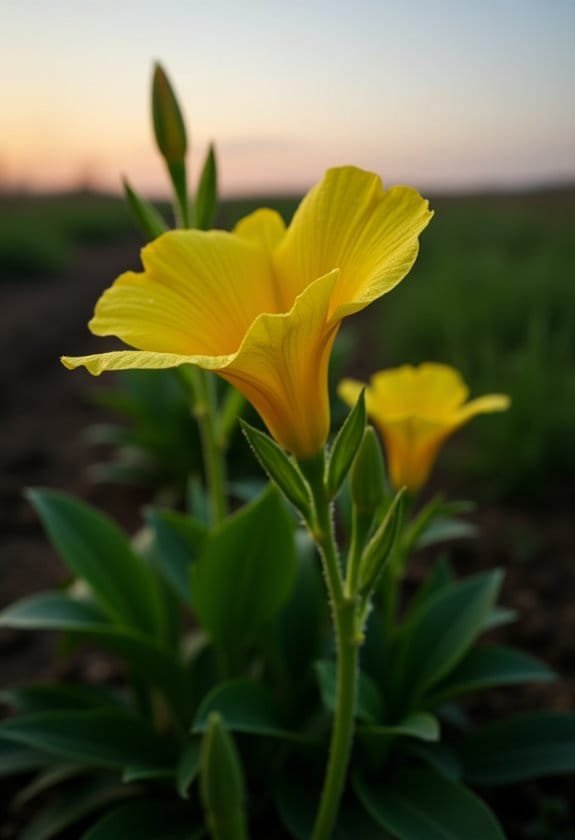
Caring for Common Evening Primrose (Oenothera biennis) effectively guarantees its vibrant presence in gardens, drawing in pollinators while enhancing local ecosystems.
Ideal growth occurs in well-drained soil with full sun exposure, where the plant's drought tolerance minimizes watering needs once established, allowing them to flourish with minimal intervention.
To promote bushier growth and extend blooming, regular pruning and the thoughtful selection of companion plants are essential, fostering a thriving garden community.
Planting Tips
To ascertain healthy growth of Evening Primrose (Oenothera biennis), it's crucial to plant it in well-drained soil with plenty of sun. This resilient perennial flourishes in full sun exposure, making sunny spots ideal for its growth.
According to plant database information, the seeds require cold/moist stratification to break dormancy, therefore sowing them in spring or between mid-July and mid-August guarantees ideal germination, paving the way for rich autumn blooms.
When selecting seeds, gardeners can choose from various packet sizes, adapting the quantity to their planting goals. With the avoidance of excessive watering, Evening Primrose becomes drought-tolerant once established, allowing a low-maintenance gardening experience.
To enhance bushier growth and prolong the blooming period, regular pruning is a recommended planting tip, encouraging the plant to develop a more robust structure.
However, prospective gardeners should remain aware of the species' potential invasiveness in certain environments; managing its spread will help protect native flora.
Ongoing Care
Ongoing care for Evening Primrose guarantees it continues to thrive and produce vibrant blooms. This biennial plant flourishes in well-drained soil and requires full sun exposure, making it essential to plant it in areas with minimal shade.
Once established, it exhibits drought tolerance, relying primarily on natural rainfall, which simplifies watering routines.
Pruning is a significant aspect of ongoing care, as it promotes bushier growth and extends the blooming period. It's best to perform pruning after the flowering phase concludes.
Regularly inspecting the plants for pests is also important; while Evening Primrose attracts beneficial pollinators, it may inadvertently host unwanted insects that could hinder its health.
Suggested Companions
Pairing Evening Primrose with compatible plants enhances both its beauty and health in the garden. Common Evening Primrose thrives alongside drought-tolerant companions like Lavender and Sedum, which not only share similar dry, sunny conditions but also attract beneficial pollinators. Additionally, stinking chamomile has similar habitat requirements but poses a risk to delicate ecosystems.
When intermingled with Echinacea (Coneflower) and Rudbeckia (Black-eyed Susan), Evening Primrose promotes visually appealing biodiversity, enriching the overall aesthetic of garden spaces.
To further enhance pollination and the garden's health, gardeners should consider planting Evening Primrose near flowering herbs such as Thyme or Oregano. These herbs are known to attract bees and butterflies, crucial for effective pollination.
Regular pruning stimulates bushier growth in Evening Primrose, making it an excellent neighbor to structurally diverse plants like Phlox and Salvia, which provide height and texture to the arrangement. Additionally, incorporating companion plants like Iris pseudacorus can improve soil moisture and support healthy growth.
It's essential to maintain proper spacing between Evening Primrose and its companions, ideally a distance of 12 to 18 inches, preventing overcrowding. This spacing allows for adequate airflow and light exposure, which ultimately promotes healthy conditions for plant growth.
Common Issues
Common Evening Primrose, while admired for its beauty, faces various challenges from pests and diseases that can hinder its growth and reproduction.
Infestations by aphids and fungal infections often threaten these plants, leading to reduced vigor and diminished flowering potential, which, in turn, affects pollinator habits.
Effective management strategies, including the introduction of beneficial insects and careful monitoring of soil health, can mitigate these issues, ensuring that this species thrives in its intended habitats.
Pests/Diseases
Evening Primrose plants can face a variety of pests and diseases that threaten their health and vigor. Among the most common pests are aphids; these small insects can weaken the plants by feeding on their crucial sap, ultimately resulting in stunted growth and an inability to thrive.
Additionally, spider mites might invade, especially in hot, arid conditions. Their presence manifests as leaf discoloration and webbing, signifying distress.
Fungal diseases also pose a significant threat to Evening Primrose. For instance, powdery mildew can emerge when humidity levels rise and air circulation diminishes, presenting as white, powdery spots on foliage that hinder photosynthesis.
Moreover, root rot can develop, largely due to overwatering or poorly drained soil, leading to wilting and often plant death if signs go unaddressed.
These pests and diseases can devastate the plants if not managed effectively. Integrated pest management strategies, emphasizing the introduction of beneficial insects and maintaining robust soil health, can mitigate the adverse effects of these common issues.
Solutions
In addressing the challenges posed by Evening Primrose, gardeners can implement several effective solutions to promote healthy growth and manage its spread. Common Evening Primrose (Oenothera biennis) often becomes invasive, threatening native flora; therefore, diligent cultivation practices are essential.
Ensuring well-drained soil and full sun exposure ideal conditions can establish healthy plants while minimizing excessive moisture, which is vital for growth.
To manage expansion, gardeners might consider selecting specific planting locations that don't disrupt the local ecosystem, reducing competition with native species. Regular pruning, a straightforward yet effective technique, can encourage bushier growth, extending the blooming period and keeping the plant's proliferation in check.
Additionally, successful dormancy breaking, using methods such as cold/moist stratification, enhances germination rates, ensuring a robust yield without over-planting.
Combining these strategies not only preserves the aesthetic charm of Evening Primrose but also safeguards surrounding biodiversity. Through thoughtful management and proper care, gardeners can harmonize their gardens with nature, allowing the beauty of Evening Primrose to flourish without overshadowing its companions.
Each deliberate step contributes considerably to maintaining a balanced garden ecosystem.
Summary
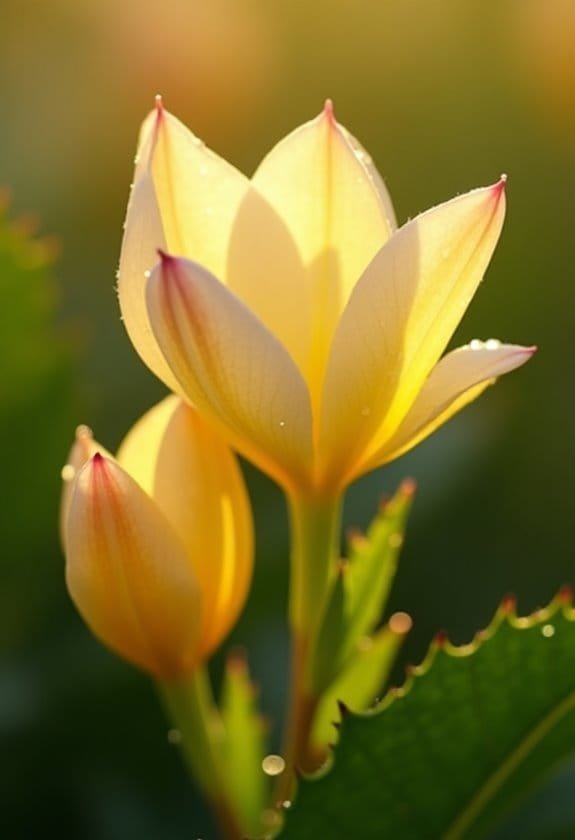
Oenothera biennis, or Common Evening Primrose, stands out as a resilient biennial flowering plant known for its striking yellow, cup-shaped flowers that bloom at night. This species, part of the Onagraceae family, often reaches an impressive height of 1.6 meters (5 feet 3 inches) by its second growing season.
As it flourishes from late spring to late summer, its four bilobed petals attract various pollinators, including moths and bees, thereby contributing to local biodiversity.
The plant thrives in disturbed soils and displays remarkable adaptability to dry conditions, making it an ideal candidate for xeriscaping in gardens.
Oenothera biennis produces erect, tubular capsules filled with numerous tiny seeds capable of remaining viable for over 70 years. This resilience indicates not only its ability to regenerate naturally but also its role as a pivotal species within ecosystems documented in native plant databases.
Moreover, it harbors beneficial compounds, such as gamma-linolenic acid (GLA) and essential fatty acids, recognized for their anti-inflammatory properties, which enhance skin health.