The Paeonia genus, commonly referred to as peonies, includes around 33 recognized species that range from herbaceous perennials to woody shrubs. These vigorous plants, celebrated for their stunning blooms that can reach up to six inches in diameter, thrive in various climates across Asia, Europe, and North America. Requiring full sun and well-drained soil, peonies typically grow between 1 to 4 feet tall and can flourish in hardiness zones 3-8. Beyond mere aesthetics, their large, bisexual flowers attract diverse pollinators, enhancing local ecosystems. A deeper understanding of their care and ecosystem contributions enriches gardening experiences considerably.
Main Points
- The genus Paeonia includes around 33 species, classified into herbaceous perennials and woody shrubs, contributing to their diverse growth habits.
- Peonies bloom from late spring to early summer, showcasing large flowers in colors like white, pink, red, and yellow, each measuring up to six inches wide.
- Established peony plants typically reach heights of 1 to 4 feet, with most peonies maturing between 2 and 3 feet in width.
- Peonies thrive in hardiness zones 3-8, requiring full sun and well-drained, fertile soil for optimal growth and blooming conditions.
- Peonies attract a variety of pollinators due to their rich pollen and nectar, enhancing local biodiversity and supporting ecosystem health.
Introduction
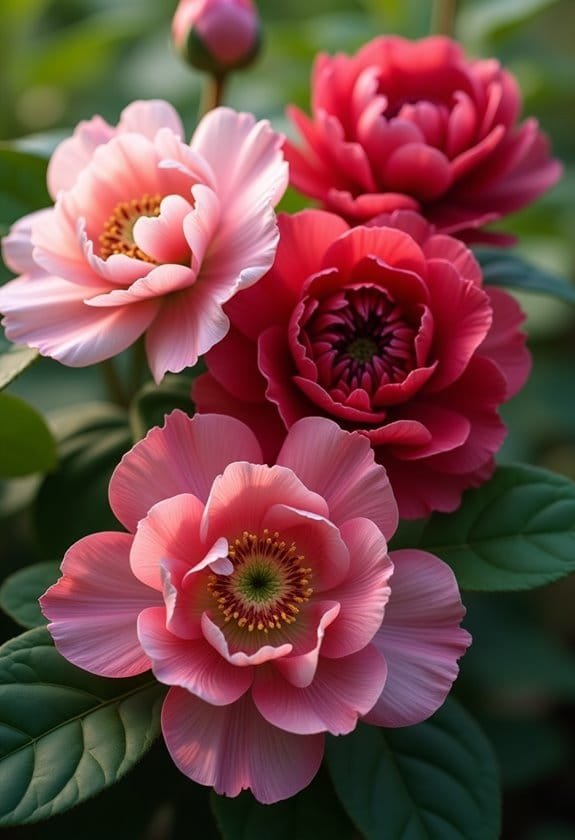
The common name for the genus Paeonia, known as peonies, encompasses around 33 recognized species that flourish across Asia, Europe, and Western North America.
These remarkable plants, ranging from herbaceous perennials to woody shrubs, not only serve as the wild ancestors of modern hybrids but also present unique ecological and cultural requirements that demand attention.
Understanding their scientific classification and the nuances of their habitat preferences will illuminate the challenges they face and the imperative of conservation efforts in a rapidly changing environment.
Common Name
Peonies, celebrated for their stunning blooms and rich cultural heritage, are commonly known as Garden Peonies, Herbaceous Peonies, and Hybrid Peonies under the scientific name Paeonia. These flowers are cherished in gardens worldwide, where their vibrant colors and diverse forms captivate admirers.
The range of hues includes striking whites, soft pinks, deep reds, and radiant corals, with popular cultivars like 'Sarah Bernhardt' and 'Buckeye Belle' standing out.
Furthermore, within the diverse world of peonies, the Itoh hybrids represent a unique subgroup, merging traits from both tree and herbaceous types. This fusion offers gardeners a striking blend of foliage and flower characteristics, broadening the appeal of peonies.
Many peonies are known for their delightful fragrances, which can range dramatically from sweet, floral notes to a spicy-sweet aroma, enticing both nature lovers and casual observers.
Culturally, peonies hold significant meaning in regions like China and Japan, often symbolizing prosperity and nobility, making them not just botanical wonders but also profound cultural icons.
With their breathtaking beauty and rich symbolism, peonies continue to enchant people across different landscapes and traditions.
Scientific Name
Known scientifically as Paeonia, this genus encompasses both herbaceous perennials and woody shrubs belonging to the Paeoniaceae family. With a recognition of 33 species, Paeonia showcases a remarkable diversity, native to temperate and cold regions of the Northern Hemisphere. The peony flower, well-loved for its lush, vibrant blooms, varies widely in characteristics due to complex hybridization patterns among these species.
Taxonomically, the family Paeoniaceae was first described in 1830, and molecular studies have established its connection to the broader order Saxifragales, emphasizing its evolutionary significance. The basic chromosome number for these enchanting plants is five, but many species exhibit notable tetraploid traits, with 4n=20 chromosomes. This genetic complexity not only underscores their adaptability but also their remarkable appeal among horticulturists and enthusiasts alike.
Common synonyms, such as Garden Peony, Herbaceous Peony, and Hybrid Peony, reflect the various cultivars that have emerged through careful breeding. Each name evokes a specific image and expectation, highlighting the genus' rich contribution to gardens and landscapes worldwide, showcasing an exquisite blend of science and nature's artistry.
Overview
Paeonia species captivate gardeners and botanists alike with their stunning variety and resilience. This diverse genus comprises approximately 33 recognized species, each native to distinct regions across Asia, Europe, and Western North America.
Peonies can be categorized into two primary types: herbaceous perennials, which regenerate each year, and woody shrubs, distinguished by their persistent, sturdy stems.
To thrive, Paeonia plants flourish in well-drained, fertile soils, favoring full sun to light shade; remarkably, most species demonstrate considerable cold hardiness, making them adaptable to a range of climatic conditions.
One can't overlook the impressive display they offer, with large, fragrant blossoms typically emerging in late spring to early summer, showcasing an array of colors and unique petal arrangements that enchant observers.
Moreover, the cultivation of peonies, especially heritage species, serves as a demonstration of their ecological importance and cultural significance around the world.
Key Features
Peonies, distinguished by their impressive size and ornate blooms, showcase a remarkable variation in appearance depending on the species. Typically reaching heights of 2 to 4 feet, these perennial plants produce large flowers that emerge in late spring to early summer, with blooming periods lasting roughly 7 to 10 days.
Their vibrant colors and diverse flower formations not only enhance garden aesthetics but also signify a plant's resilience, thriving in various environments with appropriate sun exposure and care.
Growth Size
Growing to impressive heights, peonies can reach between 1 to 4 feet tall, with certain species like *Paeonia rockii* subsp. *taibaishanica* topping out around 4 feet. The growth size of peonies, whether tree or herbaceous, demonstrates fascinating diversity.
Generally, mature peony plants span between 2 to 3 feet wide, forming a rounded shrub-like habit. Tree peonies, characterized by their persistent woody stems, provide structural stability and can grow prominently in the landscape, while herbaceous peonies showcase a unique renewal bud system at the crown, with their stems dying back each year. This contrast in growth habits markedly influences their horticultural appeal and adaptability to various garden designs.
Once established, peonies prove to be remarkably resilient, often living for decades under proper care, thereby establishing themselves as perennial staples in gardens.
Their size and longevity make them an asset to horticulturists and garden enthusiasts alike, creating vibrant bursts of color and texture through the seasons. Understanding the growth characteristics of both tree and herbaceous peonies allows growers to select the right species for their specific gardening needs and preferences.
Appearance
During the blooming season, peonies steal the spotlight with their large, fragrant flowers, which come in an array of colors such as white, pink, red, and even yellow. These blossoms are primarily bisexual and can measure up to six inches in diameter. They bloom singularly at the stem's end, showcasing numerous stamens and a lobed disc, though they lack nectar.
The leaf structures of peonies are equally striking; they're glossy, divided, and vary in length from three to eight inches, with hues ranging from dark green to a silvery-gray, depending on the species.
The growth habits of different peony types manifest visually distinct features. Herbaceous peonies produce renewal buds in summer, which form on the crown, while tree peonies develop woody, perennial stems that endure through the winter months.
Moreover, the flowers exhibit remarkable arrangements, with seven distinct styles in herbaceous peonies, including single, double, Japanese, and anemone forms. Each style boasts unique characteristics, further enriching the peony's allure and making these blooms a beloved choice in gardens worldwide.
Flowering Season
The vibrant blooms of peonies typically grace gardens from late spring to early summer, peaking between May and June, depending on the cultivar. During this enchanting period, flower buds transform into lavish blooms, exhibiting a spectrum of shapes including singles, doubles, and the intricate Japanese forms, each contributing to the garden's aesthetic allure.
The flowering duration for these magnificent plants lasts approximately 7-10 days, underscoring the importance of timely care and appropriate conditions to enjoy their beauty fully. Different species, particularly certain tree peonies like *Paeonia rockii subsp. taibaishanica*, may initiate blooming as early as the second week of May in USDA zone 6a, showcasing the variability among cultivars.
Once established, peonies generally need 1-2 years to flower after transplanting, but their longevity is remarkable; they can thrive for decades, consistently producing blooms each season.
This enduring charm makes them a favorite among gardeners who appreciate the fleeting beauty of their flowers. Understanding the specific bloom times and care requirements can greatly enhance one's experience of these stunning, ephemeral blossoms in the garden.
Growing Requirements
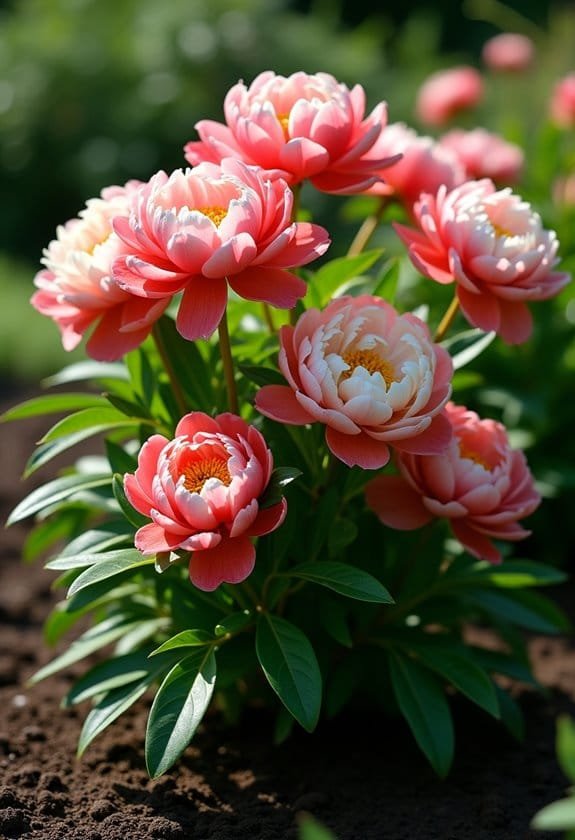
Peonies flourish under specific growing conditions that greatly impact their well-being and bloom quality.
These enchanting plants prefer full sun to light shade, thriving in deep, fertile, and well-drained soil, which serves as a foundation for their lush growth.
Additionally, understanding their high water requirements, particularly during the early growing season, is essential for maintaining ideal moisture levels and preventing waterlogging.
Each aspect plays an integral role in their development and resilience.
Light
For ideal growth and flowering, peonies need at least 6 hours of direct sunlight each day. Exposing these plants to full sun not only promotes rich blooms but also encourages overall health. In cooler climates, adequate sunlight becomes even more crucial, as it fosters the robust development that peonies need to thrive.
While most species prefer full sun, some can adapt to partial shade, particularly in regions where summer temperatures soar. In these cases, shade offers respite during the hottest parts of the day, helping to maintain plant health.
However, gardeners must be cautious, as excessive shade can lead to root rot—a common issue for peonies planted in overly damp environments.
When planning a peony garden, it's important to assess the specific light requirements of different species. Some varieties can tolerate varying light conditions better than others.
Thus, understanding each type's needs guarantees a flourishing display. By prioritizing proper sunlight exposure while also enhancing drainage, gardeners create ideal conditions that maximize the beauties of peonies.
Fundamentally, light not only illuminates the garden but also intricately intertwines with the overall success of these exquisite flowers.
Soil
Providing the right sunlight is just one aspect of a peony's successful growth; soil quality plays a fundamental role as well.
Peonies thrive best in deep, fertile, well-drained soil that supports their robust root systems and overall health. For tree peonies, which necessitate extra care, incorporating organic matter into the soil can greatly enhance nutrient availability, as it also improves drainage, particularly in challenging soil conditions.
It's vital to maintain a moderately moist environment during the early growing season; however, excessive moisture, which can lead to waterlogging and consequently root rot, must be avoided.
Peonies typically prefer a pH level between 6.0 and 7.0, ensuring ideal nutrient uptake for vigorous growth. Sharp drainage conditions are especially essential for species peonies, given their lower tolerance for excessive moisture compared to hybrid varieties.
Water
Successful growth of peonies hinges on their water requirements, especially during the early growing season. These plants demand consistent moisture to support robust initial growth and vibrant flower development. During this critical phase, the soil must remain adequately moist but not waterlogged. Overwatering can damage the roots, increasing susceptibility to diseases; hence, moderation becomes essential once early growth is established.
To optimize watering strategies, gardeners should prioritize well-drained soil, as poorly drained conditions can severely hinder peony growth and lead to root rot, a silent foe lurking in soggy environments.
Mulching around peonies serves as an invaluable ally, retaining soil moisture while regulating temperature, ensuring water availability throughout the growing season.
Interestingly, established peonies exhibit remarkable drought resistance. Once their root systems are fully developed, they can endure drier conditions, relying on their extensive root networks to access deeper soil moisture.
This resilience makes peonies relatively low-maintenance while still demanding diligence regarding water during their formative stages. Hence, understanding and managing water requirements sets the stage for the flourishing of these exquisite blooms in any garden, culminating in a stunning display of nature's artistry.
Temperature
Temperature plays an essential role in the growth of peonies, influencing their overall health and flowering potential.
These herbaceous perennials mainly thrive in hardiness zones 3-8, with specific low-chill varieties successfully adapted to zones 5-7. The cold hardiness exhibited by many peony species allows them to flourish in varied temperate environments, showcasing their remarkable resilience.
In their early growing season, peonies necessitate moderate temperatures accompanied by ample water availability, critical for root development.
After establishing, some species, like Peony rockii subsp. taibaishanica, can still bloom beautifully even under drought conditions, underscoring their adaptability to temperature fluctuations.
It's important to note that mature peonies may take 1-2 years to flower after transplanting; however, once settled, they're known for their impressive longevity, often thriving for decades.
Careful attention to watering practices is significant—while high water availability is important early on, overwatering later can trigger root issues, potentially stunting growth.
Pollinator Criteria
Peonies, with their vibrant blooms and abundant stamens, naturally attract a variety of pollinators, including bees and butterflies.
The generous pollen supply, offered by their numerous stamens, serves as nourishment for these essential insects, fostering a healthier ecosystem.
Particularly, species with open flower forms facilitate easy access to reproductive parts, further enhancing pollination efficiency and supporting biodiversity during the peak activity of pollinators in spring and summer.
Attracted Pollinators
Vibrant peony blooms play an important role in attracting a range of pollinators crucial for ecosystem health. These large, bisexual flowers provide abundant nectar and pollen, making them a valuable food source for bees, butterflies, and even ants during the critical blooming period from late spring to early summer.
The distinctive structure and eye-catching colors of peonies enhance their appeal, effectively enticing various pollinators to visit.
Research indicates that the presence of ants on peony flowers not only safeguards the blooms from herbivorous pests but may also facilitate pollination by drawing attention from bees. This synergistic relationship benefits the plants, promoting both pollination and overall health.
Moreover, when gardeners cultivate peonies in pollinator-friendly habitats, they create essential resources that contribute profoundly to local biodiversity, sustaining healthy populations of native and honey bees.
Pollination Method
The relationship between peonies and their pollinators is intricate, with these flowers relying mainly on a variety of insects for successful reproduction. The pollination method employed by peonies involves the attraction of numerous pollinators, mainly bees, butterflies, and ants, which are drawn to the flowers' large, bisexual blooms.
While peonies lack nectar, they compensate with an abundance of stamens—sometimes numbering between 50 and 160—producing considerable pollen that entices these insects. Ants, often seen on peony blooms, play a dual role: they not only protect the flowers from harmful pests but also aid in pollination inadvertently by traversing through the blooms and transferring pollen along the way.
Blooming from late spring to early summer, peonies guarantee their floral displays coincide with peak pollinator activity, greatly enhancing fertilization opportunities. The single, cup-shaped design of these flowers facilitates access for pollinators, promoting cross-pollination and, consequently, increasing genetic diversity within the species.
This dynamic partnership exemplifies how intricate floral structures and insect behavior coalesce to guarantee the thriving future of peonies, showcasing nature's remarkable interconnectedness.
Care & Maintenance
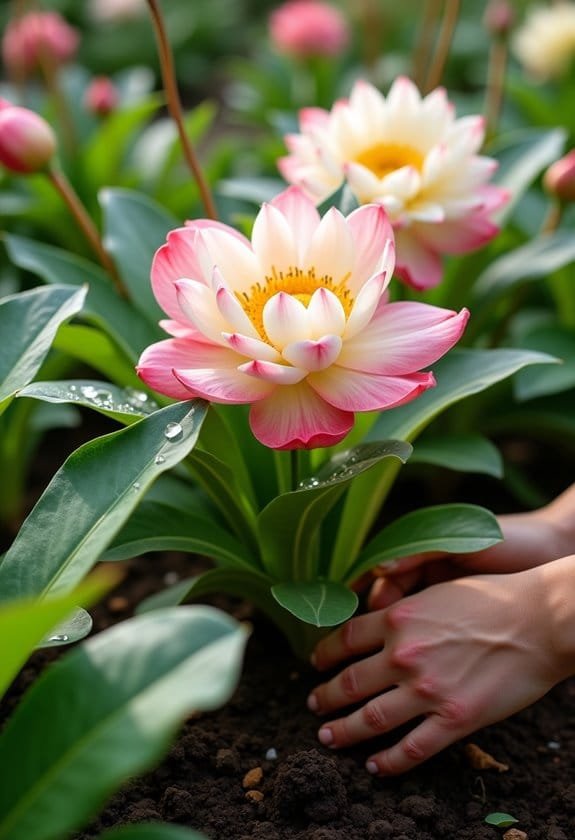
When it comes to the care and maintenance of peonies, understanding their specific needs is essential for robust growth and vibrant blooms.
These splendid plants, thriving best in hardiness zones 3-8, require ideal sunlight, well-drained yet moist soil, and a careful balance of watering, especially during their initial growth phase.
Incorporating effective planting tips, ongoing care strategies, and suitable companions not only enhances their aesthetic appeal but also fosters a thriving garden ecosystem.
Planting Tips
Successful peony planting requires a thoughtful approach to their care and maintenance. These magnificent plants thrive in full sun to light shade, demanding well-drained, fertile soil for ideal growth.
To enhance the soil's quality, gardeners should amend it with organic matter, such as compost, which greatly improves both drainage and fertility. This step is critical in preventing the waterlogging that can threaten peonies' health.
During the early growing season, it's important to water peonies generously, providing consistent moisture without saturating the soil to avoid root rot. As the plants settle, moderating subsequent watering will guarantee they remain hydrated yet not drowning.
Patience plays a key role, as it typically takes 1-2 years for peonies to establish themselves before they bloom, rewarding gardeners who wait with stunning displays of flowers.
As blooms fade in late May, it's advisable to deadhead flowers, promoting further growth for the next season.
Additionally, come fall, removing the foliage at ground level invigorates the plants for healthier development in the following year.
With these care tips, gardeners can look forward to thriving peony plants that transform their gardens into vibrant, floral sanctuaries.
Ongoing Care
Ongoing care plays an essential role in guaranteeing peonies flourish year after year. These stunning deciduous shrubs thrive best when positioned in full sun to light shade, coupled with well-drained, fertile, and consistently moist soils.
To maintain ideal health, gardeners should practice regular deadheading, removing spent flowers promptly after blooming. This encourages robust growth and enhances the plant's overall aesthetic appeal.
Mulching around the base plays an important part in maintaining soil moisture, regulating temperature, and suppressing competing weeds, which can greatly detract from a peony's vitality.
As autumn sets in, it's important to cut back the foliage at ground level to prevent any potential fungal diseases while also promoting a tidy garden appearance for the upcoming growing season.
Furthermore, monitoring for common ailments like powdery mildew and Botrytis blight is indispensable. Maintaining adequate air circulation around these plants can markedly reduce disease risks.
Suggested Companions
Choosing the right companions for peonies can greatly enhance their beauty and overall health. Peonies thrive when interplanted with herbaceous perennials like daylilies and irises, which provide complementary colors and enjoy similar conditions, from full sun to partial shade.
These companions not only complement peonies visually but also benefit from the same well-drained soil that peonies prefer.
Moreover, incorporating plants such as salvia and sedum can attract beneficial pollinators, ultimately creating a flourishing garden ecosystem. These companions are advantageous since they compete less for nutrients with peonies, allowing each plant to access what it needs for peak growth.
To guarantee the long-term vigor of peonies, proper maintenance practices are essential. Regularly deadheading spent blooms encourages healthier development and prolongs blooming periods.
Maintaining good air circulation is also important; hence, peonies should be spaced adequately apart from taller companions to reduce fungal disease risks. Mulching can retain soil moisture and suppress weed growth, further supporting the health of peonies. Additionally, planting alongside species like Common Honeysuckle not only enhances visual interest but also attracts various pollinators, contributing to a robust garden ecosystem.
Common Issues
Peonies, while generally hardy, can face challenges from pests and diseases that require vigilant monitoring.
Leaf blotch and powdery mildew, among others, can diminish their beauty and health, making it essential to implement preventive cultural practices, such as ensuring adequate air circulation and proper spacing.
Understanding these common issues not only aids in cultivating resilient plants but also enriches the garden experience by fostering a deeper connection to their care.
Pests/Diseases
Gardeners might encounter a few challenges when growing peonies, as these plants can be susceptible to various pests and diseases. Common pests, such as aphids, can infest peony plants, though introducing natural predators like ladybugs offers a natural way to manage these nuisances.
In addition, gardeners should be wary of fungal diseases, particularly leaf blotch and powdery mildew, which often develop under humid conditions or excessive shade. These fungal issues manifest as unsightly marks on the leaves, ultimately hindering the plant's vigor.
Botrytis blight represents another concern, especially during wet weather, leading to the appearance of brown spots on leaves and flowers. Preventing such outbreaks usually involves maintaining good air circulation around the plants.
Moreover, phytophthora blight, a significant threat to the roots and lower stems, arises mainly from poor drainage, underlining the importance of well-drained soil to guarantee healthy peony growth.
Interestingly, while the presence of ants on peony blooms might raise eyebrows, they typically denote an aphid problem; ants are drawn to the honeydew secreted by these pests, demonstrating nature's intricate web of interactions.
Solutions
To address common issues that can arise while cultivating peonies, implementing effective management strategies is essential.
Although these fragrant flowers are generally low-maintenance, problems like leaf blotch, powdery mildew, and Botrytis blight can emerge without proper care. To combat these concerns, gardeners should focus on ensuring good air circulation around the plants, as this can greatly reduce the risk of fungal infections, particularly during humid conditions.
Additionally, routine inspections for root and foliage diseases play an important role in early detection and management. By identifying issues promptly, growers can apply the necessary treatments to protect their peonies.
It's equally important to adhere to proper watering techniques and establish efficient soil drainage, as this prevents the onset of Phytophthora blight, a condition favoring overly wet environments.
Interestingly, while ants are often spotted on peony blooms, their presence is mostly harmless; they're attracted to the nectar and can even deter harmful insects.
Consequently, by implementing these solutions and maintaining vigilance, cultivators can enjoy robust peonies that thrive and display their alluring, fragrant blossoms with pride.
Summary
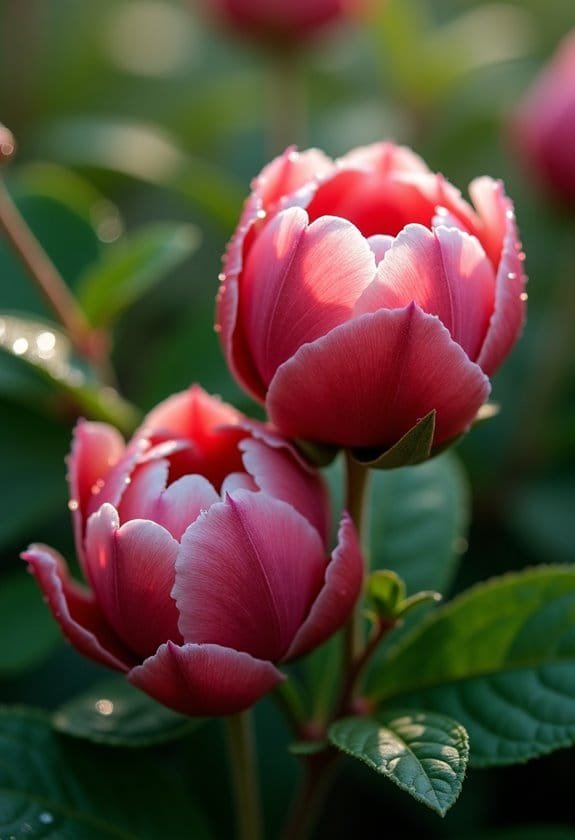
Summarizing the characteristics of Paeonia species reveals a diverse group of plants thriving in temperate regions of the Northern Hemisphere. Comprised of approximately 33 recognized species, peonies exhibit significant variations in form, from herbaceous perennials to woody shrubs.
These species peonies showcase distinct cultural requirements; some flourish in the elegance of shade while others bask in full sunlight, all necessitating sharply drained soils to thrive.
Peony flowers are equally intriguing, displaying a wide range of types and sizes. Most species present single, smaller blooms that gracefully nod, generally flowering earlier than their hybrid counterparts. Their propagation is primarily achieved through seeds, a method that aids in conserving wild populations, as division often proves less effective.
Beyond horticulture, peonies hold a rich cultural significance, historically utilized in ancient Chinese cuisine and medicine. They symbolize prosperity, featuring prominently in celebrations, particularly exemplified by events like the Luoyang Peony Festival.
The enchanting allure of these plants fosters a connection between nature and culture, embodying both aesthetic beauty and lasting impact across generations.