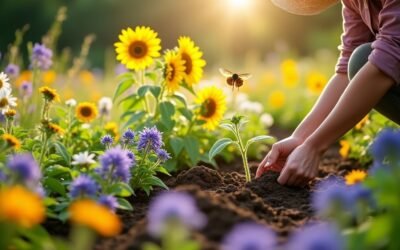
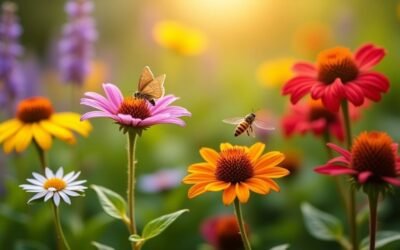
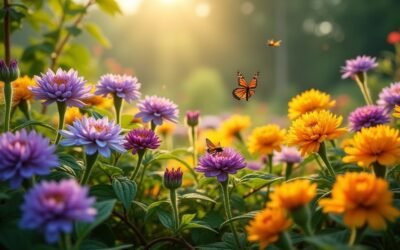
Papaver orientale, or Oriental Poppy, enchants garden enthusiasts with its vivid blooms, ranging from vibrant orange to bold red, often spanning four to six inches across. This perennial reaches heights of two to four feet, showcasing its lush foliage during cooler seasons, while flowering from June to July. Preferring full sunlight and well-drained soil with a pH of 6.5 to 7.0, it thrives in USDA hardiness zones 3a to 7b. Despite its beauty, all parts of the plant are toxic. Regular care is essential, as this plant requires periodic replacement due to its limited lifespan and environmental sensitivities, hinting at further considerations for cultivation.
Main Points
- *Papaver orientale*, or Oriental Poppy, features vibrant blooms in colors like orange, red, and pink, attracting pollinators from June to July.
- This plant thrives in full sunlight with well-drained soil, requiring a pH between 6.5 to 7.0 for optimal growth.
- Oriental Poppies have a taproot up to 12 inches deep, allowing drought resistance but are typically not long-lived perennials.
- Regular watering and early spring fertilization enhance blooming, while allowing soil to dry between sessions promotes strong roots.
- Resistant to pests, these plants may suffer from powdery mildew in humid conditions; proper spacing and companion planting can mitigate risks.
Introduction
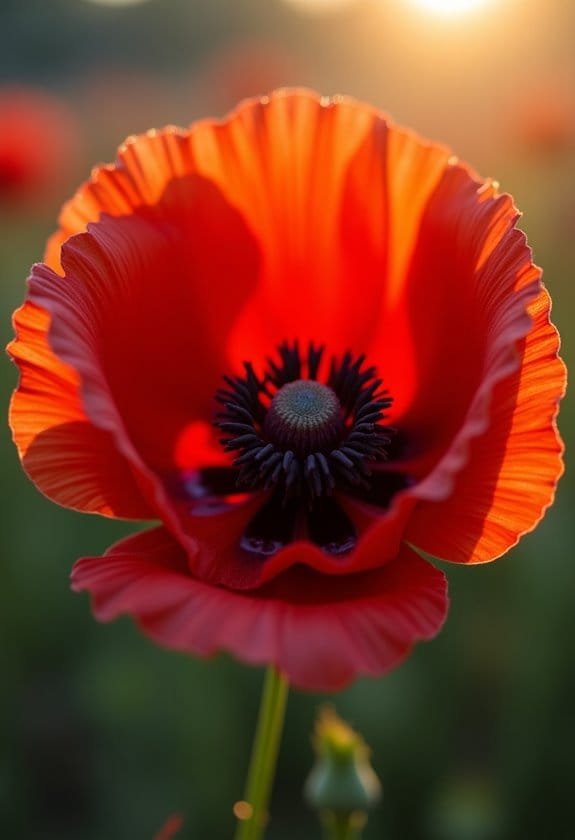
The Oriental Poppy, officially known as *Papaver orientale*, captivates gardeners with its striking aesthetics and robust nature.
This perennial, celebrated for its prolific blooms in shades of orange, red, pink, and purple, draws attention with flowers that may span up to six inches across.
Understanding its unique preferences and characteristics provides invaluable insights for successful cultivation and enhances admiration for this remarkable species.
Common Name
Often admired for their vibrant blooms, *Papaver orientale* is commonly known as the Oriental Poppy. This intriguing common name reflects not only the plant's striking visual appeal but also its suitability for garden settings.
With their large, cup-shaped flowers, Oriental poppies typically present a stunning palette of colors, including vivid orange, bold red, and soft pink, all accented by distinct black centers.
As a clump-forming herbaceous perennial, these Oriental poppies prosper in full sunlight and well-drained soil, demonstrating resilience in various garden environments. Gardeners particularly cherish their flowering period, which frequently occurs from June to July, giving an early summer burst of color that transforms any landscape.
However, one must exercise caution; while appreciated for their beauty, all parts of the Oriental Poppy are toxic and may lead to poisoning if ingested.
This duality of allure and danger paints the Oriental Poppy as a fascinating garden choice, enticing gardeners to appreciate its beauty while respecting its potential risks. Understanding the common name encapsulates the essence of this remarkable plant and highlights its importance in horticulture.
Scientific Name
Belonging to the Papaveraceae family, *Papaver orientale* reflects its botanical identity through its scientific nomenclature.
This herbaceous perennial, known as the Oriental Poppy, primarily hails from regions such as the Caucasus, northeastern Turkey, and northern Iran, showcasing a geographical range that underpins its robust adaptability. Typically, this plant reaches heights of 2 to 4 feet, while its spread can extend between 18 to 24 inches, allowing it to thrive in various garden settings.
One of the most enchanting features of *Papaver orientale* is its impressive bloom sizes, which can span up to 6 inches across. The vivid colors of its flowers—encompassing shades of scarlet, pink, white, and orange—transform any garden into a vibrant spectacle.
However, it's important to note that *Papaver orientale* isn't a long-lived perennial. Gardeners will generally need to replace it every few years to uphold ideal visual appeal and growth.
Overview
With its stunning display of large, vibrant blooms, *Papaver orientale*, commonly known as the Oriental Poppy, captures the attention of garden enthusiasts. Native to Central Asia, these herbaceous perennials thrive in cooler climates, reaching heights of 2 to 3 feet.
Their glorious blooms, measuring 4 to 6 inches in diameter, exhibit an enchanting array of colors, including vivid orange, red, and pink, each adorned with striking black centers.
Blooming from June to July, Oriental poppies provide a spectacular visual feast while attracting essential pollinators such as bees and butterflies, enhancing the biodiversity of garden environments. Preferring full sun and well-drained soil, these plants thrive best in USDA hardiness zones 3a to 7b. However, they may struggle in hot and humid conditions, so gardeners should opt for locations that provide cooler temperatures.
While Oriental poppies possess low toxicity, caution is warranted, as all plant parts can cause mild poisoning if consumed, making them a consideration for families with pets and children.
With their finely divided gray-green foliage that gracefully dies back post-bloom, Oriental poppies make a splendid addition to any garden, ensuring lasting beauty year after year. Additionally, their ability to improve soil quality through nitrogen fixation complements their aesthetic appeal when integrated with other garden plants.
Key Features
The Oriental Poppy (*Papaver orientale*) stands out not only for its impressive growth size, reaching up to 4 feet in height, but also for its stunning large blooms that burst forth in vibrant colors.
These exquisite flowers, resembling delicate crepe paper, can measure up to 6 inches in diameter and make a bold statement in any garden setting.
As spring unfolds, the flowering season captivates gardeners, inviting visual splendor and showcasing the plant's hardiness across diverse environments.
Growth Size
Growing impressively, Oriental Poppies typically reach heights of 2 to 4 feet (60 to 120 cm) and widths of 18 to 24 inches (45 to 60 cm), making them striking focal points in any garden.
These robust plants are characterized by their vigorous growth size, providing an aesthetically pleasing presence with substantial impact. When in bloom, Oriental poppies showcase large, vibrant flowers that can measure up to 6 inches (15 cm) in diameter.
These blooms, adorned in vivid hues such as scarlet, pink, white, and orange, create a breathtaking display that captivates onlookers.
Beneath the surface, Oriental poppies develop a deep taproot, often extending 12 inches into the soil, which enhances their drought resistance while complicating the process of division.
Their finely divided, downy leaves, which lend a delicate quality to the plant, become dormant during the oppressive summer heat, only to regrow robustly in the fall.
Thriving in full sun, these poppies can adapt to light shade, given they receive at least 6 hours of sunlight daily.
Consequently, their remarkable growth size contributes not only to individual beauty but also to overall garden vibrancy.
Appearance
Oriental poppies boast striking visual characteristics that make them stand out in any garden setting. These poppies feature large, cup-shaped flowers that can reach an impressive 4 to 6 inches in diameter. Vibrant colors, including scarlet, pink, white, and orange, grace their petals, with fascinating variations such as watermelon and purple adding to their allure. The delicate, crepe-paper-like texture of the blooms further enhances their appeal, creating an enchanting contrast against the softly textured foliage.
Growing between 2 to 4 feet tall and 1 to 2 feet wide, oriental poppies create a bold visual impact, especially when planted en masse. The finely divided, downy leaves, which exhibit a gray-green hue, provide a lush backdrop, although they die back after the flowering period in summer.
The plant's stiff, hairy stems not only support the showy flowers but also make for excellent cut flowers in arrangements. Additionally, the vibrant blooms attract a variety of pollinators, including bees and butterflies, contributing to a lively and flourishing garden ecosystem.
Ultimately, the striking appearance of oriental poppies fascinates both the eye and the heart, making them a cherished addition to any floral display.
Flowering Season
During early summer, from June to July, vibrant blooms of oriental poppies transform gardens into bursts of color. This flowering season captivates all who behold their striking large cup-shaped blooms, which can reach diameters of 4 to 6 inches.
These magnificent flowers create a stunning visual impact, standing out with their delicate, crepe-paper-like petals. This unique texture adds an air of elegance, enhancing gardens' overall aesthetic charm during these warm months.
For ideal blooming, the oriental poppy requires full sunlight, as adequate light exposure is essential for vigorous flower development. As the flowering season peaks, enthusiasts marvel at the rich orange, red, and even purple hues that define these impressive plants.
Once the blooms fade, the foliage will typically wither and enter a dormant phase, particularly during the harsh summer heat. However, this loss isn't permanent, as the plant will regrow once cooler temperatures arrive in fall.
Consequently, gardeners planting oriental poppies enjoy a vibrant, ephemeral display, reminding them every summer of nature's cyclical beauty and resilience.
Growing Requirements
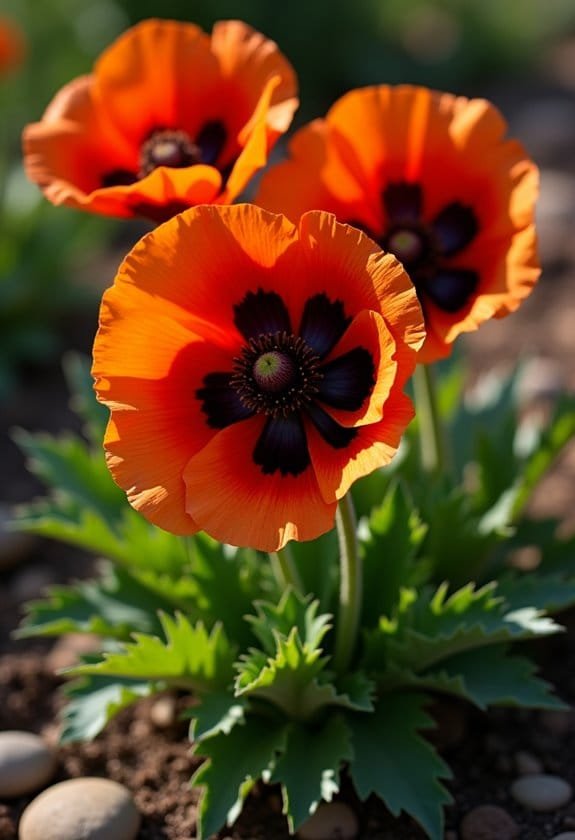
Oriental Poppies, or Papaver Orientale, flourish under specific growing conditions that guarantee their vibrant blooms.
They require at least six hours of direct sunlight daily, thrive in well-drained soil, and prefer USDA hardiness zones 3a to 7b, where a chilling period aids in germination.
Ideal watering practices include allowing the soil to dry out between sessions, minimizing the risk of root rot while nurturing their robust growth.
Light
Achieving ideal growth for Papaver orientale requires ensuring adequate light exposure. These stunning plants thrive in full sun, needing a minimum of six hours of direct sunlight each day to foster vigorous growth and abundant blooms. In light conditions, they flourish, displaying their large, vibrant flowers that captivate the eye.
However, while they can tolerate light shade, prolonged low-light conditions markedly hinder their flower production and overall vitality. The need for consistent sunlight is also evident in many other flowering plants, such as the Common Poppy, which flourishes with similar light requirements.
To achieve the best flowering results, it's important to select a planting site with ample light, as insufficient exposure can stifle the energy needed for healthy development.
It's significant, too, to take into account that excessive heat and humidity can detract from their growth; thus, choosing a location that balances sun exposure without overwhelming heat is critical. This sensitive interplay enables the establishment of a robust root system, which supports the plant's longevity and aesthetic appeal. Additionally, pairing them with pollinator flowers can help enhance the overall ecosystem health of the garden.
Soil
For ideal growth, Papaver orientale demands well-drained soil that supports its vibrant development. This enchanting plant thrives in a range of soil types, particularly sandy and loamy soils, which possess the drainage capacity essential for its root health.
The best pH level for the soil should fall within the neutral range of 6.5 to 7.0, as this balance fosters robust growth and prolific flowering.
To further enhance soil quality, gardeners can incorporate organic matter such as compost or peat moss, enriching the soil's fertility and improving drainage. This practice creates a nutrient-rich environment that encourages the plant's vigorous growth while preventing waterlogged conditions, which can lead to detrimental root rot.
It's also important to recognize that Papaver orientale requires a cold period to germinate effectively. Thus, planting seeds in the fall or early spring aligns with the plant's natural life cycle. Additionally, like Hylotelephium telephium, Papaver orientale thrives best in well-drained soil, which is critical for preventing diseases such as root rot.
Water
Watering is fundamental for the healthy growth of Papaver orientale. These plants thrive in well-drained soil, as poor drainage or excessive water can inhibit blooms and lead to the dreaded root rot. Consequently, maintaining an ideal balance is essential.
During the establishment period, consistent moisture levels are critical to support robust root development, helping the plant anchor itself firmly in the ground.
Once established, Oriental Poppies have a remarkable ability to tolerate brief droughts. However, gardeners should confirm that the soil dries out between watering sessions, avoiding any risk of over-saturation. Ideally, deep watering should occur every week, especially during the growing season, but adjustments may be necessary based on seasonal variations.
In early spring, to enhance flowering potential, a bloom-boosting fertilizer featuring phosphorus can be applied, further improving the plant's health and resilience.
Proper watering practices, tailored to the specific needs of Papaver orientale, not only promote healthy foliage but directly influence the quality and vibrancy of blooms, transforming any garden into a breathtaking tapestry of color.
Gardeners committed to these fundamental practices will certainly appreciate the splendid display this poppy can offer.
Temperature
Ideal temperatures play a crucial role in the growth of Papaver orientale. This remarkable plant thrives in cold climates, requiring a distinct cold period to trigger its blooming cycle in the following season. Recommended USDA hardiness zones range from 3a to 7b, ensuring that these poppies flourish where winter temperatures sufficiently dip, allowing for essential dormancy.
Conversely, Oriental poppies struggle in heat and humidity, which can severely hinder both their growth and prolific flowering potential. Excessive warmth and moisture create an unfavorable environment, often leading to stunted development.
Additionally, for peak growth, these poppies need full sun exposure; at least six hours of sunlight daily is crucial for their vitality.
Moreover, careful management of soil drainage is critical, as excessive moisture can drown the roots, further complicating conditions that emerge from high temperatures.
Fundamentally, while Papaver orientale revels in the cold, gardeners must be vigilant, ensuring that it doesn't face the detrimental effects of heat and humidity. By aligning their growing conditions with nature's cues, enthusiasts can cultivate flourishing displays of these stunning, vibrant blooms.
Pollinator Criteria
Oriental Poppies, with their large, cup-shaped blooms, naturally attract a diversity of pollinators, including bees, butterflies, and hummingbirds.
This attraction is essential for effective pollination, as the vibrant petals offer a rich nectar source during critical spring and early summer months when many flowers have yet to open.
Attracted Pollinators
Attracting a variety of pollinators, *Papaver orientale* showcases vibrant blooms that serve as a buffet for bees, butterflies, and hummingbirds. These remarkable poppies bloom from June to July, encompassing a wide spectrum of vivid colors like orange, red, and pink, which act as effective visual cues for pollinators actively searching for nectar sources during their peak season.
The large, open cup-shaped structure of these blooms allows easy access to the nutritious nectar within, further enhancing their allure. This accessible design not only entices pollinators but greatly increases the likelihood of successful visitation and, consequently, pollination. Chicory flowers are also known for their role in attracting various beneficial insects, thereby supporting pollination in adjacent plant species.
Additionally, by planting Oriental Poppies in groups, gardeners create a striking visual display that enhances their appeal, as clustered flowers mimic natural habitats, drawing in more pollinators keen for sustenance.
In effect, through their stunning aesthetics and strategic growth patterns, Oriental Poppies play a crucial role in supporting local ecosystems. They provide essential food sources that sustain various pollinators, thereby contributing to the intricate web of life necessary for plant reproduction and overall biodiversity.
Interestingly, the cultivation of *Papaver orientale* can be complemented by drought-tolerant companions, such as Great Mullein, which thrive in similar growing conditions and help create a balanced ecosystem.
Engaging these important creatures solidifies *Papaver orientale* as a favorite among both horticulturists and nature enthusiasts.
Pollination Method
With their striking colors and accessible nectar, *Papaver orientale* blooms effectively draw in a diverse range of pollinators, which play an important role in their reproduction. The large, cup-shaped blossoms can measure up to 6 inches in diameter, forming an inviting structure for species such as bees, butterflies, and hummingbirds. This design not only facilitates easy navigation for pollinators but also maximizes nectar accessibility, critical for attracting them.
Flowering primarily occurs between June and July, aligning perfectly with the peak activity periods of many pollinators. The vivid orange and red hues of the flowers are particularly appealing to insects, enhancing visibility in the vibrant landscape.
As pollinators visit the blooms to collect nectar, they inadvertently transfer pollen between flowers, a significant process that aids in seed set. This pollination method reinforces the overall health of *Papaver orientale* populations, ensuring genetic diversity and resilience.
In this mutually beneficial relationship, blooms supply the necessary nutrients to pollinators, while these agents of change facilitate vital reproductive success. Consequently, understanding the intricate dynamics of this pollination method fosters appreciation for the essential role of pollinators in sustaining plant species.
Care & Maintenance
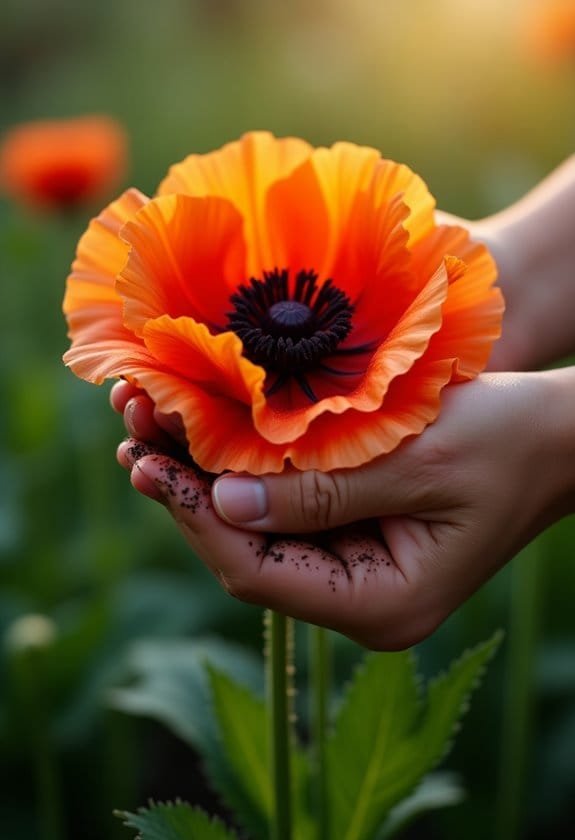
In caring for Papaver Orientale, one must consider both the initial planting conditions and ongoing maintenance.
These vibrant blooms flourish best in full sun and well-drained soil, which demands careful management to guarantee the roots remain healthy and avoid rot.
Additionally, selecting suitable companions and timing plant divisions can enhance overall garden aesthetics and promote robust growth, making strategic planning essential for any garden enthusiast.
Planting Tips
Planting Oriental Poppies requires careful attention to their specific needs for ideal growth and flowering. To successfully plant Oriental Poppies, gardeners should guarantee they use well-draining soil with a neutral pH, preferably between 6.5 and 7.0.
These vibrant flowers thrive in full sun, basking in sunlight for at least six hours daily. When growing Oriental poppies, regular watering is essential, but it's important to allow the soil to dry out between waterings to avert root rot.
Early spring fertilization with a balanced slow-release fertilizer encourages healthy foliage development and promotes the production of spectacular blooms. After flowering, cutting back the foliage to ground level helps conserve energy as the plants shift into their summer dormancy.
For gardeners looking to maintain the liveliness of their poppy patches, division should occur in late summer. This process revitalizes healthy clumps by guaranteeing each new section possesses eyes and a portion of the taproot for ideal reestablishment.
Ongoing Care
After planting Oriental Poppies, ongoing care focuses on guaranteeing their vibrant health and stunning blooms.
These resilient plants thrive best with minimal maintenance. After blooming, they naturally die back, generally requiring no cutting back of foliage, which simplifies care efforts for gardeners. Regular soil checks for nutrient levels, especially phosphorus, are essential for promoting healthy flowering and robust growth.
During winter, protection becomes critical. Mulching acts as a protective blanket, insulating garden-planted Oriental Poppies from harsh temperatures. Container-grown variants, however, may need additional insulation to guard against extreme cold.
While tidying up shriveling foliage can enhance visual appeal, it remains completely optional; these plants usually do well with little intervention.
Importantly, watering demands careful attention. Consistent hydration supports growth, but overwatering can lead to detrimental root rot, inhibiting blooming potential. Additionally, ensuring well-drained soil helps prevent root rot and maintains optimal growing conditions.
To prevent this, gardeners should guarantee well-draining conditions and adjust their watering routine based on weather and soil moisture levels.
Suggested Companions
Choosing the right companions for Oriental Poppies can elevate any garden design and guarantee a stunning display throughout the growing season.
These exquisite flowers thrive when partnered with late summer bloomers such as Black-eyed Susans, providing continuous color that captures the eye long after the poppies have faded. Companion plants like peonies and irises enhance their striking appearance, with large, brightly colored blooms that create a harmonious visual tapestry. Additionally, the use of well-drained soils helps ensure optimal growth for these companions and the poppies alike.
To further improve a garden's appeal, gardeners can stagger different color variants of Oriental Poppies—white, plum, and watermelon—crafting magnificent borders filled with vibrant contrasts.
In addition, the inclusion of drought-tolerant plants, such as lavender or sedum, can greatly benefit overall garden health, as Oriental Poppies can withstand brief periods of drought once established. Interestingly, these drought-tolerant plants often pair well with other drought-tolerant plants like Large Thyme, creating an efficient and attractive garden ecosystem.
Using ground covers or ornamental grasses adds delightful textural contrast, enriching the garden's design with a layered aesthetic.
By thoughtfully selecting companion plants, gardeners can't only cultivate beauty but also foster an ecosystem that thrives, showcasing the remarkable synergy between different species. The California poppy serves as an excellent food source for pollinators, enhancing the garden's biodiversity.
This careful planning guarantees a dynamic landscape that continually delights the senses throughout the seasons.
Common Issues
Papaver Orientale (Oriental Poppy)
Common Issues
While Oriental Poppies are admired for their striking beauty, they face several common issues that can compromise their health and aesthetics.
These plants are particularly vulnerable to powdery mildew in shaded environments, making adequate sunlight exposure essential. Additionally, factors such as overwatering can lead to detrimental root rot. Yellow Archangel's aggressiveness in shaded areas can exacerbate this issue by creating dense mats that limit sunlight for neighboring plants.
Overcrowding may foster disease progression, underscoring the importance of timely division, as even minor stress from drought can affect their vibrant blooms and overall vigor. Furthermore, introducing native species can help create competition that limits disease spread and enhances garden biodiversity.
Pests/Diseases
Oriental Poppies, though generally resistant to pests, can occasionally face issues from aphids and stem borers, which damage stems and foliage. These pests feed on the sap, leading to wilting and weakened plants, making them more susceptible to other diseases.
In addition, Oriental Poppies can experience fungal diseases such as powdery mildew, particularly in humid conditions where air circulation is compromised.
Poor cultural practices contribute greatly to the health of these plants. Overwatering can result in root rot, a serious condition that stunts growth and can be fatal. Root rot thrives in waterlogged soil, where the delicate roots no longer receive the oxygen they need.
Moreover, insufficient spacing between plants can hinder air movement, creating an environment conducive to diseases like botrytis blight, which manifests through wilting or browning leaves.
Regularly monitoring for signs of these pests and diseases is essential, as early detection allows for effective management.
Providing adequate space for each plant promotes better air circulation and minimizes the risk of disease buildup. Consequently, maintaining proper cultivation practices is vital for sustaining the vibrant health and beauty of Oriental Poppies in any garden setting.
Solutions
To combat common issues faced by Oriental Poppies, gardeners should prioritize proper cultural practices. Overwatering is a key factor that can lead to root rot, making it essential to plant these beauties in well-drained soil. Making certain the soil dries between waterings considerably enhances their health. Additionally, it is important to monitor soil moisture levels, similar to the requirements of the fine-leaved water dropwort's need for consistently moist conditions.
Furthermore, maintaining good air circulation around the plants proves critical in preventing powdery mildew and other fungal diseases that thrive in low-light conditions.
To further address potential overcrowding, which often results in diminished blooming and heightened disease susceptibility, gardeners are advised to divide established clumps every five years. This practice not only promotes healthy growth but also allows for improved air flow among the plants.
Additionally, applying a balanced slow-release fertilizer in spring supplies necessary nutrients, fostering peak bloom production and overall vitality.
As summer heat sets in and plants naturally die back, utilizing mulch can provide welcomed winter protection, enhancing their resilience and readiness for regeneration in the fall. Understanding proper soil moisture is crucial, as it also relates to the requirements of other plants like Prunus avium, which thrive in similar conditions.
Summary
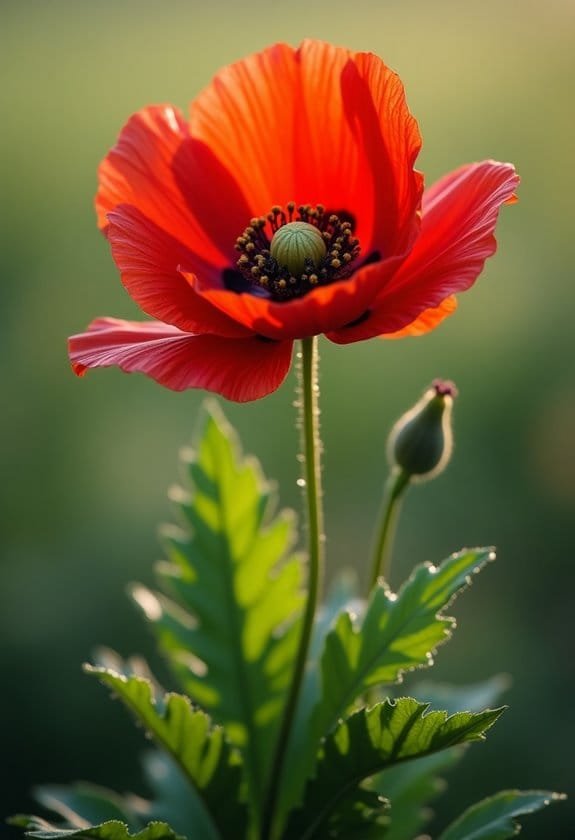
With its striking beauty and unique characteristics, *Papaver orientale*, or the Oriental Poppy, captivates gardeners and pollinators alike.
This perennial plant typically reaches heights of 2 to 4 feet, showcasing large, cup-shaped flowers in vibrant hues such as orange, red, and pink, each adorned with a dramatic black center. Thriving best in well-drained garden soil and under the full embrace of sunlight, Oriental Poppies flourish in USDA zones 3a to 8, although they struggle in heat and humidity.
These poppies are winter hardy, requiring a cold period for effective seed germination. They can be propagated through seeds or root cuttings, though variations in flower color may occur.
Flowering between June and July, Oriental Poppies create a vivid spectacle, attracting numerous pollinators, including bees, butterflies, and hummingbirds, who play a crucial role in their ecosystem.
However, caution is necessary as all parts of the Oriental Poppy are toxic to humans and pets, necessitating careful handling.
Understanding these attributes highlights the Oriental Poppy's dual role as both a stunning garden plant and a key component of local biodiversity.