Parthenocissus tricuspidata, known as Boston Ivy, is a remarkably vigorous climbing vine that can reach heights of 30 to 60 feet, making it ideal for covering walls and trellises. With its dense, three-lobed leaves spanning up to 8 inches, this plant shifts from rich green in summer to a stunning burgundy in fall, adding seasonal color to gardens. It thrives in USDA zones 4 through 8, preferring well-drained, loamy soil and moderate watering. While requiring minimal maintenance, vigilance against pests and diseases is essential. The ecological benefits, including attracting pollinators and providing berries for birds, enhance its overall appeal, inviting more insights into its cultivation.
Main Points
- Parthenocissus tricuspidata, commonly known as Boston Ivy, is a vigorous climbing vine that thrives in USDA zones 4 to 8.
- The plant features dense, three-lobed leaves that change from green in summer to vibrant burgundy in fall.
- Boston Ivy blooms inconspicuously from late spring to early summer, attracting pollinators like bees and butterflies.
- It typically requires well-drained, loamy soil and at least 4-6 hours of sunlight daily for optimal growth.
- Once established, Boston Ivy is low maintenance but needs annual pruning to manage its aggressive growth.
Introduction
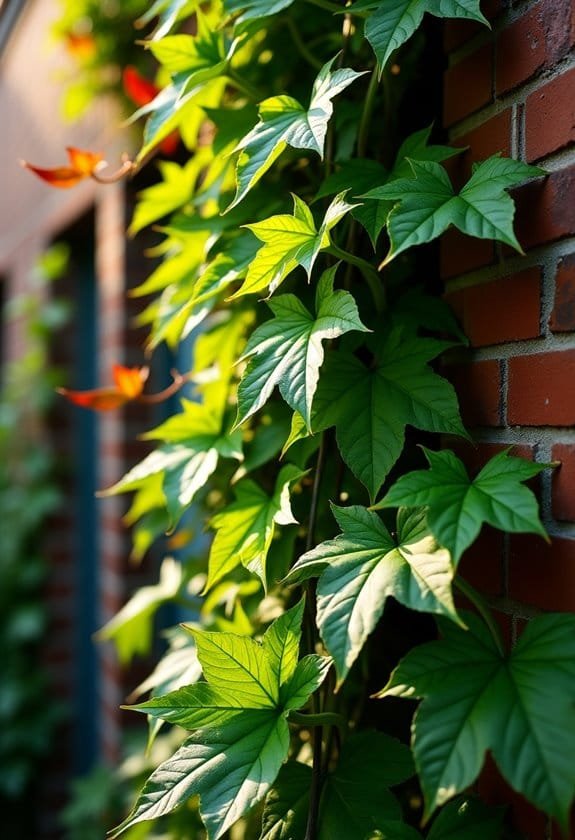
Boston Ivy, scientifically known as Parthenocissus tricuspidata, stands out as a remarkable deciduous climbing vine that captivates gardeners and nature enthusiasts alike.
Its lush green leaves transform into a stunning display of burgundy in the fall, providing not just beauty but also practical benefits, as it can grow up to 50 feet tall.
Understanding its preferred growing conditions and wildlife-friendly features enhances its appeal, making Boston Ivy an excellent choice for enhancing vertical spaces.
Common Name
Climbing gracefully across walls and fences, the common names of Parthenocissus tricuspidata—namely Boston Ivy, Japanese Creeper, and Grape Ivy—reflect its distinctive habits and alluring aesthetics.
As a deciduous vine, Boston Ivy adorns structures with vibrant green foliage that changes to stunning shades of burgundy and orange-red each fall, enchanting those who admire it. This remarkable plant's ability to adhere to various surfaces using tiny tendrils equipped with adhesive discs highlights its climbing prowess, enabling it to navigate vertical spaces effortlessly.
The moniker Japanese Creeper hints at its origin and adaptability, thriving in diverse climates and soil types. Spanning USDA zones 4 through 8, Boston Ivy is a favorite for gardeners and architects alike, providing a lush visual appeal.
In spring and summer, it produces inconspicuous greenish flowers, followed by dark bluish-black berries that serve as nourishment for local bird populations, enriching wildlife habitats. This multifaceted vine not only enhances aesthetics but contributes to ecological balance, making it a cherished choice in gardens and urban landscapes.
Therefore, the names Boston Ivy, Japanese Creeper, and Grape Ivy serve to encapsulate its beauty and ecological significance.
Scientific Name
Known scientifically as Parthenocissus tricuspidata, this vine captures interest with its unique characteristics. The name itself derives from Greek and Latin, translating to "virgin vine" and "three points," aptly describing the plant's distinctive lobed leaves.
Belonging to the grape family, Vitaceae, Parthenocissus tricuspidata is native to East Asia, thriving especially in regions of China, Japan, and Korea.
Typically, this vigorous deciduous vine can grow anywhere from 30 to 50 feet tall, demonstrating its adaptability to various structures. The small adhesive tendrils it produces enable the Boston Ivy to climb efficiently, clinging effortlessly to surfaces.
Its leaves can span up to 8 inches wide and delight observers with vibrant autumn hues, transforming from lush green to stunning shades of burgundy and red.
In late spring to early summer, Parthenocissus tricuspidata blooms inconspicuously with greenish-white flowers, which eventually give rise to small, dark blue-black berries.
These berries serve as a crucial food source for local birds, illustrating the ecological significance of this enchanting vine. With its striking appearance and beneficial attributes, the Boston Ivy stands out in both landscape and biodiversity.
Overview
Thriving in gardens and across urban landscapes, Parthenocissus tricuspidata captures attention with its lush foliage and vibrant autumn colors. More commonly known as Boston Ivy, this remarkable deciduous climbing vine extends its reach between 30 and 60 feet high and 5 to 10 feet wide, making it a striking addition to various environments.
Its distinctive three-lobed leaves shift from a rich green in the summer to mesmerizing burgundy and orange-red hues in the crisp fall air.
Resilient, Boston Ivy flourishes in USDA zones 4 through 8 and adapts to diverse soil types, although it prefers well-drained, loamy soil.
Its climbing ability is quite fascinating; it employs short tendrils that culminate in adhesive disks, allowing it to grip and ascend vertical surfaces like walls and trellises with ease.
As a bonus for wildlife enthusiasts, this plant produces inconspicuous greenish-white flowers, subsequently giving rise to dark bluish-black berries.
These fruits not only attract birds but also provide nourishment for various forms of wildlife, further enhancing the ecological value of tricuspidata in any garden setting.
Key Features
Boston Ivy, or Parthenocissus tricuspidata, showcases an impressive growth size, climbing up to 60 feet with ease.
Its striking lobed leaves shift from vibrant green in summer to brilliant shades of burgundy and orange in fall, creating a picturesque landscape.
Additionally, the plant produces unassuming greenish-white flowers in late spring, which, though modest in appearance, are succeeded by dark bluish-black berries that attract local bird species.
Growth Size
Climbing to impressive heights, Boston Ivy (Parthenocissus tricuspidata) can reach between 30 to 60 feet tall and spread 5 to 10 feet wide, making it a vigorous option for vertical gardening. Its remarkable climbing capabilities stem from small tendrils adorned with adhesive disks, which adeptly secure the vine to various surfaces such as walls, trellises, and fences. This ability not only facilitates a stunning display but also enables the plant to conquer expansive vertical spaces efficiently.
The growth size of Boston Ivy positions it as a formidable ally for those seeking to enhance their landscapes with rapid coverage. With a remarkable growth rate, this deciduous climber can quickly envelop unsightly structures, igniting areas with lush greenery.
Thriving within USDA zones 4 through 8, it adapts effortlessly to various soil types, requiring merely full sun to partial shade to flourish effectively.
As the seasons change, Boston Ivy captivates observers by transforming its foliage, boasting leaves that can expand up to 8 inches wide, consequently providing an enticing visual before transcending into vibrant burgundy and red hues in autumn—an aesthetic delight for any garden.
Appearance
What sets Boston Ivy apart in the domain of climbing plants is its striking appearance, characterized by dense, ovate or three-lobed leaves that can grow up to 8 inches wide. The vibrant green foliage paints a lush picture against various vertical structures, transforming ordinary walls into breathtaking displays of nature.
As seasons change, these leaves take on a spectacular transformation, shifting from enchanting green hues to rich shades of burgundy, orange, and wine-red in the fall.
The vine itself showcases impressive growth, reaching heights of up to 50 feet and widths of 10 feet, making it an ideal choice for covering trellises, fences, and other outdoor surfaces. Boston Ivy employs adhesive tendrils equipped with sticky discs, allowing it to cling securely and scale surfaces effortlessly.
Its dense foliage not only serves as a visually appealing feature but also provides excellent ground cover, enhancing garden aesthetics.
While the inconspicuous greenish-white flowers appear in late spring, they play a secondary role to the plant's stunning leaves. With the cultivar 'Veitchii' boasting smaller, bronze-purple leaves in spring, Boston Ivy's rich visual appeal truly enriches exterior landscapes.
Flowering Season
The flowering season of Boston Ivy typically occurs in late spring to early summer, bringing with it clusters of inconspicuous greenish-white flowers. These blooms, though modest and often overlooked, play a crucial role in the plant's lifecycle and ecosystem.
While they may lack the vibrant allure of more ostentatious flora, Boston Ivy's greenish flowers attract essential pollinators, such as bees, contributing to local biodiversity.
As the flowering progresses, the plant shifts into producing small dark blue-black berries, which remain concealed amid the lush foliage. This berry development further demonstrates the plant's resilience and adaptability, providing nourishment for various bird species and enriching the surrounding environment.
Interestingly, the flowering period precedes the stunning transformation of the ivy's leaves, which shift dramatically from green to a breathtaking array of burgundy and red hues in the fall.
This seasonal shift highlights the unique beauty of Boston Ivy, reminding observers that its contributions extend well beyond mere aesthetics.
Ultimately, even humble blooms can yield significant ecological advantages as each flowering season unfolds.
Growing Requirements
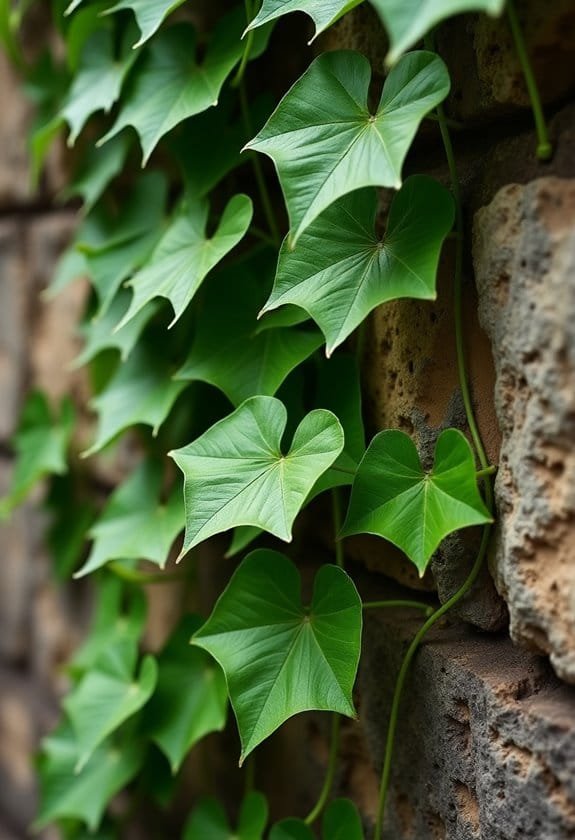
Boston Ivy thrives in a harmonious blend of light, which should be between 4 to 6 hours daily, and well-drained, loamy soil.
This resilient plant flourishes in USDA zones 4 through 8, efficiently adapting to varying temperatures down to approximately 15°F while requiring regular watering, especially during its initial growth stages.
Once established, it becomes a low-maintenance delight, embodying nature's tenacity in both sun and shade.
Light
While Boston Ivy can adapt to various light conditions, it thrives best in full sun, requiring at least six hours of direct sunlight daily to achieve vibrant fall colors. Enhanced exposure to sunlight not only contributes to the plant's vigorous growth but also plays a critical role in its stunning autumn display. Additionally, ensuring that the soil is well-drained can prevent issues similar to those experienced with other plants like heather.
The ideal conditions for exuberant foliage, signified by shades of orange and red, occur in sunnier locations.
Partial shade, receiving around four to six hours of sunlight, can still support Boston Ivy, but the growth mightn't be as robust. In these lower light conditions, the vine's rate of growth may slow, reducing its effectiveness in climbing structures such as walls and trellises.
While Boston Ivy can tolerate periods of full shade, this lack of light can lead to diminished foliage vigor and muted fall color.
For those establishing new plants, offering sufficient sunlight is essential for promoting strong root development and overall health. Therefore, gardeners must be mindful when selecting planting sites, as light exposure directly influences the plant's capacity to flourish and showcase its enchanting seasonal transformation. Additionally, ensuring optimal drainage conditions can further enhance growth and prevent issues such as root rot common in other plants.
Soil
Thriving in a range of soil types, Boston Ivy prefers well-drained, loamy soil for ideal growth and health. This plant exhibits adaptability, flourishing in average, dry to medium soil conditions, making it resilient in diverse environments.
When selecting a site for planting, it's vital to guarantee that the soil isn't too compacted, as this can severely hinder root development. Compacted soil restricts the roots' ability to access vital nutrients and water, ultimately impacting the plant's vigor.
Regular mulching around young vines is a beneficial practice, offering moisture retention and protection for the delicate roots during the harsh winter months.
While Boston Ivy shows tolerance to various soil types, it's important to avoid overly wet or poorly drained soils, which can lead to detrimental root rot. This condition arises when excess moisture suffocates roots, causing decay and potentially killing the plant.
Water
Maintaining proper moisture levels is essential for Boston Ivy's growth, especially during its formative stages. This vine prefers average water needs, requiring consistent moisture to thrive, particularly in dry spells. For young vines, regular watering proves invaluable as it aids in developing a robust root system that supports healthy growth.
During the initial growing season, the need for water is particularly significant, as this is when the plant establishes itself in the soil. While Boston Ivy becomes drought-tolerant once mature, the young plants demand a more attentive watering regime.
They flourish in well-drained soils, which mitigates the risk of root rot and encourages ideal growth conditions. However, excessive water or poor drainage can lead to detrimental issues, such as the onset of mildews and root diseases.
As a result, careful monitoring of both water levels and soil moisture is essential to guarantee the vine's health and well-being. By striking the right balance in moisture levels, gardeners can cultivate a thriving Boston Ivy that beautifully adorns their spaces, enhancing both aesthetics and ecosystem resilience.
Temperature
Given its adaptability, Boston Ivy (Parthenocissus tricuspidata) flourishes in a variety of temperature conditions. This resilient vine is particularly cold hardy, surviving temperatures as low as 15°F, and thrives within USDA hardiness zones 4 through 8.
Its ability to endure diverse climates makes Boston Ivy a preferred choice in urban settings and less temperate regions, where extreme fluctuations might otherwise challenge less resilient species.
While Boston Ivy prefers to bask in full sunlight for at least six hours daily, it demonstrates remarkable tolerance toward partial shade, functioning adequately even in full shade.
This adaptability allows it to maintain vigorous growth under varying light conditions. In addition, the vine's stunning fall color—transforming from a lush green to vibrant shades of orange-red—is most pronounced when the plant receives ample sunlight.
To support these temperature-resilient qualities, regular watering is essential, particularly during dry spells or during the initial stages of growth.
Pollinator Criteria
In the world of Boston Ivy, the subtle charm of its greenish-white flowers may not immediately capture attention, yet they play an essential role in attracting curious pollinators.
Primarily, bees and butterflies are drawn to the nectar offered during the late spring to early summer, enhancing the ecosystem's diversity. The plant's flowering period, which aligns with that of other species like Campanula poscharskyana, helps to create a continuous nectar supply for pollinators throughout the growing season.
While the plant's pollination method may not seem spectacular, the vine's adaptability to various environments makes it a significant ally for sustaining urban pollinator populations. Additionally, the early spring flowering of Prunus spinosa is essential for providing food resources for pollinators that emerge at that time.
Attracted Pollinators
While many gardeners seek to enhance their landscapes, Boston Ivy stands out for its ability to attract a variety of pollinators, including bees and butterflies. This impressive vine, scientifically known as Parthenocissus tricuspidata, blooms with inconspicuous greenish-white flowers in late spring and early summer.
These flowers, though subtle, are rich in nectar, which serves as an essential food source, drawing various pollinators during their active foraging seasons.
The lush green leaves of Boston Ivy provide not only aesthetic appeal but also a supportive habitat for wildlife. By cultivating this resilient plant, gardeners enhance their local ecosystems and contribute to biodiversity, as the thriving pollinator population benefits from the consistent food supply provided by the flowers. Furthermore, the blooming period of Boston Ivy coincides with that of Germander Speedwell(Germander Speedwell), which also attracts early-season pollinators.
In addition, once the flowering period concludes, the berries produced by Boston Ivy continue to nourish birds, extending the plant's significance in the food web.
With this capacity to thrive in various conditions, Boston Ivy becomes an excellent choice for those looking to create a vibrant, pollinator-friendly garden environment.
In fostering these relationships, gardeners play an important role in promoting the health and sustainability of local pollinator populations.
Pollination Method
Although Boston Ivy's flowers are designed for wind pollination, they can still attract a limited number of insect pollinators due to the nectar they offer. These inconspicuous greenish-white flowers bloom in late spring to early summer, providing a subtle, yet rewarding, nectar source for visiting insects.
Their structural design minimizes reliance on visually enticing features, making them less appealing to most pollinators. Instead, the plant effectively utilizes wind to disseminate pollen.
Boston Ivy exhibits both self-pollination and cross-pollination capabilities, as it possesses male and female reproductive structures within its flowers. This dual functionality enhances its reproductive success, allowing it to thrive in various environments.
While the small dark blue grapes that develop after flowering offer nourishment for birds, they don't markedly contribute to the plant's propagation.
Interestingly, the plant's climbing ability and dense foliage create microhabitats that can nurture diverse pollinator species. This ecological interaction highlights the subtle relationship between Boston Ivy and its environment, where, even if the flowers aren't heavily reliant on pollination from insects, the presence of these organisms still plays a limited, yet crucial role in the ecosystem.
Care & Maintenance
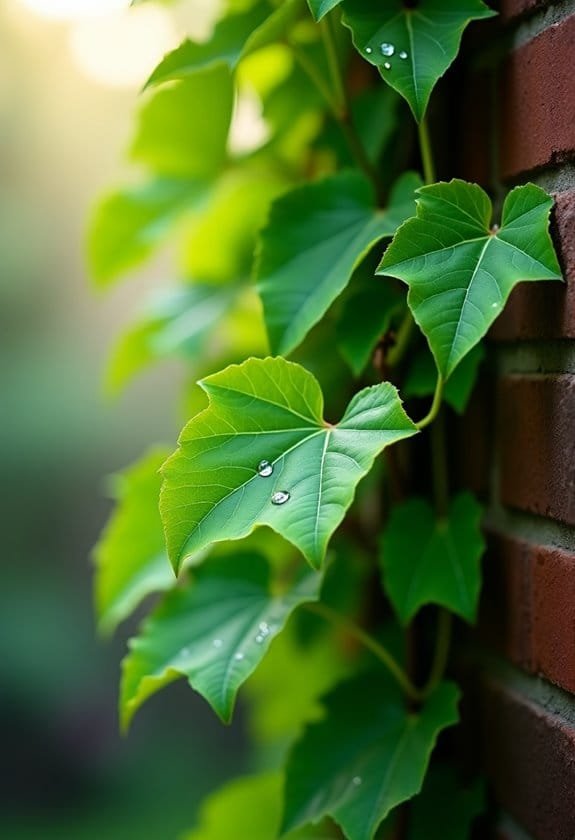
Caring for Boston Ivy involves a blend of strategic principles and attention to details, ensuring a healthy and thriving plant.
Once established, it requires minimal upkeep; however, regular pruning in late winter helps maintain its shape and encourages robust growth.
Young vines particularly benefit from diligent watering during dry spells and protective mulching in winter, emphasizing the importance of nurturing them through their formative stages.
Planting Tips
Successfully establishing Boston Ivy requires careful attention to planting and ongoing maintenance practices.
To achieve ideal growth, select a site with well-drained, loamy soil and adequate sunlight. Ideally, aim for exposure to full sun—about six hours daily—or partial shade, ideally four to six hours, to promote vibrant foliage and stunning fall colors.
When planting, consider that the tendrils of Boston Ivy will strongly adhere to various surfaces. This natural tendency can lead to complications if the vine becomes too aggressive and requires removal. As a result, it's important to plan accordingly.
During the establishment phase, young vines benefit from regular watering, particularly during dry spells. In winter, mulching offers significant protection against harsh conditions.
Maintenance doesn't end with planting; annual pruning in late winter is recommended to control growth and maintain the desired shape.
Regularly monitor the vine for signs of chlorosis or leaf issues, as these may indicate nutrient deficiencies or environmental stress.
Employing these planting tips will lay a strong foundation for a thriving Boston Ivy, ensuring its lush appearance and seasonal vibrancy for years to come.
Ongoing Care
With the right ongoing care, Boston Ivy can thrive with minimal maintenance once it's established. This hardy vine requires only annual pruning in late winter to manage its vigorous growth, ensuring it maintains an attractive shape.
Regular monitoring for issues like chlorosis and leaf spots is advised, as Boston Ivy can be susceptible to mildews and pests, which may compromise its health. During winter, young vines benefit from a protective layer of mulch, while mature plants exhibit drought tolerance, needing water only during prolonged dry spells.
Proper pruning not only enhances airflow and sunlight penetration but also simplifies the management of its adhesive tendrils, which can spread vigorously if left unchecked.
Careful site selection is essential for planting Boston Ivy; without it, the vine may damage structures, making removal challenging. Severing the vine from its root is necessary to mitigate potential regrowth.
Suggested Companions
Boston Ivy thrives alongside a variety of companion plants, creating an attractive and dynamic landscape. Effective pairings of Boston Ivy include climbing plants like clematis or honeysuckle, which add vertical interest and enhance the aesthetics of a trellis or wall, showcasing how diverse plant life can complement one another beautifully.
Beneath Boston Ivy, shade-tolerant ferns or hostas flourish in the shaded areas, demonstrating versatility in plant selection.
At the base, incorporating ground covers such as creeping thyme or sedum serves a dual purpose: they prevent soil erosion while providing lush, complementary foliage that invites the eye.
Additionally, plants that maintain moderate growth rates, like lavender or columbine, coexist harmoniously without aggressively competing for nutrients.
To guarantee healthy growth, regular pruning of both Boston Ivy and its companions is essential. This practice helps maintain desired shapes and sizes, promotes air circulation, and prevents overcrowding, guaranteeing each plant has room to thrive.
Ultimately, selecting companion plants based on light and growth compatibility enhances the overall health and beauty of gardens featuring Boston Ivy, transforming them into enchanting, ornamental landscapes.
Common Issues
Boston Ivy, while generally resilient, encounters certain challenges that can affect its health. Common issues include various mildews, leaf spots, and pests such as scale insects and Japanese beetles, which require vigilant monitoring and intervention. To promote robust growth and prevent structural damage, regular inspections and careful management practices are essential for maintaining the plant's vigor and overall integrity. Additionally, factors like full sunlight are crucial for the optimal growth of related species, and their absence may exacerbate some of the health issues faced by Boston Ivy.
Pests/Diseases
Pests and diseases are rarely a significant concern for Boston Ivy, but a few issues can arise. Generally, this resilient vine enjoys good health, though it can occasionally face challenges from mildews, leaf spots, canker, and wilt. The most common insect pests affecting Boston Ivy include scale, leaf hoppers, and Japanese beetles. If left unchecked, these invaders can result in a noticeable decline in the plant's vigor, leading to lackluster growth and visual appeal.
Careful site selection plays a significant role in minimizing exposure to potential damage. Choosing locations that offer ideal conditions can protect against environmental stressors, such as competition from invasive plants.
Additionally, monitoring for early signs of distress or chlorosis is crucial; identifying these symptoms promptly helps prevent further spread of diseases and minimizes the loss of plant health.
In instances where the removal of Boston Ivy becomes necessary to safeguard surrounding flora, it's important to sever the vines from the root to prevent unwelcome regrowth.
Solutions
To effectively address common issues with Boston Ivy, regular monitoring and proactive management are crucial. These vines may face challenges such as mildews, leaf spots, cankers, and wilting, all of which require early detection for successful intervention. Implementing a consistent inspection schedule allows for timely identification of symptoms, enabling effective treatment measures.
Pest management also plays a critical role, as insect pests like scale, leaf hoppers, and Japanese beetles can compromise the vine's health. Using integrated pest management strategies, including introducing beneficial insects and organic solutions, can help mitigate these threats while maintaining ecological balance.
Careful site selection is necessary to prevent damage to buildings and other surfaces, as the adhesive tendrils of Boston Ivy can adhere stubbornly if not controlled. For those considering removal, severing the plant from its roots is essential to prevent regrowth; this labor-intensive task guarantees that the vine doesn't re-establish itself.
In addition, regular pruning during late winter promotes a manageable shape and size, fostering healthy growth by redirecting energy to flourishing shoots.
Summary
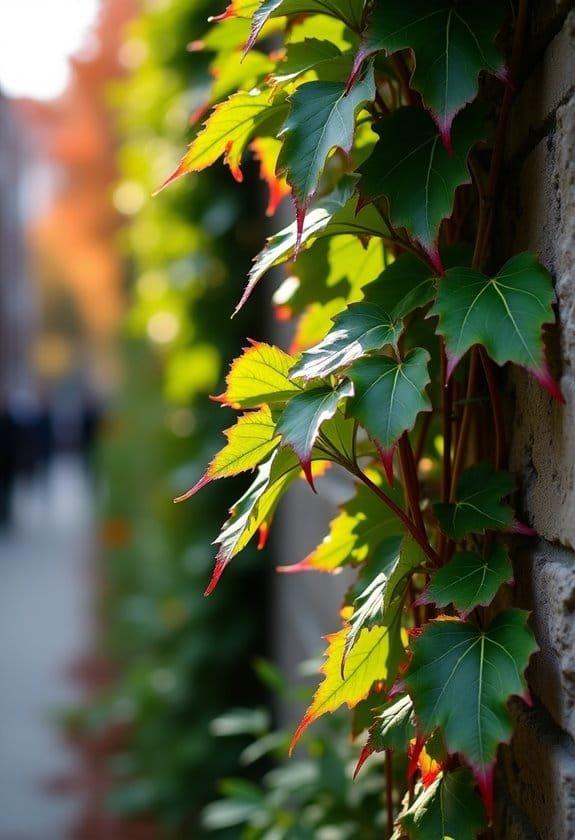
As a popular choice for vertical gardening, Boston Ivy (Parthenocissus tricuspidata) is a deciduous climbing vine that can reach impressive heights of 30 to 50 feet.
This deciduous woody vine exhibits a rapid growth rate, quickly transforming ordinary walls and trellises into breathtaking greenery. Its three-lobed leaves, initially vibrant green, undergo a stunning metamorphosis in autumn, displaying a rich tapestry of burgundy and orange-red hues, which enhance its ornamental allure throughout the seasons.
Thriving in USDA zones 4 through 8, Boston Ivy prefers full sun but demonstrates remarkable adaptability, tolerating partial to full shade along with various soil types, particularly well-drained, loamy options.
Minimal maintenance is needed once established, requiring only annual pruning in late winter to promote aesthetics and manage growth.
In spring, Boston Ivy produces inconspicuous pale yellowish-green flowers that give way to dark bluish-black berries, attracting birds and supporting local biodiversity.