Perovskia atriplicifolia, or Russian Sage, is a remarkable perennial, famous for its striking lavender-blue flowers and aromatic gray-green leaves. Typically reaching heights of 3 to 4 feet, it flourishes in well-drained soils with abundant sunlight, ideally 6 to 8 hours daily. Its resilience against pests and diseases, coupled with minimal maintenance requirements, makes it a gardener's favorite. Once established, it thrives with little watering, showcasing its drought-tolerant nature. In addition, this plant attracts essential pollinators, such as bees and butterflies, enriching garden biodiversity. Exploring further reveals even more intriguing aspects of this exceptional species.
Main Points
- Russian Sage (Perovskia atriplicifolia) is a hardy perennial native to Central Asia, growing 3-4 feet tall with aromatic gray-green foliage.
- It thrives in well-drained, sandy or gravelly soils, requiring 6-8 hours of direct sunlight daily for optimal growth.
- This plant blooms lavender-blue flowers from mid-summer to fall and was named Perennial Plant of the Year in 1995.
- Russian Sage is resistant to pests, diseases, and drought, making it a low-maintenance choice for sustainable landscaping.
- It attracts pollinators like bees and butterflies, enhancing biodiversity and visual appeal in gardens, especially when paired with other flowering plants.
Introduction
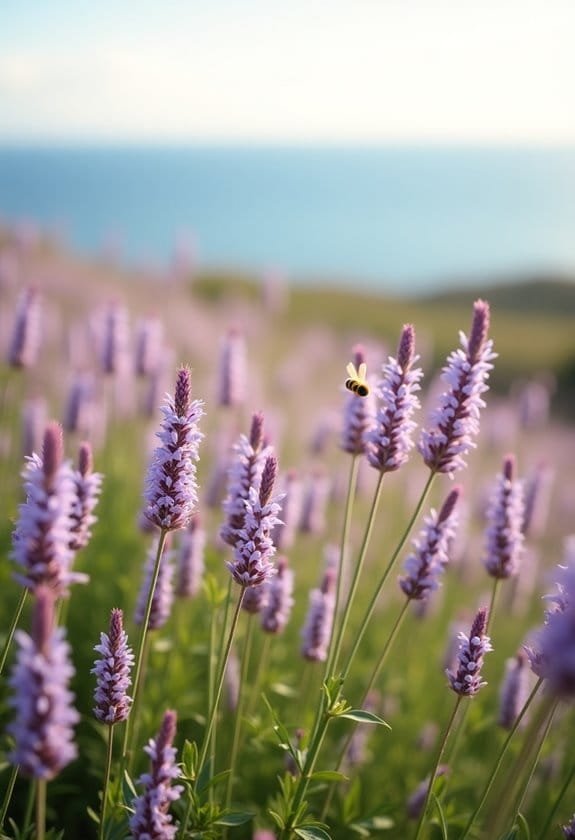
Perovskia atriplicifolia, commonly known as Russian Sage, stands out as a remarkable deciduous perennial hailing from the rugged terrains of Central Asia.
Reaching heights of 3 to 4 feet, it enchants observers with its aromatic gray-green foliage and clusters of vibrant lavender-blue flowers.
As a drought-tolerant plant prized for its ability to attract beneficial pollinators, Russian Sage serves as a demonstration of nature's adaptability and the beauty that emerges from arid environments.
Common Name
Often referred to as "Russian Sage," Perovskia atriplicifolia is a striking plant that's celebrated for its beauty and resilience. Native to Central Asia, particularly in Afghanistan and northern Iran, it offers a stunning aesthetic with fragrant gray-green foliage and enchanting lavender-blue flowers.
Despite its misleading name, Russian Sage belongs to a different botanical family than true sage (Salvia), highlighting its unique characteristics.
This perennial typically grows to a height of 3-4 feet, presenting a bushy appearance that provides vertical interest and texture in various garden settings. Its drought-tolerant nature makes Russian Sage an excellent candidate for xeriscaping and areas with lower water availability, appealing to environmentally conscious gardeners.
Recognized for its ornamental qualities, Russian Sage was awarded the esteemed title of Perennial Plant of the Year in 1995 by the Perennial Plant Association. This accolade further solidified its popularity among gardening enthusiasts who value both aesthetics and sustainability.
Scientific Name
The scientific name for Russian Sage is Perovskia atriplicifolia, a designation that reflects both the plant's botanical lineage and its unique characteristics.
This perennial plant belongs to the mint family, Lamiaceae, an extensive group known for various aromatic herbs. The genus name, Perovskia, honors Vasily Alekseyevich Perovski, a notable Russian botanist whose contributions to the field are celebrated through this plant's classification.
Meanwhile, the species name, atriplicifolia, intriguingly describes the leaves, which bear a striking resemblance to those of the Atriplex species, commonly called saltbush.
Perovskia atriplicifolia is classified as a deciduous perennial, meaning it sheds its leaves seasonally and boasts a bushy growth habit, characterized by a robust woody base.
Hardy in USDA Zones 4-9, this resilient plant flourishes across diverse climates and garden settings, offering both beauty and practicality. For gardeners seeking low-maintenance yet visually striking flora, Russian Sage is an excellent choice, known for its lavender-blue spike-like flowers that bloom late in the summer.
Overview
Russian Sage, or Perovskia atriplicifolia, stands out in the domain of ornamental plants with its striking appearance and remarkable adaptability. This deciduous perennial typically reaches heights of 3 to 4 feet (90-120 cm) and boasts a bushy habit with a sturdy woody base.
The plant displays aromatic gray-green foliage, further accentuated by spikes of small lavender-blue flowers that bloom from mid-summer through fall, presenting a prolonged period of vibrant color.
Hardy in USDA zones 4 to 9, Russian Sage flourishes in dry, well-drained conditions, showcasing its exceptional drought tolerance. It thrives across various soil types, effortlessly adapting to challenging environments.
Furthermore, its resistance to pests, deer, and rabbits simplifies maintenance, making it a favored choice for gardeners, particularly in xeriscaping designs where water conservation is essential.
The ecological impact of Russian Sage extends beyond mere aesthetics. Its attractive lavender-blue flowers entice pollinators such as bees and butterflies, contributing to a healthy garden ecosystem.
In addition to its beauty, this resilient plant plays a significant role in sustainable landscaping, effectively enhancing both beauty and biodiversity in outdoor spaces.
Key Features
Perovskia atriplicifolia, or Russian Sage, showcases remarkable features that enhance any garden.
Growing to a height and width of 3 to 4 feet, it sports striking lavender-blue flowers from mid-summer to fall, providing vibrant color over two months.
With its aromatic gray-green leaves and resilient nature, this hardy plant not only thrives in well-drained soils but also captivates with its unique aesthetic.
Growth Size
Standing at an impressive height of 3 to 4 feet (90-120 cm), Perovskia atriplicifolia showcases a bushy growth habit that makes it a popular choice for landscaping. Often referred to as Russian Sage, this perennial exhibits a width that mirrors its height, creating a uniform and pleasant appearance in garden designs.
It boasts a semi-woody structure that contributes to its density, while the slender, silvery-gray stems and aromatic gray-green foliage add distinctive texture and color to outdoor spaces.
The growth rate of Russian Sage is classified as moderate, allowing it to establish itself effectively within just one growing season, granted it's planted in ideal conditions. This resilience emphasizes its versatility and enduring presence in various landscapes, from borders to hedges.
As it matures, the bushy form of Russian Sage not only enhances visual interest but also attracts pollinators, adding to the ecosystem's vibrancy. Whether in mass plantings or as standout specimens, Russian Sage's height and overall growth characteristics make it a favored selection for gardeners seeking both beauty and functionality.
Appearance
With a robust growth size, this perennial captivates gardeners not just with its stature but also its remarkable appearance. Russian Sage, scientifically known as Perovskia atriplicifolia, typically rises to heights of 3 to 4 feet (90-120 cm) and spans a similar width, creating a striking presence in gardens.
Its elongated, gray-green leaves exude a silvery-gray hue, imparting a soft, ethereal quality to the landscape that dazzles onlookers. The leaves possess a unique aromatic quality, reminiscent of sage, which adds an intriguing sensory element when crushed.
As summer unfolds, these plants burst forth with clusters of small, lavender-blue flowers elegantly arranged in whorls along long, slender spikes. This delightful display not only enhances the garden's color palette but also invites pollinators, such as bees and butterflies, to partake in its nectar.
Furthermore, even after blooming ceases, Russian Sage maintains structural integrity in winter, ensuring visual interest in colder months. A delicate yet resilient feature, this perennial acts like nature's artist, painting the landscape with a harmonious blend of texture and color throughout its growing season.
Gardeners appreciate its multifaceted beauty, making it a popular choice for various planting schemes.
Flowering Season
During the peak of summer, Russian Sage showcases its stunning floral display, enchanting gardeners and pollinators alike. This remarkable plant, scientifically known as Perovskia atriplicifolia, typically blooms from mid-summer to fall, with its flowering season lasting several weeks.
The flowers, small yet striking, are arranged in graceful whorls atop long spikes, revealing a fascinating lavender-blue hue that stands out in any landscape. Blooming occurs during the warmer months, which underscores the drought-tolerant nature of Russian Sage, as it flourishes in conditions with minimal water.
Each flowering spike not only adds vibrant color but also enhances the visual appeal of gray-green foliage, creating a harmonious palette in gardens.
The long blooming period of Russian Sage is particularly valuable, attracting a variety of pollinators such as bees and butterflies. These essential creatures contribute to the health of ecosystems, making the presence of Russian Sage beneficial beyond mere aesthetics.
Growing Requirements
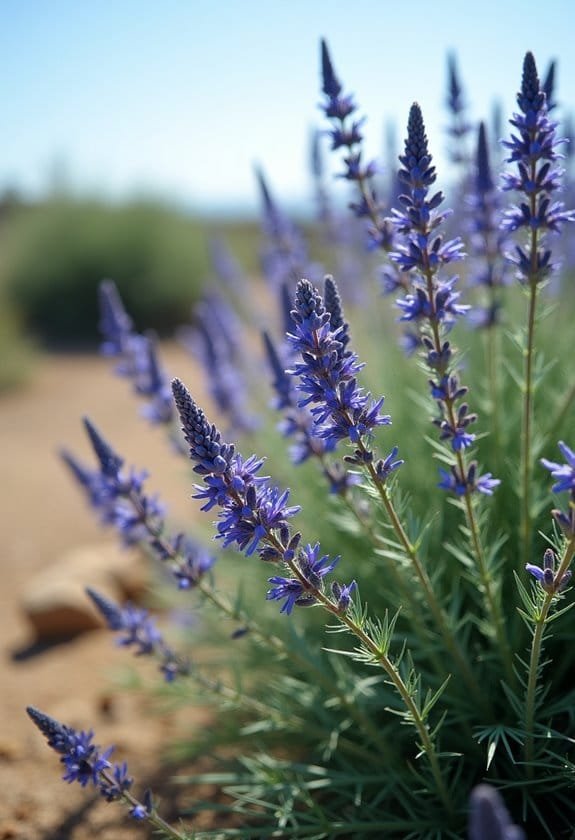
To successfully cultivate Perovskia atriplicifolia, growers must consider its specific light, soil, water, and temperature needs.
This resilient plant flourishes in full sun, requiring a minimum of six hours of direct sunlight daily, while thriving in well-drained, average to lean soils that mimic its native dry habitats.
Proper attention to these growing requirements guarantees not only robust growth but also the vibrant display of silvery foliage and striking blooms that characterize this stunning perennial.
Light
For Russian sage, or Perovskia atriplicifolia, light plays an important role in its growth and overall health. This remarkable plant thrives best with full sun exposure, requiring at least 6 to 8 hours of direct sunlight each day to flourish.
Inadequate light can lead to leggy growth and diminished flowering, compromising its aesthetic appeal and vigor. To attain ideal results, gardeners should prioritize planting Russian sage in sunny locations, avoiding shadier spots that hinder its robust development.
Furthermore, while the plant is drought tolerant once established, its initial growth phase demands careful attention to sunlight. As it adapts to its environment, providing consistent exposure will promote strong root systems and vibrant foliage.
Russian sage demonstrates a preference for well-drained soil, particularly favoring average to lean compositions that prevent waterlogging. Overly rich or moisture-retentive soils can impede its performance and overall health.
When planted in hardiness zones 4-9, where climatic conditions align with its sun-seeking nature, Russian sage will excel, offering a significant return on investment with minimal watering needs.
Soil
While adequate sunlight is essential for Russian sage, the quality of the soil plays an equally significant role in its success. This drought-resistant perennial thrives in well-drained soils, particularly those that are sandy or gravelly in texture. Russian sage prefers average to lean soil conditions, as overly nutrient-rich environments can lead to increased susceptibility to diseases, ultimately hindering plant performance.
To achieve effective growing conditions, the ideal soil pH should range between 6.0 and 8.0, showcasing a preference for slightly alkaline environments. When preparing the planting site, it's advisable to incorporate organic matter or sand into the soil to enhance drainage and prevent detrimental water retention. This preparation is essential, as any excess moisture can adversely affect the root system of the plant.
Once established, Russian sage showcases remarkable resilience, exhibiting exceptional tolerance to drought and poor soil conditions. This characteristic makes it an excellent choice for gardeners aiming to cultivate aesthetically pleasing landscapes in challenging environments.
Consequently, attention to soil quality not only fosters healthy growth but also maximizes the plant's potential, ensuring a flourishing display of its striking, silvery foliage and stunning lavender blooms.
Water
Watering needs for Russian sage (Perovskia atriplicifolia) are quite minimal once the plants are established. Initially, during the first growing season, it's essential to water deeply to promote the development of robust root systems. This early hydration lays a foundation for longevity and resilience.
However, once established, Russian sage becomes highly drought-resistant, flourishing in well-drained soils that often require little water beyond sporadic rainfall. Throughout dry spells, it's advisable to water regularly, yet caution is paramount—overwatering can lead to root rot and potentially disastrous diseases. Additionally, Large Thyme's remarkable resilience supports similar drought tolerance in various environments.
To mitigate this risk, gardeners should confirm that the soil dries out between waterings, thereby promoting healthy root functions. Additionally, applying mulch can considerably help retain soil moisture during the plant's early growth, while simultaneously suppressing weeds that vie for nutrients and space.
In xeriscaping environments, where conservation of water is vital, Russian sage excels, adapting effortlessly to periods of low moisture. As a drought-resistant perennial, it not only enhances garden aesthetics with its striking lavender-blue flowers but also demonstrates a commitment to sustainable gardening practices.
Furthermore, it is crucial to ensure that the soil has a suitable acidic level, as this contributes to the overall health and vitality of plants in similar families.
Therefore, proper watering techniques are imperative for success with this resilient plant.
Temperature
Russian sage (Perovskia atriplicifolia) truly shines in a range of temperatures, thriving in USDA zones 4 to 9. This remarkable plant excels in warm, dry environments with low humidity, showcasing impressive drought resistance once established.
Ideally, Russian sage flourishes when exposed to full sun, requiring at least 6 to 8 hours of direct sunlight daily to achieve peak growth.
During summer months, it withstands high temperatures, making it especially suited for heat zones 6 to 9. Its ability to tolerate scorching conditions allows gardeners to appreciate its stunning blue flowers even in challenging climates.
However, even in cooler growing seasons, Russian sage endures winter dormancy effectively, provided that the soil remains well-drained to prevent root rot from freezing.
In essence, Russian sage thrives best in temperatures that fall within its range, pairing warm conditions with excellent resilience, and creating a harmonious relationship with its environment.
This adaptability not only enhances its aesthetic appeal in the garden but also encourages sustainable gardening practices, as it requires minimal water once established, offering a low-maintenance choice for both novice and seasoned gardeners alike.
Pollinator Criteria
Russian sage (Perovskia atriplicifolia) attracts a diverse array of pollinators, such as bees, butterflies, and hummingbirds, thanks to its enchanting lavender-blue flowers.
The plant uses a wind-assisted pollination method, which enhances its reproductive success by allowing pollen transfer even in low-traffic environments.
With a long blooming season from mid-summer to fall, this reliable nectar source fosters robust ecosystems, ensuring that these essential pollinators thrive. Additionally, the extended flowering period of plants like Russian sage supports the stability of local pollinator populations throughout the growing season, while nectar and pollen provided by ox-eye daisies exemplifies the importance of seasonal resources for sustaining these vital insects.
Attracted Pollinators
Blooming in vibrant lavender-blue, Perovskia atriplicifolia serves as a beacon for pollinators like bees and butterflies, greatly enhancing garden biodiversity. This remarkable plant produces long spikes featuring tiny flowers that continuously bloom from mid-summer to fall, ensuring a steady food source for enthusiastic pollinators throughout the growing season.
The rich nectar and pollen found in Russian Sage's blooms not only sustain these insects but also forge essential connections within ecosystems.
Additionally, the drought resistance of Russian Sage makes it an ideal candidate for xeriscaping, attracting pollinators even in low-water gardens. Its aromatic gray-green foliage, with its enticing scent, further beckons visitors from the insect world, as many pollinators are instinctively drawn to fragrant plants.
Consequently, the presence of Russian Sage fosters a thriving habitat for diverse insect species, enriching the local food web.
With its minimal maintenance requirements and strong resistance to pests, Russian Sage embodies a reliable host plant within pollinator gardens. This resilience promotes overall pollinator health, inviting various guests that play significant roles in plant reproduction and ecosystem health.
Ultimately, Russian Sage not only beautifies gardens but also champions the resilience of crucial pollinator populations.
Pollination Method
With its vibrant flowers and enticing scent, Perovskia atriplicifolia effectively employs a passive pollination system that engages a range of pollinators. This herbaceous perennial, thriving in conditions with minimal water, attracts bees, butterflies, and even hummingbirds, all drawn to its long, upright flower spikes adorned with tiny lavender-blue blooms.
Flowering from mid-summer to fall, these blooms provide vital sustenance for pollinators during their active periods, ensuring a symbiotic relationship between the plant and its visitors. Additionally, Musk Willow's flowering season creates an overlapping bloom time that enhances the availability of food sources for various pollinating insects.
The plant's aromatic foliage offers additional appeal, as its sage-like scent tantalizes pollinators and invites them to partake in this vibrant ecosystem.
Being drought-tolerant allows Russian sage to flourish in xeriscaped gardens, meaning pollinators can consistently find nourishment, even in arid environments.
Additionally, its low-maintenance nature simplifies integration into pollinator-focused gardens, allowing gardeners to support these essential species without requiring extensive intervention. Moreover, the presence of native vegetation in the surrounding area can enhance the diversity and resilience of pollinator populations.
Care & Maintenance
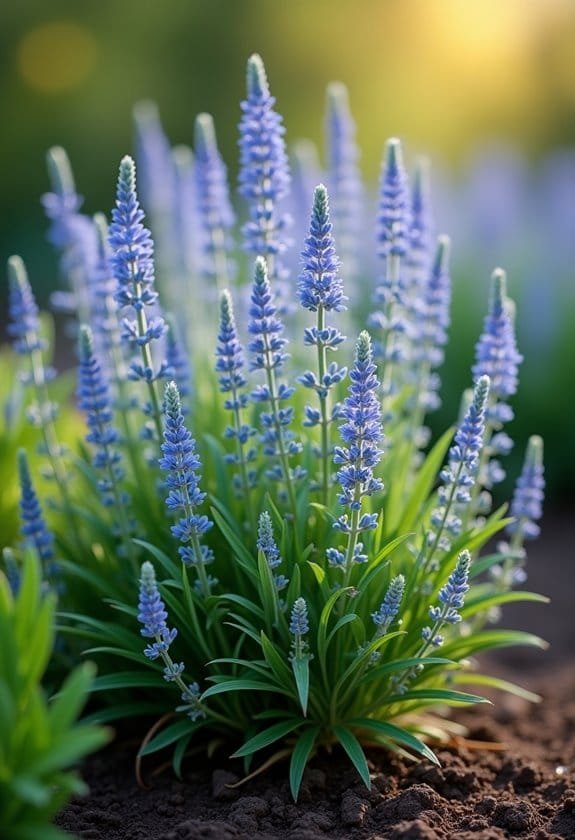
In caring for Perovskia atriplicifolia, understanding its unique needs becomes essential for promoting both health and aesthetic appeal.
From proper planting techniques to ongoing maintenance, these practices greatly influence the plant's robustness and vibrant flowering.
Additionally, selecting compatible companion plants enhances the garden's overall harmony while ensuring ideal growth conditions.
Planting Tips
Pruning Russian Sage effectively in late winter to early spring helps encourage healthy growth and maintain its shape. This robust perennial flourishes with proper care, particularly when it's pruned back to 12-18 inches above ground.
In its initial growing season, watering deeply is necessary to establish strong roots. However, once established, this drought-tolerant plant requires minimal watering, thriving in times of limited moisture.
For ideal growth, selecting well-drained soil is essential. Avoid overly rich soil, as it can lead to root rot, jeopardizing the plant's health. A well-drained, average to lean soil composition supports the plant's robust nature while facilitating proper drainage.
Additionally, incorporating mulch around the base serves several purposes. It retains moisture, suppresses weeds, and substantially enhances the overall health of the plant.
Monitoring Russian Sage for overcrowding is crucial; trimming any dead or damaged stems throughout the growing season promotes airflow, which is necessary for preventing disease. By adhering to these thoughtful planting tips, gardeners can guarantee their Russian Sage thrives beautifully, adding a striking presence to any landscape.
Ongoing Care
During the growing season, ongoing care for Russian sage focuses on watering, fertilization, and maintaining its shape. Initially, it's important to water deeply to establish a robust root system, especially for newly planted specimens, as this foundational support transforms them into resilient plants. Once established, Russian sage exhibits remarkable drought resistance, so regular flooding is unnecessary.
In early spring, consider applying a light layer of fertilizer, but Russian sage generally flourishes in low-fertility soils, thriving despite minimal nutrient input. As winter approaches, it's essential to prune the plants back to about 12-18 inches above the ground. This practice encourages healthy growth and abundant flowering, setting the stage for impressive displays come summer.
Moreover, mulching around the plants aids in moisture retention and weed suppression, particularly during their initial growth phase. Regularly monitoring for overcrowding is crucial; trimming excess growth fosters airflow, enhancing overall plant health and minimizing potential issues.
Russian sage's innate pest and disease resistance adds to its appeal, allowing gardeners to enjoy the vibrant blooms with minimal worry. Based on these dedicated efforts, this striking perennial rewards caretakers with enduring beauty and resilience.
Suggested Companions
Selecting the right companions for Russian sage enhances both the beauty and functionality of a garden. This drought-tolerant perennial pairs exquisitely with a variety of companion plants that flourish in similar conditions.
For instance, Coneflower (Echinacea) introduces bold, vibrant colors while attracting overlapping pollinators like butterflies and bees, fostering a lively ecosystem. The ecological significance of these companions ensures that the garden thrives as a haven for various wildlife.
Butterfly Bush (Buddleja) provides an extended blooming season, offering a rich palette of colors that complements the silvery hues of Russian Sage, drawing in numerous beneficial insects.
Similarly, Milkweed (Asclepias) not only attracts monarch butterflies but also enhances the visual appeal of the garden, harmonizing beautifully with the Russian sage's fine-textured foliage.
Bee Balm (Monarda) stands out with its bright flowers, presenting a striking contrast to the muted tones of Russian Sage, and both plants thrive in well-drained soil, making them ideal partners.
Aster species deliver a late-season explosion of color, serving as a delightful backdrop while attracting additional pollinators. Additionally, planting native trees like Wild Cherry (Prunus avium) can further enhance the biodiversity of the garden ecosystem.
Common Issues
Russian Sage faces several common issues that can impact its health and flowering.
While it generally resists disease, it can attract pests like spider mites during hot, dry spells, which requires vigilant observation.
Additionally, overcrowding can stunt its growth and diminish its bloom, making proper spacing of at least 18 inches essential for thriving plants.
Pests/Diseases
Exhibiting remarkable resilience, Perovskia atriplicifolia is largely immune to common garden pests and diseases. This hardy perennial flaunts impressive resistance against many nuisances, including deer, rabbits, and typical garden insects that often plague less robust plants.
Its immunity extends to prevalent diseases as well, particularly powdery mildew, a common affliction for numerous perennial species.
In low-care gardens, this adaptability proves invaluable, allowing for a stunning display of blooms without the burden of frequent pest control or disease management.
However, regular monitoring of the plant's environment remains essential; overcrowding can hinder ideal air circulation. Adequate airflow is vital, as it helps mitigate the risk of potential fungal issues that could arise if conditions become too stagnant.
Despite its admirable toughness, P. atriplicifolia requires caution against overwatering, which may lead to root rot when planted in poorly drained soil.
Solutions
How can gardeners best address common issues with Perovskia atriplicifolia? Russian Sage thrives under specific conditions, but certain challenges may arise. Overwatering is one significant concern; the plant prefers well-drained soil to prevent root rot.
Gardeners should only water established plants during extended dry spells, guaranteeing that the soil doesn't retain excess moisture.
Legginess can also detract from the plant's stature, necessitating timely pruning to encourage denser growth and more abundant blooms. A recommended practice is to cut back the stems to about 12-18 inches in late winter to early spring, fostering a bushier appearance.
Spacing is vital for the health of Russian Sage. To allow for adequate air circulation and reduce overcrowding, confirm that plants are spaced at least 18 inches apart.
In areas prone to strong winds, staking may be necessary to support the tall flower spikes, preventing breakage and maintaining their striking vertical appeal.
Summary
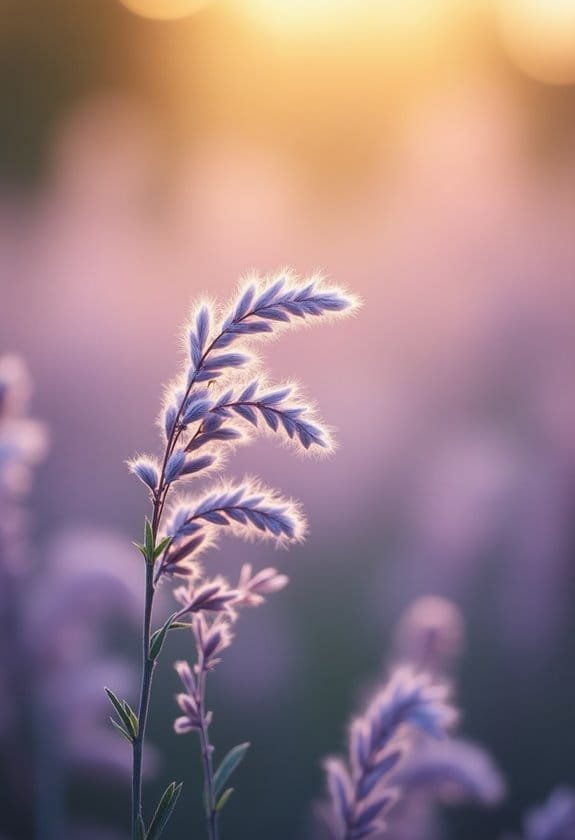
Perovskia atriplicifolia, often referred to as Russian sage, is a resilient and visually appealing perennial known for its striking lavender-blue flowers that bloom from mid-summer to fall.
This deciduous plant typically reaches a height and width of 3 to 4 feet, thriving in full sun and well-drained soils. Its exceptional tolerance to drought, salt, and poor soil conditions makes it one of the premier drought-tolerant plants, ideal for xeriscaping purposes.
Cultivated since the mid-1800s and native to Central Asia, Russian sage has garnered significant recognition, earning the title of Perennial Plant of the Year in 1995 for its ornamental value and long bloom period.
Its remarkable resistance to various pests, including deer and rabbits, allows for minimal maintenance once established, making it a popular choice among gardeners.
Moreover, Russian sage harmoniously pairs with other drought-tolerant plants, enriching landscape designs that include Mediterranean and cottage gardens.
With its graceful, aromatic foliage and stunning flowers, this perennial serves as a dependable and eye-catching addition to any garden, showcasing the beauty and functionality that nature can offer.