Phacelia campanularia, known as the Californian Bluebell, is a breathtaking wildflower native to the Mojave and Sonoran Deserts. Characterized by its vivid cobalt blue, bell-shaped flowers, which bloom from February through June, this resilient plant reaches a height of 6 to 18 inches. Preferring well-drained sandy soils and full sun, it flourishes with minimal water once established. The Californian Bluebell plays a critical role in fostering biodiversity, attracting bees and other pollinators, while enriching desert habitats. Its visual appeal transforms arid landscapes into vibrant spaces, capturing the essence of nature's endurance and beauty, hinting at deeper ecological connections.
Main Points
- Phacelia campanularia, or Californian Bluebell, features vibrant cobalt blue bell-shaped flowers and grows 6 to 18 inches tall.
- This plant prefers well-drained sandy or gravelly soils and requires full sun for optimal growth.
- It is native to the Mojave and Sonoran Deserts and is highly drought-tolerant once established.
- Blooms from February to April, attracting pollinators like bees and enhancing local biodiversity.
- California Bluebells are low-maintenance and can self-propagate, making them ideal for gardeners seeking resilience.
Introduction
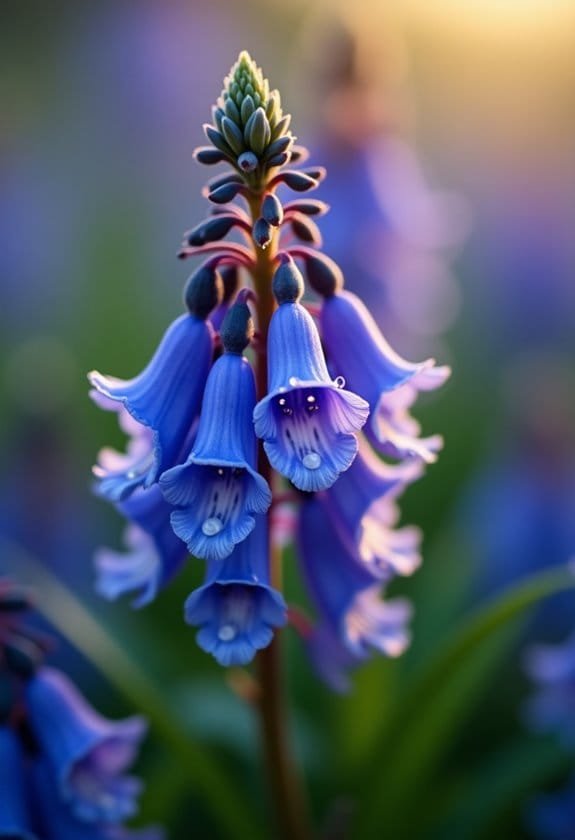
The Californian Bluebell, scientifically known as Phacelia campanularia, captivates with its striking deep blue, bell-shaped blossoms.
Native to the arid landscapes of the Mojave and Sonoran Deserts, this annual plant thrives in sandy, well-drained soils, showcasing its resilience and adaptability.
Blooming from February to April, its growth provides not only aesthetic beauty but also essential support to the desert ecosystem during a critical period of renewal.
Common Name
During spring, California Bluebells, also known as Phacelia campanularia, come alive with vibrant blue blooms. These annual wildflowers reveal their deep blue, bell-shaped flowers from February to April, offering a breathtaking spectacle across desert landscapes.
The common names, including Desert Bluebell, Arizona Bluebell, and Desert Bells, provide insight into the plant's native habitat—California's arid regions, where it thrives with resilience.
California Bluebells adapt effortlessly to dry conditions, making them a cherished choice for gardeners seeking low-maintenance beauty. Its striking hues attract a variety of pollinators, particularly bees and bumblebees, vital for maintaining ecological balance. Each flower plays a significant role, not just in aesthetics but in supporting biodiversity in these fragile environments.
From their lovely blooms to their adaptability, these flowers enhance California's coastal and desert landscapes, providing visual splendor during the spring months. Additionally, their easy propagation makes the California Bluebell a popular choice in wildflower gardens.
As they flourish, they transform barren desert terrain into a canvas of color, reminding observers of nature's enduring beauty and strength in the face of adversity.
Scientific Name
Known scientifically as Phacelia campanularia, Californian Bluebell belongs to the Hydrophyllaceae family. This exquisite plant is a visual marvel, showcasing striking deep cobalt blue, bell-shaped flowers that bloom from February to April in the stark aridity of the Mojave and Sonoran Deserts.
The plant flourishes in California's desolate conditions, specifically adapted to thrive in environments where water is scarce. Its oval-shaped, light gray-green leaves complement its vibrant blossoms, offering a stunning contrast that enhances its aesthetic appeal.
Phacelia campanularia's inflorescence serves an ecological purpose, actively attracting pollinators, particularly bees, thereby playing a critical role in local ecosystems. This magnificent species often plays a fundamental role in desert habitats, contributing to biodiversity during its blooming season, which stretches into early summer in cooler regions.
The seasonal emergence of these flowers marks a period of life and color in otherwise dry, monotone landscapes. Consequently, Phacelia campanularia not only provides visual beauty but also ecological benefits, uniting the floral and faunal elements of California's unique desert environments.
The scientific name encapsulates its identity, revealing its connection to the intricate relationships that sustain life in challenging habitats.
Overview
Celebrating the vibrant beauty of the Californian Bluebell, or Phacelia campanularia, showcases nature's resilience in the arid landscapes of the Mojave and Sonoran deserts. This striking annual wildflower, noted for its deep blue, bell-shaped flowers, flourishes from February to April, transforming barren terrains into stunning displays of color that captivate pollinators such as bees and bumblebees.
Growing to heights of 6 to 18 inches, the Californian Bluebell is adorned with heart-shaped, dark green leaves that complement its floral spectacle. These plants flourish in sandy or well-drained soils and require full sun exposure to thrive, exemplifying adaptation to their harsh environments with low water needs.
For those looking to cultivate this enchanting species, sowing seeds is the recommended method, with an ideal seeding rate of approximately 3 pounds per acre. The germination period takes between 15 to 30 days, setting the stage for the breathtaking blooms that punctuate California's desert landscapes.
Key Features
The Californian Bluebell, or Phacelia campanularia, stands gracefully at heights between 6 to 18 inches, its presence accentuated by coarsely toothed, dark green leaves.
Each striking cluster of cobalt blue flowers, measuring about 1 inch across, blooms vibrantly from February to April, creating an enchanting spectacle in desert landscapes.
This annual plant not only appeals to the eye with its elegant form and seasonal beauty but also plays an essential role in supporting local pollinators, enriching the ecosystem.
Growth Size
Californian Bluebell, or Phacelia campanularia, generally reaches a height of 6 to 18 inches, showcasing an impressive adaptability to varying environmental conditions. This annual plant flourishes particularly well in well-drained soils, making it a favored choice for rock gardens, where it can perform beautifully alongside California poppies.
The growth period is characterized by the elegant rise of long, reddish stems, enhancing its visual appeal while supporting heart-shaped, coarsely toothed dark green leaves.
As it matures, the California bluebells produce clusters of approximately 1 inch in diameter, featuring deep blue, bell-shaped blooms that enchant and attract crucial pollinators, including bees and bumblebees. The plant's ability to self-propagate once established guarantees that it maintains consistent growth and blooms from year to year, allowing for a thriving display in garden settings.
The harmonious interaction between its delicate stature and unique flower color creates a fascinating spectacle that complements other flora. Consequently, Californian Bluebell serves not only as an excellent ornamental plant but also plays an essential role in local ecosystems, fostering biodiversity through its inviting environment for pollinators.
Appearance
Boasting stunning features, the Californian Bluebell showcases deep blue, bell-shaped flowers that measure about 1 inch (2.5 cm) across, with striking white stamens prominently protruding from the center. These elegant blossoms, supported by long, reddish stems, create a fascinating visual impact, particularly when planted en masse.
While the most common color variation is vivid blue, subtle shades of lavender can emerge, adding a delightful complexity to their display.
The foliage characteristics further enhance the plant's appeal, revealing coarsely toothed, heart-shaped leaves that are dark green and covered with soft white hairs. This unique texture not only contributes to the plant's aesthetic but also helps to reflect sunlight and manage moisture, supporting its habitat preferences.
Typically thriving in well-drained soils, the Californian Bluebell flourishes in various locations, from sandy deserts to rocky hillsides, showcasing its adaptability.
Growing to a height of 6 to 18 inches (15 to 45 cm), this resilient species acts as a natural magnet for pollinators like bees and bumblebees, further intertwining its beauty with the ecological balance of its environment.
Flowering Season
Blooming primarily from February to April in desert regions, the Californian Bluebell offers a stunning display of vibrant color during its flowering season.
These bell-shaped flowers, deep blue with protruding white stamens, create an impressive show, drawing attention to their beauty. The blooming patterns of Phacelia campanularia reveal how climate effects play a crucial role; in cooler climates, the flowering period can extend from spring to early summer, highlighting seasonal variations.
Each flower endures approximately three to four weeks, providing ample opportunity for pollinators like bees and bumblebees to visit. This interaction greatly contributes to the plant's role in the ecosystem, as it supports the life cycles of these essential insects.
Additionally, Californian Bluebells flourish in well-drained soils, basking in full sunlight, which enhances their capacity to produce such breathtaking spectacles.
When mass planted, these flowers transform landscapes, creating vivid blankets of blue that evoke feelings of tranquility.
Understanding the intricacies of their flowering season not only enriches one's appreciation for nature but also emphasizes the significance of preserving these habitats in an ever-changing climatic world.
Growing Requirements
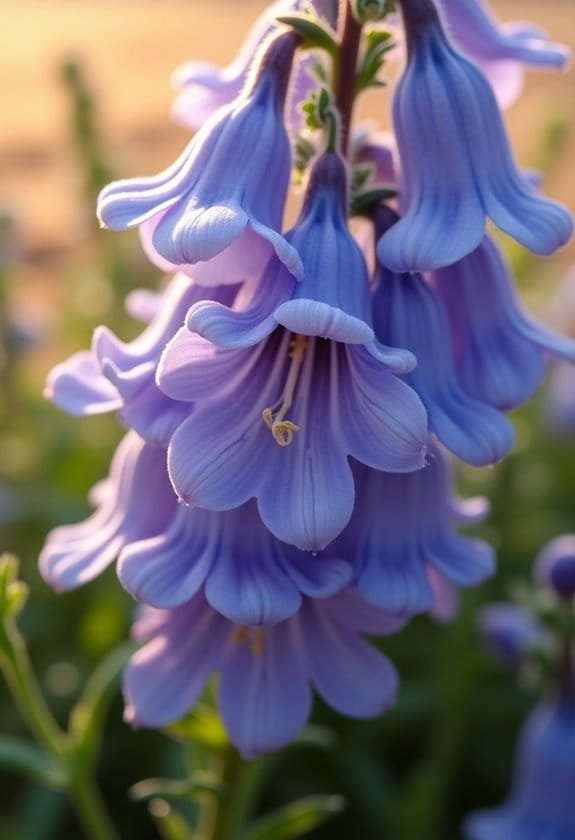
The Californian Bluebell flourishes under full sunlight, making bright, open spaces its perfect environment.
This plant thrives in well-drained sandy or gravelly soils, requiring minimal water due to its remarkable drought tolerance.
When planning to sow seeds, gardeners should aim for ideal temperatures between 60°F and 70°F, ensuring they plant at a shallow depth of just 1/16 inch for successful germination.
Light
Californian bluebells, or Phacelia campanularia, thrive best in full sun, needing at least 6 hours of direct sunlight daily to reach their full potential. Sunlight impact on these plants is profound; adequate light duration fosters vigorous growth and vibrant, abundant blooms. Conversely, insufficient sunlight can result in sparse flowering or delayed bloom times, diminishing their aesthetic appeal.
While Phacelia campanularia possesses some shade tolerance, it flourishes in warm climates characterized by hot days and cooler nights, conditions that optimize germination and growth. This adaptation to arid environments further underscores its drought tolerance, an essential trait for survival in areas with low humidity levels.
As such, gardeners aiming to cultivate Californian bluebells should select locations that capture the sun's rays for the majority of the day. By ensuring the plants receive the necessary light, they invite a beautiful display of blooms, transforming gardens into vibrant landscapes.
Furthermore, understanding the relationship between light and growth will empower gardeners to create environments conducive to the thriving of this stunning native species. With proper care, Phacelia campanularia will reward dedicated growers with its delightful blossoms.
Soil
For thriving growth, Phacelia campanularia requires sandy or gravelly soils that guarantee excellent drainage. This native plant flourishes best in well-drained soil types, particularly those that retain minimal moisture, making it especially suited for arid environments. Its adaptability enables remarkable resilience against pests and diseases, allowing it to thrive with minimal intervention.
To enhance the performance of the soil, gardeners might consider incorporating soil amendments like organic matter, which can help improve texture while promoting better aeration. However, caution is essential since overly compacted soils can obstruct the necessary drainage techniques required for the Californian bluebell's success.
Germination occurs efficiently in soils with temperatures between 60°F and 70°F, making proper soil conditions critical for initiating growth. Seeds should be sown at a depth of about 1/16 inch, followed by a recommended seeding rate of 3 pounds per acre, ensuring a dense planting that contributes to vibrant blooms.
Enthusiastic gardeners should thoughtfully prepare the soil, as these initial measures foster a foundation for robust and colorful displays, ultimately transforming the landscape into a stunning canvas of bluebell flowers.
Water
Although Phacelia campanularia thrives in arid conditions, growers must still pay attention to its water requirements. This Californian Bluebell, with its low water needs, flourishes in well-drained sandy or gravelly soils. Watering becomes essential only when natural rainfall is inadequate, emphasizing the importance of effective water conservation strategies.
Once established, the plant's ability to self-propagate greatly reduces the necessity for regular irrigation each season.
Employing efficient irrigation techniques can enhance the plant's growth. Occasional watering after rainfall not only nurtures the flowers but also extends their blooming period, transforming gardens into vibrant spectacles.
In addition, Phacelia campanularia's remarkable drought tolerance makes it an outstanding selection for drought-resistant landscaping, especially in regions prone to limited rainfall.
Incorporating this perennial into landscaping designs considerably contributes to sustainable practices, thereby alleviating water scarcity concerns. By understanding the delicate balance between water maintenance and drought resilience, gardeners can fully appreciate the beauty and adaptability of Californian Bluebell, ensuring that its radiant blooms thrive in the most challenging conditions.
Consequently, the careful management of watering can yield both ecological benefits and splendid floral displays.
Temperature
Temperature plays an essential role in the successful growth of Phacelia campanularia, as it typically requires ideal soil temperatures between 60°F and 70°F for germination. Understanding these optimum germination conditions is vital for gardeners; seedlings thrive best when sown in early spring, thereby avoiding temperature extremes during their delicate developmental phases.
These Californian Bluebells, while not winter hardy, demonstrate remarkable climate resilience factors, allowing them to adapt to a wide range of regional climates. They can survive average winter temperatures that range between 28.2°F and 54.4°F, showcasing effective temperature adaptation strategies.
In addition, they flourish in environments where average temperatures span from 49.8°F to 83.3°F, making them versatile additions to various landscapes.
Full sun exposure greatly enhances their growth, as it helps maintain consistently warm conditions essential for their overall health and flourishing.
Pollinator Criteria
California Bluebells, or Phacelia campanularia, naturally attract a variety of pollinators, especially bees and bumblebees, thanks to their vibrant blue flowers and generous nectar.
The flower's unique structure, featuring protruding stamens and light-colored anthers, facilitates efficient pollination, enhancing the interaction with these essential insects.
Attracted Pollinators
The vibrant blooms of the Californian Bluebell, or Phacelia campanularia, attract a diverse array of pollinators, particularly bees and bumblebees. These crucial pollinators exhibit specific behaviors driven by the deep blue, bell-shaped flowers, which feature prominent white stamens—visual cues guiding them toward rich nectar sources.
Blooming primarily from February to June, California Bluebells offer essential sustenance when few other flowers grace the landscape, supporting the intricate web of native ecosystems. This seasonal availability fosters significant interactions between the plants and their pollinators, encouraging biodiversity and strengthening ecological resilience.
The plant's drought-tolerant nature contributes to this dynamic, creating hospitable environments that invite pollinators to thrive in arid habitats. Moreover, mass plantings amplify these effects, attracting greater numbers of pollinators through sheer abundance and striking visuals.
These floral displays not only enhance the beauty of landscapes but also underscore the conservation benefits of choosing native plants. By promoting pollinator activity, Californians can guarantee the continued survival of these critical species while supporting healthy ecosystems that rely on their diligent work.
Understanding pollinator behavior around California Bluebells establishes a foundation for more sustainable gardening practices.
Pollination Method
During spring, Californian Bluebells employ a fascinating pollination method that mainly relies on bees and bumblebees, drawn in by their striking blue blooms and accessible stamens. The flower structure plays a pivotal role in this strategy; its bell-shaped petals surround protruding stamens adorned with light-colored anthers, which are positioned for easy reach. This design not only facilitates efficient visits but encourages frequent interactions with pollinators.
For approximately four weeks, these blooms produce nectar, serving as an irresistible incentive. Such rewards enhance cross-pollination benefits, allowing for genetic diversity and increased resilience in the plant population. The Californian Bluebell's pollination strategies hinge on this relationship, fostering an ecosystem where these essential insects thrive. Additionally, the extended flowering season of plants like Common Honeysuckle provides stable nectar sources, further supporting pollinator populations. Interestingly, these bluebells thrive best in acidic soils similar to those preferred by other native plants.
Moreover, when integrated with other wildflowers, these bluebells create a diverse habitat that attracts a wider range of pollinators, further amplifying their collaborative impact. This harmonious interplay underscores the significance of planting Californian Bluebells, as they provide sustenance for pollinators while advancing biodiversity.
Care & Maintenance
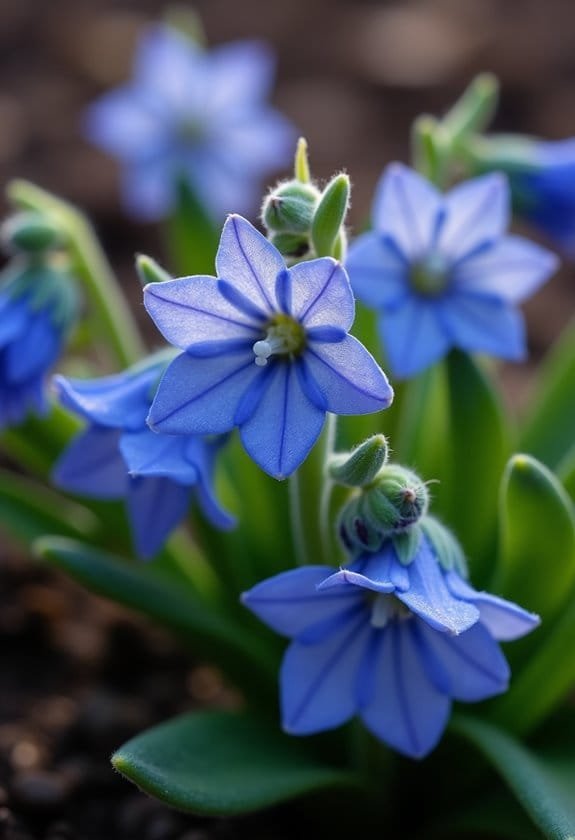
To guarantee vibrant displays of California Bluebells, gardeners should focus on strategic planting techniques and ongoing care.
Planting seeds at a shallow depth of just 1/16 inch in early spring allows these resilient flowers to establish quickly, while their low water needs simplify maintenance once they're rooted.
Pairing California Bluebells with drought-tolerant companions can also enhance garden aesthetics, creating a harmonious landscape that thrives in arid conditions.
Planting Tips
For successful planting of the Californian bluebell, proper soil preparation and site selection are crucial. This stunning species, scientifically known as Phacelia campanularia, flourishes in sandy or gravelly soils that boast excellent drainage, mirroring its native desert habitat.
To guarantee robust growth, gardeners should prioritize full sun exposure, essential for peak flowering and health.
When it comes to seed selection, the ideal time to sow seeds is in early spring, laying them at a depth of 1/16 inch. Alternatively, gardeners may scatter seeds in autumn, taking advantage of the rainy season to facilitate natural germination.
Utilizing effective planting techniques can greatly influence success; proper spacing between the plants encourages air circulation, minimizes disease risks, and enhances visual aesthetics.
Given the bluebell's striking demeanor, thoughtful garden placement will greatly elevate landscape appeal.
Once established, these resilient plants are drought-tolerant, requiring minimal irrigation, and they self-propagate beautifully, guaranteeing vibrant displays of color year after year with negligible maintenance demands.
With patience and care, gardeners can cultivate a breathtaking spectacle, inviting the Californian bluebell to flourish in their landscapes.
Ongoing Care
Ongoing care for the Californian bluebell is straightforward, as these hardy plants thrive with minimal intervention once established. They flourish in full sun and prefer well-drained sandy or gravelly soils, which enhances their drought resilience.
Regular watering is generally unnecessary, particularly if sufficient rains occur; however, during extended dry spells, a consistent watering frequency is beneficial. Minimal irrigation encourages robust growth and vibrant blooms.
For ideal blooming, gardeners can implement several blooming tips. Occasional watering after rainfall can extend the flowering season, which typically lasts around 3 to 4 weeks in spring. This gentle support allows the plant to exhibit its striking beauty without substantial effort.
Additionally, the Californian bluebell can self-propagate, contributing to annual blooms that populate the garden with an ongoing display of color.
Its remarkable resistance to pests and diseases simplifies maintenance, rendering it a perfect choice for both novice and seasoned gardeners.
Suggested Companions
Enhancing a garden with Californian bluebells can be achieved by strategically selecting companion plants that thrive alongside them. The dazzling cobalt blue of Phacelia campanularia pairs beautifully with the vibrant orange of California poppies, creating eye-catching color combinations that energize any garden space.
Incorporating low-water perennials such as Black-Eyed Susans not only complements the bluebells but also aligns with their shared drought tolerance. Together, these plants enhance pollinator attraction, inviting bees and butterflies, essential for a thriving ecosystem. Furthermore, the diverse range of colors and shapes found in dahlia hybrids boosts visual appeal and attracts even more pollinators to the garden.
Moreover, adding Gilia Birds Eye introduces biodiversity and delightful visual interest due to its contrasting flower shape and color. The Common Poppy is another excellent companion, providing vibrant blooms that attract pollinators and promote ecological health within the garden.
When arranging these companions, it's critical to guarantee proper spacing; Phacelia campanularia flourishes under full sun with good air circulation, minimizing the risk of disease. Regular deadheading of spent flowers enhances the overall aesthetics while prolonging blooming periods, contributing to a more visually appealing garden.
This careful selection and maintenance of companion plants fosters a harmonious balance between beauty, resilience, and sustainability, transforming the landscape into a vibrant oasis that flourishes with life.
Common Issues
Californian Bluebell, or Phacelia campanularia, often encounters challenges with pests like aphids and specific diseases that arise from inadequate soil drainage.
While its resilience during droughts is commendable, growers must still monitor for infestations and consider supplemental watering during prolonged dry spells to guarantee continued blooming.
To foster healthy growth and mitigate overcrowding, a careful sowing strategy, with a recommended seed density of 3 lbs. per acre, is essential for peak resource allocation.
Pests/Diseases
When it comes to pests and diseases affecting the Californian Bluebell, gardeners can breathe easy, as Phacelia campanularia displays remarkable resistance. This resilience simplifies gardening maintenance, allowing enthusiasts to focus on nurturing these enchanting blooms rather than battling invasive nuisances.
While aphids may occasionally appear, they rarely pose significant threats due to effective pest resistance strategies, including the presence of natural predators in the ecosystem.
The primary concern for this hardy plant arises from improper soil conditions. If planted in poorly drained environments, the risk of root rot increases, which highlights the importance of utilizing sandy or gravelly soils. To mitigate such issues, gardeners should consider disease prevention techniques, such as ensuring adequate spacing for enhanced air circulation, which further minimizes the chances of fungal infections.
Regular monitoring of plants for signs of wilting or discoloration is essential, as these symptoms often indicate moisture-related troubles rather than direct pest infestations.
Solutions
To guarantee the vibrancy of Phacelia campanularia in the garden, addressing common issues that can arise during growth is key. This stunning plant, often referred to as the Californian Bluebell, flourishes in well-drained, sandy soils and demands full sun exposure.
To avoid problems with moisture retention, gardeners must choose ideal planting locations carefully. When sowing seeds, planting them at a shallow depth of 1/16 inch promotes better germination, which typically occurs within 15 to 30 days under ideal conditions.
Utilizing effective design strategies, such as mass planting, enhances garden aesthetics considerably. A dense arrangement, ideally maintaining a planting density of approximately 3 lbs. of seed per acre, yields a striking floral display while minimizing competition from weeds.
Additionally, Phacelia campanularia's drought-tolerant nature means that regular watering should only occur if natural rainfall is insufficient. Once established, these bluebells prefer low moisture conditions, allowing them to thrive despite the challenging desert climate.
Summary
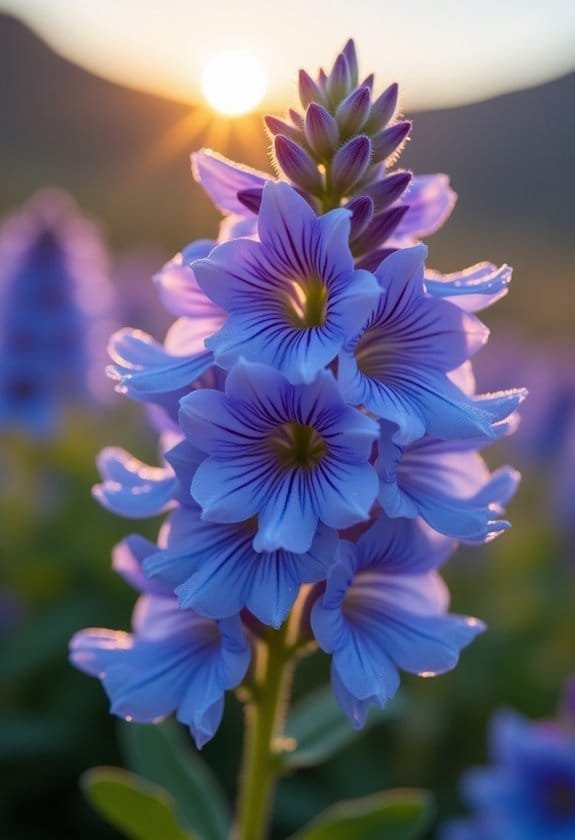
Among the desert blooms of California, Phacelia campanularia, known as Californian Bluebell or Desert Bluebell, stands out with its vibrant deep blue flowers. This native plant thrives in well-drained, sandy soils under full sun exposure and possesses low irrigation requirements, making it an ideal choice for sustainable, drought-tolerant gardens.
With striking bell-shaped flowers and dark green leaves, it typically grows between 6 to 24 inches tall, blooming from February to June.
The ecological impact of the Californian Bluebell is significant; it attracts various pollinators, primarily bees and bumblebees, thereby supporting local ecosystems.
Its role in landscape design is equally remarkable. By incorporating these striking flowers, gardeners can enhance visual appeal while promoting biodiversity.
In addition, the plant benefits from straightforward sowing practices: one packet can cover around 25 square feet, with seeds germinating in just 15 to 30 days under ideal conditions.