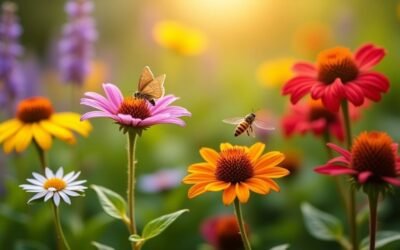
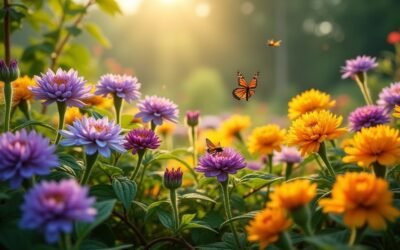
Phacelia tanacetifolia, commonly referred to as Fiddleneck or Purple Tansy, is an annual herb known for its striking lavender-blue flowers and exceptional drought tolerance. Growing between 1 to 4 feet tall, it thrives in various well-drained soils across the Southwestern U.S. and Northwestern Mexico. Its self-seeding nature supports reliable annual growth, while its nectar-rich blooms attract essential pollinators, such as bees and butterflies, enhancing local biodiversity. Fiddleneck flourishes in full sunlight, requiring minimal maintenance after establishment, though care must be taken to monitor its spread. A deeper exploration reveals further insights into its ecological role and cultivation practices.
Main Points
- Fiddleneck (Phacelia tanacetifolia) is a drought-tolerant annual herb native to the Southwestern U.S. and Northwestern Mexico.
- It features striking lavender-blue flowers that bloom from late spring to early fall, attracting pollinators like bees and butterflies.
- The plant thrives in full sunlight and well-drained soils across USDA hardiness zones 3-10, requiring minimal upkeep post-establishment.
- Fiddleneck is beneficial for local ecosystems, providing essential food resources and supporting honey production due to its nectar-rich flowers.
- Handling Fiddleneck may cause skin irritation; wearing gloves is recommended during maintenance and care.
Introduction
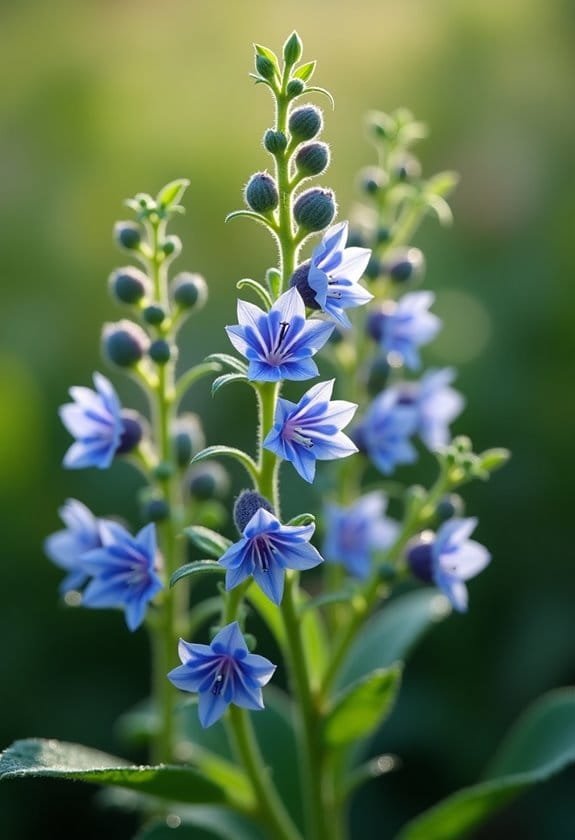
Phacelia tanacetifolia, commonly referred to as Fiddleneck or Lacy Phacelia, is an intriguing annual herbaceous plant that flourishes in the sunny landscapes of Southwestern U.S. and Northwestern Mexico.
Known for its delicate feathery leaves and fascinating clusters of purple blooms, this species not only enchants gardeners but also plays a crucial role in promoting biodiversity by attracting essential pollinators like bees and butterflies.
With its impressive adaptability to various soil types and drought tolerance, Phacelia tanacetifolia serves as a valuable ally in sustainable gardening and conservation efforts.
Common Name
Known for its unique appearance, Phacelia tanacetifolia is commonly referred to as Fiddleneck, Scorpion Weed, or Purple Tansy. The name "Fiddleneck" aptly describes its curled flower clusters, which resemble the neck of a fiddler. This plant, belonging to the Boraginaceae family, mirrors the leaf structure of plants in the Tanacetum genus, showcasing feather-like foliage that adds to its distinctive profile.
Fiddleneck thrives remarkably in various habitats, drawing an impressive array of beneficial insects, particularly pollinators like bees and butterflies. This quality positions it as one of the top honey-producing flowers, making it indispensable for beekeepers and wild pollinator populations alike.
While its beauty captures the eye, its ecological significance can't be understated. By bolstering local biodiversity and supporting the health of essential insect populations, Purple Tansy demonstrates its role as a fundamental component in various ecosystems.
Through its attractive blooms and unique structural characteristics, Fiddleneck stands out not just for its aesthetic appeal but also for its ability to foster a thriving environment for important species, elevating its importance beyond mere ornamentation.
Scientific Name
The scientific name of Fiddleneck, Phacelia tanacetifolia, reflects its unique characteristics and botanical lineage. This remarkable plant belongs to the Boraginaceae family, which is known for its diverse array of flowering plants. The genus name "Phacelia" originates from the Greek word meaning "bundle," aptly describing the plant's clustered flowers that evoke a sense of togetherness and beauty.
Meanwhile, the species name "tanacetifolia" draws attention to the distinctive resemblance of its leaves to those of the Tanacetum genus, which includes common herbs such as tansy.
Historically, Phacelia tanacetifolia underwent classification changes, previously identified as Phacelia commixta and Phacelia tripinnata. Such revisions highlight the fluid nature of botanical taxonomy, illustrating the ongoing quest to understand plant relationships and variances within ecosystems.
When pronounced, Phacelia tanacetifolia sounds like fa-SEE-lee-uh tan-uh-set-ee-FOH-lee-uh, a melodious series of syllables capturing the intricate connection between name and nature.
This scientific nomenclature serves not merely as an identifier but as a key to understanding the plant's role within its ecological context.
Overview
Fiddleneck, or Phacelia tanacetifolia, captivates gardeners and ecologists alike with its resilience and beauty. Native to the Southwestern United States and Northwestern Mexico, this hardy annual exhibits a remarkable adaptability to various soil types, excelling particularly in well-drained, poor, rocky soils.
Generally reaching heights of 1 to 4 feet, Fiddleneck showcases fine, feathery foliage that complements its clusters of lavender-blue flowers, which bloom energetically from late spring through early fall.
Thriving in full sun, Fiddleneck demonstrates exceptional drought tolerance, making it an ideal candidate for xeriscaping and low-maintenance gardens. Its ecological contributions extend beyond mere aesthetics; the plant attracts beneficial insects, such as honeybees and syrphid flies, which are crucial for pollination and natural pest control.
Additionally, with its self-seeding nature, Fiddleneck reliably reappears each year, fostering soil health through nitrogen fixation. This characteristic not only enhances garden resilience but also makes Fiddleneck an outstanding choice for cover cropping and wildlife gardens.
Key Features
Phacelia tanacetifolia, commonly known as Fiddleneck, exhibits a growth size that ranges from 1 to 4 feet in height and spans approximately 12 to 18 inches in width.
With its striking, feathery leaves that evoke the Tansy genus, the plant produces enchanting clusters of bell-shaped lavender-blue flowers, which captivate a variety of pollinators.
This annual herbaceous plant flourishes throughout a prolonged flowering season, typically lasting from late spring to early fall, where its blooms serve as a crucial resource for beneficial insects and enhance ecological diversity.
Growth Size
Growing between 1 to 4 feet tall, Phacelia tanacetifolia showcases a hardy structure as an annual herb. This plant not only exhibits impressive growth size but also spreads approximately 12 to 18 inches wide, creating a substantial herbaceous presence.
Found primarily in the dry climates of the southwestern United States and Northwestern Mexico, it thrives in environments that mimic its natural habitats.
It germinates in early spring, under specific conditions that favor its negatively photoblastic seeds—these seeds only sprout when cloaked in darkness, ensuring ideal development.
Once established, Phacelia tanacetifolia displays remarkable drought tolerance, a significant advantage for survival in less fertile, rocky, or sandy soils.
Flourishing in full sun, it requires poor ground conditions, which often deter less resilient species. This unique adaptation not only underscores its tenacity but also contributes to its role in supporting local ecosystems.
The combination of its solid growth structure, coupled with its ability to endure, allows this plant to occupy a critical niche in its native regions, underscoring its importance in the biodiversity of arid landscapes.
Appearance
With its striking blue and lavender flowers, the annual Fiddleneck captivates anyone who encounters it. This remarkable plant, known scientifically as Phacelia tanacetifolia, exhibits an erect growth habit, often reaching heights of up to 100 cm (40 in). Its distinguishing feature lies in the intricate arrangement of finely divided, feathery leaves that span between 20–200 mm (1–8 in) in length.
These leaves, adorned with toothed lobes, closely resemble those found in the Tanacetum genus, enhancing the plant's visual allure.
The Fiddleneck's inflorescence showcases unique fiddlehead clusters, formed into one-sided, coiling cymes. Each cluster is composed of numerous delicate bell-shaped flowers, which actively attract a variety of pollinators with their vibrant hues. This combination of color and texture adds depth to its overall appearance, making it a favorite in wildflower gardens.
Additionally, the glandular surface of the wild form is covered in fine, stiff hairs, imparting a distinctive texture. This remarkable combination of features not only enhances its aesthetic appeal but also contributes to its ecological role, demonstrating the intricate relationships present in nature.
Flowering Season
The flowering season of Fiddleneck, or Phacelia tanacetifolia, is a vibrant spectacle that typically unfolds from late spring to early fall. This remarkable period can last up to five months, with flowering generally commencing in early spring and continuing through mid-August.
Clusters of bell-shaped flowers emerge in stunning shades of blue and lavender, attracting a variety of pollinators, including bees and butterflies. The plant features a distinctive inflorescence characterized by a one-sided, coiling cyme, which enhances both visibility and accessibility for these beneficial insects.
As a nectar-rich flower, Fiddleneck becomes an invaluable food source during this vital flowering season, supporting pollinators as they diligently gather sustenance. Its prominence among the top 20 honey-producing plants underscores its role in local ecosystems, considerably contributing to both biodiversity and honey production.
With each bloom, Phacelia tanacetifolia not only enchants observers with its beauty but also plays a pivotal role in sustaining beneficial insects essential for pollination.
Consequently, the flowering season of Fiddleneck isn't just a natural phenomenon; it's an essential lifeline for pollinators, echoing nature's intricate web of interconnectedness.
Growing Requirements
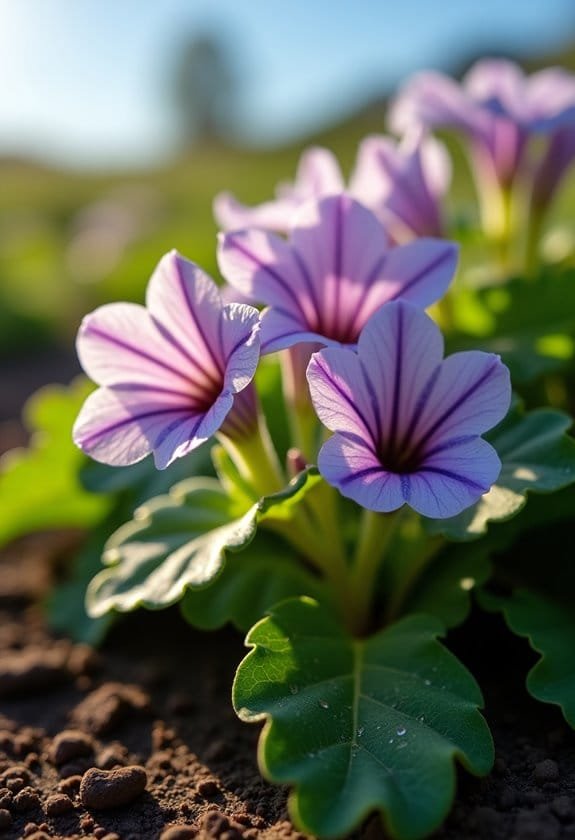
Phacelia tanacetifolia flourishes in full sunlight, showcasing its resilience in diverse soil types, particularly those that are poor, rocky, or sandy.
It prefers well-drained environments, thriving in USDA zones 3-10, where temperatures above 50°F support its growth.
This hardy annual's low-maintenance nature is further enhanced by its drought tolerance and ability to self-seed, making it an ideal choice for gardeners seeking vibrant blooms with minimal upkeep.
Light
For ideal growth, Phacelia tanacetifolia needs full sun, requiring at least six hours of direct sunlight each day. This plant thrives when exposed to generous sunlight, as it's intolerant of shade. In shaded areas, its growth becomes stunted, leading to diminished vitality and charm. Consequently, selecting sunny locations is essential for anyone wishing to cultivate this attractive species.
Moreover, Phacelia tanacetifolia is renowned for being drought-tolerant, showcasing its remarkable adaptability to low-moisture environments. Once established, it can flourish even in moderately saline conditions, making it an excellent choice for gardens where water availability may be limited.
It's important to remember that the plant also requires well-drained soils, whether sandy, rocky, or clay-based. This preference mimics the native arid landscapes from which it originates, allowing for healthy root development.
When planting, one should consider that Phacelia tanacetifolia displays resilience across various climate zones, particularly within USDA zones 3-10. This quality further highlights its suitability for diverse gardening environments, ensuring beauty and functionality meld seamlessly under the brilliance of sunlight.
Soil
Well-drained soils are crucial for cultivating Phacelia tanacetifolia, as this plant flourishes in rocky, sandy, or poor soil types. Thriving particularly in arid, drought-prone environments, this species shows remarkable resilience, coping well with moderately saline conditions. Consequently, it readily adapts to various habitat types, showcasing its versatility.
When considering its growing requirements, it's important to recognize Phacelia's dependence on full sun exposure; it requires at least six hours of direct sunlight daily to reach peak growth.
Once established, the plant exhibits drought-tolerant traits, allowing it to survive extended dry periods without detriment. Additionally, it can self-seed, fostering natural propagation, although under certain conditions, it may become weedy if not managed properly.
Phacelia tanacetifolia is most suited for USDA hardiness zones 3-10, thriving in moderate moisture levels without the risk of waterlogging.
Understanding these preferences guarantees successful cultivation, providing gardeners with a low-maintenance yet visually appealing addition to their landscapes. Through its adaptive qualities, this plant not only enhances the beauty of arid spaces but greatly contributes to ecological diversity.
Water
Moisture management is key to the successful growth of Phacelia tanacetifolia. This lacy Phacelia thrives in well-drained soils and requires moderate moisture to flourish, particularly during its early establishment phase.
Young plants benefit from consistent watering, which encourages robust root development, guaranteeing resilience against fluctuating water availability.
Drought tolerance is a remarkable characteristic of Fiddleneck, enabling it to adapt to arid conditions across the United States and Northwestern regions.
Once established, these plants can survive with minimal supplemental watering, making them valuable in landscapes requiring low maintenance.
However, one must exercise caution, as waterlogging can severely hinder growth; overly saturated soils lead to root rot and eventual plant decline.
The self-seeding nature of Phacelia tanacetifolia allows it to proliferate despite challenging environmental conditions, effectively reducing its overall water needs.
Gardeners interested in cultivating this species can feel confident knowing they can sell or share abundant seeds, enriching local biodiversity while promoting sustainable practices.
Ultimately, understanding the water requirements of Fiddleneck guarantees its successful integration into various ecosystems, contributing to a healthier habitat and vibrant landscapes.
Temperature
Temperature plays a crucial role in the growth of Phacelia tanacetifolia. This annual plant flourishes within specific temperature ranges, as it thrives in USDA zones 3-10, requiring temperatures above 50°F for ideal growth.
With remarkable temperature tolerance, Phacelia can withstand winter lows down to 18°F, making it perfect for cool-season planting.
The temperature effects on growth are significant; the plant germinates quickly in suitable warmth, initiating a rapid growth cycle that often leads to blooming from early spring through mid-August. During this period, full sun conditions are essential, as shaded environments inhibit both growth and flowering, preventing the vibrant blooms characteristic of this species.
Furthermore, established Phacelia displays impressive resilience to drought, adapted to arid climates, which bolsters its overall health in less-than-ideal moisture conditions.
When gardeners appreciate these temperature requirements, they enhance their chances of cultivating a thriving Phacelia tanacetifolia garden. By understanding and monitoring local temperature conditions, they can make informed decisions that align with this plant's unique needs, ensuring a flourishing and productive display of its stunning blossoms throughout the season.
Pollinator Criteria
Phacelia tanacetifolia serves as an essential attraction for various pollinators, drawing honeybees, bumblebees, and butterflies with its striking lavender-blue clusters. This enchanting plant's intricate flower shape, coupled with its abundant nectar production, guarantees effective pollination and fosters a thriving ecosystem. Additionally, its ability to self-seed ensures continued growth and sustains habitats for these vital insects.
Attracted Pollinators
With its vibrant blooms and rich nectar, Fiddleneck (Phacelia tanacetifolia) stands out as an indispensable resource for pollinators. This premier pollinator species attracts various beneficial insects, including honeybees, bumblebees, butterflies, and hoverflies, showcasing diverse pollinator behavior.
Fiddleneck's high-quality nectar sources offer valuable sustenance, particularly during its extended flowering period from early spring to mid-August. This duration guarantees a consistent food supply, supporting pollinators throughout multiple months, which is essential considering the current declines in their populations. Additionally, Fiddleneck's flowering period aligns with the peak activity of pollinators, similar to the flowering season of Hypericum perforatum, showcasing its importance in providing sustenance during critical times.
Furthermore, Fiddleneck thrives in full sun and drought conditions, enabling it to flourish in disturbed areas where other species may falter. This resilience contributes to habitat restoration by providing not only nectar and pollen but also a stable environment that supports declining pollinator species. Additionally, its adaptation to various environmental conditions reflects the traits seen in other native plants such as Common Yarrow(#), which also supports local biodiversity.
Additionally, Fiddleneck attracts syrphid flies, whose larvae feed on aphids, playing a significant role in natural pest control and benefiting agricultural ecosystems. By fostering a rich ecosystem that nurtures these indispensable insects, Fiddleneck exemplifies the interconnectedness of plant species and pollinator health, demonstrating its significance in maintaining local biodiversity.
Pollination Method
The pollination method of Fiddleneck (Phacelia tanacetifolia) primarily relies on its ability to attract a diverse array of pollinators through its abundant and accessible blossoms. With its striking blue and lavender bell-shaped flowers, which bloom from early spring to mid-August, Fiddleneck employs a successful pollinator strategy that guarantees a continuous food source for creatures like honeybees, bumblebees, butterflies, and hoverflies.
This rich flora facilitates efficient pollination due to the high flower density, promoting interactions among both solitary and social pollinators. The nectar source provided by Fiddleneck serves as a vital resource for supporting wildlife gardens, similar to how Greater Knapweed benefits pollinators.
The flower morphology of Fiddleneck is designed for accessibility, encouraging beneficial insects to visit frequently and guaranteeing effective pollen transfer. One of the notable ecological benefits stems from the hoverfly larvae attracted to this plant, which prey on aphids and other damaging pests, enhancing local biodiversity and ecosystem health.
Additionally, the plant's self-seeding nature permits it to thrive, reinforcing habitats and promoting the stability of pollinator populations. In this manner, Fiddleneck not only serves as an essential food resource but also supports broader ecological dynamics, demonstrating the interconnectedness of floral species and their pollinator communities. Furthermore, Fiddleneck's attractive blossoms also help to draw in key pollinators, much like the way Birds Foot Trefoil attracts essential pollinators, thereby enhancing reproductive success.
Care & Maintenance
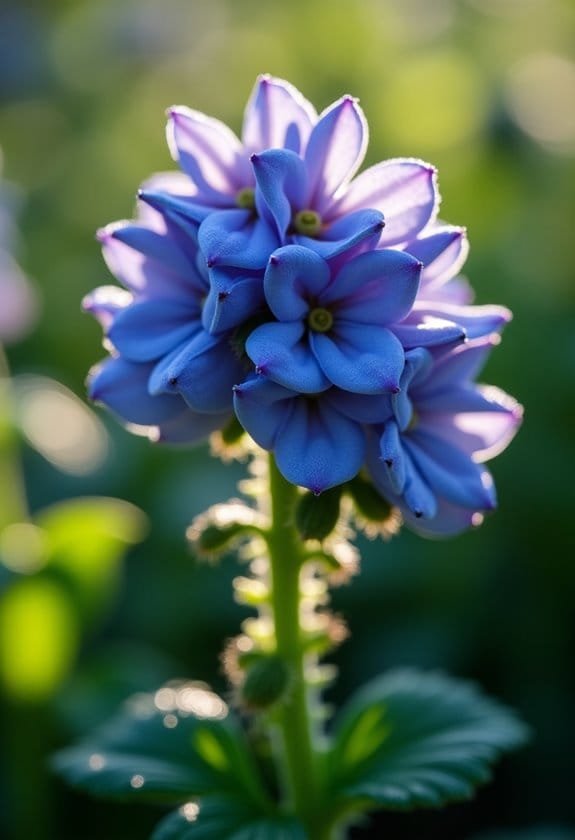
To cultivate Phacelia tanacetifolia successfully, one must consider ideal planting conditions and ongoing care practices.
The plant flourishes in well-drained, rocky or sandy soils and requires full sun exposure to maximize its striking blooms; therefore, proper site selection is vital.
Additionally, awareness of its self-seeding nature and potential weed tendencies in fertile environments can help maintain its beauty and ecological balance within your garden.
Planting Tips
In early spring or fall, gardeners can successfully plant Phacelia tanacetifolia, commonly known as Fiddleneck, to guarantee ideal growth. This vibrant plant thrives in full sun and well-drained, poor, or rocky soils, making it an excellent choice for a variety of landscapes.
For top results, employing effective seed preparation techniques is essential; soaking seeds overnight enhances germination rates and markedly boosts establishment success.
When selecting planting locations, confirm the chosen spot avoids frequent human activity to minimize potential skin irritation from the plant's sap.
After planting, gardeners should maintain a moderate soil moisture level, as Fiddleneck is drought-tolerant but still requires well-drained conditions to flourish effectively.
Growth monitoring becomes paramount once the plant blooms and begins to self-seed.
Gardeners should keep an eye on its proliferation, as unmanaged Fiddleneck can become weedy, particularly in disturbed areas. To prevent rampant growth, timely interventions, such as controlled removal of excess seedlings, can help maintain a balanced garden ecosystem.
Consequently, proper planting and attentive monitoring can guarantee that Phacelia tanacetifolia contributes beautifully to the garden's diversity.
Ongoing Care
Once Phacelia tanacetifolia is planted and established, ongoing care focuses on maintaining its health and managing its growth.
This hardy annual thrives in poor, rocky, and sandy soils, demonstrating exceptional drought tolerance. However, as it possesses self-seeding traits, gardeners must engage in regular self-seeding management to prevent it from overtaking their cultivated spaces. Monitoring its spread can guarantee that it remains a charming addition rather than a potential weed.
While tending to Phacelia, it's essential to observe skin irritation precautions, as direct contact with its foliage may cause discomfort. Consequently, wearing gloves when handling the plant is a simple yet effective preventive measure.
Given its adaptability, it flourishes in USDA zones 3-10, but local climate conditions should dictate its specific care regimen.
Suggested Companions
Selecting suitable companions for Phacelia tanacetifolia not only enhances the garden's aesthetic but also promotes healthy growth.
Companion planting with native flowers such as Yarrow and Rose Checker Mallow is particularly beneficial, as these plants attract essential pollinators that benefit Fiddleneck. Incorporating legumes like clover or vetch boosts nitrogen levels in the soil, fostering a richer growing environment for Fiddleneck and neighboring plants. Notably, white clover's nitrogen-fixing capabilities can significantly enrich the soil, further enhancing plant health.
Drought tolerance is another key factor when selecting companions. California poppies, known for their resilience in dry conditions, synergize well with Fiddleneck, creating a harmonious, water-wise garden design that flourishes even in arid climates.
Additionally, visually striking plants like Tidy Tips add bright yellow hues that brilliantly contrast with Fiddleneck's purple blooms, enhancing the overall visual appeal of the landscape.
However, avoiding aggressive species is essential; these plants can compete for precious resources, hindering Fiddleneck's growth. Furthermore, consider adding pollinator-attracting species like Creeping Cinquefoil, which can support local biodiversity while enhancing the garden's ecological role.
Common Issues
Phacelia tanacetifolia, though a valuable plant, isn't without its challenges, including susceptibility to pests and diseases that can threaten its health.
Common issues such as aphids and fungal infections can lead to diminished vigor, requiring diligent observation and targeted interventions to mitigate their impact.
Implementing integrated pest management strategies guarantees that this beautiful flowering species can thrive while minimizing detrimental effects on its delicate ecosystem.
Pests/Diseases
Establishing a garden can come with its share of challenges, but Phacelia tanacetifolia, commonly known as Fiddleneck, typically remains resistant to many pests and diseases. This hardy plant generally displays remarkable resilience, but some issues may arise.
Aphids occasionally target Fiddleneck, yet the plant's unique attractant quality draws in beneficial insects like syrphid flies, which contribute considerably to effective aphid control through natural predation.
However, under overly humid conditions, especially in crowded environments with insufficient air circulation, Fiddleneck can develop powdery mildew—a fungal disease characterized by white, powdery spots that may diminish plant liveliness.
Additionally, gardeners must remain vigilant about self-seeding management, as Fiddleneck's propensity for self-seeding can lead to unwanted invasiveness in some regions if left unchecked.
Moreover, the importance of soil health can't be overstated; poor drainage can precipitate root rot, jeopardizing the plant's growth and overall health.
Consequently, understanding these potential pests and diseases allows gardeners to cultivate Fiddleneck effectively, ensuring it flourishes while maintaining ecological balance. Proper attention to these common issues can lead to thriving, vibrant gardens. Furthermore, similar integrated pest management strategies utilized for other resilient plants can enhance the overall wellness of Fiddleneck in diverse garden settings.
Solutions
To tackle common issues with Fiddleneck, gardeners should adopt a proactive approach. Sustainable management is essential, as this beautiful plant can become weedy if left unchecked, potentially invading gardens. Regular monitoring allows gardeners to intervene early and prevent uncontrolled spread.
Skin safety is also paramount. Contact with Fiddleneck can cause irritation; consequently, wearing gloves during handling markedly minimizes this risk.
Additionally, ensuring ideal seeding is critical for healthy growth. For best results, gardeners should broadcast seeds at a rate of 2430 pounds per acre or use a seed drill set at 12 pounds per acre, promoting dense growth.
Careful pre-planting preparation can enhance germination rates considerably. Soaking seeds overnight, particularly in drier conditions, can yield better results.
The plant flourishes in full sun and well-drained environments, making soil and light conditions important. Inadequate sunlight or poorly drained soil can stifle its growth and make it more vulnerable to pests and diseases. To maintain robust health, gardeners should ensure consistent moisture during the establishment phase, similar to care strategies for Ajuga reptans.
Summary
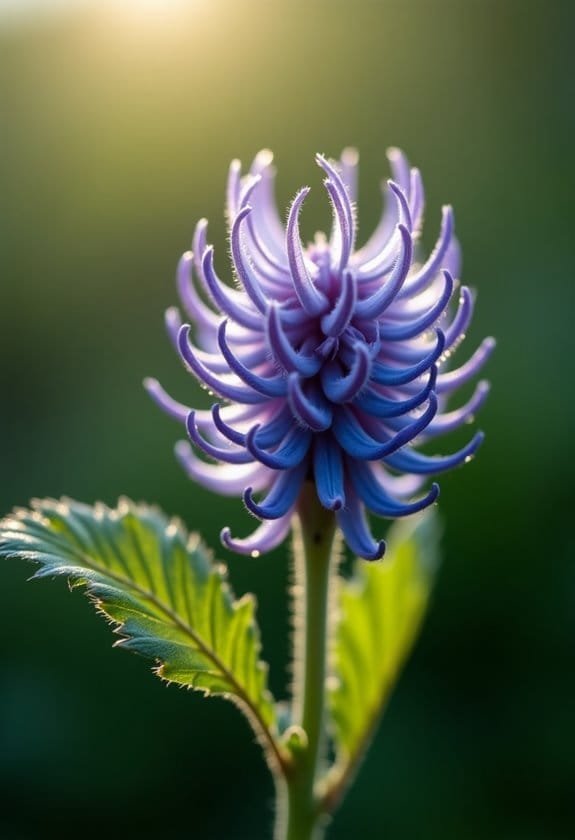
Commonly known as Fiddleneck or Lacy Phacelia, Phacelia tanacetifolia is an annual herbaceous plant admired for its striking lavender-blue flowers and ecological benefits. This remarkable species, reaching heights of 1 to 4 feet, flourishes in full sun and well-drained soils, showcasing its drought tolerance and self-seeding capabilities. These characteristics may occasionally lead to weedy growth if not properly managed.
Phacelia tanacetifolia serves as a crucial ally in fostering soil health through nitrogen fixation—a process that enriches soil nutrients, promoting robust plant growth. Additionally, this plant attracts a variety of beneficial insects, including honeybees and bumblebees, making it a significant contributor to pollination efforts and a top-rated honey-producing flower. As it sustains local wildlife, it plays an indispensable role in biodiversity initiatives, cultivating a thriving ecosystem.
Adaptable to USDA zones 3 through 10, Fiddleneck finds its place in diverse landscape applications, whether within wildflower and pollinator gardens or as a cover crop that improves soil quality. Ultimately, Phacelia tanacetifolia epitomizes the interconnectedness of plant health, wildlife welfare, and environmental conservation.