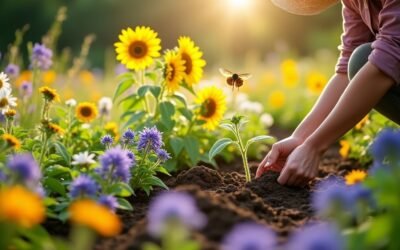
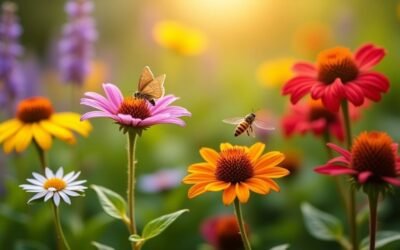
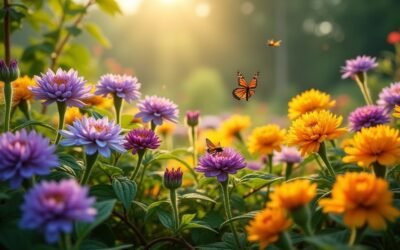
Phlox paniculata, also known as perennial phlox, enchants gardens with its vibrant, clustered blooms, showcasing colors from white to deep purple. This resilient perennial typically grows 2 to 5 feet tall and thrives in well-draining, humus-rich soil under full sun for at least six hours daily. Its flowering season spans from mid-summer to early fall, attracting crucial pollinators like butterflies and hummingbirds, therefore promoting local biodiversity. Regular deadheading and proper spacing enhance blooming and reduce disease risks. With mindful care, this charming plant can transform garden spaces into lively ecosystems, offering much to discover about its cultivation and benefits.
Main Points
- Phlox paniculata, commonly known as Garden Phlox, features vibrant blooms in various colors from mid-summer to early fall.
- It thrives in well-draining, humus-rich soil with full sun exposure, ideal for optimal growth and flowering.
- The plant requires consistent moisture, but caution is needed to avoid overwatering, which can lead to root rot.
- Attracting pollinators like butterflies and bees, it enhances biodiversity in gardens, supporting local ecosystems.
- Regular maintenance, including deadheading and seasonal cutting back, promotes healthy blooms and plant vigor.
Introduction
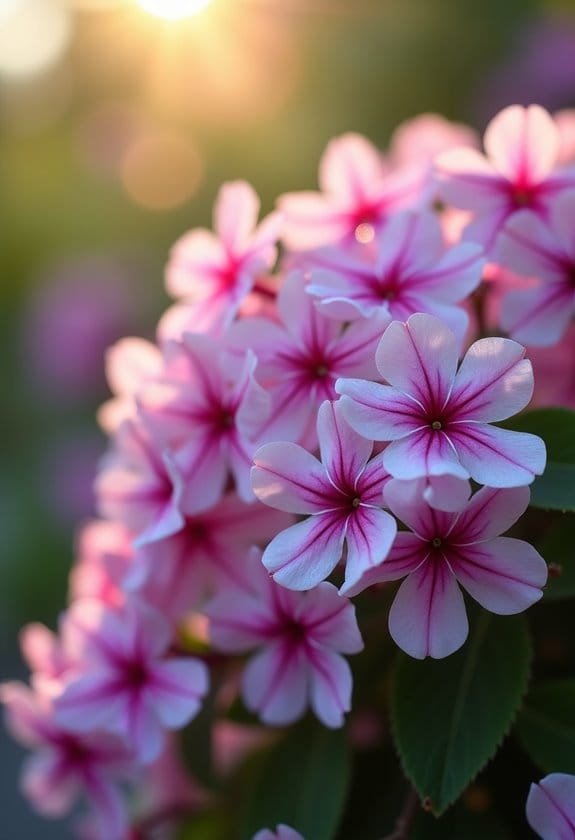
Phlox paniculata, widely recognized as Garden Phlox, is a stunning perennial that enchants gardens across the eastern and central United States.
Reaching heights between 2 and 4 feet, this resilient plant boasts lush, dark green foliage adorned with clusters of vividly colored blooms that flourish from mid-summer to early fall.
As a notable attraction for pollinators like butterflies and hummingbirds, Phlox paniculata serves as both a beautiful and ecologically beneficial addition to any garden landscape.
Common Name
Known by several common names, Phlox paniculata is often referred to as Garden Phlox, Autumn Phlox, Summer Phlox, and Tall Phlox. These designations reflect its remarkable growth habits along with its abundant blooming season, typically extending from mid-summer into early fall.
Garden Phlox is particularly celebrated for its vibrant and diverse blooms, featuring colors such as white, pink, red, purple, and lavender. This stellar color palette makes it a favorite in garden landscaping.
Another widely used term, Perennial Phlox, emphasizes the plant's perennial nature, highlighting its ability to flourish year after year in various garden settings.
The name "Cross-leaved Phlox" derives from the unique arrangement of its narrow, elliptically shaped leaves, which grow in whorls around the stem, creating a striking visual appeal.
Consequently, this perennial plant not only graces gardens with its steadfast presence but also captivates with its extensive range of colors and textures.
Fundamentally, the common names attributed to Phlox paniculata encapsulate its nature, functionality, and enduring charm, making it an integral component of both traditional and contemporary gardening.
Scientific Name
The scientific classification of this vibrant perennial highlights its significance in the botanical world. Known as Phlox paniculata, this species belongs to the Polemoniaceae family, emphasizing its connections to a variety of flowering plants cherished in gardens.
Native to the eastern and central United States, Phlox paniculata thrives in USDA hardiness zones 4 to 8, making it a versatile choice for many cultivators passionate about their landscapes.
The term "paniculata" derives from the paniculate clusters of colorful blossoms that this plant produces, often showcasing hues from soft pastels to striking brights, attracting the eye from mid-summer to early fall. Erect in growth, Phlox paniculata can reach heights of 2 to 4 feet, characterized by its dark green, elliptical leaves that create a lush backdrop for its floral display.
These stunning blooms are frequently found not just in cultivated gardens but also in naturalized areas, where they play an essential ecological role. By attracting various pollinators, such as butterflies and hummingbirds, Phlox paniculata contributes greatly to encouraging biodiversity and supporting the health of garden ecosystems.
Overview
Vibrant and enchanting, Garden Phlox (Phlox paniculata) stands out in many gardens across the eastern and central United States as a cherished perennial. This herbaceous perennial typically reaches heights of 2 to 4 feet, forming a sturdy presence in diverse landscapes.
Known for its vibrant colors, Phlox paniculata enchants gardeners with blooms in hues such as white, pink, red, purple, and lavender, which grace gardens from mid-summer to early fall.
Thriving in well-draining, humus-rich soil, this plant prefers full sun but can adapt to partial shade, demonstrating remarkable versatility in gardening applications. Hardy in USDA zones 4 to 8, Phlox paniculata can withstand a variety of climates; however, it does require regular watering and adequate air circulation to thwart potential diseases, such as powdery mildew.
Moreover, its fragrant flowers attract pollinators, including butterflies and hummingbirds, enhancing local biodiversity while adorning gardens with delightful aesthetics.
In this way, incorporating Phlox paniculata in garden design not only brings vivid beauty but also contributes positively to the environment, supporting both flora and fauna.
Key Features
Phlox paniculata stands between 2 to 4 feet tall, presenting a striking display of colorful blooms that flourish from mid-summer to early fall.
Its narrow, elliptical leaves serve as a rich backdrop, enhancing the beauty of the large, fragrant flower clusters that attract various pollinators, like hummingbirds and butterflies.
This adaptability to diverse environments, combined with its vibrant appearance, makes it a standout choice for any garden enthusiast seeking to elevate their landscape aesthetic.
Growth Size
During the growing season, Garden Phlox (Phlox paniculata) typically reaches a height of 2 to 4 feet (60-120 cm) and can sometimes grow even taller, with certain varieties extending up to 5 feet. This remarkable growth size contributes to the plant's stately and robust appearance, characterized by its erect stems.
As the plants flourish, they develop a spread of 2 to 3 feet, allowing enough room for air circulation, which promotes healthy growth.
The foliage, with its narrow, elliptical dark green leaves, supports the plant's impressive height while forming a lush backdrop for the vibrant blooms. These flowers emerge in stunning clusters, sometimes reaching individual sizes of up to 2 inches wide. When in full bloom, the clusters create an exhilarating visual spectacle, enchanting gardeners and pollinators alike.
For ideal conditions, spacing between each plant is advised at 2-3 feet to guarantee they don't crowd one another. The thoughtful arrangement not only fosters healthy growth but enhances the overall aesthetic, showcasing the unique growth size and profusion of clusters that make Garden Phlox an enduring favorite in perennial gardens.
Appearance
Garden Phlox captivates with its striking appearance, marked by upright clumps of stems that rise between 2 and 4 feet in height. This perennial showcases narrow, elliptical green leaves that create a rich, lush backdrop for its vibrant blooms, which range in hue from pristine white to deep purple. The foliage itself serves not only as an attractive complement but also as a crucial element in photosynthesis, guaranteeing the plant's vigor.
Large clusters of fragrant flowers form dramatic displays, each cluster reaching up to 7 inches wide. These visually impactful arrangements bloom profusely from mid-summer to early fall, attracting pollinators and delighting gardeners. The array of colors, including pink and red varieties, adds layers of depth to any garden landscape, enhancing both aesthetic appeal and biodiversity.
Due to the plant's robust structure, taller varieties often require staking for added support, especially during windy conditions; this guarantees that the stunning flowers maintain their poised elegance.
Altogether, the harmonization of green leaves and colorful clusters of fragrant flowers creates an enchanting display, making Garden Phlox a favored choice in perennial gardens throughout various climates.
Flowering Season
Typically, the flowering season for Phlox paniculata brings a burst of vibrant color from mid-summer to early fall, enchanting gardeners with its stunning display. During this time, Phlox showcases an array of blooms that can last approximately six weeks, considerably enhancing the aesthetics of late-season gardens. Each flower cluster, appearing in diverse colors like white, pink, red, purple, and lavender, creates a rich tapestry of visual appeal that captivates and delights.
To maintain the beauty of these blooms, regular deadheading is recommended. This practice not only encourages a second flush of flowers but also extends the overall blooming period, allowing gardeners to enjoy Phlox's splendor even longer.
The peak flowering season serves as an ecological boon as well, attracting numerous pollinators such as butterflies, hummingbirds, and bees. This influx of wildlife supports local biodiversity and contributes to the health of the surrounding ecosystem.
Ultimately, the flowering season of Phlox paniculata provides not just aesthetic pleasure, but also fosters a thriving environment for beneficial creatures, showcasing the intricate connections within the natural world.
Growing Requirements
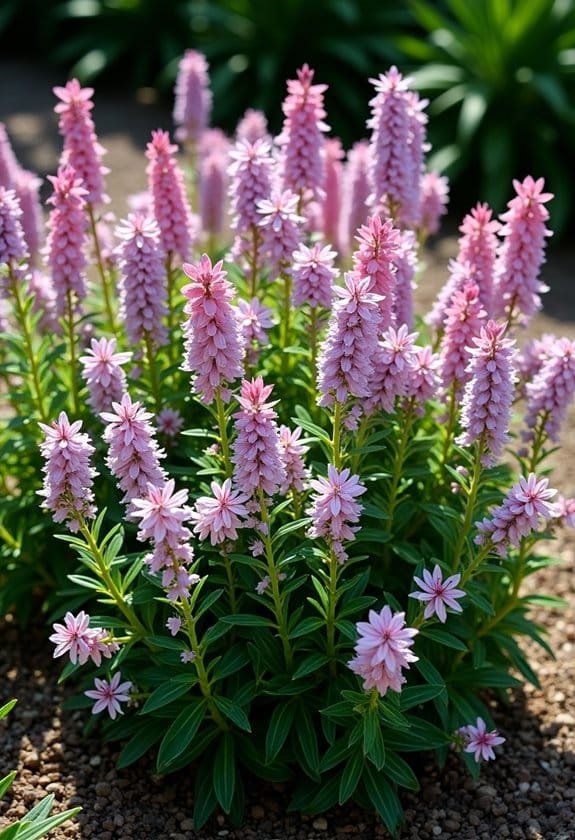
Phlox paniculata flourishes under specific conditions that support its vibrant growth and stunning blooms.
It thrives in full sun, requiring a minimum of six hours of direct sunlight daily, while also favoring well-draining soil enriched with organic matter and pH levels between 6.0 and 8.0.
Consistent moisture is essential, particularly during drought periods, while ideal spacing of 2 to 3 feet between plants enhances air circulation and mitigates disease risks.
Light
When it comes to light requirements, Phlox paniculata truly flourishes in full sun. This perennial plant thrives best with a minimum of six hours of direct sunlight daily, which stimulates ideal blooming and enhances overall plant health. In bright light, the vibrant colors and delightful fragrance of the flowers become more pronounced, creating a visually stunning display in any garden.
While Phlox paniculata favors full sun, it can tolerate light shade, offering gardeners some flexibility when selecting planting locations. However, insufficient sunlight can lead to leggy growth, where the stems stretch awkwardly in search of light, resulting in reduced flowering and diminished aesthetic appeal.
Without satisfactory light, the plants may appear lackluster and struggle to reach their full potential. For gardeners looking to maintain the brilliant blooms of Phlox paniculata, it's essential to choose a planting spot that consistently receives bright light.
This attention to proper sunlight exposure not only supports the plant's vibrant growth but also guarantees a flourishing garden, filled with the delightful hues that characterize this remarkable perennial.
Soil
For successful growth, Phlox paniculata needs well-draining soil rich in organic matter. This particular perennial flourishes best when its roots have access to nutrients and moisture, enabling robust development. Soil with a pH of 6.0 to 8.0 is perfect, ensuring prime nutrient availability to encourage vibrant blooms.
The plant thrives in medium moisture levels, which means careful attention must be given to watering, especially during those dry spells when the earth tends to dry out.
In addition to moisture management, incorporating mulch around the base of the plants can greatly benefit their environment. Mulch helps retain moisture, regulate soil temperature, and suppress competing weeds, creating an ideal microhabitat for Phlox paniculata.
However, maintaining good air circulation is equally essential to prevent powdery mildew, a common ailment for these lovely blooms. Therefore, ensuring proper spacing between plants is imperative, both for growth and health.
Fundamentally, cultivating Phlox paniculata requires a keen understanding of soil conditions that promote favorable growth, allowing this magnificent perennial to flourish, delighting gardeners and admirers alike with its stunning floral displays.
Water
How essential is proper watering for the health of Phlox paniculata? This perennial flower thrives best with medium moisture levels, requiring neither overly dry nor soggy conditions to flourish. During dry spells, regular watering becomes significant; it helps maintain the plant's vigor and supports robust blooming.
Gardeners should note that Phlox paniculata is particularly susceptible to powdery mildew, which can afflict the foliage, so overhead watering should be avoided. Instead, focused irrigation techniques are preferable, as they protect the leaves while ensuring that the roots receive adequate water.
Moreover, employing mulch around the base of these plants plays an important role in moisture retention; it keeps the root zone cool and preserves the soil's humidity.
In the sweltering summer months, timing becomes important; watering should ideally occur early in the morning or late in the afternoon. This strategy minimizes evaporation losses, allowing the plant to absorb the water more effectively while reducing stress during the hottest parts of the day.
As a result, understanding the watering needs of Phlox paniculata is a fundamental aspect of its successful cultivation, leading to vibrant blooms and enduring health.
Temperature
Phlox paniculata thrives best in USDA Hardiness Zones 4 to 8, making it adaptable to a variety of temperate climates. This perennial prefers full sun exposure, ensuring vibrant blooms and robust growth. However, it can tolerate light shade, providing flexibility for gardeners looking to integrate it into diverse garden landscapes.
For optimum development, Phlox requires medium moisture levels, benefiting substantially from mulching, which helps retain humidity in the garden soil while preventing excessive heat during scorching summers.
It's crucial to select well-drained soil that accommodates both winter wetness and summer dryness, particularly in warmer areas. Employing soil that drains effectively mitigates the risk of root rot, a common malady for moisture-sensitive plants.
To maintain air circulation and minimize the risk of fungal infections, it's advisable to space plants 2 to 3 feet apart. This also allows each plant sufficient room to flourish, reaching impressive heights and forming stunning clusters.
Ultimately, following these temperature and soil requirements can lead to a breathtaking display of color and vibrancy within any garden setting, ensuring Phlox paniculata remains a treasured component of the perennial landscape.
Pollinator Criteria
In evaluating the pollinator criteria for Phlox paniculata, it's evident that this plant plays an essential role in supporting various species.
Attracted pollinators, such as hummingbirds, butterflies, and native bees, are drawn to its vibrant blooms and readily accessible nectar, which can be an important resource during the mid-summer to early fall bloom period.
The plant's robust flower clusters not only serve as a landing platform, facilitating efficient foraging, but they also enhance the garden's biodiversity, nurturing the local ecosystem. Additionally, like the Common Cowslip, Phlox paniculata's flowers can provide nectar for diverse pollinator species, further promoting garden vitality.
Attracted Pollinators
Because of its vibrant blooms and delightful fragrance, Phlox paniculata consistently attracts a variety of pollinators, including hummingbirds, bees, and butterflies.
The wide range of colors—spanning from soft whites to deep magentas—enhances its visibility, making it a favored choice for butterfly and hummingbird gardens. Gardeners often notice these attracted pollinators flitting around the plants, especially during the critical blooming period from mid-summer to early fall.
Phlox paniculata provides a rich source of nectar, integral to sustaining these essential species when other flora may start to decline in early spring.
Its accessible flower shape allows for easy feeding, accommodating various pollinators, including various sizes of beneficial insects. This adaptability not only creates a lively atmosphere but also fosters biodiversity by drawing in a spectrum of wildlife. Additionally, like Euphorbia characias, Phlox paniculata's pollinator contributions play a significant role in enhancing garden ecosystems.
Pollination Method
The pollination method of Phlox paniculata heavily relies on its attractive blooms that serve as a beacon for pollinators. These perennial plants primarily depend on insects, specifically attracting bees, butterflies, and hummingbirds with their fragrant, vibrant flowers. Clusters of blossoms create a fortified environment that makes access easy for visiting pollinators, ensuring efficient pollen transfer between flowers.
The color range, spanning from pure white to rich purple, acts as a visual invitation, enhancing the likelihood of pollinator visitation. This striking coloration, coupled with enticing scents, draws pollinators seeking nectar, which energizes the ecological interaction between plants and insects. Additionally, Eupatorium cannabinum's effective pollination by specialized butterflies also illustrates how various plants create interdependent relationships within ecosystems.
Blooming from mid-summer to early fall coincides with the active seasons of many regional pollinators, extending opportunities for cross-pollination. Additionally, like the Common Harebell, which attracts various bee species with its distinctive blooms, Phlox paniculata plays a significant role in supporting local biodiversity.
Research supports that a diverse array of pollinators contributes not just to increased seed set but also to overall plant vigor, reinforcing Phlox paniculata's crucial role in garden ecosystems. This interaction cultivates a rich tapestry of biodiversity, showcasing the beauty and necessity of nature's intricate relationships.
Consequently, understanding the pollination method of this remarkable plant fosters appreciation for the interconnectedness of Eupatorium cannabinum's role in our gardens.
Care & Maintenance
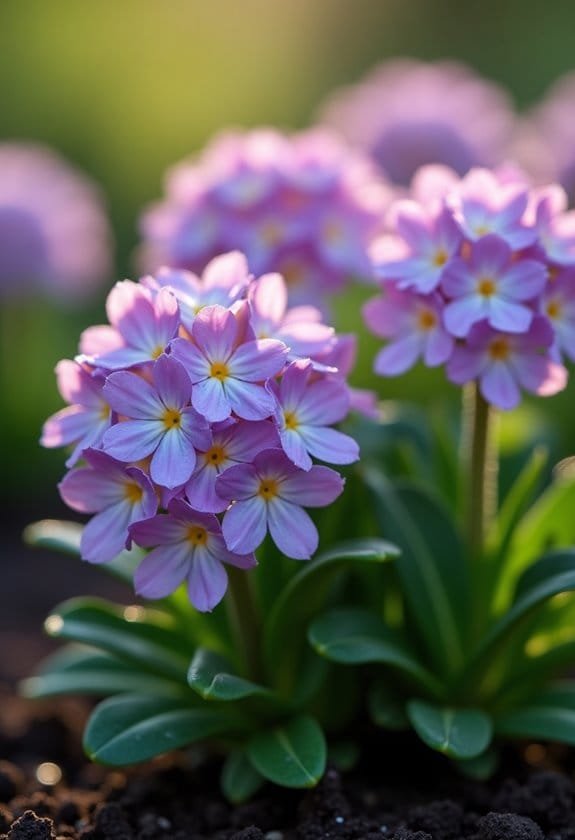
When it comes to the care and maintenance of Phlox paniculata, gardeners can maximize both growth and visual appeal. Regular practices, such as deadheading and mulching, not only enhance blooming potential but also improve overall health by retaining moisture and suppressing weeds.
Understanding the needs of these vibrant plants, including periodic division every few years, fosters a thriving garden environment that supports both aesthetic and ecological balance.
Planting Tips
For a thriving Phlox Paniculata, selecting the right planting conditions is vital. These perennial flowers flourish best in well-drained, humus-rich soil with a pH ranging from 6.0 to 8.0. Enhancing soil with organic matter optimizes growth, providing a nurturing environment for the plants.
When planting, it's important to space them 24-36 inches apart. This spacing promotes adequate air circulation, greatly reducing the risk of powdery mildew infections, which can be quite detrimental.
To encourage continual blooming and maintain aesthetic appeal, regular deadheading of faded flowers is advisable; this practice stimulates the plant to produce additional blooms throughout the growing season. Additionally, applying a layer of mulch around the bases of the plants not only retains moisture but also suppresses weeds while keeping the root zone cool during sweltering summer days.
Finally, for maintaining vigor and controlling the spread of the plants, it's beneficial to divide them every 2-3 years in early spring. This proactive approach guarantees a dynamic, healthy display, allowing gardeners to enjoy the vibrant colors of Phlox Paniculata in full bloom.
Ongoing Care
Ongoing care is crucial to guarantee Phlox Paniculata remains vibrant and healthy throughout the growing season. Regular deadheading, which involves removing spent flowers, notably encourages continued blooming and preserves the plant's visual appeal. This simple act diverts energy from seed production back into the development of new flowers, ensuring an extended flowering period.
In addition to deadheading, pruning back Phlox Paniculata to ground level in late autumn or early spring fosters rejuvenated growth for the upcoming season. This promotes a vigorous root system and encourages lush foliage. Applying a layer of mulch around the base further supports these efforts by retaining soil moisture, suppressing weeds, and shielding roots from temperature extremes.
Every two to three years, dividing the plants in early spring invigorates their growth and manages their spread, ensuring robust health.
It's equally important to monitor for pests, particularly powdery mildew and aphids. Employing suitable control measures, such as organic treatments, helps maintain the plant's health.
Suggested Companions
To create a vibrant and harmonious garden, choosing companion plants for Phlox Paniculata can make a significant impact. Echinacea (Coneflowers) and Rudbeckia (Black-Eyed Susan) not only present an appealing color palette alongside Phlox but also thrive in similar soil and light conditions, enhancing the garden's overall aesthetic. Additionally, companions like Chaenomeles speciosa offer ornamental beauty and functional benefits with their attractive flowers and edible fruit.
Planting clusters of these species fosters a cohesive look, inviting the eyes to dance across blooming beds.
Monarda (Bee Balm) serves as another excellent companion, attracting pollinators like bees and hummingbirds, which boosts biodiversity in the garden. Additionally, incorporating ornamental grasses such as Miscanthus and Panicum introduces texture and movement to the design, improving air circulation and potentially reducing the likelihood of fungal diseases like powdery mildew. Mahonia species, known for their early-season nectar sources, can also play a companion role by providing sustenance for pollinators in the garden.
When paired with taller plants like Delphinium, Phlox can be arranged in planting clusters of compatible heights, fostering visual interest through layered formations.
Regular maintenance practices, including deadheading and dividing every two to three years for both Phlox and its companions, guarantee vigorous growth and a robust flowering season, collectively contributing to a healthier garden ecosystem.
Therefore, selecting suitable companions can elevate both the beauty and liveliness of the garden.
Common Issues
Phlox paniculata often faces challenges from pests and diseases that can impede its vibrant growth.
Common issues like powdery mildew thrive in humid environments, while infestations of aphids can distort leaves and introduce diseases.
Implementing effective solutions, such as ensuring proper air circulation and maintaining a vigilant monitoring routine, will empower gardeners to safeguard their beloved plants against these persistent threats.
Pests/Diseases
Garden Phlox (Phlox paniculata) faces several pests and diseases that can hinder its growth and significance.
One of the most prevalent issues is powdery mildew, a fungal disease thriving in humid conditions. This condition manifests as a white, powdery coating on leaves and can be exacerbated by poor air circulation. To mitigate this, it's vital to avoid overhead watering and guarantee adequate spacing between plants.
Additionally, spider mites, particularly fond of hot, dry environments, can wreak havoc on the foliage. Their presence is often indicated by tiny webs and stippling on leaves, signaling severe damage. Prompt identification and removal are essential to prevent the spread of these pests.
Phlox bugs may also take their toll, resulting in leaf distortion and yellowing that detracts from the plant's aesthetic appeal.
Finally, root rot can develop from overwatering or poorly draining soil, highlighting the importance of maintaining well-drained conditions.
Seasonal maintenance, such as cutting phlox plants back in late autumn and clearing debris, plays a pivotal role in minimizing these threats, cultivating a healthier environment for the vibrant blooms to flourish in the upcoming growing season.
Solutions
For the common issues faced by Phlox paniculata, implementing effective solutions can greatly enhance plant health and energy.
One prevalent challenge is powdery mildew, especially in humid conditions. To combat this, gardeners should guarantee good air circulation by spacing plants 2-3 feet apart and allowing them to thrive in sun to partial shade. Avoiding overhead watering can considerably reduce moisture on foliage, which lowers mildew risk.
Regular deadheading of faded flowers not only maintains the plant's overall appearance but also encourages a second blooming cycle and inhibits self-seeding, allowing for a more vibrant display the following season.
Additionally, maintaining a clean garden by removing debris and fallen leaves creates a less hospitable environment for pests and diseases.
Monitoring for common pests such as phlox bugs and spider mites is essential; early detection allows for timely intervention, which can greatly mitigate damage.
Implementing these proactive strategies not only empowers Phlox paniculata to flourish but also fosters a robust ecosystem, underscoring the importance of diligent garden management in achieving sustainable growth and beauty.
Summary
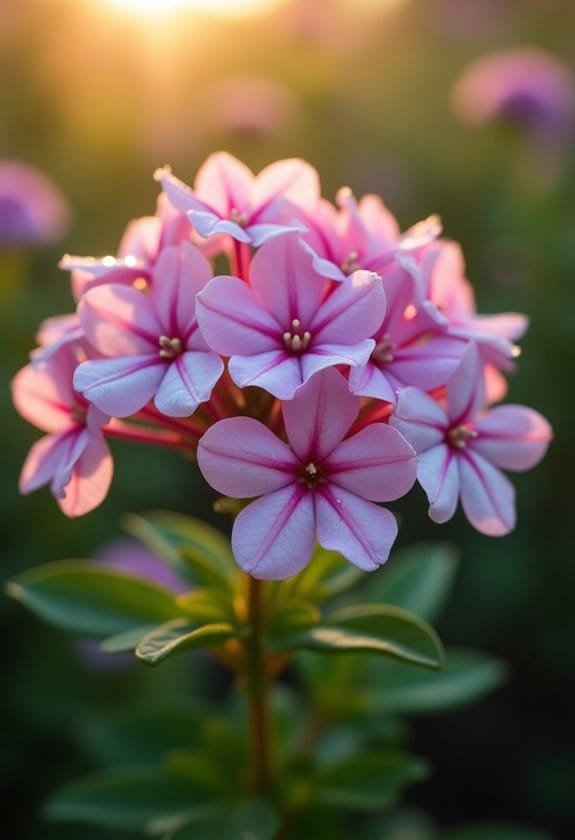
Known for its vibrant blooms, Phlox paniculata is a robust perennial that can grow between 2 to 4 feet tall, delighting gardeners from mid-summer to early fall. This stunning plant thrives in well-draining, organically rich soil and flourishes best in full sun or light shade, making it a versatile choice for various garden designs across USDA hardiness zones 4 to 8.
Its colorful flowers not only provide visual interest but also attract essential pollinators such as butterflies and hummingbirds, enhancing the ecological value of garden spaces.
Gardeners can prolong blooming periods and maintain plant health through simple maintenance practices like deadheading, which involves the removal of spent blooms, and providing regular watering during dry spells.
Companion planting with species like Echinacea, Rudbeckia, and Monarda creates a layered approach to garden designs, fostering biodiversity and visual appeal in landscapes.
Ultimately, Phlox paniculata serves as a magnificent centerpiece or a complementary addition to garden beds, embodying both beauty and ecological importance.
Its resilience and adaptability make it an enduring favorite among horticulturists and casual gardeners alike, maintaining its place in the hearts of plant enthusiasts for generations to come.