Ptelea trifoliata, known as the Hop Tree or Wafer Ash, is a deciduous shrub native to eastern North America, typically reaching heights of 10 to 20 feet. Its glossy, trifoliate leaves provide a vibrant display, shifting to a warm yellow-green in autumn. Flourishing in well-drained soils with a pH of 6.0 to 8.0, this plant prefers full sun to partial shade. Offering essential habitats for wildlife, it attracts pollinators with its malodorous, greenish-yellow flowers. Hop Tree's resilience against pests requires careful moisture management for peak health and vigor, hinting that further exploration reveals its multifaceted ecological roles.
Main Points
- Ptelea trifoliata, or Hop Tree, is a deciduous plant native to eastern North America, reaching heights of 10 to 20 feet.
- It thrives in well-drained, moist soils with a pH of 6.0 to 8.0, preferring full sun to partial shade.
- The plant features unique trifoliate leaves that turn yellow-green in autumn and blooms with small greenish-yellow flowers in spring.
- Ptelea trifoliata serves as a vital host for giant swallowtail butterfly larvae, enhancing local biodiversity.
- Minimal pest issues exist, but regular moisture management can prevent common leaf spot diseases.
Introduction
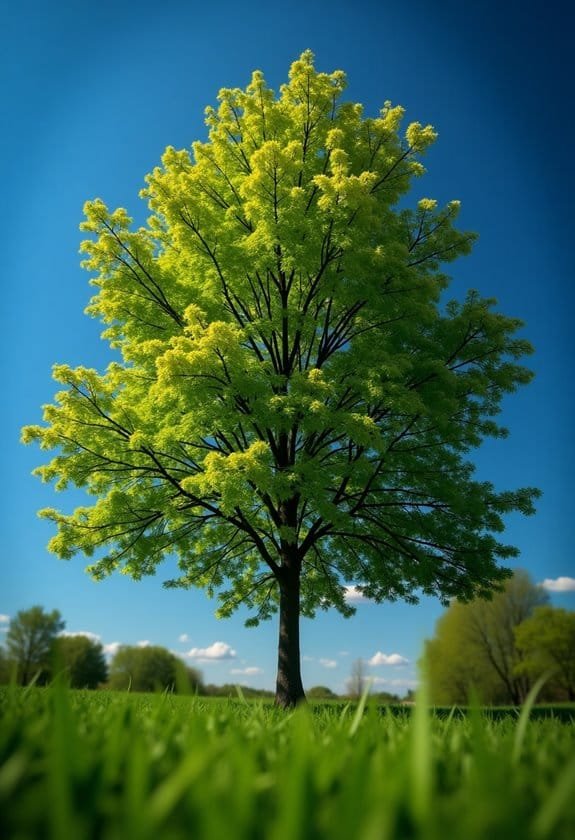
Ptelea trifoliata, commonly known as Hop Tree or Wafer Ash, stands as a significant species indigenous to eastern North America.
Typically ranging from 10 to 20 feet in height, this deciduous tree features glossy, trifoliate leaves that transform into a striking yellow-green in autumn.
Along with its unique malodorous flowers and distinct wafer-like samaras, it plays a crucial role in supporting local wildlife, making it an essential element of its habitat.
Common Name
Known for its distinctive appearance and unique fragrance, Ptelea trifoliata has garnered several common names that reflect its characteristics and regional significance. Commonly referred to as Hoptree or Hop-tree, this species exhibits a rich cultural presence. The name "Stinking Ash" alludes to the tree's blooms, which emit a significantly pungent odor, while "Wafer-ash" references its winged fruit—an intriguing feature that captures attention.
Indigenous to eastern North America, Ptelea trifoliata thrives in woodlands and open fields, stretching from Canada down to the southeastern United States. The tree's glossy green leaves are trifoliate, with each leaf divided into three leaflets, which contributes both to its visual appeal and its name.
These leaves provide essential forage for the giant swallowtail butterfly larvae, forging a unique ecological relationship. While the floral scent may not be universally adored, it signals the arrival of spring, attracting various pollinators essential for plant reproduction.
Consequently, Ptelea trifoliata weaves itself into the fabric of its ecosystem, illustrating the intricate connections that define our natural world.
Scientific Name
While many may be familiar with the common names of the Hop Tree, its scientific name, Ptelea trifoliata, holds significant meaning and insight into its characteristics. The genus name "Ptelea" derives from the Greek term for elm tree, linking the Hop Tree to certain elm-like traits, while "trifoliata" points to its characteristic three-parted leaves.
This deciduous small tree or large shrub typically reaches heights of 10 to 20 feet, displaying a bushy, rounded habit well-suited for various landscapes.
Belonging to the Rutaceae family, more commonly known as the citrus family, Ptelea trifoliata stands out as an intriguing species. Its greenish-yellow flowers, which bloom in spring, are known for their strong, often unpleasant fragrance, creating an olfactory experience reminiscent of certain citrus blossoms.
Additionally, this species is sometimes used as a substitute for hops in brewing, showcasing its versatility and potential applications.
Thriving in well-drained, moist soils with preference for full sun to partial shade, the Hop Tree beautifully marries ornamental value with practical uses, making it a unique addition to both gardens and ecological studies.
Overview
Hoptree, or Wafer-ash, captivates attention with its distinct form and ecological significance. Native to eastern North America, this versatile deciduous tree or large shrub typically grows between 10 to 20 feet in both height and width, displaying unique trifoliate leaves that shift into a striking yellow-green in the fall. Its small, malodorous greenish-yellow flowers bloom in spring, hinting at the plant's intriguing personality.
The ecological importance of Hoptree extends beyond its aesthetic appeal; it functions as a crucial food source for birds and small mammals, enriching the local biodiversity. Particularly, it serves as a host plant for the larvae of the giant swallowtail butterfly, supporting its life cycle.
Additionally, the fruit of Hoptree bears resemblance to hop cones, inspiring culinary uses as a substitute in brewing. This unique feature not only enhances the flavor profile of various beverages but also contributes to the plant's ornamental value during winter months, when the fruit becomes a focal point in the landscape.
Ultimately, Hoptree embodies a harmonious blend of ecological utility, culinary potential, and ornamental charm, making it a truly remarkable addition to any garden or natural setting.
Key Features
Ptelea trifoliata, or Hop-tree, typically grows to a modest height of 10 to 20 feet, presenting a charming bushy rounded shape.
Its glossy trifoliate leaves shift beautifully from vibrant green to a soft yellow-green in the fall, enhancing the tree's visual appeal.
During spring, the small greenish-yellow flowers emit a remarkably unpleasant scent, attracting various pollinators while contributing to the species' reproductive success.
Growth Size
Growing typically between 10 to 20 feet tall, the Hop Tree showcases a bushy rounded habit that can spread just as wide. This dimension creates an impressive presence in various landscapes, especially when planted in ideal conditions like full to partial shade.
Thriving in well-drained soils, Ptelea trifoliata exhibits remarkable adaptability; once established, it tolerates both drought and heat, making it a resilient addition to any garden.
The low maintenance requirement of the Hop Tree is particularly appealing for those wishing to cultivate beauty without excessive labor. Additionally, employing proper pruning techniques can enhance its shape and health, ensuring it maintains its attractive form.
Pruning not only promotes lush foliage but also encourages blooming, introducing greenish-yellow flowers in the springtime.
In landscape use, the tree's unique features, such as its trifoliate glossy green leaves that transform to yellow-green in fall and the intriguing wafer-like samaras, contribute to its aesthetic appeal throughout the seasons.
These elements invite interest year-round, making Ptelea trifoliata a valuable asset for gardeners and landscape designers alike. With thoughtful placement, the Hop Tree can seamlessly integrate into diverse outdoor settings, enhancing both beauty and ecological value.
Appearance
A fascinating feature of Ptelea trifoliata is its trifoliate leaves, which boast a glossy green appearance that shifts to a vibrant yellow-green hue in the fall. This distinctive foliage color not only enhances the plant's aesthetic appeal but also provides striking seasonal interest, as the changing leaves contrast beautifully against the bare branches of other species.
In addition to its vibrant leaves, Ptelea trifoliata exhibits a unique bark texture that further distinguishes it among shrubs and small trees. The bark is generally smooth and grayish-brown, developing a more rugged texture with age, which adds character and visual depth throughout its life stages.
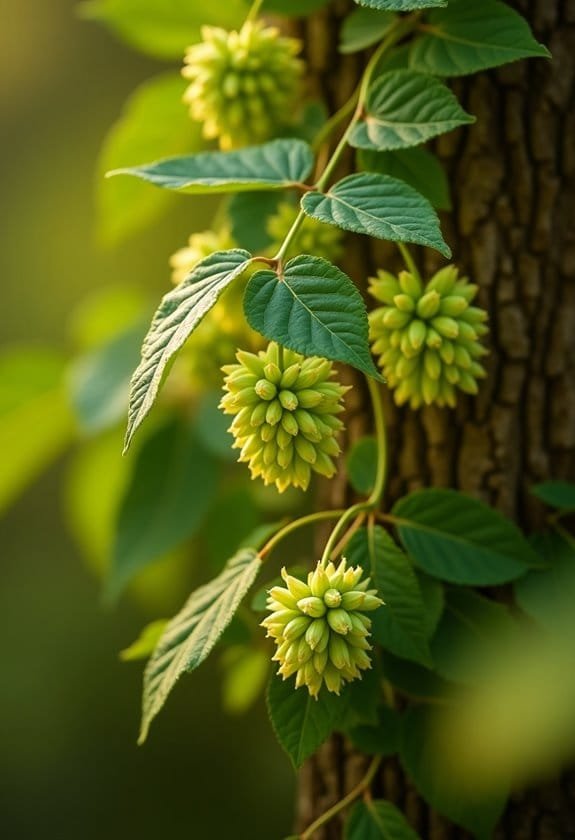
Throughout winter, the plant's persistence is exemplified by its small samaras that resemble hop cones, measuring approximately ¾-inch in diameter, serving as another form of seasonal interest.
These fruit structures cling to the branches, providing a graceful asymmetry that invites morning frost and sunlight to dance upon them.
Flowering Season
During the flowering season, which spans from April to June, Ptelea trifoliata showcases its small, greenish-yellow blooms in clustered arrangements. This flowering duration lasts approximately two weeks, delivering a brief yet important presence that adds character to landscapes. Although their appearance isn't particularly striking, the fragrance impact is quite pronounced; the blooms emit a malodorous scent that some may find off-putting.
However, this scent plays a significant role in attracting specific pollinators, such as carrion flies, which are essential for the tree's reproductive success. Ptelea trifoliata is monoecious, meaning it produces both male and female flowers, a critical characteristic for ensuring fruit development through cross-pollination.
The successful pollination process eventually leads to the formation of wafer-like samaras that resemble hop cones. These samaras not only contribute to the ecological roles of the tree but also enhance visual interest by persisting through winter.
Consequently, while the flowering season may be fleeting, it packs an ecological punch, showcasing a remarkable interplay between floral biology and the surrounding environment. Through this cycle, Ptelea trifoliata continues to enrich ecosystems and captivate those who observe its nuanced beauty.
Growing Requirements
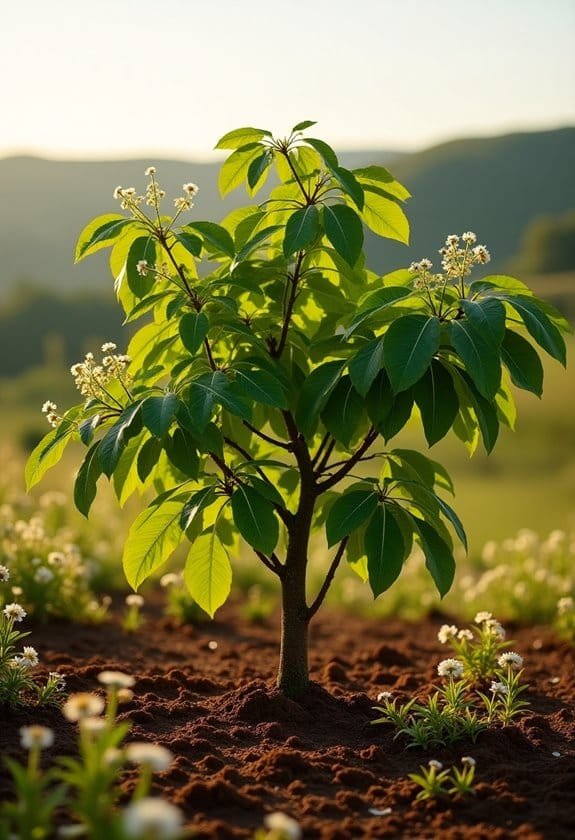
Ptelea trifoliata, commonly known as wafer ash, demonstrates specific growing requirements that greatly influence its health and vigor.
This deciduous plant flourishes best in full to partial shade, thriving in well-drained, moist soils that may range from sandy to rocky compositions.
Understanding its needs regarding light exposure, soil conditions, water availability, and temperature tolerance will guarantee successful cultivation and enhance the aesthetic appeal of any landscape.
Light
Hop trees flourish in various light conditions, thriving in full sun to partial shade. These trees exhibit peak growth when they receive 4 to 6 hours of direct sunlight each day, allowing them to fully harness the light exposure benefits essential for robust foliage and flowering.
While they can tolerate dappled sunlight effects, too much shade negatively impacts their health. When grown in full shade, hop trees often become leggy and exhibit reduced vigor, underscoring their shade tolerance limits.
In their natural habitats, these trees typically inhabit open fields and woodlands, adept at competing for light in diverse environments. Ideally, to maximize their potential, gardeners should plant hop trees in locations that provide the gentle warmth of morning sun, complemented by some afternoon shade.
This combination fosters favorable growing conditions, promoting vibrant foliage color and abundant flowers.
Soil
While the hop tree flourishes in a range of soil conditions, it thrives best in well-drained, moist soils that support its growth. This resilience allows it to adapt to various soil types, including sandy and rocky conditions, but ideal development hinges on adequate moisture levels.
Moreover, the hop tree exhibits a preference for soil pH between 6.0 and 8.0, indicating a slight affinity for neutral to mildly alkaline soils, essential for nutrient absorption and root health.
Newly planted specimens require careful attention, particularly during early development; consistent moisture is critical for establishing strong roots. While the hop tree can tolerate drought and heat once fully established, neglecting moisture can hinder its growth initially.
The planting depth of 1 to 2 inches is recommended for bare-root specimens to promote effective root establishment.
Selecting the appropriate soil guarantees not just survival but robust health, setting the foundation for future well-being.
This holistic understanding of the hop tree's soil preferences ultimately guides gardeners in creating an environment that supports its remarkable growth and resilience, illustrating the relationship between soil qualities and plant success.
Water
To thrive, wafer ash (Ptelea trifoliata) requires consistent moisture, favoring well-drained soils that still retain a degree of humidity. Ideal watering techniques are essential, especially during dry spells or the scorching summer months when this tree benefits from additional hydration.
Regularly checking soil moisture can prevent the plant from experiencing stress, ensuring both healthy growth and retention of crucial nutrients. Although wafer ash exhibits impressive drought tolerance once established, effective drought management strategies can markedly enhance its resilience. Brief periods of flooding pose little threat, yet prolonged saturation can lead to root rot, a grave concern for this species. Consequently, maintaining a balance in moisture retention becomes critical, and employing practices such as nitrogen fixation can enhance soil quality for plant health.
Utilizing mulches can aid in moisture retention around the plant's base, reducing evaporation while keeping roots cool. Germander Speedwell's need for well-drained soils demonstrates the importance of proper moisture management for healthy plant growth.
Adequate watering, particularly during the early establishment phase, allows wafer ash to thrive more robustly, encouraging the development of a strong root system.
Temperature
Thriving within a temperature range of 50°F to 75°F (10°C to 24°C), Ptelea trifoliata is well-suited for temperate climates. This hardy deciduous species showcases remarkable climate adaptability, enduring seasonal changes with grace.
While it enters a dormancy period during colder winter months, this adaptability enables it to withstand temperatures dipping below freezing.
Ptelea trifoliata flourishes best in USDA hardiness zones 3 to 7, indicating a robust resilience to various temperature extremes.
Once established, the Wafer ash can tolerate brief episodes of heat and drought; however, it notably benefits from consistent moisture during extended periods of high temperatures.
Providing full sun to partial shade not only optimizes its growth but also helps regulate surrounding temperatures, promoting overall health during sweltering summer days. Additionally, its success in diverse environments highlights the importance of native plant biodiversity for maintaining ecosystem stability.
As temperatures fluctuate, the unique characteristics of Ptelea trifoliata allow it to continue thriving throughout diverse climatic conditions.
Pollinator Criteria
Ptelea trifoliata attracts a variety of pollinators, including bees, butterflies, and specialized carrion flies, drawn by its distinct, malodorous flowers.
These small, greenish-yellow blooms rely on both visual signals and olfactory cues to facilitate the pollination process, creating a unique ecological relationship.
Attracted Pollinators
How does wafer ash entice so many pollinators? This remarkable plant, known scientifically as Ptelea trifoliata, captivates various pollinator types, particularly bees and butterflies, primarily during its blooming period from April to June.
The small greenish-yellow flowers, which emit a malodorous fragrance reminiscent of decaying matter, attract unique visitors like carrion flies drawn to this peculiar scent.
These flowers cluster together, offering a substantial food source, thereby supporting ecosystem health and biodiversity. Their abundance promotes a range of ecological benefits, reinforcing the intricate web of life within gardens.
Additionally, the presence of wafer ash serves as an essential host plant for giant swallowtail butterfly larvae, contributing positively to their life cycle and enhancing population stability.
Gardeners intent on fostering a pollinator-friendly habitat can implement effective planting strategies by incorporating wafer ash into their landscapes.
This not only encourages the survival and activity of various species but also actively promotes ecological balance. By understanding the interplay between plants and their pollinators, enthusiasts can create flourishing ecosystems that thrive on interconnectedness and diversity.
In this way, wafer ash stands as a reflection of the beauty and importance of nature's partnerships.
Pollination Method
During the blooming period, Ptelea trifoliata employs a fascinating pollination method that hinges on its unique floral characteristics and scents. This species showcases small, greenish-yellow flowers during May, which last for about two weeks. These blooms, characterized by their malodorous fragrance reminiscent of decaying organic matter, play a vital role in pollinator attraction, particularly for flies and bees.
The scent evolution of these flowers is a remarkable aspect, evolving to draw in specific pollinators, thereby enhancing reproductive strategies and ensuring successful fertilization.
The hop tree is monoecious, producing both male and female flowers, which facilitates self-pollination if needed, though cross-pollination is more beneficial. The appeal of these flowers to carrion flies can lead to efficient pollen transfer, as the flies are lured by the distinct aroma. This reliable mechanism considerably contributes to the plant's reproductive success by maximizing the likelihood of fruit development.
Additionally, the presence of Ptelea trifoliata enhances local biodiversity, offering essential food sources for various pollinators and serving as host plants for butterfly larvae, like the giant swallowtail, thereby creating a thriving ecological community.
Care & Maintenance
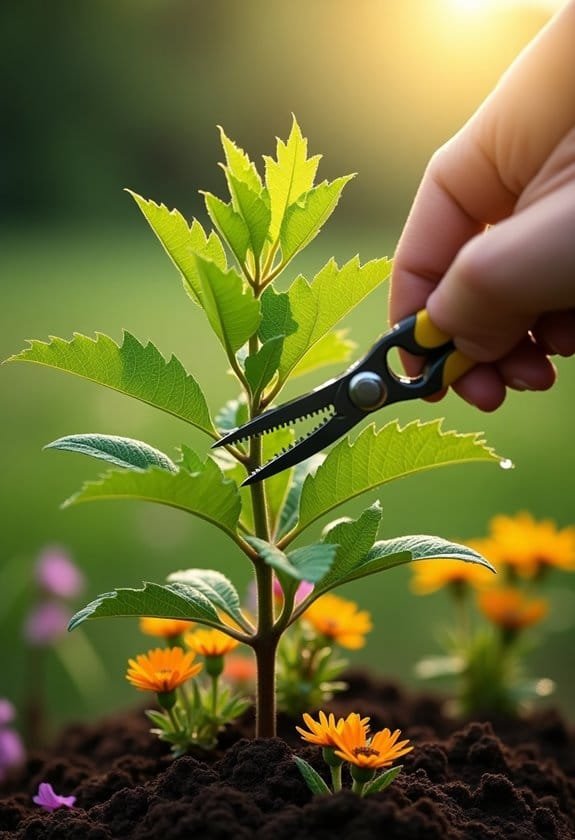
When cultivating Ptelea trifoliata, or Wafer Ash, proper planting techniques lay the groundwork for its success in gardens.
This resilient plant not only flourishes in well-drained soil but also thrives under a canopy of partial to full shade, making it an excellent choice for woodland surroundings. The addition of Common Harebell as a companion plant can enhance the garden's biodiversity and attract valuable pollinators.
Ongoing care includes mindful watering during dry spells, ensuring robust growth, while pairing it with compatible companions can enhance both its aesthetic appeal and ecological value. Additionally, monitoring soil moisture is crucial for promoting healthy foliage, similar to the care required for Common Ivy.
Planting Tips
Ensuring Ptelea trifoliata thrives begins with choosing the right planting conditions. This resilient plant prefers well-drained soil and benefits from full sun to partial shade, making it an adaptable choice for various garden layouts.
When employing effective planting techniques, selecting the correct propagation methods is vital, such as seeds or cuttings, allowing for successful establishment. Ideal spacing plays a considerable role in promoting airflow, which is essential for maintaining overall health. Placing Ptelea trifoliata at least 3 to 4 feet apart minimizes competition for nutrients and enhances its bushy growth habit.
During the establishment phase, regular watering is imperative; however, once it matures, this plant exhibits remarkable drought tolerance, ensuring minimal maintenance in the long run. Additionally, applying a balanced fertilizer in early spring stimulates foliage and flowering, contributing to vibrant growth.
While light pruning after flowering helps maintain shape and encourages new growth, it's also wise to monitor for occasional leaf spot. Although this minor issue poses no serious threat, the maintenance of proper air circulation can considerably reduce its occurrence, ultimately leading to a flourishing Ptelea trifoliata within your garden.
Ongoing Care
After successfully establishing Ptelea trifoliata in the garden, ongoing care becomes vital to maintaining its health and vibrancy. This hardy tree thrives in various soil types, but it requires moderate moisture for peak growth. While it exhibits drought tolerance once established, additional watering during prolonged dry spells is necessary for robust health.
Fertilization is generally not necessary, as Ptelea trifoliata adapts well to its environment; however, incorporating organic mulch can enhance moisture management by retaining soil hydration and suppressing weeds. In climates with severe fluctuations, mulch acts as a protective barrier, promoting stability in soil temperature.
Pruning techniques also play a significant role in ongoing care. To maintain an aesthetically pleasing shape and remove any dead or damaged branches, gardeners should undertake pruning in late winter or early spring, just before new growth begins.
This practice not only encourages healthy development but also minimizes the risk of disease, particularly important in areas where leaf spot may arise. By diligently following these care tips, gardeners can guarantee that their Wafer Ash not only survives but flourishes, becoming a vibrant addition to the landscape.
Suggested Companions
Planting Ptelea trifoliata alongside compatible companions enhances both its health and the overall aesthetic of the garden. This species flourishes when paired with moisture-loving soil companions, like ferns or hostas, which thrive in similar shaded conditions, creating a harmonious environment that promotes vigorous growth. Additionally, including Common Cowslip can attract various pollinators crucial for local ecosystems.
Incorporating flowering plants, such as columbine or cardinal flower, drastically boosts the flowering impact of the landscape, attracting essential pollinators that support ecosystem health.
In addition, consider integrating low-maintenance shrubs, like viburnum, which provide substantial wildlife benefits. These shrubs not only offer food and shelter for birds and insects but also enhance the overall biodiversity of the garden, creating a lively habitat.
Regular mulching around Ptelea trifoliata is important for maintaining soil moisture and suppressing weeds, simplifying care and maintenance. However, gardeners must be mindful of pruning backup species, ensuring they don't overshadow the growth of Wafer Ash, which thrives best in areas with ample light exposure. Furthermore, nurturing a diverse plant community, including Goats Beard, can improve soil health and support local pollinators.
Common Issues
While wafer ash (Ptelea trifoliata) typically exhibits resilience against pests, occasional leaf spot can arise under specific conditions, warranting monitoring.
Although most diseases are minimal, gardeners might need to implement preventative measures during extreme heat or drought to safeguard the plant's health and aesthetic qualities.
Emphasizing proper moisture management not only mitigates leaf scorch but also preserves the plant's overall vigor and appearance.
Pests/Diseases
Ptelea trifoliata, commonly known as Hop Tree, is fortunate to face minimal pest and disease issues, making it an excellent choice for low-maintenance landscaping.
This hardy plant rarely encounters significant pest problems, benefiting from effective pest resistance techniques inherent to its robust structure.
Occasionally, leaf spot diseases may arise; however, these are usually mild and don't severely impact the overall health of the plant.
The Hop Tree's ability to thrive in diverse soil conditions further reduces vulnerability to soil-dwelling pests, allowing it to maintain vigor even in less-than-ideal environments.
Adequate moisture is critical during early development, but once established, the plant's drought tolerance benefits become apparent, enabling it to withstand dry spells without succumbing to stress-related infestations.
Regular monitoring and engagement in leaf spot management practices guarantee that potential issues can be handled before they escalate, contributing to the long-term resilience and longevity of the Hop Tree.
Consequently, with thoughtful attention and minimal intervention, gardeners can enjoy the enchanting beauty of Ptelea trifoliata while largely avoiding the frustrations associated with pests and diseases.
Solutions
Occasional leaf spot problems can arise with Wafer Ash, but they're typically manageable and don't threaten the plant's overall health. To promote vigor, gardeners should guarantee consistent moisture, as Wafer Ash thrives in well-drained soil and can adapt to sandy and rocky conditions. The Common Wayfaring Tree provides additional wildlife habitat opportunities that can enrich the local ecosystem.
Once established, this resilient tree proves to be low-maintenance, effortlessly withstanding drought and heat, allowing it to flourish even under challenging weather.
Adhering to ideal placement practices enhances the Wafer Ash's success in landscape design. Planting in areas of full to partial shade shields the foliage from intense sunlight, fostering robust growth.
While the malodorous flowers might deter some, these unique blooms hold ecological benefits by attracting specific pollinators like carrion flies, showcasing the tree's role in a healthy ecosystem. Additionally, Wafer Ash shares its habitat with various species, contributing to local biodiversity in the ecosystem.
Incorporating Wafer Ash into garden layouts not only promotes a visually appealing aesthetic but also adds cultural significance due to its unique characteristics.
Therefore, by addressing common issues and understanding environmental requirements, gardeners can enjoy the multifaceted benefits of this remarkable species, contributing not only to their gardens but also to biodiversity and ecological balance.
Summary
Hoptree, or Ptelea trifoliata, stands out as a remarkable deciduous shrub or small tree native to eastern North America. Growing between 10 to 20 feet tall, it showcases trifoliate glossy green leaves that shift to an inviting yellow-green hue in the fall. This adaptable species thrives in diverse conditions, preferring moist, well-drained soil while requiring minimal maintenance once established.
Hoptree's significance extends beyond its aesthetic appeal; its fragrant flowers, blooming from April to June, attract vital pollinators like bees and carrion flies, providing essential ecological benefits. Additionally, as a host plant for the giant swallowtail butterfly larvae, it enhances local biodiversity, offering sustenance for various birds and small mammals.
The unique fruits of the Hoptree, resembling wafer-like samaras, serve as a substitute in brewing applications, much like traditional hops. Their presence in landscapes not only beautifies spaces but also contributes substantially to the ecosystem.
To conclude, Ptelea trifoliata is a multifunctional species that enriches local environments while providing practical uses, making it an excellent choice for landscape use and promoting ecological harmony.