Achillea millefolium, known as yarrow, is an herbaceous perennial from the Asteraceae family, thriving in temperate regions like North America and Europe. Typically growing between 1 to 4 feet tall, yarrow features fern-like leaves and flat-topped flower clusters in various colors, including white and pink. This resilient plant flourishes in well-drained, sandy or loamy soils with a pH of 6.0 to 7.0 and prefers full sun exposure. Importantly, yarrow attracts essential pollinators, contributing to local biodiversity, while its rich medicinal history underscores its cultural significance. Discovering yarrow's multifaceted roles reveals deeper ecological connections and cultivation insights.
Main Points
- Achillea millefolium, or yarrow, belongs to the Asteraceae family and is native to temperate regions worldwide.
- Yarrow thrives in full sun, tolerating poor soils and requiring moderate watering due to its drought-resistant nature.
- The plant attracts pollinators like butterflies and bees, supporting biodiversity and ecological health in gardens and landscapes.
- Yarrow has cultural significance, historically used for medicinal purposes, particularly in wound healing, named after the Greek hero Achilles.
- Common challenges include pests such as rust and stem rot, necessitating regular monitoring and effective management strategies.
Introduction

Achillea species, widely recognized as yarrow, belong to the Asteraceae family and showcase remarkable versatility across their native temperate regions.
The scientific name, Achillea millefolium, refers to its characteristic flat-topped clusters of white to pink flowers, which bloom abundantly from March to October.
This resilient plant, often reaching heights of up to 1 meter, adapts seamlessly to various habitats, thriving in well-drained soils bathed in full sunlight.
Common Name
Known for its distinctive beauty and medicinal value, the common name "Yarrow" refers to Achillea millefolium. This native plant thrives in the Northern Hemisphere, and it's commonly found adorned with flat-topped clusters of white or pink flowers, enchanting both gardeners and naturalists alike.
Historically, its name is derived from the Greek hero Achilles, symbolizing its long-standing association with wound healing and first-aid practices, a legacy that continues today.
Yarrow typically grows to a height of 1 to 4 feet, showcasing its elegant, feathery, fern-like leaves that add texture to diverse landscaping applications. Not only does this resilient plant enhance aesthetic appeal in gardens, but it also plays a significant ecological role by attracting various pollinators, including butterflies and moths.
These interactions contribute to enhanced biodiversity, creating vibrant, thriving environments for both flora and fauna.
Scientific Name
The scientific classification of common yarrow highlights its rich botanical heritage. Known as Achillea millefolium, this resilient plant belongs to the Asteraceae family, one of the largest plant families, encompassing a variety of flowering species. Native to temperate regions of Asia, Europe, and North America, Achillea millefolium thrives in disturbed soils and open environments, showcasing its remarkable adaptability.
During the vibrant summer months, one can observe its distinct flat-topped inflorescence adorned with flowers that bloom in shades of white, pink, and other colors. Yarrow not only captivates the eye but also possesses medicinal properties that have fascinated herbalists for centuries. Its chemical composition, rich in therapeutic compounds, brings forth potential antibacterial and anti-inflammatory benefits.
Within the species, several recognized subspecies exist, such as subsp. millefolium, subsp. rubra, and subsp. chitralensis. Each subspecies contributes to the genetic diversity of Achillea millefolium, further solidifying its status as a valuable plant in both ecological systems and traditional medicine. Additionally, yarrow's role as a vital food source for pollinators like butterflies underscores its importance in supporting biodiversity.
Through its unyielding presence and versatility, Achillea millefolium continues to connect humanity with nature's intricate tapestry.
Overview
Yarrow, a versatile and resilient plant, boasts a rich history of use in various cultures and ecosystems. Belonging to the Asteraceae family, the plant encompasses different species, including the well-known Common Yarrow, which exhibits distinct fern-like leaves and flat-topped clusters of flowers.
These delightful blooms grace gardens and wild landscapes from March to October, adding visual interest and biodiversity.
Native to the temperate regions of Asia, Europe, and North America, yarrow thrives in disturbed soils of grasslands and open forests, adapting to elevations that range from sea level to an impressive 3,500 meters (11,500 feet).
Its medicinal properties have long been revered, with historical accounts citing yarrow's efficacy in wound healing, attributed to its essential oils and flavonoids that possess antibacterial and anti-inflammatory effects.
Moreover, yarrow plays a crucial ecological role, attracting a plethora of pollinators and serving as an essential food resource for insect larvae and cavity-nesting birds.
Its cultural significance stretches back centuries, interwoven in folklore, traditional healing practices, and even in divination rituals, solidifying yarrow's status as a remarkable plant with enduring value in human and ecological health.
Key Features
The Achillea species, commonly known as yarrow, exhibits a remarkable range of growth sizes, spanning from 0.2 to 1 meter in height.
Its striking appearance features flat-topped clusters of flowers, which can flaunt hues from white to soft pink, creating a visually appealing aesthetic during its active flowering season.
With the ability to flourish in well-drained soils and full sunlight, these resilient plants beautifully symbolize nature's adaptability across varied temperate climates.
Growth Size
Native to a variety of environments, Achillea millefolium (Common Yarrow) typically grows between 1 to 4 feet high, with a comparable spread that makes it versatile for landscaping. This perennial herb, belonging to the Asteraceae family, showcases feathery, fern-like leaves that can measure between 5 to 20 cm (2 to 8 inches) in length, adding a delicate texture to any garden.
Thriving in full sun, Yarrow adapts remarkably well to the diverse conditions found across North America, including disturbed soils of grasslands and the open forests, flourishing at elevations up to 3,500 meters (11,500 feet).
Yarrow exhibits variations in growth forms and flower colors, especially notable in subspecies such as A. millefolium, A. rubra, and A. chitralensis. These distinctions enhance its adaptability and aesthetic appeal in various settings.
Blooming from March to October, it produces flat-topped inflorescences adorned with white, pink, or yellow flowers, which can attract a plethora of pollinators. This robust and resilient plant not only occupies space effectively but also provides a visual and ecological benefit, making it an exceptional choice for landscape projects seeking both beauty and functionality.
Appearance
Featuring striking feathery foliage, Achillea millefolium captivates with its bipinnately or tripinnately divided leaves that range from 5 to 20 cm (2 to 8 inches) in length. This native species, commonly known as yarrow, typically grows to a height of 1 to 4 feet.
Its lush greenery not only adds visual interest but also releases a spicy aroma when crushed, enhancing its sensory appeal.
Throughout the warmer months, yarrow proudly displays flat-topped inflorescences, boasting clusters of both ray and disk flowers. These delicate blooms, which flourish from March to October, can feature colors ranging from pristine white to vibrant pink.
As bees, butterflies, and moths flock to these blooms, yarrow exemplifies a plant that supports local biodiversity, making it a boon for pollinators.
Yarrow's remarkable resilience and adaptability allow it to thrive in various environments, from grasslands to open forests, in both native and introduced ranges across temperate regions of Asia, Europe, and North America.
When one chooses to use yarrow in landscaping, they aren't just selecting an aesthetically pleasing plant but also contributing to the ecological tapestry of their surroundings.
Flowering Season
Yarrow's flowering season runs from March to October, showcasing a spectacular display of flat-topped inflorescences filled with vibrant clusters of flowers. During this time, Achillea millefolium presents a stunning palette ranging from pristine white to delicate pink hues. Each inflorescence comprises both ray and disk flowers, enhancing its visual allure and enticing various pollinators, such as butterflies and moths, which are crucial for successful fertilization.
In the Northern Hemisphere, the variability in blooming periods allows gardeners to enjoy staggered flowering effects, creating a continuous spectrum of color throughout summer. This adaptability contributes to Yarrow's reputation, earning it the prestigious Award of Garden merit for its aesthetic value and ecological benefits. Furthermore, like the ox-eye daisy, Yarrow also serves as a vital resource for supporting pollinators, showcasing its importance in promoting local biodiversity.
Moreover, the prolific blooms not only enrich landscapes but also yield seeds, ensuring the plant's establishment in diverse environments, from meadows to coastal regions.
The character Achilles, named after the famous Greek hero and believed to have used Yarrow for its medicinal properties, reflects both historical significance and contemporary utility.
Growing Requirements
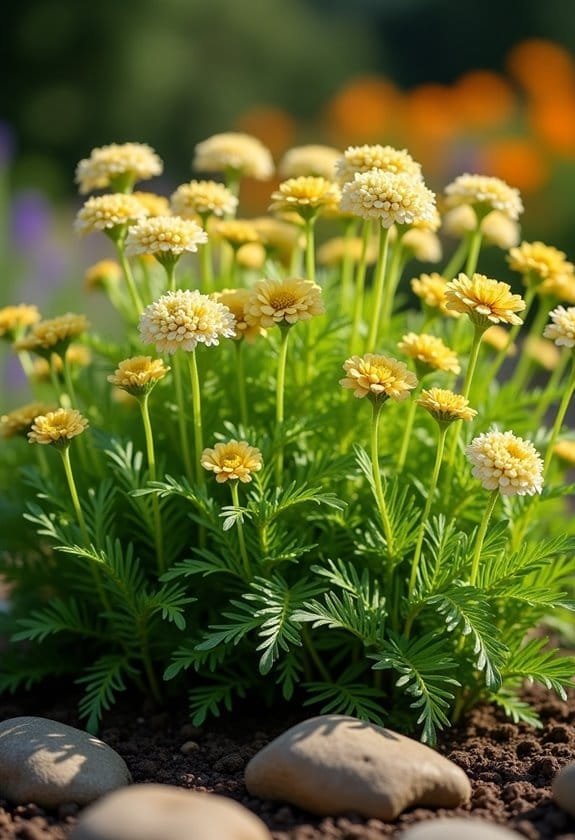
Achillea species, particularly yarrow, flourish best under full sun exposure, requiring well-drained soil to support their ideal growth between temperatures of 18–24°C (64–75°F).
Their remarkable ability to withstand drought conditions necessitates moderate watering, as excessive moisture can invite root rot, endangering the plant's health.
With the right attention to these growing requirements, yarrow can't only thrive but also enliven gardens with its vibrant blooms all summer long.
Light
Sunlight plays a crucial role in the healthy growth of Achillea species, commonly known as yarrow. These resilient plants thrive in full sun, requiring at least 6 to 8 hours of direct sunlight daily for ideal growth and flowering duration.
The sunlight impact on yarrow extends beyond mere exposure; it actively enhances growth and reinforces the plant's drought tolerance. When nestled in bright light, yarrow exhibits robust, sturdy stems, allowing it to sustain itself and support its distinctive flat-topped flower clusters.
Conversely, insufficient light can greatly hinder its development, resulting in leggy growth. This condition leads to weak stems that lack stability, rendering them vulnerable to dislodgment during adverse weather events.
While yarrow can tolerate partial shade, it's in sunnier conditions that its flowering duration is maximized, typically showcasing blooms from late spring into early autumn. Consequently, gardeners aiming to cultivate yarrow effectively must prioritize full sun locations, recognizing that proper light exposure isn't merely beneficial but crucial for fostering vibrant, healthy plants.
Ultimately, the thoughtful placement of yarrow in the garden environment can make a profound difference in its overall vigor and aesthetic appeal.
Soil
Creating a thriving environment for yarrow hinges on the soil conditions it's planted in. Yarrow prefers well-drained soil, as strong adherence to soil drainage principles prevents waterlogging that can lead to root rot, a common issue in overly saturated conditions.
Ideal growth occurs in sandy or loamy soils, which facilitate the necessary aeration for healthy root systems.
Moreover, yarrow exhibits impressive adaptability, flourishing even in poor soil conditions. This characteristic makes it an excellent candidate for erosion control, while simultaneously enhancing soil structure over time.
When it comes to soil pH impacts, the preferred range for yarrow cultivation lies between 6.0 and 7.0, promoting ideal nutrient uptake which is vital for vigorous plant development.
Effective soil nutrient management plays a pivotal role in maximizing yield, with an average of approximately 110,000 plants per hectare, indicating yarrow's capability to thrive in diverse soil types.
Ultimately, understanding these foundational soil characteristics can greatly influence yarrow's health and productivity, ensuring it remains a resilient and valuable component of any garden or landscape.
Water
For ideal growth, yarrow requires a careful balance of moisture and drainage. This perennial thrives in well-drained soil, where moderate watering techniques play a vital role in preventing root rot. During the establishment phase, moisture monitoring is imperative; gardeners should check soil moisture frequently to guarantee the plant receives adequate hydration without succumbing to waterlogging, which can be detrimental.
Once established, yarrow exhibits impressive drought resilience, allowing it to survive with minimal water during extended dry periods. This remarkable adaptation enables it to flourish in various conditions, particularly when planted in full sun, where water retention is optimized. Additionally, yarrow can thrive alongside native species, enhancing biodiversity maintenance within the garden ecosystem.
Yarrow's ability to endure drought doesn't eliminate the need for attentive watering techniques; rather, it emphasizes the significance of an initial commitment to proper hydration. Overwatering can compromise yarrow's health; hence, allowing the soil to dry out between watering sessions is essential.
Temperature
Yarrow flourishes in temperatures between 18–24°C (64–75°F), which are ideal for its germination and growth. This preferred temperature range greatly influences the plant's overall health and flowering potential.
When considering temperature effects, it's essential to note that yarrow thrives in locations that provide full sun exposure, aiding in its development and enhancing its vibrant blooms.
Despite yarrow's adaptability to various climates, it truly excels in temperate regions with well-drained soils. However, the plant faces challenges when subjected to temperature extremes; prolonged periods of extreme heat can hinder its growth, while frost can cause considerable stress, potentially jeopardizing its vitality.
Spacing is another important aspect of yarrow cultivation, as maintaining a suitable distance of 30 to 46 cm (12-18 inches) between each plant guarantees sufficient air circulation and sunlight penetration. This practice aids in moderating the effects of temperature fluctuations.
Pollinator Criteria
Yarrow, known scientifically as Achillea millefolium, plays a pivotal role in attracting various pollinators, including butterflies, moths, and beetles.
With its flat-topped flower clusters offering abundant nectar and pollen, it serves as a reliable food source throughout its blooming period from late spring to early fall. Additionally, this plant is valued for its nitrogen-fixing properties, which not only support pollinator health but also underscores yarrow's ecological significance in sustaining local biodiversity, reinforcing its value in garden ecosystems. Moreover, like corncockle, yarrow attracts essential pollinators through floral structures that enhance reproductive success in surrounding plants.
Attracted Pollinators
Although it thrives in a variety of environments, Common Yarrow (Achillea millefolium) stands out as a magnet for pollinators, attracting butterflies, moths, and beetles. This plant's ecological significance can't be overstated; it serves as a crucial food source, offering nectar and pollen from its flat-topped flower clusters. Additionally, the presence of Creeping Buttercup's aggressive growth can limit access to vital pollinator resources.
These clusters not only facilitate easy access for pollinators but also provide ample landing platforms, which enhance pollinator behavior by encouraging longer visits. Common Yarrow blooms from March to October, ensuring a continuous food supply that aligns perfectly with the habitat preferences of diverse insect species. During this extended flowering period, many pollinators find refuge and sustenance, directly impacting their life cycles.
Additionally, Yarrow's aromatic foliage may allure specific pollinators, contributing to the overall biodiversity in gardens and landscapes. Furthermore, it attracts key pollinators like bumblebees, which are pivotal for enhancing pollination efficiency, directly promoting ecosystem health.
Pollination Method
The impressive attraction of Achillea species to various pollinators is closely linked to their unique pollination method. These plants employ effective pollination strategies characterized by their flat-topped flower clusters, which provide easily accessible nectar and pollen. This design enhances visibility, drawing in an array of beneficial insects like butterflies, bees, and beetles during the summer months when flowers bloom in vibrant shades of white, pink, yellow, and red.
Yarrow's ecological impact extends beyond mere attraction; it serves as a crucial larval host for specific moth species, thereby directly influencing local plant relationships.
The feathery leaves and aromatic properties of yarrow also create a favorable habitat for additional insects seeking nourishment and shelter. These intricate interactions form a dynamic network within garden ecosystems, where enhancing biodiversity results in healthier environments.
Care & Maintenance
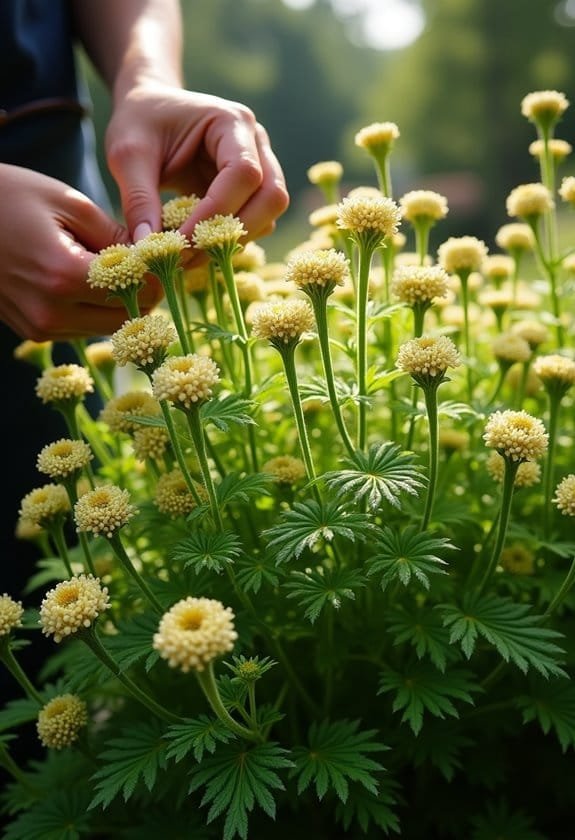
Achillea species, commonly known as yarrow, thrives best in full sun and well-drained soil, making planting location essential for its overall health.
Regular deadheading and annual mowing not only enhance its appearance but also promote vigorous growth, ensuring the plant remains vibrant throughout its flowering season.
As yarrow can be prolific in its spreading tendencies, proper ongoing care—including monitoring its growth and selecting compatible companion plants—will support a balanced garden ecosystem.
Planting Tips
Successful cultivation of yarrow hinges on a few essential tips that guarantee vibrant growth and longevity. Proper soil preparation is fundamental; yarrow thrives best in well-drained soil and full sun.
For successful seed preparation, sown seeds should be spaced 30 to 46 cm (12-18 in) apart, as this allows room for growth and airflow. Germination is light-sensitive, so it's critical to confirm that the seeds receive adequate sunlight, with ideal temperatures ranging between 18–24°C (64–75°F).
Timing also plays an important role in the planting schedule. Ideally, yarrow is best planted in early spring or fall, as cooler conditions favor root establishment.
Once planted, the plants' drought tolerance means they'll require moderate watering, which helps them thrive in various conditions. Additionally, after the first year, annual mowing helps cultivate a tidy appearance while promoting healthy growth.
Dividing established clumps can encourage propagation, spreading the beauty of yarrow throughout the garden. Regular monitoring for pests and maintaining soil fertility will create a thriving environment, reinforcing the resilient character of this remarkable plant.
Through diligent care, yarrow can flourish, lending its charm and ecological benefits to any garden space.
Ongoing Care
After planting, ongoing care is imperative for maintaining yarrow's health and appearance. To guarantee robust growth, gardeners should establish a consistent watering routine, providing moderate moisture while avoiding overwatering, which can lead to detrimental root rot. Seasonal adjustments in the watering schedule may be necessary during drier periods.
Regular deadheading of spent blooms not only encourages further flowering but also maintains a tidy garden landscape, enhancing aesthetic appeal. For peak health, yarrow benefits from annual mowing in spring or following its fall bloom, promoting fresh growth and liveliness.
Monitoring soil fertility stands as an essential aspect of yarrow care; it thrives best in well-drained soil with moderate nutrient levels. Implementing soil amendments based on annual assessments can markedly enhance plant vigor.
Moreover, gardeners must stay vigilant against potential pests and invasive spreading, employing effective pest prevention strategies and control measures to guarantee the yarrow remains within desired bounds.
With proper attention to these ongoing care techniques, yarrow will flourish, providing its delightful blooms and resilience while enhancing any garden space with its hardy charm.
Suggested Companions
Pairing yarrow with companion plants like lavender, salvia, and coreopsis can greatly enhance garden aesthetics and health. These plants share similar sun and water requirements, making them ideal partners in fostering vibrant, thriving environments. Yarrow benefits adjacent flora by enhancing soil structure and fertility over time, promoting a holistic approach to companion planting. In addition, the presence of certain flowering companions, such as coreopsis, can attract beneficial pollinators like bumblebees that support a healthy garden ecosystem. This is particularly important as increased genetic diversity from cross-pollination enhances resilience to environmental changes, similar to the way yarrow can operate in a diverse garden setting.
To guarantee healthy air circulation and prevent overcrowding, it's essential to space yarrow and its companions at least 30 to 46 centimeters (12 to 18 inches) apart. This thoughtful arrangement allows each plant to flourish without competing for nutrients.
Regularly deadheading yarrow flowers not only encourages continuous blooming but also minimizes competition, further benefiting nearby plants.
Moreover, some companions serve as allies in pest management, deterring unwanted insects while enhancing the garden's overall resilience. Consistent monitoring for pests and diseases remains critical, but the presence of such companions fosters a more balanced ecosystem.
Common Issues
Yarrow can face a variety of common issues, including susceptibility to pests and diseases like rust and powdery mildew that jeopardize its overall vigor.
Additionally, weak stems may compromise stability, especially in breezy conditions, leading gardeners to contemplate supporting strategies or careful planting arrangements.
To manage these challenges effectively, regular monitoring and proper cultural practices, such as appropriate watering and deadheading, become crucial for maintaining the plant's health and appearance.
Pests/Diseases
In the garden, Achillea species face a variety of common pests and diseases that can impact their health and appearance. One significant challenge is rust, particularly affecting Common Yarrow (Achillea millefolium), which leads to unsightly leaf spots and potential defoliation, ultimately diminishing the plant's vigor.
In addition, stem rot, often exacerbated by overwatering or poor drainage, can cause stems to collapse, resulting in aesthetic decline as well as reduced health.
Additionally, powdery mildew, a fungal affliction characterized by white, powdery spots, thrives in humid conditions and may adversely impact overall growth.
While yarrow demonstrates relatively robust plant resistance to herbivory, deer and rabbits occasionally feast upon the foliage, especially during food scarcity.
Beyond pests and diseases, yarrow's assertive spreading nature can pose a management challenge; therefore, vigilant monitoring is essential.
Effective disease management and pest control practices must be integrated to preserve the plant's landscape appeal. Regular inspections and maintenance can help gardeners enjoy the beauty of yarrow while minimizing issues related to these common threats, ensuring that this resilient perennial flourishes amidst its surroundings.
Solutions
Maintaining Achillea's health requires proactive solutions to common issues like pests and diseases. Employing effective disease prevention strategies is fundamental for combating threats such as rust, stem rot, and powdery mildew. Regular monitoring can reveal early signs of these ailments, allowing for timely intervention, especially since conditions like root rot can thrive in overly saturated soils.
Utilizing appropriate watering techniques greatly bolsters yarrow's resilience; consistent moisture is key but excessive saturation can lead to root rot. Support weak stems with stakes if necessary, preventing dislodgement and ensuring that the plants remain upright and attractive.
To manage Achillea's aggressive spreading nature, proper garden spacing is essential. Placing plants at least 18 to 24 inches apart not only allows for ample air circulation but also curbs their tendency to overtake the garden.
Regular deadheading of spent blooms not only promotes additional flowering but also maintains a tidy appearance, enhancing their overall vitality.
Interestingly, Achillea's resilience extends to herbivore deterrence—deer and rabbits often avoid yarrow, making it an excellent addition to gardens susceptible to herbivorous damage. Additionally, yarrow can be planted alongside drought-tolerant species like Sedum album to enhance garden aesthetics and biodiversity.
Summary
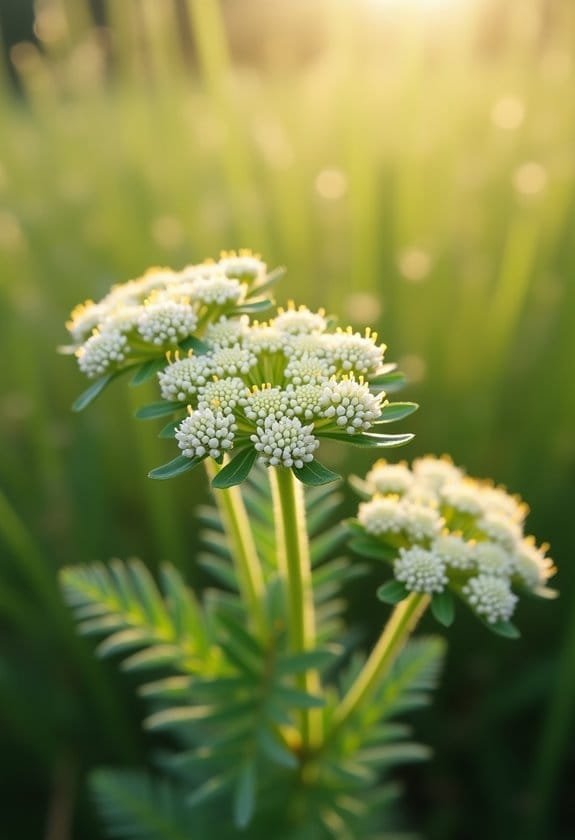
Achillea millefolium, widely known as yarrow, is a fascinating plant that boasts a range of features, from its aesthetically pleasing flat-topped flower clusters to its rich medicinal history. Native to temperate regions across North America, Europe, and Asia, yarrow thrives in disturbed habitats, such as grasslands and open forests, showcasing its adaptability and resilience.
The plant can grow between 0.2 to 1 meter in height and features deeply divided, fern-like leaves, enhancing its ornamental appeal in gardens.
Yarrow's uses extend beyond mere decoration; its medicinal properties have permeated yarrow folklore, where it's historically celebrated for promoting wound healing and controlling bleeding through its antibacterial and anti-inflammatory components.
When exploring yarrow cultivation, gardeners often find it an easy plant to maintain, thanks to its low maintenance requirements and ability to attract pollinators like bees and butterflies.
Ecologically, yarrow plays an essential role by serving as a food source for insect larvae and aiding in soil erosion control, ensuring a healthy environment.
This multifaceted plant intertwines beauty, utility, and ecological significance, making yarrow a remarkable addition to any landscape or medicinal garden.