Centaurea nigra, or Common Knapweed, is a robust perennial herb, reaching heights of up to one meter. Its charming pink-purple blossoms, which bloom from June to September, comprise numerous florets and are surrounded by striking, ragged bracts. This plant thrives in diverse habitats, favoring well-drained, nutrient-poor soils and full sunlight, exhibiting remarkable resilience. Furthermore, it supports crucial pollinator populations, including bees and butterflies, providing essential nectar and pollen. However, its aggressive growth can threaten native flora, necessitating management practices to maintain ecological balance. For those intrigued, further exploration uncovers deeper insights into its characteristics and management.
Main Points
- Common Knapweed (Centaurea nigra) produces vibrant pink-purple blooms that attract a variety of pollinators, enhancing local biodiversity.
- It thrives in diverse habitats, including grasslands and urban areas, preferring well-drained, low to moderately fertile soils.
- This herbaceous perennial can grow up to 1 meter tall, featuring deeply lobed, hairy leaves that provide a textured appearance.
- While it supports wildlife, its aggressive growth can outcompete native plants, posing management challenges in ecosystems.
- Regular maintenance involves spring pruning and monitoring soil moisture to promote healthy growth and minimize pest issues.
Introduction
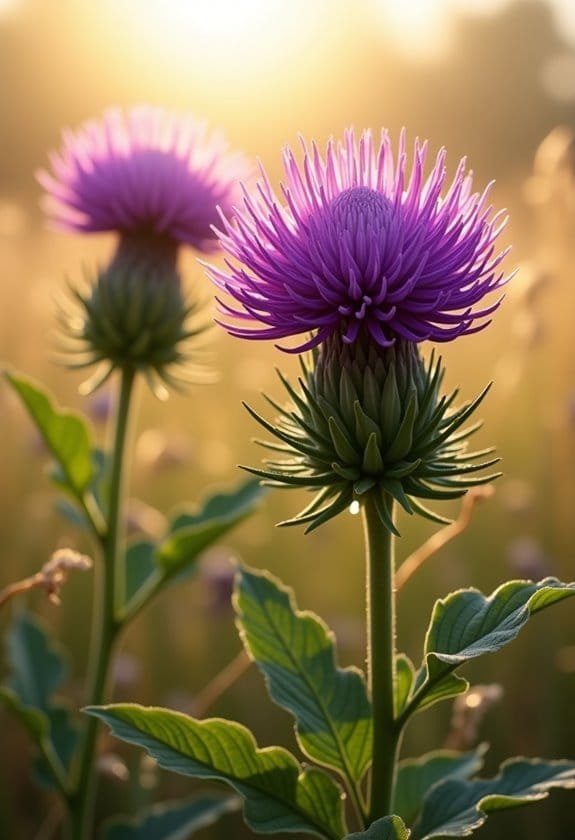
Centaurea nigra, more commonly recognized as Common Knapweed or Black Knapweed, stands as a striking herbaceous perennial, reaching heights of up to one meter.
With its vibrant pink-purple flower heads and deeply lobed, hairy leaves that can extend to 25 cm, this plant not only captivates the eye but also plays a vital role in ecological systems. Its ability to thrive in diverse soil conditions, including poor or compacted soils, demonstrates its adaptability, which allows it to compete aggressively with native vegetation. Additionally, its flowering period provides crucial sustenance for various pollinators that enrich local biodiversity.
While it serves as an essential food source for various pollinators and birds in its native range, its invasive tendencies in North America warrant significant attention.
Common Name
Common Knapweed, known scientifically as Centaurea nigra, stands out in the wild with its vibrant pink-purple blooms and robust stature. This herbaceous perennial, also referred to by common names like Hardheads and Black Knapweed, can reach impressive heights of up to one meter.
Characterized by its tall, thistle-like appearance, it features striking flower heads that bloom from June to September, each adorned with 40 to 100 delicate florets. The expertise of maintaining these plants involves understanding their soil requirements, which can enhance their flourishing in various environments.
The ecological importance of Common Knapweed shouldn't be underestimated. As a resource-rich plant, it supports a variety of pollinators, including bees and butterflies, which play essential roles in ecological balance.
Thriving in a diverse range of habitats, from lush grasslands and meadows to disturbed areas, this resilient species demonstrates an impressive adaptability. Additionally, Common Knapweed is known for its self-seeding tendencies, which can contribute to its spread in suitable environments.
Understanding the common names associated with Centaurea nigra illustrates the plant's significance in various cultures and ecosystems. Each name reflects not only its physical traits but also the ecological interactions it fosters.
Consequently, Common Knapweed embodies a blend of beauty, ecological function, and resilience, making it a compelling subject within the diverse tapestry of plant life.
Scientific Name
The scientific name for the striking plant known as Common Knapweed is Centaurea nigra, a member of the Asteraceae family. This herbaceous perennial captivates with its vibrant pink-purple composite flower heads, blooming spectacularly from June to September. Centaurea nigra can reach heights of up to 1 meter, showcasing deeply lobed and hairy leaves that enhance its rugged appearance.
The plant's reproductive strategy involves the production of tan, hairy achenes, typically measuring 2-3 mm long, often accented with a tiny dark pappus that aids in wind dispersal. Additionally, it features a unique floral architecture that maximizes pollination efficiency by attracting essential pollinators.
Known by its common names Hardheads and Black Knapweed, Centaurea nigra plays a significant ecological role in supporting various pollinators, while also serving as a focal plant in grassy meadows. Its distinctive characteristics permit it to thrive in diverse habitats, contributing to local biodiversity. Additionally, this species can sometimes be deemed invasive, as its aggressive growth can overshadow native flora. Understanding Centaurea nigra is essential for ecological balance, conservation, and informing management practices, especially as it continues to draw attention for both its beauty and its environmental impact. Furthermore, similar to Bergenia species, pollinator support is crucial for enhancing ecosystem health.
Overview
Known for its striking beauty and ecological significance, Common Knapweed (Centaurea nigra) thrives in a variety of habitats across Europe and North America. This herbaceous perennial can reach heights of up to 1 meter, showcasing deeply lobed and hairy leaves that complement its vivid flower heads. Blooming from June to September, these flower heads are typically bright purple, although white and yellow varieties sometimes appear, enriching grasslands and meadows with their vibrant hues.
Common Knapweed plays a crucial role in local ecosystems by acting as a key nectar and pollen source that attracts a diverse array of pollinators, including honey bees and butterflies. Additionally, it exhibits excellent drought resistance due to its specialized water-storing roots, which enhances its ability to thrive in various environments. Large Thyme is another plant known for its ability to attract a variety of bees and butterflies with its nectar-rich flowers.
However, its introduction to North America as an ornamental plant also led to challenges. The species can become invasive, disrupting native vegetation, particularly in disturbed habitats, where its aggressive growth can dominate landscapes.
Adapting well to a wide range of conditions, Common Knapweed flourishes in sunny locations with well-drained soils, making it a resilient inhabitant of grasslands, heathlands, and even urban environments.
Understanding the delicate balance of its beauty and ecological impact is essential for managing its presence in various ecosystems.
Key Features
Centaurea nigra, or Common Knapweed, stands out for its impressive growth, often reaching heights of up to one meter.
The plant's striking appearance is highlighted by its deeply lobed, hairy leaves and vibrant purple flower heads, which bloom from June to September, enchanting both pollinators and onlookers alike.
With its distinctive bracts and encasing phyllaries, this perennial not only adds aesthetic appeal to its environment but also plays an essential role in supporting local biodiversity.
Growth Size
Growing up to 1 meter tall, Common Knapweed showcases its impressive stature within various habitats. This robust growth allows it to dominate meadows and grasslands, providing essential resources for local wildlife.
The plant's leaves can extend up to 25 cm in length, displaying a fascinating intricacy with their deeply lobed shapes that differ between the lower and upper portions of the stem. This variation not only enhances its visual complexity but also serves functional purposes in light capture and photosynthesis.
Knapweed's flower heads present a stunning hemispherical arrangement, typically adorned with 40 to 100 small purple ray flowers, adding vibrant splashes of color from June to September. During this flowering period, the plant becomes a crucial nectar source for an array of pollinators, including bees and butterflies, thereby supporting ecological interactions.
The kneed's hairy tan achenes, measuring about 2-3 mm long, contribute to its reproductive success, as they may carry tiny dark pappi, aiding in seed dispersal.
Here, each aspect of Common Knapweed's size underscores its significance in the ecosystem, serving both aesthetic and functional roles that resonate within its growth environment.
Appearance
Common Knapweed boasts a striking appearance that catches the eye in both wildflower meadows and cultivated gardens. This perennial plant can reach heights of up to 1 meter, showcasing tall, thistle-like rounded flower heads that are a vivid demonstration of its unique beauty. Each flower head is composed of 40 to 100 bright purple ray flowers that create a lush, stunning display, with rare white varieties sometimes interrupting the spectrum.
The foliage enhances its visual allure, featuring lower leaves that are deeply lobed and stalked, while the upper leaves remain stalkless and typically measure up to 25 cm in length. Additionally, the plant's hairy, ribbed stems and rough, dull green leaves contribute to its robust character, lending a natural texture that complements its vivid blooms.
The inflorescence comprises several rounded flower heads, encircled by long, ragged bracts that exhibit a subtle pinkish hue, further accentuating its charm. As a whole, Common Knapweed represents an enchanting blend of elegance and wildness, providing an essential splash of color that enriches any landscape where it flourishes.
Flowering Season
The flowering season of Common Knapweed spans from July to September, showcasing its stunning display of blooms. During this period, the plant produces eye-catching flower heads in vibrant shades of purple, white, or yellow, created from clusters of numerous small florets. Each flower head, typically consisting of 40 to 100 ray flowers, is encircled by distinctive black or brown bristly phyllaries, giving it a recognizable hemispherical shape.
This flowering phenomena not only captivates human observers but also plays a vital role in supporting local ecosystems. The individual flowers are rich in nectar, serving as an essential food source for a variety of pollinators, including butterflies and bees, which rely on this plant for sustenance. Additionally, the presence of these blooms contributes to the habitat for local pollinator populations, enhancing biodiversity in the surrounding area.
As the clusters of flowers bloom, they attract diverse wildlife, fostering an intricate dance of life around them. The nectar-rich blooms create a vibrant tapestry that draws in pollinators throughout the season, ensuring the continuity of plant reproduction.
Ultimately, the flowering season of Common Knapweed enriches the environment, demonstrating the interconnectedness of flora and fauna within their shared habitat.
Growing Requirements
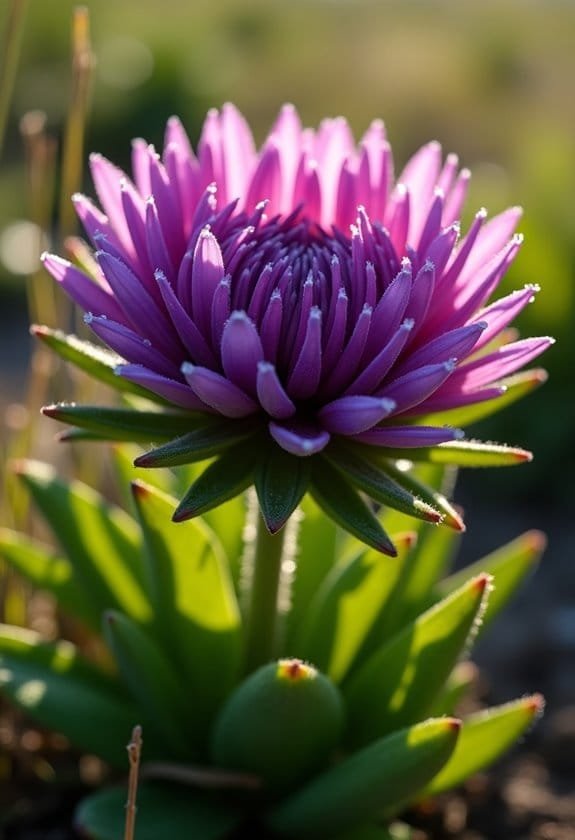
Centaurea nigra, or Common Knapweed, flourishes best in well-drained soils and enjoys the warm embrace of full sunlight, although it can adapt to partial shade conditions.
This hardy plant demonstrates resilience by thriving in various soil types, from low to moderately fertile, and exhibits remarkable drought resistance, making it an ideal candidate for meadows and pasturelands.
Understanding its growing requirements—namely, light exposure, soil composition, water needs, and temperature tolerance—can greatly enhance its successful cultivation in diverse garden settings. Additionally, incorporating organic matter during planting can provide essential nutrients and improve overall growth.
Light
For ideal growth, knapweed flourishes in full sun but proves adaptable, tolerating partial shade as well. This flexibility allows Centaurea nigra to thrive in a variety of environments, particularly in sunny locations like meadows, pastures, and roadsides where ample light is available.
The plant exhibits remarkable drought resistance, which enables it to endure bright and exposed areas, even in conditions with low to moderately fertile soils.
Light exposure plays a vital role in the growth and flowering of knapweed. Adequate sunlight is essential for the development of its vibrant flower heads, which can display colors ranging from bright purple to yellow or white. These striking blooms not only enhance the visual appeal of the landscape but also attract a variety of pollinators essential for ecosystem balance.
Moreover, knapweed often grows alongside grasses, benefiting from shared sunlight in open, well-lit spaces. The interplay of grasses and knapweed in these habitats creates a dynamic environment, highlighting the importance of light in fostering a healthy and diverse plant community.
Soil
Thriving in a range of growing conditions, Centaurea nigra shows a clear preference for well-drained soils and can adapt to various soil types, including sandy and loamy environments. This adaptability allows Knapweed to establish itself in diverse habitats, such as disturbed areas along roadsides or in waste zones.
It demonstrates remarkable resilience in nutrient-poor soils, being well-suited for low to moderately fertile substrates, where many other plants might struggle. Interestingly, this species has a prolific seed production similar to the 26,000 seeds per plant of ox-eye daisies, contributing to its successful establishment.
Moreover, Knapweed can acclimate to both dry and moderately moist conditions, yet it avoids overly wet or acidic soils, which hinder its growth. Ideal soil pH for Centaurea nigra typically ranges from neutral to slightly alkaline, supporting its thriving character in various ecosystems.
This perennial displays a preference for full sun exposure, though it can also tolerate partial shade, making it versatile regarding light availability.
With its ability to grow in numerous soil conditions, Centaurea nigra not only enriches local biodiversity but also establishes essential ground cover, potentially preventing soil erosion. Additionally, this species can serve as a nectar source for pollinators, thereby contributing to plant biodiversity in garden environments.
For gardeners looking to cultivate this species, understanding its soil preferences is fundamental to ensuring successful growth and development.
Water
When it comes to water requirements, Centaurea nigra flourishes in well-drained soils, making effective moisture management crucial for preferred growth. While this resilient plant can tolerate dry conditions, young plants necessitate supplementary watering during prolonged dry spells to guarantee proper establishment.
When freshly planted, consistent water application helps the roots develop, leading to a robust foundation for future development.
Established Centaurea nigra plants typically demand minimal watering due to their drought-resistant nature, allowing them to adapt effectively to varying soil moisture levels. This adaptability is essential, as it enables the plant to thrive in diverse environments without heavy reliance on water.
However, gardeners should be cautious: overwatering can lead to undermined health, as soil saturation may result in root rot, a detrimental issue that halts the plant's growth.
To maintain the balance, gardeners should monitor soil moisture, ensuring it remains moist but not soggy, thereby promoting peak health.
Ultimately, understanding the water needs of Centaurea nigra allows for healthier, more vibrant plants, capable of withstanding the challenges presented by environmental fluctuations. Additionally, a well-developed root system enhances the plant's drought resistance, providing further support during dry spells.
Temperature
Temperature plays an essential role in the growth of Centaurea nigra, as this hardy plant excels in a variety of climates. Thriving in full sun, it also demonstrates adaptability by tolerating partial shade, allowing it to flourish across different light conditions. This versatility is key, as knapweed flowers can emerge beautifully in diverse localities.
Preferring low to moderately fertile soils, Centaurea nigra withstands a range of soil types, including well-drained and dry conditions, ensuring its survival in less-than-ideal environments.
Moreover, this species exhibits remarkable resilience to cold temperatures, enabling it to grow successfully in exposed sites, which enhances its drought resistance. Typically found in grasslands, woodland borders, and naturalistic areas, Centaurea nigra showcases its ability to adapt to various habitats, providing splendid flowers under numerous circumstances.
Once established, common knapweed requires minimal care, thriving with little maintenance. A gardener's touch, such as removing dead stems before the onset of spring growth, can further support the plant's vigor and flowering potential.
Ultimately, the capacity of Centaurea nigra to flourish across temperature ranges makes it a favored choice for many landscapes.
Pollinator Criteria
Centaurea nigra stands out as an essential resource for a variety of pollinators, particularly honey bees and diverse butterfly species.
Its abundant nectar and substantial pollen production create a rich environment that sustains these important insects during their peak activity months of July through September. Vipers Bugloss, another pollinator-friendly plant, also provides nectar and pollen during its extensive flowering period, supporting local pollinator populations.
Understanding the specific pollination methods and preferences of these attracted pollinators reveals the complex interactions that bolster both the plant's reproductive success and the surrounding ecosystem's health. Furthermore, its ability to thrive in various habitats enhances not just its own survival but also the overall biodiversity of its environment.
Attracted Pollinators
With its vibrant purple flower heads and abundant nectar production, Centaurea nigra notably attracts a variety of pollinators. This species serves as a top nectar and pollen producer, enticing honey bees and a diverse assortment of butterflies. Among the butterflies, large skippers, painted ladies, and red admirals are drawn to its bright blossoms, enhancing the visual spectacle of many grassland ecosystems.
The flowers bloom from July to September, providing a consistent and rich nectar source that aligns with the peak activity times of numerous pollinators. This timing guarantees that pollinators can readily access the essential nutrients they need for survival and reproduction. Additionally, Birds Foot Trefoil is known for nitrogen fixation, further benefiting the soil health in areas where it grows.
The plant's pollen further supports these creatures, offering essential protein and fat that bolster their health and productivity. Additionally, the presence of Creeping Buttercup may compete with Centaurea nigra for resources, thereby affecting local pollinator populations and biodiversity.
The Royal Society for the Protection of Birds (RSPB) underscores the importance of knapweed as a food source, noting its crucial role in supporting local biodiversity.
Pollination Method
The unique structure of Centaurea nigra's flower heads plays a critical role in its pollination method. Known as black knapweed, this plant flourishes from July to September, a period that aligns perfectly with heightened activity among its most important pollinators—bees and butterflies.
The flower heads consist of numerous small florets, which create a rich, accessible food source, luring a variety of pollinators, including the European goldfinch and species such as the painted lady and peacock butterfly.
These pollinators seek nectar and pollen, essential for their survival, while simultaneously facilitating the reproduction of C. nigra. Interestingly, Corn Marigold also provides a valuable nectar source for pollinators during a similar time frame, emphasizing the importance of diverse floral resources in sustaining pollinator populations.
Evidence from a UK study published in PLOS One highlights that black knapweed excels in nectar production, ranking among the top producers, while its pollen output, though substantial, is surpassed by just a few other species.
This dual capability enhances ecological interactions, supporting not only the plant itself but also crucial wildlife. Additionally, like Common Yarrow, it plays a significant role in attracting pollinators such as butterflies and contributing to ecosystem health.
Ultimately, the engaging strategy employed by black knapweed underlines its importance in maintaining local biodiversity, fostering relationships that sustain both the plant and its pollinator communities throughout the growing season.
Care & Maintenance
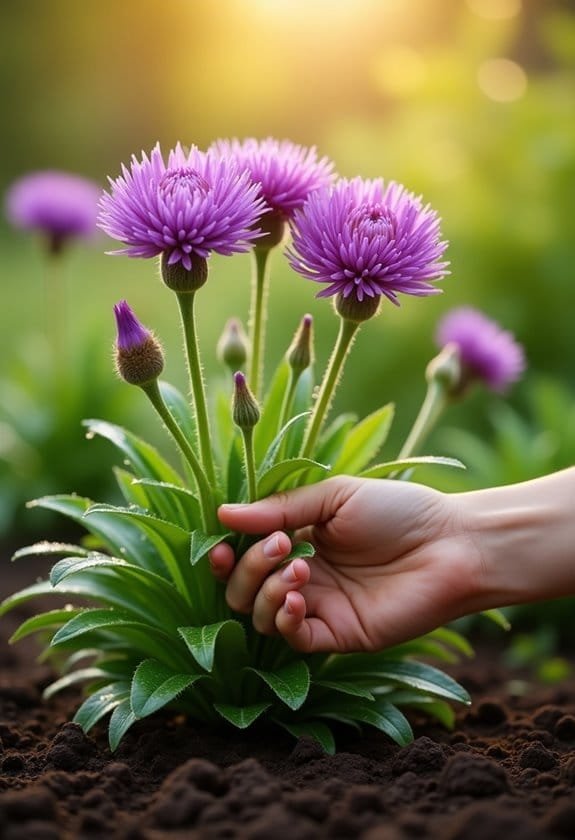
When it comes to the care and maintenance of Centaurea nigra, gardeners can appreciate its minimal requirements once established.
Regular attention during the initial growth phase—particularly ensuring adequate hydration in dry spells—enhances its resilience, while springtime pruning of dead stems supports vigorous new growth and prolific blooms.
Additionally, thoughtful selection of companion plants can create striking visual contrasts and promote a harmonious ecosystem, making this knapweed a truly valuable addition to any garden setting. To further improve the garden's health, planting alongside species like pignut (Conopodium majus) can enhance biodiversity and support beneficial insect populations.
Planting Tips
For successful establishment of Centaurea nigra in the garden, it's best to plant ready-grown plugs or pot-grown specimens in either autumn or spring. This timing guarantees that the plants acclimatize effectively to their new environments, maximizing their potential for growth.
Those wishing to propagate from seeds should sow them in bare, moist soil during the same seasons, lightly covering the seeds with a thin layer of soil for best results.
After planting, it's vital to maintain moisture to encourage germination and establishment. In the following months, allow dead stems and seed heads to linger through winter. These structures not only provide essential habitat for local wildlife but also serve as a source of food during the cold months.
By early spring, gardeners can cut these back, preparing for new growth. Additionally, dividing established clumps from autumn to early spring further promotes robust growth and genetic diversity within the planting area.
This practice allows gardeners to control density within the garden, eventually leading to more vibrant and expansive heads of flowers. Embracing these planting tips will promote a thriving display of Centaurea nigra throughout the growing seasons.
Ongoing Care
Ongoing care for Centaurea nigra is straightforward, requiring minimal intervention once the plants are established. Initially, regular watering is essential, particularly during dry spells, to guarantee young black knapweed plants survive until they grow strong roots.
Once established, these resilient plants thrive in various conditions with little maintenance, making them an excellent choice for low-care gardens or naturalistic landscapes.
To promote robust growth, gardeners should remove dead stems before new growth begins in early spring, as this encourages healthy foliage. Additionally, pruning spent flowers not only enhances the aesthetics but also stimulates further blooming and prevents self-seeding if that control is desired.
However, allowing self-seeding can positively contribute to genetic diversity and sustainability within the population.
Occasionally transplanting some young seedlings helps maintain ideal spacing, facilitating access to resources while reducing competition.
By embracing these simplified ongoing care strategies, gardeners can enjoy the vibrant presence of Centaurea nigra while witnessing the delightful interplay of nature in their green spaces.
Ultimately, adopting such practices results in a resilient display of color and life, enhancing the environmental tapestry.
Suggested Companions
Although Common Knapweed (Centaurea nigra) thrives in a variety of conditions, pairing it with the right companions can greatly enhance a garden's overall health and aesthetics. Ideal partners for common knapweed include yarrow (Achillea millefolium) and meadow sage (Salvia nemorosa), both of which flourish in similar sunny, dry environments.
By grouping perennial plants that share nutrient and water needs, gardeners can streamline maintenance while fostering a diverse ecosystem.
To heighten biodiversity, consider incorporating vibrant flowering perennials like coneflower (Echinacea) and black-eyed Susan (Rudbeckia hirta) in the mix. These companions not only provide necessary pollinator support but also enhance visual appeal through their bold colors.
It's essential, however, to guarantee the surrounding soil remains well-drained. Common Knapweed is particularly sensitive to excessive moisture, making it imperative to avoid overly aggressive moisture-loving plants.
Regular maintenance practices, such as removing dead stems and seed heads each spring, help improve both the health and aesthetics of common knapweed and its companions. This simple act fosters a vibrant and resilient garden, promoting an inviting habitat for pollinators and a striking visual palette for observers.
Common Issues
Common knapweed (Centaurea nigra) poses significant challenges due to its resilience against pests and diseases, which often leave it unchecked in diverse environments.
Its formidable taproot allows the plant to endure drought and compete vigorously with native species, threatening ecosystem balance.
To effectively manage this invasive species, understanding its growth patterns is essential, and employing innovative solutions can help restore the integrity of affected habitats.
Pests/Diseases
Pests and diseases pose significant challenges to the health of Centaurea nigra, frequently impacting its growth and reproduction. One notable pest, the Knapweed Gall Fly (Urophora spp.), creates galls on the flowering heads, which can lead to a marked reduction in seed production.
Additionally, caterpillars of the Knapweed Epi species munch on the leaves and flowers, causing defoliation and diminished vigor within the plant.
Fungal diseases, particularly rusts and powdery mildew, can also afflict Common Knapweed, especially in humid environments, compromising its overall health and resilience.
Herbivory from mammals, including rabbits and deer, further compromises the plant's competitiveness by consuming leaves and stems, ultimately resulting in stunted growth and reduced reproductive success.
While insect pests may attract natural predators within the ecosystem, a high level of infestation can induce stress on the plant, rendering it more vulnerable to diseases.
This process not only undermines the plant's integrity but can also diminish its ecological effectiveness, thereby affecting the broader environment where it exists.
Solutions
Effectively managing Centaurea nigra requires a combination of monitoring and intervention strategies to address its invasive potential and mitigate its impact on local ecosystems. Commonly known as Knapweed, this plant can rapidly outcompete native species, disrupting biodiversity.
Regular mowing during its flowering period is important, as it reduces seed production. This approach limits Knapweed's ability to establish in new areas, but it also necessitates a commitment to routine care.
To further control its spread, introducing or supporting robust native plant species can create natural competition within local habitats. These native plants, adapted to their environment, are significant in maintaining ecological balance.
Furthermore, it's imperative to avoid excessive soil disturbance during management efforts. Disturbing the soil too much can inadvertently encourage Knapweed's seeds to germinate, exacerbating the issue.
For those considering non-organic methods, utilizing herbicides may provide effective management solutions, yet it's important to do so cautiously and adhere to local guidelines.
Are Common Knapweed and Hogweed Related in Any Way?
Yes, common knapweed and hogweed are not related in any way. Common Knapweed, also known as Centaurea nigra, belongs to the Asteraceae family, while Hogweed, or Heracleum sphondylium, is a member of the Apiaceae family. For more heracleum sphondylium information, consult a reliable botanical source.
Summary
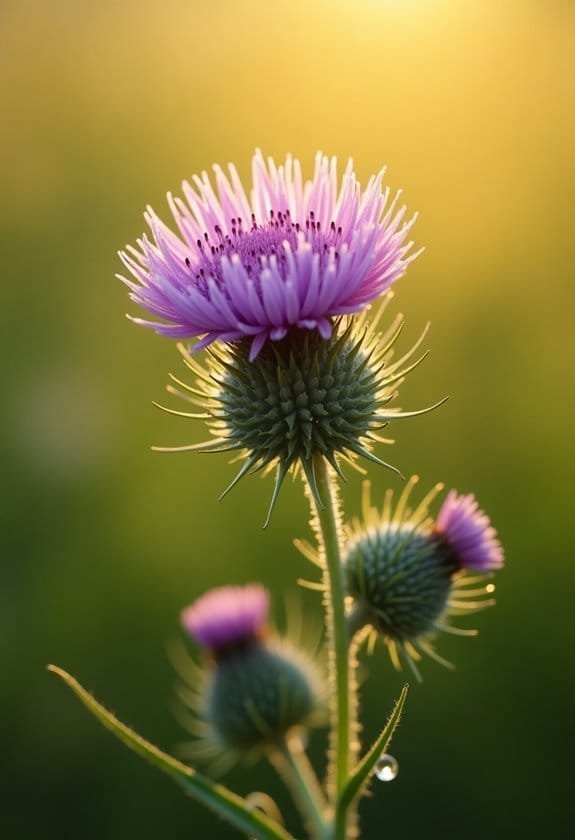
Centaurea nigra, or Common Knapweed, stands out as a striking herbaceous perennial that can reach heights of up to 1 meter. This beautiful plant features bright pink-purple flower heads, surrounded by long, ragged bracts, making it easily recognizable in various habitats.
Blooming from July to September, black knapweed produces numerous small florets that play an essential role in attracting pollinators, including butterflies and bees, who depend on these blossoms for sustenance.
Thriving in diverse environments such as grasslands, meadows, and urban areas, Common Knapweed often appears in disturbed sites like pastures and along roadsides.
While it offers ecological benefits by serving as a critical food source for species like the European goldfinch and many butterflies, its invasive nature in North America can lead to significant disruption of local ecosystems.
By outcompeting native vegetation, black knapweed challenges biodiversity and alters the balance of its new habitats.
Ultimately, understanding Centaurea nigra's dual character—as a provider of nourishment and as a potential ecological threat—highlights the importance of managing its spread while appreciating its aesthetic and ecological contributions.