*Erica cinerea*, or Bell Heather, is an elegant evergreen shrub renowned for its vibrant magenta flowers that bloom impressively from June to September. Reaching heights between 6 to 18 inches (15 to 45 cm) and spreading up to 24 inches (60 cm), it thrives in sunny, sandy, acidic soils with a pH of 4.5 to 6.0. This plant is an essential nectar source, supporting pollinators like bees and butterflies while enhancing local biodiversity. Requiring minimal maintenance, its striking aesthetic makes it ideal for rock or coastal gardens, promoting ecological balance and beauty. Further insights await those intrigued by its characteristics.
Main Points
- *Erica cinerea*, commonly known as Bell Heather, is a drought-tolerant shrub that thrives in sandy, acidic, well-drained soils.
- It features vibrant magenta flowers that bloom from July to September, attracting diverse pollinators like bees and butterflies.
- The plant requires a minimum of six hours of direct sunlight and should be spaced 24 inches apart for optimal growth.
- Bell Heather is recognized for its ecological contributions and has received the Royal Horticultural Society's Award of Garden Merit.
- It is ideal for rock gardens and coastal gardens, providing aesthetic appeal while supporting local wildlife and improving soil health.
Introduction
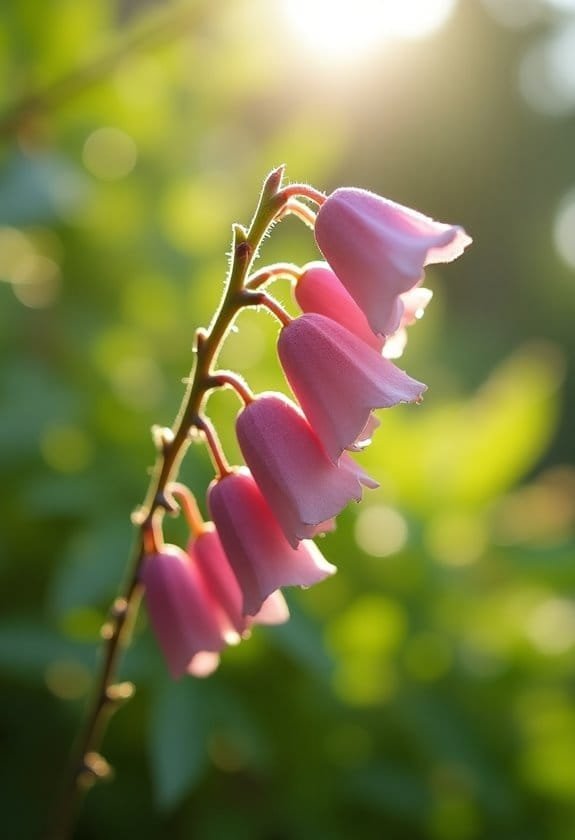
Erica cinerea, commonly known as Bell Heather or Twisted Heath, is a charming dwarf evergreen shrub celebrated for its vibrant magenta flowers that grace gardens from June to September.
Standing at a modest height of 10 inches and spreading 24 inches wide, this resilient plant thrives in sunny environments, favoring sandy, acidic soils that drain well.
Its ecological significance as an essential nectar source for pollinators underscores not only its ornamental appeal but also its role in maintaining biodiversity, making it a worthy addition to any garden.
Common Name
Known as Bell Heather or Twisted Heath, Erica cinerea showcases a striking display of magenta flowers that capture the eye from late spring through early fall. This enchanting plant, with blooms flourishing from June to September, forms a vibrant tapestry against its evergreen foliage.
Growing as a low shrub, it typically reaches heights between 6 to 18 inches (15 to 45 cm) while spreading up to 24 inches (60 cm) wide, creating a delightful ground cover for gardens. In addition, it attracts various pollinators, enhancing the local wildlife habitat in the garden.
The name "Bell Heather" aptly reflects its bell-shaped blossoms, which cluster harmoniously, enhancing its visual appeal.
Renowned for its hardiness, Erica cinerea thrives in well-drained, acidic soils, often finding a home within heathland and moorland environments throughout Western Europe. Additionally, it is recognized as one of Britain's top five nectar producers, making it an essential component of ecological networks.
The Royal Horticultural Society has duly recognized the plant, bestowing it with the Award of Garden Merit, which underscores its resilience and aesthetic charm.
As Bell Heather continues to flourish, gardeners appreciate its ability to elevate landscapes while requiring minimal maintenance.
This attractive shrub brings a touch of nature's elegance, making it an excellent choice for those seeking to enrich their outdoor spaces with enduring beauty.
Scientific Name
Bell Heather, scientifically recognized as *Erica cinerea*, belongs to the Ericaceae family. This species, native to Western Europe, flourishes in acidic, nutrient-poor environments like heathlands and moorlands, often found in well-drained soils that facilitate its growth.
The specific epithet *cinerea* derives from the Latin term for "ash-colored," aptly describing the foliage that can appear grayish under certain conditions, creating an almost ethereal appearance.
As a member of the Ericaceae family, *Erica cinerea* stands out with its remarkable bell-shaped flowers, which bloom typically from July to September.
These blossoms, often in shades of dark purple-pink, not only heighten the aesthetic appeal of the landscape but also play a significant ecological role. The plant serves as a noteworthy nectar source for various pollinators, including bees and butterflies.
This interaction underscores the fundamental importance of *Erica cinerea* in its ecosystem, reflecting the intricate connections found in nature. Its ability to thrive in challenging conditions further illustrates the resilience and adaptability of plant species within the diverse regions of Western Europe, making *Erica cinerea* an integral part of the biodiversity in these environments.
Overview
The Bell Heather, or *Erica cinerea*, is a charming dwarf evergreen shrub prized for its stunning magenta flowers that bloom from June to September. This plant generally reaches a modest height of 6 to 10 inches (15 to 25 cm) and can spread up to 24 inches (60 cm) wide, making it an ideal choice for various garden settings, especially rock and coastal gardens.
Native to Western Europe, Bell Heather thrives in full sun where it flourishes in sandy, acidic, well-drained soils, exhibiting remarkable drought tolerance once established.
The dark green foliage complements its vibrant blooms, creating a striking visual contrast that enhances any landscape.
Recognized with the esteemed Royal Horticultural Society's Award of Garden Merit, *Erica cinerea* is valued for its ornamental appeal and low maintenance requirements, which makes it a favorite among gardeners.
In addition, this resilient shrub serves as an essential nectar source for pollinators, thereby supporting local biodiversity and contributing to the ecological health of its surroundings.
Key Features
Erica cinerea, or Bell Heather, showcases a compact growth size, reaching up to 10 inches in height while spreading gracefully to 24 inches wide.
Its striking appearance features needle-like dark green foliage complemented by vibrant magenta bell-shaped flowers that bloom from June through September, creating a colorful spectacle in gardens.
This unique shrub not only enhances aesthetics but also plays a crucial role in supporting local pollinators during its flowering season.
Growth Size
With heights typically ranging from 6 to 18 inches (15 to 45 cm), Erica cinerea 'C.D. Eason' establishes itself as a charming addition to diverse landscapes. This plant typically grows to about 10 inches (25 cm) tall and can spread up to 24 inches (60 cm) wide, forming mounding, spreading low bushes that create a soft, inviting appearance in gardens and natural settings.
Its growth size contributes considerably to its appeal, particularly in perennial beds or rocky gardens.
The leaves, fine and needle-like, are uniquely arranged in whorls of three, measuring approximately 4–8 mm (0.16–0.31 in) long. This arrangement not only enhances the plant's texture but also supports its overall health.
In addition, Erica cinerea is renowned for its stunning, bright magenta bell-shaped flowers, varying from white to dark purple, which measure around 4–7 mm (0.16–0.28 in) long.
Once established, this resilient species demonstrates impressive drought tolerance but thrives in consistently moist, well-drained, sandy, acidic soils, illustrating its adaptability to various conditions.
As a result, the growth size and flourishing characteristics of Erica cinerea make it a valuable asset for both beauty and function in horticulture.
Appearance
Known as Bell Heather, Erica cinerea showcases a striking appearance that enhances its appeal in gardens. This low, spreading evergreen shrub typically grows to a height of 6 to 18 inches (15 to 45 cm).
With a spread of up to 24 inches (60 cm), its compact form makes it a great plant for a variety of landscaping applications.
The foliage features fine, needle-like leaves that exhibit a rich dark green hue, measuring 4 to 8 mm long, and are elegantly arranged in whorls of three, contributing to its lush texture.
Its signature bell-shaped flowers, which bloom from mid-summer to late summer, mainly display an enchanting dark purple-pink shade, although rare white variants can occur.
Each flower measures approximately 4 to 7 mm, grouped in clusters that create a visually striking effect when in full bloom.
Interestingly, the texture of the flowers resembles that of a strawflower, adding a distinctive aesthetic quality to the overall presentation of this charming shrub.
Originating from the landscapes of northwestern Italy, Erica cinerea not only enchants with its beauty but also thrives in diverse garden settings, ensuring lasting appeal.
Flowering Season
The vibrant spectacle of flowering season showcases the Bell Heather's stunning blooms, which span from late spring to early fall, specifically between June and September.
These bright magenta, bell-shaped flowers measure approximately 4 to 7 mm in length and blossom in clusters along the stems, creating a striking visual impact in gardens and natural settings. The flowering duration peaks in mid to late summer, a period marked by warmer weather that notably enhances pollinator activity.
During this time, the seasonal impact of Bell Heather becomes increasingly noticeable, as the blooms serve as important nectar sources. The attractive flowers draw various pollinators, including honeybees and butterflies, contributing to local biodiversity.
This pollinator attraction not only aids in the reproduction of the Bell Heather itself but also supports the broader ecosystem, as these creatures rely on the plant for sustenance during essential months of the year.
Consequently, the Bell Heather, with its vibrant blooms, not only enchants observers but plays a major role in sustaining pollinator populations through its flowering season, reaffirming its importance in both cultivated and wild landscapes.
Growing Requirements
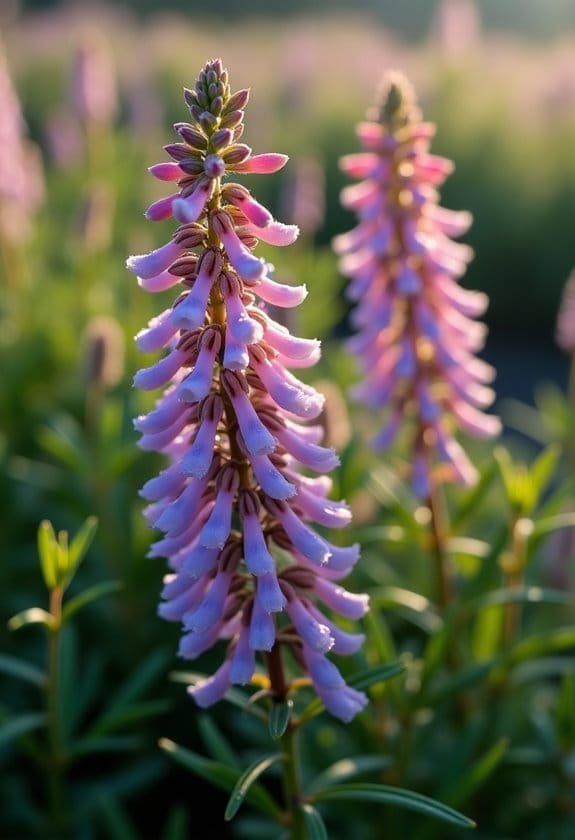
To successfully cultivate Erica cinerea 'C.D. Eason', gardeners need to focus on precise growing conditions.
This charming dwarf shrub flourishes in full sunlight, making it essential to select sandy, acidic, and well-drained soils that can maintain moderate moisture levels.
Understanding its temperature and water requirements will guarantee this resilient plant thrives beautifully in diverse settings, from rock gardens to coastal landscapes.
Light
For Erica cinerea, or Bell Heather, soaking up the sun is vital for healthy growth and vibrant blooms. This plant truly thrives in full sun, requiring at least six hours of direct sunlight exposure daily. Such consistent light allows it to develop its stunning flowers, particularly from June to September.
While Bell Heather does exhibit some shade tolerance, inadequate light can greatly inhibit its growth and flowering potential.
To adapt to varying light conditions, Erica cinerea relies on specific light adaptations, which enhance its ability to photosynthesize efficiently. These adaptations are especially important in sheltered areas, as they protect the plant from strong winds that might cause desiccation.
The ideal growing zones, typically ranging from 6 to 8, further complement its lighting needs, providing the perfect interplay of sunlight and temperature for peak health.
Soil
Growing healthy Erica cinerea requires attention to soil conditions, as this plant flourishes in sandy, acidic soils that provide excellent drainage. Ideally, the soil type should exhibit a pH level between 4.5 and 6.0, promoting optimum nutrient absorption and preventing iron deficiency. Consequently, gardeners should avoid alkaline soils, which can obstruct the plant's growth and lead to undesirable symptoms.
While Erica cinerea prefers medium moisture levels, maintaining consistent soil moisture is crucial. Excessive water accumulation, unfortunately, can lead to root rot, threatening the plant's health. To enhance moisture retention without compromising drainage, planting in sheltered areas serves a dual purpose, protecting the plant from strong winds while benefiting its overall environment.
Once established, Bell Heather exhibits respectable drought tolerance; however, it still appreciates regular watering during particularly dry periods. The balance between moisture retention and drainage is critical for the thriving of this species.
Water
While maintaining consistent soil moisture is vital for the health of Erica cinerea, it's particularly important during the plant's initial establishment phase. When planting Bell Heather, gardeners should focus on employing effective irrigation methods to prevent the soil from drying out, as dry conditions can hinder root development. Using soil moisture monitoring tools allows for precise observations, ensuring the soil remains adequately moist.
This plant prefers sandy, acidic, well-drained soils, as heavy or waterlogged environments can spell disaster, potentially leading to root diseases like Phytophthora. Once established, Erica cinerea demonstrates improved drought tolerance; however, it still requires sufficient water during prolonged dry spells to promote robust growth and vibrant dark green foliage, complemented by bright magenta flowers.
In sheltered locations, the plant benefits from protection against strong winds, which can exacerbate water loss through desiccation.
Gardeners should also consider implementing water conservation techniques, such as mulching, to retain moisture in the soil efficiently. Regular maintenance watering during dry periods becomes essential, promoting the overall health and visual appeal of this resilient and attractive perennial.
Temperature
Erica cinerea flourishes in hardiness zones 5 to 8, making it well-suited to withstand winter temperatures ranging from -20°F to 10°F (-29°C to -12°C). Known for its impressive climate adaptability, Bell Heather demonstrates significant frost resistance, allowing it to thrive in varied environments. The plant's ability to endure a broad temperature range contributes to its popularity among gardeners in temperate regions. Additionally, its blooming period in April aligns with the arrival of spring when pollinators become active, enhancing its ecological value.
Full sun exposure is essential for peak growth and flowering potential throughout the growing season, enhancing its resilience against harsh winter conditions. Although Bell Heather exhibits drought tolerance once established, attention to consistent soil moisture during early growth stages is important.
To further protect Erica cinerea, it's wise to plant it in sheltered areas that shield it from strong winds, which can lead to desiccation during colder months. Additionally, as a calcifuge preferring acidic soils, maintaining ideal soil pH is critical to prevent symptoms of iron deficiency, particularly in alkaline conditions.
In particular, Calluna vulgaris is a related plant that also thrives in similar environments and demonstrates comparable hardiness. The meticulous attention to temperature and environmental conditions fortifies the health and beauty of this enchanting plant, making it a suitable choice for a wide range of garden enthusiasts.
Pollinator Criteria
Erica cinerea attracts a diverse array of pollinators, including honeybees, bumblebees, and various moths and butterflies, making it a cornerstone species in local ecosystems. This plant employs a guided pollination method, where its bell-shaped flowers adapt to facilitate the access of these insects, providing them with essential nectar during their active periods from July to September. Understanding the unique relationship between Bell Heather and its pollinators is significant for fostering biodiversity, as it underscores the importance of cultivating such species to enhance local insect populations. Additionally, like Common Holly's role in providing wildlife habitat, Bell Heather contributes to a balanced ecosystem by supporting various species throughout the seasons, much like Common Honeysuckle which attracts a range of pollinators to maintain ecosystem health.
Attracted Pollinators
With its vibrant, bell-shaped flowers, Erica cinerea, or Bell Heather, draws a diverse array of pollinators, including honeybees, bumblebees, moths, and butterflies. This enchanting plant is a significant nectar source, thanks to its exceptional nectar production strategies. Ranking among the top five nectar producers in the UK, Bell Heather's dark purple-pink flowers release a highly fragrant nectar that entices various nectar-loving insects, especially during its blooming period from June to September.
The appeal of Bell Heather extends beyond mere beauty; it underscores the utmost importance of pollinator diversity. By attracting different species, it fosters a rich tapestry of life, ensuring that various insect populations thrive. This thriving diversity then contributes to ecosystem stability benefits, as it supports interdependent relationships among plants, insects, and other wildlife.
Notably, Bell Heather sustains local insect populations, providing essential resources throughout its flowering season. This significant role reinforces the intricate balance of heathland ecosystems, ensuring their health and resilience while demonstrating nature's remarkable interconnectedness. Additionally, like white clover, Bell Heather also plays a critical role in supporting pollinator populations, contributing to the ecological web that enriches our environment.
In this way, Bell Heather stands as a beacon of biodiversity, crucial for the ecological web that enriches our environment.
Pollination Method
Bell Heather's unique pollination method hinges on its bell-shaped flowers, which are perfectly designed for efficient nectar access. These dark purple-pink blooms, clustered together, create an inviting landscape for nectar foraging by various pollinators, including honeybees, bumblebees, moths, and butterflies.
During the flowering period from July to September, the arrangement of these flowers facilitates cross pollination benefits by allowing pollinators to visit multiple flowers in one gathering. This effective flower structure not only supports local biodiversity but also enhances the overall pollination process. Additionally, similar to how Lythrum salicaria attracts numerous pollinators, Bell Heather plays a crucial role in sustaining local ecosystems.
As insects travel from bloom to bloom, they inadvertently transfer pollen, promoting genetic diversity within the Bell Heather population. This genetic mixing is essential, as it fosters resilience against environmental changes and diseases. The rich organic substrates in which Bell Heather thrives also contribute to the success of its pollination efforts.
The nectar-rich environment contributes to the production of distinctive honey renowned for its dark color and aromatic qualities, further attesting to the plant's ecological significance.
In essence, Bell Heather serves as a critical ally in the cycle of life, ensuring that both pollinators thrive and the landscape flourishes with vibrant biodiversity through its remarkable pollination method.
Care & Maintenance
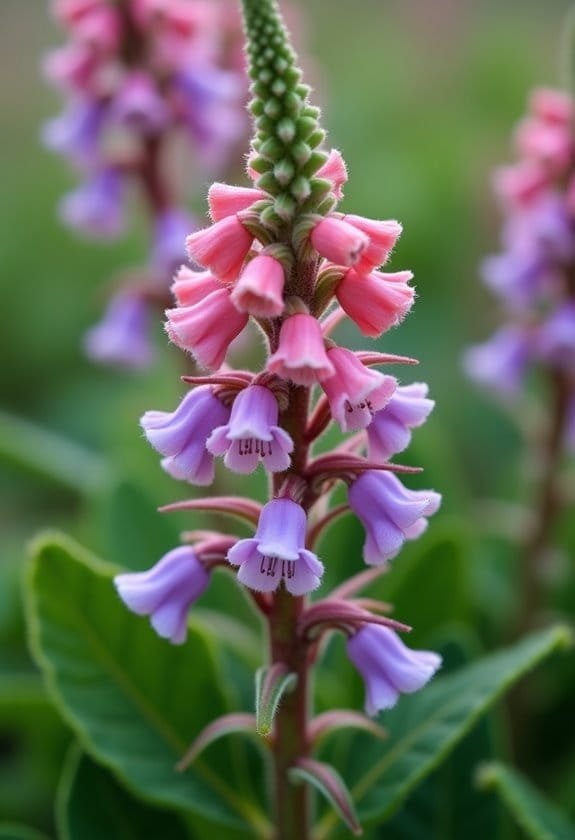
When it comes to caring for Erica cinerea, understanding its specific needs is essential for thriving growth.
This hardy plant not only requires well-drained, sandy, acidic soils to flourish but also ongoing attention in watering, particularly in its formative years.
Planting Tips
Planting Erica cinerea 'C.D. Eason' requires careful attention to its specific needs to guarantee flourishing growth. This hardy plant thrives in full sun, benefiting from sandy, acidic, and well-drained soil. Wild Basil is also known for its adaptability to various soil types, which can inspire similar cultivation practices.
Employing proper planting techniques is fundamental; one should amend the soil with organic materials to improve its nutrient content and drainage capabilities. Prior to planting, verify that the soil is well-prepared, allowing for ideal roots establishment.
Moisture management is vital during the initial growing phase. It's essential to maintain consistently moist soil without allowing it to dry out, as this plant appreciates medium moisture conditions in its early stages.
When planting, maintain a spacing of about 24 inches (60 cm) between each specimen to facilitate their natural spread and ground cover effect.
For successful cultivation, consider situating the plants in sheltered areas to protect them from strong winds, which can cause desiccation. This enhances their drought tolerance once established. Additionally, planting these heather species can
Ongoing Care
Ongoing care for *Erica cinerea* is essential to secure healthy growth and vibrant blooms. One effective method is implementing pruning techniques; annual pruning should be performed just below the flowers on the stems, ideally after flowering concludes. This technique encourages a well-defined shape, preventing straggly growth that detracts from the plant's aesthetic appeal.
Watering frequency is imperative, especially during the establishment phase. *Erica cinerea* thrives in sandy, acidic, well-drained soils, necessitating consistent moisture while avoiding any situations where the soil might dry out entirely.
Once established, this resilient plant exhibits impressive drought tolerance, easing maintenance needs markedly.
In addition to watering and pruning, regular checks for disease prevention are essential. Although generally pest-free, *Erica cinerea* can be susceptible to Phytophthora root diseases, which can compromise the plant's integrity.
By monitoring the plant for any signs of disease and guaranteeing adequate spacing during planting, it becomes possible to enhance overall growth, allowing the bell heather to serve effectively as beautiful ground cover or stylish edging in landscape designs.
This holistic approach secures both health and longevity in garden settings.
Suggested Companions
A thoughtful selection of companion plants enhances the overall beauty and health of *Erica cinerea*. Employing effective companion planting strategies not only fosters a visually appealing aesthetic garden design, but also optimizes plant health.
To complement Bell Heather, gardeners should consider low-growing shrubs and other heather varieties, such as *Calluna vulgaris*, which thrive in acidic, well-drained soils. This encourages a coherent and harmonious garden atmosphere. Additionally, including Common Cowslip's fragrant yellow flowers can attract beneficial pollinators and support biodiversity.
Incorporating drought-tolerant perennials like Gaura and Lavender aids in minimizing competition for resources while enhancing the visual appeal once established. Ground covers, including creeping thyme and sedum, serve dual purposes: providing visual contrast and suppressing weeds, as they too flourish in similar sunny environments.
Moreover, adhering to plant compatibility tips is essential—avoid pairing *Erica cinerea* with alkaline or overly moist soil plants to prevent nutrient deficiencies and detrimental growth.
Heather, known for its vital ecological role, is also an excellent choice as a companion plant due to its adaptability in attracting beneficial pollinators to the garden.
Regular pruning of companion plants guarantees they maintain an appropriate shape, preventing overshadowing of Bell Heather and promoting excellent air circulation. By carefully selecting these companions, gardeners can nurture a thriving ecosystem that celebrates both the beauty and resilience of *Erica cinerea*.
Common Issues
While Erica cinerea is generally resilient, it can face significant challenges, particularly from Phytophthora root diseases, which thrive in poorly drained soils.
Ensuring adequate drainage and shelter from strong winds is essential, as these factors can contribute to desiccation and overall plant stress.
Regular care, including annual pruning and consistent moisture, helps mitigate these issues, promoting a healthy, thriving Bell Heather.
Pests/Diseases
When it comes to growing *Erica cinerea*, vigilance against pests and diseases is essential for maintaining plant health. A significant threat is Phytophthora root disease, which often leads to root rot; if this disease isn't promptly addressed, it dramatically affects the plant's liveliness.
Although *Erica cinerea* is generally pest-free, leaf pests like aphids occasionally appear, causing foliage damage and stress.
Implementing effective disease resistance strategies can mitigate these risks. For instance, maintaining proper soil drainage is important, as overly soggy conditions not only foster root diseases but also attract pests.
Soil health practices, such as ensuring well-aerated, nutrient-rich soil, support robust plant growth and resilience. Additionally, providing a consistent growing environment prevents overcrowding, thereby reducing the likelihood of disease spread and pest infestations.
Regular monitoring presents another key aspect of effective pest management tips. Engaging in good cultural practices—like appropriate pruning and sanitation—help maintain the overall integrity of the plant, protecting *Erica cinerea* from common issues.
Ultimately, a proactive approach allows gardeners to enjoy the beauty of this enchanting species without significant disruptions to its health.
Solutions
To keep *Erica cinerea* thriving, gardeners should implement several key solutions to address common issues.
First, attention to cultivation practices is critical; planting in well-drained, sandy, acidic soils can prevent the destructive Phytophthora root disease. This particular species requires consistent soil moisture, so watering should be maintained, especially during establishment, to avoid undue stress.
Additionally, providing a sheltered location protects these plants from strong winds that could cause desiccation, thereby enhancing their resilience.
Regular annual pruning, executed below the flowers on stems post-bloom, promotes a compact shape, preventing the straggly growth that can detract from their aesthetic value. Moreover, spacing plants approximately 24 inches apart facilitates adequate air circulation, greatly reducing the likelihood of disease proliferation, ultimately benefiting landscape integration.
When cultivated successfully, *Erica cinerea* not only enhances the visual appeal of gardens but also offers considerable ecological benefits, such as supporting local pollinators and contributing to soil health.
What are the differences between Erica Cinerea and Calluna Vulgaris?
Erica Cinerea, also known as bell heather, and Calluna Vulgaris, or common heather, are distinct species. Calluna Vulgaris is known for its hardiness and ability to thrive in acidic soil, while Erica Cinerea is typically found in more temperate climates. Both heather plant calluna vulgaris characteristics and uses have made them popular choices for landscaping and ornamental gardens.
Summary
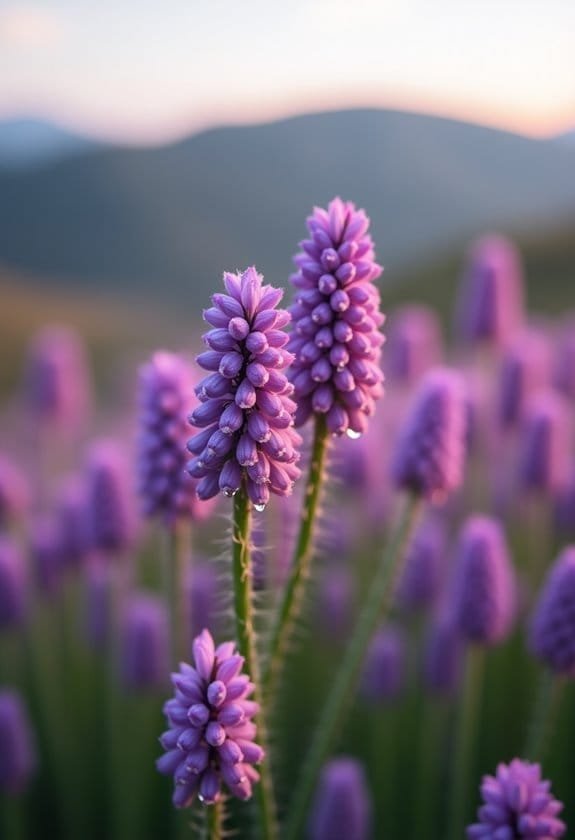
Erica cinerea, known as Bell Heather, is a charming dwarf evergreen shrub that captivates gardeners with its vibrant magenta flowers blooming from June to September.
This plant, reaching a height of up to 10 inches and spreading 24 inches wide, enriches landscape design with its striking colors and compact form. Hardy in Zones 5 to 8, it thrives in sandy, acidic, well-drained soils, preferring full sun while also displaying commendable drought tolerance once established.
Bell Heather stands out not only for its aesthetics but also for its ecological benefits. Its abundant nectar serves as a crucial food source for local pollinators, promoting biodiversity in gardens, rock formations, and coastal landscapes.
Recognized with the Royal Horticultural Society's Award of Garden Merit, this plant proves to be a versatile addition to various outdoor spaces, including containers.
Incorporating Erica cinerea into garden aesthetics not only enhances the visual appeal but also contributes positively to local ecosystems, solidifying its place as a favored choice among both amateur and professional gardeners alike.
Ultimately, Bell Heather illustrates the harmonious balance between beauty and ecological responsibility in modern gardening practices.