Euphorbia cornigera, or Horned Spurge, is an impressive perennial that reaches heights of up to 30 inches (75 cm), boasting reddish stems and lance-shaped, dark green leaves. Its enchanting yellow-green blooms emerge from late spring to late summer, attracting various pollinators, including bees and butterflies, essential for ecological balance. Thriving in full sun or partial shade, this species prefers moist, well-drained sandy loam. However, its highly toxic nature requires caution, as all parts pose risks if ingested. Gardeners will find that proper care enhances its beauty and resilience, while thoughtful plant pairings can maximize its aesthetic appeal and ecological benefits. There's much more to appreciate about this unique plant.
Main Points
- Horned Spurge (Euphorbia cornigera) features vibrant yellow-green blooms, attractive to pollinators like bees and butterflies.
- It grows up to 30 inches tall, thriving in full sun to part shade and well-drained, moist soil.
- The plant is highly toxic, necessitating careful placement away from pets and children to ensure safety.
- Its unique cyathium structure allows for abundant nectar, enhancing local ecosystems by attracting diverse pollinators.
- Resistant to pests and diseases, Horned Spurge requires minimal care post-establishment and fits well in various garden designs.
Introduction
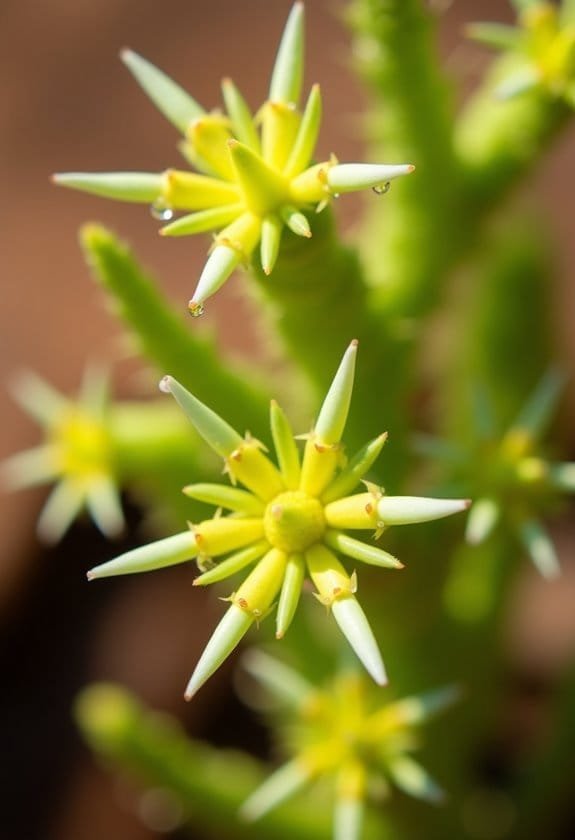
Euphorbia cornigera, commonly referred to as Horned Spurge, stands out with its distinctive bright yellow-green flowers that bloom in clusters from late spring to late summer.
This robust perennial typically reaches heights of up to 30 inches, showcasing its striking reddish stems and dark green, lance-shaped leaves, making it a favorite among gardeners.
However, while its ornamental qualities earn accolades such as the Royal Horticultural Society's Award of Garden Merit, one must approach this plant with caution, as all parts are highly toxic if consumed.
Common Name
Known as Horned Spurge, this striking plant captivates gardeners with its unique yellow-green flowers and robust growth. Reaching heights of up to 30 inches, or 75 centimeters, it showcases upright, reddish stems adorned with lance-shaped, dark green leaves. The blooms, which appear in small clusters, typically grace the landscape from late spring to late summer, creating a vibrant focal point in garden designs.
Horned Spurge isn't just a visual delight; it has earned recognition for its ornamental value. The Royal Horticultural Society has awarded it the prestigious Award of Garden Merit, highlighting its suitability for various garden settings, especially low-maintenance ones.
This plant is particularly attractive to those seeking drought-resistant species that thrive in less-than-ideal conditions.
However, prospective gardeners should remain vigilant, as all parts of the Horned Spurge are highly toxic if ingested. It's essential to educate oneself about this risk, especially if children or pets share the outdoor space.
Scientific Name
The scientific name of Horned Spurge, Euphorbia cornigera, reflects its unique characteristics and classification within the plant kingdom. As a member of the Euphorbiaceae family, which boasts approximately 7,500 flowering species, Euphorbia cornigera presents a fascinating example of botanical diversity.
This particular species falls under the genus Euphorbia, notable for its distinctive unisexual flowers that manifest in a unique cyathium structure—an arrangement that enhances its reproductive success.
Euphorbia cornigera showcases bright yellow-green flowers, which bloom in vibrant clusters from late spring through late summer. This extended flowering period contributes considerably to its ornamental appeal, attracting both gardeners and pollinators alike.
Native to the Northern Pakistan Himalaya region, this spurge thrives in specific climatic conditions, highlighting its adaptability and resilience.
Notably, Euphorbia cornigera is sometimes confused with Euphorbia wallichii, another member of the genus. However, its striking flower color and growth habit easily distinguish it.
Despite its aesthetic allure, caution is essential, as all parts of Euphorbia cornigera are toxic if ingested, exemplifying the dual nature of beauty in nature, where admiration must always be balanced with respect for potential dangers.
Overview
Nestled in the rugged landscapes of the Northern Pakistan Himalaya region, Horned Spurge, or Euphorbia cornigera, captivates gardeners with its striking appearance and unique growth habits.
This remarkable clump-forming perennial reaches an impressive height and width of up to 30 inches (75 cm), showcasing upright reddish stems adorned with lance-shaped, dark green leaves.
From late spring to late summer, this eye-catching plant produces bright yellow-green flowers in small clusters, creating a vivid contrast against the foliage. These flowering shoots not only enhance the visual appeal but also attract a variety of pollinators, establishing Euphorbia cornigera as an essential component of any garden's ecosystem.
Thriving in part shade, this resilient species demonstrates an impressive tolerance for varying light conditions, making it a versatile addition to diverse garden environments.
However, it's important for gardeners to remain vigilant, as Euphorbia cornigera is highly toxic if ingested. Consequently, education regarding its potential hazards, especially around pets and children, is vital.
The Royal Horticultural Society has recognized its reliability and aesthetic value by awarding it the prestigious Award of Garden Merit, further solidifying its place in horticultural excellence.
Key Features
Euphorbia cornigera, commonly known as Horned Spurge, showcases striking features that contribute to its ornamental appeal.
This clump-forming perennial can reach heights of up to 30 inches, sporting upright, reddish stems, and lance-shaped dark green leaves that form a lush backdrop for its vibrant yellow-green flowers.
These blooms, which cluster densely from late spring to late summer, not only enhance the plant's aesthetic but also indicate its adaptability to various garden settings.
Growth Size
Growing up to 30 inches tall and wide, Horned Spurge showcases its impressive size in gardens with upright, reddish stems and striking lance-shaped dark green leaves. This clump-forming perennial thrives in a variety of environments, making it a versatile choice for beds, borders, and rock gardens alike.
As it matures, the vibrant foliage evolves from subtle red hints to a mature yellow-green, adding seasonal visual interest.
During the growing season, Horned Spurge produces flowering shoots to ground, featuring clusters of bright yellow-green flowers that emerge from late spring and continue blooming into late summer. These stunning floral displays not only enhance the plant's ornamental appeal but also attract pollinators, supporting local biodiversity.
Its robust stature, reaching 30 inches, allows it to stand out among other plants while providing an effective backdrop in mixed garden settings. The unique shape and form of the plant contribute to its overall aesthetic, proving that even in modest arrangements, a single Horned Spurge can make a significant impact.
Ultimately, Euphorbia cornigera becomes a favorite for gardeners looking to create vibrant and engaging landscapes.
Appearance
With its striking appearance, Horned Spurge captures attention in any garden setting. Euphorbia cornigera showcases upright, reddish stems that can reach a height of up to 30 inches, forming clump-like structures.
These robust stems support lance-shaped leaves, which display glossy dark green hues and may reveal hints of red in their new growth. Together, these features create a vibrant visual that draws the eye.
As late summer approaches, the plant surprises viewers with bright yellow-green flowers that bloom in small clusters. These blooms are constructed in close-packed heads, and they're adorned with white-veined leaves that enhance the overall aesthetic.
This interplay between foliage and floral display not only enriches the garden but also provides a home for diverse pollinators.
Horned Spurge's resilience is further evidenced by its ability to produce leaves that shoot to ground level in late developing seasons, demonstrating its adaptability and vigor.
Together, these qualities make it not just a lovely addition to landscapes, but also a deciduous plant capable of enduring various gardening conditions.
The enchanting interplay of colors and forms guarantees that this species remains a perennial favorite among enthusiasts.
Flowering Season
During the flowering season, Horned Spurge captivates gardeners with its vibrant display of bright yellow-green flowers that bloom from late spring to late summer. The flowers appear in small, densely packed clusters, creating an eye-catching effect that enhances the plant's ornamental appeal.
These floral arrangements are elegantly surrounded by white-veined leaves, which add an additional layer of beauty to the overall appearance.
The intricate design of the flower structure serves not only an aesthetic purpose but also plays an essential role in attracting various pollinators, such as bees and butterflies. This attraction is critical for ensuring the continuation of the Horned Spurge's lifecycle, as pollinators help with fertilization.
As the season progresses, the flowering prolongs the plant's visual interest, making it a sought-after addition to any garden.
However, as autumn approaches, cutting back the flowering shoots to ground level in late summer or fall encourages new growth, ensuring the plant remains healthy and vigorous for the following season.
Growing Requirements
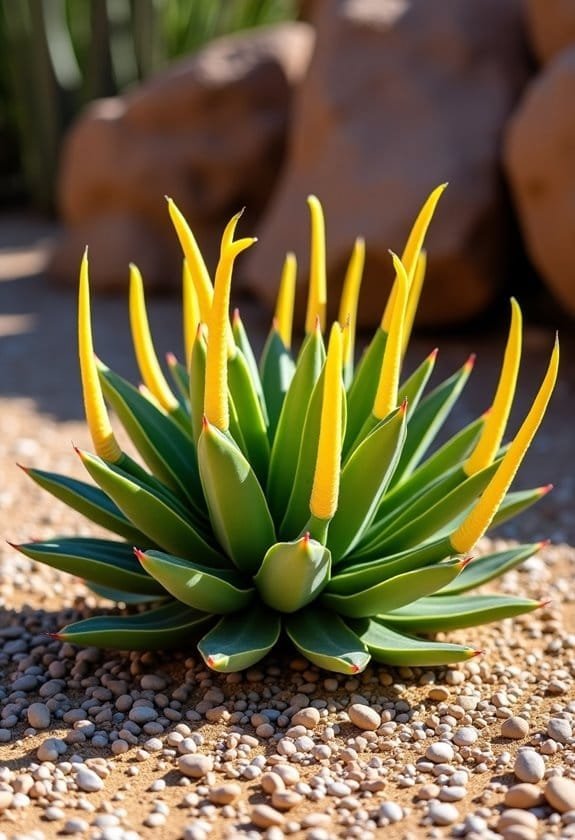
Euphorbia cornigera flourishes under a spectrum of lighting conditions, from full sun to partial shade, revealing its adaptability in various gardening environments.
It thrives best in soil that's both moist and well-drained, positioning it perfectly within plant ecosystems where water retention isn't compromised.
With a temperature tolerance established for USDA Zones 6-9, this robust plant becomes a reliable choice for gardeners looking for a resilient addition to their landscape.
Light
When growing Euphorbia cornigera, light exposure plays a crucial role in its overall development and blooming potential. This resilient plant thrives in full sun to part shade, showcasing its remarkable adaptability to various lighting conditions.
However, it's important to understand the light intensity effects on Euphorbia cornigera's growth. While it does exhibit some shade tolerance variations, ideal flowering occurs with ample sunlight exposure. In fact, insufficient light can lead to weaker stems and reduced flowering.
Euphorbia cornigera flourishes best in environments where it receives at least six hours of direct sunlight daily. This exposure promotes robust growth and showcases the plant's striking features, enhancing its aesthetic appeal in gardens.
Conversely, when planted in overly shaded areas, Euphorbia cornigera may produce fewer blooms and exhibit stunted growth, failing to reach its full potential.
Regularly evaluating the light conditions and adjusting the plant's position accordingly can greatly enhance its health and liveliness. By prioritizing adequate sunlight exposure, gardeners can foster a thriving Euphorbia cornigera, ensuring it provides vibrant blooms and robust greenery throughout the growing season, especially within USDA Zones 6-9.
Soil
Achieving ideal growth for Euphorbia cornigera hinges on the right soil conditions. This remarkable plant flourishes in moist, well-drained soils, which are essential not only for its healthy growth but also for its vibrant flowering. Preferred soil types include sandy loam or a well-balanced mix containing organic matter, enabling moisture retention while preventing stagnation through effective drainage techniques.
In particular, garden soil should be amended with organic substances such as compost or aged manure. These amendments improve the soil's structure, greatly enhancing drainage and nutrient content, which is important for best plant health.
Additionally, Euphorbia cornigera does best when positioned in full sun to part shade. This light preference influences the surrounding soil's moisture requirements, necessitating regular checks and adjustments to maintain the right moisture level.
During periods of hot, dry weather, it's even more critical to monitor the soil closely. Areas exposed to intense sunlight may require additional measures to sustain the plant, further illustrating the delicate balance between moisture retention and drainage.
Ultimately, maintaining these soil conditions will foster a thriving environment for the horned spurge, enriching any garden setting.
Water
For ideal growth, water management is essential for Euphorbia cornigera, particularly in its early stages. This unique plant thrives in moist, well-drained soils, making proper drainage fundamental to its overall health.
Young plants need consistent moisture, as this helps with establishment. Using effective irrigation methods, like drip irrigation, can promote moisture retention while minimizing water wastage.
Once established, Euphorbia cornigera becomes remarkably resilient, relying mostly on natural rainfall under typical conditions.
However, during hot and dry weather, additional watering may be significant to prevent stress and guarantee ongoing energy. Gardeners should implement water conservation techniques, such as mulching, to further enhance soil moisture and reduce evaporation.
Regularly cutting back flowering shoots in late summer or fall proves beneficial, alleviating any potential water stress while encouraging new growth.
Recognizing the contrasting needs of young and mature plants allows for careful management, guaranteeing adequate hydration during critical periods without overwatering.
By attending to these water requirements, cultivators can create an environment that supports Euphorbia cornigera's remarkable adaptability and vibrant display.
Incorporating these insights leads to flourishing plants and a thriving garden.
Temperature
Euphorbia cornigera thrives best in moderate temperature ranges typically found in USDA hardiness zones 6 to 9. This plant exhibits remarkable temperature suitability, performing splendidly when shielded from harsh weather conditions.
While it can tolerate a variety of climates, extreme temperature fluctuations might hinder its growth and flowering capabilities. Temperature regulation becomes essential, especially during the coldest winter months, where providing shelter can enhance the plant's resilience.
Euphorbia cornigera favors sunny to partially shaded environments, allowing it to maximize light exposure, which is critical for optimal growth. Once established, it exhibits excellent drought resistance, yet it prefers its roots nestled in moist, well-drained soil, reminiscent of a nurturing embrace that supports its development.
During scorching summer days, the plant's ability to cope with temperature extremes is commendable, but gardeners should be wary of the negative effects of sudden cold snaps. By ensuring that Euphorbia cornigera has the ideal temperature and environmental conditions, cultivators can foster a flourishing garden, allowing this unique perennial to bring beauty and liveliness to their landscapes.
Pollinator Criteria
Euphorbia cornigera serves as a beacon for various pollinators, particularly bees, thanks to its rich nectar and pollen content.
The plant's unique flower arrangement, featuring tightly clustered blooms that flourish from late spring to late summer, maximizes its appeal during peak pollinator activity. Additionally, plants like Common Yarrow can further attract pollinators, creating a vibrant landscape for these essential species. Moreover, the presence of diverse blossoms in gardens can stimulate higher pollinator visitation rates, enhancing the overall health of local ecosystems.
Understanding the attraction mechanisms and pollination methods can reveal how integrating this resilient variety not only enhances local gardens but also bolsters ecological balance by supporting vital pollinator populations.
Attracted Pollinators
Often overlooked, Euphorbia cornigera's bright yellow-green flowers are a magnet for various pollinators, particularly bees. These vibrant blooms, which flourish from late spring to late summer, offer abundant nectar sources crucial for sustaining foraging insects during their active seasons.
By attracting a wide array of pollinator diversity, this resilient plant enhances local ecosystems, forging a significant connection between flora and fauna. The distinct floral structure serves as a visual attractant, simplifying access to its reproductive parts, which are teeming with nutrients.
Pollinators visiting Euphorbia cornigera play a fundamental role in fostering ecological benefits, such as improved plant reproduction and seed dispersal, and thus reinforcing biodiversity within their habitats. Recognized by the Royal Horticultural Society's Plants for Pollinators initiative, this species is a key player in the promotion of pollinator health, supporting a variety of insects that work synergistically to maintain ecological balance.
Incorporating Euphorbia cornigera into garden designs offers gardeners a tangible way to create pollinator-friendly environments. This not only benefits the plants and their pollinators but also nurtures the delicate web of life that sustains biodiversity in our green spaces.
Pollination Method
Amid its vibrant yellow-green blooms, the pollination method of Euphorbia cornigera primarily relies on a diverse group of pollinators, especially bees. These insects exhibit distinct pollinator behavior, largely influenced by the plant's unique flower structure. The cyathium, an inflorescence characterized by its cup-like arrangement, presents accessible nectar and pollen, thereby enticing pollinators during the flowering period from late spring to late summer.
As bees and other beneficial insects visit the clusters of bright blooms, they not only gather sustenance but also facilitate the plant's reproductive success. This interaction underscores the ecological impact of Euphorbia cornigera, as it supports both pollinator populations and the surrounding biodiversity. By attracting various pollinators, the plant plays an essential role in maintaining balanced garden ecosystems, where every organism contributes to a thriving environment.
Furthermore, participation in initiatives such as RHS Plants for Pollinators highlights Euphorbia cornigera's importance in promoting sustainable gardening practices. These efforts guarantee that both plants and pollinators flourish, fostering habitats that ultimately enhance the ecological fabric intertwined with the beneficial properties of the Euphorbia species, such as their anti-inflammatory and anticancer qualities.
Care & Maintenance
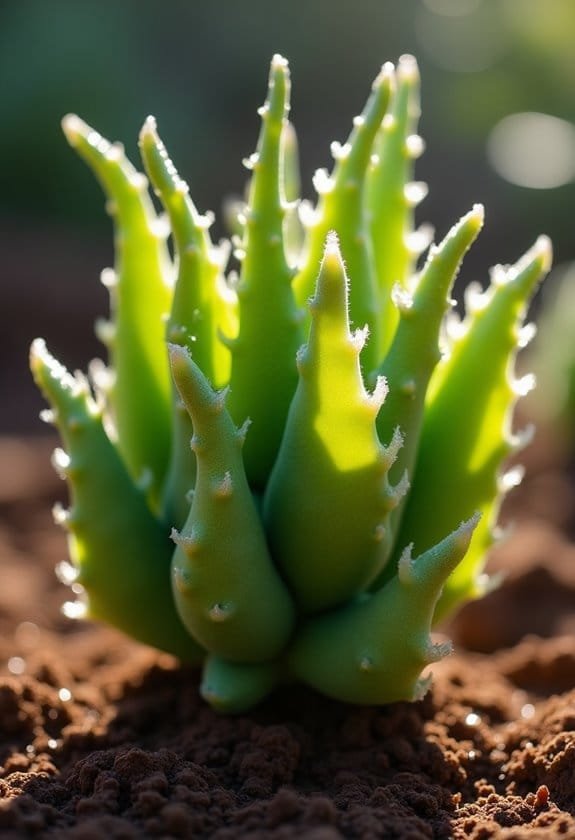
Caring for Euphorbia cornigera requires attention to various factors, including ideal planting techniques and ongoing maintenance.
This resilient plant flourishes in full sun to part shade and thrives best in well-drained, consistently moist soil, balancing hydration and drought resistance once established.
Gardeners should also consider companion plants that complement its growth while exercising caution, as all parts of Euphorbia cornigera are toxic and can irritate the skin and eyes.
Planting Tips
When planting Euphorbia cornigera, it's important to choose a location that receives full sun to part shade, as this maximizes growth and flowering potential.
Gardeners should employ effective planting techniques, verifying the soil is moist and well-drained to support this plant's thriving nature. It's advisable to space the plants about 18 to 24 inches apart, allowing for adequate air circulation and room for mature growth, while keeping in mind seasonal considerations since this species is hardy in USDA Zones 6-9.
During late summer or fall, cutting back flowering shoots to ground level can promote new growth in the following season, invigorating the plant.
Gardeners should regularly monitor soil moisture to prevent overwatering, as Euphorbia cornigera is drought-resistant once established. This minimal care requirement makes it an excellent choice for low-maintenance gardens.
While engaging in planting, it's important to handle the plant with care, given its toxicity; all parts can irritate skin and eyes and are harmful if ingested.
Therefore, employing protective measures during maintenance is significant. By following these guidelines, gardeners can guarantee that Euphorbia cornigera flourishes beautifully in their landscapes.
Ongoing Care
To guarantee Euphorbia cornigera remains vibrant and healthy, ongoing care involves consistent attention to its growing conditions. This resilient plant thrives in moist, well-drained soils, making regular monitoring of soil moisture important, particularly during dry spells. Maintaining ideal moisture levels fosters robust growth and enhances its aesthetic appeal.
In late summer or fall, employing effective pruning techniques is important; cutting back flowering shoots to ground level promotes healthy regrowth and sustains the plant's overall appearance. Using sharp, clean tools, gardeners should carefully handle Euphorbia cornigera while wearing gloves to avoid skin irritation from its toxic sap.
Moreover, pest management plays a key role in its care. Although Euphorbia cornigera is generally resilient to common garden pests and diseases, regular inspections for signs of stress or infestations guarantee the plant maintains its vigor.
Placing it in a location that offers full sun to part shade helps prevent excessive stress and encourages ideal growth.
Suggested Companions
Selecting the right companion plants for Euphorbia cornigera can greatly enhance the overall aesthetics and health of a garden. Ideal plant pairings include drought-resistant varieties like Sedum and Echinacea, which thrive alongside Horned Spurge in full sun to part shade conditions. This synergy not only creates vibrant, low-maintenance displays but also promotes healthy growth trajectories for all plants involved.
To achieve striking visual appeal, it's crucial to evaluate color contrast and texture diversity when grouping companions. For instance, the delicate leaves of Heuchera provide a fine-textured counterpart to the bold structures of ornamental grasses, creating a dynamic interplay of forms and hues. Such combinations invigorate the garden by enhancing both visual and ecological balance. Additionally, incorporating Mahonia species can further support local biodiversity through their role in attracting early-season pollinators.
Moreover, ensuring that all chosen plants are tolerant of similar soil conditions, specifically moist yet well-drained substrates, will reduce competition for nutrients. Practicing regular pruning of Euphorbia cornigera contributes to an organized aesthetic while maintaining the health of companions. Additionally, incorporating biodiversity through plants like Wild Marjoram can support pollinators and enhance the garden ecosystem.
Therefore, savvy gardening enthusiasts can create a harmonious landscape that highlights the beauty of Euphorbia cornigera alongside its carefully selected partners, ultimately fostering a lively and resilient garden ecosystem.
Common Issues
Common issues associated with Euphorbia cornigera, or Horned Spurge, primarily involve its susceptibility to pests and diseases, which, though rare, can impact its importance.
Root rot is a major concern that arises from excessive moisture, underscoring the necessity for well-drained soil to prevent such decay.
As with many resilient plants, maintaining ideal health requires vigilance; therefore, observing watering habits and promptly addressing any signs of distress can greatly enhance plant longevity.
Pests/Diseases
Euphorbia cornigera rarely encounters significant pest or disease problems, making it an ideal choice for low-maintenance gardens. Its remarkable resilience stems from various pest resistance strategies. For instance, the plant's inherent toxicity provides notable plant toxicity benefits, acting as a natural deterrent against many common garden pests, which is particularly beneficial for gardeners seeking an easy-to-manage flora.
Moreover, Euphorbia cornigera is tolerant of herbivores like deer and rabbits, reducing the risk of damage typically inflicted by these animals. This impressive hardiness means that minimal care is required once established; however, gardeners should occasionally check for signs of irritation on the leaves or any wilting, as these may signal potential pest infestations or water stress—though such occurrences are infrequent.
Additionally, using garden insect repellents can further enhance its resistance against pests, ensuring that the plant maintains its vibrant health and beauty throughout the growing season.
Ultimately, Euphorbia cornigera serves as an excellent option for gardeners looking to cultivate a striking yet low-maintenance landscape, allowing them more time to enjoy their outdoor spaces without constant worry over looming pest issues.
Solutions
When it comes to addressing potential challenges with Euphorbia cornigera, understanding its needs can greatly enhance its resilience and overall health. This drought-resistant plant thrives in low-maintenance gardens, yet it demands well-drained soil to flourish effectively.
To enjoy Euphorbia benefits, gardeners should regularly cut back flowering shoots to ground level in late summer or fall, invigorating the plant for ideal growth in the following season.
Given its toxicity, precautions are crucial; all parts of Euphorbia cornigera are harmful if ingested. As a result, it's important to situate the plant away from pets and children, effectively preventing accidental poisoning.
Ensuring the plant receives adequate moisture, particularly during dry spells, while simultaneously avoiding waterlogging helps minimize stress and reduces the likelihood of root rot.
Furthermore, a strategic placement in areas that offer shelter from extreme weather, yet allow for partial sunlight, can ward off pest infestations and diseases.
What Are the Similarities and Differences Between Euphorbia Cornigera and Coreopsis Species?
When comparing Euphorbia cornigera and Coreopsis species, there are significant differences in terms of their appearance, growth habits, and climate preferences. Euphorbia cornigera is a succulent with spiky, green stems while Coreopsis species are flowering plants with delicate, colorful blooms. To learn more about these differences, read this coreopsis species (tickseed) article relevant.
Summary
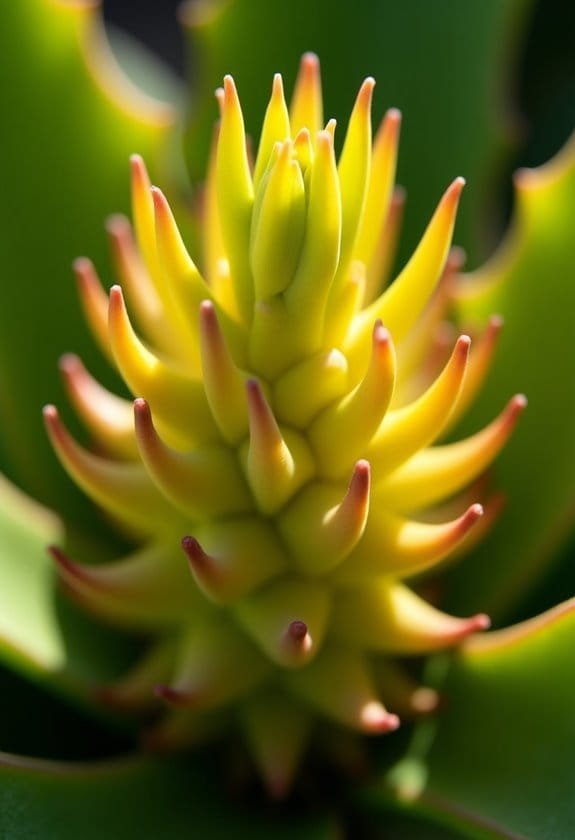
Known for its striking appearance, Horned Spurge (Euphorbia cornigera) is a clump-forming perennial that captivates garden enthusiasts. This magnificent plant grows up to 30 inches tall and wide, showcasing upright reddish stems adorned with lance-shaped dark green leaves.
From late spring to late summer, it produces eye-catching yellow-green flowers in small clusters, earning recognition with an Award of Garden Merit from the Royal Horticultural Society for its ornamental value.
When it comes to landscape design, Horned Spurge thrives in various settings like beds, borders, and rock gardens, contributing to biodiversity while attracting pollinators. Its ideal growth condition includes full sun to part shade and moist, well-drained soil, though it exhibits drought resistance. Additionally, like Common Honeysuckle, Horned Spurge can provide nectar sources for various pollinators during its flowering period.
However, potential gardeners must heed the toxicity concerns associated with this plant, as all parts are highly toxic if ingested, necessitating careful handling to prevent skin and eye irritation.
Effective propagation methods include division and stem cuttings, ensuring the continued beauty of this elegant perennial. With its aesthetic appeal and practical advantages, Horned Spurge stands as a remarkable choice for any garden enthusiast.